Disclosure: topratedkitchenware.com is reader-supported. When you buy through links on our site, we may earn an affiliate commission from Amazon and other retailers, at no extra cost to you.
Where to buy
This guide to the best cotton bed sheet sets covers six sets that shoppers compare when they search for cotton bedding. Only one set in the verified pool is genuinely made from cotton, and honesty matters more here than a long list of links, so that set carries the Amazon link below while the other five are reviewed in full as prose-only comparisons, with no link and no product photo, because they are not cotton at all. If you want the short answer, start with the cotton set, then read the full guide for why the alternatives keep showing up in cotton searches and when each one might still suit you.
- LANE LINEN 100% Organic Cotton Percale Sheet Set — the one true cotton pick in this guide. Check on Amazon for the current price and the sizes in stock.
- CGK Unlimited Breathable & Cooling Sheet Set, Navy Blue — prose-only comparison, not cotton.
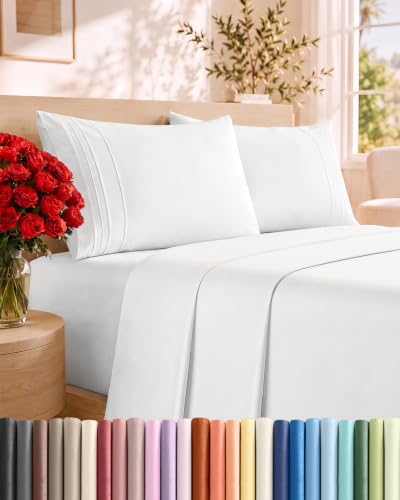
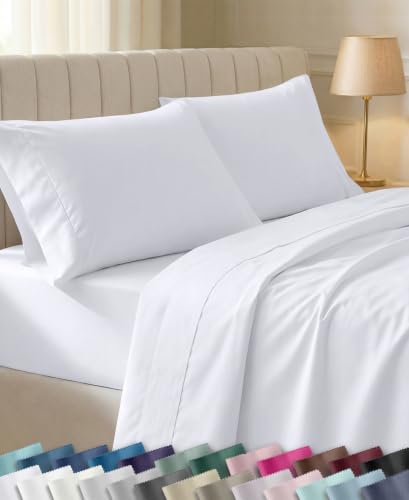
- CGK Unlimited Comfy Breathable & Cooling Sheet Set, White — prose-only comparison, not cotton.
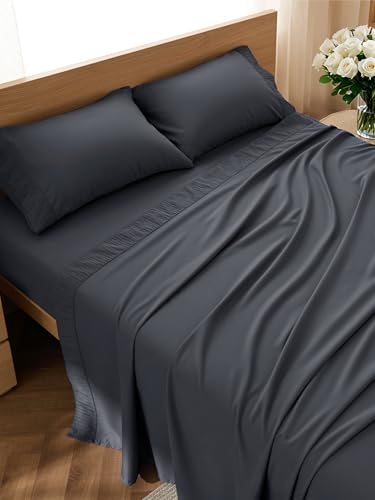
- True Bamboo Queen Sheets Set — prose-only comparison, bamboo-derived rather than cotton.
- COOLINENS Cooling Sheets — prose-only comparison, a synthetic cooling design rather than cotton.
- BEDELITE Flannel Sheets — prose-only comparison, a polyester flannel rather than cotton.
Read the full guide ↓ for the weave, fit and care details that decide whether a sheet set still feels good after a year of washing.
Finding the best cotton bed sheet sets sounds simple until you start reading listings. Cotton is one of the most loosely used words in bedding. Sets described with cotton-adjacent language turn out, on a closer read of the fibre content, to be polyester microfibre, bamboo-derived rayon, or a synthetic cooling fabric with no cotton in it at all. Shoppers who specifically want cotton usually want it for concrete reasons: it breathes in a familiar way, it absorbs a little moisture instead of feeling slick, it softens gradually with washing instead of pilling early, and it does not build the static and clammy feel that many synthetic sets develop in warm weather. A guide that quietly swaps in non-cotton sets and hopes you will not notice does you no favours, so this one takes the opposite approach. It verifies the fibre claim of every set first, links only the set that truly is cotton, and then reviews the five most common alternatives honestly as what they are, so you can see exactly what you would gain and give up by leaving cotton behind.
That structure also mirrors how people actually shop. Many readers arrive wanting cotton, then discover a cooling synthetic or a bamboo set at an appealing tier and wonder whether the difference matters. Sometimes it does not: a hot sleeper in a warm climate may genuinely sleep cooler on a purpose-built cooling fabric than on a mid-weight cotton. Sometimes it matters a great deal: a buyer with sensitive skin who dislikes synthetic textures, or someone furnishing a guest room that must survive years of hot washes, is usually better served by real cotton. The reviews below keep those two questions separate. First, is it cotton? Second, whatever it is made of, is it a good sheet set for the job you have in mind?
Key Takeaways
- Verify the fibre before anything else: of the six sets compared here, only the LANE LINEN set is actually cotton, a GOTS-certified organic cotton percale.
- Percale cotton is the cool, crisp option; it breathes well, suits hot sleepers, and softens gradually over the first several washes.
- Deep pockets and honest sizing matter as much as fibre: measure your mattress depth, including any topper, before ordering any set in this guide.
- Bamboo-derived rayon, microfibre and cooling synthetics each solve a different problem; none of them is cotton, and each is reviewed here as itself, not as a cotton substitute.
- Wash cotton cool, dry it gently and expect a little natural shrinkage and wrinkling; that behaviour is normal for real cotton and not a defect.
- Buy the weave for your climate first and the colour last; a percale in the wrong weight will disappoint no matter how good the cotton is.
In this guide
Quick Picks
| Pick | Badge | What it is | Link |
|---|---|---|---|
| LANE LINEN 100% Organic Cotton Percale Sheet Set | Best Overall — the True Cotton Pick | GOTS-certified organic cotton in a crisp, breathable percale weave, four pieces in white | Check on Amazon |
| CGK Unlimited Breathable & Cooling Sheet Set, Navy Blue | Best Easy-Care Alternative — Prose-Only, Not Cotton | A smooth synthetic hotel-style set with deep pockets and an Oeko-Tex certification, in navy blue | Prose-only — see the full review below |
| CGK Unlimited Comfy Breathable & Cooling Sheet Set, White | Best Wrinkle-Free Alternative — Prose-Only, Not Cotton | The white version of the same easy-care synthetic design, aimed at a crisp hotel look without cotton’s wrinkles | Prose-only — see the full review below |
| True Bamboo Queen Sheets Set | Best Bamboo Alternative — Prose-Only, Not Cotton | A bamboo-derived set in dark grey with a silky hand and a 16-inch deep pocket, pitched at hot sleepers | Prose-only — see the full review below |
| COOLINENS Cooling Sheets | Best Cooling-Tech Alternative — Prose-Only, Not Cotton | A synthetic cooling set in graphite with corner straps and a pocket that fits mattresses up to 18 inches | Prose-only — see the full review below |
| BEDELITE Flannel Sheets | Best Warm Alternative — Prose-Only, Not Cotton | A double-sided plush polyester flannel in grey with a 16-inch deep pocket, made for cold rooms | Prose-only — see the full review below |
Read the badges carefully. In most guides every badge implies the same basic product in a different flavour. Here the first badge is the cotton answer and the other five are deliberately labelled as alternatives, because pretending a polyester flannel is a cotton sheet would make the whole comparison meaningless. If your requirement is cotton and only cotton, the decision is already made and the rest of this guide is about confirming the weave and the fit. If your requirement is really a comfortable night’s sleep and cotton was your starting guess, the alternatives earn their place in the discussion, and readers weighing the next size down for a child’s room often cross-check Best Cotton Twin Sheet Sets alongside this guide for the same reason.
How These Picks Were Chosen
This is a research-led guide, not a laboratory test, and it does not pretend otherwise. Each candidate set was checked against its verified listing data: the fibre named in the title, the certifications the maker claims, the pocket depth, the piece count and the colour. The first and most important filter was the fibre claim itself. A set only qualified as a cotton pick if cotton was stated plainly as the material, the way the LANE LINEN set states 100% organic cotton and backs it with GOTS certification. Sets whose listings describe cooling, breathability or softness without ever naming cotton were treated as what their construction indicates — synthetic or bamboo-derived — and moved to prose-only status rather than being quietly linked as if they were cotton.
The second filter was completeness of information. A sheet set is a simple product, but the details that decide satisfaction are specific: how deep the fitted sheet’s pocket really is, whether the set includes two pillowcases or one, whether the elastic runs all the way around, and whether the maker states a weave at all. Sets with clear, checkable answers ranked ahead of sets with vague marketing language. The third filter was role coverage. Rather than list six near-identical sets, the guide keeps one representative of each direction a cotton shopper typically drifts: easy-care synthetics in two colours, a bamboo-derived set, a technical cooling set, and a warm flannel. That way the comparison teaches you something about the whole shelf, not just about one product.
What this guide does not do is invent experience. It makes no claim that our team slept on each set for a month, and it prints no prices, because prices move constantly and a printed figure would be wrong within weeks; every linked pick says to check the latest price on Amazon instead. It also prints no star ratings or review counts, for the same reason: those numbers change daily and would mislead more than they inform. What it relies on is the verified product information, the known behaviour of each fibre and weave from textile basics, and the recurring themes in owner feedback for each category — the corners that pop off, the percale that softens, the flannel that sheds — described in general terms rather than as fabricated statistics.
The 6 Best Cotton Bed Sheet Sets — One True Cotton Pick and Five Honest Alternatives
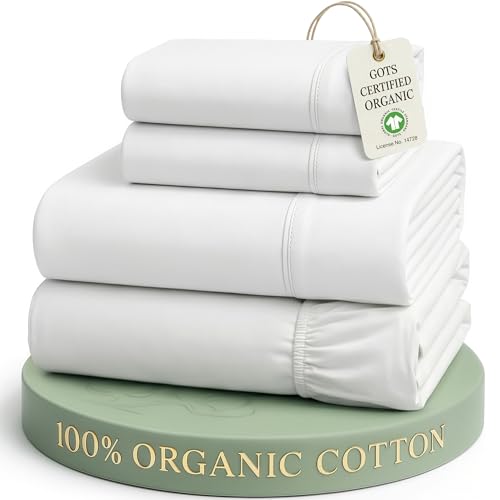
LANE LINEN 100% Organic Cotton Percale Sheet Set
Badge: Best Overall — the True Cotton Pick
Strengths
- It is genuinely cotton: 100% organic cotton, GOTS certified, which is the claim the whole search is built on.
- The percale weave is the cool, crisp, matte style that hot sleepers and hotel-sheet fans usually mean when they say they want cotton.
- Organic certification gives the fibre claim an outside audit trail instead of resting on the maker’s word alone.
Trade-offs
- Percale wrinkles more than sateen or microfibre; expect a relaxed, lived-in look unless you iron or fold straight from the dryer.
- It feels crisp rather than silky at first and needs several washes to reach its softest state.
- This listing is the white colourway, so buyers wanting deep colours will need to check the listing’s other options.
Spec box: Material: 100% organic cotton, GOTS certified. Weave: percale. Pieces: 4 (fitted sheet, flat sheet, two pillowcases in the queen configuration). Colour of this listing: white. Size of this listing: queen. Positioning: an all-season cotton set pitched at hot sleepers.
This is the set the keyword is actually asking for, and it earns the top spot by being the only verified cotton set in the pool rather than by outscoring five rivals on small details. The percale weave is the headline. Percale’s plain weave produces a sheet that feels cool and dry against the skin, with a faint papery crispness that many sleepers associate with good hotel bedding. Air moves through it more freely than through a sateen of similar weight, which is why the maker pitches it to hot sleepers, and that pitch is consistent with how percale behaves: it does not trap a layer of warm, humid air the way a denser weave can.
The organic and GOTS details matter for a particular kind of buyer. GOTS certification covers the fibre’s organic status and parts of the processing chain, so a shopper who avoids conventionally grown cotton for environmental or skin-sensitivity reasons gets a claim that has been checked by a third party. It does not make the sheet softer or more durable by itself, and this guide will not pretend otherwise; what it does is make the word “organic” on the box mean something verifiable. For everyone else, the practical story is simpler: this is a straightforward, honestly specified cotton percale set with no cooling gels, no brushed synthetic surface and no blended fibre quietly diluting the cotton.
The honest limitation is the one shared by almost all real percale: it wrinkles, and it starts life crisp. If your ideal bed looks like a smooth showroom photograph, percale will frustrate you unless you are willing to smooth it by hand or accept the rumple as part of the fabric’s character. It also softens on cotton’s schedule, not instantly — the first night is the crispest it will ever feel. Neither point is a flaw in this particular set; both are properties of the weave, and the buying guide below explains how to tell whether they will bother you before you spend anything.
Best for: anyone whose requirement is real cotton — hot sleepers, percale fans, and buyers who want a certified organic fibre / Not suited for: sleepers who want a silky, wrinkle-free surface straight out of the package
CGK Unlimited Breathable & Cooling Sheet Set, Navy Blue
Badge: Best Easy-Care Alternative — Prose-Only, Not Cotton
Strengths
- Deep pockets and an easy-fit design aimed at staying put on thicker modern mattresses.
- A smooth, wrinkle-resistant synthetic surface that comes out of the dryer looking tidy with almost no effort.
- Oeko-Tex certification on the listing, and a deep navy colour that hides wear and suits shared or guest beds.
Trade-offs
- It is not cotton, despite appearing in cotton searches; the listing never claims a cotton fibre.
- Synthetic fibres can feel warmer and slicker than cotton and may build static in dry weather.
- The easy-care surface that resists wrinkles also lacks cotton’s absorbent, natural hand-feel.
Spec box: Pieces: 4. Colour of this listing: navy blue. Size of this listing: queen. Fit: deep pockets, easy-fit design. Certification named on the listing: Oeko-Tex. Material: not stated as cotton in the verified listing — treated in this guide as a synthetic hotel-style set. Status: prose-only, no Amazon link, because it does not meet the cotton requirement.
CGK Unlimited’s sets are among the most common results a cotton shopper will meet, which is exactly why one is reviewed here in full. Judged as itself — a synthetic, hotel-style sheet set — it has real virtues. The deep-pocket fitted sheet is designed for the thick mattresses and toppers that make older standard pockets pop off at the corners, the fabric is chosen to resist wrinkling and fading, and the whole set asks very little of its owner: wash, dry, remake the bed. For a rental property, a spare room, or a teenager’s bed that gets washed hard and often, that low-effort profile is a legitimate reason to buy, and the navy colourway is the practical one, forgiving of the marks that show instantly on white.
But none of that makes it cotton, and the difference is not pedantic. Cotton absorbs a small amount of moisture into the fibre itself, which is part of why it feels dry; most synthetics move moisture across the surface instead, which some sleepers experience as clammy on humid nights. Cotton also breathes in a way that suits people who run warm but dislike the slick glide of microfibre. A buyer who ordered this set believing the search result’s implication would likely find it perfectly decent bedding and still not the thing they asked for. That gap between decent and asked-for is what the prose-only label is protecting you from.
The honest limitation, beyond the fibre, is longevity of feel. Synthetic sheet sets often start life feeling impressively soft, then develop pilling or a tired surface in high-friction areas sooner than a good cotton does. Care is easy, but the set is best understood as a convenience purchase at an accessible tier rather than a long-term bedding investment.
Best for: guest rooms, rentals and busy households that value wrinkle-free easy care over fibre / Not suited for: anyone shopping specifically for cotton, or sleepers who dislike a slick synthetic feel
CGK Unlimited Comfy Breathable & Cooling Sheet Set, White
Badge: Best Wrinkle-Free Alternative — Prose-Only, Not Cotton
Strengths
- The white colourway delivers the crisp hotel look without cotton percale’s tendency to wrinkle.
- Same deep-pocket, easy-fit construction as the navy version, suited to thicker mattresses.
- Low-maintenance fabric that tolerates frequent washing, useful for a main bed in a busy household.
Trade-offs
- Also not cotton; it is the colour sibling of the pick above, not a separate cotton option.
- White synthetic fabric can grey or yellow gradually with hard water and heavy detergent use.
- Lacks the breathability character and gradual softening that make cotton improve with age.
Spec box: Pieces: 4. Colour of this listing: white. Size of this listing: queen. Fit: deep pockets, easy-fit design. Certification named on the listing: Oeko-Tex. Material: not stated as cotton in the verified listing — treated in this guide as a synthetic hotel-style set. Status: prose-only, no Amazon link, because it does not meet the cotton requirement.
Why review the same design twice? Because the white version is the one that most often gets mistaken for a cotton hotel sheet, and the mistake is understandable. White, smooth, marketed with the language of hotel luxury — it photographs like the percale set at the top of this guide and costs the shopper far less effort to keep presentable. If the look of a freshly made white bed is what you are really buying, and the fibre underneath is a secondary concern, this set is a coherent choice: it will look smooth on the bed on day one and day fifty alike, where the cotton percale will look progressively more relaxed and rumpled unless you press it.
The trade is feel and ageing. Cotton’s surface becomes softer and more familiar the longer you own it; a synthetic set usually feels its best early and then holds steady or declines. White adds a second ageing path: repeated washing in hard water can leave white synthetics looking slightly grey, and the fabric does not respond to the occasional hot wash the way white cotton does, because synthetics prefer cooler water to protect their surface and elastic. None of this is hidden — it follows directly from the fibre — but it is rarely spelled out on a listing page, which is why it is spelled out here.
Treat this set as the convenience-first option in white. It suits a main bedroom where the bed is made daily and appearances matter, a household that irons nothing, or a short-stay rental where quick turnarounds beat textile purity. It does not suit the reader who typed “cotton” into the search box and meant it.
Best for: a smooth white hotel look with minimal upkeep, and households that never iron bedding / Not suited for: cotton purists, and anyone who plans to hot-wash white bedding back to bright
True Bamboo Queen Sheets Set
Badge: Best Bamboo Alternative — Prose-Only, Not Cotton
Strengths
- A silky, smooth hand-feel that many hot sleepers prefer to cotton’s drier texture.
- Bamboo-derived fabric is marketed for moisture-wicking and cooling, and this set leans fully into that role in dark grey.
- A stated 16-inch deep pocket covers most modern mattresses with a topper.
Trade-offs
- It is bamboo-derived rayon, not cotton; the fibres behave differently and ask for gentler washing.
- The fluid drape that feels luxurious to some sleepers feels slippery to others, and pillows can slide.
- Bamboo rayon generally needs cool, gentle cycles to avoid pilling and loss of surface.
Spec box: Pieces: 4. Colour of this listing: dark gray. Size of this listing: queen. Pocket depth stated on the listing: 16 inches. Material: bamboo-derived fabric, per the brand name and listing. Status: prose-only, no Amazon link, because it does not meet the cotton requirement.
Bamboo-derived sheets are the alternative cotton shoppers ask about most, and the honest comparison is more interesting than a dismissal. The fabric in sets like this one is typically rayon made from bamboo pulp: the plant is the feedstock, but the finished fibre is a regenerated cellulose, smooth and round under the microscope, which is why it feels silky and drapes almost like a liquid compared with cotton’s more structured hand. That smoothness reduces friction against skin and hair, and the fabric’s moisture handling gives it the cooling reputation the listing trades on. On a hot night, many sleepers genuinely prefer it to a mid-weight cotton.
The differences cut both ways. Rayon’s smoothness comes with less grip, so the flat sheet migrates and pillowcases can feel mobile. It is also the more delicate fibre in the wash: hot water and aggressive cycles shorten its life and roughen the surface that justified buying it, so it suits an owner willing to wash cool and gentle. Cotton percale, by contrast, tolerates hotter, harder washing and gets softer for it. Households laundering bedding for children, illness or allergies often need exactly that tolerance, which is one of the least glamorous and most decisive reasons to stay with cotton.
Position this set as the feel-first alternative. If your complaint about cotton is that percale feels too crisp and sateen too warm, a bamboo-derived set in a practical dark grey is a reasonable direction — just buy it as bamboo, with its care rules accepted, rather than as a cotton upgrade, because the two fibres are different tools.
Best for: hot sleepers who prioritise a silky, cool hand-feel and will wash gently / Not suited for: anyone who needs cotton’s hot-wash tolerance, or who dislikes a slippery drape
COOLINENS Cooling Sheets
Badge: Best Cooling-Tech Alternative — Prose-Only, Not Cotton
Strengths
- Built around a stated cooling technology with a Q-Max 0.4+ cool-touch claim on the listing.
- The deepest fit in this guide: pockets for mattresses up to 18 inches, plus corner straps to hold the sheet in place.
- Double stitching and a graphite colour that suits modern bedrooms and hides wear.
Trade-offs
- A synthetic cooling fabric, not cotton; the cool-touch effect is a surface sensation, strongest at first contact.
- Technical fabrics can lose their fresh feel if washed hot or with fabric softener, so care rules are stricter.
- Sleepers who like a natural, absorbent fibre feel may find the silky synthetic surface impersonal.
Spec box: Pieces: 4. Colour of this listing: graphite. Size of this listing: queen. Pocket depth stated on the listing: fits up to 18 inches, with corner straps. Construction notes from the listing: CooLoom cooling technology, Q-Max 0.4+ claim, double stitching. Status: prose-only, no Amazon link, because it does not meet the cotton requirement.
This set represents the technical end of the sheet market. Where cotton cools passively, by breathing and absorbing a little moisture, a cooling-tech set like this one is engineered to feel cold to the touch the moment you get into bed — the Q-Max figure on the listing is a measure of that instant contact sensation. For sleepers whose problem is the first hot hour of the night, in a warm bedroom or through summer heat, that engineered coolness can be more effective than any natural fibre, and the fit details here are genuinely thoughtful: an 18-inch pocket is deeper than most, and corner straps address the most common fitted-sheet complaint of all, the corner that works loose by morning.
The caveats are about time and care. A cool-touch surface is a sensation at contact, not air conditioning; once the fabric warms to skin temperature, the effect fades until you move to a fresh patch. Technical finishes also tend to be care-sensitive, and the standard advice for this class of fabric — cool washes, no softener, gentle drying — is the opposite of the throw-it-in-hot routine many households use for cotton. Follow the synthetic routine with a cotton habit and you may shorten the life of the very feature you paid for.
None of that makes it a poor product. It makes it a specialised one, reviewed here so that a cotton shopper tempted by the cooling promise understands the exchange: you are trading natural fibre, absorbency and carefree washing for an engineered first-touch coolness and an excellent deep fit. If night heat is your dominant problem, that can be the right trade. If cotton itself is the requirement, it cannot be.
Best for: very hot sleepers in warm rooms, and owners of extra-deep mattresses who struggle with corners popping off / Not suited for: cotton seekers, and anyone who washes all bedding hot with softener
BEDELITE Flannel Sheets
Badge: Best Warm Alternative — Prose-Only, Not Cotton
Strengths
- A double-sided plush flannel surface built purely for warmth, with a soft, velvety feel from the first night.
- A stated 16-inch deep pocket, generous for a winter set that must fit over mattress protectors.
- The grey colourway works as neutral winter bedding and as a giftable, cosy set.
Trade-offs
- The listing states 100% polyester flannel — warm, but the opposite fibre family from the cotton this guide is about.
- Plush synthetic flannel can shed lint early and pill in high-friction areas over time.
- Far too warm for hot sleepers or summer use; this is a seasonal set, not an all-year one.
Spec box: Pieces: 4. Colour of this listing: grey. Size of this listing: queen. Pocket depth stated on the listing: 16 inches. Material stated on the listing: 100% polyester flannel, double-sided plush fleece. Status: prose-only, no Amazon link, because it does not meet the cotton requirement.
Flannel is where the cotton conversation gets confusing, because traditional flannel is a brushed cotton — and a shopper who assumes the word guarantees the fibre will be surprised by this set, whose listing states plainly that it is 100% polyester. Judged honestly as a synthetic winter set, it does its job directly: the raised, plush surface traps warm air, feels soft immediately with none of percale’s break-in period, and turns a cold bed in a cold room into something welcoming. For a cabin, a draughty older house, or a sleeper who is cold in bed while their partner is comfortable, a set like this earns its drawer space from roughly late autumn to early spring.
The differences from cotton flannel are in the details of ownership. Polyester flannel tends to release lint in its first washes and can develop pilling where heels and elbows rub; it also holds warmth so effectively that it becomes a liability the moment the weather turns, where a cotton percale set serves all year. Static is the other familiar synthetic behaviour in dry winter air. None of these points requires exaggeration — they are simply what the fibre does, and a buyer choosing with open eyes may still choose warmth first.
It closes the detailed reviews because it is the furthest from the keyword of the six: not cotton, not cool, not all-season. Its presence here is a reminder to read the fibre line of any flannel listing twice, because flannel describes a finish, not a fibre. Shoppers furnishing a nursery, where fibre and fit rules are stricter still, should start from Best Crib Sheet Sets rather than adapting any adult set in this guide.
Best for: cold sleepers and cold rooms in winter, and anyone wanting instant plush warmth at an accessible tier / Not suited for: cotton seekers, hot sleepers, and anyone wanting one set for the whole year
Comparison Table
| Pick | Fibre | Weave / surface | Feel in one line | Link | |
|---|---|---|---|---|---|
| LANE LINEN Organic Cotton Percale | 100% organic cotton, GOTS certified | Percale, matte and crisp | Deep-pocket class fit; check the listing for your size | Cool, dry, classic hotel crispness | Check on Amazon |
| CGK Unlimited, Navy Blue | Synthetic (not cotton) | Smooth hotel-style surface | Deep pockets, easy-fit | Slick, tidy, wrinkle-resistant | Prose-only |
| CGK Unlimited, White | Synthetic (not cotton) | Smooth hotel-style surface | Deep pockets, easy-fit | Smooth white hotel look, minimal upkeep | Prose-only |
| True Bamboo | Bamboo-derived rayon (not cotton) | Silky, fluid drape | 16 inches, stated | Cool and silky with a slippery glide | Prose-only |
| COOLINENS Cooling Sheets | Synthetic cooling fabric (not cotton) | Cool-touch technical surface | Up to 18 inches, stated, with corner straps | Cold at first touch, silky thereafter | Prose-only |
| BEDELITE Flannel | 100% polyester (not cotton) | Brushed plush flannel | 16 inches, stated | Warm, fuzzy and seasonal | Prose-only |
Read the fibre column first and the feel column second. Every disappointment in sheet buying comes from reversing that order — falling for a feel description and discovering the fibre behind it later. The table also shows why this guide links one set and discusses six: the discussion is the useful part, because the alternatives are what a cotton search actually puts in front of you.
How to Choose the Best Cotton Bed Sheet Sets for Your Bed
Start with the fibre line, and be literal about it. “Cotton” should appear as the material, ideally with a percentage and, for organic claims, a certification you can recognise. Language like “cotton-feel”, “cotton-rich” or a brand name containing the word cotton tells you nothing; a blend may be mostly polyester. If a listing will not state the fibre plainly, treat it the way this guide treated the prose-only picks: possibly a fine sheet set, but not a verified cotton one. Readers who specifically want long-staple cotton can go a step further with Best Egyption Cotton Sheet Sets, which applies the same literal reading to that narrower claim.
Next, choose the weave before the colour. Percale is the plain weave: matte, crisp, breathable, the coolest-feeling of the common cotton weaves and the one in this guide’s cotton pick. Sateen is the smooth weave: a little warmer, a little more lustrous, less prone to looking wrinkled, and often what people picture when they imagine luxury cotton. Neither is better; they suit different sleepers. Hot sleepers and anyone who loves the snap of a freshly made hotel bed should start with percale. Sleepers who find percale papery, or who sleep cold and like a sheet that feels smooth rather than crisp, should look at sateen. Flannel, the brushed weave, is a winter specialist in either fibre. Deciding this one question correctly prevents more returns than any other choice in sheet buying.
Then measure for fit, because the best cotton in the world is miserable if the fitted sheet will not stay on. Measure your mattress depth at its thickest point, then add the depth of any topper or protector you actually sleep with. Compare that total honestly with the pocket depth a listing states. A pocket that is only just deep enough will fit on day one and start walking off corners after the first wash, because cotton shrinks a little as it settles. All-around elastic holds better than elastic only at the corners. Shoppers whose real problem is a sheet that will not stay put, whatever the fibre, will find the fit-first discussion in Best Fit Twin Sheet Sets useful, since the geometry is the same at every size.
Thread count deserves a calmer head than marketing gives it. Within a sensible middle range, a well-made cotton percale or sateen feels good and lasts; beyond that range, higher numbers increasingly reflect multi-ply yarn tricks rather than a better sheet, and the number tells you nothing about the weave, the staple length or the finishing. Use thread count as a rough sanity check that a set is not at the flimsy extreme, then decide on weave, fibre and fit instead. Long-staple cotton, where the listing states it, is the quieter quality signal: longer fibres spin into smoother, stronger yarns that pill less over years of washing.
Finally, match the set to your laundry reality. Cotton rewards owners who wash it properly: cool to warm water, a gentle-to-normal cycle, and drying that stops before the fabric is baked. It tolerates the occasional hotter wash for hygiene in a way bamboo rayon and technical synthetics do not, which matters for children’s beds, illness, and allergy routines. If your household washes everything hot with softener and tumble-dries to a crisp, be honest that a delicate alternative will suffer, and either choose cotton for its tolerance or adjust the routine for the set you buy.
How to Wash, Fit and Care for Cotton Sheets So They Last
Cotton sheets are easy to keep, but the first few washes set their character. Follow this sequence when a new set arrives, and repeat the washing pattern through its life.
- Wash the set before first use, on its own, in cool to warm water with a mild detergent. This removes finishing treatments from the factory and lets the fabric relax to its true size and hand-feel, so judge the crispness of percale after this wash, not straight out of the packet.
- Fit the fitted sheet starting at the deepest corner, working diagonally, and check that the pocket wraps fully under the mattress at all four corners. A corner that barely grips today will pop tonight.
- Wash weekly or fortnightly in normal use, always with similar colours, and keep zips, hooks and rough items out of the load to protect the weave.
- Skip fabric softener on cotton. It coats the fibres, dulls absorbency and can leave percale feeling strangely slick; the softness of cotton should come from the fibre itself, improving wash by wash.
- Dry on a medium setting and remove the set while it is very slightly damp if you dislike wrinkles; smooth the flat sheet and pillowcases by hand and fold or refit immediately. Line drying gives the freshest feel and the longest fabric life where you have the space.
- Rotate two sets if you can. Resting a cotton set between uses, rather than washing and refitting the same set the same day for years, noticeably extends the life of the elastic and the weave.
- Store clean, fully dry sets in a breathable place away from direct sunlight, which weakens and yellows cotton over time.
Troubleshooting, in the pattern most owners actually meet these problems:
Problem: the fitted sheet keeps popping off one corner → check the true mattress-plus-topper depth against the pocket depth first; if the fit is marginal, sheet straps or a deeper-pocket set are the real fix, and tucking harder is not.
Problem: percale feels too crisp and noisy after several washes → wash it a few more times without softener and dry it slightly less; percale softens progressively, and a set that still feels papery after a month may simply be a lighter, crisper weave than you enjoy, which is a preference signal, not a fault.
Problem: white cotton is greying → wash whites separately, avoid overloading the drum, use enough water and detergent for the soil level, and give the set an occasional hotter wash, which cotton tolerates, instead of adding softener or extra fragrance products.
Percale vs Sateen: The Cotton Decision That Actually Matters
Most cotton buyers argue about brands when they should be arguing about weave. Percale and sateen are both 100% cotton, both durable, both respectable — and they feel different enough that the wrong one reads as a bad purchase. Percale’s one-over, one-under weave makes a fabric that stands slightly away from the skin, breathes freely and feels cool and crisp; it is the weave of classic hotel bedding and of this guide’s cotton pick. Sateen floats more yarns on the surface, so it feels smoother and heavier, drapes closer, reflects a soft sheen and wrinkles less visibly. In a cool bedroom, sateen’s closer drape feels cosy; in a warm one, the same drape can feel like the sheet is following you around.
Climate and laundry tip the balance further. Percale dries a little faster and tolerates a straightforward wash routine; sateen’s surface rewards gentler handling to keep its smoothness. If you share a bed with a partner whose temperature runs opposite to yours, percale is usually the safer shared ground, because the warmer sleeper suffers more from a warm weave than the cooler sleeper suffers from a cool one — an extra blanket solves cold, but nothing solves a sheet that traps heat. Households furnishing a child’s or a dorm bed, where the same weave question appears at a smaller size, can compare notes in Best Extra Long Twin Sheet Sets.
Why So Many “Cotton” Search Results Are Not Cotton
It is worth understanding why a search for cotton sheets fills with microfibre, bamboo rayon and cooling synthetics, because once you see the mechanism you will spot it everywhere. Search results reward listings that convert, and alternative fibres let makers promise softness, cooling or wrinkle-resistance at aggressive tiers, so those listings are optimised hard for the broad sheet searches cotton shoppers run. The listings are rarely lying outright — the fibre is usually discoverable in the details — but the headline language leans on feel words, and feel words are not fibre names. A set can honestly be breathable, cooling, soft and hotel-like while containing no cotton whatsoever, as three of the prose-only picks in this guide demonstrate.
The defence is a ten-second habit: find the materials line, read it literally, and let everything else on the page be secondary. Apply it beyond sheets, too — the same pattern appears in searches like Best Damask Sheet Sets, where a weave name in the query attracts plain sets that share none of it. When a guide or a listing will not tell you plainly what a product is made of, that silence is itself the answer you need.
Common Buying Mistakes
- Trusting the search result instead of the materials line. The most expensive mistake in this category: ordering a synthetic set for a cotton job and discovering the difference at midnight. Read the fibre, every time.
- Buying the weave by photograph. Percale and sateen can look similar in a styled photo and feel completely different in bed. Decide the weave from your temperature and texture preferences, not from the picture.
- Guessing pocket depth. Measuring takes a minute; returning a set that will not stay on takes a week. Measure the mattress and topper together and leave a small allowance for cotton’s early shrinkage.
- Chasing the highest thread count. Beyond a sensible middle range the number stops describing quality and starts describing marketing. Weave, staple and fit decide satisfaction.
- Judging percale on the first night. Real cotton changes over its first washes, becoming softer and more itself. Give a cotton set a fair break-in before deciding it is too crisp.
- Using fabric softener on everything. It coats cotton and technical fabrics alike, dulling the very properties — absorbency in cotton, cool-touch in synthetics — that justified the purchase.
- Buying one set for every season and every sleeper. A winter flannel and a summer percale are different tools. Two modest sets matched to the seasons beat one premium set fighting the weather.
Final Recommendation
If you came here for cotton, buy the cotton. The LANE LINEN 100% Organic Cotton Percale Sheet Set is the only verified cotton set in this comparison, and it is a good one for the most common cotton brief: a crisp, breathable, certified-organic percale that suits hot sleepers, tolerates honest washing and improves over its first weeks of use. Confirm your size on the listing, measure your pocket depth before ordering, and give it three washes before you judge the feel.
Choose an alternative only with your eyes open. If easy care and a wrinkle-free white or navy bed matter more to you than fibre, the CGK Unlimited sets are coherent convenience buys — as synthetics. If silky coolness is the priority and you will wash gently, the True Bamboo set is the feel-first direction, and if engineered cool-touch and the deepest fit in this guide are what you need, the COOLINENS set is the specialist. If winter warmth is the whole point, the BEDELITE flannel does that job as a polyester. Each is a reasonable purchase as itself; none of them is a cotton sheet set, and ordering one under that belief is the only genuinely wrong move this guide exists to prevent.
Frequently Asked Questions
What makes a sheet set genuinely cotton?
The materials line. A genuine cotton set states cotton as the fibre, ideally at 100% or with any blend partner named honestly. Certifications such as GOTS for organic cotton add outside verification. Feel words — soft, cooling, hotel luxury — describe sensations, not fibres, and appear on synthetic listings just as often.
Is percale or sateen better for hot sleepers?
Percale, in most cases. Its plain weave breathes more freely and feels cool and crisp against the skin, while sateen drapes closer and sleeps a little warmer. A hot sleeper who dislikes crispness can compromise with a lighter sateen, but percale is the natural starting point, which is why the cotton pick in this guide uses it.
How deep should the pockets on a cotton sheet set be?
Deep enough to cover your mattress plus any topper or protector, with a small allowance to spare. Measure the full stack at its thickest point and compare it with the pocket depth the listing states. A marginal fit feels fine in the shop and pops corners after the first wash, because cotton relaxes and shrinks slightly as it settles.
Why do cotton sheets wrinkle, and can I avoid it?
Wrinkling is part of how cotton fibres behave when they dry in a creased state; it is not a sign of poor quality. You can reduce it a great deal by drying the set until it is just barely damp, smoothing it by hand and fitting or folding it straight away. If a permanently smooth bed matters more than the fibre, that preference honestly points toward a wrinkle-resistant synthetic instead.
How long should a good cotton sheet set last?
With weekly washing and sensible care, a well-made cotton set should serve for years, softening as it ages rather than pilling early. Rotating two sets, washing cool to warm, avoiding softener and not over-drying all extend its life noticeably. The elastic in the fitted sheet usually ages out before the cotton itself does.
Are bamboo sheets better than cotton sheets?
They are different rather than better. Bamboo-derived rayon feels silkier and cooler at first touch and suits sleepers who love a fluid drape, but it asks for gentler washing and offers less grip. Cotton breathes in a drier way, tolerates hotter and harder laundry routines, and improves with age. Choose by your laundry habits and the feel you prefer, not by which fibre sounds more modern.
What should I check first when a new cotton set arrives?
Wash it once before judging anything, because factory finishes make new cotton feel stiffer and slicker than it really is. Then fit the fitted sheet and check all four corners wrap fully under the mattress, feel the weave with the set at room temperature, and only then decide whether the crispness is the pleasant hotel kind or more than you enjoy.