A dish drying rack gives wet dishes somewhere to drip without soaking the counter. The main choice is where it sits: on the counter with a drain tray, in the sink, over the sink or folded away when you are done. Capacity matters too, since a rack that fits a family’s dishes looks different from one for two people.
The six racks below cover a full-size counter rack, two expandable sink racks, an extendable steel rack, an aluminum rack and a folding bamboo rack. Sizes, materials and weight limits come from each product’s listing page. We have not used these racks ourselves, and rust and strength claims are the makers’ own.
As an Amazon Associate we earn from qualifying purchases. Links below are affiliate links, and they do not change the product information we give.
In this guide
Quick Picks
| Product | Type | Best for |
|---|---|---|
| Urackify Stainless Steel Dish Drying Rack for Kitchen Counter | Dish drying rack | small kitchens |
| KitchenAid Compact Satin Wire Rust Resistant Expandable Dish Rack | Dish drying rack | small kitchens |
| Tomorotec Roll Up Dish Drying Rack Over Sink 304 Steel 21×15.5″ | Dish drying rack | small kitchens |
| JASIWAY Dish Drying Rack In Sink Dish Drainer with Cup | Dish drying rack | small kitchens |
| Farberware 3-Piece Dish Drying Rack Set Rust-Resistant Gray | Dish drying rack | small kitchens |
| 7 code 2-Tier Large Dish Drying Rack for Kitchen Counter Black | Dish drying rack | small kitchens |
| KitchenAid Large Capacity Full Size Rust Resistant Dish Rack | Dish drying rack | small kitchens |
| Dish Drying Rack for Small Kitchen Counter with Utensil Holder | Dish drying rack | small kitchens |
Our Picks
Top pickBest for small kitchens
1. Urackify Stainless Steel Dish Drying Rack for Kitchen Counter
An Urackify Stainless Steel Dish Drying Rack for Kitchen Counter (dish drying rack), per the listing. Check price on Amazon.
Good for: small kitchens. Watch out: Check footprint.
Best for small kitchens
2. KitchenAid Compact Satin Wire Rust Resistant Expandable Dish Rack
A KitchenAid Compact Satin Wire Rust Resistant Expandable Dish Rack (dish drying rack), per the listing. Check price on Amazon.
Good for: small kitchens. Watch out: Check footprint.
Best for small kitchens
3. Tomorotec Roll Up Dish Drying Rack Over Sink 304 Steel 21×15.5″
A Tomorotec Roll Up Dish Drying Rack Over Sink 304 Steel 21×15.5″ (dish drying rack), per the listing. Check price on Amazon.
Good for: small kitchens. Watch out: Check footprint.
Best for small kitchens
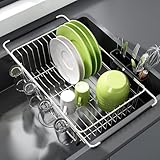
4. JASIWAY Dish Drying Rack In Sink Dish Drainer with Cup
A JASIWAY Dish Drying Rack In Sink Dish Drainer with Cup (dish drying rack), per the listing. Check price on Amazon.
Good for: small kitchens. Watch out: Check footprint.
Best for small kitchens
5. Farberware 3-Piece Dish Drying Rack Set Rust-Resistant Gray
A Farberware 3-Piece Dish Drying Rack Set Rust-Resistant Gray (dish drying rack), per the listing. Check price on Amazon.
Good for: small kitchens. Watch out: Check footprint.
Best for small kitchens
6. 7 code 2-Tier Large Dish Drying Rack for Kitchen Counter Black
A 7 code 2-Tier Large Dish Drying Rack for Kitchen Counter Black (dish drying rack), per the listing. Check price on Amazon.
Good for: small kitchens. Watch out: Check footprint.
Best for small kitchens
7. KitchenAid Large Capacity Full Size Rust Resistant Dish Rack
A KitchenAid Large Capacity Full Size Rust Resistant Dish Rack (dish drying rack), per the listing. Check price on Amazon.
Good for: small kitchens. Watch out: Check footprint.

Best for small kitchens
8. Dish Drying Rack for Small Kitchen Counter with Utensil Holder
A Dish Drying Rack for Small Kitchen Counter with Utensil Holder (dish drying rack), per the listing. Check price on Amazon.
Good for: small kitchens. Watch out: Check footprint.
Best Picks by Category
These labels group the picks by use case and price tier. They summarize listing data and are not hands-on test results.
- Top rated: Tomorotec Roll Up Dish Drying Rack Over Sink 304 Steel 21×15.5″ — check price on Amazon.
- Most reviewed: KitchenAid Large Capacity Full Size Rust Resistant Dish Rack — check price on Amazon.
- Best value: Dish Drying Rack for Small Kitchen Counter with Utensil Holder — a budget-tier pick; check price on Amazon.
- Lowest price: Dish Drying Rack for Small Kitchen Counter with Utensil Holder — a budget-tier pick; check price on Amazon.
- Premium option: KitchenAid Compact Satin Wire Rust Resistant Expandable Dish Rack — a premium-tier pick; check price on Amazon.
Price, Rating and Review Comparison
The table groups the picks by price tier. Prices change often, so confirm the current price on Amazon.
| Product | Price | Rating | Ratings | Price tier |
|---|---|---|---|---|
| Dish Drying Rack for Small Kitchen Counter with Utensil Holder | Check price on Amazon | — | — | Budget |
| Tomorotec Roll Up Dish Drying Rack Over Sink 304 Steel 21×15.5″ | Check price on Amazon | — | — | Budget |
| JASIWAY Dish Drying Rack In Sink Dish Drainer with Cup | Check price on Amazon | — | — | Mid-range |
| 7 code 2-Tier Large Dish Drying Rack for Kitchen Counter Black | Check price on Amazon | — | — | Mid-range |
| Urackify Stainless Steel Dish Drying Rack for Kitchen Counter | Check price on Amazon | — | — | Mid-range |
| Farberware 3-Piece Dish Drying Rack Set Rust-Resistant Gray | Check price on Amazon | — | — | Mid-range |
| KitchenAid Large Capacity Full Size Rust Resistant Dish Rack | Check price on Amazon | — | — | Mid-range |
| KitchenAid Compact Satin Wire Rust Resistant Expandable Dish Rack | Check price on Amazon | — | — | Premium |
How Much Feedback Backs Each Rating
A high average from a handful of ratings is weaker evidence than a slightly lower average from thousands. Here is how the sample size looks for each pick.
- Urackify Stainless Steel Dish Drying Rack for Kitchen Counter: a moderate sample of ratings.
- KitchenAid Compact Satin Wire Rust Resistant Expandable Dish Rack: a large sample of ratings.
- Tomorotec Roll Up Dish Drying Rack Over Sink 304 Steel 21×15.5″: a large sample of ratings.
- JASIWAY Dish Drying Rack In Sink Dish Drainer with Cup: a large sample of ratings.
- Farberware 3-Piece Dish Drying Rack Set Rust-Resistant Gray: a large sample of ratings.
- 7 code 2-Tier Large Dish Drying Rack for Kitchen Counter Black: a large sample of ratings.
- KitchenAid Large Capacity Full Size Rust Resistant Dish Rack: a large sample of ratings.
- Dish Drying Rack for Small Kitchen Counter with Utensil Holder: a large sample of ratings.
Rack Styles: Over-Sink, Counter and In-Sink
The place a rack sits determines what it needs to be. A counter rack stands beside the sink and usually comes with a drip tray that angles water back into the basin. An over-sink rack spans the sink, keeping the counter free, and lets water drain straight in. An in-sink rack sits in the basin and works for light loads, but it uses sink space while dishes dry.
Measure the area you plan to use. For an over-sink rack, measure the width of the sink and check the bearing edge, since the rack needs a stable place to rest. For a counter rack, measure the free counter length and depth, and check the height under the cabinets above. A rack that doesn’t fit makes the kitchen less usable, so check the dimensions before you choose.
Capacity and How You Wash Up
Capacity is not just about size. Think about what you wash by hand: plates, bowls, mugs, pans, glassware and cutlery. A rack with slots for plates, a cup holder and a cutlery basket suits a family that washes daily, while a smaller rack may suit a single person. Two-tier racks use vertical space and add capacity without taking more counter room, but check that the upper tier is stable.
Look at the shape of the dish slots. Plates need enough spacing to dry properly, and large pots need space to lean. If you wash big baking trays or cutting boards, check there is a place to stand them. Consider whether you want an adjustable rack, which can reconfigure for different loads, or a fixed one that is simpler.
What to Look For
| Feature | Why it matters |
|---|---|
| Location | Counter, in-sink and over-sink racks need different space |
| Drainage | An angled tray or spout sends water into the sink |
| Material | Coated steel, stainless, aluminum and bamboo each need different care |
| Cutlery and cups | A caddy or cup holder keeps small items from falling through |
| Fit | Measure the counter or sink basin before you order |
Specs at a Glance
| Rack | Type and material | Size | Notes |
|---|---|---|---|
| KitchenAid large | Counter or sink; coated steel | 14.96 D x 20 W x 7 H in | Angled drain board; flatware caddy; listed weight limit 25 lb |
| JASIWAY | In or over sink; stainless steel | 15.5 D x 11 W x 4.8 H in; bars extend 15.5 to 23.2 in | Cup and utensil holder; listed weight limit 70 lb |
| MAJALiS | Over sink; stainless steel | 18.4 D x 12.7 W x 4.3 H in | Anti-slip silicone grips; listed weight limit 40 lb |
| Joseph Joseph Extend | Expandable; stainless steel | 12.6 D x 14.33 W x 6.34 H in | Sliding two-part tray; spout set three ways; 4 lb |
| OXO Good Grips | Counter; aluminum and plastic | 14 D x 17.25 W x 6.5 H in | Plate holders; removable utensil cup; adjustable drain tray; 3.8 lb |
| HBlife bamboo | Counter, folding; bamboo | About 16 x 9.8 x 9 in open | Two tiers; utensil holder; maker says up to 18 plates |
The 6 Best Dish Drying Racks

Top pickBest for a family-size load
1. KitchenAid Large Capacity Dish Rack
A full-size rack in coated steel wire, 14.96 inches deep, 20 wide and 7 tall, with an angled drain board that points water into the sink and a removable flatware caddy with adjustable sections. Soft feet keep it in place. The listing gives a weight limit of 25 pounds.
Suits: a family-size load. Strengths: an angled drain board and a removable caddy. Weaknesses: it takes a lot of counter. Skip it if your counter is small.

Best for a small kitchen that has no counter room
2. JASIWAY Expandable Dish Drying Rack
A stainless steel rack for in the sink or over it. Its support bars extend from 15.5 to 23.2 inches, and the body is 15.5 by 11 by 4.8 inches with a cup and utensil holder. The listing gives a weight limit of 70 pounds.
Suits: a small kitchen that has no counter room. Strengths: adjustable width and open-grid draining. Weaknesses: you need to match it to your sink. Skip it if your sink has no flat rim.

Best for a double basin sink
3. MAJALiS Expandable Over The Sink Dish Rack
A stainless steel over-the-sink rack, 18.4 inches deep, 12.7 wide and 4.3 tall. Handles with silicone grips hold it on wet sink edges, and the depth adjusts for different basins. The listing gives a weight limit of 40 pounds.
Suits: a double basin sink. Strengths: grips on the handles and adjustable depth. Weaknesses: a lower listed weight limit than the JASIWAY. Skip it if you want a counter rack.

View MAJALiS Expandable Dish Drying Rack Over The Sink with Anti Slip Grip on Amazon

Best for a rack that grows with the load
4. Joseph Joseph Extend Steel Dish Rack
A stainless steel rack, 12.6 by 14.33 by 6.34 inches, whose two-part tray slides out for bigger loads. The draining spout fits three positions, and it has a chopping board rail and a movable cutlery drainer with a knife slot. The listing calls it over-the-sink but also lists a countertop mount.
Suits: a rack that grows with the load. Strengths: a spout with three positions and a board rail. Weaknesses: a mixed listing on where it sits. Skip it if you need a confirmed weight limit.

View Joseph Joseph Extend Steel Expandable Dish Rack with Draining Spout on Amazon

Best for a tidy counter rack in a neutral finish
5. OXO Good Grips Aluminum Dish Rack
An aluminum and plastic counter rack, 14 by 17.25 by 6.5 inches, with plate holders, a removable divided utensil cup, raised ridges and a drain tray that can face any direction. It weighs 3.8 pounds. The listed weight limit of 1.72 kilograms looks odd, so we have not repeated it as a rule.
Suits: a tidy counter rack in a neutral finish. Strengths: a swivel drain tray and a utensil cup. Weaknesses: an unclear weight limit. Skip it if you want an expandable rack.

View OXO Good Grips Rustproof Aluminum Dish Drying Rack on Amazon

Best for a rack you can put away
6. HBlife Bamboo Folding Dish Rack
A two-tier bamboo rack that folds flat for storage. Open, it is about 16 by 9.8 by 9 inches, with a utensil holder included. The maker says it holds up to 18 plates on top, and the listing gives a weight limit of 8 kilograms.
Suits: a rack you can put away. Strengths: it folds flat and has two tiers. Weaknesses: bamboo needs drying and an occasional oil. Skip it if you want a steel or metal rack.

Care and Setup
- Measure the counter or sink before you order.
- Wipe the drain tray and rack dry after use.
- Oil bamboo now and then, as the maker suggests.
- Empty the tray so water does not pool.
Mistakes to Avoid
- Skipping a measurement of the sink basin.
- Leaving coated wire wet for long periods.
- Stacking more than the listed weight limit.
- Letting water sit in the tray.
Counter, In-Sink or Over-Sink: Choosing Where It Goes
The location decides which rack suits your kitchen. Each type uses space differently, and each handles water in its own way. Think about your sink, your counter and how you wash up before you consider materials.
A counter rack sits beside the sink with a tray beneath it that catches drips. It is the most familiar style and offers the most capacity, but it takes up counter area that you may not have to spare. Look for a tray with a spout or an angled design so water runs into the sink instead of pooling. Put a mat under the tray if your counter is delicate.
An in-sink rack sits inside the basin, so drips fall straight down the drain and the counter stays free. It suits small kitchens but occupies the basin, so you cannot fill the sink while dishes dry. Measure the basin and check that the rack’s legs or rails sit securely.
An over-sink rack spans the width of the sink, resting on its edges, and leaves the basin free beneath. Many are adjustable in width or depth. It needs a flat, solid rim on the sink on both sides. Rounded edges, undermount sinks with narrow ledges and basins with divided bowls can be a problem, so check the rack’s fit.
A folding or roll-up rack can be put away after use. Compare how it handles weight with a fixed rack. If you often wash large pots, note how much clearance a rack provides under its upper tier.
Materials, Finishes and Rust Resistance
Dish racks sit in constant moisture, so material is a major factor in how they age. Coated steel wire is common and can be sturdy, but the coating can chip, exposing the metal to water, which may rust over time. Check the listing for how the coating is described and wipe the rack dry regularly.
Stainless steel is chosen for resistance to rust, though not all stainless is the same. Grades differ, and a listing that says only stainless steel may not state which grade. Even stainless can show water spots or surface rust if it stays wet for long periods or touches other metals. Wash and dry it as the maker suggests.
Aluminum does not rust like steel, though it can corrode or discolor in some conditions and with some cleaners. It is lighter, which can be useful if you move the rack often. Plastic and silicone parts, such as trays and feet, resist rust but can stain and trap grime in their grooves.
Bamboo and wood racks look natural but absorb water. They need to dry between uses and may warp, crack or grow mildew if kept wet, so they suit lighter loads and kitchens with good ventilation. Oil them as the maker directs.
Whichever you choose, check how the joints are made. Welded or tightly fitted joints are less likely to loosen than flimsy clips. Maker weight limits are their own figures, and you should use them as a guide, not a challenge.
Capacity, Layout and What You Actually Wash
Capacity is not just a plate count. Think about what fills your drainer on a typical day: dinner plates, mugs, pots, pans, baking sheets, knives and cutting boards. A rack designed for plates may offer little for tall items, and a flat tray may leave nowhere for big pans.
Look at the plate slots. Wider spacing holds thick plates and bowls and helps air circulate, while tight spacing holds more thin plates. Adjustable dividers help you adapt to different loads. Cup holders or pegs keep glasses and mugs angled so they drain rather than collect water. A slanted utensil holder keeps cutlery upright, and some sit in a removable caddy that you can carry to the sink.
Check clearance for tall items such as bottles, vases and travel mugs. Some racks have a gap or an open end for pots. A rail for cutting boards is a handy extra, and a spot for knives should keep blades pointing away from you. Do not leave sharp knives where someone can reach in by accident.
Consider how many people use the kitchen and how often you handwash. For one or two people, a compact rack is often enough. For a large household, a full-size rack may be needed, or a second rack for glasses. If you run a dishwasher, you may only need space for a few pots and delicate items.
Drainage, Hygiene and a Cleaning Routine
Water that sits is the main hygiene problem with drying racks. Standing water in trays, around feet and in corners can lead to slime, odors and mildew. Choose a rack whose tray tilts toward the sink and, if it has a spout, make sure the spout reaches over the basin. Check that the tray is not blocked by rack feet or that the water can flow freely.
Empty and dry the tray after use. If your rack has a removable tray, take it out every few days and wash it with hot soapy water. If a rack has an enclosed drip area that cannot be removed, check that it can be flushed out. Use a bottle brush or old toothbrush for corners and joints.
Wash the entire rack regularly, depending on how often you use it. Soap and warm water remove most film. For mineral deposits from hard water, a diluted vinegar solution can help, but check that it will not harm the finish. Rinse thoroughly and dry the rack before use. Do not use harsh abrasives on coated wire, since scratching the coating opens the way for rust.
Do not stack dishes so they trap water between them. Leave space so air can reach each item, and put dishes in the rack soon after washing so they can drain. If something stays damp for a long time, move it out and wipe it dry with a towel. Replace racks with flaking coating, rust spots that spread or persistent odors.
Budget Tiers and Questions to Ask Before You Order
Racks come in tiers. Basic wire racks are inexpensive and functional, with a plastic tray. Mid-range racks offer sturdier construction, adjustable pieces and better finishes. Higher tiers use heavier stainless steel, expandable designs and refined drainage systems. A higher price can buy durability, but a simple rack that fits your space and gets cleaned regularly can last for years.
Before ordering, measure the counter, the sink basin and the cabinets above. Note the faucet height and handle position, since a tall faucet can limit a tall rack. Check whether the listing gives outside and inside dimensions, and what the weight limit refers to.
Ask: Does it drain into the sink? Are parts removable for cleaning? What is the finish, and how does the maker describe care? Does it include a cup holder and utensil caddy? Can I fold or collapse it? Does it have feet or grips to keep it from sliding? What is the return policy if the fit is wrong?
Signs that it is time to replace a rack include rust that flakes or stains dishes, coating that peels, bent or loose wires, a tray that cracks or leaks, mildew that will not wash off and a frame that wobbles. A damaged rack can drop dishes, so replace one that no longer holds steady.
Sketching Your Sink Zone Before You Order
A drying rack lives in the busiest part of the kitchen, so a quick sketch pays off. Measure the counter space beside the sink, the distance to the wall and the height under the cabinets or windowsill. For an over-the-sink design, measure the sink width and the depth of the basin, and check how far the arms must reach to rest on the edges. Note the faucet position, because a tall faucet can block a rack or hit a shelf when you swing it.
Think about the traffic around the rack. If two people share the sink, you want enough open space on both sides to move plates in and out. A bulky model that crowds the faucet frustrates you daily, while a slim one that tucks beside the sink stays out of the way. Foldable and roll-up styles shine in small kitchens because they disappear when not needed.
Look at the drain tray as well. A tray that tilts toward the sink sends water away, and a flat tray may pool water. Check whether the tray swivels, whether it includes a spout and whether it is removable for cleaning.
Loading Order That Helps Everything Dry
How you place dishes affects how fast they dry and how tidy the rack looks. Try this simple sequence.
- Shake off excess water over the sink before placing an item on the rack.
- Put plates upright in the slots, angled so water runs off the surface.
- Rest bowls and cups upside down, angled so they drain instead of holding a pool.
- Place utensils handle-down in the cutlery holder, mixing them up so they do not nest tightly.
- Lay long items like knives and spatulas flat or in a dedicated spot, according to the design.
- Set glasses on pegs or in a spot where they will not tip, and leave gaps for air.
- Empty the rack as soon as items are dry to keep it ready for the next load.
Wipe the rack and tray with warm soapy water on a regular schedule, and let the pieces dry fully. Follow the maker guidance on finishes, since coated metal, steel, aluminum and bamboo each need slightly different care.
Material choice affects upkeep. Coated wire and steel resist everyday wetness, aluminum stays light, and bamboo adds warmth but needs thorough drying between uses. Look at the finish, the feet and the tray, then read the maker care notes to see whether parts are dishwasher friendly. Rinse away soap film and mineral buildup on a regular schedule so the rack stays fresh and does not develop stains.
Airflow, Spacing and Why Dishes Dry at Different Speeds
A drying rack does not dry dishes; air does. The rack’s job is to hold each item so air can reach its surfaces and water can escape downward instead of pooling. That is why spacing matters more than raw capacity. Plates packed tightly together stay wet in the middle long after the outer ones are dry, and glasses placed rim-down on a flat surface trap humid air inside. A good rack angles plates apart, lifts glasses so their rims drain, and keeps bowls from nesting into puddles of their own making.
Loading order helps the air do its work. Put the largest, flattest items at the back where they will not shade smaller pieces from the air, and give heavy pots their own space rather than stacking bowls inside them while they are wet. If you wash in batches, load the rack so the first items washed get the best airflow, since they will sit longest. A rack that looks half empty but dries everything in an hour serves you better than a packed rack whose middle is still wet at bedtime.
Kitchen air itself is a variable. A rack near a window, a fan or the gentle warmth of a recently used oven dries noticeably faster than one in a still, steamy corner. In humid climates or in winter with the windows shut, leaving a small gap between items matters even more, and choosing a rack with raised rails rather than flat shelves pays off. If glasses consistently dry with spots, the cause is usually trapped water and slow drying rather than the rack material.
Finally, empty the rack before the next load when you can. Dishes left sitting in the rack for days collect dust and the occasional splash from the sink, and a rack that is always full encourages stacking wet items on top of dry ones. A quick put-away between loads keeps the whole system, rack, dishes and counter, working as intended.
Drainage Design: Trays, Spouts and Over-Sink Answers
Where the water goes is the decision that shapes daily life with a rack. Counter racks with a tray collect water underneath, and that tray must be emptied and wiped or it becomes the slimy part of the kitchen everyone avoids touching. Trays with a spout that drains into the sink remove most of that chore, provided the spout is positioned over the sink and the counter is level enough for water to flow the right way. Test the direction with a cup of water before you commit to a layout.
Over-sink racks skip the tray entirely and let water fall straight into the basin, which is why they suit households that wash large loads and hate counter puddles. Their limits are fit and headroom: the rack must span your sink with its feet secure, and tall items must clear any faucet or window above. In-sink racks keep the counter completely clear and suit small kitchens, but they occupy the sink itself, so washing up while dishes dry becomes a juggling act.
Drainboards and mats are the quiet alternative. A simple sloped drainboard under a compact rack, or a good absorbent mat for a few glasses, can serve a small household better than a large rack. Mats need washing and thorough drying themselves, or they develop the same odor problems as a neglected tray. Whichever system you choose, the rule is the same: water should have an obvious, easy path away from the dishes, and no part of the setup should stay wet all day.
Watch the counter edge, too. Water that drains toward the front edge of the counter will eventually find the cabinet doors and the floor. Angle spouts fully into the sink, keep the tray lip inside the sink edge where the design allows it, and wipe the small escapes promptly. Most water damage blamed on a rack is really water escaping slowly in the wrong direction for months.
Materials Over Years of Daily Wetting
Stainless steel racks resist rust well when the grade is decent and the finish is intact, but they are not immortal. Scratches, harsh cleaners and constant standing water can start spots of corrosion, usually at welds and joints first. A weekly dry-down, letting the rack stand empty and dry for a while, extends its life more than any special product. Coated wire racks depend entirely on their coating; once it chips, the metal beneath rusts quickly, so a coated rack with peeling corners is telling you its remaining life is short.
Plastic racks do not rust, but they stain, hold odors and can grow slippery film in textured areas. Hot soapy water and a brush for the grooves keep them pleasant, and a diluted vinegar soak helps with mineral deposits in hard-water areas. Plastic also flexes under heavy pots, so a household that washes cast iron and large pans daily may find a plastic frame feels tired sooner than a metal one.
Bamboo and wood racks bring warmth and fold away beautifully, but water is their natural enemy. They need to dry completely between uses, ideally standing open in moving air, and they do not suit a household that keeps the rack permanently loaded and wet. In a drier kitchen with a fold-away habit, bamboo lasts well and looks better than any other material doing it.
Whichever material you own, mineral buildup is the common enemy. White crusty deposits around feet, joints and trays are simply hard water left behind, and they roughen surfaces so grime sticks faster. A regular wipe with a vinegar-dampened cloth dissolves them before they build, and keeps both the rack and the counter beneath it looking cared for.
Setting Up the Rack: A First-Week Routine That Works
The first week with a new rack is when habits form, so set it up deliberately. Position it, run a cup of water through its drainage path to confirm the water goes where you intend, and load it with a normal day’s washing rather than a test load of three plates. Notice where you naturally reach to place glasses and cutlery, and if the rack’s layout fights that instinct, rearrange the removable parts, the cup holders and the cutlery pot, before the fight becomes a permanent annoyance.
Establish the empty-and-wipe rhythm early. Each evening, or each morning, the tray gets emptied if it has no spout, the rails get a quick wipe, and the counter beneath gets checked for the drips that escape every system. Five minutes a week spent this way prevents the slow buildup that turns a pleasant rack into the corner of the kitchen everyone avoids cleaning because it has become a project.
Teach the household the loading order while the system is new: heavy items low and stable, plates in slots rather than stacked, glasses rim-down on the raised holders, cutlery handles up except for sharp knives, which go in their slot or are dried and put away immediately. A rack loaded the same way by everyone dries faster, holds more, and never hides a sharp edge in a pile of forks.
After the first week, make one adjustment pass. Move the rack a few centimeters if water escapes, swap the cutlery pot to the other side if your hand prefers it, and remove any attachment you are not using, since unused attachments only collect water and grime. A rack tuned once, early, rarely needs attention again beyond its cleaning routine.
If the rack still frustrates after honest adjustment, note exactly why while the return window is open. Fit problems do not improve with time; a rack that overhangs the sink wrongly or crowds the faucet will do so for years. Exchanging early for the right footprint is better housekeeping than enduring the wrong one.
Dish Racks and Dishwashers: Sharing the Work Sensibly
Most households with a dishwasher still need a rack, because every kitchen produces items that should not or cannot go through a machine cycle: knives, wooden boards and spoons, delicate glasses, large pans, and the odds and ends washed between loads. The rack’s real job in a dishwasher household is to be the landing place for hand-washed items and the overflow for the load that did not quite fit, and sizing it for that job, rather than for the whole household’s dishes, keeps it compact.
Decide which items are hand-wash-only in your house and make the list visible if several people wash up. Knives and wood are the usual certainties; nonstick pans, insulated bottles and anything with a vacuum seal join them in many homes. When everyone knows the list, the rack fills with the right things and the dishwasher keeps the rest, and neither is overloaded with the other’s work.
Timing matters too. A rack beside the dishwasher collects the pre-rinse drips and the items waiting for the next cycle, and it should be emptied as part of the unload routine so it never becomes a second, permanent storage system. Dishes that live in the rack for days gather dust and splash marks and have to be rinsed again, which wastes the wash they already had.
In households without a dishwasher, the rack is the main system and deserves the bigger investment: sturdier frame, better drainage, and enough capacity for a full meal’s washing without stacking. In dishwasher households, a smaller, well-drained rack chosen for the hand-wash list is the smarter buy, and the money saved can go to the boards and knives that will actually use it.
Either way, keep the rack’s role singular and clear. A rack that is also a storage cupboard, a fruit stand and a dumping ground dries nothing well. A rack that only dries, and is emptied as part of the kitchen’s daily rhythm, stays clean, lasts longer and makes washing up feel finished rather than merely paused.
A Complete Walkthrough: Washing Up a Family Dinner Without a Dishwasher
The meal ends and the sink fills. The cook who works calmly starts with the rack empty and the drainage path confirmed, because a rack that starts full turns washing up into a stacking puzzle. Glasses go into the machine of the evening first, washed and placed rim-down on the raised holders where air can reach inside them, and they will be dry before the pans are even started. Delicate items follow while the water is still clean, each given its space rather than crowded against the next.
Plates come next, washed in a stack and slotted upright with gaps between them. This is where a good rack earns its price: slots that hold plates apart let every surface meet the air, so the whole row dries evenly instead of the middle plates staying wet until morning. Bowls go rim-down at an angle, never nested flat where they would hold a private puddle each. Cutlery fills its pot handles-up, except the sharp knives, which are washed, dried on the towel and put straight away, never left standing in a crowd of forks for the next hand to find.
The big items close the performance. The roasting pan, too wide for any slot, leans against the rack’s side or stands in the empty sink at a draining angle. The heavy pot sits low and stable on the rack’s frame if the design allows, or drains on a mat beside it. Cast iron is dried on the warm stove and oiled, because its care is its own ritual and the rack is only its brief resting place. Nothing is stacked wet on wet, which is the single rule that separates a kitchen that dries from a kitchen that merely waits.
Half an hour later the air has done its work. The glasses are clear, the plates dry to the touch, and putting away takes one trip per category rather than a session of towel-finishing each piece. The rack gets its quick reward: the tray checked, the rails wiped, the counter beneath dried. Two minutes of attention now prevents the weekly deep clean from becoming a grim archaeological dig.
Scale the same system down and it serves a single person’s supper; scale it up with a second simple mat and it serves a holiday. The principles do not change with the load: start empty, wash in a sensible order, give every item air and a drainage path, keep sharp things out of the crowd, and finish by putting away and wiping down. A rack chosen to support those principles, sized to your sink and your household, makes the least loved job in the kitchen feel finished rather than endless.
That feeling is worth shopping for carefully. The rack is used more often than almost any appliance in the kitchen, touched by every member of the household, and judged silently every single day. Getting its size, drainage and material right is a small decision with an unusually long echo, which is why it repays the measuring and thinking this guide has asked of you.
What a Year Beside the Sink Teaches You
The first lesson is that drainage beats capacity. A year of washing up reveals that the racks people love are not the ones that hold the most, but the ones whose water goes somewhere sensible without being asked. Trays that needed emptying were emptied faithfully for a month and then, in every household, occasionally forgotten, and the forgotten tray is the one that smells. Spouts and over-sink designs forgive human nature, and a year of real life grades forgiveness very highly.
The second lesson is about the counter beneath. A year of small escapes, the drip that ran the wrong way, the tray that overflowed twice, writes itself on the counter and the cabinet below if it is not wiped as a habit. Owners who build the wipe into the put-away routine never see the damage; owners who do not eventually meet it all at once during a deep clean. The rack is rarely the villain in that story; the missing ten-second habit is.
The third lesson is that households sort themselves by load shape, not load size. One household washes many glasses and few pans; another washes few glasses and a mountain of baking trays. A year teaches each household its own shape, and the second rack they buy, if they buy one, fits that shape precisely: more glass holders, or a frame that welcomes trays, or a second tier for the lunchbox fleet. The first purchase is an educated guess; the experienced purchase is a portrait.
The fourth lesson is material honesty. A year of daily wetting cannot be argued with: coatings that were going to chip have chipped, bamboo that was going to darken has darkened, and good stainless looks exactly as it did. Cooks learn to read these outcomes as the materials’ true prices, and to pay for the material whose aging pattern their kitchen can accept. There is no immortal rack; there is only the rack whose way of aging suits your habits.
The final lesson is that the rack is a rhythm, not an object. The kitchens where it works are the ones where emptying, wiping and putting away became part of the day’s closing ritual, as automatic as locking the door. Get the rhythm and almost any sound rack serves well; neglect it and the finest rack in this guide becomes a damp shelf. Choose the rack that makes the rhythm easiest for your sink and your household, and a year from now it will still be earning its place.
A Note on Racks for Small Households and Solo Cooks
A person cooking for one or two produces a different washing-up profile: fewer items, washed more often, with long gaps where the rack stands empty. For that rhythm, a compact rack that drains brilliantly beats a large rack that merely holds a lot, because the small load needs air and a dry counter, not acreage. Folding and over-sink designs suit solo cooks especially well, appearing for the wash and vanishing for the rest of the day, returning the counter to its other lives as desk, bar or baking station.
Solo cooks also wash more by hand in proportion, since a dishwasher run for two plates is hard to justify, which makes the rack the main drying system rather than the overflow. That argues for spending on the rack’s quality what a larger household might spend on capacity: better drainage, sturdier feet, a cutlery pot that does not tip. The daily experience of one person, repeated three times a day for years, deserves the good version of the thing it touches most.
The empty hours matter too. A rack that stands out permanently should look calm in the kitchen’s quiet moments, and a rack that folds away should fold easily enough that it actually gets folded. Either way, the solo kitchen rewards the same principle as the family one: choose for the rhythm you truly live, not the dinner party you host twice a year.
Dish Drying Rack FAQ
Which racks fit over a sink?
The JASIWAY and MAJALiS are built for it. The Joseph Joseph is listed both ways.
Can I fold one away?
Only the HBlife bamboo rack folds flat.
How do I stop rust on a dish rack?
Dry the rack after use, empty the tray and avoid leaving it wet for long periods. Replace racks whose coating has peeled and exposed bare metal.
How often should I clean a drying rack?
Wipe the tray daily if it collects water, and wash the whole rack regularly with warm soapy water. The right frequency depends on how often you use it.
Can I use a dish rack with an undermount sink?
Over-sink racks need a flat rim on each side. Undermount sinks often have narrow ledges, so a counter rack or an in-sink model may suit better. Measure first.
Is bamboo a good choice for a drying rack?
It looks warm and natural, but bamboo absorbs water and needs time to dry between uses. It suits lighter loads and well-ventilated kitchens, and the maker may suggest oiling.
Where should I put knives in a drying rack?
In a slot or holder with the blades pointing downward or away from you. Do not leave sharp blades where someone can reach into the rack by accident.
Do I need a mat under my drying rack?
It can protect the counter from water, especially if the tray overflows or the counter finish is delicate. Dry the mat as well.
Can I put wet cast iron or pans in the rack?
Pans are usually fine to drain but dry cast iron promptly and re-oil it as its care instructions direct. Check the rack's listed weight limit for heavy cookware.
What if the weight limit is not listed?
Ask the seller or maker, and avoid loading the rack with heavy pots until you know. Stability depends on the frame and how weight is spread.
Why do my glasses dry with white spots?
Spots are mineral deposits left when hard water dries slowly. Shake excess water off glasses before racking them, angle them so water runs off rather than pooling, and dry the rack’s rails so old deposits do not transfer. A rinse aid helps if you also use a dishwasher, and a quick polish with a dry cloth solves the rest.
Can I put a drying rack on a stone counter safely?
Yes, with attention to feet and drainage. Choose a rack with soft, non-marking feet or place a mat beneath it, and make sure drained water reaches the sink rather than sitting on the stone. Wipe the area under the rack dry regularly, since constant moisture and soap residue can dull some finishes over time.
How do I dry large pots and baking trays that fit no slot?
Lean them against the rack’s side or stand them in the sink itself at an angle so water runs off, rather than forcing them into plate slots and bending the rack. Many households keep a simple mat or drainboard beside the rack for oversized pieces, which keeps the main rack unstrained and everything draining properly.
When should a dish rack be replaced?
When rust appears at joints and cannot be cleaned away, when a coating peels, when plastic cracks or holds odor after a thorough wash, or when the frame wobbles under a normal load. A rack is a hygiene item as much as a storage item, so a tired one is worth replacing promptly.
Can I put hot pans straight into the rack?
Let very hot pans cool briefly first. Sudden heat can damage plastic parts and coatings, and a hot pan in a crowded rack is a burn risk for the next person reaching in. A minute on the stove or a trivet is enough before the pan goes in to drain.
How do I dry water bottles and travel mugs properly?
Angle them on the rack’s prongs or a bottle holder so air can enter the neck and water can escape; standing them upright on a flat surface traps moisture inside. Remove lids and seals and dry those separately, since the seal is where odors develop.
Is an over-sink rack safe for heavy loads?
It is safe within its listed weight limit and when its feet sit securely on both sides of the sink. Spread heavy items along its length rather than concentrating them in the middle, and check that adjustable arms are locked before loading pots and pans.
The Short Version
For a big family load, the KitchenAid. For an adjustable sink rack, the JASIWAY. For grips on the sink edge, the MAJALiS. For a rack that extends, the Joseph Joseph. For a tidy counter look, the OXO. For one you can fold away, the HBlife.