Disclosure: topratedkitchenware.com is reader-supported. When you buy through links on our site, we may earn an affiliate commission from Amazon and other retailers, at no extra cost to you.
Where to buy
The best dripping coffee makers all do one physical thing — they drip hot water through ground coffee into a pot — and the six verified picks below differ in how well they manage that drip: how evenly the water spreads, how hot it arrives, and how the finished pot is held. Every pick brews into a thermal carafe, and one adds a single serve side for the days a pot is too much. Check the latest price on Amazon for each, and use the detailed reviews to match a machine to your routine.
- BLACK+DECKER CaféCraft 12-Cup Thermal Coffee Maker — 12-cup thermal drip machine for hot and iced coffee, programmable
- Cuisinart 12-Cup Programmable PerfecTemp Thermal Carafe Coffee Maker (White) — 12-cup PerfecTemp thermal machine with a 1–4 cup setting and brew pause
- BUNN 55200 CSB3T Speed Brew Platinum Thermal Coffee Maker — 10-cup Speed Brew thermal machine in stainless and black
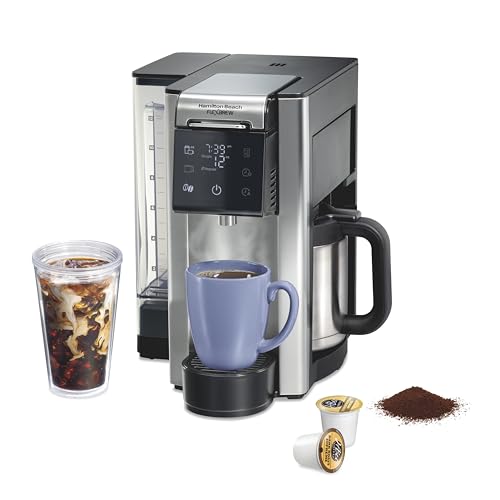
- Hamilton Beach FlexBrew Advanced 5-in-1 Drip and Single Serve Coffee Maker — 5-in-1 drip and single serve machine with a 12-cup thermal pot
- KRUPS 12-Cup Programmable Thermal Carafe Coffee Maker — 12-cup programmable thermal machine with 3 brew strengths
- Cuisinart 10-Cup Thermal Classic Coffeemaker (DCC-1170BKNAS) — 10-cup programmable thermal Classic coffeemaker in black
Read the full guide ↓
Introduction: Finding the Best dripping coffee makers
People searching for the best dripping coffee makers usually mean the classic drip brewer — the machine that showers hot water over a basket of grounds and lets gravity do the rest — and the word ‘dripping’ points at the part that decides the flavour. A drip that channels through one spot makes coffee that is somehow both weak and bitter; a drip that spreads evenly, at the right temperature, makes the same beans taste composed. This guide reads the six verified batch machines in this group through that lens: how each one delivers water, and what it does with the pot afterwards.
The shortlist is entirely thermal, which settles the holding question in favour of insulation over hot plates. Within it, personalities differ. The KRUPS offers three strengths for households that fine-tune. The white Cuisinart adds a small-batch setting and brew pause. The BUNN is built for speed. The CaféCraft covers iced coffee season. The 10-cup Cuisinart Classic trims the format for smaller households. And the Hamilton Beach FlexBrew bolts a single serve brewer onto a full drip pot for houses that cannot decide — a design explored further in our guide to Best Dual Brew Coffee Makers.
Everything here is research-led: specifications come only from each maker’s verified listing, checked on 2026-11-20, and this guide invents no prices, ratings or test claims. Where a listing is quiet about a feature, the review says so rather than filling the gap. If your household’s real question is the pot itself rather than the drip, our companion guide to Best Drop Coffee Makers approaches the same category from the single-cup side.
Key Takeaways
- Even, hot, well-spread dripping is what separates a good pot from a sour-bitter one — shower design and temperature matter more than feature counts.
- Best all-round drip machine: the BLACK+DECKER CaféCraft, for hot and iced pots in one programmable thermal brewer.
- Finest taste control: the KRUPS, with three brew strengths and a carafe specified to hold heat for four hours.
- All six picks hold coffee in thermal carafes; none parks it on a warming plate.
- Mixed pot-and-cup households should start with the FlexBrew Advanced 5-in-1.
- Descaling is the maintenance habit that protects brew temperature — and therefore flavour — more than any other single routine.
In this guide
Quick Picks
| Pick | Badge | Why it is here |
|---|---|---|
| BLACK+DECKER CaféCraft 12-Cup Thermal Coffee Maker | Best Overall | Hot pots all winter, iced coffee all summer, one programmable machine |
| Cuisinart 12-Cup Programmable PerfecTemp Thermal Carafe Coffee Maker (White) | Best for Mixed Pot Sizes | Small batches brewed properly, plus brew pause for the impatient first cup |
| BUNN 55200 CSB3T Speed Brew Platinum Thermal Coffee Maker | Fastest Brew | The fastest route from grounds to a full thermal pot |
| Hamilton Beach FlexBrew Advanced 5-in-1 Drip and Single Serve Coffee Maker | Most Versatile | A drip pot for the household, single serve for the individual |
| KRUPS 12-Cup Programmable Thermal Carafe Coffee Maker | Best Strength Control | Three strengths and a four-hour thermal carafe for slow mornings |
| Cuisinart 10-Cup Thermal Classic Coffeemaker (DCC-1170BKNAS) | Best Smaller Pot | The Classic 10-cup format for households that waste less |
How These Picks Were Chosen
Picks were verified against the makers’ own Amazon listings for this product group, checked on 2026-11-20, and only listing-confirmed specifications appear in this guide. Selection favoured machines that drip-brew a genuine batch, manage the fundamentals — water spread, temperature, strength control — and hold the result thermally. One dual-format machine, the FlexBrew Advanced, was included deliberately: its drip side is a full 12-cup thermal brewer in its own right, and it answers the many households whose drip-versus-single-serve debate is the real purchase question.
A note on method and honesty: this guide is built from verified product research, not from a bench of machines brewed side by side, and it makes no hands-on claims. Research can verify what a machine is, what its maker specifies, and how its design choices play out in daily use — and it can refuse to invent the rest. Fixed prices and star ratings are excluded on purpose, because both change constantly and a guide that prints them is quietly out of date the week it publishes. Check the latest price on Amazon when you are ready to buy.
The 6 Best dripping coffee makers Options, Reviewed in Detail

BLACK+DECKER CaféCraft 12-Cup Thermal Coffee Maker
Badge: Best Overall
Strengths
- Brews both hot pots and iced coffee, covering summer and winter routines in one machine
- 12-cup thermal carafe keeps a hot pot warm without a plate
- Programmable start suits weekday routines
Trade-offs
- Iced coffee from a drip machine still needs fridge or freezer planning for the best result
- A dual-mode machine has more settings to learn than a basic brewer
- Full-size footprint, like the other 12-cup models here
Key specs (from the verified listing)
- Capacity: 12 cups
- Carafe: thermal
- Modes: hot and iced coffee
- Programmable: yes
The CaféCraft adds one trick the other big thermal machines in this group do not claim: it is built for both hot and iced coffee. That sounds like a small thing until July, when a household that drinks a pot a day suddenly wants it cold. An iced mode on a drip machine typically brews a concentrated pot designed to pour over ice without tasting watered down, which is a far better result than refrigerating a normal pot and hoping. For the rest of the year it behaves as a conventional programmable 12-cup thermal brewer.
In daily use the appeal is consolidation: one machine on the counter instead of a drip brewer plus a separate cold-brew gadget. The programmable timer covers weekday mornings, and the thermal carafe covers slow weekends. The honest limitation is that dual-mode machines ask a little more of the user — you need to learn which mode you are in and set up ice before brewing, not after. Households that never drink iced coffee pay for a feature they will not touch, and the plainer BLACK+DECKER CM2046S in this guide may fit them better.
The CaféCraft’s year has two halves. From autumn to spring it is a programmable thermal pot machine like its sibling, and nobody thinks twice about it. From the first warm week, the iced mode starts earning its keep: brew the concentrated pot, pour over ice, and the household’s afternoon drink changes without a second appliance appearing on the counter. Owners should expect a small learning curve the first few iced brews — ice first, then brew, then taste and adjust — after which the routine is as automatic as the hot one.
Choose it if your kitchen’s coffee calendar has two seasons and you want one machine fluent in both.
Best for: households drinking hot pots and iced coffee across the year / Not suited for: households that never drink iced coffee

Cuisinart 12-Cup Programmable PerfecTemp Thermal Carafe Coffee Maker (White)
Badge: Best for Mixed Pot Sizes
Strengths
- The 1–4 cup setting makes small brews taste right in a big machine
- Brew pause lets you pour a first cup before the pot finishes
- Thermal carafe plus PerfecTemp brewing covers both extraction and holding
Trade-offs
- White finishes show coffee splashes more than black or steel
- Brew pause must be used briefly or the basket can overflow
- Still a full-size 12-cup machine on the counter
Key specs (from the verified listing)
- Capacity: 12 cups, with 1–4 cup setting
- Carafe: PerfecTemp thermal carafe
- Brew strength control: yes
- Brew pause: yes
- Finish: stainless steel and white
This Cuisinart solves the most common complaint about big drip machines: small pots taste wrong. Its 1–4 cup setting adjusts the brew for a partial batch, so a household that brews four cups on Tuesday and twelve on Saturday gets a fair extraction both days instead of a weak, rushed small pot. Add PerfecTemp hotter brewing, brew strength control and a thermal carafe, and you have the most flexible of the conventional drip machines in this group. The white and stainless finish also suits brighter kitchens where the black models look heavy.
Brew pause is the convenience feature everyone uses and should use carefully: it lets you pull the carafe and pour a first cup mid-brew, but leaving the carafe out too long risks an overflowing basket, so pour and replace promptly. The honest limitation is that flexibility is not free of complexity — there are more settings here than on the BUNN or the basic BLACK+DECKER, and a household that always brews the same full pot will use a third of them. For mixed-size households, though, this is the easiest machine in the group to recommend.
This machine’s daily gift is forgiveness. Brew four cups on a quiet morning and twelve for a houseful on Sunday, pull the carafe early for a first cup with brew pause, set the strength where the current beans taste best — it absorbs household variability instead of punishing it. The white finish does ask for a wipe when coffee splashes, a small tax for a bright kitchen. Households whose coffee life is predictable may never use its range; households whose life is not will wonder how simpler machines cope.
Choose it if your pot size is a daily variable — it is the most forgiving drip machine here.
Best for: households whose batch size changes daily / Not suited for: buyers who want zero settings to think about

BUNN 55200 CSB3T Speed Brew Platinum Thermal Coffee Maker
Badge: Fastest Brew
Strengths
- BUNN’s Speed Brew design is built around fast, ready-when-you-are brewing
- Thermal stainless carafe keeps the pot hot without a warming plate
- A 10-cup size suits households that found 12 cups slightly too much
Trade-offs
- No programmable delay-start is listed in its verified description, so it suits people who brew on demand
- Speed-focused designs trade some fine control for pace
- 10 cups is still a batch brewer, not a one-mug solution
Key specs (from the verified listing)
- Capacity: 10 cups
- Carafe: thermal, stainless steel
- Design: Speed Brew
- Finish: black with stainless steel
BUNN built its name in commercial coffee, and the Speed Brew idea carries that heritage into the kitchen: the machine is designed to be ready to brew quickly, so a pot starts when you want it rather than after a long warm-up. For households whose mornings are a scramble, that readiness is worth more than a timer. The 10-cup thermal carafe lands in a useful middle ground — big enough for a family breakfast or a small gathering, small enough that a two-person household can finish it while it still tastes fresh.
The stainless thermal carafe keeps coffee hot without a plate, following the same logic as the other thermal models here: hold heat with insulation, not with continued cooking. The honest limitation is control. The verified listing emphasises speed and the thermal carafe, not programmable starts or strength menus, so readers who love scheduling a pot the night before should look at the Cuisinart or BLACK+DECKER models instead. Readers who walk into the kitchen and want coffee started immediately, with no warm-up ritual, are exactly who this machine is for.
The BUNN’s personality is readiness. It suits the kitchen where someone decides coffee is needed and expects the pot to follow promptly, and where a 10-cup thermal carafe matches the household’s real appetite better than a 12-cup one. There is a commercial directness to the routine — fill, brew, pour — that many owners find refreshing after years of menu-diving on programmable machines. Keep it descaled so its pace does not sag, and it will keep its side of the bargain for years of fast mornings.
Choose it if the best drip is the one that starts now, not the one scheduled last night.
Best for: households that brew on demand and value speed / Not suited for: buyers who rely on a programmable timer
Hamilton Beach FlexBrew Advanced 5-in-1 Drip and Single Serve Coffee Maker
Badge: Most Versatile
Strengths
- A genuine two-format machine: a 12-cup thermal drip side plus single serve brewing
- Takes both pods and grounds on the single serve side
- A removable 60 oz reservoir feeds both sides and refills at the sink
Trade-offs
- The largest, most complex machine in this group — it needs real counter space
- Two brewing systems mean two sets of parts to clean
- Households that only ever brew one format pay for the other in size and cost tier
Key specs (from the verified listing)
- Design: 5-in-1 drip and single serve
- Drip side: 12-cup thermal, programmable
- Modes: hot and iced coffee
- Inputs: pods and grounds
- Reservoir: removable, 60 oz
The FlexBrew Advanced is the one machine in this group that refuses to make you choose. One side is a proper 12-cup thermal programmable drip brewer for the household pot; the other brews a single cup from pods or grounds when only one person wants coffee. A shared removable 60 oz reservoir feeds both, which is a quietly excellent design decision: one tank to fill at the sink instead of two, and no plumbing gymnastics on a crowded counter. Hot and iced modes on top make it the most versatile verified machine in this guide by a wide margin.
That versatility is also the honest limitation. Two brewing systems mean two baskets, two drip paths and more descaling and cleaning than any single-format machine here, and the footprint is the biggest in the group. A household that brews a pot every morning and a single cup every afternoon will use all of it and love it. A household with one fixed habit should buy the simpler machine that does that habit perfectly and keep the counter space.
Living with the big FlexBrew means organising two small routines instead of one: grounds and a carafe on the drip side, pods and a mug on the single serve side, one shared reservoir over both. Households that take a week to build those habits tend to keep them, because the machine absorbs the household’s whole coffee argument — the pot person and the pod person both win, daily. The cost is counter space and a slightly longer cleaning session, which owners consistently describe as the rent the versatility charges.
Choose it if half your household drinks by the pot and half by the cup, and the counter must hold one machine.
Best for: households split between pot drinkers and single-cup drinkers / Not suited for: small counters

KRUPS 12-Cup Programmable Thermal Carafe Coffee Maker
Badge: Best Strength Control
Strengths
- Three brew strengths give finer taste control than a simple bold button
- The double-wall thermal carafe is specified to keep coffee hot for 4 hours
- 24-hour programming covers next-day scheduling properly
Trade-offs
- No warming plate means the carafe alone carries heat-holding — pre-warming it helps
- Three strengths are one more setting to learn for new users
- A 12-cup batch machine, like most of this group
Key specs (from the verified listing)
- Capacity: 12 cups
- Programmable: 24-hour programmable
- Brew strengths: 3 strengths
- Carafe: double-wall thermal carafe, keeps coffee hot 4 hours
- Warming plate: none
KRUPS takes the thermal-carafe formula and adds the two refinements experienced drip drinkers ask for: three brew strengths instead of a single bold toggle, and full 24-hour programmability. The strength range matters because beans vary — a light roast often wants the gentler end to keep its brightness, a dark roast the stronger end to keep its body — and one machine that serves a mixed-preference household needs that span. The double-wall thermal carafe is specified to keep coffee hot for four hours, which covers a long work-from-home morning from a single brew.
There is deliberately no warming plate, and the guide counts that as a feature: plates keep coffee hot by slowly ruining it, while insulation simply slows the cooling. The honest limitation follows from the same design — once the carafe’s stored heat is spent, there is no plate to rescue a forgotten pot, and pre-warming the carafe with hot water before brewing genuinely helps on cold mornings. For households that brew on a schedule and drink over hours, this is one of the most complete packages in the group.
The KRUPS rewards the household that treats coffee as a small daily craft. Three strengths sounds like a minor specification until two drinkers with opposite tastes share one pot: the middle setting becomes the treaty, and the ends serve the days when one of them brews alone. Its four-hour carafe suits the long, grazing morning — the work-from-home pot poured across a whole project — and the absence of a warming plate means hour four tastes like hour one, which is the entire point of the design.
Choose it if you adjust strength by bean and by mood, and your mornings run long.
Best for: long, slow mornings and strength fine-tuning / Not suited for: households that finish a pot within the hour, every hour

Cuisinart 10-Cup Thermal Classic Coffeemaker (DCC-1170BKNAS)
Badge: Best Smaller Pot
Strengths
- A 10-cup thermal format trims the waste of 12-cup machines for smaller households
- Programmable start keeps the weekday routine automatic
- Part of Cuisinart’s long-running Classic thermal line
Trade-offs
- Fewer headline features in its verified listing than the PerfecTemp models
- 10 cups may still be more than a solo drinker needs
- Black finish only in this verified listing
Key specs (from the verified listing)
- Capacity: 10 cups
- Carafe: thermal
- Programmable: yes
- Model: DCC-1170BKNAS
- Finish: black
Not every household needs twelve cups, and this Cuisinart is the group’s reminder that smaller can be smarter. A 10-cup thermal carafe serves a family breakfast comfortably while leaving less coffee to go stale on an ordinary Tuesday, and coffee that gets finished tastes better than coffee that gets stored. The programmable timer keeps the set-it-the-night-before routine that makes drip machines so easy to live with, and the Classic name reflects a long-running, straightforward design rather than a novelty.
In practice this is the pick for households that want the thermal-carafe benefits — no plate, no stewed second hour — in a slightly trimmer format, from a maker whose drip machines they may already know. The honest limitation is that its verified listing is quieter about extra features than the PerfecTemp models above: no strength menu or small-batch setting is claimed here, so readers who brew widely varying pot sizes should compare the 12-cup PerfecTemp Cuisinart carefully before choosing. For a steady household routine, the simplicity is the point.
The Classic’s appeal is that it disappears. Ten cups, a timer, a thermal carafe, a black finish that matches everything — it is the machine for households that want drip coffee handled, not discussed. Its quieter listing means fewer levers to pull, and for a steady routine that is a feature: the same pot, brewed the same way, tasting the same every morning. Owners stepping up from a glass-carafe machine will notice the thermal difference most in the last cup, which no longer tastes like it waited on a hot plate.
Choose it if ten cups is your household’s honest number and you want a proven, simple format.
Best for: smaller households that finish a 10-cup pot happily / Not suited for: large families and frequent entertainers
Comparison Table
| Pick | Badge | Format at a glance | Amazon |
|---|---|---|---|
| BLACK+DECKER CaféCraft 12-Cup Thermal | Best Overall | 12-cup thermal drip, hot and iced, programmable | Check on Amazon |
| Cuisinart PerfecTemp 12-Cup (White) | Best for Mixed Pot Sizes | 12-cup thermal drip, 1–4 cup setting, brew pause | Check on Amazon |
| BUNN CSB3T Speed Brew Platinum | Fastest Brew | 10-cup thermal drip, speed-focused | Check on Amazon |
| Hamilton Beach FlexBrew Advanced 5-in-1 | Most Versatile | 12-cup thermal drip plus single serve | Check on Amazon |
| KRUPS 12-Cup Thermal Carafe Coffee Maker | Best Strength Control | 12-cup thermal drip, 3 strengths, 24-hour programmable | Check on Amazon |
| Cuisinart 10-Cup Thermal Classic (DCC-1170BKNAS) | Best Smaller Pot | 10-cup thermal drip, programmable | Check on Amazon |
How to Choose the Right Machine Among the Best dripping coffee makers
Start with the pot, not the machine. Count the mugs your household actually drinks on a normal morning, in 12 oz terms, and compare that with the cup capacities quoted for these machines — remembering that a coffee maker’s ‘cup’ is a smaller measure than a kitchen mug. A 12-cup machine serves a family or a small office comfortably; a 10-cup model suits two to four drinkers; and anyone brewing for one should ask whether a pot is the right format at all. The best dripping coffee makers in this guide are batch machines first, and choosing the right batch size is the decision everything else hangs on.
Next, decide how the coffee will be held. Every headline pick here uses a thermal carafe rather than a glass pot on a warming plate, and that is deliberate. A plate keeps coffee hot by continuing to heat it, which steadily dulls and bitters the flavour; an insulated double-wall carafe simply slows cooling, so hour-two coffee tastes like hour-one coffee, only slightly cooler. If your household drinks a pot within half an hour, a glass carafe is fine in principle — but none of the verified picks here relies on one, which tells you where the market’s centre of gravity now sits.
Then look at how the machine handles taste. Brew strength control — a bold setting, or three strengths on the KRUPS — changes how long and how thoroughly water works through the grounds, and it is the cheapest flavour upgrade in drip coffee because it costs no extra beans. Small-batch settings matter just as much in the other direction: a 1–4 cup mode, like the one on the white Cuisinart, stops a half pot from brewing weak and fast. Programmability is a lifestyle feature rather than a taste feature — valuable if your mornings run on rails, irrelevant if they do not.
Finally, think about the counter and the cleaning. A 12-cup thermal machine needs cabinet clearance to open its lid and lift its basket, and thermal carafes need hand washing more often than glass pots to keep the interior free of coffee oils. For dripping machines specifically, weigh the shower and temperature story — PerfecTemp, VORTEX and Speed Brew are three different answers to the same physics — above cosmetic features. None of these machines asks for plumbing, pods or proprietary parts, which keeps the running story simple: paper or reusable filters, beans, water, and a descale every few months depending on your water.
One more consideration separates satisfied owners from returners: how the machine behaves in its second year, not its first week. Look for a carafe and basket you can actually clean properly, a reservoir or water path you can see into, and controls you can operate before coffee — which is to say, half asleep. The best dripping coffee makers in this guide were all chosen with that unglamorous test in mind. A machine that is easy to live with gets maintained; a machine that gets maintained keeps brewing coffee that tastes the way it did on day one; and that chain, more than any single feature, is what you are really buying.
How to Get the Drip Right: Setup, Daily Brewing and Troubleshooting
Set up on day one in this order. Rinse the carafe and basket, run one full cycle of plain water to clear the machine, then brew your first real pot at a sensible starting ratio — about one to two tablespoons of ground coffee per six ounces of water — and adjust from there rather than guessing daily. If your machine is programmable, set the clock first and the brew timer second; most ‘the timer did not work’ stories are clock stories. Pre-warming a thermal carafe with a rinse of hot tap water on cold mornings genuinely improves how long the pot stays hot.
For daily brewing, the routine that produces consistent pots is boring on purpose: fresh water, the same dose, grounds spread evenly in the basket, and the carafe seated properly so the brew-through lid opens. Pour the first cup only when the cycle finishes, unless your machine has a brew pause feature — and if it does, keep the pause short, because the basket keeps filling while the carafe is away. When the pot is done, the coffee’s best window is the next couple of hours even in a thermal carafe; after that, brew fresh rather than reheating, which always tastes like a compromise.
Cleaning decides how a drip machine tastes in month six. Rinse the carafe and basket daily, wash the carafe with a bottle brush and a little dish soap weekly to strip coffee oils, and descale on the maker’s schedule or whenever brews slow down and sputter — mineral scale insulates the heating element and drags brew temperature down, which is a common hidden cause of sour pots. Problem: coffee tastes weak and sour → check the dose first, then the small-batch setting, then descale. Problem: coffee overflows the basket → the carafe was not seated, the pause ran too long, or the grounds are too fine. Problem: the pot cools too fast → pre-warm the carafe and keep the lid closed between pours.
Keep a small log for the first fortnight if your household is particular: dose, strength setting, and a one-word verdict per pot. Coffee memory is famously unreliable, and the log turns vague impressions into two or three clear adjustments. After the fortnight, tear the page out — the routine should be automatic by then, and the machine should have become what good kitchen equipment becomes: invisible infrastructure that the morning quietly depends on.
What ‘Dripping’ Really Decides: Water Spread, Temperature and Time
Strip a drip machine to its physics and three variables decide the cup. First, spread: water must wet the whole bed of grounds, because dry pockets contribute nothing and over-soaked channels contribute bitterness. Shower designs with names — VORTEX on the BLACK+DECKER, the spray arrangements on the Cuisinarts — exist to solve exactly this. Second, temperature: water that arrives too cool cannot extract the compounds that make coffee taste sweet and full, which is why Cuisinart’s PerfecTemp hotter-brewing claim is a flavour claim, not a comfort claim. Third, contact time: strength settings and small-batch modes are really time managers, slowing or organising the drip so the water and grounds spend the right minutes together.
None of this requires laboratory equipment to benefit from. It requires choosing a machine whose design takes the three variables seriously, then feeding it consistent doses and fresh water. Readers who want the pot-side view of the same machines will find it in our guide to Best Dual Purpose Coffee Makers, where several of these brewers reappear in a mixed-format household context.
Why This Shortlist Holds Coffee Thermally — and What That Asks of You
Every machine here drips into an insulated carafe, and the reason is the second half of the drip story: what happens after brewing is as important as the brewing itself. A warming plate is a slow cooker for finished coffee. An insulated carafe is a thermos. The KRUPS listing puts a number on it — its double-wall carafe keeps coffee hot for four hours — and while other makers do not quote a figure in their verified listings, the design principle is identical across the group.
The owner’s side of the bargain is small but real: pre-warm the carafe on cold days, brew amounts you will finish, and wash out coffee oils weekly so yesterday’s film does not season today’s pot. Households that also want a thermal carafe on a dual-format machine can compare notes in our guide to Best Dual Function Coffee Makers With Thermal Caraffe.
From Drip to Cup: A Short Tasting Routine for a New Machine
When a new drip machine arrives, resist the urge to judge it on the first pot. Run the maker’s rinse cycle, brew one pot at your usual dose, and taste it at three moments: immediately, after half an hour in the carafe, and after an hour. That simple exercise teaches you more about your machine than a week of random brewing — you learn its extraction character while the coffee is fresh, and you learn its carafe’s holding character across the morning. Adjust one variable at a time afterwards: dose first, then strength setting, then grind if you grind your own.
Keep brief notes for the first week if your household has opinions; coffee memory is unreliable and ‘Tuesday was better’ is usually a dose difference nobody recorded. Within a fortnight the machine’s settings become the household standard and the experimenting stops — which is the goal. A drip machine is not a hobby unless you want it to be; it is infrastructure, and good infrastructure disappears into the morning. Households comparing this infrastructure with flexible single serve designs can continue in our guide to Best Dual Purpose Coffee Makers.
Common Buying Mistakes
The most common mistake is buying capacity for the biggest day of the year. A machine sized for holiday guests brews oversized, half-wasted pots for the other 360 days, and coffee that sits is coffee that stales. Size for the ordinary week and let guests drink in two quick brews — a fast machine makes the second pot painless.
The second mistake is treating a thermal carafe like a storage jar. Insulation slows cooling; it does not stop time, and yesterday’s coffee reheated this morning will taste like it. The third mistake is ignoring water: heavily chlorinated tap water makes expensive beans taste ordinary, and hard water scales the machine until brew temperatures sag. A simple filter jug and a descale rhythm fix both for very little money.
Finally, shoppers often pay for the wrong extras. A long feature list matters less than the two or three behaviours you will use daily — for most households that is a timer, a strength setting and a carafe that pours cleanly. Read feature lists against your actual routine, not against the longest list in the category.
One further mistake deserves its own paragraph because it is so easy to make: judging a machine by its first pot. New machines carry manufacturing residues that the rinse cycle exists to remove, new owners dose by guesswork, and beans bought for the occasion are unfamiliar. Give any machine in this guide a week of ordinary mornings before forming a verdict. Most ‘bad machine’ stories are actually ‘first three days’ stories, and most genuinely good machines only reveal themselves once the routine settles and the coffee becomes the morning’s background rather than its project.
Final Recommendation
The first choice for most readers is the BLACK+DECKER CaféCraft: a programmable 12-cup thermal drip machine that also handles iced coffee, covering the widest range of real household routines in this group. If your household fine-tunes flavour, take the KRUPS for its three strengths and four-hour carafe; if it brews in a hurry, take the BUNN.
The white Cuisinart is the answer for variable pot sizes, the 10-cup Classic for smaller households that hate waste, and the FlexBrew Advanced for homes where the drip pot shares duty with single cups. All six drip a genuine batch and hold it thermally — the rest is matching the machine to the morning.
Start your shortlist here: BLACK+DECKER CaféCraft 12-Cup Thermal Cuisinart PerfecTemp 12-Cup (White) BUNN CSB3T Speed Brew Platinum.
Frequently Asked Questions
Is a thermal carafe really better than a glass carafe on a warming plate?
For flavour over time, yes. A warming plate keeps coffee at temperature by continuing to heat it, which gradually makes it taste bitter and stewed. A thermal carafe insulates instead, so the coffee cools slowly without cooking. If a pot is always finished within about half an hour, the difference is small; for pots that last a morning, it is the single biggest quality decision in drip coffee.
How long does coffee stay hot in a thermal carafe?
It depends on the carafe and how full it is. One verified pick in this guide, the KRUPS, is specified to keep coffee hot for four hours thanks to its double-wall carafe. As a rule, a full, pre-warmed thermal carafe keeps coffee pleasantly hot far longer than a half-full, cold-started one, which is why brewing the right amount matters.
What does brew strength control actually change?
It changes how the machine manages the brew — typically slowing or pulsing the water flow so it spends more time in contact with the grounds — which produces a bolder, more extracted cup from the same dose of coffee. It is the first lever to try when a pot tastes thin, before adding more grounds.
Can I brew a half pot in a 12-cup machine?
Yes, but use the machine’s small-batch setting if it has one, like the 1–4 cup setting on one Cuisinart here. Without it, a small amount of water rushes through a wide basket and under-extracts. Dose the coffee for the water you are actually brewing, not for the machine’s full capacity.
How often should I descale a drip coffee maker?
Follow the maker’s guidance, and descale sooner if brews slow down, sputter or start tasting sour — all signs that mineral scale is dragging the brew temperature down. Households with hard water will descale several times a year; soft-water households far less often.
Do programmable timers affect coffee quality?
Only indirectly. Ground coffee left sitting in the basket overnight loses some aroma before the timer ever fires, so the freshest programmable pot uses beans ground as late as practical. The timer’s real gift is reliability: coffee that is ready when you are is coffee you actually drink at home.
Why does my drip coffee taste different from the café’s?
Usually three fixable reasons: the dose is lower at home, the water is heavily treated tap water, or the machine has scaled up and is brewing cooler than it should. Raise the dose slightly, try filtered water for a week, and descale — in that order — before blaming the beans or the machine.
How long should a good coffee maker last?
With descaling on schedule and ordinary care, a well-kept machine in this category should serve for years of daily use. The two habits that decide longevity are unglamorous: keep mineral scale from building up in the water path, and do not leave wet grounds sitting in the basket for days, which corrodes parts and flavours everything brewed afterwards. Treat the machine like the daily infrastructure it is, and it repays the attention quietly, pot after pot, cup after cup.


