Disclosure: As an Amazon Associate, Reviews Took earns from qualifying purchases. Links to Amazon on this page are affiliate links; they cost you nothing extra.
Many suit dry grains only.
This guide is built from Amazon product listings and maker specs, not our own testing, so confirm size, contents and current price on each product page.
Check price on Amazon for the current price on each listing.
Last updated: November 2, 2026.
In this guide
Quick Picks
| Product | Type | Best for |
|---|---|---|
| Kitchen Mill – Electric Grain Mill – High Speed Wheat | Electric grain mill | milling flour at home |
| VEVOR Electric Grain Mill Grinder 3400W 2500G Spice Corn Dry | Electric grain mill | milling flour at home |
| 2000g Electric Grain Grinder Spice Grain Mill Stainless Steel | Electric grain mill | milling flour at home |
| Electric Grain Grinder Mill 1000g High-speed Spice Herb Mill | Electric grain mill | milling flour at home |
| VEVOR Electric Grain Mill Grinder 1.8 lbs Commercial Spice Grinders | Electric grain mill | milling flour at home |
| Grain Mill Grinder 750g High Speed Electric Stainless Steel | Electric grain mill | milling flour at home |
Our Picks

Top pickBest for milling flour at home
1. Kitchen Mill – Electric Grain Mill – High Speed Wheat
A Kitchen Mill – Electric Grain Mill – High Speed Wheat (electric grain mill), per the listing. Check price on Amazon.
Good for: milling flour at home. Watch out: Check suitable grains.

Best for milling flour at home
2. VEVOR Electric Grain Mill Grinder 3400W 2500G Spice Corn Dry
A VEVOR Electric Grain Mill Grinder 3400W 2500G Spice Corn Dry (electric grain mill), per the listing. Check price on Amazon.
Good for: milling flour at home. Watch out: Check suitable grains.
Best for milling flour at home
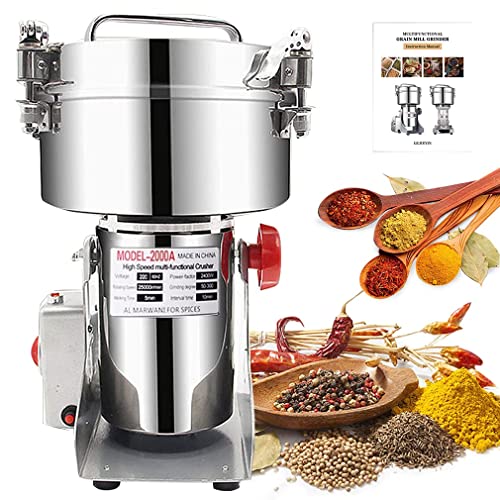
3. 2000g Electric Grain Grinder Spice Grain Mill Stainless Steel
A 2000g Electric Grain Grinder Spice Grain Mill Stainless Steel (electric grain mill), per the listing. Check price on Amazon.
Good for: milling flour at home. Watch out: Check suitable grains.

Best for milling flour at home
4. Electric Grain Grinder Mill 1000g High-speed Spice Herb Mill
An Electric Grain Grinder Mill 1000g High-speed Spice Herb Mill (electric grain mill), per the listing. Check price on Amazon.
Good for: milling flour at home. Watch out: Check suitable grains.

Best for milling flour at home
5. VEVOR Electric Grain Mill Grinder 1.8 lbs Commercial Spice Grinders
A VEVOR Electric Grain Mill Grinder 1.8 lbs Commercial Spice Grinders (electric grain mill), per the listing. Check price on Amazon.
Good for: milling flour at home. Watch out: Check suitable grains.
Best for milling flour at home
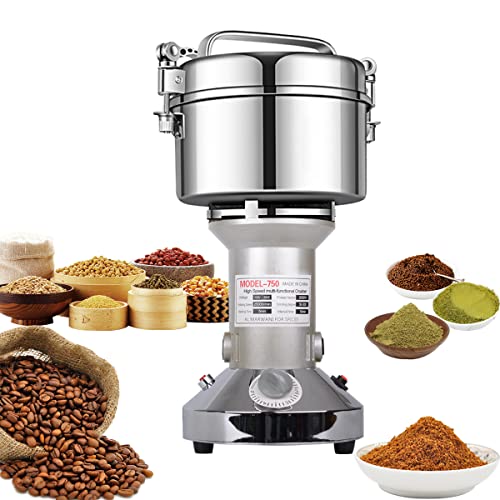
6. Grain Mill Grinder 750g High Speed Electric Stainless Steel
A Grain Mill Grinder 750g High Speed Electric Stainless Steel (electric grain mill), per the listing. Check price on Amazon.
Good for: milling flour at home. Watch out: Check suitable grains.
Best Picks by Category
These labels summarize listing data and are not hands-on test results.
- Top rated: VEVOR Electric Grain Mill Grinder 1.8 lbs Commercial Spice Grinders — a budget-tier pick; check price on Amazon.
- Most reviewed: 2000g Electric Grain Grinder Spice Grain Mill Stainless Steel.
- Best value: Grain Mill Grinder 750g High Speed Electric Stainless Steel — a mid-range pick; check price on Amazon.
- Lowest price: VEVOR Electric Grain Mill Grinder 1.8 lbs Commercial Spice Grinders — a budget-tier pick; check price on Amazon.
- Premium option: Kitchen Mill – Electric Grain Mill – High Speed Wheat — a premium-tier pick; check price on Amazon.
Price, Rating and Review Comparison
The table compares the picks by price tier. Check price on Amazon for the current price.
| Product | Price | Rating | Ratings | Price tier |
|---|---|---|---|---|
| VEVOR Electric Grain Mill Grinder 1.8 lbs Commercial Spice Grinders | Check price on Amazon | — | — | Budget |
| Grain Mill Grinder 750g High Speed Electric Stainless Steel | Check price on Amazon | — | — | Mid-range |
| VEVOR Electric Grain Mill Grinder 3400W 2500G Spice Corn Dry | Check price on Amazon | — | — | Mid-range |
| Electric Grain Grinder Mill 1000g High-speed Spice Herb Mill | Check price on Amazon | — | — | Mid-range |
| 2000g Electric Grain Grinder Spice Grain Mill Stainless Steel | Check price on Amazon | — | — | Premium |
| Kitchen Mill – Electric Grain Mill – High Speed Wheat | Check price on Amazon | — | — | Premium |
How Much Feedback Backs Each Rating
A high average from a handful of ratings is weaker evidence than a slightly lower average from thousands. Here is how the sample size looks for each pick.
- Kitchen Mill – Electric Grain Mill – High Speed Wheat: Check the listing on Amazon for current feedback.
- VEVOR Electric Grain Mill Grinder 3400W 2500G Spice Corn Dry: Check the listing on Amazon for current feedback.
- 2000g Electric Grain Grinder Spice Grain Mill Stainless Steel: Check the listing on Amazon for current feedback.
- Electric Grain Grinder Mill 1000g High-speed Spice Herb Mill: Check the listing on Amazon for current feedback.
- VEVOR Electric Grain Mill Grinder 1.8 lbs Commercial Spice Grinders: Check the listing on Amazon for current feedback.
- Grain Mill Grinder 750g High Speed Electric Stainless Steel: Check the listing on Amazon for current feedback.
How to Choose
Size
Check the max pizza or capacity size.
Fuel and power
Match fuel or power to where you cook.
Cleaning
Removable parts make cleanup easier.
Grinding Mechanisms Compared
Electric grain mills do not all work the same way, and the mechanism affects the flour you get. High-speed mills with hammers or blades spin at speed and break dry kernels into powder. They are usually compact and fast, and they suit dry grains, beans and spices in small batches. They can run warm during longer sessions, and the resulting grind can be uneven if the machine is run too briefly or overloaded.
Stone and burr mills crush grain between two hard surfaces and often allow you to adjust the gap, so you can choose a coarse cracked grain or a fine flour. They tend to be larger, heavier and more expensive. Read the listing to see which type you are looking at, because the word grinder is used for both. Many compact models sold as grain grinders are of the high-speed type.
Think about what you want to produce. If you mostly make pancakes, bread and general baking flour, ask whether the machine can produce flour fine enough for your recipes. If you also want cornmeal or coarse cereal, check whether the machine has adjustable coarseness or only a single setting. Some mills can handle spices and herbs too, though flavors can linger in the chamber, so check cleaning guidance.
What You Can and Cannot Grind
Grain mills are made for dry, hard materials. Wheat, rice, corn, oats, barley and many dry beans are typical examples. Moisture is a problem. Damp grains can clump, clog the chamber and make a mess. Make sure grain is completely dry before milling, and store it in sealed containers away from humidity.
Oily or sticky ingredients are a common mistake. Nuts, seeds high in oil, and some spices can gum up the grinding chamber, and a paste forms instead of a powder. Some listings say a machine is suitable only for dry ingredients and name materials to avoid. Take those notes seriously, since the maker knows the limits of the mechanism. When unsure, grind a small amount first and check the manual.
Size of the kernel also matters. Large or very hard items may not fit the feeding chute or may strain the motor. Remove stones, twigs and foreign matter from whole grains before milling, because a hard particle can damage the burrs or blades. Pre-sorting grain by hand or with a sieve is a cheap precaution. Never force material through the machine, and never put your hand into the chamber.
Capacity, Batch Size and Run Time
Capacity figures in listings usually refer to how much the container holds or how much the machine can process per batch. A higher number does not mean you must grind that much each time. Home bakers who mill fresh for each bake need only small batches, while someone supplying a family or a small shop may want more. Fresh flour is best used soon after milling, so a small, quick mill often suits household use better than a very large one.
Many high-speed mills are designed for short bursts and need rest periods to avoid overheating. Check the manual or listing for the maximum continuous run time, and plan for pauses between batches. If you plan to mill large quantities, look for descriptions of heat protection or longer duty cycles.
Throughput also depends on how fine you want the flour. A finer grind generally takes longer or needs a second pass. Some people sift the flour afterward to separate coarse bits and regrind them. Think about whether you want to keep the bran, in which case whole-grain flour will be coarser and heavier than store-bought white flour. Recipes may need adjusting for hydration, and bread made with fresh whole-grain flour may be denser at first.
Noise, Dust and Kitchen Setup
Grain mills are loud. A high-speed motor produces a high-pitched whirr, and some people use hearing protection or run the machine at hours when others are not disturbed. Check the listing for any noise information, though keep in mind that figures are the maker’s own and conditions vary. A stable base with rubber feet helps cut vibration noise.
Fine flour dust is another factor. Some mills have a collection container with a tight seal, while others blow flour into a bowl or bag. Look at how the output is collected, and think about where you will place the machine. A counter near an outlet with space around it works best. Wipe up flour dust, and avoid breathing it in. People with respiratory sensitivities should be cautious and may wish to wear a mask.
Check the electrical details. Make sure the power rating fits your household circuit and that the plug suits your outlet. Keep the cord away from water and hot surfaces. Use the machine on a stable, dry surface, and unplug it before cleaning or clearing a jam. Do not leave it running unattended. Check that the lid locks securely, because a poorly seated lid can leak flour or allow access to moving parts.
Storing Flour and Keeping the Mill Clean
Fresh flour behaves differently from commercial flour. Whole-grain flour contains the germ, which has natural oils that can go rancid over time. Store it in airtight containers, in a cool place, and consider the refrigerator or freezer if you do not use it quickly. Label the container with the grain type and date. Milling only what you need is the simplest way to keep flour fresh.
For cleaning, follow the manual. Many mills should not be washed with water if the grinding chamber is not designed for it, since moisture can cause rust or clumping. A soft brush and a dry cloth are the usual tools. Remove all flour from the chamber after each use so old powder does not harden or go stale. If you mill spices, clean thoroughly between uses so that flavors do not carry over into baking flour.
Inspect the machine periodically. Look for loose fittings, worn seals, cracks in the container and any damage to the cord. A grinding sound that changes, a burning smell or a drop in output may mean a blocked chamber or worn parts. Stop using it and check the manual. Look into whether replacement parts are sold by the maker and what the warranty covers.
Matching Grains to Your Baking Goals
An electric grain mill is only as useful as the flour it lets you bake with, so it helps to think backward from the loaf, pancake or tortilla you want. Different grains behave very differently once ground, and a mill that handles one well may be a poor fit for another.
Hard wheat for bread, soft wheat for tender bakes
Hard wheat varieties carry more protein, which turns into gluten when mixed with water. That makes them the standard choice for yeast bread, pizza dough and bagels. Soft wheat is lower in protein and suits biscuits, cakes, muffins and pie crust, where a tender crumb matters more than chew. If you bake mostly bread, buy hard wheat berries and do not worry about the rest. If you bake a mix, many home millers keep both on the shelf and blend them for all-purpose results.
Whole grain behaves differently from white flour
Flour straight from a mill is whole grain: it contains the bran and germ that commercial white flour removes. Bran particles cut through gluten strands, so whole wheat dough often rises less and can feel denser. Many bakers handle this by adding a little extra water, letting the dough rest before kneading, or replacing only part of the white flour at first. Expect to adjust recipes rather than swap them one for one.
Other grains worth considering
- Corn: dry field corn or popcorn makes cornmeal and grits, but the kernels are hard, so check that your mill is rated for it.
- Rice: white and brown rice make gluten-free flour for some recipes, though brown rice is oilier and stores less well once ground.
- Oats: hulled groats can be milled into oat flour, but the flakes sold for oatmeal are already processed and may clump in a mill.
- Spelt, rye and barley: popular for flavor, but each needs the right recipe, and rye in particular makes sticky dough.
Sourcing and Preparing Grain Before It Reaches the Hopper
What goes into the hopper matters as much as the machine. A good mill can be damaged, or can produce gritty flour, if the grain is wet, dirty or mixed with foreign objects.
Buying clean, dry grain
Look for grain sold for milling or human consumption, typically described as clean and sold in food-grade bags or buckets. Animal feed grain is cheaper but often carries more dust, weed seeds and small stones. Even with food-grade grain, it is sensible to pour it onto a light-colored tray before milling and look for pebbles, husks and stray seeds. A single small stone can chip a burr or jam a blade, which is far more expensive than a minute of inspection.
Moisture is the quiet problem
Grain that feels cool or slightly tacky, or that has been stored in a humid room, may be too damp to mill properly. Damp kernels smear instead of shattering, which clogs the chamber and can strain the motor. Grain stored in a sealed container in a cool, dry place is usually fine. If you are unsure, spread a small amount on a baking sheet at room temperature for a few hours before milling. Do not heat it in an oven to dry it, since that can alter the flour.
Storing the grain itself
Whole kernels last far longer than flour because the oils in the germ are protected by the hull. Airtight food-grade buckets with gasketed lids are the usual solution for bulk purchases, and many households add oxygen absorbers for long storage. Whatever you use, keep it off the garage floor and away from heat sources, and label the container with the grain type and purchase date.
Power Draw, Circuits and Safe Operation
Some mills in this guide list high wattage figures, and that deserves attention before you plug one in. A standard North American kitchen outlet typically sits on a 15 or 20 amp circuit, and everything running on that circuit shares the available load. A mill drawing a large share of it, plus a toaster or kettle on the same line, can trip a breaker.
- Run the mill on its own outlet when you can, and avoid extension cords or power strips, which can overheat under motor loads.
- Check the label on the mill for its rated voltage and make sure it matches your outlet.
- Keep liquids and spills away from the base and the power cord.
- Keep hands, utensils and spoons out of the grinding chamber while it is running.
- Switch off and unplug before cleaning or clearing a jam.
Fine flour dust is also worth respecting. In industrial settings, suspended grain dust can ignite, and while a home mill does not produce that kind of volume, a dusty, enclosed space is still unpleasant to breathe. Milling in a ventilated room and letting the dust settle before opening the collection container keeps the mess down and is easier on your lungs.
Who Should Buy an Electric Mill and Who Should Skip One
Milling at home is satisfying, but it is not for everyone, and being honest about your habits will save money.
Good fits
- People who bake bread at least weekly and want control over the flour.
- Households that already buy whole grains in bulk and want a way to use them.
- Cooks who want fresh spices, cornmeal or specialty flours for particular recipes.
- Small food hobbyists who value variety over convenience.
Probably not worth it
- People who bake only a few times a year, since a bag of store-bought flour is cheaper and simpler.
- Those with very little storage, because the mill, grain and containers all need space.
- Anyone unwilling to clean the machine and adjust recipes for whole-grain flour.
- Buyers who want a fine, white, sifted flour with no effort; home mills generally do not produce that without sifting.
If you are in the middle, start with a small hopper-size mill and one or two grains. You can learn how your recipes respond before committing to a larger machine, and the lessons carry over to whichever mill you eventually settle on.
From Grain to Loaf: Planning a Milling Routine That Fits Your Baking
An electric mill changes your baking logistics, so plan the routine rather than milling at random. Start from the loaf backwards: decide what you will bake this week, calculate the flour it needs, and mill in one session slightly more than that amount, keeping a small reserve of whole grain rather than a large reserve of flour. Fresh flour is at its best soon after milling, and whole berries store far better than flour does, so the mill’s convenience is best used little and often rather than in rare, huge batches.
Build milling into an existing kitchen rhythm. Many bakers mill while the oven preheats or while a dough from the previous batch proofs, so the extra step never feels like a separate chore. Weigh the grain before milling and the flour after, at least in the first weeks, and note the difference your sifting choices make. Those small records turn guesswork into a repeatable system, and repeatability is what home baking, like milling itself, is really made of.
Expect your recipes to need small adjustments with freshly milled flour. Whole grain flour absorbs water differently from refined flour and behaves differently again when it is freshly ground, so hold back a little liquid, watch the dough rather than the clock, and adjust across bakes. Bakers who treat the first few loaves as calibration, and write down what changed, end up with house recipes tuned to their grain, their mill and their oven, which no bought flour can ever match.
Troubleshooting Texture: Gritty, Gummy and Dense Results
When home-milled baking disappoints, the flour is usually blamed first, but the causes are worth separating. Gritty texture in a finished loaf often means the grind was too coarse for that recipe, or that bran needed sifting and regrinding, or a longer soaking or autolyse to soften it. Electric mills of the high-speed type in this guide produce a particular flour character, and recipes developed for stone-milled or roller-milled flour may need that extra hydration time to come right. Patience in the bowl fixes what force at the mill cannot.
Gummy crumb points elsewhere: underbaking, slicing too soon, or too much water for the flour’s actual absorption. Fresh whole grain flour can feel thirsty in the bowl and still produce a wet crumb if the loaf is cut while steam is still settling. Cool loaves fully before slicing, and if gumminess persists, reduce liquid slightly and extend the bake. Dense results, meanwhile, usually trace to fermentation rather than milling: whole grain doughs ferment differently, and a starter or yeast schedule tuned for white flour often needs more time or warmth with fresh whole grain.
The habit that resolves all three is changing one variable per bake and keeping notes. Mill a touch finer, or soak longer, or bake five minutes more, but not all three at once, or you will never know which change worked. Within a few weeks of this method, most bakers find their mill’s flour stops being unpredictable and becomes simply their flour, with characteristics they can bake around confidently.
Milling Beyond Wheat: Rice, Corn, Legumes and Spices
The machines in this guide are bought for wheat but earn their keep across the pantry, within the limits the earlier sections set out. Rice grinds into flour for batters, coatings and gluten-free baking, and dried corn becomes meal for cornbread and polenta-style dishes, provided the corn is properly dry. Work in modest batches, let the machine rest as its duty guidance requires, and expect these harder, drier materials to be noisier and slower than wheat. Sieve and regrind the coarse fraction rather than forcing a finer setting in one pass.
Dried legumes such as chickpeas and lentils produce useful flours for flatbreads, batters and thickening, but they are demanding on any mill and should be attempted only where the manufacturer’s guidance allows them, in small quantities, with rest periods. Oily materials remain the hard boundary for these machines, as the earlier section explains: nuts, oily seeds and damp ingredients belong to other tools. Respecting that boundary is what keeps a mill’s motor and grinding surfaces healthy for the grains it was built for.
Spices are the happiest sideline. Small batches of dried spices grind fresh with an aroma that pre-ground jars cannot match, and the mill’s speed makes light work of quantities a mortar would take ages over. Grind spices after, not before, a flour batch if you want the flour untainted, or dedicate a quick wipe-down between jobs, since spice oils carry flavour into the next batch. Many owners find this secondary use becomes a weekly pleasure in its own right.
Noise, Dust and Heat: Managing the Mill’s Side Effects
High-speed electric mills are loud, dusty and warm-running, and planning for all three makes them far pleasanter to live with. For noise, mill at sociable hours, stand the machine on a solid surface that does not amplify vibration, and consider where the sound travels in your home. Short, planned milling sessions are easier on everyone’s ears than one enormous batch, which aligns neatly with the little-and-often routine that fresh flour prefers anyway.
Dust control is mostly about sequence and containment. Fill and empty the chamber over the bowl or bin that will receive the flour, open the machine carefully after a run rather than immediately, and let the finest dust settle for a moment before tipping out. A quick wipe of surrounding surfaces after milling keeps flour dust from building up in the kitchen, and milling away from open flames and the hob is a basic precaution, since airborne flour dust and ignition sources are a combination to avoid on principle.
Heat is the machine’s own concern. The motors in these grinders work hard, and the run-and-rest pattern in the manufacturer’s guidance is what keeps them alive. If the housing grows very hot or the smell changes, stop and let it cool fully rather than finishing the batch. Splitting a large quantity into rested intervals takes a little longer and is vastly cheaper than a burnt-out motor. Owners who respect these three side effects, rather than fighting them, keep their mills for years.
Choosing Among the Mills Above for Your Kitchen and Appetite
The mills in this guide divide mainly by capacity and intended workload, so start with an honest estimate of your weekly flour use. A household baking one or two loaves a week is well served by the smaller machines, which store easily and handle domestic batches comfortably. Their limitation appears only when you ask them to behave like commercial equipment, milling continuously for a large family or a market stall, which is a job for the larger models and a different budget.
The big, high-capacity machines suit bakers who mill for many mouths, grind spices in quantity, or want the shortest possible milling session for a large batch. Their size, noise and storage demands are the trade-off, so measure the cupboard or counter they will live in before ordering, and be realistic about lifting and cleaning a heavier unit. A mill that is awkward to reach gets used less, and an unused mill, however powerful, mills nothing.
Across all six options, the deciding questions are the same: what will you grind, how much, how often, and how fine do you need it. Read the individual reviews with your answers listed, respect the limits on oily and damp materials, and plan the rested, batched routine described above. Chosen that way, an electric mill stops being a gadget and becomes the foundation of a baking habit that bought flour quietly cannot replicate.
Setting Up a Milling Station in a Working Kitchen
Where the mill lives decides how often it is used. It needs a stable surface at a comfortable height, a socket it can use without unplugging half the kitchen, and storage nearby for grain, bowls and a scale. Milling produces flour dust, so a station away from open cooking and from the fruit bowl is kinder to everyone. Many bakers settle on a single counter corner that becomes the milling and dough station together, keeping the whole grain-to-loaf workflow in one place.
Keep the supporting kit together: the scale, a jug for grain, the bowl the flour lands in, and a brush for the machine. A station that assembles in seconds gets used on a Tuesday; a station that requires a cupboard excavation gets used monthly. The mills above vary in size considerably, so let your station’s real dimensions, measured, have a vote in the choice between them.
Understanding Extraction: Whole Flour, Sifted Flour and Blends
Freshly milled flour gives you a choice bought flour hides: how much of the grain ends up in this bake. Used whole, the flour brings full flavour and nutrition and a heartier texture. Sifted, with some bran removed, it bakes lighter and rises more easily, closer to the behaviour of commercial flour while keeping a freshness no bag can match. Blending the two, or blending fresh flour with a portion of strong bought flour, lets you tune a recipe to the loaf you want rather than accepting a single manufacturer’s decision.
Keep the sifted bran rather than discarding it: it enriches porridge, muffins and the next wholegrain loaf, and it can be soaked and added back to doughs where its texture is welcome. Milling households develop a small economy around these fractions, and that economy is part of the pleasure of the process. Experiment per recipe, note the results, and your house style will emerge from the notes.
Starters, Preferments and Fresh Flour
Bakers who use sourdough starters or preferments will find fresh flour changes their timing. Whole, freshly milled flour ferments vigorously, feeding cultures generously and sometimes shortening schedules that were calibrated on aged, refined flour. Watch the dough rather than the clock in the first weeks with a new mill, and feed starters with the same flour you bake with so the culture adapts to its actual diet. The liveliness is a gift once it is understood and a surprise only while it is not.
For yeasted baking, the same principle applies in miniature: fresh whole flour may proof faster and absorb water on a delay. Adjust one variable, keep notes, and let a month of bakes recalibrate your instincts. This learning curve is sometimes misreported as fresh flour being unpredictable. It is entirely predictable; it is simply a different ingredient from the one in the bag, and it rewards the baker who treats it as such.
Milling for Households With Dietary Projects
Many mills are bought for a dietary purpose: gluten-free baking for a family member, whole grain for health, or fresh spice grinding for a particular cuisine. For gluten-free households, the discipline that matters is cross-contamination: a mill that has ground wheat cannot produce safe flour for a coeliac diet without the most rigorous cleaning, and most such households dedicate the mill to gluten-free grains entirely. Decide that dedication before the first grind, not after, and label the machine’s role in the kitchen clearly.
For general whole-grain baking, the mill’s contribution is freshness and control rather than magic: you choose the grain, the grind and the extraction, and you know exactly what is in the flour. That control, sustained over months of ordinary baking, is the real return on the purchase, and it is available from every machine in this guide used within its limits.
Cleaning Day: A Deeper Routine for Mill and Station
Beyond the daily brush-out, give the mill and its station a deeper clean on a rhythm that suits your use. Empty and wipe the chamber and any removable parts exactly as the manufacturer allows, check for flour compacted in corners where it can stale or harbour pests, and inspect the cord and housing while you work. Flour dust settles everywhere in a milling corner, so wipe the station’s surfaces and the tops of nearby jars; a clean station is also a pest-discouraged station.
Store grain with the same vigilance: sealed containers, cool and dry, checked periodically, with older stock used first. The finest mill cannot rescue grain that was stored badly, and most off-flavours blamed on machines trace back to the bin. Cleaning day, done monthly and briefly, protects the whole chain from grain store to loaf, which is the chain this guide has been describing all along.
Grain Sourcing: Buying Well From Mills, Farms and Shops
Fresh flour begins with grain bought well. Look for grain sold as clean and dry, intended for milling or food use, from suppliers who can tell you what variety it is and where it grew. Variety matters to flavour and baking character more than most beginners expect, and once your mill and routine are settled, trying a second variety of wheat is the cheapest experiment in all of baking. Store each variety separately and labelled, because their behaviour in dough differs and your notes should know which grain produced which loaf.
Buy in quantities your household will use while the grain is at its best, stored as the storage guidance describes. Grain keeps far better than flour, but it is not immortal, and a sensible rotation, oldest stock milled first, keeps flavour high and waste at zero. A household that mills weekly will find its natural order size within a couple of months, and buying to that rhythm, rather than to bulk temptation, is the economical pattern.
Frequently Asked Questions
Is it easy to use?
Most are simple with a short learning curve.
What do I need extra?
A peel and a thermometer help.
Is it safe?
Follow the maker instructions.
Can I grind wet or damp grain in an electric mill?
No. Electric grain mills are designed for dry grain, and moisture causes clumping and clogging. Dry the grain completely first and store it in a sealed container.
Can I grind nuts or oily seeds?
Usually not in a mill built for dry grain, because oils make a paste that clogs the chamber. Check the listing and manual for what the maker says is suitable.
Why does my mill get hot?
High-speed motors and friction generate heat, especially in long runs. Many mills need rest periods between batches. Follow the manual and let it cool.
How fine can I expect the flour to be?
It depends on the mechanism and settings. Some mills have adjustable coarseness while others have a single grind. Check the listing and consider sifting if you want a finer result.
Is freshly milled flour better?
Many bakers enjoy the flavor of freshly milled flour, and it lets you pick the grain. It also needs careful storage because whole-grain oils can spoil. Mill what you need and store it airtight.
Can I wash the grinding chamber?
Only if the manual says it is safe. Many chambers should be cleaned dry with a brush and cloth. Water can cause rust or clumping.
How do I protect the motor?
Do not overload the hopper, respect the run-time limits, and remove stones and hard debris from grain first. Let the machine cool between batches. Stop if you hear unusual noises.
How much wheat do I need to mill for one loaf of bread?
A typical sandwich loaf uses roughly three to four cups of flour, and wheat berries expand slightly when ground, so plan on a little less than that by volume in whole grain. Weighing is more accurate than measuring cups. Many bakers mill a bit extra so there is room to adjust the dough.
Can electric grain mills grind rice, beans or dried corn?
Some can, but it depends on the mill and its stated limits. Dry field corn and white rice are common, while beans and oily or damp items strain many models. Always check the manufacturer’s list of approved grains before trying something new, because grinding unsupported items can jam the chamber or overheat the motor.
Should I sift freshly milled flour?
It depends on the recipe. Sifting removes some of the larger bran flakes and gives a lighter result, which many bakers prefer for cakes and softer breads. Leave it unsifted for hearty loaves. If you sift, the bran can be saved and added to muffins, pancakes or granola instead of being thrown away.
How long should freshly milled flour rest before baking?
Many bakers use it right away, and others let it rest a day or two so the flour absorbs moisture more evenly and the dough behaves more predictably. There is no universal rule. If your first loaves feel gummy or hard to shape, try a resting period and compare the results.
Bottom Line
Check what grains and power each mill supports.
More Kitchen Guides
- Best Manual Grain Mills
- Best Indoor Electric Pizza Ovens
- Best Pizza Stones for Home Ovens and Grills