Disclosure: As an Amazon Associate, Reviews Took earns from qualifying purchases. Links to Amazon on this page are affiliate links; they cost you nothing extra.
Check temperature control and drip tray.
This guide is built from Amazon product listings and maker specs, not our own testing, so confirm size, contents and current price on each product page. Health products are for general information and are not medical advice.
Check the current price on Amazon.
Last updated: November 2, 2026.
In this guide
Quick Picks
| Product | Type | Best for |
|---|---|---|
| VEVOR Commercial Electric Griddle 22″ Countertop Flat Top Griddle | Electric griddle | breakfast for a crowd |
| Presto 07062 22-Inch Ceramic Electric Griddle with Removable | Electric griddle | breakfast for a crowd |
| Chefman Electric Griddle with Removable Temperature Control | Electric griddle | breakfast for a crowd |
| Chefman Electric Panini Press Grill Compact 2-Slice Sandwich | Electric griddle | breakfast for a crowd |
| DASH Family Size Electric Skillet with Lid 6-Quart Ceramic Navy | Electric griddle | breakfast for a crowd |
| bella 10″x20″ Ceramic Griddle with Warming Tray 1500W Non-Toxic | Electric griddle | breakfast for a crowd |
| Amazon Basics Electric Griddle with Nonstick Ceramic Coating | Electric griddle | breakfast for a crowd |
| Chefman XL Electric Griddle with Removable Temperature Control | Electric griddle | breakfast for a crowd |
Our Picks

Top pickBest for breakfast for a crowd
1. VEVOR Commercial Electric Griddle 22″ Countertop Flat Top Griddle
A VEVOR Commercial Electric Griddle 22″ Countertop Flat Top Griddle (electric griddle), per the listing. Check price on Amazon.
Good for: breakfast for a crowd. Watch out: Check size and cleanup.
Best for breakfast for a crowd
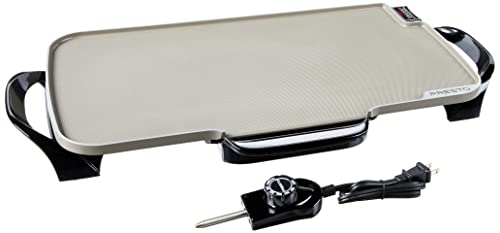
2. Presto 07062 22-Inch Ceramic Electric Griddle with Removable
A Presto 07062 22-Inch Ceramic Electric Griddle with Removable (electric griddle), per the listing. Check price on Amazon.
Good for: breakfast for a crowd. Watch out: Check size and cleanup.
Best for breakfast for a crowd
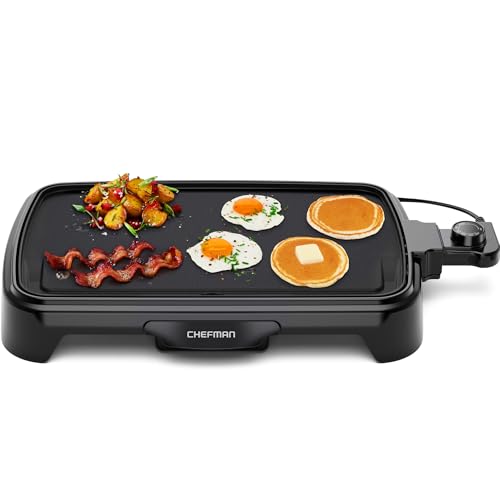
3. Chefman Electric Griddle with Removable Temperature Control
A Chefman Electric Griddle with Removable Temperature Control (electric griddle), per the listing. Check price on Amazon.
Good for: breakfast for a crowd. Watch out: Check size and cleanup.

Best for breakfast for a crowd
4. Chefman Electric Panini Press Grill Compact 2-Slice Sandwich
A Chefman Electric Panini Press Grill Compact 2-Slice Sandwich (electric griddle), per the listing. Check price on Amazon.
Good for: breakfast for a crowd. Watch out: Check size and cleanup.

Best for breakfast for a crowd
5. DASH Family Size Electric Skillet with Lid 6-Quart Ceramic Navy
A DASH Family Size Electric Skillet with Lid 6-Quart Ceramic Navy (electric griddle), per the listing. Check price on Amazon.
Good for: breakfast for a crowd. Watch out: Check size and cleanup.

Best for breakfast for a crowd
6. bella 10″x20″ Ceramic Griddle with Warming Tray 1500W Non-Toxic
A bella 10″x20″ Ceramic Griddle with Warming Tray 1500W Non-Toxic (electric griddle), per the listing. Check price on Amazon.
Good for: breakfast for a crowd. Watch out: Check size and cleanup.

Best for breakfast for a crowd
7. Amazon Basics Electric Griddle with Nonstick Ceramic Coating
An Amazon Basics Electric Griddle with Nonstick Ceramic Coating (electric griddle), per the listing. Check price on Amazon.
Good for: breakfast for a crowd. Watch out: Check size and cleanup.

Best for breakfast for a crowd
8. Chefman XL Electric Griddle with Removable Temperature Control
A Chefman XL Electric Griddle with Removable Temperature Control (electric griddle), per the listing. Check price on Amazon.
Good for: breakfast for a crowd. Watch out: Check size and cleanup.
How to Choose
Size and capacity
Pick a size that fits your household.
Power and speed
Check wattage and settings.
Cleaning
Removable, dishwasher-safe parts help.
Griddle or skillet: which shape suits you
Electric cooking surfaces come in two broad shapes, and the right one depends on what you cook most.
- Flat griddles have little or no sidewall. They are ideal for pancakes, eggs, bacon, grilled sandwiches, and smash burgers because you can slide a spatula in freely.
- Deep skillets have higher sides and often a lid. They handle stir-fry, braising, sauces, and anything that splatters or needs steaming.
- Reversible or two-sided plates offer a smooth side and a ridged side, which adds some versatility but also adds cleaning and storage considerations.
If you feed a crowd on weekend mornings, a large flat surface helps. If you cook one-pan dinners, a deeper skillet may be more useful. Check the listing for the cooking area and sidewall height before deciding.
Nonstick coatings and how to protect them
Nonstick surfaces make cooking and cleanup easier, but they wear out faster when misused. Details vary by product, so follow the care notes in the manual.
- Use silicone, nylon, or wooden utensils. Metal tools can scratch the surface.
- Avoid cooking sprays that can leave a sticky buildup; a small amount of oil or butter is usually better.
- Do not overheat an empty surface for long periods.
- Let the plate cool before washing to avoid thermal stress.
- Do not use abrasive pads or harsh cleaners.
Signs the coating is failing include flaking, deep scratches, or food that suddenly sticks everywhere. At that point, it is time to replace the unit. Check the listing for what the coating is and any care limits.
Temperature control and heat distribution
An electric griddle is only as good as its heat. Look for a clear, adjustable temperature control rather than a simple low-medium-high dial if you plan to cook different foods.
- A removable probe or thermostat control usually keeps heat steadier than a fixed element.
- Edges tend to run cooler than the center on many designs, so use the hotter zone for searing and cooler edges for keeping food warm.
- Preheat fully before adding food, since adding food too soon leads to uneven browning.
- Thicker plates tend to hold heat better, but they also take longer to heat up.
If you notice hot and cold spots, rotate food during cooking. Read the listing for wattage and any temperature range, but treat these as general guides and not as proof of performance.
Grease management and cleanup
Grease handling is a major quality-of-life feature. A slight slope toward a drip channel and a removable catch tray keep bacon fat and burger grease off the counter.
- Check that the tray is easy to remove and empty, and that its size suits how much you cook.
- Look for a detachable power cord or removable plate if you want an easier wash. Never immerse parts that contain electrical components unless the manual says it is safe.
- Wipe the surface while it is still warm, not hot, with a soft cloth or paper towel.
Pour grease into a container and throw it away rather than down the drain. A stubborn residue can usually be softened with warm water on the surface before wiping. Store the griddle flat, and avoid stacking heavy items on top of it.
Counter space, storage and electrical load
Electric griddles are bigger than they look in photos. Measure your counter and your storage spot before buying, including the cord and any lid.
- Large surfaces are great for families but can be awkward to store.
- Models with legs or a flip-up design can save space, though check how stable they are.
- These appliances draw significant power, so plug directly into a wall outlet and avoid sharing a circuit with other high-wattage items.
- Keep the unit on a heat-resistant, stable surface with space around it.
Ask yourself how often you will use it, how many people you cook for, and whether you have room to leave it out. A smaller unit that gets used beats a large one that stays in the cabinet.
Getting Even Results: Preheating, Heat Zones and Timing
Most disappointing griddle meals come from impatience at the start and overcrowding in the middle. Electric surfaces heat through a thermostat that cycles the element on and off, so the display or dial reaching its target does not always mean the whole plate is evenly hot. Give the surface several extra minutes after the indicator light says it is ready, and the metal will even out.
Preheating also depends on size. A large flat plate, like the 22 inch models in this guide, can run hotter near the element and cooler at the corners. Many cooks treat this as a feature, using one side for searing and the other side for keeping food warm. To learn your own plate, lay a thin layer of pancake batter or a few slices of bread across the entire surface and see which areas brown first. That quick map tells you where to place the items that cook fastest and where to park finished food.
Fat helps. Even surfaces sold as nonstick brown more evenly with a light film of oil or a small pat of butter, and the fat carries heat between the plate and the food. Wipe on a thin layer with a paper towel instead of pouring it, which keeps oil from pooling and smoking in low spots.
Crowding is the second culprit. Cold food dropped onto a hot plate lowers its temperature, and the more you load, the longer the plate takes to recover. Cook in waves, starting with items that need the most heat, then moving to gentler ones. Leave a gap between pieces so steam can escape; otherwise sausages and vegetables steam instead of browning.
A Week of Meals Beyond Pancakes and Bacon
A griddle earns counter space when it handles dinner as well as brunch. Here is how its flat, wide surface helps with different meals.
- Breakfast for a crowd. Pancakes, French toast, eggs, hash browns and sausage can all cook at once on a large plate, and the whole family eats together.
- Sandwich night. Grilled cheese, quesadillas and melts brown evenly on a flat surface. A compact press, like the panini press in this guide, handles two sandwiches at a time.
- Smash burgers and cheesesteaks. A wide, hot plate suits smashed patties and sliced steak with onions.
- Stir-fry style dinners. Rice, vegetables and diced chicken cook well in batches. An electric skillet with a lid and higher sides, like the DASH listing, is more comfortable for saucy dishes.
- Vegetables and fruit. Peppers, zucchini, onions and pineapple slices caramelize nicely.
- Kid projects. Quesadillas and crepes are forgiving, though adults should handle the hot surface and cord.
The skillet shape works differently. With a lid and deeper walls, it braises, simmers and fries, so a one-pan pot of chili or a chicken-and-rice dish fits. A flat griddle plate is shallow by design, and liquid spills over the edge if you try to stew there.
Food Safety and Temperatures Worth Knowing
Griddles make it easy to cook by eye, but safe doneness depends on internal temperature. The United States Department of Agriculture recommends cooking poultry to 165 degrees Fahrenheit, ground beef and pork to 160, and whole cuts of beef, pork and fish to 145 with a rest period. An inexpensive instant-read thermometer settles the question without cutting into the meat.
Keep raw and cooked foods apart. Use a clean spatula and plate for cooked chicken, and avoid placing it back where the raw version sat. If you cook bacon first, wipe or drain the plate before the next item, since leftover grease raises smoke and flavors everything that follows. Do not leave food sitting on a warm but off griddle for hours; reheat or refrigerate leftovers within two hours.
Electrical safety deserves a moment too. Place the unit on a dry, stable, heat-resistant surface, keep the cord out of walkways, and avoid extension cords with a lower rating than the appliance. High-wattage griddles share the kitchen circuit with other appliances, and running a toaster oven and a griddle on the same outlet strip risks a tripped breaker. Always let the plate cool before cleaning, and remove the temperature probe or controller, if detachable, before washing the body.
Budget vs Premium: Where the Money Goes
The eight products here span budget-friendly to more premium tiers, and the differences trace back to a handful of real factors.
Size and power are first. A larger plate and a higher-wattage element cost more to build, and a commercial-style griddle, like the VEVOR listing, is aimed at heavier use than a small family model. Construction comes next: thicker plates hold heat longer and warp less, while thin ones respond faster but cool quickly when food is added. Product listings seldom spell out plate thickness, so reviews that mention warping or hot spots are worth reading.
Coatings and cleanup features also add cost. Ceramic nonstick coatings, as on the Presto, bella and Amazon Basics listings, are marketed as an alternative to traditional nonstick, though all coatings wear with use. A removable temperature probe makes the plate easier to wash, and a fully immersible design allows more thorough cleaning. A drip tray or warming tray adds convenience, as with the bella listing.
What the money rarely buys is longevity by itself. Looking after a cheap griddle well, with wooden or silicone tools, gentle cleaning and no dry overheating, can outlast a pricey one that is scraped with metal. Match the purchase to how often you will cook: a weekly brunch tool does not need commercial features, while a daily household might justify a sturdier plate.
Troubleshooting Common Griddle Problems
Food browns on one side but stays pale on the other, which usually means a hot spot. Rotate items halfway through, or move them to the cooler side to finish. Smoke is often caused by too much oil, a plate set above the oil's smoke point, or old residue burning off, so wipe the surface, lower the temperature and ventilate. If the surface develops a sticky, tacky film after cleaning, that is polymerized oil; a gentle scrub with warm water and a soft sponge removes it, and a drop of vinegar can help.
If the unit does not heat, verify that the probe is fully seated, since many models will not heat unless the controller is firmly inserted. Check the outlet with another appliance, and inspect the cord for damage. Stop using any appliance with a frayed cord, loose connection or cracked housing.
Accessories, Storage and Extras Worth Having
A griddle works better with a few inexpensive tools nearby. A wide silicone or nylon spatula slides under pancakes and eggs without scratching the surface, and a flexible scraper clears stuck bits when the plate is still warm. Heat-resistant tongs handle bacon and vegetables, and a squeeze bottle gives you a controlled thin line of oil or batter. A basting cover or a lid, if the model fits one, traps steam to melt cheese or finish thick burgers.
Plan where the appliance will live. Many people keep a griddle on a counter near an outlet during the week and slide it into a cabinet afterward. Check the dimensions on the listing, including the height with the lid and the clearance for the cord and handles. Look for cord storage and a design that lets you hold the unit upright if space is tight. A model with a removable probe stores flatter and is easier to carry.
Finally, think about the surface it sits on. Heat and steam can mark some countertops, so a trivet or heat-resistant mat under the legs protects the finish. Keep the griddle away from the edge of the counter, especially in a home with children, and never leave it unattended while hot. Allow the plate to cool fully before putting it away.
Flat Tops, Skillets and One Panini Press: Reading This Mixed List Clearly
This guide’s eight picks are not all the same appliance wearing different badges. Most are flat electric griddles, from the VEVOR commercial plate and the large Presto and Chefman XL models down to the compact bella and Amazon Basics entries. The DASH family skillet is a different tool, a deep electric pan with a lid that braises and simmers as well as fries, and the Chefman panini press is a third tool again, built for sandwiches rather than open cooking. Comparing them fairly means deciding which of those three jobs your kitchen actually needs done. A household chasing weekend breakfasts for six wants the biggest flat surface it can store. A household that cooks one-pan dinners wants the skillet’s depth and lid. A household whose real gap is lunches wants the press, and no amount of griddle excellence substitutes for it.
Within the flat griddles, size is the honest dividing line. The large plates cook a family’s pancakes in one pass and give eggs, bacon and vegetables separate zones; the compact plates suit couples, small kitchens and anyone who will store the griddle in a drawer or a narrow cupboard. Warming trays, like the one on the bella model in this list, sound minor and prove genuinely useful when a batch must wait for late risers. Removable temperature probes, common across the Presto and Chefman designs, decide whether the plate can be immersed or must be wiped, which in turn decides how the griddle ages in a real kitchen.
Heat zones and the myth of the single temperature
A big griddle is really two or three cooking zones wearing one dial. The centre above the element runs hottest, the edges run cooler, and good griddle cooking exploits that geography instead of fighting it. Bacon and burgers belong in the hot middle, eggs and delicate items towards the edges, and finished food can rest in the cool corners while the next batch cooks. Once you start cooking by zones, a large plate stops being a blunt instrument and becomes the most flexible surface in the kitchen. This is also why preheating evenly and giving the plate a few minutes to stabilise matters more than the exact dial number: you are managing a landscape of heat, not a point of it.
A Breakfast System, Not Just a Breakfast
The owners who love these appliances most tend to run a system rather than a recipe. Batter mixed the night before, bacon started first in the hot zone because it seasons the plate and takes longest, pancakes following in the rendered fat or on a lightly greased section, eggs last in the cool zone while the coffee finishes. The griddle’s size turns a juggling act at the hob into a single calm surface where everything is visible at once. For households with children, that visibility is a safety feature as much as a convenience: one appliance to watch, one hot zone to keep small hands away from, and no parade of pans crossing the kitchen.
The same system thinking extends past breakfast. Quesadillas for a crowd, grilled sandwiches, seared halloumi and vegetables, reheating pizza with its base re-crisped, warming tortillas while fillings cook beside them: a flat plate handles the wide, flat foods that pans ration into batches. Weeknight cooking speeds up simply because more of the meal fits on the heat at once. If your cooking is dominated by saucy, deep or liquid dishes, the skillet in this guide is the better expression of the same idea; if it is dominated by flat foods in quantity, the griddle is.
Looking after ceramic and nonstick surfaces
Most plates in this list wear ceramic or conventional nonstick coatings, and their lifespan is written by utensils and cleaning habits. Silicone, wood and nylon tools only; no metal spatulas, however careful you feel. Let the plate cool before washing so the coating is not shocked, and soak rather than scour when food has caught. Avoid aerosol cooking sprays, whose additives build a sticky film on nonstick surfaces that no washing quite removes; a thin wipe of oil on a paper towel does the same job cleanly. Store the plate with a cloth or a sheet of kitchen paper between it and anything stacked on top. Treated this way, a coating lasts for years of weekly use; treated carelessly, the same plate can be scratched and sticking within a season, and no warranty conversation will rescue it.
Grease, Smoke and the Indoor Reality
Cooking fatty food on an open plate indoors produces grease and aroma in equal measure, and managing both is part of owning a griddle happily. The drip trays and grease channels on the models in this guide need emptying before they overflow, ideally while the fat is still liquid and pourable into a container for the bin, never down the sink. Cooking near an extractor, or cracking a window, keeps the kitchen pleasant during a long bacon session. A splatter screen over the busiest zone saves the surrounding counter. None of this is difficult, but a buyer who imagines a griddle is as tidy as a lidded pan will be surprised, and the skillet pick in this list, with its lid, exists partly for them.
Electrical reality deserves the same honesty. These are high-draw appliances that want their own socket while they run, not a shared strip already carrying a kettle and a toaster. Give the plate its circuit space, keep the cord clear of the hot surface, and let the appliance cool fully before it is moved or stored. In homes with limited counter depth, measure before you buy: the largest plates in this guide are generous in both directions, and a griddle that overhangs the counter edge is a hazard as well as an eyesore. The tape measure is a recurring hero in this series of guides because it prevents the one disappointment no feature can fix, the appliance that does not fit the kitchen it was bought for.
Troubleshooting pale, steamed or uneven food
Food that steams instead of searing is almost always crowded or wet. A plate loaded edge to edge traps moisture, and the surface temperature falls faster than the element can restore it. Cook in a slightly smaller batch, pat wet ingredients dry, and let the plate recover its heat for a minute between loads. Pale pancakes with dark spots suggest a plate that was not fully preheated and stabilised. Eggs that spread and thin have met a plate that is not level, which matters in older houses with sloping counters more often than people expect; a small adjustment of position can cure it. Burgers that stick despite a nonstick surface were usually placed on a plate that was not yet hot, or moved too early before a crust formed to release them. Each of these faults has a technique answer, and learning them on your own plate takes two or three sessions at most.
More Questions Griddle Owners Ask
Can I cook frozen food straight on the griddle?
Yes for the flat, sturdy items these plates suit: frozen burgers, hash browns and breaded items cook well with a slightly longer time and one extra turn. Expect more spitting as ice meets hot fat, and keep the first batch smaller while you learn how your plate recovers its temperature. Delicate frozen fish and anything with a sugary glaze deserve more care and a lower setting. The griddle is forgiving, but frozen food tests its heat recovery more than any other job, which is another reason the larger, heavier plates in this guide feel calmer under load.
What is the warming tray actually for?
For the gap between cooking and eating that real households cannot avoid. Pancakes waiting for the last eggs, toast waiting for a late riser, tortillas waiting for fillings: a gentle warming zone holds them without continuing to cook them hard. It also corrals small items that would otherwise migrate around the counter. Owners often report it is the feature they mocked and then used daily, which is a common pattern with the small, practical details on the better picks in this list.
Griddle or large frying pan: which should a small household choose?
If the household cooks flat food for one or two and owns a good large pan, the pan may genuinely be enough, and the compact griddles here compete with it on evenness and batch size rather than on kind. The griddle wins when breakfasts stretch to guests, when several items must cook at once at different heats, and when the hob is busy or small. It loses on storage in a tiny kitchen. Answer by counting your largest regular cooking event, not your average one, because appliances earn their space at the extremes.
Whichever member of this mixed list you choose, let it settle into a routine: a regular breakfast, a regular weeknight job, a regular place to live. A griddle used weekly for years is one of the best-value appliances in this entire series; a griddle used twice is a large, flat regret. The difference is never the coating or the dial. It is the match between the plate and the household, made honestly at the moment of choosing.
The Skillet and the Press Deserve Their Own Moment
Because this list mixes three tools, the two minority picks deserve direct advice. The DASH family skillet, with its depth and lid, is really a small electric cooker: it fries, but it also simmers a chilli, braises chicken pieces, steams vegetables over a little water and keeps a stew warm at the table. Households short on hob space, students in limited accommodation and anyone cooking for a family in a caravan find that breadth more valuable than a flat plate’s area. Its ceramic surface follows the same care rules as the griddles: gentle tools, no thermal shock, soak rather than scour. If your cooking leans saucy, the skillet is not the compromise pick in this guide; it is the correct one.
The panini press plays a different game again. It compresses and grills sandwiches from both sides at once, which no flat griddle can imitate without weights and turning, and it doubles as a quick grill for small portions of halloumi, vegetables and thin cuts. Its plates are small by design, so it serves lunches and snacks rather than family breakfasts. A household that already owns a good griddle may still want the press for what it alone does; a household choosing only one appliance should let the dominant meal decide, breakfast pointing to the plate and lunch to the press. Reading a mixed list well means refusing to force every product into the same contest.
Storing a large plate in a small kitchen
Storage is where big griddles are won and lost. The large models in this guide store best vertically, like a tray, in a cupboard or beside the fridge, with the probe removed and the cord wrapped separately so it does not scratch the surface. Some owners keep the plate on the hob as a cover, which works only if the household remembers it is there before lighting a burner beneath it, a habit that must be absolute to be safe. Drawer storage suits the compact models and keeps them in the daily path. Before ordering the biggest plate your breakfasts dream of, walk its dimensions to the cupboard it would live in. If it fits with room to lift out easily, buy with confidence; if it needs a rearrangement you have postponed for a year, the mid-size picks in this list will serve you better and sooner.
Feeding a Crowd Without Losing Your Morning
The griddle’s finest hour is the houseful: grandparents, cousins, a team after a match. A little choreography turns the big plate into a production line. Set up a landing zone of warm plates, a bowl for cooked bacon to rest, batter in a jug for pouring rather than a bowl for ladling, and a clear order of cooking from longest to fastest so nothing waits raw while finished food cools. Recruit one helper for drinks and toast so the cook can stay at the plate. Cook bacon and sausages first and hold them warm, pancakes in rolling batches next, eggs absolutely last and served straight from the plate to the table. That order, plus the warming tray where your model has one, means everyone eats hot food together, which is the entire social point of the appliance.
Clean-up choreography matters as much when guests are present. Scrape the warm plate into the drip tray, wipe it down while it is still warm enough to release residue easily, and leave the full wash until the kitchen is yours again. A plate cleaned in the warm window takes a minute; the same plate left cold with set egg and bacon fat takes a soak and a mood. Owners who build that warm wipe into the end of every session find their coating lasts and their willingness to use the griddle stays high, because the appliance never becomes associated with a punishment wash. Small rituals, again, are what separate the loved appliance from the stored one.
A closing thought on value
Electric griddles ask little money for a lot of surface, and their value compounds with every gathering they simplify. Choose the shape that matches your meals, the size that matches your largest regular event and your cupboard, and the surface you are willing to treat gently. Do that, and any of the honest picks in this guide will pay you back in calm breakfasts and easy crowd-feeding for years, one flat, golden batch at a time.
One more habit separates confident griddle cooks from hesitant ones: they season the meal plan to the plate. When the week’s menu includes a stir-fry of flat vegetables, a batch of quesadillas or a pile of pancakes for the freezer, the griddle comes out once and does all of it in a single session, and the leftovers reheat on the same surface later in the week. Cooking in that rhythm, a household stops seeing the griddle as a breakfast appliance and starts seeing it as the kitchen’s wide, calm extra burner, which is precisely the role its designers intended and the role in which it earns its keep most completely.
So measure the cupboard, picture the crowd, and choose the plate that fits both. The first full breakfast you serve from it, with everything hot at once and the kitchen still calm, will confirm the decision more convincingly than any review could, including this one.
And if the choice still feels close between two sizes, take the one you can store without a struggle. A slightly smaller plate used weekly beats a larger one that needs a cupboard expedition, every single time, in every kitchen we have ever heard described.
Keep the probe and its cord together with the plate, keep a soft cloth in the same cupboard for the warm wipe, and the whole system stays effortless. Appliances rarely fail their owners in dramatic ways; they fade through small frictions, and every small friction in this category is one you can design out on the day the griddle arrives.
Design them out, then, and enjoy the simplest pleasure this appliance offers: a counter full of breakfast, cooked at one unhurried surface, while the rest of the kitchen stays clean and the cook stays part of the conversation.
That pleasure, repeated across birthdays, holidays and ordinary Saturdays, is what the owners of every well-chosen griddle in this guide are really describing when they say they would not be without theirs. Join them with the plate that fits your life, and the description will soon be yours as well.
Start this weekend if you can. Cook the breakfast you know best, learn your plate’s hot centre and cool corners, and write nothing down except, perhaps, the order that worked. The second session will already feel like a routine.
Routines are where appliances prove themselves, and few routines in the kitchen are as forgiving to learn, or as rewarding to repeat, as a griddle breakfast done your way.
By the fourth or fifth session you will be cooking by zones without thinking, seasoning the plate with the first batch and judging doneness by colour and sound. That is mastery of a simple tool, and it feels good every time.
It feels even better when the food lands on warm plates in front of people you like, all of it hot at once. Keep that picture in mind while you compare the picks above, and the right size and shape will identify itself.
Then buy that one, store it where your hand expects it, and let the breakfasts begin. The rest of this guide will be here when you want the finer points.
They are worth returning to after the first month, when your questions will be specific and your plate will have started teaching you its answers.
Until then, a hot plate, a jug of batter and people to feed are education enough.
Enjoy every batch of it, from the first experimental pancakes onward.
They only get better from there.
That improvement is the quiet reward of a simple appliance used often: the cook relaxes, the batches even out, and the griddle stops being equipment and becomes part of how the household eats together.
Frequently Asked Questions
Is it easy to use?
Most have simple controls.
What do I need extra?
Check included accessories.
Is it safe?
Follow the manual.
Can I use an electric griddle indoors and outdoors?
Most are designed for indoor countertop use only. Check the manual before taking one outside, and never use it in wet conditions.
What can I cook besides pancakes and bacon?
Eggs, grilled cheese, quesadillas, vegetables, fajitas, smash burgers, and fried rice all work well. Deeper skillets can also handle stir-fries and simmered dishes.
How hot should I set the griddle?
It depends on the food. Delicate foods like pancakes generally need moderate heat, while searing meat needs more. Consult the recipe and the manual for guidance.
Is it dishwasher safe?
Some removable plates and trays are, but many are not. Check the listing and the care guide, and when in doubt, hand wash.
Why is my food sticking to a nonstick surface?
Overheating, scratches, residue buildup, or a worn coating are common causes. Clean the surface gently, use a little fat, and replace the unit if the coating is damaged.
Can I leave it plugged in after use?
It is safer to unplug it and let it cool completely before cleaning and storing. Follow the manufacturer's instructions.
How long does an electric griddle take to preheat?
Most take roughly five to ten minutes, depending on size and wattage. An indicator light may turn off before the plate is evenly hot, so wait a few more minutes. Test with a drop of water or a small bit of batter before loading the full surface.
Can I use metal utensils on a nonstick electric griddle?
It is best to avoid them. Metal spatulas can scratch and wear nonstick and ceramic coatings, which shortens their life. Use silicone, nylon or wooden tools, and check the maker’s instructions, since some surfaces claim greater scratch resistance than others.
Is an electric griddle better than a stovetop griddle pan?
An electric griddle gives you a larger flat surface with adjustable, thermostat-controlled heat, which suits batches and crowds. A stovetop pan takes less storage space and can get hotter for searing. Choose electric for convenience and volume, and stovetop for compact kitchens.
How do I clean burnt-on residue from an electric griddle?
Let the plate cool until warm, not hot, then loosen residue with a splash of hot water or a damp cloth to create steam. Scrub gently with a soft sponge or nylon scraper. Avoid steel wool and abrasive powders, and dry the plate before storing.
What temperature should I cook eggs and bacon on a griddle?
Many cooks set eggs near 300 degrees Fahrenheit and bacon around 325 to 350, but griddles run differently, so adjust by sight. Lower heat prevents rubbery eggs, while bacon needs steady heat to render fat. Start low, test a small amount, then increase.
Bottom Line
Large griddles cook many items at once.
More Kitchen Guides
- Best Disposable Parchment Air Fryer Liners
- Best Belgian and Mini Waffle Makers
- Best Cold Press and Citrus Juicers
- Best Programmable Slow Cookers
- Best Multi-Cookers for Home Kitchens
- Best Immersion Circulators for Sous Vide
- Best Ninja and Black+Decker Food Processors
- Best Automatic Bread Makers