Descaling removes the mineral scale that builds up inside an espresso machine as hot water runs through it. Scale slows flow, hurts heating and can shorten the life of the machine, so regular descaling matters, especially in hard water areas.
The six products below include liquid and powder descalers, some made for specific brands. We have not used these products ourselves, so confirm every detail on the current listing before you buy. Always follow your machine’s manual first, since some makers advise against certain acids or require their own descaler.
As an Amazon Associate we earn from qualifying purchases. Links below are affiliate links, and they do not change the product information we give.
What to Look For
| Feature | Why it matters |
|---|---|
| Compatibility | Check your machine’s manual for approved descalers |
| Form | Liquids are easy to pour; powders store longer |
| Active ingredient | Citric, lactic and other acids behave differently |
| Pack size | Match the quantity to how often you descale |
In this guide
Specs at a Glance
| Descaler | Form | Brand focus | Notes |
|---|---|---|---|
| De’Longhi EcoDecalk | Liquid descaler | De’Longhi machines | Sold in small bottles |
| Durgol Swiss Espresso | Liquid descaler | Many automatic machines | Made for espresso machines |
| Urnex Dezcal | Powder descaler | Many machine types | Mixed with water |
| Nespresso Descaling Kit | Liquid kit | Nespresso machines | Single-use bottles |
| Keurig Descaling Solution | Liquid descaler | Keurig brewers | Pour-in bottle |
| Gaggia Decalcifier | Liquid descaler | Gaggia machines | Made for Gaggia |
The 6 Best Espresso Machine Descaling Kits
Top pickBest for de’Longhi owners
1. De’Longhi EcoDecalk
A descaling solution made by De’Longhi for its own espresso machines. It is a natural pick if your machine carries that brand and the manual recommends it. Follow the dilution and cycle steps in your manual, and rinse well afterward. Check the current listing for the bottle count in the pack.
Suits: De’Longhi owners. Strengths: made for De’Longhi machines. Weaknesses: it may not suit every other brand. Skip it if you own a different brand.
View De’Longhi EcoDecalk on Amazon

Best for general espresso machine use
2. Durgol Swiss Espresso Descaler
A liquid decalcifier from a Swiss maker, marketed for espresso machines. Many owners use it on a range of brands, but check the manual first. It is sold as a liquid concentrate that you use per the label, and it is often chosen for ease of use. Check the current listing for pack size.
Suits: general espresso machine use. Strengths: made for espresso equipment. Weaknesses: it is not a fit for every manufacturer. Skip it if your maker forbids third-party descalers.
View Durgol Swiss Espresso on Amazon
Best for people who descale in bulk
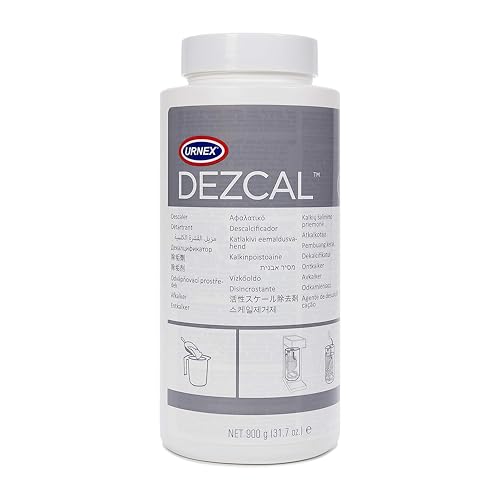
3. Urnex Dezcal Descaler
A descaling powder that you mix with water before running it through the machine. It is used in cafes as well as at home. A little goes a long way, so one container lasts through many cycles. Check the current listing for the size and recommended dosing.
Suits: people who descale in bulk. Strengths: good value and long storage life. Weaknesses: you must mix it correctly. Skip it if you want a ready-to-use bottle.

Best for nespresso owners
4. Nespresso Descaling Kit
A kit made by Nespresso for its capsule machines. It contains the solution and a set of instructions for running a descale cycle. It is designed around the capsule machine’s descale mode, so the steps are simple. Check the listing for compatible models.
Suits: Nespresso owners. Strengths: made for Nespresso machines. Weaknesses: it is brand specific. Skip it if you own a pump machine.
View Nespresso Descaling Kit on Amazon

Best for keurig owners
5. Keurig Descaling Solution
A descaling solution from Keurig meant for its brewers. It is a straightforward bottle that you pour into the reservoir. It is a familiar option for single-serve brewers. Use it only on machines your manual allows. Check the current listing for the pack size.
Suits: Keurig owners. Strengths: made for its brand. Weaknesses: it is not for espresso pump machines. Skip it if you own an espresso machine.
View Keurig Descaling Solution on Amazon
Best for gaggia owners
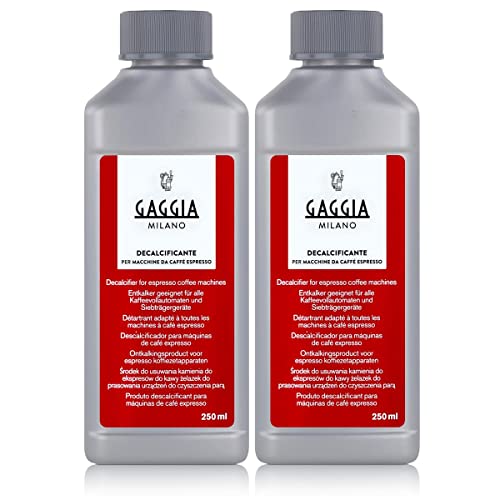
6. Gaggia Decalcifier
A liquid decalcifier sold by Gaggia for its own machines. It follows the brand’s cleaning guidance. If your machine’s manual names this product, it is the safest choice for that model. Check the current listing for the pack size and compatibility.
Suits: Gaggia owners. Strengths: made for Gaggia machines. Weaknesses: it is brand specific. Skip it if you own another brand.
View Gaggia Decalcifier on Amazon
Care and Setup
- Follow your machine’s manual for descale frequency and steps.
- Rinse the reservoir and run clean water through afterward.
- Never mix descaler with other cleaning products.
- Wipe the exterior and steam wand to remove splashes.
Mistakes to Avoid
- Using vinegar when the maker advises against it.
- Skipping the rinse cycle.
- Ignoring hard water signs.
- Buying a brand-specific descaler for a different machine.
What Scale Does Inside Your Machine
Scale is a hard, chalky deposit made mostly of calcium and magnesium minerals that leave the water when it is heated. In an espresso machine it forms on heating elements, inside boilers and thermoblocks, and in the narrow pipes and valves that carry water to the group head and steam wand. Because espresso machines use small channels and high temperatures, even thin layers can matter.
As scale builds up, several things can happen. Water may flow more slowly, so shots run longer or the machine takes more time to heat. Heating elements work harder because the deposit insulates them from the water, which can raise energy use and strain parts. Steam may weaken or sputter, and temperatures can become inconsistent, leading to sour or flat tasting coffee. In the worst case, a blocked passage or failed element needs a repair.
You can often spot early signs:
- A pump that sounds strained or louder than usual.
- Slower flow from the group or steam wand.
- White flakes in the cup or on the shower screen.
- A machine that takes longer to get hot.
- A descale indicator light, if your model has one.
Because the damage builds gradually, regular descaling is easier on the machine than waiting for symptoms. How fast scale forms depends mainly on your water and how much you use the machine, so a household in a hard water area will need to descale more often than one with soft water.
Liquid, Powder and Tablet Descalers
Descalers come in several forms, and the active ingredient is what does the work. Common acids include citric, lactic, sulfamic and others, and each reacts with mineral deposits at a different rate and with different effects on metals and seals. Your machine maker may specify or recommend a particular type, and that advice should come first.
- Liquid descalers: ready to use or concentrated. They are convenient and measure easily, but they cost more per cycle and take up storage space.
- Powder descalers: you mix them with water. They often last a long time in the cupboard and can be economical, but you must follow the dosing instructions to get the right strength.
- Tablet descalers: pre-measured, tidy and simple, though they may not suit every machine.
Strength matters. Too weak and it will not dissolve the scale; too strong and it can harm seals, gaskets or finishes. Read the label for the dilution, the contact time and any materials it should not touch. Some descalers are formulated to be gentle on aluminum or on specific parts, while others are not. Check the listing for which machine types it is made for and whether it is suitable for the metals in yours.
Matching a Descaler to Your Machine Type
Different machines need different approaches, so it pays to identify what you own before buying. Pump espresso machines with a boiler or thermoblock often have a manual descale routine: you fill the tank with solution, run it through the group head and steam wand in stages, then rinse. Bean-to-cup machines and capsule machines usually have an automatic descale program, where the machine guides you through steps and runs the cycle itself.
Points to check:
- Manual: your manual may name a recommended descaler or a type to avoid. Follow it.
- Warranty: using an unapproved product may affect your cover, so read the terms.
- Heat exchanger and dual boiler machines: these have more internal parts, and their makers often give specific instructions. Do not guess.
- Machines with a water filter: remove or bypass the filter during the descale if the manual says so, then replace it as instructed.
- Machines with milk systems: clean the milk path separately, following the maker’s steps, and keep descaling solution out of it unless directed.
A brand-specific product is the safest option when your manual names it. A general-purpose product can work well for many machines, but only if it is described as suitable and the maker does not forbid third-party solutions. When in doubt, ask the manufacturer’s support before using something new.
A Safe Descaling Routine
The exact steps depend on your machine, but a few principles apply almost everywhere. Always read the manual first and the descaler label second, and prepare before starting. Empty the drip tray, remove the portafilter basket or capsules, and take out any water filter if instructed. Make sure the machine is cool or follow guidance about warm-up, since some products work only when heated and others must not be heated too much.
A typical manual routine looks like this:
- Mix the solution with the amount of water the label gives and pour it into the tank.
- Run a portion through the group head into a large container.
- Run a portion through the steam wand or hot water outlet.
- Let the solution sit in the machine for the contact time the instructions state.
- Finish the remaining solution, then rinse the tank thoroughly.
- Run several tanks of fresh water through every outlet until no smell or taste remains.
Use gloves and eye protection if the label advises it, keep the area ventilated, and never mix descaler with other cleaners, bleach or vinegar. Do not leave the solution unattended or sitting in the machine for longer than the maker allows. Dispose of used solution as the label directs. Rinsing is important, because residue can affect taste and, in some products, is not meant to be consumed.
Prevention and Water Quality
The easiest descaling is the kind you need less often. Water quality is the biggest factor, so learn how hard your local water is. Your water supplier may publish a figure, or you can use a simple test strip. Harder water means faster scale and more frequent descaling.
Ways to reduce build-up:
- Use a filter or cartridge designed for your machine, and replace it on schedule.
- Consider bottled or treated water if your tap water is very hard, but check the maker’s guidance, because very soft or distilled water can confuse some machines’ level sensors.
- Do not leave water sitting in the tank for days; empty and refill it with fresh water.
- Run the machine regularly so water does not sit in the boiler.
Keep a log with the date you last descaled, so you do not rely on memory. Set a reminder using the manual’s guidance or your own water hardness. Also remember that descaling does not replace other maintenance, such as backflushing a group head, cleaning the portafilter, or washing the steam wand. If your machine still behaves poorly after descaling, scale may not be the cause. Contact the manufacturer or a service technician rather than repeating the process again and again.
Espresso Machine Descaling Kits FAQ
How often should I descale?
It depends on water hardness and use. Check the manual, since many makers give a schedule.
Can I use vinegar?
Some makers say no because it can leave odors or harm seals. Follow the manual.
What if my machine has a water filter?
Filters reduce scale but do not stop it, so descaling is still useful. Follow the maker’s guidance for filter changes.
Is filtered water enough?
Filters help, but they do not remove all minerals, so descaling is still useful.
Can I descale more often than recommended?
Descaling too often adds wear from the acid and is usually unnecessary. Follow the manual and adjust the schedule to your water hardness and usage.
Why does my coffee taste different after descaling?
Residue from the solution is the usual cause. Rinse the tank thoroughly and run several full tanks of fresh water through every outlet until the taste is gone.
Can I use citric acid from the grocery store?
Some makers allow it and others do not, and strength and dosing matter. Check your manual first, and never guess the mix. If in doubt, choose a product made for espresso machines.
Does descaling clean the coffee oils too?
No. Descaling removes mineral deposits, while coffee oils need a separate cleaner designed for that purpose. Use each product for its own job.
Should I descale a new machine?
Usually not at first, as a new machine has no scale. Follow the manual for the first descale timing and use the water hardness in your area as a guide.
Is there a visible sign that descaling worked?
Often you will see better water flow, steadier steam and shorter heat-up times. Some machines also reset an indicator light after the cycle, but the main check is performance.
Can I descale the steam wand separately?
Many descale routines include running solution through the steam wand. If your wand is clogged, follow the maker's cleaning instructions, which may include removing the tip and soaking it.
Reading the Ingredient Label: Which Acid Is Doing the Work
Almost every descaler is an acid solution that dissolves calcium and magnesium carbonate. The differences between kits come down to which acid is used, how concentrated it is, and what else is in the bottle. Knowing the basics helps you read a label instead of guessing from the packaging.
- Citric acid: the most common choice. It is relatively gentle on seals and rubber, biodegradable, and effective on typical household scale. It can leave a mild residue if the rinse is skimped.
- Lactic acid: found in several liquid products. It works well at lower temperatures and is often described as kind to metals and gaskets.
- Sulfamic acid: common in powders and tablets. It is strong on heavy scale but needs careful rinsing and should never be mixed with bleach or chlorine products.
- Acetic acid (vinegar): weak against heavy deposits, leaves a lingering smell, and many machine makers specifically advise against it.
A label that lists the acid and its concentration is a good sign. A bottle that only says natural or professional strength tells you very little. Whatever the formula, the machine maker’s instructions come first, because internal materials differ between brands.
How Often to Descale by Water Hardness
The manual schedule assumes average water, but your tap may be nothing like average. Hardness is measured in grains per gallon or parts per million, and your local water utility usually publishes it in an annual quality report. Inexpensive test strips from a hardware store give a quick home reading too.
- Soft water (under about 3.5 grains per gallon): scale builds slowly, and a descale every four to six months is often plenty for a daily user.
- Moderately hard water (about 3.5 to 10.5 grains): every two to three months is a reasonable starting point.
- Hard to very hard water (above 10.5 grains): monthly checks make sense, and a filter or softened water becomes worth the cost.
Treat these as starting ranges, not rules. Heavier use, a boiler-based machine, and frequent steaming all push scale faster. A light user in soft-water country can stretch the interval, as long as the machine is behaving normally.
Signs Your Machine Is Asking for Attention
Machines rarely fail suddenly from scale. They give hints first, and catching them early keeps a simple descale from turning into a repair.
- Brew time creeps up, or the flow becomes weak or sputters.
- Water comes out cooler than it used to, because scale insulates the heating element.
- The pump sounds louder or strains at the start of a cycle.
- White flakes or grit appear in the cup or the drip tray.
- A descale indicator light turns on, if your model has one.
Any of these deserves a descale, but a machine that stays slow or loud afterward may have a blockage a descaler cannot clear, or a worn part. That is the point to check the manual or contact the maker rather than repeating the treatment.
What Descaling Cannot Fix, and Rinsing Done Right
Descaling removes mineral deposits. It does not remove coffee oils, which need a separate cleaner, and it will not repair a failing pump, a cracked hose, or a worn gasket. If a machine leaks or loses pressure after a clean descale, the cause is mechanical, and more acid will not help.
The rinse matters as much as the treatment. After the solution has run through, flush the tank and cycle fresh water until any sour smell or taste is gone. Many makers suggest at least one or two full tanks. Skimping on this step is the most common reason coffee tastes strange afterward. Also wipe the tank, lid, and drip tray, since splashes of solution can sit on them. Wear gloves if your skin is sensitive, keep the solution away from countertops with natural stone, and never leave it sitting in a machine overnight unless the instructions say so.
Safety, Disposal and Household Precautions
Descaling solutions are mild acids, and a little care keeps the job uneventful. Work in a ventilated kitchen, keep the bottle away from children and pets, and store it in its original container with the cap tight. Never mix descaler with bleach or chlorine cleaners, since some combinations release harmful gas. Read the hazard notes on the label, because powders with sulfamic acid call for more caution than citric acid products.
When the cycle is finished, spent solution is usually safe to pour down the drain with plenty of running water, but check the label and your local rules first. Do not pour it onto plants, natural stone, or aluminum surfaces. Wipe up any drips straight away, and wash your hands after handling concentrate. If solution touches skin or eyes, rinse with water for several minutes and follow the label first aid advice.
Frequently Asked Questions
How do I find out how hard my water is?
Check your local water utility annual report, which usually lists hardness in grains per gallon or parts per million. You can also use inexpensive test strips from a hardware store or a home water test kit. Knowing the number lets you set a descaling schedule that fits your tap instead of relying on a generic estimate.
Can leftover descaling solution be saved for later?
It is best not to. Solution that has run through a machine carries dissolved minerals and is spent. Unused solution left in its original sealed bottle can be stored, but check the label for shelf life. Mixed powder or tablet solution should be used the same day for full strength.
Why is my machine slower after descaling?
Loosened scale flakes can briefly clog a screen or nozzle, and trapped air can slow the first brews. Run several tanks of fresh water through, then check any removable filter or shower screen for debris. If flow stays weak, a blockage or worn pump may be the cause rather than leftover scale.
Is it safe to descale a machine with a built-in grinder?
Yes, as long as you keep the solution out of the grinder and hopper. Run the descale program through the water path only, and follow the manual for your model. Empty the bean hopper first if instructed, and wipe up spills so acid does not sit on metal or plastic parts.
Going Deeper: What This Guide Means by a Good Descaling Routine
This article was written for keeping scale out of an espresso machine, where the right descaler and a calm routine protect boilers, valves and flavour. Keep that purpose in view as you revisit the six kits, because a descaler that suits a hard-water flat with a busy machine can be entirely wrong for a soft-water home where the machine idles all week, however good the product itself is. Read this guide backwards if it helps: settle first what a descaling cycle must rescue — flow, temperature, taste — then weigh each kit against that job, not an imaginary perfect product. The qualities that decide whether a kit earns its shelf space rarely headline the packaging. They show up as small annoyances at every cycle: awkward dosing, endless rinsing, a smell that lingers.
Begin with your water’s rhythm. A kit used every few weeks in hard water lives a different life from one opened twice a year, and the strengths worth paying for shift accordingly. Hard water and a busy machine reward a kit that doses cleanly, works without fuss and is painless to reorder. Infrequent descaling rewards a forgiving product with clear instructions, because nobody remembers last year’s routine. Be straight with yourself about your habits: plenty of neglected machines belong to people who bought the enthusiast’s ritual and then discovered their weekday mornings had no room for it.
Then step back and look at everything around the kit, not the bottle or sachet on its own. The machine it has to protect, the descaler chemistry that machine’s maker allows, a sink’s worth of fresh water for rinsing afterwards, and the half hour you can genuinely spare all matter as much as whichever kit tops the list. A basic kit used exactly as directed beats a premium one sloshed in carelessly. As you weigh one kit against another, keep asking what each asks of your machine and your patience, since that hidden demand is part of what you are really paying for.
Comparing the Picks With Each Other, Not With Perfection
These six kits were shortlisted because they suit different machines and different water, so reading them against each other teaches more than any simple ranking could. Take the head-to-head notes below as prompts to carry back into the individual kit reviews. When two kits look evenly matched, the tiebreaker is usually the routine itself: how the cycle begins, what you must watch while it runs, and how much rinsing waits for you at the end. Those practical differences still shape your habits half a year on, when novelty has long worn off.
Set the De’Longhi EcoDecalk beside the Durgol Swiss Espresso Descaler and ask what each assumes about you. The De’Longhi EcoDecalk justifies itself when its routine matches the way you actually descale: the tempo it imposes and the judgements it leaves in your hands. Notice your reaction to the De’Longhi EcoDecalk routine above: pleasure there is real information, not a distraction. If it read like homework, believe that too, and take a second look at the Durgol Swiss Espresso Descaler, whose virtue may be exactly how little it asks of you when time is shortest. A kit you actually use on schedule will always outperform a theoretically superior one gathering dust at the back of the cupboard.
Set the Durgol Swiss Espresso Descaler beside the Urnex Dezcal Descaler and ask what each assumes about you. Judge the Durgol Swiss Espresso Descaler by fit rather than reputation: it earns its keep when its pace and its hands-on demands line up with yours. If the Durgol Swiss Espresso Descaler routine above left you keen rather than daunted, that is real information about fit. If it felt like a chore on the page, trust that and reconsider the Urnex Dezcal Descaler, which may win you over precisely by demanding less on your busiest days. The best descaler is the one that gets opened: an elegant product left unopened removes no scale at all.
Set the Urnex Dezcal Descaler beside the Nespresso Descaling Kit and ask what each assumes about you. The Urnex Dezcal Descaler makes sense for owners whose habits mirror its own — the rhythm it sets and the decisions it hands back to you. Trust the feeling the Urnex Dezcal Descaler routine above produced; it is real information about how you will use it. If it sounded like an assignment, do not argue with the feeling — look again at the Nespresso Descaling Kit, whose appeal could be how light a claim it makes on a crowded week. Regular, unremarkable cycles with a kit you like beat heroic annual rescues with one you dread.
Set the Nespresso Descaling Kit beside the Keurig Descaling Solution and ask what each assumes about you. The Nespresso Descaling Kit justifies itself when its routine matches the way you actually descale: the tempo it imposes and the judgements it leaves in your hands. If the Nespresso Descaling Kit routine above sounded like something you would repeat happily, file that as real information. If it read like homework, believe that too, and take a second look at the Keurig Descaling Solution, whose virtue may be exactly how little it asks of you when time is shortest. A kit that fits your routine protects boilers and valves; a finer one you avoid protects nothing.
Set the Keurig Descaling Solution beside the Gaggia Decalcifier and ask what each assumes about you. Judge the Keurig Descaling Solution by fit rather than reputation: it earns its keep when its pace and its hands-on demands line up with yours. If the Keurig Descaling Solution routine above sounded pleasant rather than chore-like, that reaction is real information. If it felt like a chore on the page, trust that and reconsider the Gaggia Decalcifier, which may win you over precisely by demanding less on your busiest days. Consistency wins here — the kit you reach for without groaning is the one that keeps the machine alive.
Set the Gaggia Decalcifier beside the De’Longhi EcoDecalk and ask what each assumes about you. The Gaggia Decalcifier makes sense for owners whose habits mirror its own — the rhythm it sets and the decisions it hands back to you. If working through the Gaggia Decalcifier routine above felt easy, trust it — that reaction is real information. If it sounded like an assignment, do not argue with the feeling — look again at the De’Longhi EcoDecalk, whose appeal could be how light a claim it makes on a crowded week. Choose the kit whose routine you can picture repeating in February, not just on the enthusiastic first weekend.
One more test is worth applying before you choose: judge each kit by its worst day, not its best. On a straightforward cycle with no surprises, every kit here does its job perfectly well. What truly separates them is a tired evening, a machine already overdue, hard water fighting back and no patience for a second attempt. The kit whose bad day still ends with a rinsed, working machine, rather than a half-finished cycle and a sink of cloudy water, is usually the sensible buy for a busy home. Read each kit’s honest-limitation note above with that overdue evening in mind, and the shortlist tends to sort itself out.
A Careful Descaling Cycle, Step by Step
Advice about descaling is cheap in the abstract, so here is one full cycle laid out in the order people who descale regularly actually work through it. There is no need to commit it to memory. Walk through it carefully two or three times and the sequence settles into a rhythm, and a settled rhythm is what makes each cycle come out the same as the last. As you work, watch the flow from group and wand strengthen, listen for a pump no longer straining, and judge the first rinsed shots with a sceptical palate. Those three checks, sharpened over a handful of cycles, will tell you more about your machine’s health than any gadget or guesswork.
Work on reading the machine manual first, because some boilers and finishes rule out certain descalers. Done deliberately rather than roughly, reading the manual first makes the rest of the session easy to judge. When a result disappoints, a routine built on reading the manual first lets you name the step that drifted; without one, every cycle is a fresh mystery and progress is mostly luck. The extra moments on reading the manual first are repaid in results you can repeat.
Work on mixing the solution exactly as the product directs, never stronger for luck. Take care with mixing the solution exactly as directed instead of rushing it, because that care makes the session readable. A steady approach to mixing the solution exactly as directed means a poor result points at a step you can name, instead of leaving every session a guessing game. Time spent mixing the solution exactly as directed buys results you can reproduce deliberately.
Work on running the cycle in stages and letting the solution sit where the instructions say. Handled on purpose instead of approximately, running the cycle in stages is what makes the rest of the session legible. Consistency in running the cycle in stages turns improvement into method: a bad result identifies its own culprit rather than leaving you to luck. Extra care with running the cycle in stages pays back in drinks you can repeat.
Work on draining and rinsing the tank thoroughly before any fresh water goes in. Done deliberately rather than roughly, draining and rinsing the tank makes the rest of the session easy to judge. When a result disappoints, a routine built on draining and rinsing the tank lets you name the step that drifted; without one, every cycle is a fresh mystery and progress is mostly luck. The extra moments on draining and rinsing the tank are repaid in results you can repeat.
Work on flushing generous amounts of clean water through every path the solution touched. Take care with flushing every path with clean water instead of rushing it, because that care makes the session readable. A steady approach to flushing every path with clean water means a poor result points at a step you can name, instead of leaving every session a guessing game. Time spent flushing every path with clean water buys results you can reproduce deliberately.
Work on pulling a test shot you are prepared to throw away, and tasting the next one properly. Handled on purpose instead of approximately, pulling a sacrificial test shot is what makes the rest of the session legible. Consistency in pulling a sacrificial test shot turns improvement into method: a bad result identifies its own culprit rather than leaving you to luck. Extra care with pulling a sacrificial test shot pays back in drinks you can repeat.
Finally, close the cycle properly. Wipe down and rinse while everything is still wet and easy, jot down what the cycle shifted, and leave the counter ready for tomorrow’s coffee. That small discipline is what divides owners whose machines improve with age from those marking time: the next cycle begins from written evidence instead of a hazy recollection. Within a few months those brief notes outrank any guide you can buy, because they describe your water, your machine and your habits, not a stranger’s.
Troubleshooting: When the Result Is Not What You Expected
Everyone who owns a machine in hard water eventually meets the same short list of scale troubles. The reassuring part is that each trouble has only a handful of plausible causes, and calmly working through them cures most cases without buying anything new. Alter one variable at a time, and let that alteration prove itself before you touch another. Change two things together and you will know the result improved without ever learning why, which is how owners end up going in circles for weeks.
Consider flow that slows to a dribble from the group or the wand. Before suspecting the kit, audit the fundamentals in order: the water you filled with, the dose you measured, the dwell time you allowed, and whether the machine started clean, because the dribble-slow flow usually starts there. One of the four usually explains the dribble-slow flow. If the basics are sound, change the one variable the reviews above link most closely to the dribble-slow flow, and repeat the cycle otherwise identically. If the dribble-slow flow survives several honest attempts, consult the manual’s troubleshooting pages or the maker’s support, notes in hand.
Consider a machine that runs hotter, noisier or longer than it used to. Resist blaming the product until you have checked water, dose, dwell time and rinsing in that order, since the hotter, noisier running rarely begins with the descaler. Usually one of the four sits behind the hotter, noisier running. With the basics confirmed, adjust only the factor the reviews above tie to the hotter, noisier running, keeping the rest of the session identical. Should the hotter, noisier running persist through a few fair attempts, take your notes to the maker’s support.
Consider white flakes appearing in the tank or the drip tray. Work through the basics first: suitable water, honest measuring, proper dwell and thorough rinsing, because the white flakes is usually one of them in disguise. Mostly, one of the four explains the white flakes. Once the basics check out, vary just the variable the reviews connect with the white flakes and rerun the session unchanged otherwise. When several careful attempts leave the white flakes unchanged, consult the manual or the maker, notes ready.
Consider coffee that tastes dull or chalky despite fresh beans. Before suspecting the kit, audit the fundamentals in order: the water you filled with, the dose you measured, the dwell time you allowed, and whether the machine started clean, because the dull, chalky taste usually starts there. One of the four usually explains the dull, chalky taste. If the basics are sound, change the one variable the reviews above link most closely to the dull, chalky taste, and repeat the cycle otherwise identically. If the dull, chalky taste survives several honest attempts, consult the manual’s troubleshooting pages or the maker’s support, notes in hand.
Consider a descaler that was used on a machine whose maker forbids it. Resist blaming the product until you have checked water, dose, dwell time and rinsing in that order, since the forbidden-descaler mistake rarely begins with the descaler. Usually one of the four sits behind the forbidden-descaler mistake. With the basics confirmed, adjust only the factor the reviews above tie to the forbidden-descaler mistake, keeping the rest of the session identical. Should the forbidden-descaler mistake persist through a few fair attempts, take your notes to the maker’s support.
Ownership Over Months and Years, Not Just the First Week
The first cycle with a new kit tells you remarkably little about living with it. A new product feels foolproof at first, and early enthusiasm papers over routines that a busy month will expose. Form your real verdict after a season of ordinary cycles. Do you still reach for it without being reminded? Is the full rinse still happening, or has it quietly shrunk to a quick splash and good intentions? Can you restock it easily? Good ownership is mostly unglamorous regularity: gaskets, filters, hoses, drip trays and group heads all survive far longer with little-and-often attention than with occasional heroic rescues.
Hold on to the manual, and read its care pages once, before the day you urgently need them. Manufacturers write those pages from the warranty returns they see, so they are effectively a map of what fails when maintenance slips. Mark which items are consumables, which you may swap yourself, and which parts the maker warns you never to open, soak or scrub. For anything destined to wear out, confirm a replacement exists before it fails, not during the week your machine is out of action. A one-line log of each descale and part change turns future maintenance from guesswork into arithmetic.
Before You Buy: A Final Round of Questions
Where will the kit live? Check the cupboard or shelf it will share, and think about bottles stored upright, children or pets reaching them, and solution splashes near food preparation surfaces. Who else might descale the machine, and would the routine be obvious to them from the instructions alone, without you hovering nearby? What does the routine require that you do not own — a large jug, a spare tank, a free half hour — and are you content to provide and store those extras? What schedule of descaling and servicing does the maker prescribe, and does that timetable honestly fit your patience? None of these questions appears on a product box, which is precisely why they deserve asking before money moves.
More Questions Readers Ask
How do I know scale is the problem and not something else?
The honest answer on spotting scale as the culprit depends on your routine, but owners report a consistent pattern. Start from the ground rules running through this guide — the correct product for the boiler, honest measuring, thorough rinsing, one routine repeated — and spotting scale as the culprit gets easier to judge. Most disappointment over spotting scale as the culprit traces to a basic, not the machine. Give a change a few sessions before judging; single results mislead, patterns are evidence, on spotting scale as the culprit as elsewhere.
Can I use vinegar instead of a descaling product?
Your routine frames vinegar as a descaler, but owners report a consistent pattern. Anchor on the basics this guide repeats: right descaler, clean machine, measured dose, patient rinsing, and vinegar as a descaler usually answers itself. Usually vinegar as a descaler goes wrong because a basic slipped, not because the machine failed. Judge a change over several sessions: single results mislead, patterns do not, especially on vinegar as a descaler.
What water slows scale down the most?
No universal answer exists on water that slows scale, yet owners report a consistent pattern. The reliable starting point is the one used throughout: correct product, clean machine, measured dose, full rinsing, applied to water that slows scale. Most frustration with water that slows scale starts with a basic, not the equipment. Let changes run a handful of sessions before ruling; patterns beat one-off results on water that slows scale.
Is descaling the same as backflushing?
The honest answer on descaling versus backflushing depends on your routine, but owners report a consistent pattern. Start from the ground rules running through this guide — the correct product for the boiler, honest measuring, thorough rinsing, one routine repeated — and descaling versus backflushing gets easier to judge. Most disappointment over descaling versus backflushing traces to a basic, not the machine. Give a change a few sessions before judging; single results mislead, patterns are evidence, on descaling versus backflushing as elsewhere.
How long should a full descaling routine take?
Your routine frames how long a routine takes, but owners report a consistent pattern. Anchor on the basics this guide repeats: right descaler, clean machine, measured dose, patient rinsing, and how long a routine takes usually answers itself. Usually how long a routine takes goes wrong because a basic slipped, not because the machine failed. Judge a change over several sessions: single results mislead, patterns do not, especially on how long a routine takes.
What should I do if the machine still flows slowly after descaling?
No universal answer exists on flow still slow after descaling, yet owners report a consistent pattern. The reliable starting point is the one used throughout: correct product, clean machine, measured dose, full rinsing, applied to flow still slow after descaling. Most frustration with flow still slow after descaling starts with a basic, not the equipment. Let changes run a handful of sessions before ruling; patterns beat one-off results on flow still slow after descaling.
The Short Version
For De’Longhi, the EcoDecalk. For a general pick, the Durgol. For powder, the Urnex Dezcal. For Nespresso, the Nespresso kit. For Keurig, the Keurig solution. For Gaggia, the Gaggia Decalcifier.


