A mid-range espresso machine gives a beginner more room to grow than an entry-level model does. You get sturdier parts, better temperature control and a steam wand that can texture milk properly, so the machine does not hold you back as your skills develop.
The six machines below include machines with grinders and compact semi-automatics. We have not used these products ourselves, so confirm every detail on the current listing before you buy. Think about a grinder too, since the coffee you put in matters as much as the machine.
As an Amazon Associate we earn from qualifying purchases. Links below are affiliate links, and they do not change the product information we give.
What to Look For
| Feature | Why it matters |
|---|---|
| Temperature control | PID or good thermal stability gives repeatable shots |
| Grinder | An integrated one saves money; a separate one is more flexible |
| Steam wand | A real wand lets you learn milk texturing |
| Portafilter | A standard size makes accessories easy to find |
In this guide
Specs at a Glance
| Machine | Type | Grinder | Notes |
|---|---|---|---|
| Breville Barista Express | Semi-automatic | Built-in grinder | Grinder included and a pressure gauge |
| Gaggia Classic Evo Pro | Semi-automatic | No grinder | Durable design and a standard portafilter |
| Profitec Go | Semi-automatic with PID | No grinder | Compact size and temperature control |
| Lelit Victoria | Semi-automatic with PID | No grinder | PID control and a solid body |
| De’Longhi La Specialista Arte | Semi-automatic | Built-in grinder | Grinder and tamping help in one machine |
| Ascaso Dream PID | Semi-automatic with PID | No grinder | Compact build and a PID display |
The 6 Best Mid-Range Espresso Machines for Beginners

Top pickBest for beginners who want an all-in-one
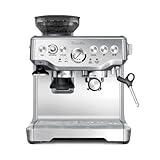
1. Breville Barista Express
A very widely sold machine with a built-in conical burr grinder, a pressure gauge and a steam wand. It is one of the most recommended starter machines because it covers grinding and brewing in one body. Check the listing for the water tank size.
Suits: beginners who want an all-in-one. Strengths: grinder included and a pressure gauge. Weaknesses: upgrading the grinder is hard. Skip it if you already own a grinder.
Best for beginners who want to learn deeply
2. Gaggia Classic Evo Pro
A refreshed take on a long-running machine with a commercial-style portafilter and a robust frame. Hobbyists like it because it is simple and has a big modding community. Pair it with a good grinder. Check the listing for the details of the current version.
Suits: beginners who want to learn deeply. Strengths: durable design and a standard portafilter. Weaknesses: it needs a separate grinder. Skip it if you want a one-touch machine.
View Gaggia Classic Evo Pro on Amazon
Best for small kitchens with big aims
3. Profitec Go
A compact German-designed machine with PID temperature control and a commercial-size portafilter. It is aimed at home users who want a small but capable machine. Pair it with a grinder. Check the listing for the exact features of the version you buy.
Suits: small kitchens with big aims. Strengths: compact size and temperature control. Weaknesses: it needs a separate grinder. Skip it if you want an all-in-one.
Best for beginners who like gadgets
4. Lelit Victoria
An Italian single-boiler machine with a PID controller and a commercial-size portafilter. It has a following among hobbyists for its feature set. A separate grinder is needed. Check the listing for the current version and what is in the box.
Suits: beginners who like gadgets. Strengths: PID control and a solid body. Weaknesses: it needs a separate grinder. Skip it if you want push-button simplicity.
Best for beginners who want guidance
5. De’Longhi La Specialista Arte
A semi-automatic machine with a built-in grinder and a guided approach to tamping and steaming. It is aimed at people who want help while learning. Check the current listing for the water tank size and attachments.
Suits: beginners who want guidance. Strengths: grinder and tamping help in one machine. Weaknesses: it is bulky. Skip it if you want a minimal footprint.
View De’Longhi La Specialista Arte on Amazon
Best for design-minded beginners
6. Ascaso Dream PID
A compact Spanish machine with a PID display and a metal body. It is aimed at people who value looks and a small footprint. A grinder is needed. Check the listing for the exact version and features before buying.
Suits: design-minded beginners. Strengths: compact build and a PID display. Weaknesses: it needs a separate grinder. Skip it if you want an all-in-one.
View Ascaso Dream PID on Amazon
Care and Setup
- Descale on the maker’s schedule.
- Backflush if the machine supports it.
- Wipe and purge the steam wand after use.
- Store beans in an airtight container.
Mistakes to Avoid
- Putting the money into the machine and skipping the grinder.
- Never cleaning the group head.
- Using tap water in a hard water area.
- Choosing a model for looks alone.
Your First Weeks with a New Machine
A machine at this level gives you room to improve, but the first weeks can feel frustrating if you expect café quality on day one. Plan to treat the early shots as practice. Read the manual, run any initial rinse or cleaning cycle it recommends and use fresh beans. Pull a few shots just to see how the machine behaves and what the coffee looks and tastes like.
A useful way to learn is to change one thing at a time. The main variables are the dose of coffee, the grind size, the tamping and the shot time. If a shot runs too fast and tastes sour or thin, the grind is probably too coarse, and a finer grind slows the flow. If it runs too slowly and tastes bitter or burnt, the grind is probably too fine. Keep a notebook with your settings and notes on taste.
Use a scale if you can, because weighing the coffee in and the espresso out gives repeatable results. Many machines include a basic recipe in the manual, which can serve as a starting point. Expect to waste a little coffee while you learn. Give yourself a few weeks of regular practice before deciding whether the machine or your technique needs adjusting.
- Change one variable at a time.
- Write down grind setting, dose and shot time.
- Weigh coffee in and espresso out if possible.
Pressurized Versus Non-Pressurized Baskets
The filter basket is a small part that has a big effect on how forgiving your machine is. A pressurized basket has a tiny single hole and a built-in mechanism that creates pressure regardless of how fine or coarse your grind is. This makes it more forgiving for beginners and for pre-ground coffee, but the resulting shot may be less like traditional espresso. A non-pressurized basket, often called a standard or single-wall basket, has many small holes and relies on your grind and tamp to create the resistance that makes espresso.
Many machines at this level include both, or are supplied with one and allow you to buy the other. Check the listing for what is included. If you use a good grinder and want to learn the craft, a non-pressurized basket gives more control and better flavor potential. If you use pre-ground coffee or want an easier start, begin with a pressurized basket and move on later.
Basket size is another point. Baskets are made for specific doses, and a mismatch between the dose and the basket can cause uneven extraction. Check the stated dose range in the manual. Make sure the basket and portafilter fit your machine, and that the size of the tamper matches the basket. Accessories made for one size may not fit another.
- Pressurized baskets are more forgiving.
- Non-pressurized baskets give more control with a good grinder.
- Match tamper and dose to the basket size.
Learning to Steam Milk
If you plan to make lattes and cappuccinos, steam wand technique is a skill that takes practice. The wand heats milk and introduces air to create foam, and good milk has a glossy, smooth texture, often called microfoam. Begin with cold, fresh milk in a cold pitcher, which gives you more time before the milk gets too hot.
The basic steps are to purge the wand briefly, place the tip just below the surface of the milk, open the valve, and listen for a gentle hissing as air is drawn in. After a short time, lower the pitcher slightly so the tip sits deeper, and let the milk spin in a whirlpool while it heats. Stop before the pitcher becomes too hot to touch comfortably, since overheated milk loses sweetness and texture. Wipe the wand with a damp cloth right away and purge it again.
Differences between machines matter. Some have a traditional manual wand, and others use an automatic or assisted system. Check the listing for the type and for how easy it is to angle and position the wand. A machine with a stronger steam output heats more quickly, and one with weaker output requires patience. Practice with small amounts of milk at first, and be careful with hot steam to avoid burns.
- Use cold milk in a cold pitcher.
- Keep the tip near the surface to add air, then deeper to swirl.
- Wipe and purge the wand after every use.
Grinder Pairing and Bean Freshness
A machine is only half of the equation, and the grinder matters just as much. Machines with built-in grinders save space and cost, but they may offer fewer adjustment steps than a separate grinder. If you choose a machine without a grinder, plan to buy a capable one with fine, repeatable adjustments, since espresso needs a very fine, consistent grind. A weak grinder is one of the most common reasons for poor shots.
Fresh beans also make a difference. Coffee loses flavor as it ages, and ground coffee loses flavor fastest. Look for beans with a roast date on the bag, and try to use them within a few weeks of roasting. Store them in an airtight container away from light and heat. Grind just before you brew.
Different roast levels behave differently. Darker roasts are often more forgiving and give a classic bold flavor, while lighter roasts can be sour or thin if the shot is not dialed in. Start with a medium or medium-dark roast marketed for espresso, and experiment later. If you notice that the grind setting you used last week no longer works, remember that beans age and humidity changes, so small adjustments are normal.
- Plan the grinder as part of your budget.
- Check roast dates and use beans within a few weeks.
- Adjust the grind gradually as beans age.
Routine Maintenance That Keeps a Machine Reliable
A consistent maintenance routine protects the machine and the flavor of the coffee. After each session, knock out the puck, rinse the portafilter and basket and wipe the group head. Purge and wipe the steam wand. Empty and rinse the drip tray and water tank regularly, and refill with fresh water.
Many machines need regular backflushing or cleaning of the group head using a cleaning powder or tablet, and the manual will describe how often. Follow the maker’s instructions, and use only recommended cleaning products. Descale at the interval recommended for your water hardness. Hard water leaves mineral deposits that harm heating elements and flow, so consider using filtered water if the manual allows it.
Check wear parts. Group head gaskets and shower screens wear over time, and signs include leaks around the portafilter, weak flow and uneven extraction. Replace them as the manual advises. Keep a few basic spares, such as a gasket, if the machine is one you intend to keep for years. Finally, keep the machine on a stable, dry surface, and unplug it before any cleaning that involves opening panels.
- Rinse and wipe after each session.
- Backflush and descale on the maker’s schedule.
- Replace gaskets and screens when they wear.
Mid-Range Espresso Machines for Beginners FAQ
Is a built-in grinder good enough?
For most beginners, yes. A separate grinder gives more upgrade options later.
Do I need PID?
It helps with repeatable shots, but it is not essential for a beginner.
How long to learn espresso?
Most people see good progress within a few weeks of practice with fresh beans and a decent grinder.
Should a beginner use a pressurized basket?
It is a forgiving place to start, especially with pre-ground coffee, since it creates pressure regardless of grind. As your skills improve, a non-pressurized basket and a good grinder give more control.
Why does my espresso taste sour?
Sour shots are often under-extracted, which can mean the grind is too coarse, the dose is too low or the water is too cool. Try a finer grind first and change only one thing at a time.
Why does my espresso taste bitter?
Bitterness often points to over-extraction, which can come from a grind that is too fine, a shot that runs too long or a roast that is very dark. Try a slightly coarser grind.
How fresh should my coffee beans be?
Look for a roast date and try to use the beans within a few weeks of roasting. Store them airtight, away from heat and light, and grind just before brewing.
How do I steam milk without scalding it?
Start with cold milk in a cold pitcher, add a little air near the surface, then swirl it deeper until the pitcher is warm to the touch. Stop before it gets too hot.
How often should I clean the group head?
Rinse after each session and follow the manual for backflushing or deeper cleaning. Frequency depends on how much you use the machine.
Do I need a tamper and a scale?
A tamper that fits your basket is essential, and a scale helps with repeatable results. Check whether the machine includes a tamper and what size it is.
Machine Types: Semi-Automatic, Dual Boiler and Built-In Grinder
Mid-range machines for beginners fall into a few designs, and knowing the differences helps you read a spec sheet. A single boiler machine heats one chamber that serves both brewing and steaming, so you wait between pulling a shot and steaming milk. A heat exchanger or dual boiler design keeps separate temperatures ready, letting you do both in sequence with less waiting. Dual boiler machines are typically larger and cost more, while single boiler designs are compact and approachable.
Some machines include a built-in grinder, which saves space and money and simplifies setup. Others require a separate grinder, which takes more room but gives you flexibility and often better grind quality. Neither approach is wrong. If counter space is limited and you want one purchase, an integrated machine is attractive. If you plan to upgrade over time, separate components let you replace one part at a time.
- Single boiler: compact, usually lower cost, requires waiting between brew and steam.
- Heat exchanger or dual boiler: faster workflow, larger footprint, higher price.
- Built-in grinder: convenient, but limits upgrades.
Temperature Stability and Pre-Infusion
Two features that come up in beginner discussions are temperature stability and pre-infusion. Espresso is sensitive to water temperature, and swings can change the flavor of the same coffee. Machines with PID control hold the brew temperature closer to a target, which makes shots more repeatable. That repeatability helps a beginner learn, because you can change one variable at a time and trust the result.
Pre-infusion gently wets the coffee puck at low pressure before full pressure begins. This can help the water saturate the grounds evenly and reduce channeling, where water finds a weak path through the coffee. Some machines offer it automatically, and others let you adjust the time. It is a helpful feature but not essential, since good technique also improves evenness.
Do not be intimidated by specs. A machine that holds a steady temperature and applies pressure consistently is easier to learn on, whether or not it has every advanced feature. Focus first on getting your dose, grind, and tamp consistent.
Budget Versus Premium: Where the Money Goes
In the mid-range, price differences reflect build quality, boiler type, temperature control, and extras. Lower cost machines in this tier often use lighter materials and simpler controls, while higher priced models use heavier metals, commercial style group heads, and better temperature control. Premium models may include features such as a pressure gauge, a programmable shot timer, or customizable settings.
For a beginner, spending more does not always speed up learning. A machine with fewer settings can be easier to master, and a simpler design leaves fewer things to troubleshoot. Consider spending the savings on a quality grinder, since grind consistency affects flavor as much as the machine itself.
Also factor in accessories. A tamper, a scale, a milk pitcher, a knock box, and cleaning supplies add to the total cost. If the machine does not include them, budget for them. A well-chosen kit makes the first weeks more enjoyable and less wasteful.
Warranty, Repairs and Resale Value
An espresso machine is a long-term purchase, so look at what happens when something goes wrong. Check the length of the warranty and whether the maker or retailer handles repairs. Machines with widely available parts, such as gaskets, shower screens, and portafilter baskets, are easier and cheaper to maintain. Some brands have an active community and guides for home repairs, which can extend a machine’s life.
Resale value is another consideration. Machines from established brands often hold value better, which matters if you plan to upgrade after a year or two. Keep the original packaging and documentation, and take care of the machine to maintain its worth.
When you are weighing choices, ask whether you will be comfortable performing basic maintenance, such as backflushing, descaling, and replacing a gasket. If not, choose a model with simpler upkeep, or one with a service network nearby.
Making Room in Your Routine
A machine only improves your mornings if you actually use it, so consider how it fits your schedule. Most semi-automatic machines need several minutes to warm up, which you can plan around by switching it on while you get ready. Learning takes patience, and early shots will not be perfect, so set aside a little time for practice rather than rushing before work. Keep your coffee, scale, tamper, and cleaning cloth in one spot so each shot goes faster. A consistent routine builds good habits and makes it easier to notice what changes when a shot tastes different.
Related guides
- 6 Best Water Purifiers and Filters for Espresso Machines
- 6 Best Espresso Machines for Small Apartments
- 6 Best Espresso Machines for Beginners
- 6 Best Espresso Machines for Cappuccinos
Frequently Asked Questions
What is the difference between single boiler and dual boiler espresso machines?
A single boiler heats one chamber for brewing and steaming, so you switch modes and wait. A dual boiler has separate boilers, letting you brew and steam with less waiting. Dual boilers are larger and costlier, while single boilers are compact and suit beginners with simpler routines.
Do I need a pressure gauge on my espresso machine?
It is not essential, but it can help you understand what is happening during extraction. A gauge shows the pressure at the group head, which helps you spot a grind that is too coarse or too fine. Many beginners do fine by tasting and timing shots.
How much counter space does a mid-range espresso machine need?
Most are about the size of a large toaster oven, with some deeper models needing more room for the portafilter and water tank. Measure width, depth, and height, including clearance above for refilling. If you add a separate grinder, plan for that footprint too.
Is it worth buying a used espresso machine?
It can be, if you know the machine’s history and condition. Check for scale buildup, leaks, and worn gaskets, and ask about maintenance. Used machines may lack a warranty, so factor in possible repairs. Buying from a reputable seller reduces the risk.
Going Deeper: What This Guide Means by a Good Espresso Machine
This article was written for a mid-range first step into espresso, where the machine is capable enough to teach you and forgiving enough to keep you going. Keep that teaching brief in mind as you re-read the six machines, because a mid-range model that suits an experienced hand can be the wrong classroom for a beginner, however capable it looks on paper. The honest way to use this guide is to decide what your session must deliver at this level — real control without punishment — then judge each option against that, not an abstract best. None of this demands special talent. It asks for attention to the same few things, in the same order, until they become habit — and mid-range machines reward that attention faster than basic ones do.
Start with frequency at this level. A mid-range machine used twice a day lives a different life from one used twice a month, and the features that matter change with that rhythm. Frequent use rewards easy cleaning, predictable behaviour and parts you can replace without a struggle when something wears. Occasional use rewards simplicity and forgiving operation, because monthly use never builds daily muscle memory. Be honest about which user you are: many disappointed owners bought for the enthusiast they hoped to become, then resented a routine their mornings could not support at this level.
Then widen the lens: judge the whole mid-range setup around the machine, not the machine in isolation. The coffee corner it sits in, beans from a roaster whose roast dates you can see and buy little and often, the water you use, and the time you genuinely have all shape the result as much as the headline machine does. A modest mid-range setup used carefully outperforms an ambitious one used in a rush. As you compare these picks, keep asking what each demands of the rest of your setup, because that hidden demand is part of the real cost of ownership.
Comparing the Picks With Each Other, Not With Perfection
The six picks in this guide were chosen to cover different kinds of mid-range beginner, so a head-to-head reading is more useful than a ranking. Use the comparisons below as questions to carry back into the individual reviews above before committing. Where two picks seem close, the deciding factor is usually workflow: how the espresso session starts, what you have to watch, and how much clearing up waits at the end of it. Those differences still shape your habits in six months, long after the upgrade’s first impressions fade.
Set the Breville Barista Express beside the Gaggia Classic Evo Pro and ask what each assumes about you. The Breville Barista Express makes most sense when its way of working matches yours: the pace it sets for a learner, and the decisions it leaves in your hands. If the Breville Barista Express routine above sounded like something you would repeat happily, file that as real information. If it sounded like homework, believe that too, and look again at the Gaggia Classic Evo Pro, whose appeal may be precisely that it asks less of you when you have least to give. A mid-range machine you use happily and often beats a theoretically finer one that gathers dust.
Set the Gaggia Classic Evo Pro beside the Profitec Go and ask what each assumes about you. At this level, the Gaggia Classic Evo Pro earns its place when its routine fits yours — its tempo, its feedback and the choices it hands back to you. If the Gaggia Classic Evo Pro routine above sounded pleasant rather than chore-like, that reaction is real information. If it sounded like homework, believe that as well, and revisit the Profitec Go, which may suit you better by asking less on tired mornings. At this level, the machine that gets used beats the machine that merely impresses on paper.
Set the Profitec Go beside the Lelit Victoria and ask what each assumes about you. The Profitec Go suits owners whose habits mirror its own: the rhythm it keeps and the decisions it leaves to you while you learn. If working through the Profitec Go routine above felt easy, trust it — that reaction is real information. If it read like homework, trust it and look again at the Lelit Victoria: at this level, the machine that asks less often teaches more. A forgiving mid-range machine used daily teaches more than a finer one avoided since the second week.
Set the Lelit Victoria beside the De’Longhi La Specialista Arte and ask what each assumes about you. The Lelit Victoria makes most sense when its way of working matches yours: the pace it sets for a learner, and the decisions it leaves in your hands. Notice your reaction to the Lelit Victoria routine above: pleasure there is real information, not a distraction. If it sounded like homework, believe that too, and look again at the De’Longhi La Specialista Arte, whose appeal may be precisely that it asks less of you when you have least to give. Learners improve on the machine they enjoy, not the one with the longest feature list.
Set the De’Longhi La Specialista Arte beside the Ascaso Dream PID and ask what each assumes about you. At this level, the De’Longhi La Specialista Arte earns its place when its routine fits yours — its tempo, its feedback and the choices it hands back to you. If the De’Longhi La Specialista Arte routine above left you keen rather than daunted, that is real information about fit. If it sounded like homework, believe that as well, and revisit the Ascaso Dream PID, which may suit you better by asking less on tired mornings. The right mid-range machine is the one still in daily use when the novelty wears off.
Set the Ascaso Dream PID beside the Breville Barista Express and ask what each assumes about you. The Ascaso Dream PID suits owners whose habits mirror its own: the rhythm it keeps and the decisions it leaves to you while you learn. Trust the feeling the Ascaso Dream PID routine above produced; it is real information about how you will use it. If it read like homework, trust it and look again at the Breville Barista Express: at this level, the machine that asks less often teaches more. A machine that invites one more practice shot today is worth more than a finer one that invites excuses.
One more comparison habit is worth adopting at this level: compare the picks at their worst, not their best. Every mid-range machine here can produce a good result on a good day. What separates them is what happens on a tired weekday, with a new bag of beans, a distracted learner and no time to start again. The pick whose failure mode is a slightly ordinary shot, rather than a wasted basket or a mess, is often the right one for a busy household learning at this level. Read the honest-limitation notes in each review above with that tired weekday in mind, and the mid-range shortlist usually narrows itself.
A Careful Espresso Session, Step by Step
Technique advice is easy to give and hard to use in the abstract, so here is the espresso session broken into the order that experienced mid-range users actually follow. Nobody expects you to memorise it. Run through it deliberately a few times and it becomes a rhythm, and rhythm is what makes mid-range results repeatable. While you work, watch the stream slow and change colour, listen to the pump settle into its rhythm, and taste for balance instead of chasing one number. Those senses, trained over a handful of espresso sessions, will tell you more than any single gadget or guess at this level.
Work on unboxing slowly and running clean water through everything before the first real shot. Done deliberately rather than roughly, unboxing slowly and flushing clean water makes the rest of the session easy to judge. When a result disappoints, a routine built on unboxing slowly and flushing clean water lets you name the step that drifted; without one, every session is a fresh mystery and progress is mostly luck. The extra moments on unboxing slowly and flushing clean water are repaid in results you can repeat.
Work on choosing one coffee and learning it properly before opening a second bag. Take care with learning one coffee properly instead of rushing it, because that care makes the session readable. A steady approach to learning one coffee properly means a poor result points at a step you can name, instead of leaving every session a guessing game. Time spent learning one coffee properly buys results you can reproduce deliberately.
Work on working through the basket options the machine gives you and noting the difference. Handled on purpose instead of approximately, working through the basket options is what makes the rest of the session legible. Consistency in working through the basket options turns improvement into method: a bad result identifies its own culprit rather than leaving you to luck. Extra care with working through the basket options pays back in drinks you can repeat.
Work on changing the grind in small steps and tasting every change. Done deliberately rather than roughly, changing the grind in small steps makes the rest of the session easy to judge. When a result disappoints, a routine built on changing the grind in small steps lets you name the step that drifted; without one, every session is a fresh mystery and progress is mostly luck. The extra moments on changing the grind in small steps are repaid in results you can repeat.
Work on steaming milk in short practice sessions rather than only at breakfast. Take care with practising steaming in short sessions instead of rushing it, because that care makes the session readable. A steady approach to practising steaming in short sessions means a poor result points at a step you can name, instead of leaving every session a guessing game. Time spent practising steaming in short sessions buys results you can reproduce deliberately.
Work on setting a weekly ten minutes aside for cleaning while it is still easy. Handled on purpose instead of approximately, setting aside a weekly ten minutes for cleaning is what makes the rest of the session legible. Consistency in setting aside a weekly ten minutes for cleaning turns improvement into method: a bad result identifies its own culprit rather than leaving you to luck. Extra care with setting aside a weekly ten minutes for cleaning pays back in drinks you can repeat.
Finally, end every session properly. Tidy up while everything is still warm and easy, note what you changed and what it did, and leave the coffee corner ready for next time. That habit separates people who improve steadily from people who plateau: the next espresso session starts from knowledge instead of a vague memory of the last. Within a few months those brief notes outrank any guide you can buy, because they describe your machine, your beans and your developing taste, not a stranger’s.
Troubleshooting: When the Result Is Not What You Expected
Every owner of a mid-range machine meets the same handful of disappointments while learning it. The reassuring part is that each problem has only a handful of plausible causes, and calmly working through them fixes most cases without spending anything. Alter a single variable at a time, and let it prove itself over several shots before touching another. Two adjustments at once leave you knowing the result changed but not why, which is how mid-range owners end up chasing their tails for weeks.
Consider a built-in grinder that seems fine until lighter roasts expose it. Before blaming the equipment, check the basics in order — bean freshness and quality, quantities, temperatures, and whether everything was properly prepared and clean — because the grinder exposed by light roasts usually starts there. One of the four usually explains the grinder exposed by light roasts. If the basics are sound, change the one variable the reviews above link most closely to the grinder exposed by light roasts, and repeat the session otherwise identically. If the grinder exposed by light roasts survives several honest attempts, consult the manual’s troubleshooting pages or the maker’s support, notes in hand.
Consider shots that improve for a week and then slide backwards. Resist blaming the machine until you have checked freshness, quantities, temperatures and cleanliness in that order, since the week of progress, then the slide rarely begins with the hardware. Usually one of the four sits behind the week of progress, then the slide. With the basics confirmed, adjust only the factor the reviews above tie to the week of progress, then the slide, keeping the rest of the session identical. Should the week of progress, then the slide persist through a few fair attempts, take your notes to the maker’s support.
Consider confusion about which basket produced which result. Work through the basics first: fresh, suitable ingredients, honest quantities, proper temperatures and a clean, prepared machine, because the which-basket confusion is usually one of them in disguise. Mostly, one of the four explains the which-basket confusion. Once the basics check out, vary just the variable the reviews connect with the which-basket confusion and rerun the session unchanged otherwise. When several careful attempts leave the which-basket confusion unchanged, consult the manual or the maker, notes ready.
Consider milk drinks hiding shot problems that straight espresso would reveal. Before blaming the equipment, check the basics in order — bean freshness and quality, quantities, temperatures, and whether everything was properly prepared and clean — because milk hiding shot problems usually starts there. One of the four usually explains milk hiding shot problems. If the basics are sound, change the one variable the reviews above link most closely to milk hiding shot problems, and repeat the session otherwise identically. If milk hiding shot problems survives several honest attempts, consult the manual’s troubleshooting pages or the maker’s support, notes in hand.
Consider a routine that works but takes longer than the morning allows. Resist blaming the machine until you have checked freshness, quantities, temperatures and cleanliness in that order, since the too-long morning routine rarely begins with the hardware. Usually one of the four sits behind the too-long morning routine. With the basics confirmed, adjust only the factor the reviews above tie to the too-long morning routine, keeping the rest of the session identical. Should the too-long morning routine persist through a few fair attempts, take your notes to the maker’s support.
Ownership Over Months and Years, Not Just the First Week
A mid-range machine’s first week is the worst guide to owning it. Novelty hides friction, and enthusiasm covers for routines that will not survive a busy month at this level either. Judge your purchase again after a season of ordinary use, not after the first fortnight. Are you still reaching for it most days? Is cleaning still happening properly, or has it become a wipe and a promise between descales? Can you restock its consumables easily? Good ownership is mostly small, regular attention: seals, filters, tubes, surfaces and moving parts all age better cleaned little and often than rescued occasionally, whatever the machine cost.
Keep the manual, and read its maintenance pages once, ideally before a mid-range repair needs them. Makers write those pages from the failures they see returned to them, so they map what goes wrong at this level when care slips. Note which parts are consumable, which you can replace yourself, and what the maker asks you not to open or soak on a mid-range machine. For any part that will wear out, confirm a spare exists before it fails, not in the week you are hosting. One line per deep clean or part change turns mid-range maintenance from guesswork into a record.
Before You Buy: A Final Round of Questions
Where exactly will it live? Measure the footprint, including headroom and door swing, and think about heat, steam, splashes and pump noise reaching whatever sits nearby. Who else will use it, and will its routine make sense to them without you standing over it explaining the baskets? What does it need that you do not own, and are you content to buy, store and clean those extras as a learner? What does the maker say about cleaning and servicing, and does that schedule fit your patience as a learner? None of these questions is glamorous, which is why they deserve asking before money changes hands at this level.
Then go back to the two or three reviews above that survived your shortlisting, and hunt down the honest limitation in each. Every pick here carries one, stated plainly in its review. Choose the limitation you can live with, not the pick that pretends to have none at this level. That shift prevents most buyer’s remorse, which usually comes not from a machine being bad but from its particular weakness landing on the thing you cared about most. The right mid-range machine is the one whose weaknesses fall where you will never notice them while you learn.
More Questions Readers Ask
What should the first month with a mid-range machine look like?
The honest answer on the first mid-range month depends on your routine, but owners report a consistent pattern. Start from the basics emphasised throughout this guide — fresh, suitable ingredients, a clean, properly prepared machine, one routine repeated — and the first mid-range month gets easier to judge. Most disappointment over the first mid-range month traces to a basic, not the machine. Give a change a few sessions before judging; single results mislead, patterns are evidence, on the first mid-range month as elsewhere.
When do non-pressurised baskets start to make sense?
Your routine frames when non-pressurised baskets make sense, but owners report a consistent pattern. Anchor on the basics this guide repeats: fresh ingredients, a clean machine, the same routine each time, and when non-pressurised baskets make sense usually answers itself. Usually when non-pressurised baskets make sense goes wrong because a basic slipped, not because the machine failed. Judge a change over several sessions: single results mislead, patterns do not, especially on when non-pressurised baskets make sense.
How do I tell a grind problem from a distribution problem?
No universal answer exists on grind faults versus distribution faults, yet owners report a consistent pattern. The reliable starting point is the one used throughout: fresh, suitable ingredients, everything clean and prepared, one routine, applied to grind faults versus distribution faults. Most frustration with grind faults versus distribution faults starts with a basic, not the equipment. Let changes run a handful of sessions before ruling; patterns beat one-off results on grind faults versus distribution faults.
Is it normal for the first shot of the day to differ?
The honest answer on the differing first shot depends on your routine, but owners report a consistent pattern. Start from the basics emphasised throughout this guide — fresh, suitable ingredients, a clean, properly prepared machine, one routine repeated — and the differing first shot gets easier to judge. Most disappointment over the differing first shot traces to a basic, not the machine. Give a change a few sessions before judging; single results mislead, patterns are evidence, on the differing first shot as elsewhere.
What cleaning can wait a week and what cannot wait a day?
Your routine frames weekly versus daily cleaning, but owners report a consistent pattern. Anchor on the basics this guide repeats: fresh ingredients, a clean machine, the same routine each time, and weekly versus daily cleaning usually answers itself. Usually weekly versus daily cleaning goes wrong because a basic slipped, not because the machine failed. Judge a change over several sessions: single results mislead, patterns do not, especially on weekly versus daily cleaning.
How do I know when I have outgrown the built-in grinder?
No universal answer exists on outgrowing the built-in grinder, yet owners report a consistent pattern. The reliable starting point is the one used throughout: fresh, suitable ingredients, everything clean and prepared, one routine, applied to outgrowing the built-in grinder. Most frustration with outgrowing the built-in grinder starts with a basic, not the equipment. Let changes run a handful of sessions before ruling; patterns beat one-off results on outgrowing the built-in grinder.
The Short Version
For an all-in-one, the Barista Express. For tinkering, the Gaggia Classic Evo Pro. For a compact PID, the Profitec Go. For a single-boiler PID, the Lelit Victoria. For guidance, the La Specialista Arte. For design, the Ascaso Dream PID.


