At this level, a home espresso machine can rival what a small cafe uses. You get heavier builds, steadier temperature, stronger steam and, on some models, full automation that handles grinding, tamping and milk for you.
The six machines below span dual-boiler and single-boiler prosumer designs as well as two super-automatics from established makers. We have not used these products ourselves, so confirm exact features, size and accessories on the current listing before you buy. Everything here is general guidance only.
As an Amazon Associate we earn from qualifying purchases. Links below are affiliate links, and they do not change the product information we give.
What to Look For
| Feature | Why it matters |
|---|---|
| Boiler design | Dual boilers let you brew and steam at the same time |
| Temperature control | A PID controller keeps brew temperature steady |
| Build quality | Steel bodies and standard parts support years of use |
| Automation | Super-automatics trade control for convenience |
| Grinder pairing | A prosumer machine deserves a good separate grinder |
| Service | Check parts availability and the warranty terms |
Specs at a Glance
| Machine | Type | Standout | Best for |
|---|---|---|---|
| Breville Dual Boiler | Semi-automatic | Dual boilers | Brewing and steaming together |
| Breville Oracle | Semi-automatic with grinder | Automated grind and tamp | Convenience with control |
| Rancilio Silvia | Semi-automatic | Commercial-style group | Long-term ownership |
| Profitec Pro 300 | Semi-automatic | Dual boiler design | Enthusiasts |
| Lelit MaraX | Semi-automatic | Heat exchanger | Fast steam |
| De’Longhi Eletta Explore | Super-automatic | Cold brew options | One-touch variety |
The 6 Best Espresso Machines Under 2000

Top pickBest for enthusiasts who steam often
1. Breville Dual Boiler
A well-known prosumer machine with separate boilers for brewing and steaming, plus a digital display for temperature control. It suits people who make several milk drinks in a row. Pair it with a separate grinder if you want to push quality higher over time.
Suits: enthusiasts who steam often. Strengths: simultaneous brewing and steaming. Weaknesses: a large body and a learning curve. Skip it if you have little counter space.
View Breville Dual Boiler on Amazon

Best for people who want automation plus control
2. Breville Oracle
A semi-automatic that automates grinding, dosing and tamping while keeping a manual steam wand. It bridges the gap between easy and enthusiast machines. It suits households where one person makes most of the drinks and wants speed.
Suits: people who want automation plus control. Strengths: automated grind and tamp steps. Weaknesses: a bulky footprint. Skip it if you want a simple compact machine.
View Breville Oracle on Amazon
Best for people who want a durable, traditional design
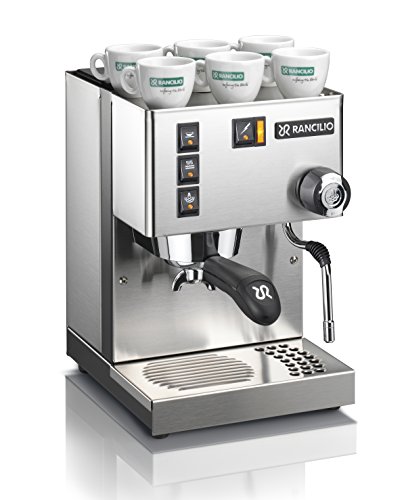
3. Rancilio Silvia
A long-running Italian semi-automatic with a commercial-style group head and a sturdy frame. Owners often keep these machines for many years. Expect to spend time learning temperature surfing and flushing habits with this style of machine.
Suits: people who want a durable, traditional design. Strengths: a rugged build and a standard portafilter. Weaknesses: no built-in grinder and a bit of a learning curve. Skip it if you want modern digital features.
View Rancilio Silvia on Amazon
Best for serious home baristas
4. Profitec Pro 300
A German-made dual-boiler machine with PID control, aimed at home enthusiasts who want cafe-style stability in a compact housing. Its group head and boiler setup are favored by people who like to read about the process.
Suits: serious home baristas. Strengths: a polished build and stable heat. Weaknesses: no grinder included. Skip it if you want a beginner machine.
View Profitec Pro 300 on Amazon
Best for milk drink lovers who want a compact prosumer
5. Lelit MaraX
An Italian heat-exchanger machine that offers quick steaming and strong temperature management. It suits people who steam milk often. Heat exchangers need a short cooling flush before a shot, which is a habit worth learning.
Suits: milk drink lovers who want a compact prosumer. Strengths: fast steam and a good reputation. Weaknesses: settings take time to learn. Skip it if you want automatic milk.

Best for households that want variety on demand
6. De’Longhi Eletta Explore
A super-automatic with a touch display and options that include cold coffee drinks, plus automatic milk. Check the listing for the full drink list. It is the easiest option here for mixed households where not everyone wants to learn technique.
Suits: households that want variety on demand. Strengths: one-touch hot and cold drinks. Weaknesses: less hands-on control. Skip it if you prefer manual shots.
View De’Longhi Eletta Explore on Amazon
Care and Setup
- Back-flush a machine with a three-way valve on the maker’s schedule.
- Use filtered or softened water to reduce scale in boilers.
- Descale only with products the maker recommends.
- Purge the steam wand before and after each use.
- Let the machine warm up fully before you pull your first shot.
Mistakes to Avoid
- Pairing a prosumer machine with a weak grinder.
- Ignoring the room needed for a larger body and drip tray.
- Forgetting regular maintenance on boilers and gaskets.
- Choosing automation and then wanting full manual control.
- Skipping a scale and timer, which help shots stay consistent.
Prosumer Versus Super-Automatic at This Level
At this tier you are choosing between two philosophies, and the choice matters more than any single feature. Prosumer machines are built like small commercial machines. They use heavy components, stable temperature systems and strong steam, but they hand the work to you. You supply a grinder, dose the coffee, tamp it, time the shot and steam the milk. In return you control every variable and can improve for years.
Super-automatic machines do the grinding, dosing, tamping, brewing and often milk frothing automatically. They are designed for convenience and consistency, and for households where several people want different drinks at the touch of a screen. You get less control over the recipe, but you also get less mess, less training and shorter prep times.
- Choose prosumer if you want to craft shots, enjoy the process and do not mind weekly cleaning and tuning.
- Choose super-automatic if daily convenience and variety matter more than the ability to fine-tune.
- Consider assisted semi-automatic if you want some automation but still want a manual steam wand and control over the grind.
Ask who will use the machine most. A single enthusiast will probably enjoy a prosumer machine, while a busy family may find a super-automatic better. Also consider what happens when the main user is away, since a complicated machine can be frustrating for others.
Boilers, PIDs and Temperature Stability
Much of what you pay for in this class is temperature control. Espresso extraction is sensitive to water temperature, and small swings change the taste. Machines achieve stability in different ways.
- Single boiler with PID: a digital controller holds the boiler at a set temperature. It is simple and compact, though brewing and steaming share one boiler, so you wait between them.
- Heat exchanger: a steam boiler heats the brew water as it passes through a tube. It allows brewing and steaming together, but often needs a short flush before a shot to manage brew temperature.
- Dual boiler: separate boilers for brewing and steaming give the most stable temperatures and the best multitasking, at the cost of size, weight and warm-up time.
A PID is a controller that regulates temperature more precisely than a basic thermostat. Many machines in this class offer it, and some let you set the brew temperature to suit each coffee. Check the listing for what can be adjusted and whether it is shown on a display.
Group head design also affects stability. Heavy brass groups hold heat well and reward a proper warm-up. Whatever the design, give the machine time to heat fully before pulling shots, and keep the portafilter in the group while waiting.
The Grinder Is Half the Machine
Buyers sometimes spend nearly all their budget on the machine and then pair it with a modest grinder. For prosumer machines, that undermines the investment. Espresso needs a fine, consistent grind and the ability to make small adjustments. A grinder that cannot do so will hold the machine back no matter how good the boiler is.
When you plan your purchase, reserve part of the budget for a quality burr grinder and good accessories.
- Burr quality and size: look for burrs designed for espresso, and read the listing for details.
- Adjustment: fine, repeatable steps matter more than a long list of features.
- Dosing: timed or weight-based dosing helps consistency.
- Retention and cleaning: grinders that hold less old coffee and open easily for cleaning keep flavors fresh.
- Noise and size: check that it fits beside the machine and under cabinets.
A scale accurate to a fraction of a gram, a precise tamper, a good basket and a distribution tool are modest additions that make a measurable difference. If you choose a super-automatic, the grinder is built in, so check how adjustable it is and how easy it is to clean. Some models allow adjusting grind coarseness only while grinding, and the manual explains how.
Installation, Power and Plumbing Considerations
Larger machines come with practical needs that smaller models avoid. Check the electrical requirements on the listing, and make sure the outlet you plan to use can deliver the load. Dual boilers and heat exchangers can draw a lot of power when heating, so avoid sharing a circuit with other high-draw appliances, and use a wall outlet instead of an extension cord.
Think about weight and placement. A heavy machine needs a solid, level counter, and you will want to avoid moving it often. Measure the height under cabinets, and check the clearance needed to open lids and fill the tank. Some machines allow a direct plumbed water supply and drain with extra parts, which saves refilling but requires fittings, a nearby water line and sometimes a professional installer. Check what your machine supports before planning.
- Use a water filter or treatment suited to your supply, following the maker’s advice.
- Plan where wastewater from the drip tray and purge will go.
- Check if the machine has a vibration pump or a rotary pump, as that affects noise and options for plumbing in.
- Leave room around the machine for ventilation.
Also check the warranty terms, support options and availability of replacement parts and service in your region before you commit.
Longevity, Servicing and Total Ownership
Machines in this class are meant to last, but only if maintained. Prosumer machines are generally more repairable, with replaceable gaskets, shower screens, valves and pumps. Super-automatics have more internal systems, including a brew unit and milk path, that need regular cleaning and occasionally replacement.
A realistic maintenance plan includes:
- Daily rinsing, wiping and purging of the group and steam wand.
- Regular backflushing or cleaning cycles according to the manual.
- Replacing group gaskets and shower screens when they harden or clog.
- Descaling with approved products when needed, and using treated water to slow build-up.
- Annual or periodic checks of fittings, valves and pumps, or professional servicing if recommended.
When comparing machines, ask how easily you can get parts, whether the maker documents servicing, and whether a local technician can work on it. Think about the cost of upkeep over several years, not just the purchase price. Signs that service is due include temperature drift, weak pressure, leaks around the group, noisy pumps, slow-draining drip tray, or steam that sputters. A well-kept machine in this class can serve for many years, so choose one that suits how you will use it, not one that merely has the longest feature list.
Espresso Machine FAQ
Is a dual boiler worth it?
If you make many milk drinks, yes, because brewing and steaming do not have to wait for each other.
Do I need plumbing?
These models use a water tank, though some prosumer machines can be plumbed in with extra parts.
What grinder should I pair?
Pair a prosumer machine with a good standalone grinder that can make fine adjustments.
Are super-automatics good here?
They are convenient, though you give up the control that prosumer machines allow.
Do I need a separate grinder with a prosumer machine?
Yes, in most cases. Prosumer machines usually do not include one, and the grinder has a major effect on shot quality. Plan the budget for both together.
How long should I warm up a dual boiler or heat exchanger machine?
Follow the manual. Many benefit from a longer warm-up than compact machines so the group and portafilter reach stable temperature. Check the listing or the maker's guide for the recommended time.
What is a PID controller?
It is an electronic controller that holds the boiler temperature closer to a set value than a basic thermostat. It helps make shots more consistent and can allow you to adjust temperature for different beans.
Is a super-automatic less capable than a manual machine?
It offers less control, but many produce good drinks with great consistency. Choose based on whether you value convenience or craft.
Can I plumb in a machine that uses a tank?
Only if the manufacturer offers a compatible plumbing kit or option. Do not modify a machine without checking the manual, as it may affect warranty and safety.
How often should I replace gaskets and shower screens?
It depends on usage and water quality. Replace them when they harden, crack, leak or clog, or follow the maker's schedule.
Is it worth using a pressure profiling feature?
It can give more control over extraction, but it also adds variables to learn. If you enjoy experimenting, it can be rewarding, otherwise a stable standard shot may be enough.
Where to buy
If you are shopping for the best espresso machines under 2000 dollars, the six fully automatic machines below are the shortlist this guide is built around. All six sit in the premium bean-to-cup class that the under-2000-dollars band is really about: a built-in grinder, automatic milk handling, and one-touch drinks. Listings change often, so use the links to check the current listing for each model on Amazon before you buy.
- Best Overall: PHILIPS 3300 Series — Check on Amazon
- Bosch Series 6 — Check on Amazon
- De’Longhi Rivelia (Beige) — Check on Amazon
- De’Longhi Magnifica Start — Check on Amazon
- De’Longhi PrimaDonna Aromatic — Check on Amazon
- PHILIPS 5500 Series — Check on Amazon
Read the full guide ↓
Shopping for the best espresso machines under 2000 dollars puts you in the most interesting part of the home espresso market. Below this band, you are mostly choosing which compromises to accept: a separate grinder to buy and dial in, a steam wand to learn, a smaller set of drinks you can make without a routine of tamping, timing, and cleaning between cups. At this level, the machines change character. A budget in this range buys a true bean-to-cup automatic — whole beans in the top, a finished espresso, cappuccino, or latte out the front at the press of a button — and the real question stops being whether the machine can make good coffee and becomes how you want to live with it every day.
That is the question this guide is organized around. All six picks here are fully automatic machines from the three brands that dominate this class, and all six grind, brew, and handle milk for you. What separates them is not a simple good-to-bad scale. It is the milk system design, the size of the drink menu, how the machine asks to be cleaned, how much of your counter it claims, and how much control it hands you when you want a drink made your way rather than the factory’s way. A household of one who drinks a single flat white each morning and a household of five that hosts brunch every weekend will honestly be happiest with different machines from this same list, and both of them can stay comfortably inside the same budget band.
One thing this guide will not do is print prices. Prices for appliances in this class move with promotions, seasons, and listing changes, and a number printed here would be stale quickly and could mislead you at exactly the moment it matters. Instead, each pick is positioned by tier — which machines in this list are the value end of the band, which are the middle, and which are the splurge end — and every link takes you to the live listing so you can check the current price on Amazon for yourself before deciding. If your ceiling is actually much lower, be honest with yourself about that before reading on: our coverage of Best Espresso Machines Under $400 deals with a different class of machine entirely, and no amount of wishful thinking turns a bean-to-cup automatic into a budget appliance.
Key Takeaways
- The under-2000-dollars band is the natural home of the fully automatic espresso machine: built-in grinder, automatic milk, and one-touch drinks are standard here, not luxuries.
- The PHILIPS 3300 Series is the best overall pick for most households — its LatteGo milk system is the easiest in this list to clean, and its five hot and iced presets cover what most people actually drink.
- Milk system design matters more day to day than menu size. A carafe you can rinse and refrigerate beats a larger recipe count you rarely use.
- The De’Longhi Magnifica Start is the value end of this band and the gentlest first automatic; the De’Longhi PrimaDonna Aromatic, with 38 one-touch recipes and hot and cold frothing, is the splurge end.
- Budget for ownership, not just purchase: fresh beans, water care, and the machine’s cleaning and descaling routine are part of what you are buying.
- Check the live listing for every finalist. In this tier, the gap between models narrows and widens with promotions, so the best value on the day you buy may not be the one that looks best on paper.
In this guide
Quick Picks: The Best Espresso Machines Under 2000 Dollars at a Glance
| Pick | Badge | Standout trait from its listing | Link |
|---|---|---|---|
| PHILIPS 3300 Series | Best Overall | LatteGo milk system, 5 hot and iced presets, ceramic grinder, 15 bars | Check on Amazon |
| Bosch Series 6 | Best for Households and Guests | 25 drinks, XL to-go options, cup warmer, 3.7-inch touchscreen | Check on Amazon |
| De’Longhi Rivelia (Beige) | Best for Trying Different Beans | Removable bean hoppers, 18 one-touch recipes, milk frother | Check on Amazon |
| De’Longhi Magnifica Start | Best First Automatic | 3 one-touch recipes, built-in grinder, frother, easy-to-clean design | Check on Amazon |
| De’Longhi PrimaDonna Aromatic | Best Premium | 38 one-touch recipes, hot and cold milk frother, touchscreen display | Check on Amazon |
| PHILIPS 5500 Series | Best Drink Variety | LatteGo milk system, 20 hot and iced presets, QuickStart, ceramic grinder | Check on Amazon |
Read the table as a map of priorities rather than a ranking from best to worst. If easy milk cleanup is your pain point, start at the top with the Philips machines and their LatteGo system. If your household drinks a wide rotation and entertains, the Bosch Series 6 and the PrimaDonna Aromatic earn their place at the splurge end of the band with the longest menus. If you switch beans often — a caffeinated bag for mornings, a decaf for evenings — the Rivelia’s removable hoppers solve a problem the other five simply route around. And if this is your first automatic and a long menu sounds more intimidating than exciting, the Magnifica Start is the honest entry point to this class. Readers stretching down from a higher ceiling may also want to compare against our guide to Best Espresso Machines Under $3000, where the same class continues upward; readers whose real ceiling is lower should look at Best Espresso Machines Under $300 to understand what that band buys instead, rather than expecting these machines to meet them there.
How These Picks Were Chosen
This guide is research-led. We built the shortlist from the verified product pool for this category: manufacturer listings, the specifications and features stated in those listings, and the documented design of each model’s grinder, brew system, and milk system. We compared the six machines on the factors that actually differentiate fully automatic machines in daily use — milk system type and cleaning burden, drink menu breadth, grinder type, how strength and cup size can be adjusted, display and controls, and the cleaning and descaling routine each machine asks of its owner. Every specification mentioned in the reviews below comes from the product’s own listing; where a detail is not stated in the listing, we leave it out rather than guess.
We want to be straightforward about the limits of that method. This is not a hands-on test report, and we do not claim to have pulled shots side by side on a bench. What research does well is exactly what matters most before a purchase in this tier: it tells you how each machine is designed to be used, what it will ask of you every week, and where its menu and controls genuinely differ from a rival’s. Taste, in the end, will depend heavily on the beans you feed any of these machines and how fresh they are — a variable no review can fix for you. What we can do is make sure you choose the machine whose daily routine fits your household, because in this class the machine you enjoy using every morning is the one that makes the best coffee over the years you own it.
Two filters shaped the final six. First, every pick had to be a genuine fully automatic machine with a built-in grinder — at this budget, buying a machine that still needs a separate grinder defeats the purpose of the band. Second, every pick had to handle milk drinks automatically or with a proper frother, because milk drinks are the main reason most households step up to this tier. Machines that failed either filter, whatever their other virtues, do not belong in a guide to the best espresso machines under 2000 dollars.
Water Quality, Scale and Taste
Espresso is mostly water, so what comes out of your tap matters as much as the beans. Hard water, which is rich in calcium and magnesium, leaves scale inside boilers, heating elements and pipes. Scale reduces heat transfer, clogs small passages and can eventually cause costly failures. Very soft water has the opposite problem: it can taste flat and may not suit machines with sensors that rely on mineral content to detect water levels. Aim for moderate mineral content and avoid distilled water, which can confuse sensors and gives a lifeless cup.
Start by checking your local water report or using a simple test strip to learn your hardness. If it is high, a filter cartridge designed for espresso machines, or a bottled option with balanced minerals, protects the boiler. Some machines in this price range have a water softener port, and tank-fed models usually have a filter holder in the reservoir. Replace cartridges on schedule, since an exhausted filter no longer helps and can add flavors of its own.
Descaling frequency depends on hardness and usage. With filtered water and light use, many owners descale a couple of times a year, while hard-water households may do it every few months. Follow the maker’s recommended descaling solution, since harsh chemicals can damage seals and brass parts.
Steaming Milk and Making Milk Drinks
If most of your drinks are lattes and cappuccinos, steam performance matters as much as shot quality. Heat exchanger and dual boiler machines can steam without waiting between shots, because the steam boiler stays hot. Single boiler machines like the Rancilio Silvia produce good steam but require you to switch temperature settings between brewing and steaming, which slows you down when making several drinks. Super-automatic machines, such as the De’Longhi Eletta Explore, handle milk through automatic systems that reduce effort and give consistent results.
Manual steaming is a skill that takes practice. The goal is a smooth, glossy microfoam with tiny bubbles, achieved by introducing air briefly at the start and then spinning the milk to heat it evenly. Use a stainless pitcher sized for your drink, cold milk and fresh steam. Purge the wand before and wipe it after every use, because dried milk blocks the tip and creates sour smells.
- Large boilers recover quickly for back-to-back milk drinks.
- Steam wands with multiple holes give gentler, more controllable foam.
- Automatic milk systems need regular rinsing to stay hygienic.
Kitchen Fit: Size, Noise and Heat-Up Time
Before you buy, measure the space. Prosumer machines are often deep and heavy, and many need clearance above for refilling the tank or lifting the lid. Check the height under your cabinets, the depth of the counter and whether the machine’s drip tray can be pulled out. A grinder sits beside the machine, so leave space for both along with a knock box and a tamping area.
Noise is easy to overlook. Vibratory pumps are loud during extraction, while rotary pumps run more quietly but are found on more expensive or plumbed models. Heat-up time varies too. Some dual boiler machines are ready in a few minutes, while others need fifteen to thirty minutes for the group head to stabilize. If you are a hurried morning drinker, a machine with fast heat-up or a timer function removes friction from your routine.
The Learning Curve and Your First Month
Do not judge a machine by the first week. Expect a period of dialing in, where grind size, dose and shot time are adjusted until the espresso tastes balanced. Begin with a consistent recipe, such as a fixed dose, a target yield about twice the dose, and a shot of around 25 to 30 seconds, then change one variable at a time. A scale accurate to a tenth of a gram and a timer will help you build good habits quickly.
Fresh, good-quality beans make the learning faster. Stale coffee produces thin shots no matter how fine the equipment, and it will make you doubt your technique. Keep notes, taste each shot, and give yourself a month before judging whether the machine suits you.
Setting a Total Budget, Including Accessories
A budget of 2,000 dollars rarely means the machine alone. Plan for a scale, a tamper that fits your basket, a knock box, a milk pitcher, cleaning supplies, a water filter and descaler. These items add up to a modest sum but make daily use far easier. If you have not yet chosen a grinder, reserve a meaningful share of the budget for it, since a stronger grinder with a slightly cheaper machine often produces better results than the reverse. Keep a small reserve for maintenance too, such as gaskets and a shower screen, so a routine service never becomes a reason to stop using the machine.
Related guides
- 6 Best Espresso Machines Under 1000: Semi and Super-Auto
- 6 Best Pro Espresso Machines: Commercial and Prosumer (2026)
Frequently Asked Questions
Is distilled water safe in an espresso machine?
Usually not recommended. Many machines rely on a small amount of mineral content for sensors, and distilled water makes lifeless-tasting coffee. Use filtered or balanced bottled water instead, and check the manual for the maker’s guidance. Water with moderate hardness is a safer target.
How loud are home espresso machines?
Most use vibratory pumps that produce a noticeable buzz during extraction, roughly comparable to a loud appliance. Rotary pump models are quieter, but are usually found on higher-priced or plumbed machines. Grinders are often louder than the machine itself, so consider the whole setup.
Can I make good lattes on a single boiler machine?
Yes, but the workflow is slower. After brewing, you wait for the boiler to heat to steaming temperature, then steam the milk. It works well for one or two drinks. If you often make several milk drinks at once, a heat exchanger or dual boiler is more convenient.
How long does it take to learn to pull good espresso?
Most beginners get drinkable shots within a few weeks and consistent ones within a couple of months, provided they use fresh beans and a decent grinder. Keep a fixed recipe, change one variable at a time, and use a scale and timer to track results.
Going Deeper: What Really Matters When Choosing Prosumer and super-automatic espresso machines in this top tier
The first part of this guide gave you the shortlist. This extended section slows the decision down, because prosumer and super-automatic espresso machines in this top tier reward buyers who think past the headline features and into the daily reality of owning and using them. None of the criteria below appears in large print on a product box, yet together they decide whether a purchase still feels right a year from now. Work through them with your own kitchen, household and habits in view — the right answer is personal, and these are the questions that reveal it.
Heat management is the headline act
At the top end, machines separate themselves by how they manage heat: dual boilers that brew and steam independently, heat exchangers that do both through one boiler, and sophisticated controls that hold temperatures steady. The practical benefit is simple — you can pull a shot and steam milk at the same time, repeatedly, without the second drink suffering. If your household makes several milk drinks in a row, this is the feature that changes mornings. If you drink one straight espresso a day, it may be power you never use, and a simpler single-purpose machine could serve you just as well for less complexity.
Pressure and pre-infusion control
Higher-tier machines increasingly let you shape how water meets coffee: gentle pre-infusion that wets the puck before full pressure, and in some designs, profiling that varies pressure through the shot. Used well, these tools forgive small preparation errors and unlock sweetness from lighter roasts. Used carelessly, they add variables you do not need. Ask whether the control on a given model is simple and repeatable — a lever, a paddle, a saved programme — or a rabbit hole. The best control is the kind you can return to exactly, drink after drink.
Serviceability and parts culture
Prosumer machines borrow their logic from commercial equipment: standard portafilter sizes, replaceable gaskets, accessible internals and a community that documents repairs. That culture is a feature. Before buying, check that wear parts are listed and available, that the manual covers routine service, and that independent technicians in your area will work on the brand. A machine designed to be opened and maintained can serve for a very long time. Super-automatics in this tier trade some of that openness for integration, so their service story runs through the manufacturer’s network instead — confirm it is strong where you live.
The grinder question returns, larger
A top-tier machine paired with a mediocre grinder produces mediocre espresso with expensive confidence. If the picks you are considering are machine-only, treat a capable grinder as part of the same purchase decision, not a later accessory. If a pick integrates grinding and automatic drinks, judge it on convenience and consistency rather than ultimate control. Either way, allocate your attention in proportion: the grinder sets the ceiling, the machine determines how reliably you reach it, and your preparation decides where between floor and ceiling each individual shot lands.
How the Picks in This Guide Compare in Daily Use
The reviews above introduce each option on its own terms. This section steps back and compares them as things you will live with, because the differences that matter most — effort, forgiveness, maintenance, fit with your household — only appear in daily use. Read it with your own routine in mind, and let the picks sort themselves against that routine rather than against each other in the abstract.
Consider Breville Dual Boiler again with daily life in mind rather than first impressions. The description above sets out what it is and who it suits; the living-with-it question is how its strengths and its stated trade-off feel after a month of ordinary use. If its strength matches the thing you do most often, the trade-off will fade into the background. If its strength serves an occasional need while its weakness taxes a daily one, the honeymoon will be short. That simple projection — strength against routine, weakness against routine — is the most reliable comparison tool in this whole guide.
With Breville Oracle, the detail worth re-reading is the limitation named in its review, because limitations are where ownership is actually decided. Every pick here does its main job well; they differ in what they ask of you in return — space, patience, cleaning attention, or a narrower set of drinks. Ask whether the specific thing it asks is a thing you give easily. A demand that fits your habits is barely a cost. A demand that fights them is a daily tax, and daily taxes, not headline features, are what make people stop using a product they once researched carefully.
Place Rancilio Silvia in the context of the other picks rather than judging it alone. This guide deliberately spans different approaches to the same job, so each option defines the others: the convenient ones show what the hands-on ones ask you to give up, and the hands-on ones show what the convenient ones cannot do. If you find yourself torn between this pick and another, name the single difference that separates them and imagine living with that difference for a year. Decisions made on one honest difference age better than decisions made on a blur of features.
Think about Profitec Pro 300 in the hands of the other people in your household, not only in yours. A product that only its buyer can operate becomes a service that person must provide; a product others can use confidently becomes part of the household. If your household will share it, weight clarity and forgiveness heavily. If it is truly yours alone — your hobby, your ritual, your quiet morning — weight pleasure and control instead. Neither weighting is wrong, but choosing the wrong one for your situation is the most common reason a well-reviewed product disappoints a perfectly sensible buyer.
For Lelit MaraX, imagine the second year rather than the second week. What wears, what needs cleaning, what needs replacing, and how available are the parts and the knowledge to do it? Products in this guide were chosen to be keepable — standard sizes, documented care, designs that can be maintained rather than discarded. Still, the ownership stories differ, and the pick whose maintenance rhythm matches your temperament will feel cheaper and better over time than a rival whose care you resent. Long-term fit is a feature; read for it between the lines of each review.
Finally, hold De’Longhi Eletta Explore against the simplest test of all: does it remove a friction you actually feel, or add a capability you only imagine using? Both can justify a purchase, but they justify different ones. Friction-removers pay you back daily and are almost never regretted. Capability-adders pay you back when the imagined occasion arrives — so be honest about how often it will. Running every pick through that test, in the order they appear above, usually leaves one option standing quietly at the end. That quiet one, more often than not, is the right purchase.
A Closer Look at the Details That Decide Satisfaction
Living with a prosumer machine changes your relationship with the morning. Warm-up becomes part of the rhythm: machines with substantial boilers need time to reach full stability, so timers and smart plugs become quiet heroes, switching the machine on before you wake. Once hot, the machine stays ready for hours, which suits households where drinks happen across the morning rather than in one rush. Plan for that pattern when you choose. A machine that rewards being left on suits a home office; a fast-heating design suits a single quick drink before a commute.
Plumbing is the other lifestyle decision at this tier. Some machines can be connected directly to a water line and drain, removing tank refills and drip-tray emptying from your life entirely. That convenience requires a suitable location and, for renters, permission. Tank-fed machines keep placement flexible and installation trivial. Neither choice affects the cup directly, but both affect how the machine fits your home for years. Think about where the machine will live in your next home as well as this one, especially if you are buying at a level you expect to keep for a decade.
Shot diagnosis becomes a genuine pleasure with capable equipment. A bottomless portafilter shows you channeling as it happens — jets and uneven streams that tell you the distribution or tamp needs attention. A gauge shows pressure behaviour across the shot. A scale under the cup turns guesswork into ratios you can repeat. None of this equipment is required, but this tier of machine responds visibly to good information, which is why enthusiasts love it. Add diagnostic tools one at a time, and let each one teach you something before the next arrives.
Milk steaming power at this level can surprise newcomers. Strong steam textures milk in seconds, which is wonderful once your pitcher movements are automatic and chaotic before they are. Practise with water and a drop of washing-up liquid, or with milk you are willing to waste, until the whirlpool and the timing feel familiar. The goal is glossy, integrated milk, not maximum foam. Once the technique lands, back-to-back lattes for guests become the party trick this tier of machine was born to perform — and the reason many buyers choose it.
A Practical Routine: From Cold Machine to a Drink You Are Proud Of
Begin before the machine: fresh beans, a clean milk path or wand, and water you would happily drink on its own. Fill and check the tank, empty the drip tray if it is close, and switch the machine on early enough for it to be genuinely ready rather than merely awake. While it warms, prepare your dose and your cup. This unhurried front end is not ceremony — it removes every small scramble that later masquerades as a bad drink. Espresso punishes rushing at exactly the moment your hands are busiest, so the routine’s job is to make the busy moment the only thing you are doing.
During the drink itself, work in the same order every time. Consistency in sequence builds consistency in the cup, because variables stop changing accidentally. Dose, distribute and tamp the same way; start the shot and the milk in the same relationship; pour and serve immediately rather than letting the drink sit while you tidy. Tidying is part of the routine too, but it comes after serving: knock out the puck, wipe and purge the steam wand or run the milk rinse, rinse the pitcher, and give the drip area a quick wipe. Two minutes of reset now prevents the residue that would otherwise flavour tomorrow’s first drink.
Once a week, give the machine its slightly deeper care: wash removable parts in hot soapy water, clean the group and shower screen as the manual describes, wipe seals and surfaces, and check the water filter’s age. Once a month — or on the machine’s own prompting — deal with scale according to your water hardness. Keep the supplies for these jobs together in one place so the routine has no friction. Machines rarely fail from use; they decline from skipped small care compounding quietly. A written rhythm, kept, is the cheapest performance upgrade in this entire guide.
Troubleshooting the Drinks That Disappoint
When a shot tastes sour and thin, think under-extraction: the water rushed through, too cool or too coarse a bed, leaving the coffee’s sweetness behind. When it tastes bitter and hollow, think over-extraction: too fine, too hot or too long, pulling the harsh compounds out. These two poles organise nearly all espresso troubleshooting. Adjust one variable a step at a time — grind first, then dose or ratio, then temperature habits like warm-up — and taste again. Random changes feel productive and teach nothing; single changes feel slow and teach everything, which is why experienced home baristas keep notes even when their drinks are already good.
Inconsistent drinks with no change in recipe usually trace to preparation or cleanliness: an unevenly distributed bed, a tilted tamp, stale beans from a bag left open, or a group and basket filmed with old coffee oils. Before adjusting any setting, clean the coffee path and make one careful drink with fresh beans and your most deliberate technique. That diagnostic drink separates machine problems from habit problems, and most of the time it is the habits. This is good news disguised as blame: habits are free to fix, and fixing them improves every future drink on any machine you ever own.
Milk troubles follow their own short list. Foam that collapses points to milk that was too hot, too old or contaminated by a dirty wand or carafe. Foam that will not form points to air not being introduced, a blocked wand tip or intake, or milk whose proteins have faded with age. Scorched flavours mean the milk went too far; flat flavours mean it stopped too soon or the espresso beneath it was weak. Work the list in order — fresh cold milk, clean equipment, correct temperature — before suspecting the machine. Nine milk problems out of ten are solved by those three checks, in that order, at no cost.
Matching the Setup to the Household
For the solo drinker, the virtues are speed and simplicity: a machine that heats quickly, wastes little milk and cleans in moments keeps the habit alive on workdays. For a couple with different tastes, profiles and flexibility matter more — one machine must make a strong small drink and a large milky one without either person compromising. For families, capacity and forgiveness dominate: tanks and carafes sized for a queue, systems that tolerate interruption, and cleaning that does not depend on one conscientious person. Read the picks through your household’s lens, because the same machine can be perfect for one kitchen and wrong for the one next door.
Entertainers should think in rounds. Making drinks for six guests tests heat recovery, milk capacity and your own workflow more than any weekday morning. Machines that hold temperature across back-to-back drinks, and milk systems that do not need long rests, turn hosting from a performance into a pleasure. If you entertain rarely, do not buy for the party — buy for the weekday and accept a slower party pace. If weekends at your house mean a queue of friends with cups, weight the recovery and capacity details in the pick descriptions heavily. They are written for exactly that queue.
Finally, consider the household’s future. Coffee habits evolve: children become teenagers who want hot chocolate from the milk system, a partner discovers flat whites, your own taste migrates from cappuccino to straight espresso. A machine with a little headroom — a broader menu, a wand alongside automation, a standard portafilter — adapts as tastes move. Buying exactly for today’s drink is efficient; buying with one step of headroom is wise. The picks in this guide were chosen partly for that adaptability, so favour the one whose strengths overlap not just your current favourite, but the drink you suspect you are growing toward.
More Questions Worth Asking Before You Decide
Is a dual boiler worth it for home use?
It is worth it if you regularly make milk drinks for several people, or drink espresso and milk drinks in the same session, because brewing and steaming never wait for each other and temperatures stay stable. If you make one drink at a time and rarely steam, a well-designed single boiler or heat exchanger covers your needs with less to maintain. Count your typical drinks in a busy morning and let that number, rather than aspiration, decide the boiler question.
How important is warm-up time in daily life?
More important than specifications suggest, because a machine that is not ready does not get used. Substantial machines may need a long warm-up for full temperature stability; a timer that starts it before you wake removes the friction entirely. Fast-heating designs suit spontaneous single drinks. Match the warm-up pattern to your routine: scheduled mornings favour the timer approach, unpredictable schedules favour speed. Either way, a warm machine that is ready when you are beats a theoretically superior one that is still cold.
Can these machines handle light-roast espresso well?
Generally yes, and this is one of their strengths. Stable temperatures, pre-infusion and good pressure control help extract sweetness from dense, light-roasted beans that can taste sharp on lesser equipment. Success still depends on the grinder and on giving the shot enough time and water to open up. If light roasts are your passion, prioritise temperature stability and gentle pre-infusion in your choice, and expect to experiment with longer ratios than you would use for darker roasts.
The Short Version
For brewing and steaming together, the Breville Dual Boiler. For automation with control, the Breville Oracle. For a traditional build, the Rancilio Silvia. For a polished dual boiler, the Profitec Pro 300. For fast steam, the Lelit MaraX. For one-touch variety, the De’Longhi Eletta Explore.


