A portafilter basket is the metal filter cup that holds your coffee grounds, and its hole pattern affects how evenly water passes through the puck. Swapping a stock basket for a precision one can make shots more consistent.
The six baskets below come from well-known suppliers and cover 54mm and 58mm sizes. We have not used these products ourselves, so confirm the exact size, dose and fit for your portafilter on the current listing before you buy. Everything here is general guidance only.
As an Amazon Associate we earn from qualifying purchases. Links below are affiliate links, and they do not change the product information we give.
What to Look For
| Feature | Why it matters |
|---|---|
| Diameter | Match your portafilter, often 54mm or 58mm |
| Dose | Baskets are made for a particular amount of coffee |
| Pressure type | Non-pressurized baskets reward good grinding |
| Hole precision | Even holes help water flow through the puck evenly |
| Material | Stainless steel resists rust and wear |
| Fit | Check the model list on the listing for compatibility |
In this guide
Specs at a Glance
| Basket | Material | Size class | Notes |
|---|---|---|---|
| IMS Competition | Stainless steel | 58mm class | Precision-made holes |
| VST Precision | Stainless steel | 58mm class | Popular among enthusiasts |
| Breville 54mm Single Wall | Stainless steel | 54mm | For Breville machines |
| Normcore 58.5mm | Stainless steel | 58.5mm class | Fits many 58mm holders |
| Pullman Baristas Basket | Stainless steel | 58mm class | Shaped for better extraction |
| Gaggia Classic 58mm | Stainless steel | 58mm class | Replacement for Gaggia |
The 6 Best Espresso Portafilter Baskets

Top pickBest for enthusiasts upgrading a stock basket
1. IMS Competition Filter Basket
A precision-made basket from a respected Italian maker. It is available in different dose sizes, so check the listing before ordering. Weigh each dose, since precision baskets work best with accurate dosing.
Suits: enthusiasts upgrading a stock basket. Strengths: tight tolerances and a good reputation. Weaknesses: you must match the dose and fit. Skip it if you are happy with the stock basket.
View IMS Competition Filter Basket on Amazon
Best for people who weigh and time every shot
2. VST Precision Filter Basket
A precision basket designed to give consistent hole sizes and a well-regarded finish. It is available in different dose sizes. Pair it with a good tamper and a consistent grind for the best effect.
Suits: people who weigh and time every shot. Strengths: even hole patterns. Weaknesses: a premium tier for a small part. Skip it if you rarely change your routine.
View VST Precision Filter Basket on Amazon
Best for breville owners
3. Breville Single Wall Filter Baskets
Non-pressurized baskets made for Breville 54mm portafilters, suited to owners who want to move beyond the dual-wall style. The single-wall style gives more feedback on grind quality than pressurized options.
Suits: Breville owners. Strengths: a direct fit for the machine. Weaknesses: only for 54mm holders. Skip it if your machine uses a 58mm portafilter.
View Breville Single Wall Filter Baskets on Amazon
Best for enthusiasts with 58mm machines
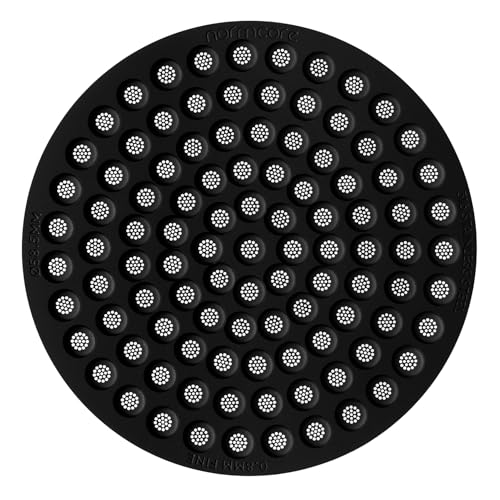
4. Normcore 58.5mm Filter Basket
A precision basket sized for many standard 58mm holders. Check the dose and size options on the listing. Measure your portafilter before ordering to avoid a poor fit.
Suits: enthusiasts with 58mm machines. Strengths: a precise build and good reviews from brewers. Weaknesses: fit varies by portafilter. Skip it if you have a 54mm machine.
View Normcore 58.5mm Filter Basket on Amazon
Best for coffee tinkerers
5. Pullman Baristas Basket
A precision basket designed with a shape that aims for even extraction in a puck. Confirm the dose and fit before ordering. Treat it as one piece of a broader approach to better shots.
Suits: coffee tinkerers. Strengths: an unusual and thoughtful design. Weaknesses: less common in shops. Skip it if you want a standard stock replacement.
View Pullman Baristas Basket on Amazon
Best for gaggia Classic owners
6. Gaggia Classic Pro 58mm Replacement Filter Basket
A replacement basket suited to the Gaggia Classic family. Confirm which dose and style you need before ordering. It is a practical, no-fuss way to refresh a worn basket.
Suits: Gaggia Classic owners. Strengths: a simple direct fit. Weaknesses: basic hole precision. Skip it if you want a boutique upgrade.
View Gaggia Classic Pro 58mm Replacement Filter Basket on Amazon
Care and Setup
- Rinse baskets after each use and dry them fully.
- Soak them in cleaner as the maker recommends.
- Check hole patterns now and then for clogging.
- Replace a basket that shows dents or rough edges.
- Store spares where they will not scratch.
Mistakes to Avoid
- Buying the wrong diameter for your portafilter.
- Using an oversized dose that touches the shower screen.
- Expecting a basket to fix a poor grinder.
- Forgetting that basket dose affects your recipe.
- Using abrasive cleaners that scratch the surface.
Measuring Diameter and Checking Fit
A basket that does not fit your portafilter is useless, so start with measurement. Baskets are made in several diameters, and the sizes people see most often on home machines are about 51mm, 54mm and 58mm. Even within the same nominal size, there are variations, such as baskets labeled 58.5mm that are meant to suit particular holders. Do not rely on memory or on the machine brand name alone.
Check your machine’s manual or product page for the stated portafilter size. Then confirm by measuring the inside diameter of the portafilter’s basket seat, using calipers if you have them, or a ruler for a rough check. Compare this with the basket listing, which should give an outside diameter and sometimes a lip width or height.
Look at the details that affect seating. A basket should drop into the portafilter and sit flat, with its lip resting evenly on the ledge. Some holders use a spring clip or a retaining ring, and a basket that is too tall or short can make the clip hard to fit. Also check whether the machine uses an unusual shape, such as a bottomless portafilter or a spouted one, and whether the basket is meant to work with it.
If the listing does not name your machine, look for a statement of compatibility from the seller or maker. When in doubt, ask them. Keep the old basket until you know the new one fits, so you are not stuck without a working setup.
Dose Capacity and Headspace
Baskets are made for specific amounts of ground coffee, often labeled by dose such as a single or a double or by a number of grams. The label tells you the intended range, and that range affects your recipe. Using a dose far below or above the range often leads to uneven extraction, because the puck is too shallow or too tall.
Headspace is the empty space between the top of the coffee bed after tamping and the shower screen. Too little headspace means the coffee can touch the screen, leaving marks and making it harder for water to spread evenly. Too much headspace can let the puck move around when the water hits it. Many machines work best with a small, consistent gap, and the correct size varies by model, so check the manual.
When you change baskets, expect to adjust your routine. A basket with a different capacity may need a different dose, and a different grind setting. Weigh the coffee each time rather than guessing, and record the grams in and the grams out. If you intend to use a larger dose, confirm that your portafilter has room and that the machine’s shower screen will not touch the puck.
It is also worth checking whether the basket is tapered or straight-walled, as the shape affects how the puck behaves. There is no single right shape for everyone, so read the maker’s description and think about whether you want a gentle change or a significant one.
Hole Pattern and Precision, Explained
The main reason to change a basket is the hole pattern. Standard baskets are made in large quantities and can have holes that vary slightly in size and spacing. Precision baskets aim for tighter control over these details, with holes that are more uniform and sometimes laser cut or chemically etched, depending on the maker.
Why does that matter? Water takes the easiest path through the puck. If the holes are uneven, the flow can vary across the bottom of the basket, and that may contribute to uneven extraction. A precision basket may give more consistent flow, but only if the grind, dose and tamp are also consistent. It cannot fix a grinder that produces a wide mix of particle sizes.
Hole count, hole size and the open area are the numbers you may see on listings. Be careful in interpreting them. Different arrangements suit different grinders and styles of espresso, and no listing can promise a better taste. If you buy a precision basket, expect to adjust your grind and dose, and give yourself time to taste the difference.
Also consider whether the basket is single wall or dual wall. Dual-wall, or pressurized, baskets create resistance in a different way and are more forgiving. Single-wall baskets give you more feedback. Matching the basket type to your skill and your grinder is more important than choosing the most expensive option.
Material, Finish and Cleaning Habits
Most baskets are made of stainless steel, and differences in finish, thickness and edge quality can affect longevity and feel. Look at the listing for the material and any claims about food-safe finishes. Smooth, burr-free edges matter, because a rough rim can chip the coffee puck or fail to seat evenly.
Cleaning is straightforward but should be regular. Coffee oils build up in the holes and eventually go rancid, which can add a stale taste to shots. Rinse the basket after each session, and give it a deeper clean with an espresso machine cleaner as the maker recommends. Soak it in hot water with a cleaner, then rinse thoroughly and let it dry fully.
Do not use abrasive pads or harsh brushes that can scratch the surface or widen the holes. Look for clogged holes by holding the basket up to the light. If many holes appear blocked even after cleaning, the basket may be due for replacement.
Handle baskets carefully. They are thin and can dent if dropped or pried out with a hard tool. Use a soft method to remove them, such as pressing from the back or following the instructions for your portafilter. Store spares in a separate container, away from other tools that could scratch them, and label them by dose so you do not confuse them.
When to Replace a Basket and What Else to Check
Baskets wear slowly, and many users keep one for years. There are still signs to watch for. Visible dents or warping, rough or sharp edges, holes that will not clear and persistent staining that does not respond to cleaning can all be reasons to replace one. If shots become inconsistent and nothing else has changed, inspect the basket along with the rest of your gear.
Before blaming the basket, check other parts of the system. A worn gasket or a dirty shower screen can create uneven flow. A grinder that has drifted out of adjustment, or beans that are stale, can have a bigger effect than any basket. Make sure the portafilter itself is not bent or corroded, and that the group head is clean.
If you are replacing the basket as part of an upgrade, also look at the rest of the workflow. A tamper that fits the new basket closely, a scale for dosing, and a good distribution method help the basket do its job. Consider buying a spare of the same size if your routine depends on it, so you can keep brewing while one is soaking.
Finally, keep your expectations realistic. A better basket is a small, targeted upgrade and can make shots more repeatable. It works best alongside fresh beans, a capable grinder and a steady technique, and it is rarely a substitute for any of them.
Portafilter Basket FAQ
Will a better basket change flavor?
It can improve consistency, but results depend on grind, dose and technique.
How do I know my basket size?
Measure the inside of your portafilter and check the machine manual.
What is a precision basket?
It is a basket with tightly controlled hole sizes and placement.
Do I need to change my grind?
Often yes, since a new basket can change how the puck behaves.
Are pressurized baskets bad?
No, they forgive coarse or uneven grinds, but they limit how much you can refine a shot.
What basket sizes are common on home machines?
Sizes such as about 51mm, 54mm and 58mm are common, but fit varies by machine and holder. Check your manual and measure the portafilter before ordering.
What does headspace mean?
It is the gap between the tamped coffee and the shower screen. Too little can leave marks and uneven flow, and too much can let the puck move. The right amount varies by machine.
What is the difference between single-wall and dual-wall baskets?
Dual-wall baskets add resistance that forgives coarse or uneven grinds. Single-wall baskets give more feedback and more control but need a better grind and technique.
Can I use a larger dose than the basket is made for?
It is not advised. Going well outside the intended range can cause uneven extraction and may cause the coffee to touch the shower screen. Follow the dose stated on the listing.
How do I clean a basket?
Rinse after each use and soak it periodically in an espresso machine cleaner according to the maker's directions. Rinse well, dry it and avoid abrasive pads.
Do I need a new tamper with a new basket?
Often you do if the diameter is different. A tamper that fits closely helps give an even, level puck.
How long does a basket last?
With good care they can last for years. Replace one that is dented, warped, rough-edged or has holes you cannot clear.
Tapered, Straight-Wall and Ridged Basket Designs
Two baskets with the same diameter can behave very differently once you look at the wall shape and the rim. Knowing the main design variations will save you from buying a basket that technically fits but never seats the way you want.
Wall shape
Straight-wall baskets keep the same width from the top to the shower-screen end of the puck, which tends to give a uniform column of coffee. Tapered baskets narrow toward the bottom, which changes how the puck sits and how water travels through it. Neither is universally better. The right answer depends on the grinder, the dose and how you prepare the puck, and many baskets sold for 58 mm home machines are a mix of both shapes.
Ridged and ridgeless
Most baskets have a small ridge on the inside wall that holds the puck in place against the portafilter spring clips. Ridgeless designs leave the wall smooth so the puck is not pinched at the edge, which some users like for even extraction, though they can sit slightly differently in the portafilter and may need a compatible tamper. If you are looking at the IMS or VST styles in this guide, check whether the listing says ridge or ridgeless before ordering.
Rim and lip
The outer lip determines whether the basket drops into the portafilter and stays secure. A lip that is slightly too wide or too narrow can cause wobble, a poor seal or difficulty locking the spring clip. That is why measuring your existing basket and noting the exact machine model matters as much as the stated diameter.
Diagnosing Your Shots Before Blaming the Basket
A basket swap is an appealing fix, but most problems start somewhere else. A short checklist helps you decide whether a new basket is really the answer.
- Sour, thin and fast shots. Usually grind too coarse, dose too low, or a puck that is not level. Fix the grind first.
- Bitter, harsh and slow shots. Often grind too fine or water temperature too high. A basket change will not cure it.
- Spurting jets from the bottom. Typically channeling from uneven distribution or a tamp that is crooked. Try stirring the grounds with a thin needle or using a distribution tool before tamping.
- Muddy, inconsistent cups from shot to shot. Look at dose weight and puck prep. Weighing the dose to a tenth of a gram removes a big variable.
- Visible clogged or bent holes. This is a genuine basket issue and a good reason to replace it.
A bottomless portafilter, if your machine accepts one, is a useful diagnostic tool because it lets you watch the flow. Even, centered streams suggest good prep. Spraying or blonding on one side points to uneven distribution rather than basket quality. Watching a few shots this way tells you whether a precision basket will help or whether the real gain is in technique.
Pairing a Basket With Your Grinder and Puck Prep
Precision baskets reward consistent preparation, and the benefit shrinks if the grind itself is uneven. A hand grinder or an entry-level electric with wide particle spread can limit what any basket does. If you have a capable grinder, the basket becomes the part of the system that finally lets that grind do its job.
The prep routine matters too. A simple sequence works well: weigh the dose, distribute it evenly with a stir tool or a gentle tap, level the surface, and tamp straight down with moderate firm pressure. Many people add a thin paper filter on the bottom or a metal puck screen on top to keep the shower screen cleaner and to spread water more evenly. Those add-ons cost little, and you should confirm that the puck screen diameter matches your basket so it does not wedge.
When you change baskets, plan to re-dial. A new basket can have a different volume and different hole density, so the old grind setting is only a starting point. Pull a few shots, adjust in small steps, and keep notes on dose, time and taste so you can compare. This is also the moment to confirm your tamper still fits the new inner diameter, since a tamper that is slightly small leaves an uncompressed ring around the edge.
Where to Spend: Upgrade Priorities on a Home Setup
If your budget is limited, it helps to rank where each dollar tends to make the most difference. A rough order, assuming you already own a competent espresso machine, goes like this: a good grinder, fresh beans, a scale, consistent puck prep, then a precision basket. A basket upgrade is among the cheaper steps, so it is a reasonable early purchase, but it will not fix a weak grinder.
If your machine uses pressurized baskets from the factory, such as many entry-level Gaggia and Breville units, moving to a non-pressurized basket needs a capable grinder and some patience. The Breville single-wall baskets in this guide and the Gaggia Classic Pro replacement are examples of simple swaps aimed at the machines their names suggest. For the premium options, treat them as a refinement for a setup that is already working well rather than a rescue.
Related guides
Frequently Asked Questions
Do I need a bottomless portafilter to use a precision basket?
No. A precision basket works in a regular spouted portafilter. A bottomless one simply lets you see the flow, which helps you spot channeling and uneven distribution. If you want to troubleshoot technique, it is a useful add-on, but it is not required for the basket to fit or work.
What is a ridgeless basket?
A ridgeless basket has a smooth inner wall instead of the small ridge that holds the puck against the basket edge. Some users prefer it for more even extraction at the rim. It may need a tamper with a closer fit, and the result depends on your grinder and prep.
Does a puck screen replace a paper filter?
Not exactly. A puck screen sits on top of the coffee to spread water and keep the shower screen cleaner, while a paper filter usually goes underneath the puck. Some people use one, some use both, and some use neither. Check that the diameter fits your basket so it does not jam.
Why does my shot taste different after changing baskets?
A new basket can have a different capacity and hole pattern, which changes flow and the right grind setting. Treat your old setting as a starting point, re-dial in small steps, and weigh the dose each time so you can compare results fairly.
Going Deeper: What Really Matters When Choosing Espresso portafilter baskets
The first part of this guide gave you the shortlist. This extended section slows the decision down, because espresso portafilter baskets reward buyers who think past the headline features and into the daily reality of owning and using them. None of the criteria below appears in large print on a product box, yet together they decide whether a purchase still feels right a year from now. Work through them with your own kitchen, household and habits in view — the right answer is personal, and these are the questions that reveal it.
Size and fit come before everything
A basket only works if it matches your portafilter and machine exactly: the diameter must suit the portafilter body, and the depth must suit both your dose and the space under the shower screen. A basket that is too deep can press against the screen and disturb the puck; too shallow leaves headspace that changes how water builds pressure. Check the stated size for each pick against your machine’s specification, and confirm whether your portafilter is the standard or a proprietary design. Precision baskets are machined to tight tolerances, which is their virtue — but it also means a near-fit is not a fit.
Hole pattern and extraction evenness
The point of a precision basket is even extraction: holes distributed consistently across the base, sized uniformly, so water passes through the whole puck rather than finding a few easy channels. Stock baskets often have fewer or less even holes, which the coffee bed must compensate for. When comparing picks, look at how the hole area covers the base — coverage that reaches toward the edges supports the outer ring of the puck, where under-extraction often hides. Even holes cannot rescue poor distribution, but they stop the basket itself from being the weakest link in the chain.
Ridged versus ridgeless, and dose range
Ridged baskets have a groove that clicks into the portafilter spring and holds the basket firmly; ridgeless baskets sit smooth and knock out more easily, and some baristas find they dose and distribute more comfortably. Neither is better — it is a workflow preference. More important is the basket’s intended dose range: baskets are designed around a nominal dose, and straying far above or below it changes headspace and flow. Choose the size that matches the dose you actually use for your usual drinks, not the largest that fits. A basket used in its intended range behaves predictably day after day.
Your grinder decides if precision helps
A precision basket is an honest basket: it exposes uneven grinding, stale beans and sloppy distribution that a forgiving pressurised basket would hide. That honesty is valuable only if the rest of your setup can respond to it — above all, a grinder capable of fine, consistent espresso grounds. If your grinder struggles at espresso settings, a precision basket will frustrate before it educates. Sequence your upgrades honestly: grinder first or alongside, basket to refine. The picks here span stock-replacement to competition level, so match the basket’s demands to the setup you have today, not the one you hope for.
How the Picks in This Guide Compare in Daily Use
The reviews above introduce each option on its own terms. This section steps back and compares them as things you will live with, because the differences that matter most — effort, forgiveness, maintenance, fit with your household — only appear in daily use. Read it with your own routine in mind, and let the picks sort themselves against that routine rather than against each other in the abstract.
Consider IMS Competition Filter Basket again with daily life in mind rather than first impressions. The description above sets out what it is and who it suits; the living-with-it question is how its strengths and its stated trade-off feel after a month of ordinary use. If its strength matches the thing you do most often, the trade-off will fade into the background. If its strength serves an occasional need while its weakness taxes a daily one, the honeymoon will be short. That simple projection — strength against routine, weakness against routine — is the most reliable comparison tool in this whole guide.
With VST Precision Filter Basket, the detail worth re-reading is the limitation named in its review, because limitations are where ownership is actually decided. Every pick here does its main job well; they differ in what they ask of you in return — space, patience, cleaning attention, or a narrower set of drinks. Ask whether the specific thing it asks is a thing you give easily. A demand that fits your habits is barely a cost. A demand that fights them is a daily tax, and daily taxes, not headline features, are what make people stop using a product they once researched carefully.
Place Breville Single Wall Filter Baskets in the context of the other picks rather than judging it alone. This guide deliberately spans different approaches to the same job, so each option defines the others: the convenient ones show what the hands-on ones ask you to give up, and the hands-on ones show what the convenient ones cannot do. If you find yourself torn between this pick and another, name the single difference that separates them and imagine living with that difference for a year. Decisions made on one honest difference age better than decisions made on a blur of features.
Think about Normcore 58.5mm Filter Basket in the hands of the other people in your household, not only in yours. A product that only its buyer can operate becomes a service that person must provide; a product others can use confidently becomes part of the household. If your household will share it, weight clarity and forgiveness heavily. If it is truly yours alone — your hobby, your ritual, your quiet morning — weight pleasure and control instead. Neither weighting is wrong, but choosing the wrong one for your situation is the most common reason a well-reviewed product disappoints a perfectly sensible buyer.
For Pullman Baristas Basket, imagine the second year rather than the second week. What wears, what needs cleaning, what needs replacing, and how available are the parts and the knowledge to do it? Products in this guide were chosen to be keepable — standard sizes, documented care, designs that can be maintained rather than discarded. Still, the ownership stories differ, and the pick whose maintenance rhythm matches your temperament will feel cheaper and better over time than a rival whose care you resent. Long-term fit is a feature; read for it between the lines of each review.
Finally, hold Gaggia Classic Pro 58mm Replacement Filter Basket against the simplest test of all: does it remove a friction you actually feel, or add a capability you only imagine using? Both can justify a purchase, but they justify different ones. Friction-removers pay you back daily and are almost never regretted. Capability-adders pay you back when the imagined occasion arrives — so be honest about how often it will. Running every pick through that test, in the order they appear above, usually leaves one option standing quietly at the end. That quiet one, more often than not, is the right purchase.
A Closer Look at the Details That Decide Satisfaction
Swapping a basket changes your recipe, so treat the first week as recalibration. The same dose and grind that behaved in the old basket may run faster or slower in the new one because hole area and resistance differ. Change nothing else, pull several shots, and adjust grind in small steps until the flow and taste settle. Keep notes: basket changes are exactly the moments when a notebook proves itself. Once dialled in, most users notice the difference not as a single dramatic improvement but as consistency — fewer sink shots, fewer mystery sour cups, and a narrower gap between the first and second extraction of the day.
Distribution becomes more important, not less, with a precision basket. Even holes assume an even bed; a bed with clumps or a tilted tamp gives water channels to exploit, and the basket will faithfully extract those channels. Simple distribution habits — breaking clumps with a needle tool or a few taps, levelling before tamping, tamping straight — pay larger dividends here than on a stock setup. If your shots show jets or uneven streams through a bottomless portafilter after the basket swap, look to distribution before blaming the new basket. It is usually reporting your preparation accurately, which is its job.
Cleaning precision baskets rewards care. The fine holes can clog with coffee oils and fines, especially if shots are left sitting in the basket. Rinse and brush the basket after use, soak it periodically in espresso-machine cleaning solution, and hold it up to the light occasionally: blocked holes show as dark spots in the pattern, and a soak usually clears them. Avoid poking holes with pins, which can deform them. A clean precision basket extracts like a new one for a long time; a neglected one slowly becomes the uneven basket you replaced, one clogged hole at a time.
Think of baskets as inexpensive experimentation. Because they cost little compared with machines and grinders, keeping two — your daily size and one a step up or down — lets you adapt to different beans and drink sizes without compromise. A smaller basket suits single shots and strong small drinks; a larger one suits generous doubles for milk drinks. Label or store them so you always know which is fitted, because recipes are basket-specific. This small, cheap flexibility is one of the quiet pleasures of standard-size portafilter systems, and a good reason to stay within the standard sizes when you choose.
A Practical Routine: Building the Habit Around the Tool
Tools like these earn their keep through repetition, so design the routine deliberately. Keep the tool in one place, within reach of the machine, on its stand or mat if it has one. Use it in the same position in your sequence every time — after dosing, before the shot — until the motion is automatic. Automatic technique is not mindless; it is what frees your attention for the variables that actually change, like a new bag of beans or a different dose. When a tool feels invisible in the routine, it is doing its job perfectly.
Check your results visually every time, not just when a drink disappoints. A level puck, an even extraction, a stream that starts together rather than in one corner — these small confirmations take seconds and catch drift before it becomes a habit. If you use a bottomless portafilter, its feedback is immediate; if not, the taste and timing of the shot tell the same story more slowly. Keep brief notes when you change anything: dose, grind, or the tool itself. Espresso variables interact, and memory is a poor lab notebook. Two lines per change will save you from re-learning the same lesson quarterly.
Weekly, give the tool and its neighbours a proper clean: wash off coffee oils, dry thoroughly, and inspect edges and surfaces for damage. Oils go rancid and quietly flavour everything they touch, which is why a mysterious background bitterness in your drinks so often turns out to be a cleaning issue rather than a coffee issue. Store the tool protected from knocks. Precision edges and calibrated parts repay gentle handling with years of accuracy, and the weekly clean is also your chance to notice wear — a dented rim, a tired spring — while it is still a small problem.
Troubleshooting: Reading What the Shot Is Telling You
Channeling — water finding one fast path through the puck — announces itself as jets or pale streaks in the extraction and a cup that tastes both sour and bitter at once. Its causes live in preparation: clumps, uneven distribution, a tilted tamp, or a basket whose holes are partly blocked. Work the causes in order of likelihood and cost: distribute more carefully, tamp more levelly, clean the basket, then reconsider dose and grind. The tool in this guide can support the fix, but no tool performs the fix for you; channeling is a technique report, and it is almost always honest.
If every shot suddenly changes character without you changing anything, suspect the unglamorous: a new bag of beans at a different roast level, beans that have aged past their best, a grinder setting nudged during cleaning, or water that changed with the seasons. Espresso is a system, and accessories are only one part of it. Return to a known baseline — fresh beans, a dose you trust, a grind you have notes for — and change one thing. The discipline of the baseline is what separates troubleshooting from superstition, and it works on every setup from the simplest to the most elaborate.
When results are good but not repeatable, the missing ingredient is usually measurement. Weigh the dose in and the drink out for a week, time the shots, and write it down. Patterns that were invisible become obvious: the morning shots differ because the machine was not fully warm, the weekend shots differ because a different person prepares them, the new-bag shots differ because fresh beans extract faster. A small scale and a notebook cost little and diagnose more than any single accessory upgrade. Buy information before hardware; then buy hardware that acts on what the information showed you.
Who Benefits Most — and Who Should Wait
The drinker who makes the same espresso every day benefits fastest from precision accessories, because repetition turns small consistency gains into a permanently better daily cup. The milk-drink maker benefits too, though more subtly: a balanced shot survives dilution better, so lattes taste more of coffee. The occasional espresso maker benefits least — not because the tools do not work, but because skills fade between sessions and the limiting factor is practice, not equipment. Be honest about which drinker you are today, while remembering that tools bought for the drinker you are becoming have a way of pulling you toward becoming them.
Households with more than one coffee maker gain a special benefit from consistency aids: they narrow the gap between different hands. A level, repeatable preparation method means the drink tastes like the household’s drink rather than depending on who made it. If one person is the acknowledged barista, precision tools protect their standard on the mornings they are away. If everyone is learning together, the tools become teachers, showing each person the same feedback. Either way, shared equipment that reduces person-to-person variation quietly reduces morning friction, which is a benefit no specification sheet ever lists.
If you are choosing between this accessory and a different upgrade, sequence by bottleneck. Beans that are not fresh cap everything; fix that first because it costs nothing in equipment. A grinder that cannot grind finely and evenly caps extraction; fix that before precision accessories, which assume a capable grinder. Technique caps the rest, and it improves free with practice and notes. The accessory in this guide belongs after those foundations — where it stops being a gamble and becomes a refinement. Bought in the right order, it will feel less like a purchase and more like the final click of a system coming together.
More Questions Worth Asking Before You Decide
How do I know which basket size my machine takes?
Check the machine’s manual or the existing basket for its diameter, which is commonly stamped or listed in the specifications, and measure the inside of the portafilter if in doubt. Basket sizes are not interchangeable between diameter families. Depth matters secondarily: compare the new basket’s height with your current one and your usual dose. If your machine uses a proprietary portafilter, confirm compatibility with the manufacturer or seller before ordering, because precision baskets assume standard dimensions that proprietary designs sometimes depart from.
Will a precision basket improve my espresso straight away?
It will make your espresso more consistent if your grinder and preparation are already sound, and it will reveal problems if they are not. Expect a short recalibration period of grind adjustments rather than an instant transformation. The fairest test is a week of normal use after dialling in: count how many shots you discard compared with before. Most users who were ready for the upgrade see that number fall. If it rises, the basket is showing you a preparation issue worth fixing — useful information, even when it stings.
Can I use a precision basket with pre-ground coffee?
You can, but you will not get its benefit, and flow may become unpredictable because pre-ground coffee is usually ground for pressurised systems and lacks the fine, fresh particles precision baskets assume. Precision baskets are designed for freshly ground coffee you can adjust. If pre-ground is your routine, a standard or pressurised basket will serve you better and more forgivingly. Save the precision basket for the day a grinder joins your setup; it will be waiting, and the improvement then will be obvious.
The Short Version
For a respected precision upgrade, the IMS Competition. For even holes, the VST Precision. For Breville machines, the Breville Single Wall baskets. For standard 58mm holders, the Normcore. For a thoughtful shape, the Pullman. For a simple Gaggia replacement, the Gaggia Classic 58mm basket.


