Disclosure: As an Amazon Associate, Reviews Took earns from qualifying purchases. Links to Amazon on this page are affiliate links; they cost you nothing extra.
Check microwave and freezer safety.
This guide is built from Amazon product listings and maker specs, not our own testing, so confirm size, contents and current price on each product page.
Check the current price on Amazon, as prices change often.
Last updated: November 2, 2026.
In this guide
Quick Picks
| Product | Type | Best for |
|---|---|---|
| Vtopmart 5Pack 22oz Glass Storage Containers with Lids Grey | Food storage containers | meal prep and leftovers |
| Dealusy 60 Set Deli Containers with Lids 32/16/8 oz X 20 Set Each | Food storage containers | meal prep and leftovers |
| 10 Packs 30 oz Glass Meal Prep Containers with Lids | Food storage containers | meal prep and leftovers |
| Rubbermaid Brilliance BPA Free 44-Piece Food Storage Containers | Food storage containers | meal prep and leftovers |
| Vtopmart 8 Pack Glass Food Storage Containers with Lids Green | Food storage containers | meal prep and leftovers |
| 60 Sets (120-Piece) Deli Containers with Lids 32/16/8 oz X 20 Set | Food storage containers | meal prep and leftovers |
| 10 Sets 36 oz & 12 oz Glass Food Storage Containers with lids Gray | Food storage containers | meal prep and leftovers |
| Dealusy 50 Pack (100-Piece) 24 oz Meal Prep Containers Reusable | Food storage containers | meal prep and leftovers |
Our Picks

Top pickBest for meal prep and leftovers
1. Vtopmart 5Pack 22oz Glass Storage Containers with Lids Grey
A Vtopmart 5Pack 22oz Glass Storage Containers with Lids Grey (food storage containers), per the listing. Check price on Amazon.
Good for: meal prep and leftovers. Watch out: Check lid seals.

Best for meal prep and leftovers
2. Dealusy 60 Set Deli Containers with Lids 32/16/8 oz X 20 Set Each
A Dealusy 60 Set Deli Containers with Lids 32/16/8 oz X 20 Set Each (food storage containers), per the listing. Check price on Amazon.
Good for: meal prep and leftovers. Watch out: Check lid seals.
Best for meal prep and leftovers
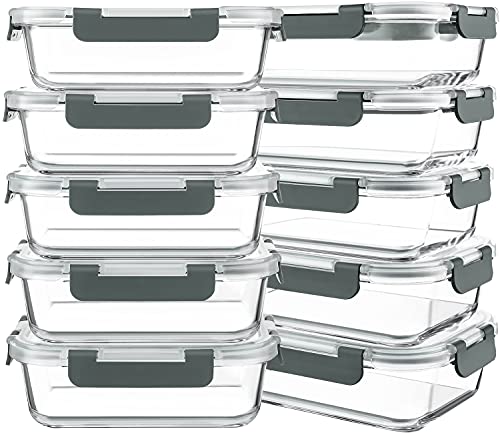
3. 10 Packs 30 oz Glass Meal Prep Containers with Lids
A 10 Packs 30 oz Glass Meal Prep Containers with Lids (food storage containers), per the listing. Check price on Amazon.
Good for: meal prep and leftovers. Watch out: Check lid seals.


Best for meal prep and leftovers
4. Rubbermaid Brilliance BPA Free 44-Piece Food Storage Containers
A Rubbermaid Brilliance BPA Free 44-Piece Food Storage Containers (food storage containers), per the listing. Check price on Amazon.
Good for: meal prep and leftovers. Watch out: Check lid seals.


Best for meal prep and leftovers
5. Vtopmart 8 Pack Glass Food Storage Containers with Lids Green
A Vtopmart 8 Pack Glass Food Storage Containers with Lids Green (food storage containers), per the listing. Check price on Amazon.
Good for: meal prep and leftovers. Watch out: Check lid seals.

Best for meal prep and leftovers
6. 60 Sets (120-Piece) Deli Containers with Lids 32/16/8 oz X 20 Set
A 60 Sets (120-Piece) Deli Containers with Lids 32/16/8 oz X 20 Set (food storage containers), per the listing. Check price on Amazon.
Good for: meal prep and leftovers. Watch out: Check lid seals.

Best for meal prep and leftovers
7. 10 Sets 36 oz & 12 oz Glass Food Storage Containers with lids Gray
A 10 Sets 36 oz & 12 oz Glass Food Storage Containers with lids Gray (food storage containers), per the listing. Check price on Amazon.
Good for: meal prep and leftovers. Watch out: Check lid seals.

Best for meal prep and leftovers
8. Dealusy 50 Pack (100-Piece) 24 oz Meal Prep Containers Reusable
A Dealusy 50 Pack (100-Piece) 24 oz Meal Prep Containers Reusable (food storage containers), per the listing. Check price on Amazon.
Good for: meal prep and leftovers. Watch out: Check lid seals.
Best Picks by Category
These labels summarize the Amazon listings and are not hands-on test results.
- Top rated: Rubbermaid Brilliance BPA Free 44-Piece Food Storage Containers — check price on Amazon.
- Most reviewed: Rubbermaid Brilliance BPA Free 44-Piece Food Storage Containers — check price on Amazon.
- Best value: Vtopmart 5Pack 22oz Glass Storage Containers with Lids Grey — a budget-tier pick; check price on Amazon.
- Lowest price: Vtopmart 5Pack 22oz Glass Storage Containers with Lids Grey — a budget-tier pick; check price on Amazon.
- Premium option: Rubbermaid Brilliance BPA Free 44-Piece Food Storage Containers — a premium-tier pick; check price on Amazon.
Price, Rating and Review Comparison
The table lists the picks with their price tier. Prices change often, so confirm the current price on Amazon and check the listing for the latest feedback.
| Product | Price | Rating | Ratings | Price tier |
|---|---|---|---|---|
| Vtopmart 5Pack 22oz Glass Storage Containers with Lids Grey | Check price on Amazon | See listing | See listing | Mid-range |
| Vtopmart 8 Pack Glass Food Storage Containers with Lids Green | Check price on Amazon | See listing | See listing | Mid-range |
| Dealusy 60 Set Deli Containers with Lids 32/16/8 oz X 20 Set Each | Check price on Amazon | See listing | See listing | Mid-range |
| 60 Sets (120-Piece) Deli Containers with Lids 32/16/8 oz X 20 Set | Check price on Amazon | See listing | See listing | Mid-range |
| Dealusy 50 Pack (100-Piece) 24 oz Meal Prep Containers Reusable | Check price on Amazon | See listing | See listing | Mid-range |
| 10 Sets 36 oz & 12 oz Glass Food Storage Containers with lids Gray | Check price on Amazon | See listing | See listing | Mid-range |
| 10 Packs 30 oz Glass Meal Prep Containers with Lids | Check price on Amazon | See listing | See listing | Mid-range |
| Rubbermaid Brilliance BPA Free 44-Piece Food Storage Containers | Check price on Amazon | See listing | See listing | Premium |
How Much Feedback Backs Each Rating
A high average from a handful of ratings is weaker evidence than a slightly lower average from thousands. Here is how the sample size looks for each pick.
- Vtopmart 5Pack 22oz Glass Storage Containers with Lids Grey: a large sample of customer feedback behind it on the listing.
- Dealusy 60 Set Deli Containers with Lids 32/16/8 oz X 20 Set Each: a large sample of customer feedback behind it on the listing.
- 10 Packs 30 oz Glass Meal Prep Containers with Lids: a large sample of customer feedback behind it on the listing.
- Rubbermaid Brilliance BPA Free 44-Piece Food Storage Containers: a large sample of customer feedback behind it on the listing.
- Vtopmart 8 Pack Glass Food Storage Containers with Lids Green: a large sample of customer feedback behind it on the listing.
- 60 Sets (120-Piece) Deli Containers with Lids 32/16/8 oz X 20 Set: a large sample of customer feedback behind it on the listing.
- 10 Sets 36 oz & 12 oz Glass Food Storage Containers with lids Gray: a moderate sample of customer feedback behind it on the listing.
- Dealusy 50 Pack (100-Piece) 24 oz Meal Prep Containers Reusable: a large sample of customer feedback behind it on the listing.
How to Choose
Size
Check the max pizza or capacity size.
Fuel and power
Match fuel or power to where you cook.
Cleaning
Removable parts make cleanup easier.
Glass, Plastic and Deli Containers: How the Materials Compare
The eight sets here fall into three groups. Some are glass with lids, such as the Vtopmart sets and the 10-pack of 30 oz glass containers. Some are thin, stackable deli-style plastic containers sold by the dozens, like the Dealusy sets and the 60-set and 120-piece listings. And one, the Rubbermaid Brilliance 44-piece set, is a BPA-free plastic collection. Each group suits a different kind of cook, and the best choice depends on how you plan to fill, heat, carry, and store the food.
| Material | Strengths | Trade-offs |
|---|---|---|
| Glass | Does not absorb odors or stains, easy to see through, generally oven and microwave friendly once the lid is off | Heavier, can chip or break, lids are usually still plastic |
| Reusable plastic | Light, resists drops, nests and stacks well | Can stain with tomato sauce or turmeric, may warp with heat, can hold smells over time |
| Deli-style plastic | Very low cost per container, easy to bring to work and not worry about losing | Thin walls, shorter lifespan, lids can crack after repeated washing |
Glass is the usual answer for people who reheat meals daily, because the material does not stain and food looks the same on day four as it did on day one. Plastic wins on weight, which matters if you carry a lunch bag for a commute. Deli containers make sense when you freeze portions in bulk, send food home with guests, or simply want a stack you can use without anxiety.
Lids, Seals and Leak Resistance
In most sets, the container is not what fails first. The lid is. A lid that warps in the dishwasher, loses its gasket, or cracks around a latch turns a good container into a drawer of orphans. When comparing listings, spend as much time on the lid as on the body.
Snap-on lids versus locking lids
Snap-on lids press on around the rim and are the cheapest style. They keep food covered in the refrigerator but may leak if the container tips in a bag. Locking lids use clips or latches and often a silicone gasket around the edge. They are more likely to hold soup and sauce, though the gasket is a spot that needs careful cleaning.
Vented lids
Some lids include a vent for microwave use. Venting lets steam escape so that the lid does not pop off or trap moisture on top of the food. If a lid has no vent, you can usually rest it loosely on top, but follow the manufacturer’s directions.
Matching lids to bodies
Mixed-size sets such as the 32, 16, and 8 oz deli packs have lids that fit by size family. Check that lids can interchange across containers of the same diameter, since that makes it far easier to pair them up after washing. Big sets with many pieces can feel messy if lids do not nest or stack cleanly in a cabinet.
Planning Sizes and Quantities for Real Meals
It is tempting to buy the largest set at the lowest price per piece. That works only if the sizes fit how you eat. A few minutes of planning avoids a cupboard full of containers you never use.
- Single-portion lunches: look for 22 to 30 ounce containers. A 22 oz container is a modest lunch, while 30 oz holds a protein, grains, and vegetables with less crowding.
- Sauces, dressings, and snacks: small 8 oz containers keep wet items separate from dry ones and prevent soggy meals.
- Soups, stews, and bulk grains: 32 oz sizes and larger are useful for batch cooking, and they are easier to freeze flat in a single layer.
- Family leftovers: bigger rectangular or square containers fit more efficiently in a refrigerator than round ones.
As a rough guide, a week of lunches and dinners for one person needs 10 to 14 containers, plus a few spares since some will always be in the dishwasher. A 5-pack feels small for full meal prep, while 10-packs and 44-piece sets leave room for variety. A 60 or 120-piece deli set is generous enough to share or to use for freezer portions.
Shape matters too. Round containers are easier to clean in the corners and pour well, while rectangular ones pack tighter. Compartment containers keep foods separate but can be awkward for soup. If a set has no dividers, consider a few silicone cups for sauces.
Heating, Freezing and Safety Basics
Containers are used under extreme conditions, from cold storage to the microwave, so it pays to learn their limits. These rules apply broadly, but always follow the instructions that come with your specific set.
Microwave
Remove the lid or vent it, and avoid heating oily or sugary foods to very high temperatures in plastic, since they can exceed the plastic’s tolerance. For glass, do not put an empty container in the microwave and let it cool before you wash it.
Oven
Not every glass container is made for oven use, and lids almost never are. Read the product page for an oven rating. Never place a container straight from the freezer into a hot oven, as sudden temperature swings can cause glass to crack or shatter.
Freezer
Leave about an inch of headspace because liquids expand as they freeze. Cool food to room temperature before sealing and freezing, and label with a date. Thaw in the refrigerator when possible rather than on the counter.
Plastic safety
BPA free is a common label, but it is not the only point to check. Look for a recycling number or food-safe marking on the base and avoid containers that are cracked, cloudy, or warped, since damaged plastic is harder to clean. If a container smells strongly of old food after washing, it is time to replace it.
Cleaning, Stain Control and Making Containers Last
A set that costs little can still be a bargain if it lasts years, and a good set can be wasted if it is treated roughly. Basic care goes a long way.
- Rinse right after use. Tomato sauce, curry, and oil bind to plastic more tightly once they dry.
- Use the top rack of the dishwasher for plastic and lids, which keeps them farther from the heating element.
- Remove silicone gaskets and wash them separately so moisture does not collect underneath.
- For stains, soak in warm water with a little baking soda, or leave the container in sunlight for a few hours.
- Let everything dry fully before putting lids on, since trapped moisture causes odor.
- Avoid metal scrubbers on plastic and sharp knives in glass, since scratches collect bacteria and weaken surfaces.
Glass should be handled with care at the edges and set down gently. A chipped rim is a reason to retire a container, because chips can spread or flake into food. With plastic, replace anything that is cracked, cloudy, or permanently stained.
Budget vs Premium: Where the Money Goes
The sets in this guide range from small glass sets at the budget end to the large Rubbermaid collection at the premium end. Because the sets differ so much in piece count, the better measure is cost per container, not the total. A 44-piece set may include 22 containers and 22 lids, so a larger set can still be a fair deal.
Extra spending usually buys one of three things: more containers, thicker or tempered material, or sturdier lids. A low price is not a warning sign by itself, especially for deli containers meant to be used freely. But for a set you will heat every day, lid quality and wall thickness are worth paying for, since replacing a broken lid can mean replacing the whole container. If you are unsure, buy a smaller set first, live with it for a few weeks, and then add more of the same line so everything keeps matching.
Common Buying Mistakes With Container Sets
- Buying by piece count: a 120-piece listing is 60 containers and 60 lids, so divide before comparing.
- Ignoring weight: ten glass containers in a backpack add up quickly.
- Skipping the lid details: a set with lids that crack or do not nest will frustrate you quickly.
- Assuming every container is oven safe: confirm the rating on the product page.
- Choosing only one size: mix at least two sizes so sides and sauces have a home.
With only a modest number of ratings behind some of these sets, customer photos and lower-star reviews are the best clues about lid quality and durability. Read them for words like crack, warp, leak, and stain before you commit to a large order.
Going Deeper: The Criteria That Decide Long-Term Satisfaction
The headline differences between the picks in this guide are easy to spot, but the factors that decide whether you are still happy with your food storage container set in a year are usually quieter ones. They show up in the kitchen, fridge and freezer, on busy days, when the product is no longer new and nobody is treating it carefully. This section works through those slower, more honest criteria one by one, so you can weigh the reviews above against the way you actually live rather than the way a product page imagines you do.
Lid seal you can trust in a bag
A container earns its place when its lid survives a commute in a bag without leaking soup. Snap-locking lids with silicone seals generally out-seal simple press-on lids, but every seal depends on the rim being clean and undamaged. When you compare the picks above on this point, use the descriptions already given in each review rather than the headline claims at the top of a listing. Write down how this factor affects your own routine, because a weakness that never touches your habits is not a weakness worth paying to avoid, while a strength you will use daily is worth prioritising over almost everything else in the set.
Material matched to your food
Glass handles tomato sauces, reheating and odours gracefully but is heavy and breakable; plastic is light and cheap but stains and holds smells. Many kitchens settle on glass for home and plastic for travel. Judge this in the context of your own kitchen, fridge and freezer, not an ideal one. The honest test is whether the feature still helps on an ordinary tired day when nobody is concentrating, and whether any drawback shows up immediately or only after months of use. Shortlist the picks that handle this point well and let other criteria separate them later.
Sizes that match real portions
Sets padded with tiny tubs nobody uses waste cupboard space. Audit your leftovers honestly: family dinners, packed lunches and batch cooking each demand a different size mix, and lids should interchange where possible. This is also a point where the most expensive option is not automatically the best. Mid-priced picks often balance it sensibly, while premium designs sometimes trade it away for a sleeker look or a longer feature list. If two picks seem equal overall, let the one that handles this everyday detail better take the lead in your decision.
Stacking in cupboard and fridge
Containers that nest when empty and stack when full turn chaos into a system. Lids are the usual failure: sets whose lids store together, clipped or nested, stay usable; loose lids vanish. Think about who else will use the food storage container set besides you. A choice that works for one careful adult can frustrate children, guests or a partner with different habits, and shared use multiplies small annoyances quickly. If the item will be shared, weight this factor more heavily than you would for a purely personal purchase.
Freezer and microwave behaviour
Check the makers guidance for freezer, microwave and dishwasher use rather than assuming. Lids often have stricter limits than bases, and frozen containers need headroom left for expansion to seal properly. When you compare the picks above on this point, use the descriptions already given in each review rather than the headline claims at the top of a listing. Write down how this factor affects your own routine, because a weakness that never touches your habits is not a weakness worth paying to avoid, while a strength you will use daily is worth prioritising over almost everything else in the set.
Stain and odour resistance
Curry, tomato and garlic test every container. Glass shrugs them off; plastic needs prompt washing and occasional bicarbonate soaks. If your cooking is sauce-heavy, weight this criterion heavily. Judge this in the context of your own kitchen, fridge and freezer, not an ideal one. The honest test is whether the feature still helps on an ordinary tired day when nobody is concentrating, and whether any drawback shows up immediately or only after months of use. Shortlist the picks that handle this point well and let other criteria separate them later.
How It Plays Out in Real Life: Scenarios Worth Picturing
Specifications describe a product; scenarios describe a life. The situations below are the ones that most often separate a food storage container set that merely tests well from one that earns its place, and each one highlights a different strength among the picks already reviewed above. Find the scenario that sounds most like your week and read the relevant reviews again with that picture in mind before you decide.
Weekly meal prep for work lunches
Meal preppers need identical mid-size containers that stack in the fridge like bricks and survive the bag daily. Uniformity beats variety here: same lids, same fill line, washed and refilled in one rhythm. The lesson from this scenario is that context beats specification. A pick that looks average on paper can be exactly right once the room, the timing and the people involved are real, and the reverse is just as true. Match the scenario closest to your own life first, then check that your shortlisted pick also copes with your second most common situation.
Family leftovers and batch cooking
Family kitchens need the big sizes sets often skimp on, plus small tubs for sauces and half onions. A freezer-friendly subset for soups and batch sauces pays for itself in rescued food. Preparation decides how well this goes in practice. A few minutes spent arranging the food storage container set, clearing the space around it and setting expectations with anyone sharing it will do more for the result than an upgrade to a pricier model. Build the small routine once and the scenario becomes repeatable without thought.
Small kitchens with one cupboard
Where storage space is tight, nesting design is the whole decision. Choose the set whose empty containers and lids occupy the smallest footprint, even if it offers fewer sizes. Notice, too, that this scenario exposes different weaknesses in different picks. One design handles it through sheer capacity, another through convenience, another through being quick to clean or put away afterwards. Decide which of those qualities your household values before comparing, because there is rarely a single winner for everyone.
Freezer organisation for soups and sauces
Flat, stackable containers freeze efficiently and thaw evenly. Label with contents and date as you fill, freeze in portion sizes you actually eat, and keep a running list so good food is not discovered a year late. If this is your main scenario, be strict: a pick that only copes with it when conditions are perfect will disappoint you weekly. Favour the option that forgives imperfect setup, tired users and interruptions, since real life supplies all three generously and without warning.
Setup and First Use, Done Properly
Wash the whole set on arrival and run a leak test before trusting it: fill one of each size with water, seal, tilt and shake gently over the sink. Then audit your fridge and cupboard, assign the containers their shelf, and set the storage system — bases nested, lids filed together in one spot — while the set is complete. Fill a container with a typical leftover to learn real capacities, note which size suits lunches and which suits family leftovers, and put a roll of labels or a marker with the set so dating food becomes the household habit from the first week.
During the first week, resist the urge to judge the food storage container set on a single use. Early impressions are distorted by novelty, by packaging stiffness or new-material smells, and by your own learning curve. Give it several ordinary days in the kitchen, fridge and freezer, adjust the small things — position, settings, accessories, routine — and only then decide whether a disappointment is the products fault or simply an unsettled setup. Many returns happen in week one for problems that a ten-minute adjustment would have solved permanently.
Care, Cleaning and Storage That Add Years
Wash containers promptly after strong or oily foods, dry lids and seals fully before storing, and keep seals clean because a crumb on the rim defeats the best lid. Store bases nested with lids together, avoid abrasive scouring on plastic, and let hot food cool slightly before sealing to reduce warping and condensation. Check seals and locking tabs periodically, retire cracked lids early, and keep one or two containers as the designated strong-food tubs so stains concentrate where nobody minds.
Care works best as a rhythm rather than a rescue. Tie the small jobs to something you already do — a weekly clean, a monthly tidy of the kitchen, fridge and freezer, the change of a season — and they stop feeling like chores attached to the food storage container set. Keep any tools, chargers, covers or spares the product needs in one labelled place, because maintenance skipped while hunting for a missing part tends to stay skipped. A product that is easy to care for is not one that needs nothing; it is one whose needs fit calmly into your existing routines.
Troubleshooting: When Your Food storage container set Is Not Behaving
Most problems with a food storage container set have ordinary causes and patient fixes. Before assuming a defect, work through the situations below, which cover the complaints owners raise most often once the newness wears off. Change one thing at a time, test honestly, and only escalate to the maker or a replacement when the simple explanations have been ruled out.
Lids leaking in transit
Leaks trace to seals seated badly, rims with food residue, or containers filled to the brim with hot liquid. Clean and dry the rim, seat the seal evenly, leave headroom, and carry soups upright in a separate bag until you trust the set. Work through the checks in order and change only one thing at a time, so you can tell what actually fixed it. If the problem survives every sensible adjustment, treat it as a sign the pick no longer suits your needs or has reached the end of its service, and use the warranty or the makers support while those options still exist.
Plastic holding stains and smells
Soak stained tubs with bicarbonate, wash promptly after strong foods, and accept that one sacrificial curry container may serve the household better than ruining the whole sets looks. Prevention is cheaper than cure here: most cases start small and grow through being ignored. Add a quick look at this point to your normal routine with the food storage container set, and you will catch the early stage, when a wipe, a tightening or a small adjustment is still all that is required.
Lids warping or no longer fitting
Heat warps lids in dishwashers and microwaves. Keep lids out of the microwave, wash them on gentler settings, and store containers with lids off or loosely placed so seals are not compressed for months. Avoid the tempting rough fixes — forcing parts, using harsh cleaners, or improvising repairs the maker never intended. They often convert a recoverable problem into permanent damage. Gentle, documented steps first, and if a component has genuinely failed, replace that component rather than the whole product where the design allows it.
Glass chipping at the rim
Chips come from stacking carelessly and thermal shock. Do not pour boiling liquid into a cold glass base, nest glass with care, and retire chipped containers whose rims can no longer seal or be cleaned safely. Keep notes the first time this happens: what you changed, and what worked. The same issue tends to recur across the life of any food storage container set, and future-you will solve it in minutes with a record instead of starting the detective work from the beginning again.
Mistakes Buyers Keep Making With This Purchase
Buyers count pieces and discover half are thimble-sized, or buy all glass for a cycling commute and tire of the weight in a week. Others microwave lids, seal boiling soup to the brim, and store lids in a separate drawer from bases until the set dissolves into orphans. A container system succeeds on lids, sizes and habits, not on the number printed on the box.
One more mistake deserves its own mention: deciding in a hurry and researching afterwards. The order matters. Read the reviews in this guide first, picture your own scenarios, check the measurements and compatibility points that apply to your kitchen, fridge and freezer, and only then look at todays offers. A food storage container set bought calmly for the right reasons rarely needs replacing, while a bargain bought for the wrong ones becomes the most expensive option you own, because you pay for it twice — once at the till and once in frustration.
Comparing the Picks in This Guide Against Each Other
With no new products introduced, the fairest comparison is between the roles the existing picks already fill. At one end sit the simplest, most affordable-style options in the list: they cover the core job with the least fuss and suit buyers whose needs are occasional or narrowly defined. In the middle are the all-rounders, which balance features, build and convenience for the widest range of households, and which most readers should shortlist first. At the other end are the specialist or premium-leaning picks, whose extra capability only pays when your scenario genuinely demands it every week.
To choose between them, score each shortlisted pick against your own top three criteria from the deeper list above, using only what the reviews in this guide already state. Add a point for every criterion a pick clearly handles well, take one away for every drawback that touches your routine, and ignore features you will never use no matter how impressive they sound. The pick that wins on your personal scorecard — not the one with the longest feature list — is the one that will still feel right with your food storage container set long after the comparison tables are forgotten.
More Questions Worth Settling Before You Buy
The main questions are answered in the frequently asked questions section of this guide. The points below cover the second round of questions that thoughtful buyers usually ask once a shortlist exists — the ones about fit with an existing kitchen, fridge and freezer, about other people in the household, and about what ownership feels like after the first month rather than the first day.
How do I know which of the picks above suits my household size?
Match the pick to the largest group that will use the food storage container set regularly, not the average day. Occasional guests or rare big efforts can be handled with patience and workarounds, but a pick undersized for your everyday household will frustrate you constantly. Conversely, the biggest option often brings cost, storage and handling burdens that a smaller household never recovers. Let your busiest ordinary week, honestly described, make this decision.
What should I check about my existing space before ordering?
Measure the exact spot in your kitchen, fridge and freezer where the food storage container set will live and be used, including the clearance around it for doors, drawers, people and cleaning. Check access too: the route from the front door to that spot defeats more purchases than any specification does. Photograph the space, keep the measurements on your phone, and compare them with the dimensions stated for each pick before you commit to any of them.
Is it worth paying more for the premium-leaning picks in this guide?
Only when the extra money buys something your routine touches weekly: stronger construction where loads are real, finer control where small differences matter, or convenience features that remove a daily irritation. Premium pricing spent on capacity, speed or features you use twice a year is decoration. Decide which weekly benefit you are buying, in one sentence, before paying for it; if the sentence will not come, the mid-range pick is probably your answer.
How long should a good food storage container set realistically last?
Longevity depends less on the badge and more on the match between the product and its workload, plus the small care habits described above. A well-matched pick used within its limits and maintained on a simple rhythm should serve for years of ordinary use, while even the sturdiest option fades quickly when it is overloaded, stored badly or cleaned with the wrong products. Judge lifespan claims by construction details you can verify, not by optimism.
What if several people in the household disagree about which pick to choose?
Let the person who will use the food storage container set most often hold the casting vote on comfort and handling, while the person who will clean and store it holds the casting vote on care and size. Features nobody will operate can be ignored entirely. Where tastes still clash, choose the pick with the fewest strong objections rather than the one with the loudest supporter; shared products succeed on the absence of daily friction.
Should I buy accessories or spares at the same time?
Buy only the accessories the reviews above identify as part of normal use, plus any consumable you know you will need within the first month. Everything else can wait until your routine reveals a genuine gap, because accessory drawers everywhere are full of attachments bought for imagined habits. When you do add pieces later, choose ones made for your exact model so fit and safety are never improvised.
How do I judge a pick when two reviews seem to contradict each other?
Look for the context behind each opinion: the household size, the space, the frequency of use and the expectations the reviewer brought to it. Contradictions usually dissolve once you see that one writer needed the food storage container set daily in a busy kitchen, fridge and freezer and the other used it occasionally. Weight the experience closest to your own situation and treat the other as a warning about a scenario that may never apply to you.
What is the sensible first upgrade if I outgrow my first pick?
Outgrowing a pick usually means one specific limit has started to bite — capacity, control, durability or convenience — rather than everything being wrong at once. Name that limit precisely, then choose the next pick from this guide that removes exactly it, instead of jumping to the largest or most feature-heavy option. Targeted upgrades cost less and satisfy more, because they are answers to a problem you actually have.
A Simple Routine for the First Month of Ownership
In the first week, use the food storage container set exactly as the maker directs, without inventing improvements, so you learn its intended behaviour and have a fair baseline. In the second week, adjust the one thing that annoyed you most — position, setting, accessory or habit — and leave everything else alone. In the third week, involve the other people who share the kitchen, fridge and freezer and agree the household rules: where it lives, who cleans it, and what never happens to it. By the fourth week the product should feel less like a purchase and more like furniture: present, understood and quietly doing its job.
Keep the packaging and paperwork until that first month is over, stored flat and out of the way rather than in a guilty pile. If a genuine fault is going to appear, it usually announces itself early, and having everything to hand makes any conversation with the seller straightforward. Once the month passes and the food storage container set has earned its place, recycle the packaging, file the documents with your other household papers, and write the purchase date somewhere sensible so future warranty questions have an answer.
A Final Decision Checklist You Can Run in Five Minutes
First, state your main scenario in one sentence — who uses the food storage container set, where, and how often — and cross out any pick in this guide that clearly does not fit that sentence, however well it scores elsewhere. Second, check the physical fit: measurements of your space in the kitchen, fridge and freezer, compatibility with what you already own, and a storage home you can point to. Third, read the drawback paragraph of each surviving pick one more time and ask whether that specific drawback touches your routine; a flaw you will never meet is not a reason to pay more, and a flaw you will meet daily is not a detail to wave away.
Frequently Asked Questions
Is it easy to use?
Most are simple with a short learning curve.
What do I need extra?
A peel and a thermometer help.
Is it safe?
Follow the maker instructions.
Are glass meal prep containers better than plastic?
Neither wins in every case. Glass resists stains and odors and reheats cleanly, but it is heavier and can chip. Plastic is lighter and tougher in transit but may stain and warp over time. Daily microwave users often prefer glass, while commuters carrying lunch may prefer plastic.
Can I put glass food containers in the freezer?
Usually yes, if the manufacturer says they are freezer safe. Leave headspace for expansion, cool the food first, and avoid moving a frozen container straight into a hot oven or microwave. Sudden temperature changes are what typically break glass. Lids are plastic, so check their temperature limits too.
How many meal prep containers do I need for a week?
For one person eating lunch and dinner from prep, 10 to 14 containers covers the week, plus a few spares for dishwasher turnover. If you only prep lunches, 5 to 7 is enough. Add small containers for sauces and snacks so wet and dry foods stay apart.
Why do plastic food containers stain and smell?
Plastic is slightly porous, so oils and pigments from tomato sauce, curry, and turmeric can settle into the surface. Heat sets them in further. Rinse quickly, soak with baking soda, and dry fully before closing the lid. Persistent smells usually mean the container is worn and ready for replacement.
Is it safe to microwave deli containers?
Only if the product page or markings say microwave safe. Thin deli-style containers can warp with high heat or oily food. Take the lid off or vent it, heat in short bursts, and stop using any container that is cracked or distorted. When unsure, move food to a plate or glass dish.
Bottom Line
Glass lasts longer; plastic is lighter and cheaper.
More Kitchen Guides
- Best Stainless Steel and Ceramic Mixing Bowls
- Best Chef Knives from Budget to Premium
- Best Wooden Cutting Boards for Kitchens
- Best Knife Block Sets with Sharpener