Disclosure: topratedkitchenware.com is reader-supported. When you buy through links on our site, we may earn an affiliate commission from Amazon and other retailers, at no extra cost to you.
Where to buy
Here is the verified shortlist for best grills for condos. Condo grilling is governed by three things before brand ever enters it: your building’s rules, your balcony or patio’s size, and your neighbours’ patience. The six verified picks below span the realistic condo range — from a portable that stores in a cupboard to full-size carts for houses and townhome patios where rules allow. Each review states its rule implications plainly. Each name links to its Amazon listing, where you can check the latest price on Amazon and confirm the current configuration.
- Char-Broil Portable 1-Burner Propane Gas Grill
- Weber Original Kettle Premium Charcoal Grill, 22-Inch
- Monument Grills Mesa II 410FBZ 4-Burner Gas Grill
- Nexgrill 4-Burner Gas Grill with Side Burner
- AMERLIFE 6-Burner Propane Gas Grill with Side Burner
- Royal Gourmet CC1830S Charcoal Grill and Offset Smoker
Start with the first-listed pick if you want the shortest route: Check on Amazon for the current configuration of the Char-Broil Portable 1-Burner Propane Gas Grill. Read the full guide ↓ for the reasoning, the honest limitations of every pick, and the checks that matter more than any headline claim.
The best grills for condos are not a smaller version of the best grills for houses, because the condo constraint is legal and social before it is culinary. Many buildings restrict fuel types on balconies — charcoal is commonly prohibited, propane is often limited by tank size or banned on upper floors, and some properties allow grilling only in shared amenity areas. The right purchase starts with your declaration and local fire code, and only then becomes a question of grates and burners.
This guide therefore ranks six verified picks by condo scenario rather than by raw performance: a portable for the strictest buildings and smallest balconies where any grill is allowed, a kettle for ground-floor patios where charcoal is permitted, and full-size gas carts for townhome and shared-amenity settings. Every review names the setting its pick actually fits, so you can match the grill to your rules instead of falling for a specification. Shared-property buyers should also read Best Grills For Commercial Use At Condo, and those with private outdoor space questions can compare Best Grills For Cooking for the all-round view.
Key Takeaways
- Rules first: check your building’s declaration and local fire code for fuel, tank-size and location limits before buying anything.
- Charcoal is prohibited in many condo settings; where it is allowed, it is usually ground-floor patios, not balconies.
- Storage footprint is a condo specification: the best grill is the one that fits your storage as well as your cooking.
- Smoke and smell are neighbour issues — a lid, reasonable hours and the right menu keep the peace better than any apology.
- Shared amenity areas change the answer: bigger grills belong there, under the community’s rules and rota.
- A small grill used weekly beats a large grill used twice and stored with resentment.
In this guide
Quick Picks: Best grills for condos
Badges are assigned by condo scenario, from the most restricted settings to the most permissive. Read the badge as a setting label as much as a ranking.
| Pick | Badge | Why it is here | Link |
|---|---|---|---|
| Char-Broil Portable 1-Burner Propane Gas Grill | Best for Strict Balconies | A portable single-burner that stores indoors and suits the smallest permitted spaces. | Check on Amazon |
| Weber Original Kettle Premium Charcoal Grill, 22-Inch | Best Where Charcoal Is Allowed | The classic kettle for ground-floor patios where charcoal is allowed. | Check on Amazon |
| Monument Grills Mesa II 410FBZ 4-Burner Gas Grill | Best Townhome Patio | Stainless four-burner with foldable shelves for a townhome patio. | Check on Amazon |
| Nexgrill 4-Burner Gas Grill with Side Burner | Best Shared Amenity | Four burners and a side burner sized for shared amenity decks. | Check on Amazon |
| AMERLIFE 6-Burner Propane Gas Grill with Side Burner | Best for Big Townhome Gatherings | Six burners and 650 square inches for large shared or townhome settings. | Check on Amazon |
| Royal Gourmet CC1830S Charcoal Grill and Offset Smoker | Best Ground-Floor Charcoal | A barrel with offset smoker for ground-floor homes where charcoal culture thrives. | Check on Amazon |
How These Picks Were Chosen
This is a research-led guide with an unusual first criterion: permissibility. We mapped the verified pool against the settings condo residents actually live in — strict balconies, permissive balconies, ground-floor patios, townhome terraces and shared amenity areas — using the pool’s published data on fuel, size and format, and ranked within those realities. We did not test grills on balconies, and no review pretends a pick is allowed somewhere your rules may forbid it.
That framing produces an order some readers will find surprising: the smallest grill leads, because for the largest number of condo residents it is the one that can actually be owned, stored and used without conflict. The full-size carts close the list not because they cook worse — several cook superbly — but because their condo settings are narrower: townhomes with real patios and shared amenity decks under community rules.
Within each scenario, the usual virtues applied: ignition simplicity, grate quality, storage design and the courtesy factors of smoke and size. Readers whose buildings provide a shared grill should cross-check the community angle in Best Grills For Commercial Use At Condo; those cooking for condo guests in volume may also glance at Best Grills For Concession Stands for throughput thinking that scales down gracefully.
The 6 Best Grills for Condos

Char-Broil Portable 1-Burner Propane Gas Grill
Badge: Best for Strict Balconies
Strengths
- Stores indoors in a cupboard — the balcony stays clear
- Single-burner simplicity suits occasional, small-scale grilling
- Light and portable for amenity-area or picnic use too
Trade-offs
- Still a propane grill: only where your rules permit gas on your space
- Small grate cooks for two or three at a time
- 11,000 BTU is gentle heat; searing is modest
At a glance
- Fuel: Propane gas
- Burners: 1
- Output: 11,000 BTU
- Body: Aluminised steel
- Colour: Black
- Format: Portable tabletop
The little Char-Broil leads this guide because it fits the most condo lives. Where a building permits a small propane grill on a balcony — a common but not universal rule — its footprint respects the space, and when dinner ends it stores indoors, which solves the two condo problems (weathering and clutter) that kill bigger grills. For one or two people, it cooks honestly: burgers, dogs, vegetables, a couple of steaks.
Its conditions must be stated plainly. It is still an open-flame propane appliance: if your building prohibits balcony grilling or propane entirely, this pick is not your workaround — use the amenity area or a grill-free method indoors. And its heat is modest, so manage expectations on thick steaks. Within the rules, for the smallest spaces, it is the proportionate answer.
Daily-life note: this grill’s best feature is invisible — the balcony gets its floor back. Cook, cool, cupboard: the space returns to being a place to sit, which in a condo is the difference between a grill that is loved and a grill that is resented by October.
Best for: solo residents and couples in buildings that permit small balcony gas grills / Not suited for: buildings that prohibit balcony grilling, or cooking for groups
Check on Amazon to confirm the current configuration of the Char-Broil Portable 1-Burner Propane Gas Grill before you buy.
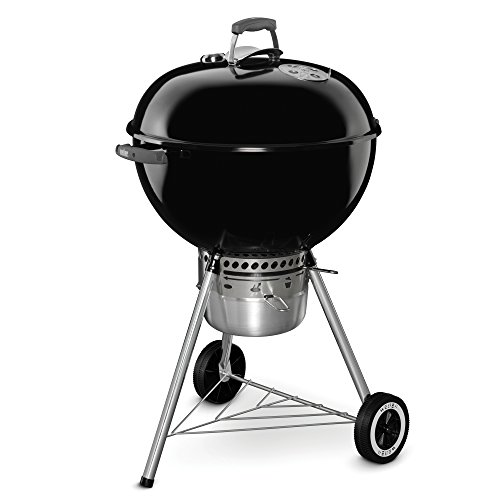
Weber Original Kettle Premium Charcoal Grill, 22-Inch
Badge: Best Where Charcoal Is Allowed
Strengths
- Compact footprint with genuine charcoal flavour
- Precise dampers keep smoke disciplined when managed well
- One-Touch cleaning keeps ash tidy — a neighbour virtue
Trade-offs
- Charcoal is prohibited in many condo settings — verify before buying
- Balconies are usually the wrong setting even where patios allow it
- Requires dry charcoal storage somewhere in the home
At a glance
- Fuel: Charcoal
- Size: 22-inch kettle
- Extras: Built-in lid thermometer
- Heat control: Heat control dampers
- Cleaning: One-Touch cleaning system
- Colour: Black
Where charcoal is allowed — most often a ground-floor patio with no balcony above — the Weber kettle is the condo charcoal answer. It is compact, its dampers let a considerate cook manage smoke rather than broadcast it, and the One-Touch system keeps ash contained and tidy, which matters when your outdoor space is also your neighbour’s view.
The condition is absolute: many declarations and fire codes ban charcoal in multi-unit buildings outright. If yours does, this pick is for a future house, not a present workaround. If yours allows it, cook with the lid on, mind the wind direction, and you will have the best flavour-per-square-foot in this guide.
Daily-life note: on a still evening, this kettle’s smoke will find the balcony above if there is one — which is why its setting is the ground floor and its fuel is the first thing to verify. Used where it belongs, with the lid disciplined, it is the flavour champion of the guide.
Best for: ground-floor patio owners in charcoal-permitting buildings / Not suited for: balconies or any building with a charcoal ban
Check on Amazon to confirm the current configuration of the Weber Original Kettle Premium Charcoal Grill, 22-Inch before you buy.

Monument Grills Mesa II 410FBZ 4-Burner Gas Grill
Badge: Best Townhome Patio
Strengths
- Stainless body suits a smart townhome terrace
- Foldable shelves shrink the parked footprint
- Broil Zone gives real searing for a private patio
Trade-offs
- A full-size cart: too much grill for a typical balcony
- No enclosed storage for the tank
- Check townhome rules on propane and placement all the same
At a glance
- Fuel: Propane gas
- Burners: 4
- Heat zone: Advanced Broil Zone
- Body: Stainless steel
- Shelves: Foldable side shelves
- Heat-up claim: Reaches 500°F in 5 minutes (maker claim)
Townhome living is the condo scenario where a real grill comes back into play: a genuine patio, ground-level access, and rules that usually regulate placement rather than existence. The Monument Mesa II fits that life — stainless, four burners, a Broil Zone for proper searing, and shelves that fold so the parked grill respects the terrace.
Measure honestly before ordering: this is a full-size cart, and a townhome patio shared with seating and planters fills quickly. Where it fits, it cooks like a house grill because it is one — the condo-appropriate choice for the least condo-like setting in this guide.
Daily-life note: fold the shelves after every cook for a month and it becomes habit; the terrace keeps its walking space and the grill stops being furniture you negotiate with. Stainless also forgives the townhome reality of a grill that lives outdoors all year.
Best for: townhome owners with a real patio and permissive rules / Not suited for: apartment balconies of any size
Check on Amazon to confirm the current configuration of the Monument Grills Mesa II 410FBZ 4-Burner Gas Grill before you buy.
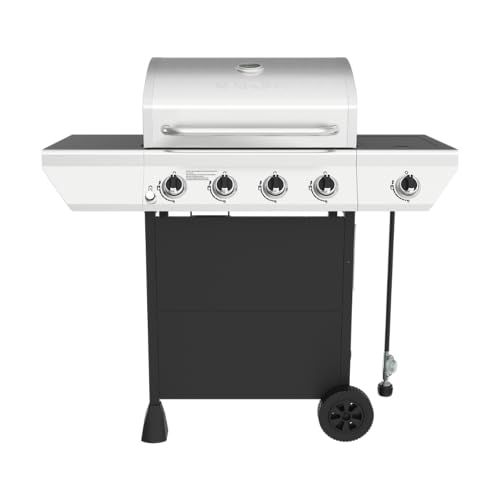
Nexgrill 4-Burner Gas Grill with Side Burner
Badge: Best Shared Amenity
Strengths
- Four burners and a side burner serve amenity-deck gatherings
- Electronic ignition suits many different resident users
- Stainless lid presents well in a shared space
Trade-offs
- Too large for private balconies
- Cast iron grates need the community’s cleaning discipline
- A shared purchase needs the association’s process, not an impulse
At a glance
- Fuel: Propane gas
- Burners: 4 plus side burner
- Output: 52,000 BTU
- Cooking space: 526 sq in
- Grates: Matte-finish cast iron
- Extras: Built-in thermometer, electronic ignition, stainless steel lid
The Nexgrill four-burner is sized for the shared amenity deck: enough grate for a residents’ evening, a side burner for the extras, and ignition simple enough for every user the building contains. Its stainless lid keeps a shared space looking cared-for, which in communal areas is half the battle for continued permission to have nice things.
As a shared asset it inherits shared duties — the rota and rules discussion in the companion condo guide applies in full. As a private purchase it belongs only on the largest townhome terraces. Placed correctly, it is the community workhorse of this list.
Daily-life note: as a private grill this only makes sense on the largest terraces; as a shared one it is the size communities actually use. Either way, its ignition simplicity is the feature residents will thank the buyer for, one unbriefed user at a time.
Best for: shared amenity decks and the largest townhome terraces / Not suited for: private balconies or unorganised shared use
Check on Amazon to confirm the current configuration of the Nexgrill 4-Burner Gas Grill with Side Burner before you buy.

AMERLIFE 6-Burner Propane Gas Grill with Side Burner
Badge: Best for Big Townhome Gatherings
Strengths
- 650 square inches for building-scale gatherings
- Warming rack stages food for a crowd
- Six burners zone an entire event menu at once
Trade-offs
- Far too large for any private condo space
- Needs a community rota, cover and tank system
- Overkill that smaller settings will resent storing
At a glance
- Fuel: Propane gas
- Burners: 6 plus side burner
- Output: 60,000 BTU
- Cooking area: 650 sq in
- Grates: Cast iron
- Extras: Warming rack, built-in thermometer, regulating valve
The AMERLIFE appears in this guide for one setting: the big shared space — a large complex’s amenity deck or a townhome community’s common patio — where gatherings are building-scale and a small grill would queue into the evening. There, its area, zoning and warming rack do exactly the work they were designed for.
Everywhere else in condo life it is simply too much grill, and the review says so without apology. Condo buying fails most often by oversizing; this pick is the reminder that capacity is a setting, not a virtue. If your setting is genuinely the big shared one, it is superb. If not, it is a storage problem with burners.
Daily-life note: if your community is considering this grill, the conversation to have first is not about the grill — it is about the rota, the cover and the tank fund. Agree those, and this machine will feed the building’s summers for years.
Best for: large shared amenity spaces hosting building-scale events / Not suited for: any private condo balcony or patio
Check on Amazon to confirm the current configuration of the AMERLIFE 6-Burner Propane Gas Grill with Side Burner before you buy.

Royal Gourmet CC1830S Charcoal Grill and Offset Smoker
Badge: Best Ground-Floor Charcoal
Strengths
- Offset smoker adds a whole cuisine for ground-floor homes
- 783 square inches for serious gatherings
- Tables make it a self-contained outdoor station
Trade-offs
- Charcoal rules apply in full — many condo settings prohibit it
- Largest storage footprint in this guide
- Smoke output is the least neighbour-friendly here
At a glance
- Fuel: Charcoal
- Cooking space: 783 sq in (barrel)
- Smoker: Offset smoker box
- Charcoal pan: Adjustable height
- Extras: Front and side tables, side door, lid thermometer
- Colour: Black
The CC1830S closes the list as the ground-floor enthusiast’s pick: a barrel grill and offset smoker for the condo resident whose setting is effectively a small house — a ground-floor unit with a real yard area, in a community that permits charcoal and the smoke that honest smoking produces.
That is a narrow setting in condo terms, and the guide ranks it last for exactly that reason, not for any failure of the grill, which is the most versatile cooker here. If your home matches the description, it offers a range nothing else in this guide can touch. If it does not, admire it and buy for the home you have.
Daily-life note: this barrel turns a ground-floor patio into a destination, which is its blessing and its social cost: smoke and gatherings both travel. Invite the neighbours early and often; a community that eats from a grill rarely complains about it.
Best for: ground-floor units with yard space in charcoal-friendly communities / Not suited for: balconies, upper floors, or smoke-sensitive neighbours
Check on Amazon to confirm the current configuration of the Royal Gourmet CC1830S Charcoal Grill and Offset Smoker before you buy.
Comparison Table
Compare by setting first and specification second — in condo life, the setting is the specification. Fuel and format come from the verified pool data.
| Pick | Badge | Fuel | Cooking space | Standout feature | Link |
|---|---|---|---|---|---|
| Char-Broil Portable 1-Burner Propane Gas Grill | Best for Strict Balconies | Propane | Not published in pool data | Portable, stores indoors | Check on Amazon |
| Weber Original Kettle Premium Charcoal Grill, 22-Inch | Best Where Charcoal Is Allowed | Charcoal | 22-inch kettle | Compact kettle, One-Touch cleaning | Check on Amazon |
| Monument Grills Mesa II 410FBZ 4-Burner Gas Grill | Best Townhome Patio | Propane | Not published in pool data | Stainless body, foldable shelves | Check on Amazon |
| Nexgrill 4-Burner Gas Grill with Side Burner | Best Shared Amenity | Propane | 526 sq in | Side burner, electronic ignition | Check on Amazon |
| AMERLIFE 6-Burner Propane Gas Grill with Side Burner | Best for Big Townhome Gatherings | Propane | 650 sq in | Six burners, warming rack | Check on Amazon |
| Royal Gourmet CC1830S Charcoal Grill and Offset Smoker | Best Ground-Floor Charcoal | Charcoal | 783 sq in | Offset smoker, work tables | Check on Amazon |
How to Choose a Grill for a Condo
Decode your rules before anything else
Read three documents: your building’s declaration or house rules, your lease if you rent, and your local fire code’s multi-unit provisions. Look for fuel bans (charcoal is the usual first prohibition), propane tank size limits, balcony-versus-patio distinctions, distance-from-structure rules, and whether grilling is confined to amenity areas. If the documents are ambiguous, ask the association or landlord in writing. This homework takes an afternoon and decides the entire shortlist — every pick in this guide is the right answer somewhere and a violation somewhere else.
Size and storage: the condo arithmetic
Measure two spaces: where the grill cooks and where it lives. Balcony cooking space must keep the grill its required clearance from railings and walls while leaving the balcony usable; storage space — a cupboard, a deck box, a garage bay — decides which grills can come in from the weather. Foldable shelves, compact carts and the portable format exist in this guide because condo arithmetic rewards them. A grill that fits both spaces will be used for years; one that fits only the first becomes a grievance with a lid.
Smoke, smell and the neighbour equation
Condo grilling is a social technology. Cook with the lid on to cut smoke, watch wind direction before lighting charcoal anywhere it is allowed, keep fatty flare-up foods for amenity areas where possible, and observe reasonable hours. A brief word with the immediate neighbours before a first big cook converts potential complainants into occasional guests. None of this requires a lesser dinner — it requires the same dinner, considerately produced. Buildings differ, and the guidance in Best Grills For Commercial Use At Condo covers the shared-space etiquette formally.
Fuel choice under condo rules
Where both fuels are permitted, propane’s instant on-off and lack of ash suit condo rhythms, while charcoal wins on flavour where its smoke is acceptable. Where rules restrict propane tank size, a grill’s compatibility with the permitted tank format becomes the deciding specification — check before purchase, as adapters and storage both have rule implications. Electric grilling sits outside this pool entirely; if your building allows only electric, treat this guide as your amenity-area and future-home reference rather than a balcony shortlist.
How to Grill at a Condo: Setup, Courtesy and Storage
Condo grilling done well is a routine of preparation, courtesy and tidy storage. The steps below assume you have confirmed your rules and chosen a permitted pick.
- Confirm your setting: the grill’s permitted location, clearances from railings, walls and overhangs, and any hours or notification norms your community keeps.
- Set up on a stable, level surface with the grill’s full clearance respected; for balcony use, keep the path to the door clear and a fire extinguisher accessible indoors.
- Leak-test gas connections after any tank change, and store spare fuel only as your rules permit — many buildings limit or forbid spare tanks on balconies.
- Preheat with the lid down, and cook with the lid down as much as the food allows: less smoke, less smell, better heat.
- Manage flare-ups by zoning — a cooler area to move food to — rather than spraying water, which spreads grease and smoke.
- After cooking, brush the grates, let everything cool fully, and return the grill to its storage position or fit its cover; never store a warm grill against a wall or in a cupboard.
- Keep the area swept and the grease tray emptied: in shared sight-lines, tidiness is what keeps grilling permitted and welcome.
A final condo habit: keep a small log of what worked — wind direction on your balcony, the grill’s hot spots, the dishes neighbours complimented. Condo outdoor space is personal in a way a garden is not, and within a season you will know exactly how your grill behaves in your spot. That knowledge, plus the rules respected, is what turns a constrained space into a genuine outdoor kitchen.
Troubleshooting
Problem: smoke is drifting into a neighbour’s windows → cook with the lid down, trim excess fat before grilling, shift cooking times when wind blows toward the building, and move the smokiest cooking to the amenity area if your community has one.
Problem: the balcony feels crowded with the grill in place → the grill is oversized for the space or stored in its cooking position. Fold shelves, park the grill in its storage spot between uses, or step down a size — the portable pick exists for exactly this.
Problem: the association has questioned your grill → do not argue from the grate. Produce the rule documents, confirm your fuel and placement comply, and if they do not, relocate to the permitted setting — goodwill is worth more than any single cookout.
Balcony Versus Patio Versus Amenity Area
These three settings are different sports. A balcony is the most restricted: size, fuel and storage all constrained, neighbours above and below, and rules at their strictest — the portable end of this guide lives here. A ground-floor patio relaxes size and sometimes fuel, and adds the possibility of a kettle or a townhome cart. An amenity area is a shared facility with community rules, where the big grills belong and where the purchase is a community decision. Most condo grilling disappointment comes from buying for one setting while living in another; naming your setting honestly is the whole secret of this guide.
When the Answer Is Not a Grill From This Pool
Some condo situations resolve outside this pool: buildings that permit only electric appliances, residents whose only outdoor access is a shared deck with an existing grill, and renters barred from open flame entirely. In those cases the honest advice is to use the amenity facility, or to build indoor technique — a heavy pan and a good oven produce a great deal of what people miss about grilling. This guide would rather tell you that than sell a balcony a grill its rules forbid. When circumstances change — a move, a rule revision, a townhome — the rankings here will be waiting, sorted by the setting you land in. Small-space cooks can also browse Best Grills For Beach House for compact-deck ideas that transfer.
A Condo Grilling Year
Spring brings the first cook and the rules refresher: check the documents, service the grill, and start the season as you mean to continue. Summer is the high season — the balcony portable working weekly, amenity decks booked for gatherings, townhome terraces in full use. Autumn suits the kettle owners and the patient cooks, as cooler evenings make grilling a pleasure again after the heat. Winter sorts the committed from the casual: small grills store away without drama, amenity grills get their deep clean, and everyone learns which purchase they actually needed.
Reading the year honestly is the best buying guide of all. If your grill served forty dinners, it was the right size. If it served four and occupied the balcony for forty weeks, the next purchase is smaller — and this guide’s order, which leads with the smallest honest option, will make more sense than ever.
Hosting in a Condo: Small Space, Full Table
Condo hosting rewards the same discipline as condo grilling: a short menu cooked well, staged in waves, with the grill’s limits treated as a menu design tool rather than an embarrassment. Two items from the grate, one from the kitchen, everything else cold and ready — that formula feeds six people from a balcony portable without a single apology. Cook the forgiving items first, the fast items last, and let guests graze in the order the grill produces.
The social details matter as much: a warning to neighbours, an invitation where relations allow, and a finish time that respects the building. Hosts who run this play become the reason their building likes grilling, which is the only lasting permission any condo cook ever really holds.
Moving On: When the Condo Grill Changes
Circumstances change — a move to a house, a rule revision, a growing household — and the right grill changes with them. The portable that served a balcony becomes the camping grill; the kettle steps up to a garden without missing a beat; the townhome cart simply becomes a house cart. Buying honestly for the setting you have, rather than the one you hope for, means today’s grill is never wasted: it is either still serving, or it has taught you exactly what the next setting needs.
Renters: Grilling Without Owning the Rules
Renters sit under two rulebooks — the building’s and the landlord’s — and both must permit the grill before it is bought. The renter’s rational picks are the portable end of this guide: equipment that stores indoors, leaves no trace on the balcony, and can leave with you at the end of the lease. Anything that requires installation, storage structures or permanent placement belongs to a home you own.
Get the permission in writing, keep the grill’s footprint visibly considerate, and be the tenant whose outdoor cooking nobody ever had cause to discuss. That reputation is portable too, and worth more than any single barbecue.
Small Balcony, Real Dinner: A Worked Example
A permitted balcony, the portable grill, two people, and a menu designed for a small grate: skewers first, because they cook fast and hold well; a shared steak cooked whole and sliced, because one perfect item beats four cramped ones; vegetables in a single layer while the steak rests. Total grate time is under half an hour, the balcony is clear again by dessert, and the dinner is indistinguishable in quality from a garden production.
The lesson generalises: constrained grilling fails on menu ambition, not on equipment. Design the dinner for the grate you have and the setting you are in, and a condo balcony becomes a small, serious kitchen rather than an apology for a garden.
Future-Proofing the Purchase
Condo circumstances change — buildings revise rules, households move, balconies become gardens. Prefer picks whose second life is obvious: the portable becomes the camping grill, the kettle becomes the garden grill, the townhome cart becomes the house cart. The picks in this guide were all chosen partly on this test, because a grill bought honestly for today’s setting should never become waste when the setting changes.
Keep the paperwork with the grill — purchase record, and a note of which rules permitted it where. A future buyer of your home, or a future association board, will thank you; and if you move, the note tells you at a glance which of your new setting’s questions the old grill already answers.
The Amenity Deck From the Resident’s Side
Most condo guides address the buyer; residents experience the result. A good amenity grill, from the user’s chair, is one that lights first time, has a clean grate because the last user left it so, comes with instructions that respect the reader, and sits in a space that feels cared for. Every element of that experience is a decision somebody made — the rota, the signage, the spare tank — which is why this guide treats governance as part of the product.
If your building’s shared grill currently fails that test, the fix is rarely a new grill. It is the system around the existing one, and it can be installed in a weekend for the price of a cover, a brush, a laminated page and a named volunteer.
Condo Grilling Etiquette, Distilled
Everything in this guide’s etiquette discussion compresses into four habits: know the rules before you light, keep the smoke down and the lid down, cook at hours the building considers reasonable, and leave the space cleaner than you found it. A resident who keeps those four is welcome at any grill in any building in this guide, and will usually find the neighbours drifting from tolerance to anticipation by the third cookout.
The fifth habit, for those who want it, is generosity: an extra skewer for the neighbour whose window your smoke crossed is the oldest and most effective planning permission in multi-unit living. Condo grilling is a community activity whether you plan it that way or not; planning it that way works better.
The First Cook at a New Condo
Make the first cook deliberately small: two people, forgiving food, no audience. Its purpose is reconnaissance — how the grill behaves in your exact spot, where its smoke travels, how the neighbours’ windows sit relative to your wind, and how the storage routine feels in practice. Every answer you gather calibrates the bigger cooks to come, and a quiet success establishes your reputation before a ambitious one tests it.
Note the findings the way this guide has modelled throughout: rules confirmed, wind mapped, routine timed. A condo cook with notes is a professional in miniature, and the buildings that love their grilling residents are full of exactly such people.
A Seasonal Rhythm for Condo Grilling
Condo grilling has a natural calendar. Spring: rules re-checked, grill serviced, first small cook. Summer: the social season — amenity decks booked, balconies in weekly use, neighbours converted by exposure to good smells and good manners. Autumn: the connoisseur’s season, cooler air and heartier food, kettles earning their keep where they are allowed. Winter: the honest audit — what got used, what merely got stored, and what next year’s purchase or policy should therefore be.
Running the calendar consciously keeps a condo household from the two classic errors: buying in spring’s enthusiasm for a setting summer will not permit, and resenting in winter a grill that summer used happily forty times. The setting, the rules and the rhythm — a condo cook who holds all three cooks as well as anyone with a garden, and usually with better stories.
The Condo Grill as a Good Neighbour
In the end, every pick in this guide succeeds or fails on the same measure: whether the building is glad it exists. The portable that stores away, the kettle that minds its smoke, the amenity grill with its rota and its clean grate — each is a small argument that shared and constrained living can still include fire, food and gathering. Buy for your setting, keep the rules and the routine, share the results generously, and a condo — balcony, patio or deck — becomes what it was always capable of being: a home with a grill, fully entitled to both words.
Common Buying Mistakes
The defining condo mistake is buying the grill first and reading the rules second. Fuel bans and balcony prohibitions do not care what you paid; the association’s letter arrives all the same. Documents before dollars, every time.
Second is oversizing. A grill that consumes the balcony gets used twice and resented daily, and its storage problem never goes away. In condo life, the right size is the one that disappears politely between dinners.
Third is ignoring the neighbours until they complain formally. Smoke management, reasonable hours and one friendly conversation are cheap; a formal complaint can end balcony grilling for the whole building, including you.
Fourth is storing fuel and gear against the rules — spare tanks on a balcony that forbids them, charcoal in a damp corner, the grill parked against siding. Condo storage rules exist because density multiplies small risks; respect them as part of the hobby, not as fine print.
Final Recommendation
For the largest number of condo residents, the little Char-Broil portable is the right first choice: permitted in the most settings, stored in a cupboard, and honestly capable for one or two people. It respects the reality that in condo life, the best grill is the one you are allowed to use every week.
Where your setting allows more, take it gladly: the Weber kettle for charcoal-permitted patios, the Monument for townhome terraces, and the Nexgrill or AMERLIFE for shared amenity spaces under community rules, with the Royal Gourmet for the rare ground-floor home that can host it. Match the grill to the setting, keep the rules and the neighbours on your side, and a condo cooks as well as any house.
Still deciding between the front-runners? Compare the Weber Original Kettle Premium Charcoal Grill, 22-Inch and the Monument Grills Mesa II 410FBZ 4-Burner Gas Grill side by side on Amazon, where you can check the latest price on Amazon and confirm the current configuration of each before you commit.
Frequently Asked Questions
Are grills allowed in condos?
It depends entirely on the building and local fire code. Many condos restrict charcoal, limit propane tank sizes, confine grilling to amenity areas, or prohibit balcony grilling altogether. Read your declaration and local code, and confirm in writing if anything is unclear — before buying.
What is the best grill for a small condo balcony?
Where a small gas grill is permitted, a portable like the Char-Broil in this guide fits the setting: compact in use, stored indoors afterwards. If your building prohibits balcony grilling or open flame, no grill is the right balcony purchase — use the amenity area instead.
Can I use a charcoal grill at a condo?
Only where your building and fire code explicitly allow it, which is uncommon in multi-unit settings and usually limited to ground-floor patios. Charcoal is the most frequently prohibited fuel in condo rules. Verify before buying; a kettle bought against the rules is a kettle you cannot use.
How do I grill without upsetting my neighbours?
Cook with the lid down, manage fat and flare-ups to limit smoke, watch wind direction, keep reasonable hours, and talk to immediate neighbours before big cooks. Most friction comes from surprise and smoke, both of which a considerate routine prevents.
Where should a condo grill be stored?
Where your rules and space allow: indoors for portables, a deck box or designated storage for compact carts, and its covered position for amenity grills. Never store a grill warm, keep spare fuel only as rules permit, and keep the storage itself tidy — in shared sight-lines, appearance is compliance.
Our building has a shared grill area — what should the association buy?
A mid-to-large gas grill with simple ignition, enclosed storage and a mainstream brand for parts, under a written rota and rules. This guide’s Nexgrill and AMERLIFE fit larger spaces; the companion shared-use guide linked in the introduction covers the governance in detail.
I am moving from a condo to a house — which of these grills comes with me?
All of them can, which is deliberate. The portable becomes the camping and tailgate grill, the kettle becomes a garden classic, and the full-size carts simply become house grills. The townhome and amenity picks transition most directly; the portable transitions most charmingly. Buy for the setting you have and the grill will find its second life.