Disclosure: topratedkitchenware.com is reader-supported. When you buy through links on our site, we may earn an affiliate commission from Amazon and other retailers, at no extra cost to you.
Where to buy
The six models below are the verified picks for this guide to best grills for cooking pizza. Each name links to its Amazon listing, where you can check the latest price on Amazon, confirm the current configuration, and read current owner feedback before you decide.
- Royal Gourmet CC1830S Charcoal Grill and Offset Smoker — Best for Large Pizzas
- Weber Original Kettle Premium Charcoal Grill 22-Inch — Best Overall for Pizza
- Weber Original Kettle Charcoal Grill 22-Inch — Best Value for Pizza
- Cuisinart 14-Inch Portable Charcoal Grill — Best Portable for Pizza
- Royal Gourmet CC1830V 30-Inch Barrel Charcoal Grill — Best for Crowds
- NATUREPON 17.5-Inch Charcoal Kettle Grill — Best Compact Kettle
Read the full guide ↓ for the reasoning behind every badge, the honest limitations of each pick, and the buying checks that matter more than any headline claim.
Cooking pizza on a grill is one of the great outdoor upgrades, and the best grills for cooking pizza share three traits: they reach and hold high heat, they fit a pizza stone or steel with room to spare, and they let you manage airflow or burner zones so the crust crisps before the toppings scorch. One honesty note before the picks: every grill in this verified line-up is a general-purpose charcoal grill, not a dedicated pizza oven. Used with a stone, they make genuinely excellent pizza — but you should know exactly what you are buying.
That distinction matters because pizza exposes a grill’s weaknesses fast. A thin lid loses the radiant heat that finishes the top of the pizza. A small grate forces small pies and awkward stone sizes. Poor damper control turns a promising high-heat session into a burnt base and a raw centre. The reviews below judge each pick specifically on pizza duty: stone fit, heat behaviour, and how forgiving it is while you learn. If you are comparing neighbouring questions as you shop, our notes on Best Grills For Cooking Pizza Blaze cover the closest overlapping search, and the two guides are written to be read together rather than as duplicates.
Technique carries half the result, and this guide covers it in full — stone preheating, launch and rotation habits, and the troubleshooting fixes for the three failures every grill pizza cook meets. Choose the grill whose size and heat style match your household, then let the technique sections turn it into a pizza station your kitchen oven will envy.
Key Takeaways
- Every pick here is a charcoal grill used with a pizza stone or steel — none is a dedicated pizza oven, and the guide says so plainly.
- Stone size decides pizza size: match the stone to the grate before you buy either.
- Preheat the stone with the grill for at least half an hour; a rushed stone makes a soggy base.
- Two-zone heat protects toppings: sear over the fire, finish beside it.
- Rotate the pizza a quarter turn midway for an even crust on any kettle or barrel.
In this guide
Quick Picks
Short on time? This table is the whole guide to best grills for cooking pizza in brief. The badge beside each pick here is used again, word for word, in its detailed review below, so you can jump straight to the model that matches your situation.
| Pick | Badge | Headline specification | Listing |
|---|---|---|---|
| Royal Gourmet CC1830S Charcoal Grill and Offset Smoker | Best for Large Pizzas | 783 sq. in. total cooking space | Check on Amazon |
| Weber Original Kettle Premium Charcoal Grill 22-Inch | Best Overall for Pizza | 22-inch kettle | Check on Amazon |
| Weber Original Kettle Charcoal Grill 22-Inch | Best Value for Pizza | 22-inch kettle | Check on Amazon |
| Cuisinart 14-Inch Portable Charcoal Grill | Best Portable for Pizza | 14-inch portable kettle | Check on Amazon |
| Royal Gourmet CC1830V 30-Inch Barrel Charcoal Grill | Best for Crowds | 30-inch barrel design | Check on Amazon |
| NATUREPON 17.5-Inch Charcoal Kettle Grill | Best Compact Kettle | 17.5-inch kettle | Check on Amazon |
Because all six picks burn charcoal, the real differences are size, shape and control. The barrel grills fit larger stones and rectangular steels; the kettles concentrate heat beautifully over a round stone; the small portable is a one-or-two-person pizza solution for campsites and picnics rather than a family pizza night machine.
How These Picks Were Chosen
Every pick in this guide to best grills for cooking pizza was cross-checked against a verified product pool before a single word was written. That means each model below is a real, currently listed grill of the right type, confirmed through retailer data on 2026-11-20, and only confirmed products received an Amazon link and a product image. Where a specification appears in this article — burner count, output, cooking area, grate material, included features — it comes from the verified listing data for that exact model. Where the listing does not state a figure, this guide leaves it out rather than filling the gap with a plausible guess.
This is a research-led guide, not a hands-on laboratory test, and it does not pretend otherwise. The comparison draws on manufacturer specifications, listing data, owner feedback patterns, and the accumulated buying knowledge for this category: how grills behave across a season, which parts wear first, and which conveniences owners actually use after the novelty fades. Badges were assigned by fit, not by price or by brand reputation. The best overall pick is the one that serves the widest range of households well; every other badge names the specific job that pick does better than the rest of the line-up.
Two rules shaped the writing throughout. First, no static prices are printed anywhere in this guide, because grill pricing moves with seasons and promotions and a printed figure would mislead you within weeks; each pick instead links out so you can check the latest price on Amazon at the moment you shop. Second, no fixed scores or counts are quoted, for the same reason. What does not change — format, capacity, fuel, control style, cleaning burden — is compared in full, because those are the things you will live with for years.
Readers who arrived here from Best Grills For Cooking Steaks will find the same discipline applied: fit for the stated job first, specification-sheet bragging last.
The 6 Best Picks Reviewed: Best grills for cooking pizza
Pizza performance is the lens for every review below. Strengths and trade-offs are written for stone-based pizza cooking first and general grilling second, and each verdict names the pizza cook who should choose — or skip — that grill.

Royal Gourmet CC1830S Charcoal Grill and Offset Smoker
Badge: Best for Large Pizzas
Strengths
- Offset smoker box adds genuine low-and-slow capability
- Adjustable charcoal pan helps manage heat without moving food
- Side door lets you add charcoal without lifting the grate
Trade-offs
- Charcoal takes longer to light and settle than gas
- Offset smoking needs practice to hold steady temperatures
- Large barrel footprint is not a fit for small decks
At a glance
- 783 sq. in. total cooking space
- Barrel charcoal grill with offset smoker
- Adjustable charcoal pan
- Side door for adding charcoal
- Lid thermometer
- Front and side tables
Charcoal asks more of you and gives something back for it: real wood-fire flavour and the kind of radiant heat that builds a deep crust. The trade is time. You light a chimney, wait for the coals to ash over, build the fire in zones, and only then start cooking. Cooks who enjoy that ritual rarely give it up, while cooks who need dinner finished quickly should be honest with themselves and weigh the gas picks in this guide just as seriously. For pizza duty, charcoal is the classic route to a blistered crust: a full chimney of lit coals banked around a preheated stone delivers fierce, even base heat, and the kettle or barrel shape reflects heat down onto the toppings so the top finishes as the base crisps.
Heat control on charcoal is airflow control. Open dampers feed the fire and raise the temperature; easing them down starves the fire gently. The first skill worth learning is the two-zone fire: coals banked on one side for searing, an empty side for indirect finishing and resting. With that single technique you can handle everything from delicate fish to a whole chicken without burning either, and most charcoal frustration disappears once the zones become second nature.
Cleanup and storage shape the charcoal experience more than most buyers expect. Ash has to go somewhere after every cook, and a design that sweeps ash into a removable catcher saves real minutes each time. Charcoal itself needs dry storage, because damp briquettes light poorly and burn unevenly. None of this is difficult, but it is a routine, and the picks in this guide were judged partly on how painless they make that routine across a whole season of cooking.
Best for: cooks making large or rectangular pizzas for a group on a stone or steel / Not suited for: solo cooks who want the smallest possible setup
Check on Amazon to confirm the current configuration and check the latest price on Amazon before ordering.
Weber Original Kettle Premium Charcoal Grill 22-Inch
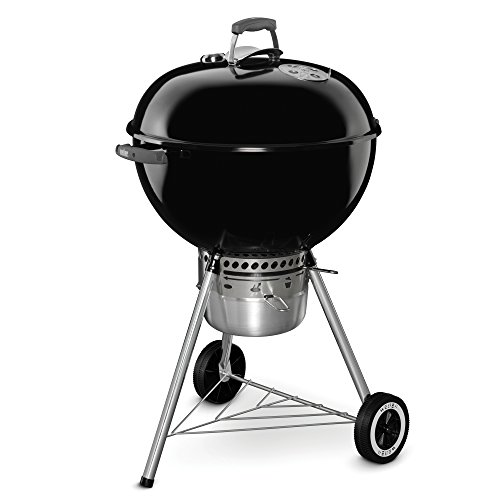
Badge: Best Overall for Pizza
Strengths
- Proven kettle shape circulates heat evenly for roasting and searing
- Dampers give precise airflow and temperature control
- One-Touch system sweeps ash into the catcher for fast cleanup
Trade-offs
- Charcoal startup takes patience compared with gas
- Round grate fits fewer long items than a rectangular barrel
- No side tables, so you need a nearby work surface
At a glance
- 22-inch kettle
- Built-in lid thermometer
- Heat control dampers
- One-Touch cleaning system
Charcoal asks more of you and gives something back for it: real wood-fire flavour and the kind of radiant heat that builds a deep crust. The trade is time. You light a chimney, wait for the coals to ash over, build the fire in zones, and only then start cooking. Cooks who enjoy that ritual rarely give it up, while cooks who need dinner finished quickly should be honest with themselves and weigh the gas picks in this guide just as seriously. For pizza duty, charcoal is the classic route to a blistered crust: a full chimney of lit coals banked around a preheated stone delivers fierce, even base heat, and the kettle or barrel shape reflects heat down onto the toppings so the top finishes as the base crisps.
Heat control on charcoal is airflow control. Open dampers feed the fire and raise the temperature; easing them down starves the fire gently. The first skill worth learning is the two-zone fire: coals banked on one side for searing, an empty side for indirect finishing and resting. With that single technique you can handle everything from delicate fish to a whole chicken without burning either, and most charcoal frustration disappears once the zones become second nature.
Cleanup and storage shape the charcoal experience more than most buyers expect. Ash has to go somewhere after every cook, and a design that sweeps ash into a removable catcher saves real minutes each time. Charcoal itself needs dry storage, because damp briquettes light poorly and burn unevenly. None of this is difficult, but it is a routine, and the picks in this guide were judged partly on how painless they make that routine across a whole season of cooking.
Best for: most home pizza cooks, for even stone heat and proven damper control / Not suited for: cooks who want gas-style push-button convenience
Check on Amazon to confirm the current configuration and check the latest price on Amazon before ordering.
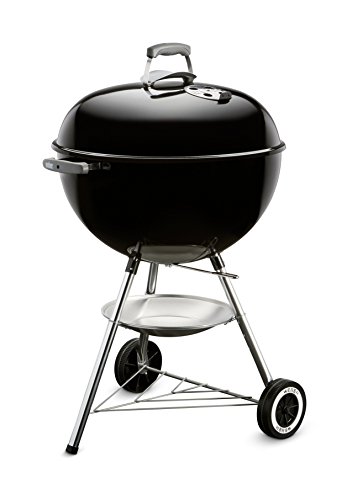
Weber Original Kettle Charcoal Grill 22-Inch
Badge: Best Value for Pizza
Strengths
- Classic kettle design with a wide accessory ecosystem
- Damper control makes two-zone charcoal cooking straightforward
- Ash sweeping cleanup is quick after every cook
Trade-offs
- No built-in lid thermometer on this version
- Charcoal heat takes time to build and to cool down
- Round cooking surface is less flexible for long cuts
At a glance
- 22-inch kettle
- One-Touch cleaning system
- Precise temperature control dampers
Charcoal asks more of you and gives something back for it: real wood-fire flavour and the kind of radiant heat that builds a deep crust. The trade is time. You light a chimney, wait for the coals to ash over, build the fire in zones, and only then start cooking. Cooks who enjoy that ritual rarely give it up, while cooks who need dinner finished quickly should be honest with themselves and weigh the gas picks in this guide just as seriously. For pizza duty, charcoal is the classic route to a blistered crust: a full chimney of lit coals banked around a preheated stone delivers fierce, even base heat, and the kettle or barrel shape reflects heat down onto the toppings so the top finishes as the base crisps.
Heat control on charcoal is airflow control. Open dampers feed the fire and raise the temperature; easing them down starves the fire gently. The first skill worth learning is the two-zone fire: coals banked on one side for searing, an empty side for indirect finishing and resting. With that single technique you can handle everything from delicate fish to a whole chicken without burning either, and most charcoal frustration disappears once the zones become second nature.
Cleanup and storage shape the charcoal experience more than most buyers expect. Ash has to go somewhere after every cook, and a design that sweeps ash into a removable catcher saves real minutes each time. Charcoal itself needs dry storage, because damp briquettes light poorly and burn unevenly. None of this is difficult, but it is a routine, and the picks in this guide were judged partly on how painless they make that routine across a whole season of cooking.
Best for: value-focused pizza cooks happy to add their own thermometer / Not suited for: cooks who need a built-in thermometer to manage stone temperature
Check on Amazon to confirm the current configuration and check the latest price on Amazon before ordering.

Cuisinart 14-Inch Portable Charcoal Grill
Badge: Best Portable for Pizza
Strengths
- Compact 196 sq. in. size is made for camping and picnics
- Lid locks secure everything for one-handed carrying
- Dual vents give more heat control than most mini grills
Trade-offs
- Cooking area only suits one or two people at a time
- Chrome-plated grate needs gentle care to avoid damage
- Not a realistic choice for family-size batches
At a glance
- 14-inch portable kettle
- 196 sq. in. cooking area
- Dual air vent system
- 3 lid locks for one-handed carrying
- Chrome-plated grate
- Model CCG-190RB
Charcoal asks more of you and gives something back for it: real wood-fire flavour and the kind of radiant heat that builds a deep crust. The trade is time. You light a chimney, wait for the coals to ash over, build the fire in zones, and only then start cooking. Cooks who enjoy that ritual rarely give it up, while cooks who need dinner finished quickly should be honest with themselves and weigh the gas picks in this guide just as seriously. For pizza duty, charcoal is the classic route to a blistered crust: a full chimney of lit coals banked around a preheated stone delivers fierce, even base heat, and the kettle or barrel shape reflects heat down onto the toppings so the top finishes as the base crisps.
Heat control on charcoal is airflow control. Open dampers feed the fire and raise the temperature; easing them down starves the fire gently. The first skill worth learning is the two-zone fire: coals banked on one side for searing, an empty side for indirect finishing and resting. With that single technique you can handle everything from delicate fish to a whole chicken without burning either, and most charcoal frustration disappears once the zones become second nature.
Cleanup and storage shape the charcoal experience more than most buyers expect. Ash has to go somewhere after every cook, and a design that sweeps ash into a removable catcher saves real minutes each time. Charcoal itself needs dry storage, because damp briquettes light poorly and burn unevenly. None of this is difficult, but it is a routine, and the picks in this guide were judged partly on how painless they make that routine across a whole season of cooking.
Best for: campers and picnic cooks making personal pizzas outdoors / Not suited for: families planning a weekly pizza night for four or more
Check on Amazon to confirm the current configuration and check the latest price on Amazon before ordering.

Royal Gourmet CC1830V 30-Inch Barrel Charcoal Grill
Badge: Best for Crowds
Strengths
- Generous 627 sq. in. space fits long cuts and big batches
- Front and side tables keep tools and trays within reach
- Barrel shape gives useful direct and indirect zones
Trade-offs
- Charcoal management is hands-on through the whole cook
- Barrel size needs a dedicated patio corner
- No offset smoker box for true smoking work
At a glance
- 30-inch barrel design
- 627 sq. in. cooking space
- Side and front tables with wood-painted finish
Charcoal asks more of you and gives something back for it: real wood-fire flavour and the kind of radiant heat that builds a deep crust. The trade is time. You light a chimney, wait for the coals to ash over, build the fire in zones, and only then start cooking. Cooks who enjoy that ritual rarely give it up, while cooks who need dinner finished quickly should be honest with themselves and weigh the gas picks in this guide just as seriously. For pizza duty, charcoal is the classic route to a blistered crust: a full chimney of lit coals banked around a preheated stone delivers fierce, even base heat, and the kettle or barrel shape reflects heat down onto the toppings so the top finishes as the base crisps.
Heat control on charcoal is airflow control. Open dampers feed the fire and raise the temperature; easing them down starves the fire gently. The first skill worth learning is the two-zone fire: coals banked on one side for searing, an empty side for indirect finishing and resting. With that single technique you can handle everything from delicate fish to a whole chicken without burning either, and most charcoal frustration disappears once the zones become second nature.
Cleanup and storage shape the charcoal experience more than most buyers expect. Ash has to go somewhere after every cook, and a design that sweeps ash into a removable catcher saves real minutes each time. Charcoal itself needs dry storage, because damp briquettes light poorly and burn unevenly. None of this is difficult, but it is a routine, and the picks in this guide were judged partly on how painless they make that routine across a whole season of cooking.
Best for: crowd pizza nights with long pies and multiple stones in rotation / Not suited for: apartment balconies and very small patios
Check on Amazon to confirm the current configuration and check the latest price on Amazon before ordering.

NATUREPON 17.5-Inch Charcoal Kettle Grill
Badge: Best Compact Kettle
Strengths
- 302 sq. in. grate is a sensible middle size for small households
- Porcelain-coated steel resists rust and wipes down easily
- Wheels and a bottom shelf make it easy to move and store
Trade-offs
- Smaller than a full 22-inch kettle for party cooking
- Basic feature set compared with premium kettles
- Charcoal still means slower startup than gas
At a glance
- 17.5-inch kettle
- 302 sq. in. grate
- Porcelain-coated steel bowl, lid and grid
- Adjustable air dampers
- Rear wheels and bottom shelf
Charcoal asks more of you and gives something back for it: real wood-fire flavour and the kind of radiant heat that builds a deep crust. The trade is time. You light a chimney, wait for the coals to ash over, build the fire in zones, and only then start cooking. Cooks who enjoy that ritual rarely give it up, while cooks who need dinner finished quickly should be honest with themselves and weigh the gas picks in this guide just as seriously. For pizza duty, charcoal is the classic route to a blistered crust: a full chimney of lit coals banked around a preheated stone delivers fierce, even base heat, and the kettle or barrel shape reflects heat down onto the toppings so the top finishes as the base crisps.
Heat control on charcoal is airflow control. Open dampers feed the fire and raise the temperature; easing them down starves the fire gently. The first skill worth learning is the two-zone fire: coals banked on one side for searing, an empty side for indirect finishing and resting. With that single technique you can handle everything from delicate fish to a whole chicken without burning either, and most charcoal frustration disappears once the zones become second nature.
Cleanup and storage shape the charcoal experience more than most buyers expect. Ash has to go somewhere after every cook, and a design that sweeps ash into a removable catcher saves real minutes each time. Charcoal itself needs dry storage, because damp briquettes light poorly and burn unevenly. None of this is difficult, but it is a routine, and the picks in this guide were judged partly on how painless they make that routine across a whole season of cooking.
Best for: small households wanting kettle-style pizza in a compact footprint / Not suited for: cooks regularly making large family-size pizzas
Check on Amazon to confirm the current configuration and check the latest price on Amazon before ordering.
Comparison Table
| Pick | Badge | Fuel | Key specification | Listing |
|---|---|---|---|---|
| Royal Gourmet CC1830S Charcoal Grill and Offset Smoker | Best for Large Pizzas | charcoal | Adjustable charcoal pan | Check on Amazon |
| Weber Original Kettle Premium Charcoal Grill 22-Inch | Best Overall for Pizza | charcoal | Heat control dampers | Check on Amazon |
| Weber Original Kettle Charcoal Grill 22-Inch | Best Value for Pizza | charcoal | Precise temperature control dampers | Check on Amazon |
| Cuisinart 14-Inch Portable Charcoal Grill | Best Portable for Pizza | charcoal | Dual air vent system | Check on Amazon |
| Royal Gourmet CC1830V 30-Inch Barrel Charcoal Grill | Best for Crowds | charcoal | Side and front tables with wood-painted finish | Check on Amazon |
| NATUREPON 17.5-Inch Charcoal Kettle Grill | Best Compact Kettle | charcoal | Porcelain-coated steel bowl, lid and grid | Check on Amazon |
No prices and no fixed scores appear in this table, deliberately, because both change too often to print honestly. The comparison sticks to what does not change: format, fuel, capacity and control style. Shoppers comparing this guide with Best Grills For Cooking Steaks That Doesn T Make A Mess will see the same six-model discipline applied to a neighbouring question.
How to Choose the Right Grill for Best grills for cooking pizza
Start with space, not with features. Measure the spot where the grill will live, including the room you need to stand in front of it, open the lid fully, and set down a tray. Then work backwards to a cooking area that matches your real life: a household that grills for two on weeknights and six on weekends needs a different grate from a household feeding twelve at every gathering. Oversizing is the quiet budget mistake in this category — a grill that is too big heats slowly for small cooks, uses more fuel, and dominates a small patio — while undersizing turns every party into frustrating batches.
Fuel is the second decision, and it is really a decision about your habits. Gas offers push-button starts, dial-precise temperatures, and cleanup measured in minutes, which is why gas grills get used more often in most households. Charcoal offers deeper fire flavour, higher peak radiant heat, and a lower-tech machine with fewer parts to fail, at the cost of startup time and ash handling. Pellet and electric options exist in the wider market, but every verified pick in this guide burns gas or charcoal, so the honest comparison here is between those two proven routes.
For pizza specifically, choose by stone first and grill second. Decide the pizza diameter your household actually eats, buy the stone or steel to match, and then confirm the grill’s grate fits it with an inch of clearance on every side for airflow and safe handling. Round kettles suit round stones; barrels suit rectangular steels and larger pies. Also weigh lid height: domed kettle lids radiate heat onto toppings more effectively than flat, low lids, which is one reason kettles punch above their size for pizza.
Finally, judge the ownership details before the showroom details. Look at how the grease is managed, because a grill that is annoying to clean gets cleaned less and performs worse over time. Check grate material: cast iron sears beautifully and rewards light seasoning care, porcelain-coated grates balance searing with easier cleaning, and plain chrome grates on portable models ask for gentle handling. Check how the lid feels, whether the thermometer is built in, whether shelves fold when storage space is tight, and whether replacement parts for that brand are easy to find. A grill is a five-to-ten-year purchase; buy the one whose weekly routine fits your patience.
How to Cook Pizza on a Grill, Step by Step
Setup begins before the first cook. Assemble the grill on a flat surface, keep every fastener finger-tight until the frame is square, then tighten in sequence. For a gas model, connect the propane tank, open the valve slowly, and brush soapy water over the connections: growing bubbles mean a leak, and the fix is to close the valve, reseat the fitting, and test again before any ignition. For a charcoal model, confirm the dampers move freely and the ash catcher seats properly, because airflow and ash handling are your two main controls for the entire life of the grill.
Season new grates before real food goes on. Heat the grill empty for fifteen to twenty minutes to burn off manufacturing residues, let it cool slightly, then wipe the grates with a thin film of high-heat cooking oil on a folded paper towel held with tongs. Repeat the light oil coat after the first few cooks. This small ritual prevents sticking far more reliably than any spray applied in a panic while food is already tearing on cold, dry metal.
The pizza routine itself is simple once it becomes habit. Set the stone on the grate before lighting, and preheat everything together for at least thirty minutes so the stone is fully heat-soaked. Build the pizza on a floured peel or parchment, launch it onto the stone, close the lid, and resist peeking for the first few minutes. Rotate the pizza a quarter turn once the base sets, move it to the cooler zone if the base races ahead of the top, and rest it on a rack — never back on the hot stone — so the crust stays crisp.
Cleaning works best as a two-level routine. After each cook, while the grates are still warm, brush them down and empty or check the grease management parts once the grill has cooled. Once a month in heavy season, scrape the inside of the lid and firebox, wash removable trays with hot soapy water, and inspect gas burner ports for blockages or charcoal vents for ash build-up. A covered grill stored dry will outlast an uncovered one by years, and a thirty-second cover habit is the cheapest maintenance there is.
Troubleshooting. Problem: the grill will not reach high heat → for gas, check the tank level, the regulator connection, and whether a burner was lit with the lid closed long enough to trip a safety flow limiter; for charcoal, confirm the dampers are open and the ash has not choked the airflow. Problem: constant flare-ups → trim excess fat, move food to a cooler zone until the flames settle, and clean the grease path, because most flare-up cycles are yesterday’s drippings burning off. Problem: food sticks and tears → the grates were cold, dry, or dirty; preheat fully, oil the grate rather than the food, and wait for a natural release before forcing a turn.
Pizza Stones and Steels on a Grill: What Actually Matters
A stone stores heat and wicks moisture from the dough, giving a crisp, evenly browned base. A steel transfers heat faster and can char a base quickly at grill temperatures, which suits thin pies but punishes inattention. Either works on every pick in this guide; thickness matters more than material, because a thicker slab holds its temperature across back-to-back pizzas instead of cooling after the first pie.
Care is simple but not optional. Let stones cool with the grill rather than shocking them with cold water, brush off flour and debris once cool, and never use soap on a porous stone. Store the stone dry. A cracked stone usually traces back to thermal shock or a drop, not to cooking, so handle it like the ceramic it is and it will serve for years.
Dough, Sauce and Cheese Choices That Suit Grill Heat
Grill pizza rewards a slightly leaner approach than oven pizza. A moderate-hydration dough handles confidently on a peel and crisps well over high heat. Go lighter on sauce than you think — excess moisture is the enemy of a crisp base at any temperature — and use low-moisture mozzarella so the top sets instead of pooling. Pre-cook watery vegetables and raw sausage before they go on the pie.
Timing toppings is the other half of the craft. Delicate herbs, fresh mozzarella and cured meats often belong on the pizza after it leaves the grill, or in the final minute, so the fierce base heat does not scorch them. Build two smaller pizzas rather than one overloaded large one while you learn a new grill; the second pie is where your adjustments pay off immediately.
Two neighbouring searches are worth a look before you order: Best Grills For Dad and Best Grills For Decks ask the same underlying question from different angles — how much grill, of which type, for the cooking you actually do. Answer that question first and the model choice usually becomes obvious.
Common Buying Mistakes
The most common mistake behind searches like best grills for cooking pizza is buying for the biggest cook of the year instead of the typical cook of the month. A grill sized for a once-a-year party spends fifty weeks being slower and thirstier than it needs to be for ordinary dinners. Buy for your regular household plus a comfortable margin, and borrow or batch-cook for the rare crowd.
The second mistake is ignoring the surface the grill will stand on. Heat, dripping grease, and rolling wheels all interact with decks, balconies, and lawns differently. A grill that is perfect on a concrete patio can stain deck boards, wobble on grass, or break a balcony rule in an apartment building. Check your surface, your building or local rules, and your clearance from siding and railings before the grill arrives, not after.
The third mistake is judging only the first cook. Almost every grill in this guide can produce one good dinner. The differences that matter — ignition reliability, ash and grease handling, grate care, parts availability, cover fit — reveal themselves across a season. That is why the detailed reviews above weigh ownership routine as heavily as cooking power, and why the cheapest path to a better grill is usually maintaining the one you buy properly.
Final Recommendation
Start with the Weber Original Kettle Premium Charcoal Grill 22-Inch, the Best Overall for Pizza pick in this guide. Its kettle shape is the natural pizza geometry: heat reflects from the domed lid onto the toppings while the stone crisps the base, the dampers give you real control over the fire, and ash cleanup after a pizza session takes a minute. For most households learning grill pizza, it is the surest route to a pie worth repeating.
If its trade-offs are the ones that bother you, the honest alternatives are the Royal Gourmet CC1830S Charcoal Grill and Offset Smoker (Best for Large Pizzas) and the Weber Original Kettle Charcoal Grill 22-Inch (Best Value for Pizza). Choose the larger barrel if your pizza nights feed a crowd, or the classic kettle if value matters most and you are happy to manage temperature with a separate thermometer. Readers still weighing Best Grills For Dual Purpose should settle the fuel and size questions first, because those two choices eliminate most of any shortlist.
Frequently Asked Questions
Can you really cook good pizza on a charcoal grill?
Yes — a preheated stone on a hot charcoal grill produces a crisp, blistered crust that many cooks prefer to a home oven, because the grill reaches and holds higher, drier heat. The learning curve is heat management: bank the coals, soak the stone fully, and rotate the pie. Expect the first two pizzas to teach you your grill’s hot spots.
What size pizza stone should I buy?
The largest stone that fits your grate with about an inch of clearance all around. On the 22-inch kettles here, that usually means a stone in the mid-teens of inches; on the small portable, a personal-pizza size. Measure the grate before ordering, because return shipping on a heavy stone is nobody’s idea of fun.
Why is my pizza base burnt but the top underdone?
The stone was hotter than the air above it — usually from coals banked directly and densely under the stone with the lid open too often. Spread the coals in a ring or to one side, keep the lid closed so radiant heat builds above the pizza, and give the top time to finish. A slightly longer, slightly less fierce cook beats a scorched sprint.
Do I need a dedicated pizza oven instead?
Only if pizza becomes a weekly, high-volume ritual and you want specialist convenience. For most households, a stone on a capable grill delivers the great majority of the result with none of the extra storage or single-purpose cost — and the grill still cooks everything else the rest of the week.
How long should a grill in this class last?
With basic care — grates brushed after cooks, grease parts emptied, the grill kept covered and dry — a mid-range gas or charcoal grill should serve for years of regular use. The parts that usually age first are igniters, grates, and charcoal trays, so brands with easy replacement-part access hold a real long-term advantage. Longevity depends far more on the cleaning and storage routine than on small differences in the original specification sheet.
Do I need a cover and special tools right away?
A fitted cover is the one accessory worth buying immediately, because weather is the main enemy of outdoor cooking equipment. For tools, a long pair of tongs, a wide spatula, a sturdy grate brush or scraper, and an instant-read thermometer cover almost everything; the thermometer matters most, because cooking to temperature ends the guesswork that ruins more grilled food than any equipment shortcoming. Add specialty tools only when a recipe you actually cook demands them.
One habit separates satisfied grill owners from frustrated ones: a short pre-cook checklist. Fuel level, clean grates, an empty grease tray or ash catcher, tongs and a thermometer within reach, and a clear landing space for finished food. Two minutes of setup prevents nearly every mid-cook scramble, and it costs nothing but attention.
Think about wind and weather as part of the equipment decision. A grill placed in a constant crosswind will cook unevenly and frustrate you no matter how good its specification sheet looks, while the same grill in a sheltered corner with safe clearance becomes predictable. Position first, accessories second: most performance complaints are placement problems in disguise.
Keep a simple cooking log for the first season. Note the food, the zone setup, the damper or dial settings, and the result. Patterns appear quickly — which zone runs hot, how long preheating really takes on a cold evening, which cuts need indirect finishing — and a grill you understand this well will outperform a more expensive grill you are still guessing at.
When comparing two finalists, compare the cost of ownership rather than the cost of purchase: replacement grates, igniters, covers, and fuel efficiency across a season. A design with widely available parts and a standard propane connection or standard charcoal format will almost always be the calmer long-term buy, even when a rival looks more exciting on the first page of its listing.
Fuel planning deserves a paragraph of its own. Gas cooks should keep a spare tank or a reliable exchange routine, because a tank always seems to empty itself mid-cook on the busiest evening of the month. Charcoal cooks should store fuel dry and in quantity, and standardise on one consistent fuel type for a season: switching between briquettes and lump every week makes your fire behaviour a moving target and slows down the learning that makes charcoal cooking satisfying.
Temperature is the cook’s real language, whatever the fuel. A lid thermometer tells you the air temperature near the top of the grill, which is useful for roasting and smoking but only loosely related to the heat at the grate where searing happens. An instant-read thermometer for the food itself removes the guesswork that matters most. Use the lid gauge for trends, the probe for decisions, and your notes from previous cooks to connect the two on your particular grill.
Finally, buy the grill you can get parts for. Igniters, grates, burner tubes, charcoal trays and damper parts are wear items on every design in this guide, and the brands with established parts pipelines turn a five-year failure into a ten-minute repair. Before ordering, spend two minutes confirming that the wear parts for your finalist are actually listed and available; that small check protects the entire purchase better than any extended feature list.