Disclosure: topratedkitchenware.com is reader-supported. When you buy through links on our site, we may earn an affiliate commission from Amazon and other retailers, at no extra cost to you.
Where to buy
The six grills below are the verified picks for this guide to best grills for flavor. Each name links to its Amazon listing, where you can check the latest price on Amazon, confirm the current configuration, and read the newest owner feedback before you decide.
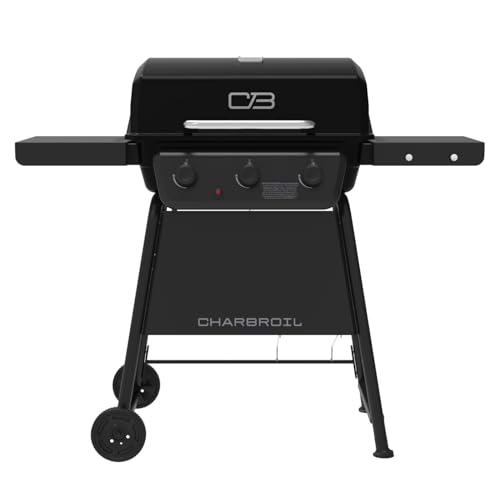
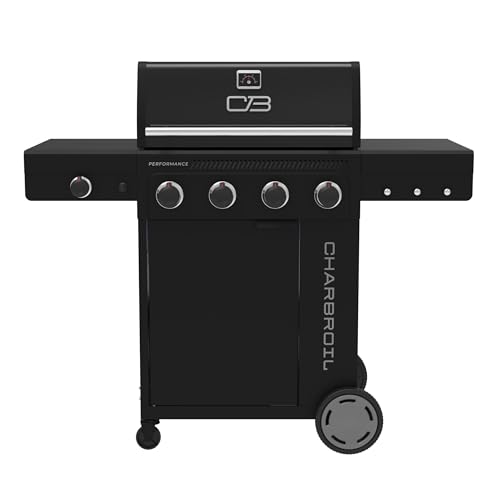
- Char-Broil Performance Series 4-Burner Gas Grill Cabinet
- Nexgrill 4-Burner Propane Gas Grill with Side Burner
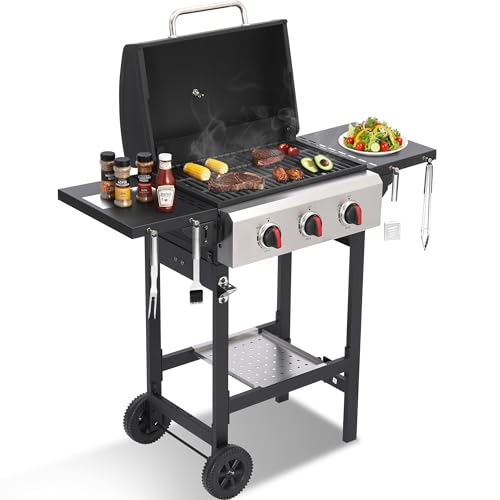
- IdeaMaxx 3-Burner Propane Gas Grill with Cast Iron Grates
- Weber Spirit E-425 Gas Grill
- Nexgrill 4-Burner Propane Gas Grill with Stainless Steel Lid
- Monument Grills Mesa II 4-Burner Propane Gas Grill 410FBZ
Read the full guide ↓ for the ranking logic, the honest limitations of every pick, and the buying checks that matter more than any headline claim.
Searching for the best grills for flavor deserves a straight answer before any ranking: the deepest grill flavour in the world comes from charcoal and wood, and the verified pool for this guide is entirely propane gas grills. This guide will not pretend a gas burner tastes like a bed of hardwood coals. What it will do is rank these six gas grills by the flavour they genuinely produce, because gas flavour is real, it is just built differently: from searing heat, cast iron, vaporised drippings, broil zones, and smoke tools used with intent.
Flavour on a grill comes from a short list of physical events. The Maillard reaction browns proteins into hundreds of savoury compounds, and it needs serious surface heat. Fat and juices dripping onto something hot vaporise into aromatic smoke that coats the food, which is the signature taste people call grilled. Cast iron stores heat so a cold steak does not crash the temperature. And added smoke, from chips in a box or pouch, layers on top. A gas grill that does those four things well tastes dramatically better than one that merely gets hot.
So the ranking below is a flavour engineering ranking: burner power per zone, grate material, sear and broil features, and how well each design vaporises drippings instead of letting them pool or flare uselessly. Every pick can also run a smoker box, and the how-to section explains how to get the most smoke a gas grill can honestly give. If your heart is set on charcoal, the kettle and barrel discussions in Best Grills For Fathers Day show the other path; this guide is for cooks who want maximum flavour with gas convenience.
One expectation to set now: gas flavour is cleaner and more about the food itself, the rub, the marinade, and the char, while charcoal adds its own ingredient to every bite. Many excellent cooks prefer the gas profile for fish, vegetables, and anything delicate, and prefer charcoal for brisket and ribs. Knowing which profile you love is worth more than any badge below.
Key Takeaways
- Honest framing: this pool is all gas. Gas flavour is built from sear heat, cast iron, vaporised drippings, and added smoke, not from charcoal.
- Sear features matter: the Weber’s Boost Burners and Monument’s Broil Zone exist specifically to deepen browning.
- Cast iron grates are a flavour feature: they hold heat through contact and mark food properly.
- A smoker box or foil pouch of chips over one burner is the legitimate way to add smoke on gas.
- Drippings are flavour: designs that vaporise them taste more grilled than designs that drain them away.
- Rubs, marinades, and resting carry more flavour on gas than on charcoal, because the fire adds less of its own.
In this guide
Quick Picks
Six gas grills ranked as flavour machines: searing, grate material, drip vaporisation, and smoke-tool potential.
| Grill | Badge | Fuel | Standout feature |
|---|---|---|---|
| Char-Broil Performance Series 4-Burner Gas Grill Cabinet | Best All-Round Flavour | Gas (propane) | Cabinet-style body |
| Nexgrill 4-Burner Propane Gas Grill with Side Burner | Best Searing Power | Gas (propane) | 626 sq. in. cooking space |
| IdeaMaxx 3-Burner Propane Gas Grill with Cast Iron Grates | Best for Crispy Sear | Gas (propane) | Cast iron cooking grates |
| Weber Spirit E-425 Gas Grill | Best Flavour Features | Gas (propane) | Sear Zone with Boost Burners |
| Nexgrill 4-Burner Propane Gas Grill with Stainless Steel Lid | Best Cast Iron Sear | Gas (propane) | 526 sq. in. cooking space |
| Monument Grills Mesa II 4-Burner Propane Gas Grill 410FBZ | Best Broil Finish | Gas (propane) | Advanced Broil Zone |
How These Picks Were Chosen
This guide to best grills for flavor was built by research, not by press release. We compared the verified pick pool specification by specification: fuel type, burner count and heat output where the listing states it, cooking area in square inches, grate material, and the practical extras that change daily use, such as side burners, folding shelves, warming racks, and cabinet storage. For flavour we ranked on sear-zone design, grate material and mass, heat output relative to cooking area, and how each firebox handles drippings, and we disclose openly that the verified pool contains no charcoal model, so the guide teaches maximum gas flavour rather than claiming charcoal results.
Every pick in this guide comes from a pool verified against Amazon’s catalogue data before writing began, which is why every linked model carries a confirmed listing, a confirmed image, and specifications taken from that listing rather than from memory or from a manufacturer’s brochure. Where a listing does not state a specification, this guide leaves it out instead of guessing: you will not find invented dimensions, invented outputs, or invented accessories anywhere below.
A note on honesty: this is a research-led guide. We did not cook on every grill in a test kitchen, and we will not pretend otherwise. What we did is the work a careful buyer would do at ten times the scale: cross-checking specifications, reading how each design behaves in the situations this keyword actually describes, and ranking by fit for that situation rather than by headline numbers. The badges below reflect that fit. A grill can be excellent and still carry a badge that is not Best Overall, because the best grill for one household is the wrong grill for another.
The 6 Best Options for Best Grills For Flavor

Char-Broil Performance Series 4-Burner Gas Grill Cabinet
Badge: Best All-Round Flavour
Strengths
- Cabinet base hides the propane tank and stores tools
- Side burner adds a second cooking station
- Four burners give flexible zone control for mixed menus
Trade-offs
- Cabinet design is heavier and less portable
- Black finish shows dust and pollen between cooks
- Assembly involves more panels and hardware than open-cart grills
Key specs
- 4 burners plus side burner
- Cabinet-style body
- Colour: Black
- Model 463253925
The Performance Series cabinet model encloses the tank and storage in a tidy black cabinet, which makes a patio look calmer and keeps tools out of the weather. Underneath, four burners and a side burner give it the zone flexibility that mixed family menus need.
Living with the Char-Broil Performance Series 4-Burner Gas Grill Cabinet means grilling becomes a weeknight behaviour rather than a weekend project: uncover, ignite, preheat while you prep, and cook. That balance of effort and reward is exactly what this guide weighs in every pick. Gas grills ask for a different kind of attention instead: keeping the tank filled, the grease tray emptied, and the burners clear, small jobs that take minutes but decide whether the grill lights first time in February as reliably as it did in June. Build those minutes into your routine and a gas grill like this one stays effortless for years.
As a flavour tool, the Char-Broil Performance Series 4-Burner Gas Grill Cabinet should be judged by what happens in the first ninety seconds of contact: whether the grate is hot enough, heavy enough, and ready to brown rather than steam.
The Char-Broil Performance takes Best Overall for flavour on balance: four burners give a fierce zone and a gentle zone at once, which is the working shape of flavour cooking, sear hard, finish gently, and the cabinet keeps a smoker box, chips, and tools at hand so the smoke habit actually happens. It lacks a dedicated sear burner, so its crust comes from full preheat discipline rather than a boost feature. For households that want flavour across a whole menu, not just on steaks, that balance wins.
Best for: balanced flavour across whole menus / Not suited for: cooks wanting a dedicated sear burner

Nexgrill 4-Burner Propane Gas Grill with Side Burner
Badge: Best Searing Power
Strengths
- 60,000 BTU is the strongest heat output in this pool
- 626 sq. in. cooks for a crowd without batch juggling
- Electronic ignition and thermometer simplify every session
Trade-offs
- Large and heavy: pick its patio spot carefully
- High output can burn through propane faster at full blast
- Big grates take longer to brush and season
Key specs
- 4 burners plus side burner, 60,000 BTU total
- 626 sq. in. cooking space
- Stainless steel body
- Built-in thermometer
- Electronic ignition
- Double-door cabinet
The big Nexgrill brings 60,000 BTU across four burners and a side burner, 626 square inches of cooking space, and a double-door stainless cabinet. It is the high-capacity option: the grill you choose when the guest list, not the recipe, is the hard part.
Living with the Nexgrill 4-Burner Propane Gas Grill with Side Burner means grilling becomes a weeknight behaviour rather than a weekend project: uncover, ignite, preheat while you prep, and cook. That balance of effort and reward is exactly what this guide weighs in every pick. Gas grills ask for a different kind of attention instead: keeping the tank filled, the grease tray emptied, and the burners clear, small jobs that take minutes but decide whether the grill lights first time in February as reliably as it did in June. Build those minutes into your routine and a gas grill like this one stays effortless for years.
As a flavour tool, the Nexgrill 4-Burner Propane Gas Grill with Side Burner should be judged by what happens in the first ninety seconds of contact: whether the grate is hot enough, heavy enough, and ready to brown rather than steam.
The big Nexgrill is the raw searing-power pick: 60,000 BTU across 626 square inches means the hot zone stays hot when four steaks land at once, and mass browning is where gas grills usually fail. Its flavour style is abundance: everything seared properly, batches cooked without temperature sag. The discipline it asks is restraint with the lid thermometer and zones, because this much heat burns sugary rubs and glazes quickly if the gentle zone goes unused.
Best for: searing for a crowd without heat sag / Not suited for: small households or small patios

IdeaMaxx 3-Burner Propane Gas Grill with Cast Iron Grates
Badge: Best for Crispy Sear
Strengths
- Cast iron grates hold heat and leave deep sear marks
- Foldable shelves shrink the footprint for storage
- 38,200 BTU is strong output for a three-burner layout
Trade-offs
- Cast iron needs seasoning and dry storage to prevent rust
- Three burners limit zone splits for very mixed menus
- Folding shelves support lighter loads than fixed tables
Key specs
- 3 burners, 38,200 BTU output
- Cast iron cooking grates
- Foldable side shelves
- Colour: Black
The IdeaMaxx pairs 38,200 BTU of three-burner output with cast iron grates, the combination sear-focused cooks ask for: mass in the grate, heat underneath it. The foldable side shelves make it a friendlier fit for smaller patios and camping-style setups where space changes day to day.
Living with the IdeaMaxx 3-Burner Propane Gas Grill with Cast Iron Grates means grilling becomes a weeknight behaviour rather than a weekend project: uncover, ignite, preheat while you prep, and cook. That balance of effort and reward is exactly what this guide weighs in every pick. Gas grills ask for a different kind of attention instead: keeping the tank filled, the grease tray emptied, and the burners clear, small jobs that take minutes but decide whether the grill lights first time in February as reliably as it did in June. Build those minutes into your routine and a gas grill like this one stays effortless for years.
As a flavour tool, the IdeaMaxx 3-Burner Propane Gas Grill with Cast Iron Grates should be judged by what happens in the first ninety seconds of contact: whether the grate is hot enough, heavy enough, and ready to brown rather than steam.
The IdeaMaxx makes its flavour case with cast iron and strong output in a three-burner body: the grates store the heat that writes deep marks and real crust onto steaks, chops, and salmon skin. Foldable shelves keep it patio-friendly. Its flavour ceiling is set by zone count: three burners split into hot and gentle less gracefully than four, and the cast iron demands seasoning care, because a neglected grate steals the very crust it exists to create.
Best for: crispy sear in a compact footprint / Not suited for: very mixed menus needing many zones

Weber Spirit E-425 Gas Grill
Badge: Best Flavour Features
Strengths
- Dedicated sear zone with boost burners for steakhouse crusts
- Porcelain-enamelled cast iron blends heat retention with easier care
- Accessory rails keep tools and prep items organised at the grill
Trade-offs
- Premium Weber positioning within this pool
- Four-burner body is a committed patio fixture
- Sear zone rewards attention; boost heat can overshoot delicate foods
Key specs
- 4 burners
- Sear Zone with Boost Burners
- Porcelain-enamelled cast-iron grates
- Weber Works rails
- Colour: Black
The Spirit E-425 is Weber applying its design discipline to gas: four burners, a dedicated Sear Zone with Boost Burners, porcelain-enamelled cast-iron grates, and the Weber Works rail system for accessories. It is the precision instrument in this line-up.
Living with the Weber Spirit E-425 Gas Grill means grilling becomes a weeknight behaviour rather than a weekend project: uncover, ignite, preheat while you prep, and cook. That balance of effort and reward is exactly what this guide weighs in every pick. Gas grills ask for a different kind of attention instead: keeping the tank filled, the grease tray emptied, and the burners clear, small jobs that take minutes but decide whether the grill lights first time in February as reliably as it did in June. Build those minutes into your routine and a gas grill like this one stays effortless for years.
As a flavour tool, the Weber Spirit E-425 Gas Grill should be judged by what happens in the first ninety seconds of contact: whether the grate is hot enough, heavy enough, and ready to brown rather than steam.
The Weber Spirit E-425 has the most deliberate flavour engineering here: a Sear Zone with Boost Burners for a concentrated blast, and porcelain-enamelled cast-iron grates that combine iron’s heat memory with easier release. For a cook chasing steakhouse crust on gas, this is the sharpest tool in the pool, and its steadiness at low heat also suits the smoke-box, low-and-slow style of flavour building. Premium positioning is its only real caveat.
Best for: the sharpest steakhouse crust on gas / Not suited for: anyone expecting charcoal smoke from gas
Nexgrill 4-Burner Propane Gas Grill with Stainless Steel Lid
Badge: Best Cast Iron Sear
Strengths
- 52,000 BTU gives strong, even multi-zone heat
- Matte cast iron grates sear well and hide wear gracefully
- Side burner covers sauces and sides without kitchen trips
Trade-offs
- Cast iron grates need seasoning care
- Mid-large footprint suits patios, not balconies
- No enclosed cabinet storage in the listed features
Key specs
- 4 burners plus side burner, 52,000 BTU total
- 526 sq. in. cooking space
- Matte finish cast iron grates
- Built-in thermometer
- Electronic ignition
- Stainless steel lid
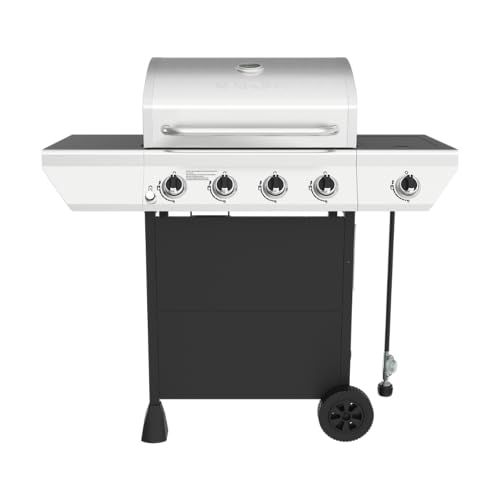
This Nexgrill variant combines 52,000 BTU, 526 square inches, and matte cast iron grates under a stainless steel lid. It sits in the sweet spot for families that grill several times a week and want cabinet-free simplicity with real zone control.
Living with the Nexgrill 4-Burner Propane Gas Grill with Stainless Steel Lid means grilling becomes a weeknight behaviour rather than a weekend project: uncover, ignite, preheat while you prep, and cook. That balance of effort and reward is exactly what this guide weighs in every pick. Gas grills ask for a different kind of attention instead: keeping the tank filled, the grease tray emptied, and the burners clear, small jobs that take minutes but decide whether the grill lights first time in February as reliably as it did in June. Build those minutes into your routine and a gas grill like this one stays effortless for years.
As a flavour tool, the Nexgrill 4-Burner Propane Gas Grill with Stainless Steel Lid should be judged by what happens in the first ninety seconds of contact: whether the grate is hot enough, heavy enough, and ready to brown rather than steam.
This Nexgrill variant pairs 52,000 BTU with matte cast iron grates, a combination aimed squarely at searing quality: the iron holds the heat, the output replaces it, and the matte finish shrugs off the cosmetic wear that hard searing causes. The side burner earns a flavour mention too, because butter, glazes, and pan sauces finished outdoors keep the whole dish in the grilled register instead of splitting it with the kitchen stove.
Best for: hard searing with sauce support / Not suited for: minimalists avoiding cast iron care

Monument Grills Mesa II 4-Burner Propane Gas Grill 410FBZ
Badge: Best Broil Finish
Strengths
- Broil Zone concentrates heat for finishing and searing
- Foldable shelves adapt the footprint to the day
- Stainless body wipes clean and shrugs off weather
Trade-offs
- Broil Zone is another heat behaviour to learn
- Foldable shelves carry less than fixed tables
- Newer model line means fewer long-term owner reports to consult
Key specs
- 4 burners
- Advanced Broil Zone
- Stainless steel body
- Foldable side shelves
- Fast assembly design
- Model Mesa II 410FBZ
The Monument Mesa II adds an Advanced Broil Zone to a four-burner stainless platform, with foldable side shelves and a fast-assembly design. The broil function is the differentiator: a concentrated finishing heat for melting, crisping, and last-minute crust.
Living with the Monument Grills Mesa II 4-Burner Propane Gas Grill 410FBZ means grilling becomes a weeknight behaviour rather than a weekend project: uncover, ignite, preheat while you prep, and cook. That balance of effort and reward is exactly what this guide weighs in every pick. Gas grills ask for a different kind of attention instead: keeping the tank filled, the grease tray emptied, and the burners clear, small jobs that take minutes but decide whether the grill lights first time in February as reliably as it did in June. Build those minutes into your routine and a gas grill like this one stays effortless for years.
As a flavour tool, the Monument Grills Mesa II 4-Burner Propane Gas Grill 410FBZ should be judged by what happens in the first ninety seconds of contact: whether the grate is hot enough, heavy enough, and ready to brown rather than steam.
The Monument Mesa II brings a different flavour weapon: the Advanced Broil Zone, a concentrated top-end heat for finishing. Broiling is how you melt cheese properly, crisp chicken skin at the end, blister peppers, and set a glaze without overcooking the food beneath. Used as a finishing tool rather than a cooking zone, it adds a flavour move the other picks cannot copy. Its foldable shelves and stainless body keep the package practical between those moments.
Best for: finishing, melting, and glazing / Not suited for: purists who never use a broil finish
Comparison Table
The flavour view: what each grill does to food in the first minutes of contact, and where its flavour ceiling sits.
| Grill | Badge | Fuel | Headline spec | Where it shines |
|---|---|---|---|---|
| Char-Broil Performance Series 4-Burner Gas Grill Cabinet | Best All-Round Flavour | Gas (propane) | 4 burners plus side burner | Balanced menu flavour |
| Nexgrill 4-Burner Propane Gas Grill with Side Burner | Best Searing Power | Gas (propane) | 4 burners plus side burner, 60,000 BTU total | Raw searing power |
| IdeaMaxx 3-Burner Propane Gas Grill with Cast Iron Grates | Best for Crispy Sear | Gas (propane) | 3 burners, 38,200 BTU output | Compact cast iron crust |
| Weber Spirit E-425 Gas Grill | Best Flavour Features | Gas (propane) | 4 burners | Boost-burner precision |
| Nexgrill 4-Burner Propane Gas Grill with Stainless Steel Lid | Best Cast Iron Sear | Gas (propane) | 4 burners plus side burner, 52,000 BTU total | Iron plus side burner |
| Monument Grills Mesa II 4-Burner Propane Gas Grill 410FBZ | Best Broil Finish | Gas (propane) | 4 burners | Broil-zone finishing |
How to Choose the Right Grill for Flavour-First Grilling
Flavour shopping on gas means auditing four things in order. First, can the grill get a zone genuinely fierce and keep it fierce under load: look at total output relative to area, and at dedicated sear features. Second, what are the grates made of: cast iron and porcelain-enamelled cast iron store heat and brown; thin steel loses the moment food lands. Third, what happens to drippings: flavour bars and firebox designs that vaporise juices return them as aroma, while designs that drain everything away cook cleaner and taste plainer. Fourth, can it run a smoker box comfortably at low heat without the whole grill becoming an oven.
Fuel is the first decision, and it is a lifestyle decision before it is a cooking one. Charcoal asks for fifteen to thirty minutes of lighting and a little fire management, and pays you back in smoke flavour, fierce searing heat, and the ritual many grillers genuinely enjoy. Propane lights in seconds, holds a set temperature with a knob, and cleans up faster, which is why gas wins weeknights. Neither is better in the abstract: the right answer is the one that matches how often you will actually cook, because the best grill is the one that gets used twice a week, not the one that impresses twice a year.
Cooking area is the second decision, and buyers consistently misjudge it in both directions. As a working rule, allow roughly seventy to one hundred square inches of primary grate per person for a mixed load of mains and sides, remembering that food needs elbow room to cook rather than steam. A couple cooking burgers needs far less than a household grilling for eight with corn and peppers on the same grate. Every pick in this guide states its cooking area where the listing provides it, so do the arithmetic for your real guest list, not your aspirational one.
Heat output needs interpreting, not just comparing. Total BTU figures rise with grill size, so a big number on a big grill may mean the same heat per square inch as a smaller number on a compact one. What matters for results is whether the grill can hold a fierce sear zone and a gentle zone at the same time: multiple burners on a gas grill, or a well-managed two-zone charcoal fire, both achieve it. Grate material then decides how that heat reaches the food: cast iron holds heat and marks deeply but wants seasoning and dry storage, porcelain-coated grates forgive more and clean easier, and chrome-plated grates on small portables are light and simple but need gentle treatment.
Then be honest about your flavour target. If your reference meal is a charcoal-grilled ribeye with a smoky edge, no gas grill fully reproduces it, and the techniques in this guide get you perhaps most of the way: ripping sear, cast iron, chips smoking on the side. If your reference is a clean, char-kissed chicken with a bright rub, gas is not a compromise at all, it is the right tool. The guides at Best Grills For Fish and Best Grills For Grilling And Smoking explore the two ends of that spectrum in depth.
Finally, remember that on gas, the cook supplies more of the flavour, so budget for the supply chain: fresh spices for rubs, real wood chips for the smoker box, good salt, and a thermometer so the sear you built is not wasted on overcooking. Those small recurring purchases move the flavour needle more than another burner ever will.
Finally, price the whole ownership, not the box. Charcoal grills consume fuel and ash handling on every cook; gas grills consume propane and eventually igniters, burners, and grates as wear parts. A cover, a decent instant-read thermometer, a stiff brush or scraper, and a chimney starter for charcoal are not accessories so much as the rest of the purchase. Every linked pick in this guide lets you check the latest price on Amazon before deciding, and the honest move is to cost the grill plus its first season of supplies together, then choose the combination you will still be happy with next summer.
How to Get Maximum Flavour From a Gas Grill
Flavour on gas is a technique stack, and each layer is simple. Stack them all and the gap between gas and charcoal narrows to a matter of taste rather than quality.
Setup comes first. Assemble on a flat surface, keep every bolt finger-tight until the frame is square, then tighten in sequence; a grill that rocks on its legs will annoy you for years. Before the first cook, wash the grates in warm soapy water, dry them fully, and run the grill hot and empty for twenty to thirty minutes to burn off manufacturing oils, then lightly oil the hot grates with a high-heat oil on a folded paper towel held in tongs. That first seasoning is the foundation every later cook builds on.
- Preheat with the lid down for a full fifteen minutes; grate temperature, not air temperature, writes the crust.
- Dry food thoroughly and season assertively; surface water steams instead of browning.
- Sear over the fiercest zone, then finish over the gentle zone to the exact target temperature.
- Run a smoker box or chips pouch over a lit burner for the first part of longer cooks, lid down.
- Rest everything, and finish with butter, herb oil, or a glaze applied off the fiercest heat.
The smoker box method deserves detail: fill a cast iron or steel box, or a double-layer foil pouch with a few vent holes, with a handful of dry wood chips, place it directly over a burner on high until it smokes, then set your cooking zone and put the food on the cooler side with the lid down. One fill flavours a typical cook; refilling mid-cook rarely earns its interruption. Choose chips by food: oak and hickory for beef, apple and cherry for pork and poultry, alder for fish.
Cleaning is where grills are won or lost over a season. Brush or scrape the grates while they are still warm after cooking, empty ash only when it is fully cold, and wipe grease from shelves and lids before it bakes on. On gas models, check the grease tray every few cooks and clear the burner ports if flames turn lazy and yellow. Problem: food sticks badly → the grate was not hot enough, not oiled, or the food was moved too early; let a proper crust form and it releases itself. Problem: flare-ups scorch everything → too much fat over too much direct heat; move food to the cooler zone, close the lid briefly, and never spray water on a grease fire. Problem: temperatures will not climb → on charcoal, open the dampers and check ash is not choking the fire; on gas, check the tank, the regulator connection, and whether a burner tube is blocked.
The Science of the Sear, in Plain Language
Browning is chemistry with a temperature threshold: below it, food steams in its own juices and stays grey; above it, amino acids and sugars react into the deep savoury crust that makes grilled food taste grilled. Two things decide which side of the threshold you land on: how hot the grate truly is when food touches it, and how much heat the grate can spare without cooling. That is why preheat time and grate mass dominate this guide’s rankings, and why a thin grate on a powerful burner still disappoints: the burner’s heat arrives seconds too late, after the steam has already won.
Dripping vapour is the second flavour system. When juices hit a hot surface or flame and vaporise, the aromatic compounds rise and condense on the food. It is the same effect as charcoal’s, in smaller measure, and it explains why two gas grills of equal power can taste different: the one whose firebox returns vapour to the food tastes more grilled. Keep those surfaces seasoned rather than surgically clean; a grill scrubbed to bare metal after every cook tastes less like itself.
Rubs, Marinades, and Finishes: Where Gas Cooks Win Back Flavour
Because the gas fire contributes less of its own taste, the seasoning layer carries more weight, and that is an opportunity disguised as a limitation. Dry rubs with a little sugar brown beautifully over a fierce zone, but move sugared food to the gentle zone once the crust sets, because the same sugar scorches fast. Marinades should be patted dry before grilling for the same reason marinades exist at all: their flavour is in the surface they seasoned, not in the liquid that steams.
Finishes are the gas cook’s secret weapon: compound butter melting over a resting steak, a miso glaze set in the final minute, chimichurri spooned on at the table. None of these need smoke, all of them taste deliberate, and together they are how gas-grilled food stops tasting like a compromise. For readers who want the smoke-first philosophy instead, Best Grills For Grilling Smoking covers the low-and-slow route, and Best Grills For Florida covers keeping flavour alive through a humid, stormy season.
Common Buying Mistakes
The most common mistake in shopping for best grills for flavor is buying for the biggest day of the year. A grill sized for a once-a-year party is oversized, slow to heat, and hungry for fuel on the ordinary Tuesday when two people want burgers. Size for your typical cook, and handle the rare crowd with batches, a warming rack, or a borrowed second grill.
The second mistake is treating headline heat as quality. Total output figures only mean something relative to cooking area, and they say nothing about evenness, lid fit, or grate material, which are what actually decide whether food cooks predictably. The comparison table in this guide exists so you can judge those things side by side instead of chasing the largest number on the box.
The biggest flavour mistake is impatience at the preheat. Five extra minutes with the lid down is the cheapest flavour upgrade in all of grilling, and skipping it produces the grey, steamed results people wrongly blame on gas itself.
The second is scrubbing the grill back to bare metal after every cook and calling it care. Grates should be clean of residue and rust, but their seasoned surface is part of the flavour system. Brush hot, oil lightly, and let the grill keep its character.
The last mistake is skipping the unglamorous checks: measuring the patio or balcony before ordering, confirming the fuel you can actually store and source locally, and reading the assembly expectations honestly. A grill that arrives too big for its spot, or that needs a free Saturday you do not have, is a bad purchase no matter how well it cooks. Ten minutes with a tape measure and the specification list saves all of that.
Final Recommendation
For flavour across a whole menu, start with the Char-Broil Performance: zones, capacity, and smoke-box practicality in one balanced package. Start with the Char-Broil Performance Series 4-Burner Gas Grill Cabinet, and compare it against the Weber Spirit E-425 Gas Grill and the Nexgrill 4-Burner Propane Gas Grill with Side Burner before you decide.
Chase the specific ceilings if your cooking leans that way: the Weber Spirit E-425 for the finest sear control, the big Nexgrill for crowd searing without sag, the IdeaMaxx for cast iron crust in a smaller footprint, the second Nexgrill for iron plus a sauce burner, and the Monument when finishing and glazing are your signature moves.
Above all, run the technique stack: full preheat, dry food, fierce sear, gentle finish, smoke when it helps, rest always. A cook who does those six things on any grill in this guide will serve food nobody apologises for.
One Last Thing Before You Decide
One more consideration belongs in every grilling decision, whatever the keyword that brought you here: the cook who stands at the grill. Reach, lid weight, shelf height, and where the controls sit decide whether a grill feels like a tool or an obstacle course, and those things are personal in a way specifications are not. If you can stand in front of a similar model in a showroom, do it. If you cannot, read the dimensions twice and picture your own patio, your own hands, and your own habits honestly before ordering.
Ownership also has a rhythm worth planning for. Grills ask for small, regular kindnesses: a cover fitted, a grate brushed, a tank checked, a bag of fuel in reserve. Households that build those minutes into the week find their grill ready whenever the mood strikes, which is the real luxury in this category. The models in this guide were chosen partly because their upkeep is ordinary: no exotic parts, no unusual rituals, just the standard care that any of them repays with years of service.
Finally, give any new grill a honest trial period before judging it. The first cook teaches the hot spots, the second teaches the timing, and by the fifth the machine has usually become familiar enough to disappear, leaving only the food and the company. That disappearance is the true test of a good grill, and it is why this guide ranks fit for a specific purpose above raw specification every time. A grill that suits your life will vanish into it; a grill that does not will remind you of the mismatch at every meal.
Fuel storage deserves a short, serious paragraph in any grill guide. Propane tanks live outdoors or in a ventilated store, upright, away from heat sources, and never in a living space or an enclosed garage; a spare tank, stored the same way, is the difference between a cookout and a cancelled one. Charcoal lives in a sealed, dry container, because damp charcoal lights badly, burns cool, and frustrates exactly the cooks who can least diagnose why. Matches, lighters, and chimney paper belong in the same dry place, so the whole lighting routine is one trip rather than four.
Parts and support decide how a grill ages. Burners, igniters, grates, and heat tents are wear items on gas grills, and dampers, grates, and ash pans are the wear items on charcoal ones. Before buying, it is worth a minute to confirm that the maker sells those parts for your model and that they are ordinary rather than exotic. A grill whose wear parts are available is a grill you maintain; a grill whose parts have vanished is a grill you replace, and that difference dwarfs most specification gaps in this guide.
Seasonal timing is the last practical lever. Grill ranges turn over as seasons change, and the same model can be easier to find, easier to accessorise, and occasionally easier to buy well at the edges of the season than at its peak. None of that changes which grill fits your life, so decide the model on fit first and let timing be a tiebreaker rather than a driver. Check the latest price on Amazon for the picks that fit, confirm the configuration matches what this guide reviewed, and then buy with confidence.
A word about cooking for mixed groups, because most real grilling serves people who want different things at the same time. The practical pattern is sequencing rather than simultaneity: vegetables and delicate items first while the grate is cleanest and the heat is freshest, sturdy proteins through the middle of the cook, and quick-finishing items last so everything reaches the table together. Resting is part of the sequence, not dead time: rested meat holds happily under loose foil while the final items cook, and that buffer is what lets one cook feed a table without panic. Plan the sequence before lighting, and even a modest grill performs like a larger one.
Frequently Asked Questions
Can a gas grill really produce great flavour?
Yes, through a different route than charcoal: fierce searing, cast iron heat, vaporised drippings, and optional wood-chip smoke. The profile is cleaner and more about the food and seasoning than about the fire.
How do I add smoke flavour on a gas grill?
Use a smoker box or a foil pouch of wood chips over a lit burner until it smokes, then cook with the lid down, ideally with the food on a cooler zone so it spends time in the smoke.
Why does my grilled food taste bland?
Usually the grate was not fully preheated, the food went on wet, or it was under-seasoned. Dry surfaces, assertive seasoning, and a full fifteen-minute preheat fix most bland results.
Are cast iron grates worth the maintenance for flavour?
For searing-focused cooks, yes: iron’s heat storage produces deeper crusts. The cost is seasoning and dry storage. Porcelain-enamelled cast iron, as on the Weber pick, splits the difference.
What wood chips go with what food?
Oak and hickory suit beef, apple and cherry suit pork and poultry, and alder or fruitwoods suit fish. When in doubt choose a milder wood; you can add smoke next time, but you cannot remove it.
Does a sear zone actually make a difference?
Yes. Concentrated heat browns before the interior overcooks, which is the whole problem with thick steaks on ordinary burners. The Weber’s Boost Burners and the Monument’s Broil Zone exist to solve exactly that.