Disclosure: topratedkitchenware.com is reader-supported. When you buy through links on our site, we may earn an affiliate commission from Amazon and other retailers, at no extra cost to you.
Where to buy
The six models below are the verified picks for this guide to best grills for kabob. Each name links to its Amazon listing, where you can check the latest price on Amazon, confirm the current configuration, and read the newest owner feedback before you decide.
- Royal Gourmet CC1830V 30-Inch Barrel Charcoal Grill
- Weber Original Kettle 22-Inch Charcoal Grill
- Electactic 4-Burner Gas Grill with Side Burner
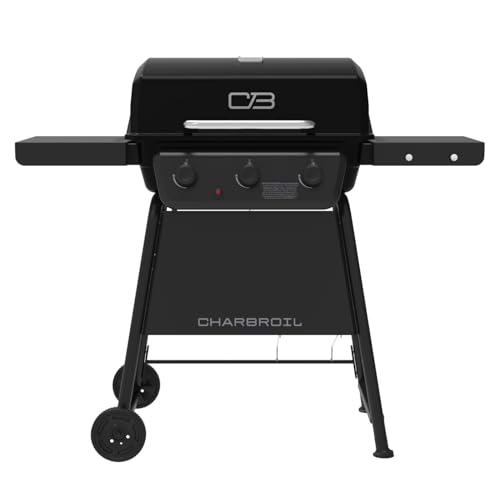
- Charbroil Classic 3-Burner Gas Grill
- NATUREPON 17.5-Inch Charcoal Kettle Grill
- Cuisinart 14-Inch Portable Charcoal Grill
Read the full guide ↓ for the ranking logic, the honest limitations of every pick, and the buying checks that matter more than any headline claim.
The best grills for kabob are the ones that understand what a skewer actually needs: strong direct heat that reaches every side of a cube, a grate layout that lets a row of skewers lie flat and turn together, and a calmer corner where finished skewers can wait while the next batch chars. Kabob — cubed meat and vegetables threaded and grilled — looks like the simplest food in outdoor cooking, and it punishes exactly two failures: skewers that spin instead of turning, and heat so uneven that the peppers incinerate while the meat stays raw. This guide ranks six verified grills, charcoal and gas, on how completely they solve the skewer problem: fire character, grate geometry, batch room, and the zoning that mixed skewers demand.
The shortlist spans the honest range of kabob cooking. Two classic kettles and a big barrel bring charcoal’s char and smoke. A compact kettle and a small portable charcoal grill cover balconies, picnics, and camping. Two gas grills bring instant heat and dialled zoning for the weeknight version of the dish. Each review judges its pick as a kabob machine first. Readers buying for someone else as well as themselves should note that Best Grills For Men covers several of these same grills through a gift-buying lens; the hardware overlaps, and the two guides differ mainly in the questions they ask of it.
Kabob also rewards the cook socially in a way worth naming at the outset: it is fast, theatrical, and eaten communally, often straight from the skewer, which makes it the grill food most likely to gather people around the cook instead of sending the cook away from the gathering. The right grill for kabob is therefore partly a piece of furniture for a party — a judgement the reviews below take seriously alongside the fire and the steel.
A practical promise before the rankings: this guide treats skewers as equipment, not garnish. The grill is half the purchase; the skewers themselves, their material and shape, decide whether kabob night is a pleasure or a wrestling match, and the buying sections give them their full weight.
Key Takeaways
- Kabobs need two heats at once: fierce for charring, calm for finishing and resting.
- Thread skewers by ingredient or by cooking time, not by colour; peppers and beef do not finish together.
- Flat metal skewers turn food; round skewers let food spin. The grill cannot fix the wrong skewer.
- Leave small gaps between cubes so heat reaches every side; a crowded skewer steams.
- Charcoal gives kabobs their classic char and smoke; gas gives zoning and weeknight speed.
- Check the latest price on Amazon and confirm fuel, area, and grate details on the listing before you buy.
In this guide
Quick Picks
| Pick | Badge | Why it earns its place | Listing |
|---|---|---|---|
| Royal Gourmet CC1830V 30-Inch Barrel Charcoal Grill | Best Overall for Kabob | A 30-inch barrel charcoal grill with 627 sq. in. and side tables: long skewers in parallel rows over a real fire. | Check on Amazon |
| Weber Original Kettle 22-Inch Charcoal Grill | Best Classic Kettle for Kabob | The 22-inch Weber kettle: banked-fire zoning, damper control, and the easiest ash clean-up in charcoal. | Check on Amazon |
| Electactic 4-Burner Gas Grill with Side Burner | Best Gas for Kabob | Four burners plus a side burner in stainless steel: dialled two-zone kabob cooking with a thermometer to confirm it. | Check on Amazon |
| Charbroil Classic 3-Burner Gas Grill | Best Compact Gas | A 360 sq. in. three-burner with porcelain-coated grates: proper two-zone kabob cooking for small households. | Check on Amazon |
| NATUREPON 17.5-Inch Charcoal Kettle Grill | Best Compact Kettle | A 17.5-inch charcoal kettle with 302 sq. in., dampers, wheels, and a shelf: small-format real-fire kabob. | Check on Amazon |
| Cuisinart 14-Inch Portable Charcoal Grill | Best Portable for Kabob | A 14-inch portable charcoal grill with dual vents: kabob at the park, the campsite, and the tailgate. | Check on Amazon |
Cooking kabobs for the whole household every week? Best Grills For Large Families looks at family-scale grills through a daily-use lens.
How These Picks Were Chosen
This guide is research-led, built from a verified pool for the grills category, with every pick included only where its brand, fuel, and listing details could be confirmed. For the kabob brief, the comparison weighted fire character and zoning first: can the grill hold a fierce zone and a finishing zone at the same time, by banked coals, dampers, an adjustable layout, or independent burners? Mixed skewers live or die on that split, because no single temperature suits charring peppers and finishing chicken simultaneously.
Second came layout. Cooking area was interpreted as skewer room: how many standard skewers lie in a single layer with handles accessible and turning space between rows. Shape mattered as well as size — long rectangular grates organise skewers in parallel, round kettles organise them across a diameter, and each has cooks who swear by it. Grate material was weighed for the marinade cycle: kabob marinades drip, flare, and bake on, and the grill that brushes clean afterward is the grill that gets used again.
Third came occasion fit. Kabobs are weeknight food, party food, and camping food in the same week for many households, so the shortlist deliberately includes a portable and a compact kettle alongside the full-size designs. Badges name the occasion and the method each pick serves best, so you can shop by your own calendar rather than by a single ranking.
The 6 Best Options for Best Grills for Kabob
Read each review as a kabob session: skewers threaded, fire ready, batches turning, finished skewers resting. That arc, not a specification sheet, is what the badges reward.

Royal Gourmet CC1830V 30-Inch Barrel Charcoal Grill
Badge: Best Overall for Kabob
Strengths
- 627 sq. in. barrel grate lays long skewers in neat parallel rows
- Charcoal fire gives kabobs their defining char and smoke
- Side and front tables hold the threading, resting, and serving stations
Trade-offs
- Charcoal setup and ash are part of every session
- No dampers or thermometer refinements listed; fire is judged by eye and hand
- Large grill for a two-person kabob night
At a glance
- Fuel: charcoal
- Size: 30-inch barrel
- Cooking space: 627 sq. in.
- Extras: side and front tables with wood-painted finish (per listing title)
- Finish: black
The Royal Gourmet CC1830V earns the top badge on geometry and fire. Its listing confirms a 30-inch barrel format, 627 square inches of cooking space, and side and front tables with a wood-painted finish. A barrel grate is the natural home of the skewer: long skewers lie in parallel rows along the rectangle, handles aligned at one end, so the cook can roll an entire row a quarter-turn with a gloved hand or tongs in one motion. Over charcoal, those rows char the way kabobs are supposed to char — edges darkened, centres juicy, a breath of smoke in every bite.
The tables complete the session in a way spec sheets never capture. Kabob cooking is a small factory: a tray of threaded raw skewers, a resting tray for finished ones, oil and seasoning for the final brush, and serving plates. This grill’s tables hold the factory at the fire, and the barrel’s length lets you bank the coals deeper at one end, creating the fierce-to-calm gradient that mixed skewers need without any accessory at all.
The honest costs are charcoal’s costs and size’s costs. There is no shortcut around lighting the fire or clearing the ash, the listing names no thermometer or damper system, so fire judgement is the traditional kind, and a 30-inch barrel is a lot of grill to light for two people. For the household whose kabob nights are gatherings, it is the most complete tool in this guide. For weeknight pairs, the kettles and the portable below scale the same pleasures down.
A barrel also forgives the most common kabob scheduling error: everything ready at once. Its length lets early skewers slide to the cool end and wait in gentle heat while late skewers char, so a mixed menu converges on the table instead of scattering across twenty minutes. Hosts who cook for a crowd twice a month will feel that forgiveness at every event, and it is a large part of why this format, rather than a bigger kettle, takes the top badge for this particular food.
Best for: kabob gatherings and charcoal loyalists / Not suited for: solo weeknight cooks and instant-heat households
Weber Original Kettle 22-Inch Charcoal Grill
Badge: Best Classic Kettle for Kabob
Strengths
- Banked coals create fierce and finishing zones in one kettle
- Temperature control dampers govern the fire precisely
- One-Touch cleaning makes post-kabob ash a ten-second job
Trade-offs
- Round grate takes skewers across the diameter, not in long rows
- No thermometer listed and no work surfaces
- Charcoal time applies before every session
At a glance
- Fuel: charcoal
- Size: 22-inch kettle
- Extras: One-Touch cleaning system, temperature control dampers (per listing title)
- Finish: black
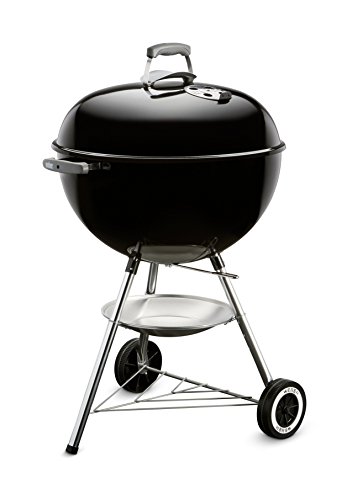
The Weber Original Kettle is the kabob grill that generations of cooks have learned on, and its listing confirms the essentials: the 22-inch format, temperature control dampers, and the One-Touch cleaning system. Its kabob method is the banked fire — coals piled deep on one side, sparse on the other — which turns a round kettle into a two-zone skewer station. Skewers start over the deep bed for char, slide to the shallow side to finish, and rest at the rim. The dampers then hold that arrangement steady with a precision that surprises cooks who think of charcoal as guesswork.
Skewers lie across the diameter, handles to the rim, which suits standard-length skewers well and makes turning a simple lift-and-roll. The kettle’s dome, closed for a minute at a time, rolls heat over the tops of the cubes — useful for thicker chicken skewers that need help finishing without more char underneath. And when the last skewer rests, the One-Touch sweep clears the greasy, marinade-laden ash that kabob cooking produces in quantity, which is why kettles stay in weekly service for decades.
The limitations are the kettle’s familiar ones: no built-in thermometer in the listing, no tables, and a round layout that organises skewers less formally than a barrel. None of them has stopped this design from being the default charcoal recommendation for skewer cooking, and for a household buying one charcoal grill for kabobs and everything else, it remains the safest pair of hands in the guide.
The kettle also rewards a small accessory that kabob cooks swear by: a handful of bricks or a raised grate at the rim, creating a gentle upper shelf where finished skewers rest in warm air while the fire does its next batch. It is not required — the shallow-coal side does the same job — but it shows the depth of the kettle’s second-hand wisdom: every kabob problem a new owner meets has been solved on this shape of grill before, usually cheaply.
Best for: charcoal households wanting one proven grill for kabobs and more / Not suited for: cooks who want long parallel skewer rows and work tables

Electactic 4-Burner Gas Grill with Side Burner
Badge: Best Gas for Kabob
Strengths
- Four burners split into charring and finishing zones by dial
- Built-in thermometer confirms the fierce zone before skewers land
- Side burner handles sauces, flatbreads, and accompaniments in parallel
Trade-offs
- Gas char is cleaner; smoke flavour must come from marinade and technique
- Cooking area is not stated in the listing title, so verify skewer capacity
- Stainless surfaces need wiping after marinade-heavy sessions
At a glance
- Fuel: propane gas
- Burners: 4 plus side burner
- Total output: 42,000 BTU (per listing title)
- Body: stainless steel
- Extras: built-in thermometer
The Electactic is the gas standard-bearer for kabob in this guide. Its listing confirms a stainless steel four-burner design with a side burner, a total output figure of 42,000 BTU, and a built-in thermometer. For skewers, four burners translate into a professional layout: two burners high for charring, one medium for finishing, one low or off for resting — all set by dial, all repeatable next Tuesday. The thermometer confirms the charring zone is genuinely fierce before the first skewer lands, removing the guesswork that makes gas kabob disappointing when it is merely warm.
The side burner earns a specific mention in this cuisine. Kabob accompaniments are hot work: flatbreads warming, a pan of onions caramelising, a sauce holding at a simmer. Giving them their own burner keeps the main grate a pure skewer field, laid out in rows with turning room, instead of a negotiation between skewers and pans. Stainless construction shrugs off the marinade splatter that kabob cooking distributes generously.
State the trade honestly: gas gives char without smoke. The marinade, the char itself, and a final brush of seasoned oil must carry the flavour, and in practice they carry it well. What gas returns is the weeknight — kabobs lit, zoned, and served inside the time charcoal is still lighting. Confirm the unstated cooking area on the listing against your skewer count, and this is the gas pick to beat. Homeowners planning a permanent patio fuel line should also weigh Best Grills For Natural Gas Hookup.
Repeatability deserves its own sentence on gas. A charcoal fire is a new instrument every session; a gas grill returns to the same fierce zone at the same dial setting, which means a kabob recipe that worked last week works this week, and a household can build genuine skill instead of re-learning the fire. For families whose kabob night is a weeknight institution rather than a weekend ceremony, that consistency is not a lesser virtue — it is the virtue.
Best for: gas households cooking kabobs weekly / Not suited for: smoke-first cooks and buyers who need a stated cooking area

Charbroil Classic 3-Burner Gas Grill
Badge: Best Compact Gas
Strengths
- Confirmed 360 sq. in. holds a family batch of skewers in one layer
- Porcelain-coated grates release sticky marinades and clean easily
- Side shelves give a compact grill a real landing zone for trays
Trade-offs
- Three burners mean a narrower resting zone than four-burner designs
- No side burner for accompaniments
- Too small for party-scale skewer batches
At a glance
- Fuel: propane gas
- Burners: 3
- Total output: 30,000 BTU (per listing title)
- Cooking area: 360 sq. in.
- Grates: porcelain-coated
- Extras: side shelves
The Charbroil Classic is the compact gas pick, and kabob suits it beautifully. The listing confirms three burners, a total output figure of 30,000 BTU, 360 square inches of cooking area, porcelain-coated grates, and side shelves. Three hundred and sixty square inches is, in skewer terms, a family batch: a row of meat skewers and a row of vegetable skewers in a single layer, with the burners split into a hot side and a resting side. For households of two to four, that is not a reduced version of kabob night; it is kabob night at its correct scale.
Porcelain-coated grates are the right surface for this cuisine at this size. Kabob marinades are sticky by design, and a coating that releases them — and wipes clean afterward without a seasoning ritual — keeps a small grill in the weekly rotation it was bought for. The side shelves matter at this scale too: a compact grill without landing space turns skewer service into juggling, and these shelves hold the raw tray and the resting tray exactly where they belong.
The limits are size’s limits. The resting zone is a strip, not a field; there is no side burner, so accompaniments share the kitchen; and a party batch means relays. None of that is hidden, and none of it matters to the small household this grill serves. It is the honest compact answer to the kabob brief on gas.
Compact gas grills also change who cooks. A three-burner that lights instantly and cleans in minutes is a grill that a second household member will happily run, and kabob — with its simple turning rhythm and fast feedback — is the ideal food for a newer cook to learn on. The best family grill is often not the most capable one but the one two people use confidently, and this pick makes that case quietly and well.
Best for: small households wanting gas kabob without a big grill / Not suited for: party batches and side-burner cooking

NATUREPON 17.5-Inch Charcoal Kettle Grill
Badge: Best Compact Kettle
Strengths
- Real charcoal char in a compact, wheeled kettle format
- Adjustable air dampers give genuine fire control at small scale
- Bottom shelf and wheels suit balconies and small patios
Trade-offs
- 302 sq. in. cooks kabobs in modest batches
- Shorter skewers fit best across its diameter
- Porcelain-coated parts want gentle cleaning to protect the finish
At a glance
- Fuel: charcoal
- Size: 17.5-inch kettle
- Cooking area: 302 sq. in.
- Body: porcelain-coated steel bowl, lid and grid
- Extras: adjustable air dampers, rear wheels, bottom shelf (per listing title)
The NATUREPON kettle fills the gap between the portable and the full-size kettles: a real charcoal fire in a compact, mobile format. Its listing confirms a 17.5-inch kettle with 302 square inches of grate, a porcelain-coated steel bowl, lid, and grid, adjustable air dampers, rear wheels, and a bottom shelf. The dampers are the headline for kabob: they let a small coal bed be run fierce for charring and then calmed for finishing, the two heats every skewer session needs, in a grill that wheels into a balcony corner afterward.
Three hundred and two square inches is a couples-and-small-family kabob field: a handful of skewers in a single layer, cooked in one or two relaxed batches. Shorter skewers suit its diameter best, laid across the centre with handles to the rim. The bottom shelf holds the charcoal bag and tools, keeping the small patio this grill serves genuinely tidy.
Judge it by its class. It will not feed a kabob party in one batch, and its coated finish prefers a soft brush to a steel one. As the compact charcoal option — the grill for the small household that refuses to give up real fire — it is well judged and honestly badged, and it pairs naturally with the portable below for households that cook skewers in two places.
Best for: small households and balconies wanting real charcoal / Not suited for: party batches and long skewers

Cuisinart 14-Inch Portable Charcoal Grill
Badge: Best Portable for Kabob
Strengths
- True charcoal kabob anywhere, in a lidded, lockable portable
- Dual air vents control the small fire with unusual precision
- 196 sq. in. suits a rolling relay of skewers for a small group
Trade-offs
- A few skewers at a time; plan a relay, not a single batch
- No resting zone beyond batch planning
- Chrome-plated grate wants gentle treatment to stay at its best
At a glance
- Fuel: charcoal
- Size: 14-inch portable
- Cooking area: 196 sq. in.
- Grates: chrome-plated
- Extras: dual air vent system, 3 lid locks for carrying
- Model: CCG-190RB
The Cuisinart portable closes the guide as the kabob grill that leaves home. Its listing confirms a 14-inch format, 196 square inches of cooking area, a chrome-plated grate, a dual air vent system, and three lid locks for one-handed carrying. Kabob is ideal portable food — pre-threaded skewers travel in a marinade bag, cook in minutes, and need no carving or plating — and this little grill’s dual vents give its small fire the control the food deserves: fierce to char, calmed to finish.
The relay is the method and the pleasure. Four skewers on, turned as they char; off to rest while four more go on; the group eats in waves, each wave fresher than a single held batch would be. Vegetable skewers and meat skewers alternate so the fire’s fierce phase is always meeting the food that wants it. When the cooking ends, the lid locks down and the whole grill carries away in one hand.
Its limits are written on its badge: it is a portable. A family feast belongs on the barrel or the kettles above. But for kabob at the park, the beach, the campsite, or the stadium car park, nothing else in this guide is even in the conversation, and owners of large grills routinely keep a portable like this for exactly those days.
Best for: picnics, camping, tailgates, and small-group kabob anywhere / Not suited for: family feasts cooked in a single batch

Comparison Table
Skewer capacity follows cooking area and shape together. Use the table to match your batch size and your fuel preference; the strength column names what each grill does best for skewers.
| Pick | Cooking area | Fuel and control (per listing) | Kabob strength | Listing |
|---|---|---|---|---|
| Royal Gourmet CC1830V 30-Inch Barrel Charcoal Grill | 627 sq. in. | Charcoal barrel, side and front tables | Best skewer layout over real fire | Check on Amazon |
| Weber Original Kettle 22-Inch Charcoal Grill | 22-inch kettle | Charcoal, dampers, One-Touch cleaning | Best banked-fire zoning in a kettle | Check on Amazon |
| Electactic 4-Burner Gas Grill with Side Burner | Cooking area not stated in listing title | 4 burners + side burner, 42,000 BTU total per listing | Best dialled zoning on gas | Check on Amazon |
| Charbroil Classic 3-Burner Gas Grill | 360 sq. in. | 3 burners, 30,000 BTU total per listing | Compact two-zone gas kabob | Check on Amazon |
| NATUREPON 17.5-Inch Charcoal Kettle Grill | 302 sq. in., 17.5-inch | Charcoal kettle, adjustable dampers | Compact real-fire kabob with control | Check on Amazon |
| Cuisinart 14-Inch Portable Charcoal Grill | 196 sq. in., 14-inch | Charcoal, dual air vents | Portable relay kabob over real fire | Check on Amazon |
How to Choose the Right Grill for Best Grills for Kabob
Start with the skewer, not the grill. Decide what you actually thread: mixed meat-and-vegetable skewers, ingredient-separated skewers, or minced-meat skewers. Mixed skewers demand zoning most, because their ingredients finish at different times and the grill must let you move a skewer from fierce to calm. Separated skewers demand batch room, because you are cooking more skewers of fewer kinds. Minced skewers demand fierce, fast heat and gentle grates. Each style points at different picks in this guide, and knowing your style is worth more than any specification.
Then decide fuel by rhythm. Charcoal’s char and smoke are the classic kabob flavours, and the barrel, kettles, and portable here deliver them at three scales. Gas delivers the dish on a weeknight with zoning by dial. The honest pattern in most households is that the grill matching the calendar wins: an occasion cook thrives on charcoal; a weekly cook thrives on gas. Buy for the sessions you will actually have, and the grill will be used enough to justify itself many times over.
Read cooking area as skewer count. Lay your skewers out mentally: each needs its own strip of grate with turning room, and handles need somewhere to rest that is not over the fiercest heat. Rectangular grates organise long skewers in parallel; round grates organise them across a diameter; both work, and the choice is a preference, not a hierarchy. What does not work is a grate so small that skewers crowd and steam — that failure is visible in the area figure before you buy, if you do the skewer arithmetic honestly.
Do not skip the storage question. Kabob households grill often, and a grill that lives under a cover it hates being removed from gets used less. Kettles and compact designs disappear into corners; barrels and big carts need a planned home. Wheels, foldable shelves, and lockable lids — all present somewhere in this shortlist — are worth real weight in the decision for exactly that reason. The best kabob grill is the one that is ready when the marinade is.
Finally, buy the skewers with the grill. Flat stainless skewers with real handles, long enough for your chosen grate, are the difference between kabob as a pleasure and kabob as a negotiation. Wooden skewers serve small, gentle batches and must be soaked; metal serves everything else for a lifetime. Confirm fuel, area, and grate details on the listing, check the latest price on Amazon, and let the skewer arithmetic make the final call.
How to Grill Kabobs That Char Outside and Stay Juicy Inside
Thread with intention. Cut ingredients to a uniform size so each skewer cooks evenly, and thread by cooking time: dense meat on its own skewers, quick vegetables on theirs, or mixed skewers only where the ingredients genuinely finish together. Leave a small gap between pieces — heat needs to reach every face — and leave handle room at one end and a small margin at the tip. Chill threaded skewers while the grill heats; cold, firm skewers char better and turn more obediently.
Build a two-zone fire before the first skewer lands. On charcoal, bank the coals deep on one side and shallow on the other, or use dampers and pan height to create the same split. On gas, set one side high and the other low. Start every skewer over the fierce zone, turning a quarter-turn as each face chars, then move it to the calm zone to finish through. That movement — fierce to calm, char to finish — is the entire technique, and every grill in this guide was chosen because it can perform it.
Finish and rest with the same care. A final brush of seasoned oil or butter in the last minute adds gloss and carries spice. Rest skewers briefly — a few minutes under loose foil — so juices settle back into the meat, and serve them on warm flatbreads that catch what escapes. Slide food off metal skewers with a fork or a piece of bread, never with fingers; the skewer is as hot as the fire it left.
Work clean as you go. Keep a small bowl of oil and a brush for the final gloss, a spray-free zone for resting skewers, and a discard bowl for the pieces that char beyond rescue — every session has one or two, and serving them anyway helps no one. Wipe the handles of shared tongs between raw and cooked service. These habits sound like restaurant discipline because they are, scaled down to a garden, and kabob’s speed makes them more valuable here than in slower cooking.
Clean the grate hot, before marinade sugars set. Troubleshooting: Problem: food spins instead of turning → the skewers are round or the pieces are threaded loosely; switch to flat skewers and thread firmly through each piece twice where the shape allows. Problem: vegetables burn before the meat cooks → they were sharing a skewer and a schedule; separate them onto their own skewers and give the meat a head start. Problem: skewers stick and tear → the grate was not fully hot or the food was turned too early; let the first face char and release before turning, and oil the food rather than the grate.
Metal, Wood, or Flat: The Skewer Decision
Flat metal skewers are the kabob standard for a reason: they stop rotation, conduct a little heat into the centre of each piece, survive a lifetime of fires, and turn a row of skewers into a single manageable unit. Wide flat skewers are essential for minced-meat styles and merely excellent for cubes. Round metal skewers are acceptable for firm, well-threaded pieces and frustrating for everything else. Wooden skewers have one honest role — small, gentle batches and presentation — and must be soaked so they char slowly rather than burn through.
Length is the forgotten specification. A skewer should span your grate with its handle resting somewhere cool enough to grip with a glove or tongs. Measure your grill before buying a set, and buy the set with the grill where you can, so the two purchases agree with each other. The guides in this cluster return to this point because it decides more kabob nights than any burner figure.
Marinades, Timing, and the Order of the Grill
Marinate for flavour, not for rescue. A few hours in a yoghurt, oil, or citrus marinade seasons kabobs beautifully; an overnight acid bath turns surfaces mushy and guarantees sticking. Drain skewers before they meet the fire — the marinade’s work is done — and let the surface dry for a few minutes so the first contact chars instead of steaming. That single habit separates glossy kabobs from pale ones on any grill in this guide.
Sequence the session by finishing time. Longest-cooking skewers first, vegetables in the fierce phase’s second act, breads during the rest. Readers cooking over lump charcoal will recognise the same logic in Best Grills For Lump Charcoal, where fire order and sequencing are treated as the craft they are.
Kabobs for a Crowd Without the Chaos
Crowd kabob is a batching problem with a delicious solution: cook by ingredient, in waves, and hold finished skewers briefly in the grill’s calm zone or a warm oven while the next wave chars. Because skewers cook in minutes, waves arrive constantly, and guests experience abundance rather than a queue. The barrel and the four-burner gas pick here are built for exactly this rhythm; the kettles handle it in two waves; the portable turns it into theatre for a small group.
Set the station before lighting: raw skewers on one side, resting tray on the other, and nothing crossing between. That discipline, plus the two-zone fire, is the whole of crowd kabob. The grill supplies the zones; the cook supplies the order.
Keeping a Mixed Grill Honest: Meat, Vegetables, and Timing
The mixed grill is where kabob cooking becomes genuinely skilled, and the skill is mostly scheduling. Dense beef and lamb skewers take the fire first, chicken follows into the fierce zone as the first batch moves to rest, and vegetable skewers — the fastest of all — cook last in the fire’s still-lively phase. Halloumi and paneer, where used, go on for the final minutes only. Run in that order, a single grill of any size in this guide serves a varied table without a single item waiting long enough to decline.
The resting tray is the unsung equipment: warm, covered loosely, and positioned at the grill so finished skewers land without a journey. Cooks who set it up before lighting describe their sessions as calm; cooks who improvise it mid-service describe theirs as chaotic, on identical grills. Kabob rewards the prepared out of all proportion to the effort preparation takes.
Common Buying Mistakes
The defining kabob mistake is the mixed skewer threaded by appearance: alternating meat, pepper, onion, and tomato in a rainbow that photographs beautifully and cooks terribly, because each ingredient needed a different fire and a different finish. Thread by cooking time and let the plate provide the colour. The second mistake is crowding the skewer itself — pieces pressed together steam at their touching faces and never char. Gaps are not wasted space; they are where the cooking happens.
The third mistake is the single-temperature fire. Skewers that cannot move from fierce to calm force a choice between charred-raw and grey-done. Every pick in this guide was chosen for its zoning; use it. The fourth mistake is buying skewers as an afterthought — short, round, and flimsy — and then blaming the grill for spinning food. The grill and the skewer are one system, and the system is only as good as its cheaper half.
Finally, buyers routinely size the grill for the party they host once and starve the weeknight sessions they host fifty times. The badges here are honest about scale in both directions. Match the pick to your most common kabob night, confirm its details on the listing, and check the latest price on Amazon before you decide.
Final Recommendation
Start with the Royal Gourmet barrel if kabob night is a gathering: no pick organises long skewers over a real fire as completely. Choose the Weber kettle for the classic charcoal all-rounder, the Electactic for dialled gas zoning on weeknights, and the Charbroil Classic for compact gas kabob at family scale. The NATUREPON kettle keeps real fire in a small footprint, and the Cuisinart portable takes the whole pleasure anywhere.
Whichever grill you choose, buy flat metal skewers that fit its grate in the same order, build a two-zone fire every time, and thread by cooking time. Those three decisions will do more for your kabobs than any further research.
And cook them soon after the grill arrives. Kabob is the rare dish that rewards a first session within the week: the fire teaches, the skewers forgive, and the household learns its new grill over the most sociable food in outdoor cooking. That early momentum is worth more than a month of deliberation.
Royal Gourmet CC1830V 30-Inch Barrel Charcoal Grill · Weber Original Kettle 22-Inch Charcoal Grill · Electactic 4-Burner Gas Grill with Side Burner
Frequently Asked Questions
What is the difference between kabob and kebab in these guides?
The words name the same skewer tradition in different spellings and regions. On this site, the kabob guide covers the broad cubed-meat-and-vegetable style, while the Indian kebab guide focuses on seekh kebab, tikka, and tandoor-style heat. The hardware overlaps heavily; the techniques and spicing differ, and each guide is written for its own table.
Should skewers be metal or wood for grilling?
Flat metal for almost everything: it turns food instead of letting it spin, lasts indefinitely, and handles fierce heat. Wooden skewers suit small, gentle batches and must be soaked first so they do not burn through. Whatever you choose, match the skewer length to your grill’s grate before buying.
How do I keep chicken kabobs juicy?
Use thigh meat where you can, thread pieces with small gaps, start over fierce heat to char, and finish over the calm zone rather than cooking the whole time at full power. Rest the skewers briefly before serving. Dry chicken kabobs are almost always overcooked chicken kabobs; the two-zone method exists to prevent exactly that.
Can I cook kabobs on a gas grill and still get char?
Yes. Char comes from fierce direct heat and dry surfaces, both of which a good gas grill provides: preheat fully, drain the marinade, and use the hottest zone for the first turns. What gas does not add is smoke flavour, which marinades and the char itself largely replace. The four-burner pick in this guide is the strongest gas option here.
How many skewers fit on these grills?
It depends on skewer length and grate shape, which is why the reviews discuss layout rather than inventing counts. As a method: lay your skewers side by side with turning gaps, and count how many strips of grate that needs; compare it with the confirmed cooking areas in the comparison table. Rectangular grates suit long skewers in parallel; kettles suit standard skewers across the diameter.
How do I stop kabobs drying out while other batches cook?
Rest them in the grill’s calm zone or a warm, loosely covered tray for minutes, not tens of minutes, and sequence the cooking so the last batch is the one served first’s replacement rather than its reheated echo. A final brush of seasoned oil at serving revives the surface. Drying is a scheduling problem far more often than a recipe problem.
What vegetables work best on kabobs?
Peppers, red onion wedges, courgette chunks, mushrooms, and cherry tomatoes are the classics. Thread them on their own skewers so their shorter cooking time is respected, or pair them only with meats of similar pace. A brief marinade or seasoned oil, fierce heat, and early removal — vegetables should char at the edges and stay bright — is the whole technique.