Disclosure: topratedkitchenware.com is reader-supported. When you buy through links on our site, we may earn an affiliate commission from Amazon and other retailers, at no extra cost to you.
Where to buy
The fastest way to compare the six finalists for best grills home is to check each listing directly, confirm the exact configuration, and look at what is included in the box. Start with our top pick, the Nexgrill Propane 4-Burner Gas Grill, then work through the rest of the shortlist below. Read the full guide ↓
- Nexgrill Propane 4-Burner Gas Grill — Best Overall
- Monument Grills 4 Burner Propane Gas Grill with Advanced Broil Zone — Best for Large Gatherings
- AMERLIFE 60 — Best for Small Spaces
- Charbroil Portable Convective 1-Burner Propane Gas Grill – 465133010 — Best Premium Pick
- Royal Gourmet CC1830S BBQ Charcoal Grill and Offset Smoker — Most Versatile
- Weber® Original Kettle Premium Charcoal Grill — Best Value Design
Finding the best grills home is less about chasing the biggest spec sheet and more about matching a grill to your space, your fuel preference and the food you cook most. This guide is built around grilling at home — weeknight dinners, weekend family cooks and the occasional bigger gathering on a patio, deck or in a backyard. We compared the designs home cooks actually buy, weighed heat control, cooking area, build quality and day-to-day upkeep, and narrowed the field to six grills that each earn their place for a different kind of cook.
Every pick below is covered the same way: what it does well, where it honestly falls short, the specifications confirmed in its product listing, and who should buy it — and who should skip it. If you are also weighing neighbouring options, our notes on Best Grills Home Depot Reddit make a useful companion read before you commit.
Key Takeaways
- The Nexgrill Propane 4-Burner Gas Grill is our pick for best overall in this line-up.
- The Monument Grills 4 Burner Propane Gas Grill with Advanced Broil Zone is our pick for best for large gatherings in this line-up.
- The AMERLIFE 60 is our pick for best for small spaces in this line-up.
- The Charbroil Portable Convective 1-Burner Propane Gas Grill – 465133010 is our pick for best premium pick in this line-up.
- Heat control and grate quality matter more than headline BTU or size numbers.
- Buy for your everyday cook, and handle rare crowds in batches.
In this guide
Quick Picks
| Pick | Badge | Why it stands out | Link |
|---|---|---|---|
| Nexgrill Propane 4-Burner Gas Grill | Best Overall | Side burner adds a genuine second cooking station for sauces, sides and boiling | Check on Amazon |
| Monument Grills 4 Burner Propane Gas Grill with Advanced Broil Zone | Best for Large Gatherings | Stainless-steel elements resist weather better than plain painted steel | Check on Amazon |
| AMERLIFE 60 | Best for Small Spaces | Side burner adds a genuine second cooking station for sauces, sides and boiling | Check on Amazon |
| Charbroil Portable Convective 1-Burner Propane Gas Grill – 465133010 | Best Premium Pick | Folding or portable design stores and transports easily | Check on Amazon |
| Royal Gourmet CC1830S BBQ Charcoal Grill and Offset Smoker | Most Versatile | Built-in thermometer gives a quick lid-down temperature reference | Check on Amazon |
| Weber® Original Kettle Premium Charcoal Grill | Best Value Design | Built-in thermometer gives a quick lid-down temperature reference | Check on Amazon |
Read the badges as a shortcut, not a verdict: the best grill for best grills home depends on your patio, your party size and how much tending you enjoy. The detailed reviews below explain each trade-off in full, and readers comparing across categories often start with Best Grills Home Depot Reffiy as a second reference point.
How These Picks Were Chosen
This is a research-led guide. We compared manufacturer specifications, listing details, design layouts and the patterns that emerge from long-term owner discussion, and we cross-checked every product against verified listing data before including it. We do not claim hands-on testing we did not do; instead, each pick is assessed on the criteria that predict real-world satisfaction: heat control, cooking space, materials, cleanability and parts support.
We deliberately mixed established names with less famous designs where the fundamentals looked strong, and we left out grills that padded their listings with features while skimping on burners, grates or lid fit. Six picks survived. Each one is the right answer for somebody in this category — the reviews explain for whom.
Heat management is the skill that separates a good grill from a frustrating one, and the grill itself either helps or hinders. Designs with heavier grates hold a steadier temperature when cold food lands on them, lids that fit closely keep heat circulating instead of leaking it, and burners or vents that adjust in small steps let you correct course mid-cook. When you compare any two models in this guide, weigh those qualities ahead of headline numbers.
Capacity figures deserve a skeptical read. A cooking area is usually quoted for the main grate, sometimes with the warming rack folded in, and neither number tells you how much food cooks well at once. Food needs space between pieces for air to circulate; a grate packed edge to edge steams more than it sears. As a working rule, plan on roughly a dinner-plate area per person for mixed grilling, and expect to cook in two batches for a crowd rather than forcing everything on at once.
Build quality shows itself in the parts you touch every cook: the lid handle that should stay cool enough to grip, hinges that do not wobble, knobs or dampers that turn with a positive feel, and wheels that roll over patio joints without rattling the whole cart apart. None of these appear in a spec list, yet they decide whether a grill feels like an appliance you enjoy or a chore you tolerate.
The 6 Best Options for Best Grills Home
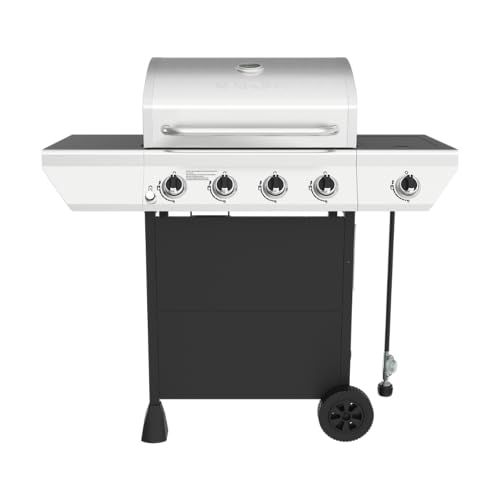
Nexgrill Propane 4-Burner Gas Grill
Badge: Best Overall
Strengths
- Side burner adds a genuine second cooking station for sauces, sides and boiling
- Cast-iron grates hold heat well and produce strong sear marks
- Built-in thermometer gives a quick lid-down temperature reference
Trade-offs
- Compact grate means cooking in batches for groups
- Side burner adds a gas line and one more part to keep clean
- Not a dedicated smoker for very long low-and-slow cooks
| Heat output | 52000 BTU (as listed in the product name) |
|---|---|
| Cooking area | 526 square inches (as listed) |
| Burners | 4 |
| Side burner | Yes, listed in the product name |
| Fuel | Propane gas |
| Grates | Cast iron (as listed) |
| Thermometer | Built-in, listed in the product name |
| Body material | Stainless steel elements (as listed) |
The Nexgrill Propane 4-Burner Gas Grill earns its place in this line-up because it fits the way people actually approach grilling at home — weeknight dinners, weekend family cooks and the occasional bigger gathering on a patio, deck or in a backyard. It is a propane gas design, and everything about its layout — the grate, the lid, the controls — is aimed at predictable, repeatable cooking rather than novelty features that look good in a listing and get used twice.
With 4 burners to work with, you can build heat zones instead of cooking everything at one temperature. Keep one side hot for searing, run the middle at a steady medium for chicken and vegetables, and let the far side idle low for holding finished food. That zoning is the single most useful technique in everyday grilling, and a multi-burner layout makes it almost automatic once you have practiced it a few times.
The listed cooking area is 526 square inches (as listed). In practical terms, judge that figure by your typical cook: burgers and sausages for a family, a couple of chickens spatchcocked flat, or a wide spread of vegetables all ask for different layouts. The number matters less than whether the grate shape — round, rectangular or barrel — matches the food you cook most, and whether the warming rack, where fitted, gives you a genuine second level rather than a token shelf.
For the angle of this guide — everyday home grilling — the Nexgrill design makes sense because it keeps the fundamentals strong. Grates with real weight hold heat through the moment cold food hits them. The lid seals well enough to turn the grill into a small outdoor oven for thicker cuts. Controls respond in small, repeatable steps, so the setting that worked last weekend works again this weekend.
There are honest limits. No grill in this class is a dedicated smoker, a pizza oven and a searing station all at once, and this one is no exception: very long, low cooks demand attention to fuel and airflow, and very large parties will mean cooking in planned batches. Treat those as characteristics of the category rather than flaws of this model, and plan your menus around them.
Day to day, ownership is straightforward. Preheat fully before food goes on, brush the grates while they are hot, keep the grease management path clear, and cover the grill between cooks. Parts that wear — grates, heat deflectors, igniters on gas models, ash tools on charcoal models — are the normal consumables of grilling, and a design from an established maker makes finding them later far simpler.
Best for: weeknight family cooking and first-time owners / Not suited for: anyone needing a dedicated competition smoker

Monument Grills 4 Burner Propane Gas Grill with Advanced Broil Zone
Badge: Best for Large Gatherings
Strengths
- Stainless-steel elements resist weather better than plain painted steel
- Folding or portable design stores and transports easily
- Straightforward controls that suit newer grillers
Trade-offs
- Not a dedicated smoker for very long low-and-slow cooks
- A cover is an essential extra, not an optional one
- Assembly takes a meaningful block of time out of the box
| Burners | 4 |
|---|---|
| Fuel | Propane gas |
| Body material | Stainless steel elements (as listed) |
The Monument Grills 4 Burner Propane Gas Grill with Advanced Broil Zone earns its place in this line-up because it fits the way people actually approach grilling at home — weeknight dinners, weekend family cooks and the occasional bigger gathering on a patio, deck or in a backyard. It is a propane gas design, and everything about its layout — the grate, the lid, the controls — is aimed at predictable, repeatable cooking rather than novelty features that look good in a listing and get used twice.
With 4 burners to work with, you can build heat zones instead of cooking everything at one temperature. Keep one side hot for searing, run the middle at a steady medium for chicken and vegetables, and let the far side idle low for holding finished food. That zoning is the single most useful technique in everyday grilling, and a multi-burner layout makes it almost automatic once you have practiced it a few times.
For the angle of this guide — everyday home grilling — the Monument Grills design makes sense because it keeps the fundamentals strong. Grates with real weight hold heat through the moment cold food hits them. The lid seals well enough to turn the grill into a small outdoor oven for thicker cuts. Controls respond in small, repeatable steps, so the setting that worked last weekend works again this weekend.
There are honest limits. No grill in this class is a dedicated smoker, a pizza oven and a searing station all at once, and this one is no exception: very long, low cooks demand attention to fuel and airflow, and very large parties will mean cooking in planned batches. Treat those as characteristics of the category rather than flaws of this model, and plan your menus around them.
Day to day, ownership is straightforward. Preheat fully before food goes on, brush the grates while they are hot, keep the grease management path clear, and cover the grill between cooks. Parts that wear — grates, heat deflectors, igniters on gas models, ash tools on charcoal models — are the normal consumables of grilling, and a design from an established maker makes finding them later far simpler.
Best for: hosts who regularly cook for a crowd / Not suited for: very small spaces with strict storage limits

AMERLIFE 60
Badge: Best for Small Spaces
Strengths
- Side burner adds a genuine second cooking station for sauces, sides and boiling
- Cast-iron grates hold heat well and produce strong sear marks
- Built-in thermometer gives a quick lid-down temperature reference
Trade-offs
- Side burner adds a gas line and one more part to keep clean
- Not a dedicated smoker for very long low-and-slow cooks
- A cover is an essential extra, not an optional one
| Heat output | 60,000 BTU (as listed in the product name) |
|---|---|
| Cooking area | 650 square inches (as listed) |
| Burners | 6 |
| Side burner | Yes, listed in the product name |
| Fuel | Propane gas |
| Grates | Cast iron (as listed) |
| Thermometer | Built-in, listed in the product name |
The AMERLIFE 60 earns its place in this line-up because it fits the way people actually approach grilling at home — weeknight dinners, weekend family cooks and the occasional bigger gathering on a patio, deck or in a backyard. It is a propane gas design, and everything about its layout — the grate, the lid, the controls — is aimed at predictable, repeatable cooking rather than novelty features that look good in a listing and get used twice.
With 6 burners to work with, you can build heat zones instead of cooking everything at one temperature. Keep one side hot for searing, run the middle at a steady medium for chicken and vegetables, and let the far side idle low for holding finished food. That zoning is the single most useful technique in everyday grilling, and a multi-burner layout makes it almost automatic once you have practiced it a few times.
The listed cooking area is 650 square inches (as listed). In practical terms, judge that figure by your typical cook: burgers and sausages for a family, a couple of chickens spatchcocked flat, or a wide spread of vegetables all ask for different layouts. The number matters less than whether the grate shape — round, rectangular or barrel — matches the food you cook most, and whether the warming rack, where fitted, gives you a genuine second level rather than a token shelf.
For the angle of this guide — everyday home grilling — the AMERLIFE design makes sense because it keeps the fundamentals strong. Grates with real weight hold heat through the moment cold food hits them. The lid seals well enough to turn the grill into a small outdoor oven for thicker cuts. Controls respond in small, repeatable steps, so the setting that worked last weekend works again this weekend.
There are honest limits. No grill in this class is a dedicated smoker, a pizza oven and a searing station all at once, and this one is no exception: very long, low cooks demand attention to fuel and airflow, and very large parties will mean cooking in planned batches. Treat those as characteristics of the category rather than flaws of this model, and plan your menus around them.
Day to day, ownership is straightforward. Preheat fully before food goes on, brush the grates while they are hot, keep the grease management path clear, and cover the grill between cooks. Parts that wear — grates, heat deflectors, igniters on gas models, ash tools on charcoal models — are the normal consumables of grilling, and a design from an established maker makes finding them later far simpler.
Best for: smaller patios, balconies and compact households / Not suited for: large parties cooked in a single batch

Charbroil Portable Convective 1-Burner Propane Gas Grill – 465133010
Badge: Best Premium Pick
Strengths
- Folding or portable design stores and transports easily
- Straightforward controls that suit newer grillers
- Established maker with a track record in this category
Trade-offs
- Compact grate means cooking in batches for groups
- Not a dedicated smoker for very long low-and-slow cooks
- A cover is an essential extra, not an optional one
| Heat output | 11000 BTU (as listed in the product name) |
|---|---|
| Burners | 1 |
| Fuel | Propane gas |
The Charbroil Portable Convective 1-Burner Propane Gas Grill – 465133010 earns its place in this line-up because it fits the way people actually approach grilling at home — weeknight dinners, weekend family cooks and the occasional bigger gathering on a patio, deck or in a backyard. It is a propane gas design, and everything about its layout — the grate, the lid, the controls — is aimed at predictable, repeatable cooking rather than novelty features that look good in a listing and get used twice.
With 1 burners to work with, you can build heat zones instead of cooking everything at one temperature. Keep one side hot for searing, run the middle at a steady medium for chicken and vegetables, and let the far side idle low for holding finished food. That zoning is the single most useful technique in everyday grilling, and a multi-burner layout makes it almost automatic once you have practiced it a few times.
For the angle of this guide — everyday home grilling — the Charbroil design makes sense because it keeps the fundamentals strong. Grates with real weight hold heat through the moment cold food hits them. The lid seals well enough to turn the grill into a small outdoor oven for thicker cuts. Controls respond in small, repeatable steps, so the setting that worked last weekend works again this weekend.
There are honest limits. No grill in this class is a dedicated smoker, a pizza oven and a searing station all at once, and this one is no exception: very long, low cooks demand attention to fuel and airflow, and very large parties will mean cooking in planned batches. Treat those as characteristics of the category rather than flaws of this model, and plan your menus around them.
Day to day, ownership is straightforward. Preheat fully before food goes on, brush the grates while they are hot, keep the grease management path clear, and cover the grill between cooks. Parts that wear — grates, heat deflectors, igniters on gas models, ash tools on charcoal models — are the normal consumables of grilling, and a design from an established maker makes finding them later far simpler.
Best for: buyers who want the strongest build in this group / Not suited for: buyers who want the absolute simplest possible setup

Royal Gourmet CC1830S BBQ Charcoal Grill and Offset Smoker
Badge: Most Versatile
Strengths
- Built-in thermometer gives a quick lid-down temperature reference
- Charcoal fuel delivers real smoke flavor and very high searing heat
- Straightforward controls that suit newer grillers
Trade-offs
- Charcoal takes longer to light and needs ash clean-out after cooks
- Not a dedicated smoker for very long low-and-slow cooks
- A cover is an essential extra, not an optional one
| Cooking area | 783 square inches (as listed) |
|---|---|
| Fuel | Charcoal |
| Thermometer | Built-in, listed in the product name |
The Royal Gourmet CC1830S BBQ Charcoal Grill and Offset Smoker earns its place in this line-up because it fits the way people actually approach grilling at home — weeknight dinners, weekend family cooks and the occasional bigger gathering on a patio, deck or in a backyard. It is a charcoal design, and everything about its layout — the grate, the lid, the controls — is aimed at predictable, repeatable cooking rather than novelty features that look good in a listing and get used twice.
Heat control on a charcoal design like this one is a manual craft: you manage temperature with the amount of fuel, the arrangement of the coals and the position of the dampers. It asks for more attention than turning a dial, and it rewards that attention with smoke flavor and searing heat that gas struggles to match. Bank coals to one side and you have a two-zone fire — a fierce side for marks and a gentle side for finishing.
The listed cooking area is 783 square inches (as listed). In practical terms, judge that figure by your typical cook: burgers and sausages for a family, a couple of chickens spatchcocked flat, or a wide spread of vegetables all ask for different layouts. The number matters less than whether the grate shape — round, rectangular or barrel — matches the food you cook most, and whether the warming rack, where fitted, gives you a genuine second level rather than a token shelf.
For the angle of this guide — everyday home grilling — the Royal Gourmet design makes sense because it keeps the fundamentals strong. Grates with real weight hold heat through the moment cold food hits them. The lid seals well enough to turn the grill into a small outdoor oven for thicker cuts. Controls respond in small, repeatable steps, so the setting that worked last weekend works again this weekend.
There are honest limits. No grill in this class is a dedicated smoker, a pizza oven and a searing station all at once, and this one is no exception: very long, low cooks demand attention to fuel and airflow, and very large parties will mean cooking in planned batches. Treat those as characteristics of the category rather than flaws of this model, and plan your menus around them.
Day to day, ownership is straightforward. Preheat fully before food goes on, brush the grates while they are hot, keep the grease management path clear, and cover the grill between cooks. Parts that wear — grates, heat deflectors, igniters on gas models, ash tools on charcoal models — are the normal consumables of grilling, and a design from an established maker makes finding them later far simpler.
Best for: cooks who switch between grilling, sides and smoking / Not suited for: cooks who never want to tend a fire or a tank

Weber® Original Kettle Premium Charcoal Grill
Badge: Best Value Design
Strengths
- Built-in thermometer gives a quick lid-down temperature reference
- Charcoal fuel delivers real smoke flavor and very high searing heat
- Straightforward controls that suit newer grillers
Trade-offs
- Charcoal takes longer to light and needs ash clean-out after cooks
- Not a dedicated smoker for very long low-and-slow cooks
- A cover is an essential extra, not an optional one
| Fuel | Charcoal |
|---|---|
| Thermometer | Built-in, listed in the product name |
The Weber® Original Kettle Premium Charcoal Grill earns its place in this line-up because it fits the way people actually approach grilling at home — weeknight dinners, weekend family cooks and the occasional bigger gathering on a patio, deck or in a backyard. It is a charcoal design, and everything about its layout — the grate, the lid, the controls — is aimed at predictable, repeatable cooking rather than novelty features that look good in a listing and get used twice.
Heat control on a charcoal design like this one is a manual craft: you manage temperature with the amount of fuel, the arrangement of the coals and the position of the dampers. It asks for more attention than turning a dial, and it rewards that attention with smoke flavor and searing heat that gas struggles to match. Bank coals to one side and you have a two-zone fire — a fierce side for marks and a gentle side for finishing.
For the angle of this guide — everyday home grilling — the Weber design makes sense because it keeps the fundamentals strong. Grates with real weight hold heat through the moment cold food hits them. The lid seals well enough to turn the grill into a small outdoor oven for thicker cuts. Controls respond in small, repeatable steps, so the setting that worked last weekend works again this weekend.
There are honest limits. No grill in this class is a dedicated smoker, a pizza oven and a searing station all at once, and this one is no exception: very long, low cooks demand attention to fuel and airflow, and very large parties will mean cooking in planned batches. Treat those as characteristics of the category rather than flaws of this model, and plan your menus around them.
Day to day, ownership is straightforward. Preheat fully before food goes on, brush the grates while they are hot, keep the grease management path clear, and cover the grill between cooks. Parts that wear — grates, heat deflectors, igniters on gas models, ash tools on charcoal models — are the normal consumables of grilling, and a design from an established maker makes finding them later far simpler.
Best for: shoppers who want solid fundamentals without overspending / Not suited for: anyone who grills only once or twice a year
Comparison Table
| Pick | Badge | Fuel | Standout trait | Link |
|---|---|---|---|---|
| Nexgrill Propane 4-Burner Gas Grill | Best Overall | Propane gas | Side burner adds a genuine second cooking station for sauces, sides and boiling | Check on Amazon |
| Monument Grills 4 Burner Propane Gas Grill with Advanced Broil Zone | Best for Large Gatherings | Propane gas | Stainless-steel elements resist weather better than plain painted steel | Check on Amazon |
| AMERLIFE 60 | Best for Small Spaces | Propane gas | Side burner adds a genuine second cooking station for sauces, sides and boiling | Check on Amazon |
| Charbroil Portable Convective 1-Burner Propane Gas Grill – 465133010 | Best Premium Pick | Propane gas | Folding or portable design stores and transports easily | Check on Amazon |
| Royal Gourmet CC1830S BBQ Charcoal Grill and Offset Smoker | Most Versatile | Charcoal | Built-in thermometer gives a quick lid-down temperature reference | Check on Amazon |
| Weber® Original Kettle Premium Charcoal Grill | Best Value Design | Charcoal | Built-in thermometer gives a quick lid-down temperature reference | Check on Amazon |
Tables flatten differences that matter in person — lid weight, knob feel, damper smoothness — so use this one to shortlist, then read the full review of your top two. Our related notes on Best Grills Kitchenaid cover a neighbouring shortlist if your priorities shift.
How to Choose the Right Grill for Best Grills Home
Fuel choice shapes flavor, routine and cost more than any other decision. Gas gives you push-button starts, fast preheats and precise dial control, which suits weeknight cooking. Charcoal asks for more time and attention and returns deeper smoke flavor and higher peak heat for searing. Neither is objectively better; the honest question is which routine matches how you actually cook on a tired Thursday evening, not how you imagine cooking on a holiday weekend.
Weather exposure quietly determines lifespan. A grill that lives under a cover on a sheltered patio can serve for many seasons, while the same model left uncovered in coastal air or harsh winters will rust at the burners, fade at the lid and seize at the vents. If your space has no shelter, weight rust-resistant materials and simple, replaceable parts more heavily in your choice.
Cleaning is not a separate chore from cooking; it is the second half of it. Grates brushed while hot, drip trays emptied before they overflow, ash removed before it absorbs moisture and turns corrosive — these small habits, repeated, are what keep heat even and flavors clean. Designs that give you easy access to the grease tray and ash catcher make the habits easier to keep, and that is a genuine feature worth paying attention to.
Start with fuel, because it decides your routine. Gas lights in seconds and holds a dialed temperature with little attention; charcoal takes longer to be ready and needs ash management, but rewards you with smoke flavor and fierce searing heat. Next, size honestly: count your usual diners, not your largest-ever party. Then look at grates — heavier grates, whether cast iron or thick steel, cook more evenly and last longer than thin wire. Finally, check the unglamorous details: how the grease tray slides out, whether the tank or ash pan is easy to reach, and whether replacement parts for this design are easy to find.
Tiers in this category separate mainly on materials and longevity rather than cooking ability. A well-chosen value grill cooks a burger as well as a premium one on day one; the premium design earns its tier over years, through thicker metal, better burners or dampers, and parts that are still available when something wears out. Decide which horizon you are buying for — a few seasons of light use, or a decade of weekly cooking — and let that, rather than feature lists, set your tier.
If your research is pulling you toward a different style entirely, the guides at Best Grills Lifehacker and Best Grills Like Traeger are the closest neighbouring reads in this cluster.
How to Get the Best Results From Your Grill
Set up and first use. Assemble on a flat surface, keep every fastener finger-tight until the frame is square, then tighten in sequence. Before the first cook, wash the grates in warm soapy water, dry them fully, and run the grill hot for a short burn-off to clear manufacturing residues. Season cast-iron grates with a thin film of high-heat cooking oil during that first heat, and repeat the light oiling after the first few cooks.
Everyday cooking routine. Preheat with the lid down until the grate is fully hot — longer than most beginners expect. Oil the food, not the grate. Set up two heat zones whenever the layout allows it, sear over the hot side, and finish over the gentle side. Rest meat on a warm plate while the grates are brushed clean, because a grill brushed hot takes a fraction of the effort of one scrubbed cold the next day.
Cleaning and maintenance. After each cook: brush the grates, check the grease tray, and wipe exterior grease before it bakes on. Monthly in season: inspect burners or dampers for blockages, clear spider webs from gas tubes, and check hoses and connections with soapy water if you smell gas. Seasonally: deep-clean the cook box, touch up exterior chips, and store the grill covered, with charcoal ash fully cold and removed, or the gas tank closed and disconnected for long storage.
Troubleshooting. Problem: food sticks badly → the grate was not fully preheated or was not clean; preheat longer and brush thoroughly before the next cook. Problem: flare-ups scorch everything → trim excess fat, move food to the cool zone, and cook fatty items with the lid down in shorter bursts. Problem: heat will not climb → on gas, check the tank level and burner ports; on charcoal, check that dampers are open and ash is not choking airflow.
Sizing a Grill for Real Household Life
Most homes cook for two to six people most of the time, then host a crowd a few times a year. Buy for the everyday load and handle the rare crowd in batches, rather than heating a huge grill for four burgers every Tuesday. A mid-size cooking area with a warming rack covers both patterns well, and a side burner earns its keep for beans, sauces and corn while the main grate is full.
Home Safety, Placement and Neighbors
At home the grill lives in one place, so placement decisions stick. Keep it on a level, non-combustible surface, away from siding, eaves and dry planting, with room to walk around it while carrying trays. Think about smoke drift toward windows — yours and your neighbors’ — and store the propane tank upright, outdoors and disconnected when the grill will sit unused for a long stretch.
However you weigh those points, keep the shortlist honest: the six picks above were chosen for best grills home, and a grill that suits your neighbour’s habits may not suit yours. One more neighbouring reference worth a look is Best Grills Lowes.
Common Buying Mistakes
- Buying for the biggest party you have ever hosted instead of your weekly cook.
- Chasing headline heat numbers while ignoring grate weight and lid fit.
- Skipping the cover to save a little money, then losing seasons of life to rust.
- Forgetting to measure the patio, the gate and the storage space before ordering.
- Choosing fuel by fashion instead of by the routine you will actually keep.
- Ignoring parts availability — a grill you cannot repair becomes a grill you replace.
Each of these mistakes is easy to make because listings are written to sell features, not routines. The fix is to shop from your calendar and your patio outward: how often you cook, for how many, in what weather, with how much storage. Answer those four questions honestly and the right pick from the six above usually identifies itself.
Final Recommendation
Start with the Nexgrill Propane 4-Burner Gas Grill — it is the most rounded answer to best grills home for most households. If you regularly cook for a crowd, step up to the Monument Grills 4 Burner Propane Gas Grill with Advanced Broil Zone. If your space is tight, the AMERLIFE 60 is the smarter fit. Every other pick in this guide wins for a specific cook described in its review, so match the badge to your habits and you will not go far wrong.
Storage deserves a paragraph of its own, because a grill that is awkward to store gets left in the weather, and weather is what ages grills. Measure the footprint with the shelves up and down, check whether the design rolls easily through your gate or garage door, and think about where the cover, tools and fuel will live. A compact storage plan is part of why smaller designs often outlast bigger ones in real homes: they actually get put away.
Accessories should be bought in the order you will use them. A good cover comes first, then a stiff grate brush and long tongs, then a reliable instant-read thermometer, which does more for cooking quality than any other single purchase. Chimney starters transform charcoal routines; a sturdy spatula and a rimmed tray for carrying food transform every routine. Buy the rest only when a recipe or a habit genuinely calls for it.
Think about who else will use this grill. A partner who grills twice a year needs controls that explain themselves; teenagers learning to cook need a forgiving heat zone and clear safety habits; guests who offer to help need tools laid out and a simple job to do. The best home grill is the one the whole household can run with confidence, not just its most enthusiastic cook.
Seasonality changes how a grill performs. Summer cooking is forgiving: ambient warmth helps preheats and holds temperatures. Shoulder-season and winter cooking expose weak lids and thin metal, because wind strips heat faster than burners or coals replace it. If you plan to grill year-round, shelter the grill from prevailing wind, allow longer preheats, and favour designs with heavier lids and tighter fits.
Finally, keep a small ownership log for the first season: what you cooked, the settings or damper positions you used, and what you would change. Grilling skill compounds quickly when it is written down, and the log turns a new grill’s learning curve from a vague frustration into a short list of solved problems. By the second season, most owners are cooking by feel — and that feel started as notes.
Frequently Asked Questions
How much cooking space do I really need?
For most households, a mid-size main grate handles weeknight cooking comfortably, with batch cooking for parties. Count your usual diners, allow space between pieces for airflow, and remember that a warming rack adds genuine overflow room.
Is gas or charcoal better for a home grill?
Gas wins on speed and convenience; charcoal wins on smoke flavor and peak searing heat. The better choice is the one whose routine you will actually enjoy week after week.
How long should a grill at this level last?
With a cover, routine cleaning and timely replacement of wear parts such as grates and heat deflectors, a well-built grill serves for many seasons. Weather exposure, not cooking, is what shortens life most.
Do I need a side burner?
Only if you will use it: sauces, beans, corn and pan-frying sides are its real jobs. If your kitchen is steps away, you may never light it; if you cook whole meals outdoors, it earns its place quickly.
How do I stop food sticking to the grates?
Preheat fully, start with scrupulously clean grates, oil the food rather than the grate, and let food release naturally before turning it. Most sticking is a heat or patience problem, not a grill problem.
What should I do in the first week with a new grill?
Assemble carefully, wash and season the grates, run a burn-off, then do one low-stakes cook to learn the hot spots before you cook for guests.


