Disclosure: topratedkitchenware.com is reader-supported. When you buy through links on our site, we may earn an affiliate commission from Amazon and other retailers, at no extra cost to you.
Where to buy
Short on time? These are the six picks this guide stands behind for best grills sold by lowes. Each name links to its Amazon listing, where you can check the latest price on Amazon and confirm current configuration details before you buy.
- IdeaMaxx 3-Burner Gas Grill with Foldable Side Shelves — Best for Small Spaces.
- Weber Spirit E-425 4-Burner Gas Grill — Best Premium Gas Pick.
- Nexgrill 4-Burner Gas Grill with Stainless Steel Lid — Best Mid-Size Gas Pick.
- Monument Grills Mesa II 4-Burner Gas Grill — Best Fast-Heating Pick.
- AMERLIFE 6-Burner Gas Grill with Side Burner — Best for Crowd Cooking.
- Char-Broil Portable 1-Burner Gas Grill — Best Ultra-Portable Pick.
Read the full guide ↓ for the reasoning, the trade-offs, and who should skip each pick.
If you are searching for best grills sold by lowes, you probably do not need more opinions — you need a shortlist you can trust and a clear way to choose from it. This guide gives you both: six grills researched against the specific angle of best grills sold by lowes, honest notes on what each one gives up, and a buying framework you can apply even if you end up choosing something else entirely. Readers comparing adjacent questions often start with Best Grills Spruce Eats Char Broil before settling on a fuel type.
The short version is simple. Match the grill to your most common cook, not your most ambitious one. A household that grills burgers and chicken twice a week needs reliability, fast cleanup, and heat control more than it needs maximum area, while a household that hosts twelve people monthly needs area and zone flexibility above all. Every pick below is mapped to the household it actually serves, with a badge that stays consistent from the quick picks table through the detailed reviews, so you can skim for your badge and read deeply only where it matters.
Key Takeaways
- Fuel decides flavor and routine: charcoal means fire management and deeper smoke character; gas means speed and dial control.
- Grate material and firebox construction predict longevity better than headline heat output.
- Buy for your most frequent cook, and treat maximum cooking area as a hosting feature, not a default need.
- Every pick here carries a named trade-off — the right choice is the one whose trade-off you mind least.
- Parts availability turns a grill from a purchase into a long-term tool; mainstream models win this quietly.
- Cleaning design decides whether maintenance happens: accessible grease trays and scrapable grates win seasons.
In this guide
Quick Picks
| Pick | Badge | Fuel |
|---|---|---|
| IdeaMaxx 3-Burner Gas Grill with Foldable Side Shelves | Best for Small Spaces | Propane gas |
| Weber Spirit E-425 4-Burner Gas Grill | Best Premium Gas Pick | Propane gas |
| Nexgrill 4-Burner Gas Grill with Stainless Steel Lid | Best Mid-Size Gas Pick | Propane gas |
| Monument Grills Mesa II 4-Burner Gas Grill | Best Fast-Heating Pick | Propane gas |
| AMERLIFE 6-Burner Gas Grill with Side Burner | Best for Crowd Cooking | Propane gas |
| Char-Broil Portable 1-Burner Gas Grill | Best Ultra-Portable Pick | Propane gas |
The badges are deliberate. If you read nothing else, find the badge that matches your household and start with that pick’s detailed review — then read its trade-off list twice, because trade-offs, not strengths, are what owners live with.
How These Picks Were Chosen
This is a research-led guide, not a hands-on test report, and it does not pretend otherwise. Each candidate was screened using manufacturer listings verified through the Amazon catalog, construction details visible in those listings, long-running owner discussion patterns, and the accumulated findings of established review coverage of the same mainstream models. Where sources disagreed, the disagreement itself is reported in the trade-offs rather than smoothed over. Shoppers cross-checking construction claims often detour through Best Grills Spruce Eats Charbroil to see how the same models are framed for a neighboring question.
The screening weighted five things, in order: cooking behavior implied by burner or fire design and grate material; construction quality at the firebox, lid, and cart; the cleaning path, from grate scraping to grease tray access; parts and consumables availability for multi-year ownership; and fit for the specific angle of best grills sold by lowes. Models were cut when their construction contradicted their positioning — thin fireboxes sold as heavy-duty, oversized carts sold as compact, grates that fight the cleaning routine their buyers need. What survived is a list of six that disagree with each other in useful ways, so the final recommendation can be a real decision instead of a coin flip.
A note on scope: prices move constantly, so this guide deliberately avoids fixed figures and asks you to check the latest price on Amazon for any pick you shortlist. Tier language — value, mid-range, premium — is used qualitatively, the way owners actually talk about these classes, and it stays true even when a sale shuffles the exact order for a weekend.
The 6 Best Picks for best grills sold by lowes

IdeaMaxx 3-Burner Gas Grill with Foldable Side Shelves
Badge: Best for Small Spaces
For shoppers focused on best grills sold by lowes, the IdeaMaxx 3-Burner Gas Grill with Foldable Side Shelves earns its place by matching the brief honestly rather than by winning a specification contest. It brings foldable side shelves to the setup. The listing describes it plainly — IdeaMaxx 3-Burner Propane Gas Grill with Cast Iron Grates, 38200 BTU output,Foldable Side Shelves for Portable Outdoor Patio Camping, Black (3 Burner) — and the details that matter most in daily use are the grate, the firebox or burner layout, and how the whole thing cleans up afterward.
Strengths
- Fast, push-button starts that suit weeknight cooking.
- Cast iron grates hold heat for stronger sear marks.
- Foldable shelves shrink the storage footprint between cooks.
Trade-offs
- Less natural smoke flavor than a charcoal fire.
- Cast iron grates demand seasoning discipline.
- More components to maintain over the years.
| Specification (from listing) | Detail |
|---|---|
| Heat output | 38200 BTU |
| Burners | 3 |
| Fuel | Propane gas |
| Grates | Cast iron (per listing title) |
| Side shelves | Foldable |
In practice, on gas, the headline skill is zone discipline: light only the burners you need, preheat with the lid down, and keep one zone low or off as a safe landing spot for food that is browning too fast. Burgers, chicken pieces, vegetables, and standard cuts all sit comfortably within what this design does well, and the learning curve is mostly about the first three or four cooks, while you map its hot zones and settle on a preheat routine. Owners who cook in a rotation — weeknight proteins, weekend projects — tend to rate this class of grill by how little friction it adds, and on that measure the design is coherent: nothing on it exists only for the brochure.
The honest limitation is the mirror image of its strengths. A grill built around gas convenience gives something up on the other side of the trade, and no accessory fully closes that gap. If your cooking drifts toward the opposite style — long, smoky, low-and-slow sessions every weekend — read the verdict line literally and choose a different pick from this same list instead of hoping this one will change character.
Best for: households whose cooking matches the best for small spaces brief and who will keep up the basic cleaning routine. / Not suited for: buyers who need the opposite fuel style or a much larger cooking surface.

Weber Spirit E-425 4-Burner Gas Grill
Badge: Best Premium Gas Pick
Judged through the lens of best grills sold by lowes, the Weber Spirit E-425 4-Burner Gas Grill makes sense for a specific kind of household, and the review below names that household plainly. It brings a dedicated sear zone to the setup. The listing describes it plainly — Weber® Spirit® E-425 Gas Grill, Outdoor Cooking, Propane Gas Grill, Black | Weber® Grill 4 Burners, Sear Zone w/Boost Burners, Porcelain-Enameled Cast-Iron Grates, Weber Works™ Rails, BBQ Grill — and the details that matter most in daily use are the grate, the firebox or burner layout, and how the whole thing cleans up afterward.
Strengths
- Fast, push-button starts that suit weeknight cooking.
- Separate burners make two-zone cooking straightforward.
- Even, repeatable heat once preheated properly.
Trade-offs
- Less natural smoke flavor than a charcoal fire.
- More components to maintain over the years.
- Needs a propane supply kept on hand.
| Specification (from listing) | Detail |
|---|---|
| Burners | 4 |
| Fuel | Propane gas |
| Grate finish | Porcelain-coated or porcelain-enameled (per listing title) |
In practice, on gas, the headline skill is zone discipline: light only the burners you need, preheat with the lid down, and keep one zone low or off as a safe landing spot for food that is browning too fast. Burgers, chicken pieces, vegetables, and standard cuts all sit comfortably within what this design does well, and the learning curve is mostly about the first three or four cooks, while you map its hot zones and settle on a preheat routine. Owners who cook in a rotation — weeknight proteins, weekend projects — tend to rate this class of grill by how little friction it adds, and on that measure the design is coherent: nothing on it exists only for the brochure.
The honest limitation is the mirror image of its strengths. A grill built around gas convenience gives something up on the other side of the trade, and no accessory fully closes that gap. If your cooking drifts toward the opposite style — long, smoky, low-and-slow sessions every weekend — read the verdict line literally and choose a different pick from this same list instead of hoping this one will change character.
Best for: households whose cooking matches the best premium gas pick brief and who will keep up the basic cleaning routine. / Not suited for: buyers who need the opposite fuel style or a much larger cooking surface.
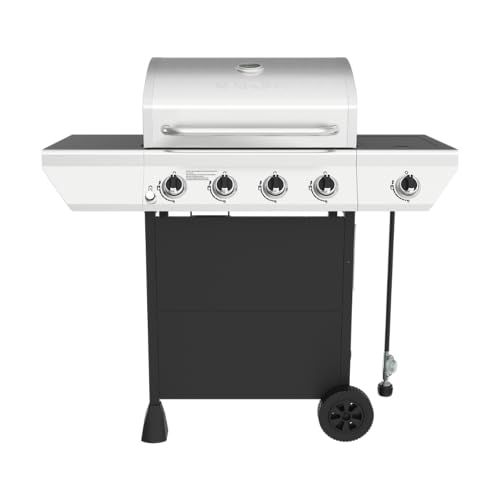
Nexgrill 4-Burner Gas Grill with Stainless Steel Lid
Badge: Best Mid-Size Gas Pick
The case for the Nexgrill 4-Burner Gas Grill with Stainless Steel Lid in a best grills sold by lowes shortlist rests on how it behaves across a whole season, not on one perfect Saturday. It brings a side burner for sauces and sides, a built-in lid thermometer and electronic ignition to the setup. The listing describes it plainly — Nexgrill Propane 4-Burner Gas Grill, Side Burner and Stainless Steel Lid | Offers 52000 BTU, Built-In Thermometer, Electronic Ignition, 526 SQ In Cooking Space, Matte Finish Cast Iron Grate, Portable — and the details that matter most in daily use are the grate, the firebox or burner layout, and how the whole thing cleans up afterward.
Strengths
- Fast, push-button starts that suit weeknight cooking.
- Cast iron grates hold heat for stronger sear marks.
- Lid thermometer helps track preheat and holding temperatures.
Trade-offs
- Less natural smoke flavor than a charcoal fire.
- Cast iron grates demand seasoning discipline.
- Side burner is the first part many owners stop using.
| Specification (from listing) | Detail |
|---|---|
| Cooking area | 526 SQ In |
| Heat output | 52000 BTU |
| Burners | 4 |
| Fuel | Propane gas |
| Side burner | Yes |
| Lid thermometer | Yes |
| Grates | Cast iron (per listing title) |
In practice, on gas, the headline skill is zone discipline: light only the burners you need, preheat with the lid down, and keep one zone low or off as a safe landing spot for food that is browning too fast. Burgers, chicken pieces, vegetables, and standard cuts all sit comfortably within what this design does well, and the learning curve is mostly about the first three or four cooks, while you map its hot zones and settle on a preheat routine. Owners who cook in a rotation — weeknight proteins, weekend projects — tend to rate this class of grill by how little friction it adds, and on that measure the design is coherent: nothing on it exists only for the brochure.
The honest limitation is the mirror image of its strengths. A grill built around gas convenience gives something up on the other side of the trade, and no accessory fully closes that gap. If your cooking drifts toward the opposite style — long, smoky, low-and-slow sessions every weekend — read the verdict line literally and choose a different pick from this same list instead of hoping this one will change character.
Best for: households whose cooking matches the best mid-size gas pick brief and who will keep up the basic cleaning routine. / Not suited for: buyers who need the opposite fuel style or a much larger cooking surface.

Monument Grills Mesa II 4-Burner Gas Grill
Badge: Best Fast-Heating Pick
For shoppers focused on best grills sold by lowes, the Monument Grills Mesa II 4-Burner Gas Grill earns its place by matching the brief honestly rather than by winning a specification contest. It brings foldable side shelves to the setup. The listing describes it plainly — Monument Grills 4 Burner Propane Gas Grill with Advanced Broil Zone, Stainless Steel Outdoor Mesa 2 Barbecue Grill, Foldable Side Shelves, 500°F in 5 Mins, Fast Assembly, Mesa II 410FBZ — and the details that matter most in daily use are the grate, the firebox or burner layout, and how the whole thing cleans up afterward.
Strengths
- Fast, push-button starts that suit weeknight cooking.
- Foldable shelves shrink the storage footprint between cooks.
- Separate burners make two-zone cooking straightforward.
Trade-offs
- Less natural smoke flavor than a charcoal fire.
- More components to maintain over the years.
- Needs a propane supply kept on hand.
| Specification (from listing) | Detail |
|---|---|
| Burners | 4 |
| Fuel | Propane gas |
| Side shelves | Foldable |
In practice, on gas, the headline skill is zone discipline: light only the burners you need, preheat with the lid down, and keep one zone low or off as a safe landing spot for food that is browning too fast. Burgers, chicken pieces, vegetables, and standard cuts all sit comfortably within what this design does well, and the learning curve is mostly about the first three or four cooks, while you map its hot zones and settle on a preheat routine. Owners who cook in a rotation — weeknight proteins, weekend projects — tend to rate this class of grill by how little friction it adds, and on that measure the design is coherent: nothing on it exists only for the brochure.
The honest limitation is the mirror image of its strengths. A grill built around gas convenience gives something up on the other side of the trade, and no accessory fully closes that gap. If your cooking drifts toward the opposite style — long, smoky, low-and-slow sessions every weekend — read the verdict line literally and choose a different pick from this same list instead of hoping this one will change character.
Best for: households whose cooking matches the best fast-heating pick brief and who will keep up the basic cleaning routine. / Not suited for: buyers who need the opposite fuel style or a much larger cooking surface.

AMERLIFE 6-Burner Gas Grill with Side Burner
Badge: Best for Crowd Cooking
Judged through the lens of best grills sold by lowes, the AMERLIFE 6-Burner Gas Grill with Side Burner makes sense for a specific kind of household, and the review below names that household plainly. It brings a side burner for sauces and sides, a built-in lid thermometer and a warming rack to the setup. The listing describes it plainly — AMERLIFE 60,000 BTU 6-Burner Propane Gas Grill with Side Burner | 650 Sq.In. Cooking Area For Outdoor BBQs, Cast Iron Grates, Warming Rack, Built-In Thermometer, Regulating Valve — and the details that matter most in daily use are the grate, the firebox or burner layout, and how the whole thing cleans up afterward.
Strengths
- Fast, push-button starts that suit weeknight cooking.
- Cast iron grates hold heat for stronger sear marks.
- Lid thermometer helps track preheat and holding temperatures.
Trade-offs
- Less natural smoke flavor than a charcoal fire.
- Cast iron grates demand seasoning discipline.
- Side burner is the first part many owners stop using.
| Specification (from listing) | Detail |
|---|---|
| Cooking area | 650 Sq.In. |
| Heat output | 60,000 BTU |
| Burners | 6 |
| Fuel | Propane gas |
| Side burner | Yes |
| Lid thermometer | Yes |
| Grates | Cast iron (per listing title) |
| Warming rack | Yes |
In practice, on gas, the headline skill is zone discipline: light only the burners you need, preheat with the lid down, and keep one zone low or off as a safe landing spot for food that is browning too fast. Burgers, chicken pieces, vegetables, and standard cuts all sit comfortably within what this design does well, and the learning curve is mostly about the first three or four cooks, while you map its hot zones and settle on a preheat routine. Owners who cook in a rotation — weeknight proteins, weekend projects — tend to rate this class of grill by how little friction it adds, and on that measure the design is coherent: nothing on it exists only for the brochure.
The honest limitation is the mirror image of its strengths. A grill built around gas convenience gives something up on the other side of the trade, and no accessory fully closes that gap. If your cooking drifts toward the opposite style — long, smoky, low-and-slow sessions every weekend — read the verdict line literally and choose a different pick from this same list instead of hoping this one will change character.
Best for: households whose cooking matches the best for crowd cooking brief and who will keep up the basic cleaning routine. / Not suited for: buyers who need the opposite fuel style or a much larger cooking surface.

Char-Broil Portable 1-Burner Gas Grill
Badge: Best Ultra-Portable Pick
The case for the Char-Broil Portable 1-Burner Gas Grill in a best grills sold by lowes shortlist rests on how it behaves across a whole season, not on one perfect Saturday. The listing describes it plainly — Charbroil Portable Convective 1-Burner Propane Gas Grill – 465133010 | Grills, Aluminized Steel, Black, 11000 Btu, Gas Grills, Propane Grills, Portable Grills, 000 Btu — and the details that matter most in daily use are the grate, the firebox or burner layout, and how the whole thing cleans up afterward.
Strengths
- Fast, push-button starts that suit weeknight cooking.
- Separate burners make two-zone cooking straightforward.
- Even, repeatable heat once preheated properly.
Trade-offs
- Less natural smoke flavor than a charcoal fire.
- More components to maintain over the years.
- Needs a propane supply kept on hand.
| Specification (from listing) | Detail |
|---|---|
| Heat output | 11000 Btu |
| Burners | 1 |
| Fuel | Propane gas |
In practice, on gas, the headline skill is zone discipline: light only the burners you need, preheat with the lid down, and keep one zone low or off as a safe landing spot for food that is browning too fast. Burgers, chicken pieces, vegetables, and standard cuts all sit comfortably within what this design does well, and the learning curve is mostly about the first three or four cooks, while you map its hot zones and settle on a preheat routine. Owners who cook in a rotation — weeknight proteins, weekend projects — tend to rate this class of grill by how little friction it adds, and on that measure the design is coherent: nothing on it exists only for the brochure.
The honest limitation is the mirror image of its strengths. A grill built around gas convenience gives something up on the other side of the trade, and no accessory fully closes that gap. If your cooking drifts toward the opposite style — long, smoky, low-and-slow sessions every weekend — read the verdict line literally and choose a different pick from this same list instead of hoping this one will change character.
Best for: households whose cooking matches the best ultra-portable pick brief and who will keep up the basic cleaning routine. / Not suited for: buyers who need the opposite fuel style or a much larger cooking surface.
Comparison Table
| Pick | Fuel | Best as | Listing |
|---|---|---|---|
| IdeaMaxx 3-Burner Gas Grill with Foldable Side Shelves | Propane gas | Best for Small Spaces | Check on Amazon |
| Weber Spirit E-425 4-Burner Gas Grill | Propane gas | Best Premium Gas Pick | Check on Amazon |
| Nexgrill 4-Burner Gas Grill with Stainless Steel Lid | Propane gas | Best Mid-Size Gas Pick | Check on Amazon |
| Monument Grills Mesa II 4-Burner Gas Grill | Propane gas | Best Fast-Heating Pick | Check on Amazon |
| AMERLIFE 6-Burner Gas Grill with Side Burner | Propane gas | Best for Crowd Cooking | Check on Amazon |
| Char-Broil Portable 1-Burner Gas Grill | Propane gas | Best Ultra-Portable Pick | Check on Amazon |
Read the table by columns, not rows: settle fuel first, then badge fit, then use the detailed reviews to check the trade-offs you are actually willing to live with.
How to Choose the Right Grill for best grills sold by lowes
Start with your calendar. Count realistic grilling sessions per month and how many fall on weeknights. Weeknight-heavy households should weight gas convenience heavily; weekend-heavy households can afford charcoal’s slower rhythm and gain its flavor. Next, count mouths: regular cooks for two to four need far less grate than holiday hosting suggests, and oversizing costs preheat time, fuel, and cleaning effort at every single session. Readers working through the sizing question in depth may also find Best Grills Spruceeats Char Broil Donna useful alongside this section.
Then judge construction in a fixed order. Grates first, because they touch food and decide searing and cleaning. Firebox and lid second, because they decide heat retention and lifespan. Burner layout or damper design third, because they decide control. Conveniences last: side burners, cabinets, shelves, and thermometers are worth having only after the first three are right. This order is unfashionable — marketing leads with conveniences — but it predicts satisfaction with unusual accuracy, because it ranks parts by how often they affect a cook: every time, most times, and occasionally, respectively.
Finally, plan ownership before purchase. Where will the grill stand, where will it winter, how does the grease tray come out, and who sells its burners and grates in five years? A grill is one of the few kitchen tools expected to live outdoors and work for a decade; the buying decision should be made at that timescale. The picks in this guide were all chosen to survive that question, though they answer it with different strengths.
How to Use, Clean, and Maintain Your Grill
Setup begins with assembly discipline: build on a flat surface, keep fasteners loose until the frame is square, then tighten in sequence. Run an empty burn-off before the first cook to clear manufacturing residues, and use that session to learn your grill — where it runs hot, how fast it preheats, how the lid thermometer tracks against your sense of the fire. For charcoal, that means practicing damper control with no food at stake; for gas, checking every burner lights evenly and watching for lazy yellow flames that signal a cleaning need.
The cleaning loop that keeps any of these picks cooking well is short. Preheat before cooking and scrape the hot grate. Cook with the lid down more than up. Scrape again while the grate is still warm after cooking. Empty the grease tray on a schedule set by what you cook, not by the calendar — fatty menus fill it fast. Monthly, look underneath: check burners or the firebox floor, clear spider-prone venturi tubes on gas models at the start of the season, and confirm the cover still vents. Readers who want the dedicated treatment can continue with Best Grills Spruceeats Com Char Broil Donna after this section.
Troubleshooting follows the same practical pattern throughout this guide. Problem: food sticks relentlessly → the grate was not fully preheated or was scraped clean of its seasoning; preheat longer and oil the food, not the grate, until the surface rebuilds. Problem: flare-ups scorch everything → excess grease is burning; move food to a cooler zone, close the lid briefly to starve the flame, and clean the grease path before the next cook. Problem: heat will not climb → on gas, check the tank and burner ports; on charcoal, check ash buildup choking airflow and open the dampers fully before adding fuel.
How Big-Box Assortments Should Shape Your Shortlist
Shoppers searching best grills sold by lowes are usually asking a practical question: which models can I see, touch, and get parts for locally? Large home-improvement assortments concentrate on exactly the brands in this guide — Char-Broil, Weber, Nexgrill and similar names dominate big-box shelves because their parts pipelines, replacement burners, and cover sizes are standardized. Use that as a filter, not a verdict: a grill that is easy to buy is not automatically the grill that fits your patio, and seasonal floor stock rotates, so a model missing from your local shelf may still be the right buy online.
The smart play is to use the store visit for what it is good at — judging lid weight, grate heft, cart wobble, and knob feel in person — and use research like this guide for what the store cannot show you: how a model cooks in wind, how its grease system behaves after a month of burgers, and which parts wear first. Availability also cuts both ways: end-of-season floor models can be tempting, but a grill with a documented parts ecosystem protects you long after any single store’s assortment changes.
Parts, Covers, and Propane: The Local Ownership Equation
Ownership costs hide in consumables. A grill whose manufacturer sells burners, heat tents, igniters, and grates for years — the pattern you see across the big-box brands in this guide — stays repairable; an obscure import with no parts channel becomes disposable the first time a burner perforates. When you compare picks, weigh that ecosystem alongside cooking specs, especially if you grill year-round and expect a five-plus-year service life.
Covers and tanks follow the same logic. Standard twenty-pound propane tanks swap anywhere, fitted covers exist for every mainstream model in this guide, and both are easier to source for brands with big retail footprints. None of that makes a lesser grill cook better — but it does mean the mainstream picks here ask less of you across years of ownership, which is precisely what most big-box shoppers are optimizing for, whether they say it out loud or not.
More Decision Notes
Wind, Cold, and Cooking Time Honesty
Wind steals heat from every grill and lies to every lid thermometer. In cold or windy conditions, preheat longer, open the lid less, and expect cook times to stretch — then plan side dishes that forgive the delay. Positioning the grill with its back to the wind, without violating clearance rules, recovers a surprising amount of performance. Charcoal users should bank extra fuel for winter sessions; gas users should watch for pressure-related laziness from a nearly empty tank in the cold. None of this is a reason to avoid grilling in bad weather. It is a reason the honest guides — and the honest picks — talk about heat retention and lid construction instead of only peak output.
Seasoning and Caring for Cast Iron Grates
Cast iron grates reward a small ritual: preheat, brush, oil the grate lightly before food goes on, and scrape again while warm after cooking. The oil polymerizes into the surface over sessions, building the release layer that makes cast iron worth its weight. Never soak cast iron grates, never let them sit wet, and if rust blooms after a neglected winter, scrub it back, dry thoroughly, and re-season rather than replacing the grate. Porcelain-coated cast iron splits the difference — it needs gentler tools to protect the coating but far less seasoning discipline. Know which version a pick carries before you buy, because your maintenance personality should match your grate.
Assembly Realities and First-Day Checks
Budget a realistic block of time for assembly, lay parts out before starting, and hand-tighten everything before final torque so the frame can settle square. Once built, run three checks before the first real cook: confirm every burner lights or every damper moves freely, look for gas leaks at connections with soapy water on gas models, and burn off manufacturing residues with an empty high-heat run while you watch for hot spots. Photograph the model and serial plate for future parts orders. None of this is difficult, and all of it is cheaper on day one than in month thirteen when a part fails before a holiday cookout.
When Replacement Beats Repair
Grills earn replacement when the firebox or frame — the parts you cannot buy — corrode or warp, and they earn repair when burners, grates, igniters, or heat tents wear, because those are designed consumables on mainstream models. Price the repair path honestly: a full set of wear parts for a mid-range grill costs a fraction of a new grill and returns it to near-new cooking behavior. This is the deeper reason this guide favors brands with real parts catalogs. A grill you can refresh is a grill you can keep, and keeping a grill you know is almost always better cooking than learning a new one’s hot zones from zero.
Accessories Worth Owning, in Order
Buy accessories in the order they change outcomes: a reliable instant-read thermometer first, then a chimney starter for charcoal or a spare tank habit for gas, then a cover that fits, then a sturdy scraper matched to your grate material, then the specialty tools — baskets, stones, rotisserie kits — only when your cooking actually asks for them. This order protects beginners from the classic mistake of owning eleven gadgets and no way to tell whether the chicken is done. It also keeps the total ownership cost of a modest grill modest, which is the entire point of the value picks in this guide.
Fuel Planning for a Whole Season
Decide your fuel logistics before your grill, because logistics decide how often you grill. Propane households should keep a spare tank or a gauge habit, since an empty tank mid-cook is the most common preventable grilling failure. Charcoal households should store fuel dry, off concrete, and in quantity matched to their cooking style — chimney users burn through charcoal faster than they expect in spring. Neither system is expensive to run when planned; both are irritating when improvised. A five-minute inventory before the weekend beats a mid-sear store run every single time, and it quietly determines whether your new grill becomes a habit or a monument.
The Bread Test for Heat Distribution
Before you judge any grill by its specification sheet, run the bread test: cover the grate with slices of plain white bread, run the grill at medium for a few minutes, and flip the slices to read the heat map printed in toast. Dark corners and pale centers tell you exactly where your hot zones live. Every grill has them; good cooks know theirs. Repeat the test once a season, because burner aging and grease buildup move the zones over time. This single cheap experiment teaches more about a specific grill than any output figure, and it turns the two-zone setups described in this guide from theory into a map you can cook from.
Lid Thermometers and Real Temperature
A lid thermometer measures the air near the lid, not the temperature at the grate, and the gap between the two can be wide — especially on windy days or right after the lid opens. Treat the built-in gauge as a trend indicator: useful for knowing whether the grill is climbing, holding, or falling, and not a precision instrument. For anything where doneness matters, a simple probe or instant-read thermometer at food level is the honest tool. This matters when comparing picks, because a grill is not better for having a gauge; it is better for holding the temperature its gauge reports, steadily, with the lid closed and the wind up.
Grease Management Is Fire Prevention
Most grill fires are grease fires, and most grease fires are maintenance failures with a delay fuse. Keep the grease tray emptied, scrape the firebox floor when buildup flakes, and never let a drip pan become a reservoir. After fatty cooks — burgers, chicken thighs, sausages — assume the tray needs attention before the next session. Position also matters: a grill pulled away from siding with its tray accessible gets cleaned; a grill wedged into a corner does not. When you evaluate the picks in this guide, notice which designs make the tray a slide-out drawer and which make it an archaeological dig, because that difference decides whether the cleaning actually happens.
Common Buying Mistakes
The most common mistake is buying for the biggest gathering of the year instead of the ordinary Tuesday, which saddles every ordinary cook with an oversized, slow, hungry grill. The second is reading total heat output as a quality score, when distribution and retention matter more at the grate. The third is ignoring the cleaning path until the first greasy Sunday, by which time the return window has closed. The fourth is choosing a fuel by ideology — charcoal purity or gas convenience as identity — rather than by the calendar test described above. And the fifth is forgetting the ecosystem: tanks, covers, replacement grates, and burners, all of which cost more in money and patience when a grill comes from a brand with no parts culture. Each mistake is easy to make because each is encouraged by how grills are marketed; the framework in this guide exists to make them equally easy to avoid. Shoppers who recognize their own shortlist in this paragraph often pause at Best Grills Stain Steel to re-sort it before committing.
Final Recommendation
Start with the IdeaMaxx 3-Burner Gas Grill with Foldable Side Shelves if you want the most defensible all-round answer to best grills sold by lowes: it carries the Best for Small Spaces brief and its trade-offs are the kind most households adapt to within a few cooks. Choose the Weber Spirit E-425 4-Burner Gas Grill instead if its badge — Best Premium Gas Pick — describes your cooking more precisely, and give the Nexgrill 4-Burner Gas Grill with Stainless Steel Lid a serious look when best mid-size gas pick is the priority you keep returning to. Whichever you choose, choose it for the trade-off you mind least, keep up the short cleaning loop, and the grill will repay you for years. One last cross-check worth making before ordering is Best Grills Stainless Steel Grates, which covers the neighboring case many readers weigh at the same time.
Related guides
Frequently Asked Questions
How much cooking area do I actually need for regular family meals?
For most households of two to five, a mid-size grate handles weeknight cooking comfortably, especially with two-zone technique letting you stage food. Area becomes the deciding factor only when you regularly cook for groups, cook many items at once, or grill large items whole. Buy for the regular pattern and borrow capacity with batch cooking on the rare big day.
Is charcoal or gas better for a first grill?
Neither is universally better; they teach different lessons. Gas teaches temperature control and consistency quickly because the dials repeat. Charcoal teaches fire craft and delivers deeper smoke flavor, at the cost of slower starts and ash. Beginners who value weeknight speed usually thrive with gas first; beginners who grill for the ritual usually stay with charcoal happily.
How long should a grill at these tiers last?
With the cleaning loop in this guide and covered storage, mainstream grills in these classes commonly serve for many seasons, with burners, grates, and heat tents treated as replaceable wear parts along the way. Longevity tracks maintenance and storage far more closely than it tracks the badge on the lid.
Do I need a side burner?
Only if your cooking says so. Side burners earn their keep for sauces, corn, beans, and keeping sides hot during big cooks, and they are dead weight for households that never cook a side outdoors. Be honest about your menus; the detailed reviews flag which picks include one so you can decide deliberately.
What is the single most useful accessory to buy first?
A reliable instant-read thermometer, because it removes the guesswork that causes most overcooked grilling. After that, a cover that fits your specific pick, and a scraper matched to your grate material. Everything else should be bought in response to a real cooking need, not in anticipation of one.
How do I keep a grill from rusting outdoors?
Keep it clean, dry, and covered with a vented cover once fully cool; empty ash before it can sit damp; keep the grease tray from holding salty residue; and touch up chips in coated finishes before corrosion gets underneath. Material choice helps, but the routine decides — the rust-focused sections of this guide explain the starting points of corrosion in detail.


