Disclosure: topratedkitchenware.com is reader-supported. When you buy through links on our site, we may earn an affiliate commission from Amazon and other retailers, at no extra cost to you.
Where to buy
The best high end drip coffee makers form a small, serious category: thermal carafes instead of scorching hot plates, programmable strength and timing, and on two of these machines a built-in grinder that takes the coffee from whole bean to brewed pot in one housing. All six verified picks below are genuine drip brewers — batch machines with carafes, not single-serve pod devices — and all six carry purchase links. They divide into three philosophies: pure drip speed and heat retention, drip-plus-single-serve flexibility, and grind-and-brew integration.
- BUNN 55200 CSB3T Speed Brew Platinum Thermal Coffee Maker
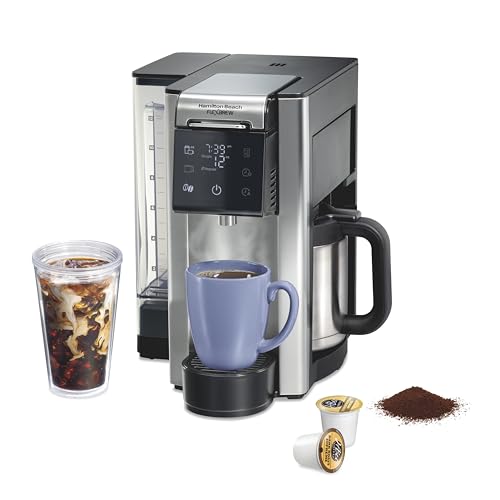
- Hamilton Beach FlexBrew Advanced 5-in-1 Drip and Single Serve Coffee Maker
- KRUPS 12-Cup Programmable Thermal Carafe Coffee Maker
- Cuisinart 10-Cup Thermal Classic Coffeemaker (DCC-1170BKNAS)
- SECPOEDR Grind and Brew Coffee Maker with Built-In Grinder
- Gevi 10-Cup Grind and Brew Coffee Maker
Read the full guide ↓ for what separates a premium drip machine from a basic one, how thermal and glass carafes change the second hour of a pot, and the brewing routine that makes a high-end machine earn its tier.
Introduction: What “High End” Buys in a Drip Coffee Maker
The best high end drip coffee makers justify themselves in the second cup, not the first. Almost any drip machine can produce one decent mug from fresh coffee; the premium tier is about what happens across a whole pot and a whole morning — whether the last cup tastes like the first, whether the machine brews hot enough and evenly enough to extract properly, whether yesterday’s programming gives you coffee at wake-up without a stale warmer plate cooking it for hours, and whether the carafe keeps heat with insulation instead of electricity. That is why five of the six machines in this guide use thermal carafes or thermal designs, and why the two grind-and-brew models matter: freshness ground minutes before brewing is the single largest quality lever in drip coffee, and integrating the grinder removes the separate appliance and the transfer mess.
This pool also contains one deliberate bridge machine: the Hamilton Beach FlexBrew Advanced 5-in-1, which pairs a 12-cup thermal programmable drip side with single-serve capability for pods and grounds. It is the answer for households split between pot people and cup people. Everything else here is a dedicated batch brewer of 10 to 12 cups. Read the reviews with your morning in mind — how many cups, over how long, ground how fresh — because the high-end tier rewards buyers who know their pattern and punishes, with counter clutter and unused features, those who buy the maximum instead. Readers whose homes are choosing between this batch class and premium single-serve can cross-read the companion framing at Best High End Home Coffee Makers before deciding the class itself.
Key Takeaways
- Thermal is the high-end default: five of six picks hold heat with insulated carafes or thermal designs rather than a warming plate, protecting the second hour of the pot.
- The BUNN Speed Brew Platinum leads on the classic premium virtues — speed of brewing and a stainless thermal carafe in a 10-cup format.
- The KRUPS makes the boldest verified heat claim in the pool: a double-wall thermal carafe that keeps coffee hot for 4 hours with no warming plate.
- Two picks grind and brew in one housing — the SECPOEDR and the Gevi — which is the freshest-coffee route in the category.
- The Hamilton Beach 5-in-1 is the only hybrid: 12-cup thermal drip plus single-serve pods and grounds from a removable 60 oz reservoir.
- Programmability is table stakes at this tier; what separates the picks is carafe style, capacity, strength control, and whether grinding is built in.
In this guide
Quick Picks
| Pick | Badge | Capacity | Carafe / heat | Defining feature | Link |
|---|---|---|---|---|---|
| BUNN Speed Brew Platinum (55200 CSB3T) | Best Overall | 10-cup | Thermal, stainless steel | Speed Brew design | Check on Amazon |
| Hamilton Beach FlexBrew Advanced 5-in-1 | Most Versatile | 12-cup drip plus single serve | Thermal programmable drip | Drip and single serve, pods and grounds, 60 oz reservoir | Check on Amazon |
| KRUPS Programmable Thermal | Best Heat Retention | 12-cup | Double-wall thermal, no warming plate | Keeps coffee hot 4 hours per verified title; 3 strengths | Check on Amazon |
| Cuisinart Thermal Classic (DCC-1170BKNAS) | Best Classic Programmable | 10-cup | Thermal | Programmable batch brewing | Check on Amazon |
| SECPOEDR Grind and Brew | Best Grind-and-Brew Simplicity | 10-cup | 2-hour keep warm function | Built-in grinder, stainless steel | Check on Amazon |
| Gevi Grind and Brew | Best Grind-and-Brew Features | 10-cup | Glass carafe, 90-min warm plate | Built-in grinder, touch screen, reusable filter, 1.5L tank | Check on Amazon |
How These Picks Were Chosen
This is a research-led guide built from verified product data, not a hands-on lab test. All six machines were confirmed against Amazon’s product data on 2026-11-20 — title, brand, and image — and every specification quoted in the reviews comes from those verified titles: capacities, carafe types, keep-warm durations, programmability, strength counts, reservoir and tank sizes. Where a title makes a performance claim, such as the KRUPS carafe keeping coffee hot for 4 hours, the review attributes it as the manufacturer’s verified claim rather than a measurement this guide performed.
The high-end screen itself was applied strictly: a pick had to be a true carafe drip brewer and had to show at least one premium-tier marker — thermal carafe, grind-and-brew integration, multi-format flexibility, or full programmability with strength control. Single-serve pod machines, however premium, were not admitted to a drip shortlist. No prices or star ratings were used in the ranking; at this tier the meaningful separations are thermal performance, freshness integration, capacity, and control depth, and those are the axes the comparison table scores. Households weighing this class against premium single-cup machines for a mixed kitchen can find the other side of the argument at Best High End Single Cup Coffee Makers.
The 6 Best High End Drip Coffee Makers, Reviewed

BUNN 55200 CSB3T Speed Brew Platinum Thermal Coffee Maker
Badge: Best Overall
Strengths
- BUNN’s Speed Brew identity: a brewer designed around getting a full pot brewed fast, the brand’s signature for decades of café-style drip thinking.
- Stainless steel thermal carafe holds heat by insulation, so the pot waits for the household instead of cooking on a plate.
- 10-cup capacity is the household sweet spot — a full family morning without the footprint of the largest machines.
Trade-offs
- No built-in grinder: freshness depends on your separate grinder or pre-ground coffee.
- A focused drip machine — no single-serve side for the one-cup moment.
- Thermal carafes need a rinse-and-dry habit; they do not show coffee level the way glass does.
Mini spec box
- Capacity: 10-cup
- Carafe: thermal, stainless steel
- Line: Speed Brew Platinum
- Model: 55200 CSB3T
- Colour: Black
BUNN built its name on a simple observation: drip coffee quality collapses when brewing is slow and uneven, and when the finished pot sits being heated. The Speed Brew Platinum attacks both halves. The brewing side is the brand’s speed-focused design, built to move a full 10-cup pot through quickly and evenly rather than dribbling over a long, cooling cycle. The holding side is a stainless thermal carafe: once the coffee is brewed, insulation — not a hot plate — keeps it hot, so the cup poured at nine tastes like the cup poured at eight instead of like a reduction of it.
Who it suits is equally clear: a household that drinks drip coffee as its main event, values the pot’s consistency across a morning, and either owns a grinder already or buys good pre-ground coffee in sensible quantities. The honest limitation is scope. There is no grinder in the housing and no single-serve escape hatch; the BUNN is a specialist, and specialists ask the kitchen to meet them halfway. In return, it offers the most focused expression of the high-end drip idea in this pool — brew fast, brew evenly, hold with insulation — executed by the brand that has thought about little else.
Best for: drip-first households that want a fast-brewing thermal pot as the kitchen’s centrepiece / Not suited for: anyone wanting grinding built in or a single-serve option.
Hamilton Beach FlexBrew Advanced 5-in-1 Drip and Single Serve Coffee Maker
Badge: Most Versatile
Strengths
- Two machines in one verified title: a 12-cup thermal programmable drip brewer and a single-serve side for pods and grounds.
- Removable 60 oz reservoir — the largest water supply in this pool — feeds the flexibility without constant refilling.
- Hot and iced capability extends the single-serve side beyond the morning pot.
Trade-offs
- The largest counter commitment here: two brew paths in one housing take room.
- More components to rinse and descale than any dedicated machine in this guide.
- No built-in grinder on either side.
Mini spec box
- Format: 5-in-1 — drip and single serve
- Drip capacity: 12-cup, thermal, programmable
- Single serve: pods and grounds, hot and iced
- Reservoir: 60 oz, removable
- Colour: Black
The FlexBrew Advanced 5-in-1 is the pool’s answer to the split household: pot people and cup people, sharing one counter and one water reservoir. Its drip side is a legitimate high-end entry on its own — 12 cups, thermal carafe, programmable — and the single-serve side covers the weekday solo cup in pods or grounds, hot or iced, without waking the big brewer. The removable 60 oz reservoir is the engineering that makes the combination livable, and its removability keeps the hygiene story honest: the biggest tank here is also a washable one.
Judge it as a household appliance rather than a purist’s brewer. A dedicated machine like the BUNN does one thing with fewer parts; the FlexBrew does five things with more of everything — more components to rinse, more path to descale, more counter given over. Households that genuinely use both sides weekly will find it the best value of counter space in this guide. Households that brew pots daily and single cups never should buy the dedicated machine and let the unused flexibility go. That self-knowledge, more than any feature, is the premium purchase.
Best for: split households that brew pots and single cups every week / Not suited for: purists who want one format with the fewest possible parts.

KRUPS 12-Cup Programmable Thermal Carafe Coffee Maker
Badge: Best Heat Retention
Strengths
- The pool’s clearest verified heat claim: a double-wall thermal carafe that keeps coffee hot for 4 hours.
- No warming plate at all — heat retention by insulation alone, so late cups never taste cooked.
- Three brew strengths and 24-hour programmability cover both the flavour and the schedule sides of a household morning.
Trade-offs
- 12-cup capacity is the joint-largest here; small households will brew half-pots most days.
- No grinder and no single-serve side — a dedicated batch brewer.
- Thermal carafes hide the coffee level; you learn the pot by weight and habit.
Mini spec box
- Capacity: 12-cup
- Carafe: double-wall thermal
- Heat claim from verified title: keeps coffee hot 4 hours, no warming plate
- Strengths: 3 brew strengths
- Programming: 24-hour programmable
The KRUPS is built around a scheduling truth: in many homes the pot is brewed once and drunk across hours — the early riser’s brew is the late riser’s coffee. A warming plate handles that pattern by slowly ruining it. The KRUPS handles it with a double-wall thermal carafe and no plate at all, and its verified title puts a number on the promise: coffee kept hot for 4 hours. Whether your household’s real window is two hours or four, the direction is right — insulation preserves flavour in a way reheating-by-plate never has — and the 24-hour programming means the pot can be ready at the first alarm while still tasting fresh at the last.
The three strength settings deserve their sentence: strength control at the machine, rather than by dose guesswork, lets a household with mixed preferences brew the pot at the middle strength and know it is a setting, not an accident. The limitations are the dedicated brewer’s usual ones — no grinding, no single cup — plus a size consideration: at 12 cups this is a machine for households that drink coffee as a group sport. For them, it is the most complete thermal-pot argument in the pool. Readers who buy appliances in person can test the carafe’s heft and lid action on the shop floor, a point the angle at Best High Street Coffee Makers develops.
Best for: households that brew one big pot and drink it across the morning / Not suited for: solo drinkers or single-serve households.

Cuisinart 10-Cup Thermal Classic Coffeemaker (DCC-1170BKNAS)
Badge: Best Classic Programmable
Strengths
- The classic premium formula, unadorned: 10-cup thermal carafe and full programmability from a heritage kitchen brand.
- Thermal holding instead of a warmer plate, keeping the pot honest across a morning.
- A 10-cup size that fits the majority of households without the largest footprint.
Trade-offs
- No built-in grinder and no single-serve side — a dedicated batch brewer.
- Its verified title is sparing with extra features; buyers wanting strength menus or touch controls should look at the Gevi or KRUPS.
- Thermal carafe care — rinse and dry — is part of ownership.
Mini spec box
- Capacity: 10-cup
- Carafe: thermal
- Programming: programmable
- Model: DCC-1170BKNAS
- Finish: Black with Thermal carafe
The Cuisinart Thermal Classic is the pick for buyers who distrust novelty at the premium tier. Its proposition is the category’s fundamentals executed by a brand with a long kitchen pedigree: a 10-cup pot, a thermal carafe to hold it, and programmability to have it ready when the household wakes. There is a discipline to that restraint. Every feature a machine does not have is a menu you never navigate, a mode you never mis-set at 6 a.m., and a component that cannot fail — and at the high end, where machines are kept for years, that restraint compounds into reliability of experience even before any question of mechanical reliability.
It will not grind your beans, pour your single cup, or present a touch screen, and its review does not pretend otherwise. What it offers the household is the classic morning: coffee brewed on schedule into an insulated carafe, poured across the morning without flavour decay, from a machine whose controls a guest can operate without instruction. In a guide full of flexibility and integration, the Classic is the reminder that focus is also a premium feature — and for the household that brews one pot, drinks one pot, and repeats, it may be the wisest money in the list, qualitatively speaking. The comparison-minded reader can set it against the wider home field at Best Home Brew Coffee Makers Comparison.
Best for: households that want the classic programmable thermal pot without feature sprawl / Not suited for: buyers wanting grinding, single-serve, or rich controls.

SECPOEDR Grind and Brew Coffee Maker with Built-In Grinder
Badge: Best Grind-and-Brew Simplicity
Strengths
- Built-in grinder: whole beans to brewed pot in one housing — the freshest-coffee route in drip, with no separate grinder to store or clean.
- 10-cup programmable brewing, so the freshness can be scheduled rather than performed half-asleep.
- 2-hour keep warm function bridges the household’s drinking window.
Trade-offs
- A grinder inside the machine is another mechanism to keep clean — bean oils and fine grounds migrate.
- Stainless build and integrated design make it a committed counter resident.
- Keep-warm holding is a plate-style window; flavour is best inside the first part of it.
Mini spec box
- Capacity: 10-cup
- Grinder: built-in
- Programming: programmable
- Keep warm: 2-hour keep warm function
- Finish: Stainless Steel
Grind-and-brew is the high-end idea with the clearest flavour logic: coffee’s aromatics begin escaping the moment beans are ground, so the machine that grinds seconds before brewing starts every pot at a freshness no bag of pre-ground can match. The SECPOEDR builds its whole identity on that sequence — beans in, pot out, one housing, programmable timing — and adds a 2-hour keep warm window sized to a real household morning rather than an all-day stew.
The ownership contract is the honest counterweight. An integrated grinder lives in a warm, humid neighbourhood, and ground coffee residue plus bean oils will find every seam; owners who thrive with grind-and-brew machines are the ones who treat the grinder chamber as a weekly wipe-down rather than a sealed mystery. Do that, and the SECPOEDR delivers the category’s signature luxury — a pot that smells like a coffee shop’s first minute — on a timer, in stainless, at 10-cup family scale. Skip the cleaning, and the same integration becomes the fastest route to stale flavours in the guide. The machine rewards the ritual it demands; judge whether your household will perform it before you buy its freshness.
Best for: whole-bean households that want scheduled, freshly ground pots without a separate grinder / Not suited for: owners who will not clean a grinder chamber.

Gevi 10-Cup Grind and Brew Coffee Maker
Badge: Best Grind-and-Brew Features
Strengths
- Built-in grinder plus a touch screen control panel — the most modern interface in this pool, on the freshest format.
- Reusable filter ends the paper-filter supply chain for the household.
- Glass carafe lets you see the pot level at a glance, with a 90-minute warm plate for the drinking window.
Trade-offs
- Glass plus a warm plate is the classic flavour trade: visibility now, gentle cooking if the pot sits the full window.
- Most components to manage here alongside the FlexBrew: grinder, reusable filter, carafe, 1.5L tank.
- Touch controls are a preference, not an upgrade — button loyalists should look at the Cuisinart or BUNN.
Mini spec box
- Capacity: 10-cup
- Grinder: built-in
- Controls: touch screen, programmable brew
- Carafe: glass, with 90-minute warm plate
- Filter: reusable
- Tank: 1.5L
The Gevi takes the grind-and-brew idea and dresses it in the pool’s most contemporary specification: touch screen programming, a reusable filter, a 1.5L tank, and a glass carafe on a 90-minute warm plate. The glass-versus-thermal choice is its defining decision, and it is a legitimate one. Glass shows you the pot — how much is left, how strong it looks — and the warm plate keeps it serving-hot for the household’s window; the cost, shared by every glass-and-plate design ever made, is that coffee held hot keeps changing, so the Gevi’s best cup is in the first part of its window rather than the last.
For the household that drinks a pot promptly — brewed at breakfast, finished by mid-morning — that trade is nearly free, and what remains is pure upside: beans ground in-house, a filter that never needs reordering, and controls that make scheduling the freshness a few taps rather than a dial ritual. Like the SECPOEDR, it asks for grinder-chamber housekeeping; unlike the SECPOEDR, it adds a reusable filter to the rinse list and a glass carafe to the careful-handling list. Buyers who want the freshest format with the most modern controls will find it the most complete package here; buyers who want the pot to wait four hours should be reading the KRUPS review again. The naming muddle in this corner of the market is real, and Best Highend Coffee Makers sorts the same tier from another direction.
Best for: prompt-drinking households that want grinding, reusable filtration, and touch controls / Not suited for: long-window drinkers who need thermal holding.
Comparison Table
| Machine | Capacity | Heat holding | Grinder | Programmable | Link |
|---|---|---|---|---|---|
| BUNN Speed Brew Platinum | 10-cup | Stainless thermal carafe | No | See listing | Check on Amazon |
| Hamilton Beach FlexBrew 5-in-1 | 12-cup plus single serve | Thermal drip carafe | No | Yes | Check on Amazon |
| KRUPS Thermal | 12-cup | Double-wall thermal, 4 hours per title, no plate | No | Yes, 24-hour | Check on Amazon |
| Cuisinart Thermal Classic | 10-cup | Thermal carafe | No | Yes | Check on Amazon |
| SECPOEDR Grind and Brew | 10-cup | 2-hour keep warm | Yes, built-in | Yes | Check on Amazon |
| Gevi Grind and Brew | 10-cup | Glass carafe, 90-min warm plate | Yes, built-in | Yes, touch screen | Check on Amazon |
How to Choose a High End Drip Coffee Maker
Choose the heat strategy first: insulation or plate. Thermal carafes (BUNN, KRUPS, Cuisinart, and the FlexBrew’s drip side) hold coffee by keeping heat in, and flavour degrades slowly and gracefully. Glass on a warm plate (Gevi) holds coffee by adding heat, and flavour degrades faster but visibility is total. Match to your window: drink the pot within about an hour and either works; drink across a morning and thermal is the high-end answer — it is no accident that four of six picks insulate.
Decide whether freshness will be ground or bought. The two grind-and-brew machines move the freshness decision inside the appliance: whole beans, ground on schedule, brewed immediately. The four non-grinding machines outsource it — to your countertop grinder, which gives you grind control the integrated machines cannot, or to pre-ground coffee, which asks you to buy small and store airtight. There is no wrong answer, but there is a dishonest one: buying a grind-and-brew machine and never cleaning its grinder gives you worse freshness than a clean machine brewing pre-ground.
Size the pot to the household’s real morning. Capacity math: a “cup” in drip-machine language is a small serving, not a mug — a 10-cup pot serves roughly four to five generous mugs, and a 12-cup pot roughly five to six. Households of one or two who brew a full 12-cup pot “because the machine is that size” waste coffee and drink the last of it stale; brew half-pots on big machines, or choose the 10-cup class. The KRUPS and FlexBrew earn their 12 cups only in genuinely group-scale homes.
Treat programmability as a freshness feature, not a convenience feature. A timer that brews before you wake means coffee spends zero minutes waiting for its first drinker. Pair programmable brewing with a thermal carafe and the whole morning is covered: fresh at the start, insulated through the end. That combination — schedule plus insulation — is the practical definition of the high-end tier in this guide.
How to Brew a Better Pot: The High-End Routine
Step 1 — Start with the carafe. Rinse a thermal carafe with hot water before brewing; a warm carafe steals less heat from the first pot, and the rinse clears yesterday’s residue. For glass, confirm the carafe is clean and dry.
Step 2 — Dose by ratio, not by habit. Begin near one to two tablespoons of coffee per six ounces of water, scaled to the pot you are actually brewing, and adjust across days — stronger if the pot tastes thin at the end of the window, milder if the first cup is harsh. On the KRUPS, use the strength settings as the fine adjustment after the dose is sane.
Step 3 — Mind the grind. Grind-and-brew owners: keep the grinder chamber brushed out weekly so old grounds do not season new beans. Separate-grinder owners: a medium drip grind is the baseline; a pot that runs slow and bitter points finer-than-needed, a fast, weak pot points coarser.
Step 4 — Serve the window, not the clock. Thermal pots: pour freely across the morning. Glass on a plate: plan to finish inside the warm window — 90 minutes on the Gevi, 2 hours of keep warm on the SECPOEDR — and brew a second smaller pot rather than stewing a big one.
Step 5 — Close the loop daily. Empty the carafe, rinse it, and leave it open to dry. Wash the brew basket; on reusable-filter machines, rinse the filter the day it is used, not the day after.
Troubleshooting. Problem: the pot tastes great at first and harsh by the third cup → the pot is being held too hot for too long; move to a thermal routine or shorten the drinking window. Problem: brewed coffee tastes weak despite a full dose → check the grind (too coarse), then scale in the spray head, which starves parts of the coffee bed. Problem: the grind-and-brew pot tastes muddy → the grinder chamber and chute need cleaning; residue there fines its way into every pot.
Thermal Carafes vs Warming Plates: The Second-Hour Argument
Every drip household eventually has the same argument with itself, usually over a harsh third cup: is the plate the problem? The physics are unforgiving. Coffee held at serving temperature keeps undergoing the chemistry that heat drives — aromatics leave, acids shift, and the cup flattens and then turns. A warming plate accelerates exactly that by adding energy continuously. A thermal carafe refuses the bargain: it accepts slow cooling in exchange for slow flavour change, which is why a thermal pot at hour two, slightly cooler, routinely tastes better than a plated pot at hour two, piping hot. The high-end market has voted with its designs — this pool insulates four times and plates twice, and even the plated machines bound their windows at 90 minutes and 2 hours. If your household’s pot must wait, buy insulation. If it never waits, buy whichever carafe you prefer to pour from, and spend the difference of attention on the coffee itself. One practical footnote belongs to the thermal side: an insulated carafe also travels — to the table, to the desk, to the garden — in a way a plated glass pot tethered to its warmer never can, and households that drink coffee in more than one room will feel that freedom daily. The plate’s counter-virtue is honesty of level: you always know what is left. Weigh travel against visibility with your own rooms in mind, because at this tier both designs are executed well enough that the household’s geography, not the engineering, should cast the deciding vote.
Built-In Grinder or Separate Grinder? The Freshness Debate, Settled Practically
The two grind-and-brew machines in this pool raise the category’s favourite argument, and it deserves a practical settlement rather than a tribal one. The integrated case is convenience with freshness attached: one housing, one timer, beans ground at the moment of brewing, no second appliance on the counter and no grounds transferred — and therefore spilled — between devices. For a household that brews a pot every morning on a schedule, integration removes every friction between the bean and the pot, and friction is what kills freshness habits in real kitchens.
The separate-grinder case is control. A standalone grinder lets you change the grind for the brewer, the bean, or the day; it can be cleaned on its own schedule, replaced on its own schedule, and it does not share a warm, humid housing with a water tank. Purists add that an integrated grinder’s grind range is whatever the machine offers, while a separate grinder is a specialist. Both cases are true, which is why the settlement is behavioural: households that value a scheduled, effortless pot should integrate — the SECPOEDR and Gevi exist for them — and households that enjoy the ritual and already own a good grinder should keep it and buy a focused brewer like the BUNN or the KRUPS. The only losing move is paying for integration and then resenting its cleaning, or buying the separate setup and letting the grinder gather dust while pre-ground does the work. Freshness follows behaviour, not architecture.
Programming the Morning: Using the Timer Like a High-End Feature
Programmability is listed on nearly every spec sheet in this tier and used well by very few owners. The naive use — set it once, forget it — produces the category’s quiet failure mode: grounds loaded the night before, sitting in a warm kitchen for eight hours before the water arrives, trading away in staleness much of what the machine was bought to protect. The high-end use is more deliberate. Load the water and the filter the night before, but keep the coffee out of the machine until morning if your schedule allows a thirty-second head start on the alarm; on grind-and-brew machines, let the timer do the whole sequence, since the beans wait whole — and whole beans wait gracefully in a way ground coffee never does. That asymmetry is the grind-and-brew format’s least advertised virtue: it is the only design whose programmable cycle loses nothing overnight.
Then match the program to the household’s actual first hour. A pot timed for the earliest riser and held in a thermal carafe serves the last riser nearly as well — the KRUPS pattern. A pot timed for the latest riser leaves the earliest making a separate cup — the pattern the FlexBrew’s single-serve side exists to absorb. Programming is therefore a household negotiation disguised as a clock setting, and the machines here give you both halves of the solution: schedule the pot for the majority, and let insulation or a single-serve side cover the outliers. Set that negotiation once, honestly, and the timer becomes the feature the tier promises — coffee that is ready, fresh, and still good when the last cup is poured.
Descaling and Care at the Premium Tier
High-end machines concentrate more heated water path, more sensors and valves, and — on two of these picks — a grinder, into one housing, and scale attacks all of it impartially. The care routine therefore has three layers. The daily layer is the carafe and basket: rinse, dry, leave open. The weekly layer is the brew basket, the reusable filter where fitted, the reservoir on the FlexBrew, and the grinder chamber brush-out on the SECPOEDR and Gevi — the single most skipped chore in this category and the one with the fastest flavour payback when done. The seasonal layer is descaling, on the manufacturer’s schedule for your water hardness, followed by plain-water cycles until the rinse runs neutral. Owners of thermal carafes should add one habit: a periodic deep wash of the carafe itself with hot water and a bottle brush or a denture-style cleaning tablet routine recommended for stainless interiors, because an insulated carafe’s inner wall accumulates coffee oils invisibly — you cannot see the level of the coffee, and you cannot see the film either. Premium machines do not ask for more care than basic ones so much as they repay it more visibly: every feature that makes the tier worth buying — even extraction, true temperature, fresh grinding — is a feature scale and residue quietly tax. Keep the three layers and the tax stays near zero.
Common Buying Mistakes
- Buying capacity for the party you host twice a year. The daily pot decides the machine; guests can drink a second brew.
- Paying for a grinder you will not clean. Integrated grinding is a freshness feature only under a cleaning routine.
- Leaving a glass pot on its plate for hours. Warm windows are measured in minutes on purpose — brew smaller, brew again.
- Judging a thermal carafe by its first pour. Its virtue is the third pour; that is what the insulation is for.
- Dosing a half-pot like a full one. Ratio follows the water you actually brew.
- Ignoring the reservoir on the hybrid. The FlexBrew’s 60 oz tank is removable — wash it like the carafe it feeds.
- Loading ground coffee into the timer the night before. Grounds stale overnight in the basket; either load in the morning or let a grind-and-brew machine hold whole beans instead.
- Judging the tier by its screens. A touch panel is an interface preference; insulation, extraction, and freshness decide the cup.
Final Recommendation
For the classic high-end drip experience, choose the BUNN Speed Brew Platinum: fast brewing, a stainless thermal carafe, and a focused design that does one thing superbly. For the longest, gentlest hold, the KRUPS 12-Cup Thermal and its 4-hour double-wall carafe are the pick. For the freshest pot, go grind-and-brew — the Gevi for features and visibility, the SECPOEDR for stainless simplicity — and for the split household, the FlexBrew 5-in-1 stands alone. High end, in this category, is not a finish or a screen; it is a pot whose last cup honours its first, and every pick above was chosen to deliver exactly that. Buy the heat strategy that matches your drinking window, the freshness route that matches your habits, and the capacity that matches your real morning rather than your largest gathering, and then keep the three layers of care — daily rinse, weekly brush-out, seasonal descale — that let a premium machine stay premium. Do those things and the tier stops being a marketing word: it becomes the taste of the second cup, the third cup, and the last cup of every pot, every day the machine serves your kitchen.
Frequently Asked Questions
What makes a drip coffee maker “high end”?
In this guide’s terms: heat management and freshness integration. Thermal carafes instead of indefinite warming plates, full programmability with strength control, capacities executed without shortcuts, and — at the top of the logic — built-in grinding so the coffee is fresh when the water hits it. Price is not the criterion; those engineering choices are.
Is a thermal carafe really better than a glass carafe?
For holding coffee, yes: insulation slows flavour change, while a warm plate accelerates it. Glass wins on visibility — you can see the level and the brew — and on tradition. The deciding question is your drinking window: finish the pot promptly and glass serves beautifully; drink across hours and thermal is the honest choice.
Does a built-in grinder actually improve the pot?
It improves the input, which is where drip quality is decided: beans ground moments before brewing retain aromatics that pre-ground coffee loses in the bag. The condition is housekeeping — a grinder chamber left dirty seasons every pot with stale residue. Cleaned weekly, a grind-and-brew machine brews the freshest coffee in this category.
How many mugs does a 10-cup or 12-cup pot really serve?
Fewer than the number suggests, because a drip “cup” is a small serving rather than a mug. Plan on roughly four to five generous mugs from a 10-cup pot and five to six from a 12-cup pot, then size the machine — and the amount you brew — to the household’s actual morning.
Is a 10-cup or a 12-cup machine better for a couple?
For most couples, the 10-cup class is the better fit: it brews a full morning for two with headroom for a guest, and its half-pots are a sensible size for quieter days. A 12-cup machine earns its capacity in homes that regularly brew for four or more drinkers, or that drink across a long morning from one pot — the KRUPS pattern. Remember that you can always brew less than capacity, but a pot brewed far below a big machine’s design size is the one most likely to extract unevenly, so buy close to your real morning.
How long can coffee sit in a thermal carafe?
The KRUPS in this pool carries the clearest verified claim: its double-wall thermal carafe keeps coffee hot for 4 hours with no warming plate. As a routine, treat the first couple of hours as the pot’s prime for any thermal design, and brew a fresh half-pot rather than stretching a morning pot into the afternoon.
Do I need a separate grinder with a high-end drip machine?
Only if the machine does not grind and you want the freshest input. Two picks here — the SECPOEDR and the Gevi — grind in-house. The other four brew what you give them: beans from your own grinder, which offers the most grind control, or pre-ground coffee, which asks for small bags and airtight storage to stay lively. There is no wrong route, but the route should be chosen deliberately, because freshness at the input decides more of the cup than any other single factor in this category.
Can the Hamilton Beach 5-in-1 replace both my drip machine and my pod machine?
That is exactly its design brief: a 12-cup thermal programmable drip side for pots, and a single-serve side for pods and grounds, hot or iced, fed by a removable 60 oz reservoir. Households that use both formats weekly can retire two appliances for it; households that use only one format should buy the dedicated machine instead.


