A high-end home espresso machine gives you a strong pump, stable brew temperature and real steam power for milk drinks, without the bulk of a cafe machine. Premium models usually add a better boiler design, finer control over shot variables and sturdier steel construction. Think about how much counter space you can spare, how much practice you want to put in, and whether you would rather have guidance or full manual control.
The six machines below range from hands-on semi-automatics to touchscreen models that guide each step. We have not used these machines ourselves, so please confirm the included accessories, water tank size and voltage details on the current listing before buying.
As an Amazon Associate we earn from qualifying purchases. Links below are affiliate links, and they do not change the product information we give.
What to Look For
| Feature | Why it matters |
|---|---|
| Heating system | Thermocoil, single boiler or dual boiler designs recover heat and steam at different speeds |
| Control | Manual levers and dials reward practice; touchscreens and presets are easier to repeat |
| Grinder | Built-in grinders save space, while separate grinders let you upgrade later |
| Steam wand | A strong wand makes silky milk for lattes and flat whites |
| Build | Metal housings and commercial-style portafilters usually last longer |
In this guide
Specs at a Glance
| Machine | Type | Grinder | Notes |
|---|---|---|---|
| Breville Barista Pro | Semi-automatic | Built in | Digital display; fast heat-up |
| Breville Barista Touch | Semi-automatic with touchscreen | Built in | Guided steps and saved drinks |
| Gaggia Classic Pro | Manual semi-automatic | Separate | Compact steel body; commercial-style group |
| Rancilio Silvia | Manual semi-automatic | Separate | Heavy frame; long-running design |
| Lelit Anna | Manual semi-automatic | Separate | Compact; PID temperature control |
| De’Longhi La Specialista Arte | Semi-automatic | Built in | Sensor tamping assistance |
The 6 Best High-End Espresso Machines
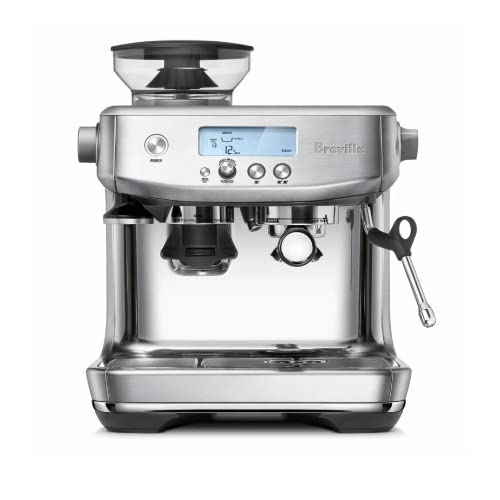
Top pickBest for a home barista who wants one machine for beans to cup
1. Breville Barista Pro
A well-known semi-automatic with a built-in conical burr grinder and a digital temperature display. It heats quickly, so a morning drink does not mean a long wait.
Suits: a home barista who wants one machine for beans to cup. Strengths: a built-in grinder and quick heat-up. Weaknesses: the grinder is less adjustable than a standalone unit. Skip it if you plan to upgrade to a separate high-end grinder.

Best for newer users who want guidance
2. Breville Barista Touch
A touchscreen version of the same idea, which walks you through grinding, tamping and brewing and can store personalized drink settings. Automatic milk texturing is part of the appeal.
Suits: newer users who want guidance. Strengths: simple repeatable drinks from a screen. Weaknesses: more electronics to go wrong over the years. Skip it if you prefer purely manual machines.


Best for learning espresso fundamentals
3. Gaggia Classic Pro
A compact manual machine with a stainless steel body and a commercial-style portafilter. It is a favorite of hobbyists who like to tinker and upgrade.
Suits: learning espresso fundamentals. Strengths: a simple design and lots of community know-how. Weaknesses: no built-in grinder, so you need your own. Skip it if you want push-button convenience.

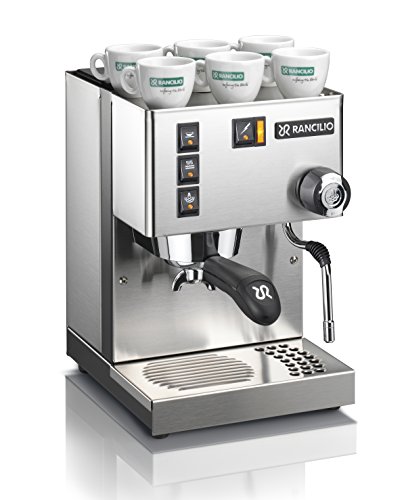
Best for hands-on enthusiasts
4. Rancilio Silvia
A long-running manual machine with a sturdy frame and a commercial-grade group head. It rewards patience and a good grinder with cafe-style shots.
Suits: hands-on enthusiasts. Strengths: solid construction and a classic design. Weaknesses: temperature surfing takes practice. Skip it if you want an automatic workflow.
View Rancilio Silvia on Amazon
Best for small kitchens
5. Lelit Anna
A compact Italian machine with PID temperature control and a commercial-size portafilter. It suits small counters while still letting you adjust your shots.
Suits: small kitchens. Strengths: steady brew temperature in a small footprint. Weaknesses: you need a separate grinder. Skip it if you want a built-in grinder.

Best for beginners moving up
6. De’Longhi La Specialista Arte
A semi-automatic with a built-in grinder, sensor-assisted tamping and a manual steam wand. It aims to remove the guesswork from dosing and tamping.
Suits: beginners moving up. Strengths: guided dosing and tamping. Weaknesses: the footprint is wider than that of a manual machine. Skip it if you like to control every variable.
View De’Longhi La Specialista Arte on Amazon
Care and Setup
- Descale on the schedule in the maker’s manual.
- Purge the steam wand and wipe it after every use.
- Rinse the portafilter and basket after each shot.
- Use filtered water to protect the boiler and pump.
Mistakes to Avoid
- Buying a machine without planning for a grinder.
- Using stale or oily beans in a built-in grinder.
- Skipping descaling until flow slows.
- Expecting a machine to fix poor technique.
What “High-End” Means for a Home Machine
At this level, a machine should do more than make hot water pass through coffee. The features that separate premium machines from basic ones are mostly about stability and control. Better temperature management keeps each shot consistent, a stronger boiler or heating system recovers quickly between shots and steam, and sturdier materials hold up to daily use. A good machine should also give you tools to adjust shots, such as pressure, temperature or dose, instead of locking everything behind a single button.
It is worth separating real capability from marketing words. Terms like “barista-style” or “commercial-grade” are not standardised, so look for specifics in the listing: the heating system, the portafilter size, the type of steam wand and what controls you actually get. Expect a premium machine to reward good technique and fresh beans, not to remove the need for either.
Also think about how much involvement you want. Some buyers love tinkering and prefer a manual or semi-automatic machine that lets them change variables. Others want a polished, guided routine with saved drinks. Neither is better in the abstract, but the wrong choice leads to frustration. Decide whether you want to learn a craft or simply enjoy great coffee, and let that guide your shortlist.
Boiler and Heating Systems Explained
The heating design affects shot stability and how quickly you can steam milk after brewing. The most common types in home machines are worth knowing.
- Single boiler: one heater serves both brewing and steaming. It is compact and simpler, but you may need to wait as the temperature changes between brewing and steaming.
- Heat exchanger: one larger boiler produces steam, and a pipe passes brew water through it. It lets you brew and steam at nearly the same time, but temperature management takes some learning.
- Dual boiler: separate heaters for brewing and steam, offering consistent temperature and simultaneous operation. These machines tend to be larger and more complex.
- Thermocoil or thermoblock: a heating element that warms water as it flows, giving fast heat-up and compact size. Quality varies, and the listing should explain the design.
A PID controller is an electronic temperature regulator that keeps the water within a narrow range, and it is often valued for consistent results. Check whether the listing says a machine has one and whether you can adjust the temperature.
Choose according to your routine. A single-boiler machine can be perfect for one or two drinks, while a household that makes many milk drinks may appreciate faster recovery. Always read the manual for startup and warm-up recommendations.
Grinder Pairing and Dose Control
A premium machine paired with a weak grinder will produce poor espresso. Grind consistency, adjustability and freshness shape the shot. Models with an integrated grinder are convenient and compact, but the grinder is part of the machine and cannot be upgraded separately. A machine without one offers freedom to pick a separate grinder, which many enthusiasts prefer.
If you choose a separate grinder, look for:
- Fine, stepped or stepless adjustment, so you can change the grind in small increments.
- Burr grinding rather than blade grinding, for more even particles.
- A way to control dose, either by time or by weight.
- Reasonable retention, meaning how much old coffee stays inside between uses.
- Easy cleaning and access to the burrs.
Dose and tamping affect extraction too. A scale helps measure the grounds going in and the espresso coming out, and a level tamp gives even resistance. Assisted tamping on some machines takes away some guesswork, while manual machines let you practise. Whichever route you take, change one variable at a time, taste the result and keep notes. Many disappointing shots come from grind size, not from the machine.
Keep a small notebook by the machine with the grind setting, dose and shot time for each bag of beans. Over a few weeks, these notes teach you more than any guide, and they make a new bag easier to dial in.
Steam Power, Milk Texturing and Workflow
If you drink lattes and cappuccinos, steaming matters as much as brewing. A manual steam wand gives control over texture, from light foam to silky microfoam, but needs practice. Automatic milk systems, found on some premium models, deliver consistent results with less effort, though the milk path needs careful cleaning.
Look at how long it takes to steam a typical jug, how easy the wand moves, and whether the tip design suits you. Wands with multiple holes and strong pressure produce foam faster, while weaker ones need more patience. Check the listing for the type of wand and whether it can pivot freely.
- Use cold milk and a cold jug, and purge the wand before and after steaming.
- Wipe the wand immediately to prevent baked-on residue.
- Practise with a small amount of milk, then scale up.
- Consider plant milks, which behave differently and may need a different technique.
Workflow is the final consideration. If you make two drinks in a row, can the machine brew and steam without long waits? If you entertain, is the drip tray large enough and the tank easy to refill? These practical details separate machines that are impressive from machines that are pleasant to use every day.
Ownership, Service and Longevity
A high-end machine is an investment, so think about the long term. Look at how the manufacturer supports its products: availability of spare parts such as gaskets, shower screens and baskets, access to service and clear documentation. Ask whether parts are user-replaceable or require a technician, and whether a warranty is offered. Read warranty terms on the listing, as they differ between machines and sellers.
Plan regular maintenance:
- Backflush or clean the group head as the manual directs.
- Descale according to the maker’s schedule, and use suitable water.
- Replace the group gasket and shower screen when they harden or clog.
- Keep the machine on a level, heat-safe surface with air around it.
Water quality is vital. Very hard water builds scale quickly, while very soft water can cause other issues, so follow the maker’s guidance on filtration. Also check the electrical requirements and the voltage on the listing, especially if you are buying from another region.
Signs it is time for service or replacement include weak pressure, inconsistent temperature, persistent leaks, noisy pump behaviour or failed controls. Start with descaling and gasket changes, and consult a technician before replacing the machine.
Ask the seller about the return window and what happens if the machine arrives damaged. Premium machines are heavy, and shipping damage is better dealt with early than discovered months later.
High-End Espresso Machine FAQ
Do I need a separate grinder?
Some models include one. Others need a separate burr grinder, and a good grinder often matters as much as the machine.
Which model is best for beginners?
The Barista Touch and La Specialista Arte offer the most guidance. The manual machines teach more but ask for patience.
Is a PID worth having?
It holds brew temperature steadier, which makes shots more consistent. Check the listing to see which models include one. It matters most on small boilers.
How often should I descale?
Follow the maker’s manual. Hard water may call for more frequent descaling. Using filtered water also helps slow scale buildup in the boiler.
Is a more expensive espresso machine always better?
Not always. Higher-priced machines usually offer better temperature stability, build and features, but the best machine is the one that suits your routine. A simple machine with a good grinder can beat a complex one with a poor setup.
What is the difference between a semi-automatic and a super-automatic machine?
A semi-automatic needs you to grind, dose, tamp and start the shot, while a super-automatic does most of it for you. Semi-automatics offer more control, and super-automatics offer more convenience.
Do I need to preheat my cups and portafilter?
Many people do, because cold metal and ceramic take heat from the shot. Warming the cup and portafilter is a cheap way to improve consistency.
How important is the water I use?
Very. Water affects taste and scale build-up. Follow the maker's guidance, and consider a filter if your tap water is hard or has a strong taste.
Can I make espresso with pre-ground coffee?
You can, but freshness suffers and the grind may not suit your machine. If you use pre-ground, buy a small amount and finish it quickly. A grinder is a worthwhile addition.
How long does a premium machine last?
It depends on the build, the water and maintenance. With regular cleaning and descaling, many last for years, and replaceable parts such as gaskets keep them running.
Do I need to leave the machine on all day?
Not necessarily. Many machines heat up quickly and have standby modes. Check the manual for the maker's recommendations.
Budget, Mid-Range and Premium: Where the Money Goes
At the upper end of home espresso, price differences come from a handful of things you can actually name. Better thermal stability, either from larger boilers, heavier brass parts or electronic temperature control, gives more consistent shots. Build quality affects how long the machine lasts and how easily it can be repaired. Convenience features, such as automatic milk systems, programmable doses and touch screens, add cost without necessarily improving the espresso itself.
That is why a more expensive machine is not automatically a better fit. A simple semi-automatic with a good grinder and a patient owner can produce shots that rival those from a far costlier automated machine. Conversely, a buyer who wants one-touch drinks every morning may value an automated machine more than raw shot quality. Decide first which of these two groups you belong to, then compare machines within that group.
- Spending on temperature stability pays off in consistency.
- Spending on automation pays off in speed and convenience.
- Spending on a grinder often matters more than the machine itself.
- Spending on accessories, such as a good tamper and scale, is small but useful.
Counter Space, Power and Plumbing Considerations
Before choosing, measure the space where the machine will live. Many premium models are taller and deeper than expected, and you need clearance above for filling the reservoir and removing the water tank. Check the cabinet height, the cord length and the circuit it will share. Some machines draw a lot of power when heating, so avoid plugging them into the same outlet as a kettle or toaster.
Most home machines use a reservoir you fill by hand, which keeps installation simple. A few can be plumbed directly to a water line, which removes refilling but adds installation work and, in some homes, a need for a water filter and a drain. If you rent, a reservoir model is usually the practical choice. Also think about where the grinder will sit, since it needs counter space and an outlet too.
Learning Curve and What to Expect in the First Month
Even the most capable machine takes time to learn. Expect to pull a number of poor shots while you dial in grind size, dose and tamping pressure. Beans change too: a bag from a new roaster, or one that has been open for a few weeks, may need a different grind. Take notes at first, adjusting one variable at a time, and weigh your dose and output so that you can repeat what works.
Milk work is a separate skill. Steaming milk to a smooth, glossy texture takes practice, and you may waste some milk early on. Do not be discouraged: most people notice steady improvement within a few weeks. Free tutorials and the maker’s own guidance help, but the biggest teacher is repetition.
If you want a smoother start, begin with a straightforward recipe, such as a standard ratio of coffee to liquid espresso, and change it only when you can taste a reason to.
Cleaning Routines That Protect Shot Quality
Coffee oils and milk residue build up quickly and affect flavor. Backflushing, where the machine supports it, rinses the group head. Wipe the steam wand immediately after each use and purge it. Soak the portafilter and baskets in a suitable cleaner periodically. A regular routine takes only a few minutes and keeps the machine tasting clean. Neglect shows up first as bitterness and uneven flow, and it can eventually damage components.
Beans, Freshness and Water: The Inputs That Decide the Cup
A high-end machine cannot rescue stale beans. Espresso is unforgiving, and coffee that is several weeks past its roast date tends to taste flat and produce thin crema regardless of the equipment. Buy from a roaster that prints a roast date, favor smaller bags you will finish within a few weeks, and store them in an airtight container away from heat and light. Whole beans ground just before brewing always beat pre-ground coffee.
Roast style changes what you taste and how you dial in. Darker roasts extract easily and suit milk drinks, while lighter roasts need finer grinding and higher temperatures and can taste sour if under-extracted. If you are new, a medium roast labeled for espresso is a forgiving place to begin.
Water makes up almost all of the cup and also affects the machine. Very hard water builds scale, while very soft or distilled water can taste flat and may not work with machines that rely on conductivity sensors. A filter pitcher or a cartridge matched to your local water often solves both concerns. Check what the maker recommends for your model.
- Use beans within a few weeks of roasting for best flavor.
- Grind fresh for every shot, and adjust in small steps.
- Filter hard water to protect heating elements and improve taste.
- Keep the reservoir clean and refill it with fresh water daily.
Frequently Asked Questions
Is it worth upgrading from an entry-level espresso machine?
It can be, if you are limited by temperature consistency, steam power or build quality. If your current shots are inconsistent despite a good grinder, an upgrade may help. If you have not yet mastered technique, practice may improve results more than new equipment.
How long does it take to learn to pull good espresso shots?
Most people need a few weeks of regular practice to get drinkable shots and a few months to become consistent. Weighing your dose and output, changing one variable at a time, and using fresh beans speeds the process.
Can I plumb an espresso machine directly to my water line?
Some models support it, but many home machines use only a reservoir. Plumbing requires compatible hardware, a filter and sometimes a drain, so check the manual first. If you rent or prefer simplicity, a reservoir model is easier.
How much counter space does a premium espresso machine need?
Plan for the machine, a grinder, and room to work, plus clearance above for the water tank. Many premium models are deeper than basic ones. Measure the cabinet height and check the footprint listed by the maker before you buy.
Two Tribes of High-End Home Espresso
The six machines in this guide look like one category and are actually two, and seeing the divide clearly is the fastest route to the right choice. In one tribe stand the all-in-one machines — the Breville Barista Pro, the Breville Barista Touch and the De’Longhi La Specialista Arte — which fold a grinder into the same body as the brewer and promise a complete espresso station in a single footprint. In the other stand the traditional machines — the Gaggia Classic Pro, the Rancilio Silvia and the Lelit Anna — which are brewers only, expecting a separate grinder, a separate relationship with the craft, and a counter arranged like a small café rather than a single appliance’s stage.
Neither tribe is the advanced one. The all-in-one machines are not training wheels, and the traditional machines are not automatically superior; they distribute the work, the cost and the learning differently. An all-in-one concentrates the purchase and the footprint, and its grinder is matched to its brewer by the maker. A traditional machine lets the owner choose and later upgrade the grinder independently — and since the grinder shapes espresso at least as much as the brewer, that independence is the traditional tribe’s deepest argument.
The daily experience differs in texture as much as in hardware. The all-in-one household makes espresso the way it makes toast: the station is simply there, complete, and the skill grows inside a guided frame. The traditional household makes espresso the way a cook uses a knife: separate tools, chosen individually, maintained individually, and combined by hand and judgment. Both households can drink superbly. The question is which texture of morning you want to live inside for the next several years.
The All-in-One Three, Taken Seriously
The Breville Barista Pro is the keen driver’s all-in-one: fast heat-up from its modern heating system, a grinder integrated with intent, and an interface that gives the drinker real control without demanding a manual’s memorization before the first shot. It suits the household that wants café drinks daily, values speed on weekday mornings, and still wants to learn the craft’s fundamentals — dose, grind, timing — rather than have them hidden.
The Breville Barista Touch trades some of that keenness for guidance. Its touchscreen walks the drinker through drinks step by step, remembers preferences, and lowers the cost of entry for a household where several people with different confidence levels will use the machine. That guidance is sometimes dismissed by purists, which is a mistake: a machine that a whole household actually uses makes more good coffee than a more capable machine that intimidates half its owners into leaving it alone.
The De’Longhi La Specialista Arte brings the Italian appliance tradition to the same idea, with an emphasis on assisted tamping and temperature steadiness for the drinker who wants the ritual’s pleasures — the portafilter, the tamp, the lock-in — with the fiddliest steps steadied by the machine. Between the three, the choice is temperamental: control, guidance or assisted ritual. All three answer the same prayer, which is a complete espresso station that a real kitchen can absorb without a remodel.
The Traditional Three, Taken Seriously
The Gaggia Classic Pro is the traditional tribe’s gateway and its longest-running argument: a real portafilter, a commercial-style group, a boiler with honest temperature behavior, and a design that owners have modified, repaired and loved for years. Its community is part of the product — there is no question about this machine that has not been answered somewhere by an owner who solved it — and for the tinkerer, that ecosystem is worth as much as any specification.
The Rancilio Silvia carries the reputation of the class’s iron: a machine built with a commercial hand, famously durable, famously demanding of good technique and a good grinder, and famously rewarding when both arrive. The Silvia does not flatter beginners, and its owners tend to describe that as respect rather than hostility — the machine tells the truth about your preparation in every cup, which is how its drinkers become skilled. The Lelit Anna rounds out the tribe with the modern touches — gauges and, in its family, temperature control options — in a compact Italian-made form that suits smaller counters and drinkers who want information from their machine while they learn.
What unites the three is upgrade gravity. Each pairs with a better grinder tomorrow without asking to be replaced itself, each can be serviced and kept for a very long time, and each anchors a station that grows with its owner. The household that suspects espresso will become a hobby, not just a beverage, should feel that gravity and let it pull.
The First Month: A Realistic Diary
Week one belongs to humility. Shots run fast, then choke, then run fast again; the sink drinks more espresso than the household does. This is not a defective machine, whichever of the six you bought — it is the universal tuition of the craft, compressed. The variables are few (fresh beans, dose, grind, distribution, tamp) but they interact, and the hand learns them only by pulling shots and tasting the results with attention. Keep notes; the notebook is the difference between a frustrating month and an educational one.
By week three, most households find their baseline: a grind setting and dose that produce a drinkable, repeatable shot with their current beans. Milk, if the household steams, is usually still behind the espresso — big bubbles giving way to gloss in slow stages — and that lag is normal, because milk texturing is a motor skill with no shortcut but jugs of practice. The machine that seemed demanding in week one now feels merely honest.
By the end of the first month, the ritual has usually inverted: what was a project is now the morning’s calmest ten minutes, and the drinker has opinions — about beans, about their grinder’s steps, about which of their cups suits a double. That inversion is the product high-end espresso actually sells. The machines in this guide are six different doors into the same room, and the room is a small daily competence that tastes wonderful. Enter by the door that fits your household’s temperament, and do not let anyone tell you the room has a dress code.
Ownership Costs Beyond the Price of Admission
A high-end machine’s purchase is the beginning of a modest, predictable economy, and planning for it prevents the only real disappointments in this category. Beans are the largest line: espresso consumes coffee at a rate that surprises households arriving from gentler brewing, especially during the learning month when the sink is a stakeholder. Fresh beans from a good roaster, bought in quantities the household will finish while they are lively, are not an indulgence in this system — they are the fuel the entire apparatus exists to burn, and economizing there while spending on machinery is the classic inverted budget.
Maintenance is the second line: water treatment, cleaning supplies, and the periodic gaskets and screens that any real machine consumes. The amounts are small and the rhythm is regular, and the machines in this guide — traditional ones especially — are built to have these parts replaced rather than to be replaced. The third line is the grinder’s parallel economy for the traditional tribe, and the all-in-one tribe’s version of the same truth: burrs wear, and a grinder’s performance fades so gradually that owners often blame their technique for what fresh burrs would restore.
Counted honestly, the economy still favors the home machine in any household that drinks espresso daily — but the deeper return, as with every craft purchase, is not the arithmetic. It is that the money buys a practice rather than a product: mornings with a skill in them, guests served without a queue at a café, and a machine on the counter that represents competence instead of convenience. Households that want that practice will find any of these six a fair price of admission. Households that want only the beverage should buy the beverage, and no machine in this guide will argue.
Counter Space, Workflow and the Geography of a Coffee Station
Where the machine lives decides how it is used, and the geography deserves planning before the box arrives. A working espresso station is a small triangle: the machine, the grinder if it is separate, and the sink or bin where pucks are knocked out, with cups and milk within one step. Arranged well, a shot flows in a dozen unhurried movements; arranged badly, every drink is a walk across the kitchen carrying hot things, and the machine’s use quietly declines to weekends. Measure the station, not just the machine: depth for the portafilter’s swing, height for cups on top and jugs beneath the steam wand, and a landing zone for the tamper, the scale and the cloth that every real station accumulates.
Water and power belong in the same plan. A reservoir machine still needs filling, which means either headroom to pour above it or a routine of sliding the machine out — a routine whose friction should be tested honestly against your counters and your patience. Drainage matters too: drip trays fill, and a station far from the sink makes tray-emptying a spill-prone expedition that owners postpone until the tray makes the decision for them. None of these considerations appears on a specification sheet, and together they decide whether a high-end machine becomes the kitchen’s heart or its most impressive dust collector.
Choosing for the Household, Not the Individual
Espresso machines are often bought by one enthusiast and used by an entire household, and the gap between those two perspectives explains many returns. The enthusiast imagines the weekend ritual; the household lives the weekday reality, in which a partner wants a latte without a lesson and a guest wants a coffee without a ceremony. The machines that survive in real homes are the ones both perspectives can operate: the enthusiast finds depth to grow into, and everyone else finds a path to a good drink that does not route through the enthusiast’s presence.
That is the practical lens for the tribe divide. In a one-drinker household, a traditional machine’s demands are a private hobby’s pleasures. In a multi-drinker household, the guided all-in-one machines earn their place by making every user competent, while a traditional station asks the household to either train together or accept a house barista. Neither answer is wrong; both are expensive to reverse. Talk about who will actually stand at the machine at seven on a wet Tuesday, and let that conversation — not the showroom, not the forum — cast the deciding vote among these six.
What “High-End” Buys That the Next Tier Down Cannot
It is fair to ask what the money in this category actually purchases, because the answer is not simply better-tasting espresso — a skilled hand can coax a fine shot from humbler equipment. What the high end buys is consistency under repetition: temperature that behaves the same on the fourth shot as the first, steam that does not fade mid-jug, components that feel identical on the five-hundredth morning as on the first. It buys headroom — the machine stops being the limiting factor, so the drinker’s improving skill keeps showing up in the cup instead of hitting the equipment’s ceiling. And it buys time: machines built at this level, kept with ordinary care, measure their service in many years, which quietly changes the arithmetic of the purchase from a splurge into an installment plan on a decade of mornings.
It also buys honesty, which sounds strange until you have owned a machine that hides its workings. High-end machines, traditional ones above all, report themselves truthfully — a shot runs fast and tastes sour and the machine offers no alibi — and that truthfulness is the engine of learning. The drinker who wants to be shielded from the craft should not buy at this level at all; the drinker who wants to be taught by it will find no better faculty than these six, each with its own teaching style, all of them fluent in the same language: the language of a small, hot, exacting drink that rewards attention out of all proportion to its size.
A Final Sorting: Six Machines, Six Households
Let the guide close with the sorting its whole argument has been building toward. The household that wants speed, completeness and a learning curve with a handrail belongs with the Barista Pro if its drinker is keen, the Barista Touch if its drinkers are many and varied, and the La Specialista Arte if it loves the ritual’s motions with the hardest steps steadied. The household that wants a craft with an upgrade path and a long horizon belongs with the Gaggia Classic Pro if it tinkers, the Rancilio Silvia if it respects iron and honesty, and the Lelit Anna if it wants modern feedback in a compact Italian form.
Notice what the sorting never asks: which machine is best. At this level, that question has dissolved into fit — of footprint to counter, of temperament to tribe, of ambition to household. Answer the fit honestly and the machine you choose will not merely make espresso. It will take its place in the home’s mornings so completely that within a season, no one will remember the kitchen without it — which is the only review that finally matters, and the one every machine in this guide is capable of earning.
The Beans Deserve a Paragraph of Their Own
Every machine in this guide will eventually be judged by a bag of beans, so the beans deserve direct address. Espresso rewards freshness with a narrow definition: recently roasted, rested just long enough for the roast’s gases to settle, and ground moments before the shot. Beans that are weeks past their best will make a thin, tired drink on the finest machine here, and the owner will blame the equipment for the ingredient’s biography. Build the bean supply into the purchase plan — a roaster you trust, a delivery rhythm that keeps the hopper or the bag inside its lively window, a notebook note of which roasts suited your machine — and the hardware’s whole character changes. High-end espresso is a system in which the machine is only the most expensive component, not the most important one. The most important one is the one you grind.
On Keeping the Romance Alive After the Honeymoon
Somewhere around the six-month mark, every espresso household reaches the same fork: the machine has become either furniture or ritual. The difference is rarely the machine. It is whether the drinker kept one small practice of attention alive — a new roaster tried each season, a drink learned properly each quarter, a morning shot pulled with the same care in November as in the excitement of the first week. High-end machines reward that attention indefinitely, because their ceilings sit far above a home drinker’s current skill; there is always a finer grind adjustment, a cleaner distribution, a smoother milk texture waiting to be earned.
That is the final case for buying at this level and buying once. A machine that can grow with you for a decade turns a beverage into a biography — of beans discovered, skills compounded and mornings made deliberately. Choose the one of these six that fits your counter and your household, feed it fresh beans and honest water, keep its small maintenance promises, and it will still be teaching you things years from now, one small, perfect, exacting cup at a time.
A Word Before the First Shot
When the machine is finally on the counter, resist the urge to judge it by the first morning. Fill it, warm it fully, pull the shots the day demands, and expect them to be ordinary. Then pull another the next morning, and another, changing one small thing at a time. Somewhere in that patient sequence the drink will turn a corner — the stream will thicken, the color will deepen, the taste will suddenly explain what everyone was talking about — and from that morning on, the machine is no longer new equipment being evaluated. It is yours, and the kitchen’s mornings belong to it.
That corner, once turned, tends to stay turned — because what changed was never only the machine’s settings, but the drinker’s hands, eyes and patience, which are the components of a home espresso station that no upgrade will ever need to replace.
The Short Version
For beans to cup, the Breville Barista Pro. For a guided touchscreen, the Barista Touch. For a tinkerer, the Gaggia Classic Pro. For a classic build, the Rancilio Silvia. For a compact PID machine, the Lelit Anna. For assisted tamping, the De’Longhi La Specialista Arte. Pick the control style you will actually enjoy using every morning.


