A high-end juicer is built to squeeze more from produce, run quietly and survive years of leafy greens and hard roots. Premium models are mostly slow masticating designs with strong augers, wide feed chutes and parts that come apart for cleaning. A few fast centrifugal machines still earn a place for speed. If you juice often, the extra effort in cleaning is worth weighing against the extra yield.
The six machines below cover vertical slow juicers, a horizontal twin-gear model and one centrifugal option. We have not used these juicers ourselves, so please confirm the chute size, included parts and warranty terms on the current listing before you buy.
As an Amazon Associate we earn from qualifying purchases. Links below are affiliate links, and they do not change the product information we give.
What to Look For
| Feature | Why it matters |
|---|---|
| Juicing style | Slow masticating models press gently, while centrifugal models spin fast and finish sooner |
| Feed chute | A wide chute means less chopping before you juice |
| Yield and pulp | Drier pulp usually means more juice from the same produce |
| Noise | Slow juicers are generally much quieter than fast spinners |
| Cleanup | Fewer parts and included brushes cut the post-juice chore |
In this guide
Specs at a Glance
| Juicer | Style | Orientation | Notes |
|---|---|---|---|
| Omega J8006HDS | Slow masticating | Horizontal | Long-running model; also handles nut butters |
| Hurom H-AA | Slow masticating | Vertical | Compact vertical design |
| Kuvings EVO820 | Slow masticating | Vertical | Wide feed chute |
| Nama J2 | Slow masticating | Vertical | Large chute; sleek design |
| Tribest Greenstar Elite | Twin gear | Horizontal | Twin-gear pressing |
| Breville Juice Fountain Cold | Centrifugal | Vertical | Fast; cold-spin design |
The 6 Best High-End Juicer Machines
Top pickBest for green juice fans
1. Omega J8006HDS Nutrition Center
A horizontal slow juicer that has been sold for years and is popular with leafy-green drinkers. It can also make pasta, nut butters and frozen desserts with the right attachments.
Suits: green juice fans. Strengths: versatility and a long track record. Weaknesses: a narrower chute needs more prep. Skip it if you want a quick, low-prep machine.
Best for small counters
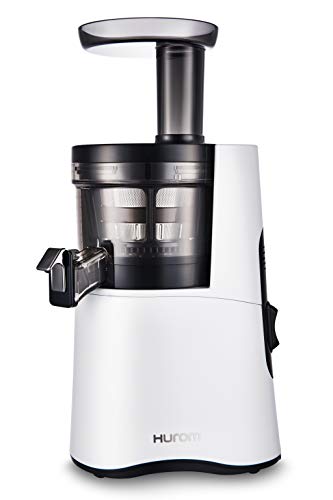
2. Hurom H-AA Slow Juicer
A vertical slow juicer from a brand known for the design. It has a compact footprint and a self-feeding style that suits citrus, soft fruit and vegetables.
Suits: small counters. Strengths: a tidy vertical build. Weaknesses: parts to wash after use. Skip it if you juice large batches.

Best for people who dislike chopping
3. Kuvings EVO820 Whole Slow Juicer
A vertical slow juicer with a wide feed chute meant to take whole or lightly cut produce. A slow auger keeps the juice smooth.
Suits: people who dislike chopping. Strengths: a wide chute and quiet running. Weaknesses: a taller body that needs headroom. Skip it if you have a low shelf.
Best for modern kitchens
4. Nama J2 Cold Press Juicer
A sleek vertical juicer with a large chute and a design focused on whole-fruit juicing. It aims to cut prep time while keeping the pulp dry.
Suits: modern kitchens. Strengths: a large chute and a clean look. Weaknesses: a bulky size on small counters. Skip it if you want a smaller machine.
Best for wheatgrass and greens
5. Tribest Greenstar Elite GSE-5000
A horizontal twin-gear juicer that presses produce between two gears. It is often chosen by people who juice wheatgrass and leafy greens daily.
Suits: wheatgrass and greens. Strengths: thorough pressing. Weaknesses: more parts to clean. Skip it if you juice only occasionally.
View Tribest Greenstar Elite on Amazon

Best for speed and convenience
6. Breville Juice Fountain Cold
A fast centrifugal juicer with a wide chute and a quick finish. Choose it if you want a glass in minutes and do not mind more noise.
Suits: speed and convenience. Strengths: a quick start to finish. Weaknesses: louder and less efficient on greens. Skip it if you mostly juice leafy greens.
Care and Setup
- Rinse the strainer and auger right after juicing before pulp dries.
- Use the supplied brush on the screen mesh.
- Cut hard produce into pieces that fit the chute.
- Store the parts dry and fully assembled once clean. Wipe the housing with a damp cloth only.
Mistakes to Avoid
- Forcing produce down the chute too fast.
- Letting pulp dry on the screen.
- Buying a vertical model when you want a horizontal one for greens.
- Running citrus through a machine not designed for it.
Vertical, Horizontal, Twin-Gear and Centrifugal: Which Design Fits
Premium juicers come in four broad shapes, and each trades convenience against efficiency. Vertical slow juicers stand upright, usually with a wide chute and a pressing auger that drops pulp out the side. They tend to take less counter width, handle soft fruit and citrus comfortably, and often clean up quickly because the parts stack together. Horizontal slow juicers lay the auger on its side, which many people prefer for leafy greens, wheatgrass and herbs, because the produce is pushed along and squeezed rather than relying on gravity. They also tend to offer extra attachments for pasta, nut butters or frozen treats, though the exact accessories depend on the model.
Twin-gear juicers use two interlocking gears to press produce, and are often chosen by people who juice greens and wheatgrass every day and accept more parts to wash. Centrifugal machines shred produce on a fast spinning disc and strain it, finishing in a minute or two with a wide chute but with more noise and usually wetter pulp. Choose by what you put in the glass most often: soft fruit and quick mornings point toward a vertical or centrifugal model, while daily greens point toward horizontal or twin-gear. If you are unsure, a vertical slow juicer is a common middle ground.
Matching the Machine to Your Produce
Different produce behaves differently inside a juicer, so it helps to list what you actually buy. Hard roots such as carrots and beets need a strong auger and may need cutting into smaller pieces to avoid straining the motor. Leafy greens and herbs are fibrous and light, so they are best folded or rolled into a bundle and alternated with watery produce such as cucumber or apple so the screw can grip them. Citrus can be juiced in many slow machines, but peel the thick rind and pith if the manual advises it, since bitter oils can flavor the juice.
- Soft fruits such as berries and ripe peaches produce more puree than juice in some machines; check whether a fine or coarse strainer is supplied.
- Pineapple, celery and other stringy produce may need trimming to shorter lengths.
- Pits, large seeds and hard stones should be removed unless the manual says otherwise.
- Frozen produce should be thawed or used only if the maker permits it.
Reading the manual for a list of what not to juice saves frustration and prevents damage to the screens.
Prep Time, Chute Size and Your Daily Routine
The wide feed chute on some premium models is not just a marketing feature, it determines how much time you spend with a knife. A narrow chute means cutting apples, cucumbers and carrots into thin pieces, while a wide one may take them nearly whole. Over a month that adds up to a lot of chopping, so a person who juices every morning may value a big chute more than a person who juices once a week.
Think through the whole routine rather than just the juicing minutes. Washing produce, prepping it, feeding it slowly, then disassembling and scrubbing every part can easily take longer than drinking the result. Slow juicers should be fed at a steady pace; pushing produce too fast can clog the auger or leave juice in the pulp. If your mornings are rushed, ask yourself whether you would actually use the machine on a weekday. A machine that is quick to rinse may beat a higher-yield one that you avoid using. Also check how the pulp bin and juice jug fit, and whether the unit needs lots of headroom under cabinets.
Cleaning Routine and Keeping Parts in Shape
Cleaning is the main reason people abandon expensive juicers. Rinse the strainer, auger and bowl straight after use, before fibers dry, and use the supplied brush on the screen mesh, working from the inside out so pulp is pushed away from the fine slits. Soak the parts briefly in warm water with a little mild dish soap if needed. Avoid harsh scouring pads or abrasive powders that can scratch plastic and clog the screen.
- Check the manual for which parts are dishwasher safe; some plastics warp or cloud in high heat.
- Inspect the silicone seals and wipers for tears, because worn ones let pulp bypass the screen.
- Dry all parts completely before storing them to prevent odors and mold.
- Never submerge the motor base; wipe it with a damp cloth only.
Some staining from carrots or beets is cosmetic and often fades with time or a rinse with diluted lemon juice. A juicer that starts leaking, vibrating more than before, or whose auger shows cracks or deep scratches may need replacement parts.
Warranty, Replacement Parts and Total Cost of Ownership
With a premium juicer, the price on the tag is only part of the cost. Wear parts such as strainers, seals and augers eventually need replacing, and a machine whose parts are easy to buy will outlast one whose parts are discontinued. Before you buy, check the listing or maker site for the warranty length and what it covers, whether the motor and the pressing parts are treated differently, and whether registration is required.
Think about the produce you will buy as well. Daily juicing uses a lot of fruit and vegetables, so a drier-pulp machine that extracts more from each item may pay back in the grocery budget over time, while a fast machine could cost more in produce but save time. Pulp need not go to waste: it can go into compost, soups, crackers or baking, depending on the recipe.
Signs that it is time to replace the machine include a motor that strains or smells hot, juice that suddenly comes out thin and pulpy despite a clean screen, a cracked bowl or auger, or parts you can no longer find. If you juice only occasionally, a simpler model may serve you better than a premium one, since unused equipment does not earn its space.
High-End Juicer FAQ
Are slow juicers better than fast ones?
They typically give drier pulp and quieter running, while fast juicers finish sooner. The better choice depends on what you juice and how often.
Can I juice leafy greens in any of these?
Slow and twin-gear designs handle greens best. A fast centrifugal machine may leave more juice behind in the pulp.
How long does juice keep?
Slow-pressed juice generally keeps longer than centrifugal juice, but drink it fresh for the best taste. Store it chilled and sealed.
Do I need to peel produce first?
It depends on the produce. Citrus rind and thick skins usually come off, but follow each maker’s manual.
Can I make nut milk or nut butter in a slow juicer?
Some models come with attachments for this, while others do not. Check the listing for the accessories included and the maker's guidance on nuts, since the wrong ingredients can strain the motor.
Why is my juice foamy?
Foam is common with fast centrifugal machines and with some fruit such as apples and pineapple. Skim it off or let the juice rest briefly. A slow juicer usually produces less foam.
How should I feed produce into a slow juicer?
Add pieces at a steady pace, letting the auger clear each one before adding more. Alternate soft and hard items, and fold leafy greens into a bundle. Forcing produce down can cause jams.
Is the pulp always too wet to use?
Wet pulp can mean the produce was fed too fast or the screen is clogged. Feed more slowly and check the screen after cleaning. You can often run very wet pulp through again.
Do I need to buy organic produce?
That is a personal choice. Whatever you buy, wash it well, and remove any waxy or very thick skins if the manual advises it.
How noisy is a slow juicer compared with a fast one?
Slow juicers are generally quieter, since the auger turns gradually. Fast machines spin a disc at high speed and sound more like a blender. Individual models vary, so look at recent customer feedback.
Where should I store the juicer?
A dry, level spot on the counter or in a cabinet works. Make sure the parts are fully dry and that the cord is not pinched or wrapped tightly around the base.
Understanding Yield, Pulp and Juice Quality
Premium juicers are sold on the promise of getting more from the same produce, so it helps to know what that actually means. Yield is the amount of juice you extract from a given weight of fruit or vegetables. It depends on the machine, but also on the produce itself: citrus and watermelon are mostly water, carrots and apples give a good return, and leafy greens give far less per handful. Comparing yield between machines is only meaningful when the same produce is used, so be cautious about any claim that gives a single percentage without context.
Pulp is the clue you can see. A drier pulp usually means more liquid was pressed out, while wet, juicy pulp suggests some juice went out with the waste. That said, a very dry pulp is not automatically better. Pressing too hard can add bitterness from skins and fibers, and some people prefer a smoother, lighter juice over a thicker one. Different screens or strainers, where offered, change how much pulp passes into the glass.
Juice quality is also about what happens after extraction. Slow machines add less air, so juice tends to separate more slowly, while fast machines whip in air, which leads to foam and quicker separation. Juice oxidizes whatever machine you use, so drinking it soon after making it gives the best flavor. If you plan to store juice, fill a container to the top, seal it and keep it cold, and follow food safety guidance on how long to keep it.
Planning a Juicing Routine That Lasts
Many people buy a good juicer, use it enthusiastically for two weeks and then let it gather dust. The cause is usually friction, not the machine. A few habits make the difference.
- Shop for the week. Buy produce you will actually use, and wash and trim it all at once so juicing in the morning is a short task.
- Prep in batches. Cut hard items such as beets and carrots into chute-sized pieces and store them in containers, ready to go.
- Choose a time. Juicing right after breakfast cleanup, when the sink is already in use, makes the cleanup feel smaller.
- Keep the juicer out. A machine that lives in a cabinet is used far less than one that sits on the counter.
- Start with recipes you like. Fruit-heavy juices taste better than strict green blends, and you can shift the balance gradually.
A realistic plan is two or three juicing sessions a week, each producing enough for a day or two. That keeps cleaning manageable and produce fresh. If you discover you juice daily, a model with fewer parts and a wide chute becomes more valuable, and a twin-gear or horizontal design may be worth the extra cleaning for the yield it gives.
Who Should Actually Buy a Fast Centrifugal Juicer
The list includes one centrifugal machine, and it has a real audience. Centrifugal juicers shred produce against a spinning basket and fling the juice out, which makes them quick and often easier to assemble and wash. They suit people who want a glass in a few minutes, who juice mostly apples, carrots, citrus and other firm produce, and who are not trying to extract every drop from leafy greens.
They also suit people who are unsure about juicing. If you have never used a juicer, a fast machine lets you test the habit before spending more on a slow one. The trade-offs are noise, more foam and a wetter pulp. If you plan to juice kale, spinach or wheatgrass often, a slow or twin-gear machine is the better tool. If you plan to juice for a household in a hurry, speed may be worth more to you than a few extra ounces.
What to Do With Leftover Pulp
Pulp is a byproduct with uses, and thinking about it before you buy can make juicing feel less wasteful. Carrot and apple pulp can go into muffins, pancakes or quick breads. Vegetable pulp works in broths, veggie burgers and crackers. Citrus pulp is usually too bitter for most baking, but can be added to marinades or used in a compost pile. Freeze pulp in small bags so it does not spoil while you collect enough for a recipe.
Be realistic. Fresh pulp spoils quickly and takes effort to repurpose, so if you will not cook with it, compost it. Also remember that pulp from a slow juicer is drier and holds up better in recipes than the wet pulp from a fast machine.
Counter Footprint, Power and Noise at Home
Think about the space you will give the machine every day. Vertical juicers take little counter width but need headroom under cabinets, especially with a tall feed chute and a pusher. Horizontal machines are longer and take more width. Allow space for a collection jug, a pulp container and a spot to rest the pieces after washing.
Check the power rating and the cord length against your outlet. Slow juicers draw modest power, while fast machines use more. Check what the listing says about running time, because some machines are designed to run only for limited periods before they need to rest. Noise is another daily concern: a slow machine is quiet enough for early mornings, while a fast one is closer to a blender in volume.
Related guides
Frequently Asked Questions
How much produce do I need to make one glass of juice?
It varies widely by produce. Water-rich items like oranges or cucumbers give more juice than leafy greens or herbs. As a rough guide, a glass can require a few apples or carrots, or a large bunch of greens. Your machine and the ripeness of the produce also matter.
Is a high-end juicer worth it compared with a blender?
They do different jobs. A juicer separates the juice from the fiber, while a blender keeps everything and makes a smoothie. If you want a clear, thin juice and mostly use produce, a juicer is worth considering. If you want fiber and quick cleanup, a blender may fit better.
Can I freeze fresh juice?
Yes, many people freeze juice in containers or ice-cube trays, leaving room for expansion. Texture and flavor can change after thawing, so expect some difference. Use clean containers and follow food safety guidance for how long to keep it.
Does juicing remove fiber from fruit and vegetables?
Yes, most of the insoluble fiber is left in the pulp, and the juice contains the liquid and some soluble components. If fiber matters to your diet, eat whole produce as well. This is general information, not medical advice.
Juicing as a Practice: What Changes at the High End
At the high end, a juicer stops being an appliance you try and becomes a system you run, and the difference shows in the glass. Serious machines extract more completely, which means the same bag of produce yields more juice and drier pulp; they handle the difficult ingredients — leafy greens, wheatgrass, hard roots, soft fruits — without the jams and workarounds that teach owners of lesser machines to quietly narrow their repertoire to oranges and apples. And they do it at a pace and a volume that make juicing a sustainable daily practice rather than a weekend production, which matters because the entire value of juicing lives in its regularity.
The practice has a rhythm worth describing. Produce is washed and staged, the machine runs in a steady sequence from soft to hard so each ingredient helps push the last through, and the juice is drunk fresh or stored cold and full to the brim for the shortest honest time. Cleanup follows immediately, while pulp is wet and forgiving. Owners who build that rhythm finish the whole ceremony in the time a coffee drinker spends on a pour-over; owners who let pulp dry onto a fine mesh screen discover the one chore that has ended more juicing habits than any other, and it is entirely a chore of postponement.
That is the lens for every machine in this guide: not which produces a marginally better glass on a demonstration day, but which one a real household will still be running, happily, on an ordinary morning three years from now. Design, cleaning geometry and the honesty of the feed chute matter more to that outcome than any laboratory yield figure.
The Six Machines and the Juicers They Suit
The Omega J8006HDS Nutrition Center is the horizontal masticating school at its most established: a slow auger that presses produce through with patience, handling greens and wheatgrass with the authority that made this format famous, and doubling in many kitchens as a food-processing helper for nut butters and extruded shapes. It suits the methodical juicer — the one whose basket holds kale and ginger as often as apples — and who values extraction and versatility over raw speed.
The Hurom H-AA brings the vertical slow-juicer philosophy to a design-led point: produce feeds from above, the auger works in a compact tower, and the whole machine presents itself as kitchen furniture rather than equipment. Its juicer is the design-conscious daily drinker who wants slow-pressed quality without surrendering the counter’s looks. The Kuvings EVO820 answers the vertical format’s classic frustration — prep — with a wide mouth that accepts produce in larger pieces, which suits the high-volume household juicing for several people, where minutes of knife work per session are the difference between a habit and a chore.
The Nama J2 has built its following on the batch: load the hopper, let the machine work through a full recipe largely unattended, and return to juice ready and pulp ejected. For the meal-prep household that juices several days’ worth in one session, that hands-free character is not a gimmick but the entire proposition. The Tribest Greenstar Elite is the twin-gear maximalist, pressing produce between two gears with an extraction thoroughness aimed at the committed — the juicer for whom greens, wheatgrass and maximum yield are the point, and for whom a longer session and a more involved cleanup are fair prices. The Breville Juice Fountain Cold flies the centrifugal flag at the high end: genuine speed, a wide chute, and a design that keeps the juice’s temperature rise in check, for the household that wants a glass in two minutes and will trade the last degree of extraction for a machine that fits between waking and leaving.
None of these is the best juicer. Each is the best answer to a different morning: the methodical press, the beautiful press, the wide-mouth press, the batch press, the maximal press and the fast spin. Name your morning and the guide has already chosen for you.
Building Recipes the Machine Will Love
Great juice is architecture: a watery base for volume, a sweet element for generosity, a green or earthy element for depth, an acid for brightness and a spark — ginger, mint, a squeeze of citrus at the end — to wake the whole glass up. Machines differ in how they treat each layer. Slow presses coax greens into genuine contribution rather than green-tinted water, which is why kale and spinach appear in the repertoires of masticating owners and quietly vanish from centrifugal households that grew tired of pale results. Hard roots reward every format but demand respect at the feed chute: steady pressure, alternating with softer pieces, keeps the auger or the basket working in its rhythm rather than its limit.
Sequence is the recipe inside the recipe. Soft produce first, while the machine is fresh; hard produce after, to scour the soft pulp through; leafy greens rolled or packed between firm pieces so the machine can grip them; citrus peeled, because its oils turn bitter under pressure in quantities the palate did not invite. A juicer run this way produces a cleaner-tasting glass and a cleaner machine, and the pulp emerges drier — the visible signature that the extraction did its work.
Finally, drink juice like a cook, not like a patient. Taste and adjust: a pinch of salt deepens a green juice mysteriously, a few drops of citrus rescue a flat one, and dilution with a little water or ice is no confession of failure but the same seasoning judgment a bartender makes. The high-end machine’s contribution is to give you a full-flavored, fully extracted base to season from. What you build on it is your palate’s business, and it improves with every glass you bother to taste critically.
The Economics and Ecology of a Juicing Habit
A serious juicer changes a household’s produce arithmetic, and it is worth facing the numbers with clear eyes. Juicing consumes vegetables and fruit at a rate that surprises new owners — a single generous glass can hold the produce of a small market bag — and the habit is therefore a commitment to buying well and often. The households that thrive with these machines plan for it: they buy in season, when flavor and price align; they keep a standing order of the workhorse ingredients; and they treat the juicer as the destination for the market’s abundance rather than an occasional guest at it.
The pulp question belongs in the same honest accounting. A high-end machine leaves pulp drier, which is yield won, but pulp still exists, and the satisfied households are the ones with a plan for it: vegetable pulp into soups, stocks and savory bakes; fruit pulp into muffins and compotes; the remainder to compost without guilt. A juicer whose pulp has a destination feels like part of a kitchen’s economy. A juicer whose pulp is pure waste quietly taxes its owner’s conscience at every session, and habits taxed that way rarely survive the year.
Set against that, the machine’s own longevity is the good news of the category. The makers in this guide build for years of service, with the screens, augers and seals that wear available as parts rather than as obituaries. A juicer bought at this level and used daily amortizes itself into a modest daily cost while returning the freshest juice a household can obtain without a juice bar’s queue. The economics work when the practice works — which returns, as every section of this guide does, to the same conclusion: choose the machine your real mornings will run, and run it.
Storage, Freshness and the Honest Shelf Life of Juice
Fresh juice is a living thing on a short clock, and a high-end machine does not repeal that — it merely gives you a better starting point. Exposure to air is the enemy from the moment the juice leaves the spout, which is why the experienced juicer’s storage rules are all variations on one theme: fill the container to the very brim so no air rides along, seal it immediately, keep it as cold as the refrigerator allows, and treat a day as the outer horizon for quality even when safety would permit longer. Slow-pressed juice, made with less incorporated air, generally keeps its character a little more gracefully than a fast-spun glass, but both are at their best in the first hours, and the household that juices for the moment will always out-drink the one that juices for the week.
Freezing is the underused extension of that logic. Juice frozen promptly in small portions, thawed overnight in the refrigerator, keeps far more of its character than juice merely refrigerated for days, and it suits the batch-oriented machines in this guide particularly well — a Sunday session can stock a week of mornings without asking any single glass to grow old. Freeze in the portions you drink, leave a little headspace for expansion, and label with the recipe and the date, because frozen green blocks are anonymous in a way that defeats even confident memories.
When a High-End Juicer Is More Than You Need
A fair guide ends its enthusiasm with a boundary. If your juicing is a glass of orange juice on a Sunday, the machines in this guide are magnificent overkill, and a simple citrus press will serve the ritual better and clean in seconds. If your household’s produce mostly arrives as smoothies in waiting, a blender keeps the fiber that juicing removes, and for many drinkers that fiber is the point. And if no one in the home will wash a screen within the hour, the finest juicer here will become a monument within a month.
The high-end juicer earns its counter when juice itself — fresh, green, varied, extracted properly — is a standing pleasure of the house, drunk often enough that yield, versatility and cleaning geometry compound daily. Households in that description will find one of these six machines among the most satisfying purchases in their kitchen. Households outside it should buy the simpler tool without a whisper of shame, and drink their occasional glass with the clean conscience of a well-matched purchase.
The Cleaning Geometry Tour: What to Inspect Before You Buy
Since cleaning decides whether a juicer lives or dies in a real kitchen, it deserves the same scrutiny as extraction. Look first at the screen or strainer, the part that meets the pulp most intimately: how fine is its mesh, how does it come out, and can it be rinsed clean under a tap with a soft brush in under a minute? Look at the pulp path next — the route from pressing chamber to pulp bin should be short, smooth and free of corners where wet fiber can pack and hide. Then count the parts that must be washed after every session and imagine washing them at your least energetic hour, because that is the hour that decides the habit.
Dishwasher claims deserve a careful read rather than a headline’s trust. Parts described as dishwasher safe often carry a top-rack qualification, and plastics that survive a dishwasher can still cloud and tire across a year of cycles. Most devoted juicers end up hand-washing by choice, because it is faster than loading and the parts return to the machine immediately, ready for the next session. The juicer that wins the cleaning tour is rarely the one with the fewest parts on paper; it is the one whose parts rinse clean with the least persuasion, dry without trapping water, and reassemble in an order your hands memorize within a week.
A First Fortnight With a Serious Juicer
Give a new machine a deliberate first fortnight and it will teach you its character while your enthusiasm is high enough to pay attention. Juice daily if you can, even small amounts, and vary the cast: a hard root day, a greens day, a soft fruit day, a batch day if your machine allows it. Note what jams, what flies through, what the pulp looks like and how long cleanup honestly takes. By the end of two weeks you will know your machine’s appetites and your household’s real consumption, which are the two facts that turn a purchase into a practice.
Expect the second week to be faster than the first in every respect — prep, juicing, cleaning, even shopping, because you will finally know what a week of juice actually eats. That acceleration is the quiet promise of the whole high-end category: not a better first glass, though you will likely get one, but a tenth glass, and a hundredth, that arrive with the ease of a routine mastered. Choose the machine whose routine you can picture yourself enjoying, and the fortnight will do the rest.
The Recipe Card on the Refrigerator
Every lasting juicing household develops a short canon: three or four combinations that are made so often they live on a card on the refrigerator rather than in a book. A green standard, a root-and-citrus standard, a fruit standard for guests and children, and one wildcard the household treats as its signature. The canon matters because it removes the daily decision — the friction that kills habits is rarely the juicing and often the choosing — and because a known recipe can be shopped for, prepped and run almost without thought, which is what a morning routine requires.
Build the canon by keeping what survives repetition. A juice that dazzles once and palls by the third glass is a guest recipe; a juice the household requests on a tired Wednesday is a canon recipe. Write the proportions down as you settle them, in handfuls and pieces rather than laboratory measures, because juicing is a produce-driven craft and its units are the market’s. With a canon on the door and a machine chosen for your mornings, the practice this guide has been describing stops being an aspiration. It becomes breakfast.
Listening to the Machine
Experienced juicers run their machines partly by ear, and a new owner can borrow the skill from the first session. A juicer working in its comfort has a steady voice: the auger turning at its unhurried pace, or the centrifugal basket humming at a constant pitch as produce meets it in a rhythm. Strain announces itself honestly — a slowing note, a new vibration through the counter, the sound of the machine negotiating rather than processing. The correct response is always the same: pause the feeding, let the machine clear what it holds, and resume with smaller pieces or a softer ingredient to help the hard one through.
That listening habit protects more than the motor. It protects the juice, because produce forced through a struggling machine emerges as a hotter, foamier, less cleanly separated glass, and it protects the habit itself, because a jam cleared calmly is an incident while a jam fought is a story the owner tells as a reason to stop. Machines in this guide are built to be understood this way — their sounds are information, offered freely, to an owner willing to learn the language of the particular machine on their counter.
The Last Glass of the Day
There is a small, unadvertised pleasure that owners of these machines mention when the specification talk is over: the juice made for no reason, late in the day, from whatever the refrigerator offers — half an apple, the last carrots, a handful of greens, a lemon’s bright correction. A serious juicer turns that improvisation from a production into a two-minute act of kitchen grace, and it is in those unplanned glasses, more than in any regimen, that the machine proves it has become part of the household rather than a guest in it. Buy the juicer that fits your mornings, keep its screen clean and its canon on the refrigerator door, and those glasses will keep appearing — which is to say, the habit will have taken, and the purchase will have become what it was always meant to be.
And when it has taken, notice what it does to the kitchen around it: the produce drawer stays stocked and turns over, the market list writes itself, and mornings acquire a small ceremony of color and cold that no one in the house would trade back. That is the real yield of a high-end juicer — measured not in ounces per apple, but in a household that drinks the garden on purpose, most days, for years.
The Short Version
For greens and versatility, the Omega J8006HDS. For a compact vertical, the Hurom H-AA. For a wide chute, the Kuvings EVO820. For a sleek large chute, the Nama J2. For twin gears, the Tribest Greenstar Elite. For speed, the Breville Juice Fountain Cold. Whichever you pick, rinse it promptly.

