Disclosure: topratedkitchenware.com is reader-supported. When you buy through links on our site, we may earn an affiliate commission from Amazon and other retailers, at no extra cost to you.
Where to buy
The six models below are the verified picks for this guide to best home bbq smokers. Each name links to its Amazon listing, where you can check the latest price on Amazon, confirm the current configuration, and read the newest owner feedback before you decide.
- Masterbuilt 30-Inch Analog Electric Smoker MB20070210
- EAST OAK 30-Inch Electric Smoker, Matte Black
- EAST OAK 30-Inch Electric Smoker, Polar Night
- Royal Gourmet SE2805 28-Inch Electric Smoker
- Traeger Pro 22 Wood Pellet Grill and Smoker
- Pit Boss 700 Carbon Series Wood Pellet Grill and Smoker
Read the full guide ↓ for the ranking logic, the honest limitations of every pick, and the buying checks that matter more than any headline claim.
Shopping for best home bbq smokers sounds simple until you stand in front of the actual choices. A home smoker can be a plug-in electric cabinet that asks almost nothing of you, or a wood pellet grill that smokes, roasts, and bakes from one fire. Both styles cook wonderful food at home, but they suit different yards, different schedules, and different ideas of what a Saturday should feel like. This guide is built for home cooks first: people cooking on patios, decks, and driveways, feeding families and neighbours, and learning brisket, ribs, pulled pork, and smoked chicken in real conditions rather than competition ones.
The six verified picks below split into two families. Four are vertical electric smokers from Masterbuilt, EAST OAK, and Royal Gourmet, chosen for steady low-and-slow cooking, modest footprints, and controls a beginner can learn in one afternoon. Two are wood pellet grill-and-smoker combinations from Traeger and Pit Boss, chosen for households that want one machine to smoke a pork shoulder on Sunday and grill burgers on Tuesday. Every pick gets a detailed review with strengths, trade-offs, a spec summary drawn only from verified listing data, and a plain statement of who should skip it. You will also find a comparison table, a full buying guide, a practical how-to section with troubleshooting, and answers to the questions home buyers ask most. If your household leans toward plug-in simplicity, our notes on Best Home Electric Smokers sit naturally alongside this guide.
Key Takeaways
- Decide the fuel question first: electric cabinets are the easiest way to hold low smoking temperatures at home, while pellet grills add grilling, roasting, and baking in the same machine.
- Cooking area in square inches is the honest capacity number; the picks here range from a compact 454 square inches to a generous 725, and that spread decides how many racks of ribs cook at once.
- A side wood chip loader matters more than it sounds, because it lets you add smoke wood without opening the door and dumping heat during a long cook.
- A built-in meat probe takes the guesswork out of doneness for thick cuts, and it is the feature beginners appreciate most after their first brisket.
- Plan where the smoker will live before you buy: vertical electric models need little floor space but still need a covered, ventilated outdoor spot near an outlet.
- Check the latest price on Amazon for each pick before deciding, and confirm the exact configuration on the listing, because bundles and finishes change.
In this guide
Quick Picks
Here is the short version. Every badge used in this table is repeated in the detailed review of the same model further down, so the recommendation you see here is the one we defend there.
| Pick | Badge | Standout trait | Link |
|---|---|---|---|
| Masterbuilt 30-Inch Analog Electric Smoker MB20070210 | Best Budget Pick | Simple analog control and chrome racks in a compact cabinet | Check on Amazon |
| EAST OAK 30-Inch Electric Smoker, Matte Black | Best Overall | 725 square inches, digital timer, and a side chip loader | Check on Amazon |
| EAST OAK 30-Inch Electric Smoker, Polar Night | Best for Entertaining | Built-in meat probe and mobility stand on the same big cabinet | Check on Amazon |
| Royal Gourmet SE2805 28-Inch Electric Smoker | Best for Small Spaces | The smallest footprint here, with three cooking grates | Check on Amazon |
| Traeger Pro 22 Wood Pellet Grill and Smoker | Most Versatile | Six cooking styles from one pellet fire, with a meat probe | Check on Amazon |
| Pit Boss 700 Carbon Series Wood Pellet Grill and Smoker | Best for Large Groups | 718 square inches and a wide temperature range on an LCD controller | Check on Amazon |
How These Picks Were Chosen
This is a research-led guide, not a lab report. We did not cook on every unit in a test kitchen, and we will not pretend otherwise. Instead, each candidate was checked against its verified Amazon listing data through the Creators API, and only models whose identity, brand, and headline specifications could be confirmed were allowed into the pool. From that verified pool we selected six smokers that cover the realistic range of home buying: entry-level electric, full-featured electric, compact electric, and pellet combinations at two sizes.
The ranking weighs what home cooks actually live with. Temperature control came first, because holding a steady low temperature for six to twelve hours is the whole job of a smoker. Capacity came second, measured in verified cooking area rather than marketing language. Smoke management came third: how wood chips or pellets are loaded, and whether reloading forces you to open the cooking chamber. Day-to-day details followed, including probes, timers, wheels, stands, windows, and how much floor space each design asks for. Features that could not be verified from listing data were left out of the spec boxes entirely rather than guessed.
One honesty note belongs here. Electric and pellet smokers are different tools that happen to share a job title. Comparing them on a single scale would mislead you, so each review judges its pick against its own family first and against the whole group second. Where a model gives something up, the trade-off list says so in plain words.
The 6 Best Home BBQ Smokers for Your Backyard
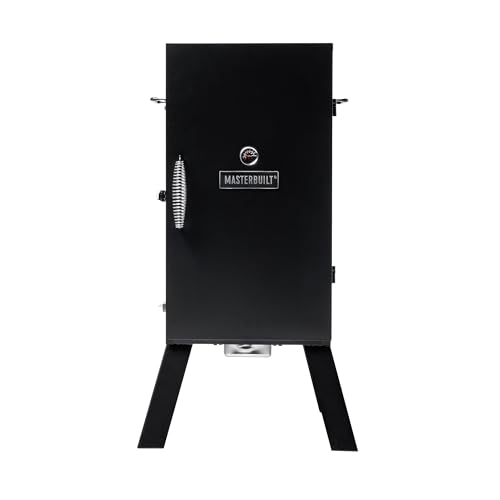
Masterbuilt 30-Inch Analog Electric Smoker MB20070210
Badge: Best Budget Pick
Strengths:
- Analog temperature control with nothing to program, update, or pair, which keeps the first cook calm for a nervous beginner.
- Chrome smoking racks across 535 square inches of cooking space, enough for a couple of pork shoulders or several racks of ribs cut to fit.
- A side wood chip loader on this Masterbuilt design lets you refresh smoke without opening the door and losing the heat you built.
Trade-offs:
- Analog control means no digital readout and no timer, so you will want a separate thermometer and your own clock discipline.
- At 535 square inches it is a mid-size cabinet; a full packer brisket may need trimming or a rack shuffle to fit comfortably.
- Electric-only cooking means no direct grilling or searing from this cabinet when you want a crusty finish.
At a glance: 30-inch vertical electric smoker; analog temperature control; chrome smoking racks; 535 square inches of cooking space; model MB20070210; black finish.
Masterbuilt has sold versions of this 30-inch electric cabinet for years, and the formula explains itself the first time you use it. You plug it in, turn a dial, load wood chips through the side loader, and the cabinet settles into the low, steady heat that turns a pork shoulder tender while you do something else with your day. For a home cook buying a first smoker, that lack of ceremony is the point. There is no fire to manage, no charcoal to light, and no app account standing between you and dinner.
The analog dial is both the charm and the ceiling of this model. It holds a working temperature well once you learn where your target sits on the dial, but it asks you to verify with your own thermometer rather than trusting a screen. Treat that as a small tuition payment: the habit of checking meat temperature independently will make every future smoker you own cook better. The 535 square inches of chrome rack space handles family-scale cooks honestly — two shoulders, a modest turkey, or ribs on multiple levels — and the vertical layout keeps the footprint kind to small patios.
Choose this Masterbuilt if you want the classic electric-smoker experience at the simplest tier of this group, and if your cooks are weekend projects rather than party production. Skip it if you already know you want digital precision, a built-in probe, or the option to grill; two picks further down this list answer each of those wants directly.
Best for: first-time home smokers who want simple, proven electric cooking / Not suited for: cooks who want digital controls, a built-in probe, or any grilling ability

EAST OAK 30-Inch Electric Smoker, Matte Black
Badge: Best Overall
Strengths:
- A full 725 square inches of cooking area, the joint-largest electric capacity in this guide, so big batches cook in one run.
- A digital 12-hour timer that suits overnight and all-day cooks, paired with push-button temperature setting instead of a dial.
- A side chip loader rated by the maker for up to six times longer smoking on a single load, plus easy-rolling wheels for moving the cabinet.
Trade-offs:
- No built-in meat probe on this version, so doneness checks need your own thermometer.
- No viewing window, which means opening the door when curiosity wins, and every opening costs heat and time.
- The larger cabinet is still a cabinet: it smokes beautifully and grills not at all.
At a glance: 30-inch vertical electric smoker; 725 square inches of cooking area; digital control with 12-hour timer; side wood chip loader; easy-rolling wheels; matte black finish.
If one electric smoker in this group earns the default recommendation, it is this EAST OAK. The specification reads like a list of answers to the complaints owners make about entry-level cabinets. Capacity is generous at 725 square inches, so a holiday ham and a tray of smoked sides are not competing for the same rack. The digital timer stretches to twelve hours, which covers the honest length of a brisket cook without mid-cook restarts. The side chip loader stretches each load of wood further, and the wheels mean the cabinet can live against a garage wall and roll out when it is time to cook.
What lifts it above the simpler Masterbuilt is control you can repeat. Digital setting turns last month’s successful ribs into a procedure instead of a memory: same temperature, same timer, same chip routine. New smokers underestimate how much that repeatability matters. Barbecue has enough variables in the meat and the weather; a controller that removes two of them is worth real money in confidence, even though we talk about tiers here rather than figures.
The gaps are fair ones. There is no integrated probe, and no window, so this is a smoker you run by schedule and spot checks rather than by watching. Add a good instant-read thermometer to your kit and the objection mostly dissolves. For households that want the fullest electric feature set short of a probe model, this is the centre of the list, and the Polar Night version reviewed next is its closest relative.
Best for: home cooks who want the most complete electric smoker for regular family and party cooking / Not suited for: buyers who insist on a built-in meat probe or a viewing window
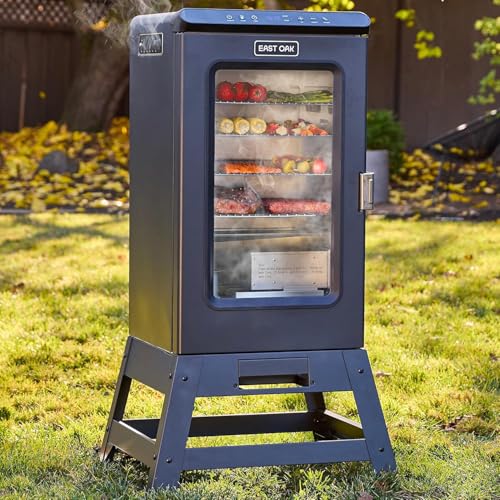
EAST OAK 30-Inch Electric Smoker, Polar Night
Badge: Best for Entertaining
Strengths:
- A built-in meat probe, so the cook can follow internal temperature on the cabinet instead of opening the door to check.
- The same 725 square inches of cooking area as the matte black model, sized for entertaining batches rather than single meals.
- A mobility stand that raises the cabinet to a comfortable working height and makes repositioning it a one-person job.
Trade-offs:
- It sits in a higher tier than its matte black sibling, and the difference buys the probe and stand rather than more cooking space.
- Like the rest of the electric family here, it cannot grill, sear, or bake the way the pellet models below can.
- The stand adds presence; measure your storage corner before assuming it tucks away like the plainer cabinet.
At a glance: 30-inch vertical electric smoker; 725 square inches of cooking area; built-in meat probe; mobility stand; side wood chip loader; Polar Night finish.
Entertaining is where smokers earn their keep and where they embarrass their owners. A crowd is coming at six, the pork shoulder is the plan, and the cook’s whole stress reduces to one question: is it done, and is it done on time? This Polar Night version of the EAST OAK cabinet answers with its built-in meat probe. Internal temperature is the only honest doneness signal for large cuts, and reading it from the cabinet, with the door shut and the heat undisturbed, is the single most useful upgrade an electric smoker can offer a host.
The rest of the package supports the same role. The 725 square inches of rack space swallow party quantities: multiple shoulders, a shoulder plus ribs, or a whole smoked side-dish programme alongside the main event. The side chip loader keeps smoke rolling through a long cook without the door-opening ritual that drops cabinet temperature at the worst moments. The mobility stand sounds like a footnote until you have dragged a cabinet across a patio by its edges; on the stand, the smoker rolls to its cooking spot and presents its racks at a height that does not punish your back during loading.
Pick this model when your smoking calendar is built around gatherings, or when you simply know that a probe is the feature you will use every single cook. If you cook mostly for the household and already own a thermometer you trust, the matte black EAST OAK above gives you the same cooking area in a simpler package, and the honest difference is convenience rather than capability.
Best for: hosts who cook for groups and want probe-guided, low-stress timing / Not suited for: solo cooks who rarely fill a big cabinet and do not need a stand

Royal Gourmet SE2805 28-Inch Electric Smoker
Badge: Best for Small Spaces
Strengths:
- The most compact cabinet in this guide at 28 inches, with 454 square inches arranged over three cooking grates.
- Adjustable heat with analog control and a 1350W element, a straightforward setup that suits apartment patios and small yards.
- Vertical design keeps the floor footprint small while the three-grate layout still separates meats, vegetables, and sides.
Trade-offs:
- Capacity is the ceiling: large briskets and big party batches will outgrow this cabinet faster than any other pick here.
- Analog control again means no digital readout, timer, or probe, so your own thermometer is part of the real purchase.
- Three smaller grates mean some big cuts need trimming or creative placement compared with the 30-inch cabinets.
At a glance: 28-inch vertical electric smoker; 454 square inches of cooking space; 1350W heating element; analog temperature control with adjustable heat; three cooking grates; black finish.
Not every home has a patio that can host a growing collection of outdoor cookers, and this Royal Gourmet is the pick that respects that fact. At 28 inches with 454 square inches of cooking space, it is the cabinet for a townhouse deck, a rental yard, or a balcony-adjacent setup where the smoker shares space with chairs, plants, and actual human beings. The three-grate layout is the smart part: capacity in a vertical smoker is about levels as much as area, and three levels let a small household smoke chicken on one, corn on another, and a pan of beans catching drippings below.
The 1350W element and analog adjustable heat keep the machine honest and simple. There is nothing here you cannot understand at a glance, and for cooks whose smoking ambitions run to weeknight chicken, weekend ribs for four, and the occasional small shoulder, there is nothing important missing either. What you give up is headroom. The first time you volunteer to smoke for a dozen people, this cabinet will make you cook in relays, and that is the moment its owners start reading guides like this one again with different eyes.
Buy it as a deliberate small-space choice and it will satisfy for years. Buy it as a compromise while secretly wanting party capacity and it will frustrate within a season. That distinction, more than any specification, is what this badge is trying to tell you. Readers comparing the wider electric field will also find our Best Home Electric Smokers notes useful, because this model anchors the compact end of that conversation.
Best for: small households, renters, and tight patios that still want real smoked food / Not suited for: cooks who host large groups or smoke full-size briskets often

Traeger Pro 22 Wood Pellet Grill and Smoker
Badge: Most Versatile
Strengths:
- Six-in-one cooking from one pellet fire: grill, smoke, bake, roast, braise, and barbecue across 572 square inches.
- A maximum temperature of 450°F, which carries the machine from low-and-slow smoking up into genuine roasting and grilling heat.
- An 18 lb pellet hopper and a meat probe, so long cooks run with fewer refills and doneness is measured, not guessed.
Trade-offs:
- Pellet cooking is a fuel habit: you will buy, store, and keep dry a steady supply of wood pellets, unlike a plug-in cabinet.
- The grill format takes more floor space than any vertical cabinet here, and it lives outdoors in the weather.
- Smoke flavour at grilling temperatures is milder than a dedicated low-and-slow cabinet cook; it is a spectrum, not two machines.
At a glance: Wood pellet grill and smoker; 572 square inches of cooking space; six-in-one versatility (grill, smoke, bake, roast, braise, barbecue); meat probe included; 450°F maximum temperature; 18 lb pellet hopper.
The Traeger Pro 22 is the pick for the household that wants one outdoor cooker rather than a fleet. Its six-in-one pitch is easy to mock and hard to argue with after a month of ownership: the same fire that holds a pork shoulder at smoking temperature all afternoon will bake a pizza on Friday, roast a chicken on Sunday, and grill burgers in between. For homes where the smoker must also be the grill, that breadth is not a bonus feature. It is the entire buying case.
Pellets change the daily experience in ways worth naming. Flavour comes from real wood fire, metered by an auger, so the cook tastes closer to traditional barbecue than an electric cabinet produces, while the effort stays close to electric. The 18 lb hopper stretches refills on long cooks, the probe keeps doneness honest, and the 450°F ceiling means the machine is never trapped in the low-temperature corner. Readers who have compared Best Home Gas Smokers with pellet models will recognise the trade: gas is instant and clean, pellets are wood-fired and broader, and this Traeger is the broadest single cooker in the present guide.
Its limits are the honest limits of the format. It is a grill-shaped object that needs grill-sized space and a cover. Pellet quality and dry storage become your problem. And a purist chasing the deepest smoke ring on a competition brisket may still prefer a dedicated smoker. For the far larger group of home cooks who want smoked food as part of a varied outdoor kitchen, the Pro 22 is the most complete answer here.
Best for: households replacing a grill and a smoker with one wood-fired machine / Not suited for: small patios, or buyers who want a set-and-forget cabinet with no fuel to store

Pit Boss 700 Carbon Series Wood Pellet Grill and Smoker
Badge: Best for Large Groups
Strengths:
- 718 square inches of cooking space, the largest grill-format capacity in this guide, ready for crowd-sized batches.
- A wide 180°F to 500°F temperature range on an LCD digital controller, from gentle smoke up to serious searing heat.
- A meat probe included, with a 13.5 lb pellet hopper feeding long cooks between refills.
Trade-offs:
- The 13.5 lb hopper is smaller than the Traeger’s, so the longest cooks may ask for a top-up.
- It is the biggest footprint in the guide; small decks should measure twice before falling for the capacity.
- Like every pellet grill, it ties you to pellet supply and dry storage, and to more moving parts than an electric cabinet.
At a glance: Wood pellet grill and smoker; 718 square inches of cooking space; LCD digital controller; 180°F to 500°F temperature range; meat probe included; 13.5 lb pellet hopper; black finish.
Where the Traeger argues versatility, this Pit Boss argues scale and range. The 718 square inches of cooking space put it in party territory: multiple chickens, a brisket with company, or a grill load of burgers without cooking in shifts. The temperature span tells the same story at both ends. The 180°F floor is a true smoking temperature for fish and cheese-adjacent projects, and the 500°F ceiling is real searing territory, the kind of heat an electric cabinet simply does not attempt. One machine covering that span is why pellet grills keep winning converts at home.
The LCD digital controller is the working heart of the design, presenting temperature as a number you can return to rather than a position you estimate, and the included meat probe closes the doneness loop the same way the better electrics do. Around those controls, the compromises are visible and fair. The hopper holds 13.5 lb of pellets, adequate for most cooks but not the marathon champion of this list, and the grill’s physical size is the price of its cooking area. Neither fact is hidden in the listing, and neither should surprise a buyer who measures their space first.
Choose the Pit Boss 700 when your cooking regularly involves a crowd, or when you want one pellet grill whose range runs from the gentlest smoke to a hard sear. Households cooking for two on a narrow deck will find its virtues mostly theoretical, and the compact Royal Gourmet or a 30-inch EAST OAK will serve them better in the space they actually have.
Best for: big households and entertainers who want pellet capacity plus a wide temperature range / Not suited for: small spaces, or minimalists who prefer a plug-in cabinet with no fuel logistics
Comparison Table
The table below lines the six picks up on the attributes that decide daily life with them. All figures come from the verified listings; where a model does not claim a feature, the table says so rather than filling the gap.
| Model | Type | Cooking area | Control | Notable feature | Link |
|---|---|---|---|---|---|
| Masterbuilt MB20070210 | Electric vertical | 535 sq in | Analog dial | Side wood chip loader, chrome racks | Check on Amazon |
| EAST OAK Matte Black | Electric vertical | 725 sq in | Digital, 12-hour timer | Side chip loader, wheels | Check on Amazon |
| EAST OAK Polar Night | Electric vertical | 725 sq in | Digital | Built-in meat probe, mobility stand | Check on Amazon |
| Royal Gourmet SE2805 | Electric vertical | 454 sq in | Analog, adjustable heat | Three grates, 1350W element | Check on Amazon |
| Traeger Pro 22 | Wood pellet grill | 572 sq in | Digital pellet controller | Six-in-one cooking, 18 lb hopper | Check on Amazon |
| Pit Boss 700 Carbon | Wood pellet grill | 718 sq in | LCD digital controller | 180°F to 500°F range, meat probe | Check on Amazon |
How to Choose the Right Home BBQ Smoker
Start with fuel, because fuel is lifestyle. An electric vertical smoker is an appliance: plug it in, set it, and let a heating element and a tray of wood chips do the work. It asks for an outdoor outlet, a dry spot, and almost no fire skills, which is why four of our six picks are electric. A pellet grill is a wood fire with a thermostat: an auger feeds pellets into a fire pot, and you get real combustion flavour plus grilling range, at the cost of buying and storing fuel. Neither is better in the abstract. The right answer is the one whose weekly routine you will actually enjoy.
Size by your biggest honest cook, not your average one. Cooking area in square inches translates roughly like this in the vertical cabinets: the 454 square inch class feeds a small household’s ribs-and-chicken rhythm; 535 square inches covers family cooks with a little planning; 725 square inches is where two large cuts or a main plus sides stop negotiating. On the pellet side, 572 square inches grills for a family and smokes a brisket, while 718 square inches is crowd equipment. Remember that vertical smokers multiply area across racks, which suits tall stacks of smaller items, while grill-format area is a single broad surface that suits big flat cuts.
Control style decides your learning curve. Analog dials, like those on the Masterbuilt MB20070210 and the Royal Gourmet, are simple and repairable but report nothing; pair them with your own thermometer and they perform honestly. Digital controls, like the EAST OAK timer models and the pellet controllers, trade a little complexity for repeatability. A built-in meat probe is the single control feature we would protect in any budget: it converts doneness from folklore into a number, and it appears on the EAST OAK Polar Night, the Traeger, and the Pit Boss for exactly that reason.
Smoke management separates pleasant smokers from fussy ones. In an electric cabinet, the question is how chips are loaded. A side loader, fitted to both Masterbuilt and EAST OAK designs here, lets you add wood without opening the door; every door opening dumps heat and stretches the cook. In a pellet grill the question is hopper size and pellet quality: an 18 lb hopper outlasts a 13.5 lb one on overnight cooks, and dry, fresh pellets smoke cleaner than a bag that spent a humid season in the garage.
Finally, place the smoker before you buy it. Measure the footprint, the door swing on cabinets, and the distance to your outlet or pellet storage. All smokers belong outdoors in ventilated space, away from walls and overhangs, and most behave best under some cover. A smoker that fits your space and your habits will be used weekly; a technically superior one that fights your patio will be used twice.
How to Use, Clean, and Troubleshoot Your Smoker
First cook: season before you feast. Whatever style you buy, run it empty once before food goes in. Wipe the racks, run the smoker at a moderate smoking temperature with a load of chips or pellets, and let it burn off manufacturing residues while you learn how the controls respond. This is also your rehearsal: watch how long the cabinet takes to settle, and note the dial position or digital setting that holds your target.
A standard low-and-slow session, step by step. First, load the water pan if your electric model uses one, since the moisture steadies temperature and keeps surfaces from drying. Second, load wood chips in the tray or loader — a modest handful is enough; oversmoking is the beginner’s most common flavour error. Third, preheat to your target temperature with the door closed. Fourth, place the meat on the racks with space between pieces, insert a probe into the thickest part if your model has one, and close the door. Fifth, resist opening it. Check the probe reading, the timer, or the pellets on schedule, and add chips through the side loader only when the smoke visibly fades. Sixth, rest the meat after it comes off; large cuts need that pause to settle their juices.
Cleaning is short if it is routine. Empty ash and cooled grease after each cook, wash racks and drip trays with hot soapy water, and wipe the interior while it is warm rather than letting residue bake into varnish over a season. Pellet owners should vacuum the fire pot regularly and keep the hopper free of pellet dust. Electric owners should keep the element and the chip tray clear of built-up ash, and check the door seal for gaps that leak heat.
Troubleshooting, in the pattern that fixes most home smoker problems:
- Problem: temperature will not hold steady → check the door seal and wind exposure first, then confirm the chip tray or fire pot is not choked with ash; move the smoker out of direct wind before blaming the controller.
- Problem: food tastes bitter or acrid → you are oversmoking; use fewer chips, let the smoke run thin and pale before loading food, and make sure old residue is not burning off the walls into the new cook.
- Problem: meat stalls and the cook runs hours long → the stall is normal for large cuts as moisture evaporates; hold your temperature, keep the door closed, and plan future cooks with a wider time buffer rather than cranking the heat.
Electric Cabinets and Pellet Grills: Living With Each Style
A season with an electric cabinet teaches you its rhythm quickly. Cooks start with a plug and a dial, the smoke is gentle and controllable, and cleanup is a tray and a wipe. The cabinet’s world is low and slow: it will not brown a steak, and it does not pretend to. Owners who thrive with electrics are planners who value a quiet, repeatable process, and households where a dedicated grill already exists for the fast and hot work. If that is your kitchen, the electric half of this list is not the compromise option; it is the correct one.
A season with a pellet grill teaches a different rhythm. The machine becomes the backyard’s main cooker, and the smoker question merges with the grill question. You will think about pellets the way charcoal cooks think about charcoal: which wood for which meat, where the dry storage lives, when the hopper needs attention. In exchange, weeknight cooking joins weekend smoking in one appliance, and guests get grilled food in summer and smoked food in autumn from the same fire. The Traeger and Pit Boss in this guide differ mainly in scale and emphasis, and choosing between them is mostly choosing your crowd size.
Some households eventually own one of each, using the cabinet for dedicated long smokes and the pellet grill for everything else. That is a fine destination, but nobody needs to start there. Start with the style that matches the cooking you already do, and let the second machine, if it ever comes, be bought with experience instead of speculation. Readers curious about the gentler end of the craft will find Best Home Cold Smokers a useful detour, since cold smoking is the technique these hot smokers deliberately do not attempt.
Common Buying Mistakes
- Buying capacity for a fantasy crowd. If twelve people eat at your house twice a year, rent the day with a second cook on your grill rather than storing a huge smoker for the other fifty weekends.
- Ignoring the probe question. A smoker without any thermometer plan produces guesswork barbecue. Either buy a model with a built-in probe or budget for a good thermometer from day one.
- Judging smoke by volume. Thick white smoke is not the goal; it carries the bitter flavours. The right smoker run well produces a thin, steady smoke, which is why chip loaders and clean fires matter.
- Forgetting the outlet and the weather. Electric smokers need power where they stand, and every smoker in this guide belongs outdoors under ventilation. A perfect machine in an impossible spot is a bad purchase.
- Chasing the longest feature list. Timers, windows, stands, and probes each solve a real problem, but only the problems you actually have. The best home bbq smokers for your neighbours are not automatically the best for you.
- Skipping the seasoning run. The first cook on an unseasoned smoker can carry off-flavours from manufacturing. One empty burn protects your first brisket.
Final Recommendation
For most households, the EAST OAK 30-Inch Electric Smoker in Matte Black is the home smoker we would buy first: the big 725 square inch cabinet, the digital timer, and the side chip loader answer the everyday needs of family smoking with the least fuss, and its trade-offs are the easiest to live with. If a built-in probe and a proper stand would make your entertaining calmer, step up within the same family to the EAST OAK Polar Night, which keeps the capacity and adds exactly those two comforts.
Choose differently when your situation differs. The Traeger Pro 22 is the right answer when one machine must grill and smoke, and the Pit Boss 700 earns its place when your cooks regularly feed a crowd across a wide temperature range. The Masterbuilt analog cabinet remains the honest starting point for a first smoker on a simple brief, and the Royal Gourmet is the pick that respects a small patio. There is no wrong door among the six; there is only the door that fits your yard, your crowd, and your patience.
Related guides
Frequently Asked Questions
What is the best type of smoker for a beginner at home?
A vertical electric smoker is the gentlest start, because it removes fire management from the learning curve and lets you concentrate on meat, seasoning, and timing. The Masterbuilt analog model in this guide is the simplest version of that idea, while the digital EAST OAK models add repeatability. Pellet grills are also beginner-friendly, but they ask you to manage fuel as well.
How much cooking space does a home smoker really need?
Match space to your largest regular cook. Around 450 to 535 square inches handles family ribs, chicken, and a single shoulder comfortably. Around 700 square inches and up is where two big cuts, or a main plus sides, cook together. Buying one size above your honest need is sensible; buying three sizes above it mostly buys storage problems.
Do electric smokers produce real smoke flavour?
Yes, because the smoke comes from real wood chips smouldering in the tray, not from a flavouring. The result is typically milder and cleaner than a charcoal fire’s output, which many home cooks prefer for chicken, fish, and cheese-adjacent projects. Pellet grills burn wood as their actual fuel, so their smoke character runs deeper, especially at low temperatures.
Can I use one of these smokers on a covered porch or in a garage?
No. Every smoker here belongs outdoors in open, ventilated air, away from walls, eaves, and anything combustible, following the maker’s clearance guidance. Smoke and carbon monoxide are both reasons, and grease is a third. A covered patio edge with open sides is the closest acceptable arrangement, and local rules for rental properties and balconies deserve a check before you buy.
What wood should I start with?
Start with a mild, versatile wood such as apple, cherry, or a blended pellet, learn how your smoker behaves with it, and then branch into stronger woods like hickory or mesquite for beef and bold flavours. In an electric cabinet, a small load of chips goes further than beginners expect. In a pellet grill, keep pellets dry and fresh, because stale or damp pellets smoke poorly and feed unevenly.
How long does a typical home smoking session take?
It depends entirely on the cut. Chicken and fish finish in a few hours, ribs take the middle of a day, and large cuts like brisket and pork shoulder can run well past ten hours at low temperatures. That is why timers, probes, and hopper capacity feature so heavily in this guide: the machine’s job is to stay steady while time passes, and your job is to plan the day around it.
What should I check on the listing before I order?
Confirm the exact model name and finish, the cooking area, and what is included in the box, because bundles change and a stand, probe, or cover may or may not be part of a given listing. Check the latest price on Amazon at the same time, and measure your space against the listed dimensions. Readers who also plan to experiment with drink garnishes and finishing smokes will find Best Home Cocktail Smokers covers that separate, smaller tool category.


