Disclosure: As an Amazon Associate, topratedkitchenware.com earns from qualifying purchases. Links to Amazon on this page are affiliate links; they cost you nothing extra. Listing details such as price and availability change often, so check the current Amazon listing before you buy.
Five gallons is the classic size for a home water cooler, and top loading models are still the most common way to use it. You invert a large jug, drop it onto the neck of the dispenser and let gravity do the rest. The best home water coolers for five gallon bottles are the ones that make that routine safe, stable and predictable.
This guide is for households that already buy large jugs, either from a store exchange or from a delivery service, and want a dependable top loader to match. We compare four dispensers, look at what separates one gallon cooler from another, and explain how to lift, place and seat a heavy bottle without trouble. We also discuss when a three gallon bottle is the more sensible size.
Facts here come from listings, so check the current page before ordering.
In this guide
Quick Picks
- Primo Top Loading Hot Cold Room Temperature Water Dispenser
- Brio Top Loading Water Cooler Dispenser CLTL520
- Avalon Top Loading Water Cooler Dispenser
- hOmeLabs Hot and Cold Top Loading Water Dispenser
Quick Comparison
| Product | Best for | Main point | Link |
|---|---|---|---|
| Primo Top Loading Hot Cold Room Temperature Water Dispenser | People with an exchange routine | Hot, cold and room temperature taps | Check on Amazon |
| Brio Top Loading Water Cooler Dispenser CLTL520 | Households wanting plain controls | Straightforward hot and cold | Brio Top Loading Water Cooler Dispenser CLTL520 |
| Avalon Top Loading Water Cooler Dispenser | Homes that like a polished look | Familiar brand with a clean style | Check on Amazon |
| hOmeLabs Hot and Cold Top Loading Water Dispenser | Smaller rooms | Tighter footprint than many floor models | hOmeLabs Hot and Cold Top Loading Water Dispenser |
How These Options Were Chosen
These dispensers were picked from maker listings and published specifications. We have not used them ourselves, so we cannot report on noise or long term behaviour.
The aim was to show four different personalities within the same format. Each one takes the standard top loading bottle, but they differ in temperature options, style and size. Check the exact model code on the listing before ordering, and remember that capacity and dimensions can change between production runs.
4 Best Top Loading 5 Gallon Home Water Coolers
Primo Top Loading Hot Cold Room Temperature Water Dispenser
Primo designs dispensers around the five gallon bottles sold in its exchange network, which makes this top loader an easy match for that kind of supply. It has three taps, so one can serve hot water, one cold and one room temperature. Model numbers differ across retailers, so confirm yours on the listing.
Capacity matters in a top loader because the jug sits above the taps. A full five gallon bottle gives you a substantial supply before you need to reach for a spare. For a family of four who all drink at home, a single jug may last a few days, depending on use. Keep a replacement ready so a sudden empty does not leave you stranded.
The challenge is the lift. Raising a full bottle to the top of a tall cooler means shoulder height or higher. Lift with your legs, keep the jug close to your body, and ask for help if you are unsure. Placing the jug straight rather than at an angle also reduces spills.
It suits households with an exchange routine and someone able to lift. It is not for anyone who cannot raise a heavy jug.
Brio Top Loading Water Cooler Dispenser CLTL520
The Brio CLTL520 is a plain, functional cooler that pairs well with a five gallon jug. It aims at people who want hot and cold taps without extra layers of features. Verify the model code on the listing because Brio uses neighbouring codes for related variants.
One of the pleasures of a simple unit is that bottle seating is the only thing you really have to learn. Remove the cap, flip the jug quickly and lower it onto the neck in one smooth motion. A tray or a bottle crown helps catch drips. Wipe any water from the top of the cooler right away to keep it tidy.
It has limits. A top loader sets the bottle high, so it looks tall and can feel top-heavy in a crowded space. Place it against a wall on a level floor, where children and pets are unlikely to knock it. Also check whether the hot tap has a lock.
Choose it for a no-nonsense household cooler. Skip it if you prefer a cabinet style unit that hides the bottle.
Brio Top Loading Water Cooler Dispenser CLTL520
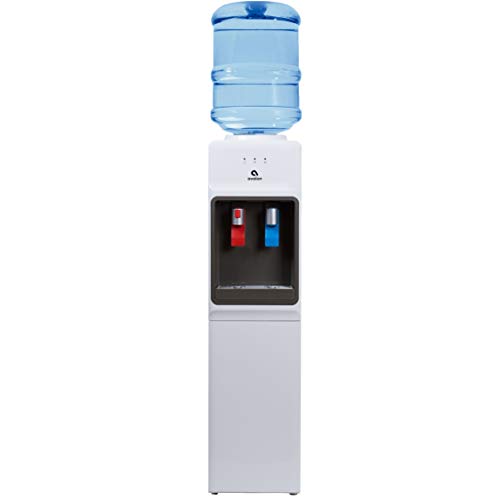
Avalon Top Loading Water Cooler Dispenser
Avalon is known for modern lines, and its top loading cooler follows that approach with a smooth front and a tidy cabinet. It offers hot and cold dispensing. Finishes and details vary by listing, so look at the photos and read the product description for the exact variant.
Many buyers pick a cooler like this for a hallway, a living area or a home bar where the dispenser is on show. The finish is a real part of the appeal, since a dispenser that looks good is more likely to be left in a visible, convenient place.
Weigh the practical side too. A top loader presents the same lifting task as any other, and a polished surface can show drips from a hurried bottle change. Keep a cloth nearby. If the cooler sits near a wall, leave the space the manual recommends for ventilation.
It suits buyers who care about style. Skip it if you need to squeeze it under a low shelf, because the bottle needs headroom above the neck.
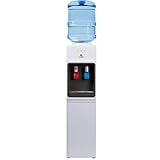
hOmeLabs Hot and Cold Top Loading Water Dispenser
hOmeLabs offers a top loading unit with hot and cold output at a more compact scale than many floor dispensers. That can be useful when your five gallon routine has to fit in a small apartment kitchen or a narrow utility room.
Narrower bodies do not change the bottle: it is still a heavy jug, so the seating process is the same as for any other model. The advantage is that you may get away with a thinner footprint on the floor. Check the listing for the width and depth, and compare them with the space you have.
A smaller unit can mean a smaller reservoir or slower recovery when several glasses are poured one after another. If you often host guests, that might matter. Also read the notes on the lock for the hot water tap.
Select it for compact homes with a five gallon habit. Look elsewhere if you want a large, premium unit.
hOmeLabs Hot and Cold Top Loading Water Dispenser
Best for Exchange Bottle Households
The Primo is the natural partner for refill bottles from a store, and its extra room temperature tap is a bonus.
Best for Simplicity
The Brio CLTL520 offers the least to learn, which suits families who want a cooler they can forget about.
Best for Looks
The Avalon top loader works as a feature piece in a visible location.
Best for Small Rooms
The hOmeLabs unit is the one to compare against your measurements if space is tight.
How to Choose
Begin with the bottle you actually plan to buy. Five gallon jugs are common, but not all necks and caps are identical, and some suppliers use their own designs. Ask your supplier what they sell and compare it with the cooler listing. If you are unsure, look through the customer questions for mentions of that bottle.
Consider your own strength and habits. A five gallon bottle full of water is heavy, and raising it above head height is not a task for everyone. If someone in the home would struggle, a bottom loading model or a smaller bottle size might make better sense. A three gallon bottle is lighter, though you will replace it more often.
Think about capacity in daily terms. A family may drink a surprising amount, particularly if the cooler also supplies cooking and tea. Divide the volume of a bottle by the number of people using it to estimate how long it lasts, and keep a spare available.
Look at the floor and the wall. A top loader is tall, and the bottle makes it taller. Make sure there is clear ceiling height and no low cabinet overhead. A stable, level surface prevents wobble when you seat a heavy jug.
Check the controls and safety. Hot water must be handled with care, and a lock on the tap is a listed feature rather than a promise. Read the manual so everyone knows how it works.
The typical mistakes are choosing a cooler without thinking about the lift, forgetting where spare bottles will live, and placing the unit where it is likely to be bumped. A short plan avoids all three.
Changing a Five Gallon Bottle Step by Step
A calm routine prevents most spills. This is a typical order, but the manual for your cooler always takes priority.
- Check that the old bottle is empty or nearly empty, and wipe the neck of the cooler with a clean cloth.
- Carry the new jug to the cooler with the cap still on, holding it close to your body and bending your knees rather than your back.
- Remove the cap or seal, then lift and invert the jug in one smooth movement, with a second person guiding it if you can.
- Lower the neck onto the cooler until it seats firmly, and watch for a moment to confirm that it is not leaking around the collar.
- Run a little water from the cold tap and follow any first-use steps in the manual before you pour for guests.
If a bottle seems loose or the seal looks damaged, set it aside and use another one. A cooler placed on a firm floor, with a spare jug stored within a few steps, turns a heavy chore into a short, predictable task. Many households find that choosing a fixed day for bottle changes avoids the awkward moment when the last glass runs dry just before guests arrive.
Installation, Safety and Legal Notes
Set the cooler on a level surface and allow it to stand as the maker requires before switching on. Rinse and sanitise as directed in the manual and keep the cord clear of walkways. Use a proper wall outlet, and do not use damaged cords.
Follow the maker’s instructions for the hot tap and its lock, and keep the cooler out of reach of children when possible. Anything involving wiring should be left to a licensed electrician. Check any lease or workplace rules that might restrict heating appliances.
Care and Troubleshooting
| Sign | Likely cause |
|---|---|
| Bottle will not flow | Cap seal not fully pierced or bottle not seated |
| Water on the floor | Drip tray full, or bottle seated at an angle |
| Cold water not cold | Switch off, or vents blocked |
| Strange smell | Reservoir needs cleaning as the maker describes |
Wipe the neck of the cooler before each new bottle, empty the tray often and unplug before any deeper cleaning.
Keep a note of the date each jug goes on. A simple tally on the fridge door tells you how fast your household really drinks, and it makes reordering easier. If a jug has been sitting for a long time, check the supplier guidance on how long a bottle should be kept once opened, because makers and suppliers give different advice.
Lifting, Loading and Handling Five-Gallon Bottles
A full five-gallon bottle is heavy and awkward, so the loading method deserves as much attention as the cooler itself. Top-loading models require you to lift the bottle to the top of the unit and turn it upside down into the reservoir. Think honestly about who will do this job and whether it suits them.
- Check the weight of a full bottle from your supplier.
- Decide who will lift it, and whether they are comfortable doing so.
- Use proper lifting technique, bending your knees and keeping the bottle close to your body.
- Position the cooler at a height that makes the lift manageable.
- Seat the bottle gently and check that the neck is aligned with the opening.
If lifting is a concern for anyone in the household, consider a different style, such as a bottom-loading model, or a smaller bottle. Ask the maker for guidance, and never attempt a lift that feels unsafe.
Hot Water Safety and Child Lock Questions
Many top-loading coolers offer hot water as well as cold, and the hot tap needs careful handling. Look for a child safety feature on the hot spout, such as a push-and-turn lock or a separate switch. Check how clear the labeling is, and whether the lock is easy for adults but difficult for small children to operate.
| Feature | Why it matters |
|---|---|
| Hot tap lock | Reduces the chance of accidental use |
| Red and blue taps | Makes hot and cold easy to tell apart |
| Hot water switch at the back | Lets you turn the heater off when not needed |
| Spill tray | Catches drips and keeps the floor dry |
Follow the maker instructions for every use, and supervise children near the cooler. Position the unit where it is not easy for small hands to reach.
Placement, Clearance and Floor Protection
A water cooler needs a firm, level spot with some space around it for airflow. Check the manual for clearance distances, usually several inches at the back and sides. Avoid placing the unit near heat sources, in direct sun or in a damp spot. Keep it close to an outlet that matches the electrical requirements.
Think about leaks too. Place the cooler on a water-resistant surface or tray, so a spill does not damage a wood floor or carpet. Wipe up drips quickly. Keep the cord out of walkways, and do not use an extension cord unless the maker allows it. If you move the unit, empty the reservoir first and let it drain, following the manual.
Cleaning the Reservoir and Taps on a Schedule
Water coolers need regular cleaning to keep the water tasting fresh. Check the manual for the recommended steps and the schedule, since materials and cleaning solutions vary. A typical routine involves unplugging the unit, draining the reservoir, wiping the inside with an approved cleaning solution, rinsing thoroughly and refilling.
- Wipe the taps and the drip tray often, since they collect residue.
- Clean the bottle neck and the area where it seats.
- Replace filters or parts as the maker advises.
- Use only cleaning products that the manual allows.
A cooler that is cleaned on schedule gives better-tasting water and lasts longer. Write the date of each cleaning on a note near the unit.
Water Supply Choices and Bottle Exchange
Most households buy water in bottles from an exchange program, a delivery service or a store refill station. Compare the options in your area for convenience and reliability. Check that bottles fit your cooler, because necks and sizes vary. Store spare bottles upright in a cool, dark place, away from chemicals and strong smells.
If you refill bottles yourself, follow the guidance for clean, food-safe water and containers. Consider how much water your household drinks each week, and how many bottles you will need to keep on hand. A little planning keeps the cooler running without interruptions.
Noise, Power Use and Temperature Settings
Coolers make small sounds as they chill and heat water. A gentle hum is normal, and a gurgle can occur when a new bottle is placed on the unit. If you plan to put the cooler in a bedroom, home office or quiet kitchen, check the description for noise information and think about how you will feel about sounds at night.
Power use varies by design. Some models offer a switch to turn off the heater or the cooling system when not needed, and a few have settings for the temperature of hot or cold water. Read the manual to learn about the controls, and set the unit as the maker suggests. If you are away for several days, unplug the unit or switch off the heating as the manual describes.
A Short Buying Checklist
- Confirm the cooler uses the standard five-gallon bottle you plan to buy.
- Check the height of the unit and the space where you want to place it.
- Look at the safety features on the hot water tap.
- See whether a drip tray is removable and easy to wash.
- Read about the cleaning steps and any parts that wear out.
- Check the warranty terms and the maker support options.
A cooler is something you will use every day, so choose one that matches your lifting ability, your space and your routine. If you have any doubts, talk with the supplier of your bottles, who often has helpful tips about which cooler styles work best in homes like yours.
Frequently Asked Questions
How long does a five gallon bottle last?
It depends on how many people use it and how often. Track a first bottle to learn your own pattern.
Is it hard to change a bottle on a top loader?
It takes a firm lift and a steady hand. Using your legs and getting help makes it easier.
Can I use a three gallon bottle instead?
Many coolers accept both sizes, but check the listing for the maker’s statement.
Why does the cooler bubble when the bottle is seated?
Air enters the bottle as water flows into the reservoir. This is normal for the format.
Should I keep the cooler on a mat?
A small mat can protect the floor from drips. Make sure it does not block the vents.
Can I move a cooler once it is full?
Remove the bottle and empty the reservoir first, following the manual.
How a Top Loading Cooler Actually Works, in Plain Terms
A top loading cooler looks simple from the outside, and the basic idea really is simple: gravity does most of the work. The bottle sits upside down on top of the cabinet, its neck resting in a support collar, and water flows down into a reservoir inside the machine whenever the level inside drops. From that reservoir, water is routed to the cold tank, the hot tank where fitted, and the room temperature path on models that offer one. When you press a tap or push a paddle, you are opening a valve on one of those paths, and gravity plus the weight of water in the bottle keeps the flow steady until the bottle runs low.
Understanding that layout explains most of the behaviour owners notice. The bubbling sound after you draw a large glass of water is air travelling up into the bottle to replace the water that just left, which is normal and healthy. The pause before the cold tap runs truly cold again after heavy use is the cold tank refilling and chilling a fresh batch, not a fault. The hot tank is small compared with the bottle, so back to back mugs of tea can exhaust it briefly while it reheats. None of this requires any technical knowledge to live with, but knowing why it happens stops you mistaking ordinary cycling for a breakdown, and it helps you describe a real problem clearly if you ever need support from the maker.
It also explains why the condition of the bottle neck and the support collar matters so much. The seal between bottle and machine is what keeps the system tidy. A cracked neck, a worn cap or grit on the collar can let air in at the wrong place or let water creep where it should not. A quick wipe of the neck and collar at every bottle change, which the care sections above already recommend, is therefore not cosmetic fussiness. It is the one small habit that protects the whole gravity arrangement, and it takes less than a minute while the old bottle is off and the new one is still sealed.
The Four Picks Compared Through a Week of Real Use
Specifications tell you what a cooler has. A week of ordinary use tells you what it is like to live with, and that is where the four picks in this guide separate. The Primo is described above as the natural fit for exchange bottle households, and in daily life that shows up as rhythm: empties go back, full bottles come home, and the machine itself asks for very little attention in between. If your household already runs on a store exchange routine, that fit matters more than any single feature, because the best cooler is the one whose refills match the shopping you already do.
The Brio CLTL520 earns its place through plainness. Fewer extras means fewer decisions at the taps and fewer settings to explain to guests, children or a house sitter. In a kitchen where several people help themselves all day, that simplicity is a genuine comfort: everyone can get water without a briefing, and there is little to set wrong. The Avalon leans the other way, putting more weight on appearance. In an open plan room where the cooler is always on show, a cabinet that looks considered rather than purely functional changes how the corner feels, and owners who care about that are not being shallow; appliances this visible shape a room.
The hOmeLabs is the one to think hardest about if your space is tight. A compact footprint helps in a small kitchen, a studio or a narrow utility area, but small rooms also punish poor placement, so pair it with the clearance advice earlier in this guide and give the vents room to breathe. Across all four, the shared lesson is that none of them asks for plumbing, a water line or permanent installation. The differences that matter are routine, simplicity, looks and footprint, and the right choice is the one whose strengths line up with the way your household already moves through the day.
The First Week With a New Cooler: What to Expect
The first few days with any new cooler involve a little settling in, and knowing that in advance makes the week calmer. Start by letting the machine stand upright for a while after moving it, especially if it travelled on its side, and follow the maker’s guidance before switching on the cooling or heating. The first bottle may taste faintly of a new appliance, which is why many manuals suggest drawing off and discarding some water at the start, and why the flushing steps in the manual are worth doing properly rather than rushing to the first glass.
Temperatures also take time to stabilise. The cold tank needs a full cycle to chill its first load, and the hot tank needs time to reach and hold its working heat. Judge both on the second day, not the first hour. You may also hear the machine more in the first week simply because you are listening for it; the gurgles, clicks and hums that seem prominent on day one usually fade into the background of household noise by day five, once you know which sounds belong to normal refilling and chilling.
Use the first week to set the habits that will carry the machine for years. Decide who changes the bottle and how, using the lifting guidance above. Choose where spare bottles live so a change never means a trip across the house with a full jug. Put a small cloth or drip tray routine in place under the taps if your household includes enthusiastic children. And note the date the first bottle went on, somewhere simple like a phone note, because that single habit makes the cleaning schedule and bottle ordering far easier to keep later.
Morning Rush, Packed Lunches and Evening Wind-Down
Most coolers earn their keep at predictable moments, and planning for those moments is the difference between a machine that feels generous and one that always seems empty. The morning rush is the hardest test: bottles for work and school, kettles ignored in favour of the hot tap, and several cold glasses in quick succession. A five gallon bottle holds enough water for this in volume terms, but the chilled and heated tanks are smaller, so a household that drains both at breakfast may notice the last glass is less cold or the last mug less hot. Spreading the rush by even a few minutes, filling some bottles the night before, or letting the machine recover between rounds solves most of it without any new equipment.
Packed lunches are where a home cooler quietly saves money and waste. Filling reusable bottles at home replaces a stream of single-use purchases, and cold water on tap makes that the easy choice rather than the virtuous one. Keep the filling spot tidy, with bottles stored near the cooler rather than across the kitchen, and the habit sticks. In the evening the pattern reverses: a glass of water with dinner, perhaps a hot drink later, and a final round before bed. Nothing about that strains the machine, but it is a good moment to glance at the bottle level, because noticing an empty bottle at night is far better than discovering it mid-rush the next morning.
Weekends bring their own pattern, with guests, gardening, sport and cooking all drawing water at irregular times. This is where a spare full bottle in the house proves its worth. Households that keep one spare almost never run dry at an awkward moment, while households that order only when the last bottle empties eventually host a barbecue with an empty cooler. Treat the spare bottle like a pantry staple: when it goes on the machine, that is the signal to arrange the next one.
When a Top Loader Is Honestly the Wrong Choice
Top loading is the classic format, but classic does not mean universal, and this guide would be incomplete without naming the households it suits least. If nobody in the home can lift a full five gallon bottle comfortably and safely, the format fights you at every change. The lifting section above gives technique, and technique helps, but it does not change the basic weight involved. In that case a bottom loading model, covered in the related guides, removes the lift entirely and is the kinder long-term choice, even if it costs a little more effort to compare models.
Top loaders are also a poor fit where the only available spot is under low cupboards or a sloping ceiling, because the bottle needs vertical room both to sit and to be lifted into place. Measure the full height with a bottle on, and the extra height needed during a change, before you commit. They can frustrate households that want filtered water from the tap as well, since a bottled cooler serves whatever is in the bottle; if filtration is the priority, a bottleless or filtered model is the more direct route. Finally, if the cooler will live in a bedroom or a very quiet studio, think about the refill bubbling and cooling cycle sounds described earlier. They are modest, but modest sounds carry at night, and a different style or a different room may suit you better. None of these points argues against top loaders in general. They argue for matching the format to the household, which is the whole purpose of a buying guide.
Seasonal Care: Summer Demand and Winter Gatherings
A cooler works hardest in summer, when cold water is drawn constantly and warm rooms make the cooling system run longer. Expect bottles to empty faster, and plan orders or exchanges so a heatwave does not catch you short. Keep the machine out of direct sun if you can, since a sunlit cabinet and a warm bottle make the cooler work harder for the same cold result, and check that vents have not been gradually blocked by the clutter that accumulates in busy kitchens over a season.
Winter brings the opposite pattern: the hot tap becomes the star. Hot drinks, soups and cooking shortcuts draw on the small hot tank repeatedly, especially when guests are staying. Give the tank recovery time between heavy rounds, keep the child lock habit firm when visiting children are in the house, and remember that a house full of guests empties a bottle faster than the household’s normal rhythm suggests. Holiday periods are also the classic moment when cleaning gets skipped, so do the reservoir and tap clean just before the busy stretch rather than promising yourself you will do it after.
Spring and autumn are the natural maintenance seasons. Use the quieter months for the deeper clean, a check of the drip tray and seals, and a look at the power cord and the area behind the machine. If the cooler will sit unused during a long trip, follow the maker’s advice about switching off, draining or leaving it running, rather than improvising; standing water and an idle hot tank both deserve the manual’s answer, not a guess.
Small Annoyances, Worked Through Calmly
A slow drip at a tap
A tap that drips slowly after use is often a droplet clinging to the outlet rather than a failing valve, so watch it for a minute before worrying. If dripping persists, check that the tap or paddle is returning fully to its closed position and that no grit is caught in the mechanism. Wipe the outlet, work the tap a few times, and monitor the drip tray. A tray that fills steadily over a day points to a real leak that deserves the maker’s support route rather than repeated wiping.
Water that tastes flat or stale
Taste complaints usually trace back to time rather than to the machine: a bottle that has been open for many weeks, a reservoir overdue for cleaning, or a cooler standing in warm sun. Work through the simple causes first, following the cleaning schedule in this guide, and draw water regularly, since a cooler that is used daily keeps its water moving and tasting fresher than one drawn from once a week.
Gurgling at odd moments
Random bubbling usually follows a draw of water by some minutes, as air and water settle between bottle and reservoir, and it can also appear when room temperature changes expand or contract the air in the bottle. Both are normal. Bubbling accompanied by water at the base, a falling level in a bottle nobody has used, or a wet collar is different, and that combination deserves a check of the bottle neck and seal described earlier.
Condensation and a damp patch
In humid weather a cold bottle and cold surfaces can gather condensation, which then runs to the lowest point and looks alarmingly like a leak. Dry everything thoroughly, note where the damp first reappears, and check again after a few hours of normal use. Damp that starts at the base seam without any draw of water is worth reporting; damp that appears on the bottle itself after a humid night usually is not.
More Questions Owners Ask
Can I leave the cooler switched on all the time?
Most home coolers are designed to stay on, holding their tanks at temperature so water is ready when wanted. The maker’s manual is the authority for your model, including any guidance about holidays or long absences. If you do switch off the hot or cold side, allow time after switching back on before judging the temperature, since the tanks need a full cycle to recover.
What should I do if the cooler will not be used for a few weeks?
Follow the manual’s storage advice, which typically covers switching off, dealing with water left in the tanks and whether to remove the bottle. The general principles are to avoid leaving the hot tank running dry, to avoid letting water stand indefinitely, and to clean the machine before it returns to daily use rather than after the first glass from it.
Does the cooler need its own socket?
It needs a socket it can reach without strain on the cord and without the cord crossing a walkway or heat source. Avoid trailing extension leads across a kitchen floor, keep the plug accessible so the machine can be isolated quickly, and never position the cooler so the cord is pinched by the cabinet or the bottle store.
How do I keep the area around the cooler pleasant?
Most of it is small housekeeping: empty and wash the drip tray before it becomes unpleasant, wipe splashes the same day rather than at the weekend, and keep the bottle store tidy so changes feel easy. A cooler corner that is clean and uncluttered is also safer, because bottle changes happen with clear floor space and a dry grip.
Teaching Children, Guests and House Sitters
A cooler that everyone uses confidently is a cooler that gets treated well. Children mainly need two lessons: how to work the cold tap without leaning on it, and the fact that the hot tap is not for them. Show them where their cup lives, agree a simple rule about filling bottles over the drip tray rather than over the floor, and expect the occasional spill while the habit forms. A small towel kept by the machine, replaced as part of the normal laundry rhythm, turns those spills into a ten second wipe rather than a slippery patch discovered by the next person in socks.
Guests need almost nothing, but a sentence helps: where the cooler is, that the hot tap has a lock if your model uses one, and that they should help themselves. People hesitate around an unfamiliar appliance in someone else’s kitchen, and a cooler that guests actually use is one that takes pressure off the host during gatherings. If your model has a room temperature tap alongside hot and cold, say so, because visitors often assume the middle option does not exist and mix hot and cold to get lukewarm water, draining the small hot tank for no benefit.
House sitters and cleaners benefit from slightly more: how to change the bottle if it empties, where the spare is stored, and what to do if water appears where it should not, which in practice means switching off at the socket and telling you, not attempting a repair. Leave that on a short note near the machine rather than relying on a conversation weeks earlier. The same note can carry the cleaning date, so a sitter does not helpfully scrub the reservoir with a scented product the day before you come home.
A Simple Log That Makes Ownership Easier
You do not need a spreadsheet to run a water cooler well, but a few dated notes remove nearly all the guesswork from ownership. Record the date each bottle goes on for the first few months. That gives you your household’s real consumption rhythm, which is the only reliable basis for deciding how many bottles to keep, when to arrange exchanges, and whether a delivery schedule, if you use one, matches your actual use rather than a guess made at the start.
Add the cleaning dates alongside, both the quick tap and tray routine and the deeper reservoir clean. When taste questions arise, and they do in most households eventually, the log answers the first diagnostic question instantly: when was it last cleaned, and how long has this bottle been open? Without dates, owners tend to clean a machine that was cleaned a fortnight ago while the real cause, a bottle open for two months, goes unconsidered.
Finally, note anything unusual with a date: a drip that stopped, a new sound, a bottle that did not seat properly. Single events are hard to judge, but a short dated list turns a vague feeling that something is changing into a pattern you can describe accurately to the maker’s support team. Keep the log where the household actually looks, whether that is a note on the fridge, a line in a shared phone note or a sticker inside a nearby cupboard door. The best system is the one that survives contact with real life, and for a humble appliance like a cooler, three dates a month is a system that genuinely earns its place.
Getting More From the Hot and Room Temperature Taps
The cold tap gets most of the attention in summer, but the other paths on a tri-temp top loader quietly change how a kitchen runs. The hot tap is at its best as a shortcut for small, frequent jobs: a single mug of tea, instant soup, warming a baby bottle under a parent’s careful testing routine, or giving a saucepan a head start. Used that way, in small draws with recovery time between them, it is convenient and quick. Used as a kettle replacement for a full round of drinks for six people, it will run lukewarm before the round is finished, because the tank is small by design. Neither behaviour is a flaw; they are the same design seen from two different expectations, and matching your expectation to the tank size is what keeps the feature feeling useful rather than disappointing.
The room temperature path, where fitted, is the one owners most often overlook. It suits people who dislike very cold water, households filling bottles for immediate use during exercise, and cooking jobs where chilled water would slow things down. It is also the gentlest option for the machine, since it draws on the reservoir without asking the cooling or heating systems to recover afterwards. If your household finds the cold tap too cold for first thing in the morning, the room temperature tap often becomes the most used of the three within a month, a small surprise that repeats in many homes. Experiment during the first weeks, notice which tap each person reaches for at which moment, and you will quickly learn whether your household is really a cold water household or a mixed one, which is useful knowledge when the time eventually comes to choose a replacement machine.
Bottom Line
A top loading five gallon cooler is a proven format that suits households with a steady bottle routine. The Primo suits exchange users, the Brio keeps things plain, the Avalon adds style and the hOmeLabs squeezes into small rooms. Be honest about the lifting involved, check each listing and follow the maker’s instructions for setup and hot water.