Disclosure: topratedkitchenware.com is reader-supported. When you buy through links on our site, we may earn an affiliate commission from Amazon and other retailers, at no extra cost to you.
Where to buy
All six verified picks for this guide to best hot grills are listed below, and every name links to its Amazon listing so you can check the latest price on Amazon, confirm the current configuration, and read the newest owner feedback before you order. Each detailed review also carries its own Check on Amazon link.
- Monument Grills 4 Burner Propane Gas Grill with Advanced Broil Zone, Mesa II — Best Overall. The fastest route to fierce, usable heat in this guide.
- AMERLIFE 60,000 BTU 6-Burner Propane Gas Grill with Side Burner — Best for Crowds. Six burners and the largest grate, for heat at volume.
- Nexgrill Propane 4-Burner Gas Grill with Stainless Steel Lid — Best All-Round Heat. Strong output, cast iron mass, and a balanced chamber.
- Weber Original Kettle Premium Charcoal Grill, 22-Inch — Best Charcoal Heat. The highest ceiling of all, when the fire is built right.
- Royal Gourmet CC1830S BBQ Charcoal Grill and Offset Smoker — Best Dual Character. Searing heat in the barrel, gentle smoke in the offset.
- Charbroil Portable Convective 1-Burner Propane Gas Grill — Best Portable. Modest, honest heat that travels.
Read the full guide ↓ for what “hot” actually means at the grate, how gas and charcoal heat differ, and the searing method that makes the most of either.
Every grill gets hot; the best hot grills get hot in the ways that matter. That distinction is the whole subject of this guide. Heat at the grate is what sears — it drives the browning reactions that make a steak taste like a steak, blisters pepper skins, and crisps chicken skin before the meat overcooks. But raw maximum temperature is only one ingredient. A genuinely hot grill also heats fast, so weeknight cooking is practical; distributes its heat so the whole grate is usable, not just a scorching stripe; recovers quickly when cold food lands; and — the part most buyers forget — can be turned down, because the cook who can only cook fiercely is as limited as the cook who cannot cook fiercely at all. This guide ranks six verified grills, four propane and two charcoal, against that fuller definition of hot, using only the specifications in data verified against Amazon’s catalogue on 2026-11-20.
The fuel split deserves a word up front, because it shapes the ranking. Charcoal, at its best, reaches the highest grate temperatures of all — a concentrated bed of glowing lump charcoal is a ferocious thing — but it takes time and skill to get there, and its heat is a curve, not a setting. Gas heat is lower at its ceiling but instant, repeatable, and divisible into zones. Neither is “better” in the abstract; they are different instruments, and this guide’s order reflects usefulness across a typical household’s cooking rather than a single laboratory number. It is a research-led guide — no thermocouple theatre, no invented figures — and every pick carries its honest limitation alongside its heat credentials. If your interest in heat is really about enclosed, oven-style cooking, Best Hot Air Grills covers that neighbouring subject in depth, while Best Hotpot Grills To Buy explores a very different kind of communal heat altogether.
Key Takeaways
- “Hot” is four qualities, not one: peak heat, speed to heat, evenness across the grate, and recovery after cold food lands. Judge all four.
- The Monument Mesa II leads on usable heat: a broil zone and a chamber at high temperature in minutes is the most practical fierceness here.
- Charcoal’s ceiling is the highest of all — the Weber kettle, properly fired, out-sears every gas grill — but it asks for time and fire skill on every cook.
- Six burners and 650 square inches (the AMERLIFE) is heat at volume: the pick when the crowd, not the crust, is the challenge.
- A portable’s 11,000 BTU is honest small-scale heat. It grills; it does not sear like the big picks, and this guide will not pretend otherwise.
- Control is part of heat. Every pick here can also cook gently, which is what makes their fierceness useful rather than theatrical.
In this guide
Quick Picks
Six grills, four gas and two charcoal, ranked for heat in all its useful forms. Badges match the detailed reviews.
| Pick | Badge | Who it suits |
|---|---|---|
| Monument Grills Mesa II 4 Burner with Broil Zone | Best Overall | Cooks wanting the fastest, fiercest usable heat with zone control |
| AMERLIFE 6-Burner Propane Gas Grill | Best for Crowds | Hosts searing and serving at serious volume |
| Nexgrill 4-Burner with Stainless Steel Lid | Best All-Round Heat | Households wanting strong heat plus an even, roasting chamber |
| Weber Original Kettle Premium Charcoal Grill | Best Charcoal Heat | Cooks chasing the highest sear ceiling and happy to build the fire |
| Royal Gourmet CC1830S Charcoal Grill and Offset Smoker | Best Dual Character | Cooks who sear over charcoal and smoke low in the same machine |
| Charbroil Portable 1-Burner Propane Gas Grill | Best Portable | Campers and tailgaters needing honest heat that travels |
How These Picks Were Chosen
The pool was verified against Amazon’s catalogue data on 2026-11-20, and the assessment is research-led: verified specifications — burner counts and outputs, cooking areas, grate materials, charcoal formats — read against the physics of searing and the patterns of owner feedback. No specification appears in this guide that the verified data does not support, and no laboratory claims are made. Where a manufacturer figure is quoted, such as a time-to-temperature, it is attributed as a listing figure rather than presented as our measurement.
Ranking for a heat keyword needs its logic stated. We weighted usable heat — the combination of peak, speed, evenness, and recovery defined above — over any single number, which is why a fast-heating gas grill with a broil zone leads a list that also contains charcoal grills with higher absolute ceilings. The charcoal picks are ranked by the quality of their fire management, because a charcoal grill’s heat is only as good as the cook’s ability to build and steer it: the kettle’s dampers and thermometer make its fierceness repeatable, and the offset barrel earns its place by adding a second, gentle character to charcoal’s heat. The portable closes the list transparently: it is the weakest heater here by every measure, included because portability is a real requirement and its heat, honestly described, is sufficient for its job. Readers who want heat in service of general home cooking rather than as the headline should continue to Best Homemade Grills after this guide.
The 6 Best Hot Grills in Detail

Monument Grills 4 Burner Propane Gas Grill with Advanced Broil Zone, Mesa II 410FBZ
Badge: Best Overall
Strengths
- The Advanced Broil Zone concentrates heat where browning happens — the most sear-focused gas feature in this guide.
- Reaching 500°F in 5 minutes, per its verified listing, makes fierce heat a weeknight option rather than a weekend project.
- Four burners mean the fierceness is zoned: broil on one side, hold gently on the other, in the same session.
Trade-offs
- Broil-zone heat punishes distraction; thin foods cross from bronzed to burnt quickly.
- It remains a gas grill — its ceiling, while high, is below a perfectly built charcoal fire’s.
- Full-size four-burner footprint, with an assembly that deserves care so the lid seals and the heat stays in.
Mini spec box
- Format: 4-burner propane gas grill
- Feature: Advanced Broil Zone
- Heat-up: reaches 500°F in 5 minutes (manufacturer figure in verified listing)
- Construction: stainless steel; foldable side shelves
- Model: Mesa II 410FBZ
Most gas grills are hot the way a room is warm — generally, eventually. The Mesa II is hot the way a broiler is hot: deliberately, quickly, and in a designated place. That is why it leads a heat-ranked guide. The broil zone gives the cook a pocket of concentrated, enclosed fierceness for the foods that define hot grilling — steaks finishing under radiant heat, peppers blistering, cheese bronzing — while the remaining burners hold the rest of the meal at civilised temperatures. The five-minute heat-up matters as much as the peak: heat you can summon on a Tuesday gets used, and heat that takes half an hour of ceremony becomes a weekend hobby. In the economy of a household’s actual cooking, usable fierceness beats theoretical fierceness, and this grill is the most usable fierce thing here.
Its limitations are the honest companions of its strengths. Broil heat is fast, and fast heat burns the inattentive; and for all its pace, it is still propane, so the charcoal purist chasing the absolute ceiling should read the Weber’s review below. But as a single purchase for a household that wants serious heat with push-button manners, nothing in the pool argues better.
Best for: sear-focused home cooks who want fierce heat fast, with zones / Not suited for: cooks seeking charcoal’s absolute ceiling or a compact footprint
Check on Amazon to check the latest price on Amazon and confirm the current configuration.

AMERLIFE 60,000 BTU 6-Burner Propane Gas Grill with Side Burner
Badge: Best for Crowds
Strengths
- Six burners and 650 square inches — the largest hot surface in the guide — sear for a crowd without batching.
- 60,000 BTU of total output keeps that vast grate genuinely hot across its width, with a warming rack for finished food.
- Cast iron grates hold the heat through the constant loading that crowd cooking involves.
Trade-offs
- It is the biggest appliance here; small patios and small households should not apply.
- Six burners lit for a two-person dinner is fuel spent on theatre.
- More burners and a regulating valve system mean more to clean and maintain.
Mini spec box
- Format: 6-burner propane gas grill with side burner
- Output: 60,000 BTU
- Cooking area: 650 square inches
- Grates: cast iron; warming rack; built-in thermometer; regulating valve
There is a kind of hot that is about area rather than intensity: the ability to lay down twenty burgers, a dozen chicken thighs, or a flank steak for a table of ten and have every piece meet a properly hot grate at the same moment. That is the AMERLIFE’s discipline. Six burners under 650 square inches, fed by 60,000 BTU and steadied by cast iron, make it the guide’s volume searing machine — and its warming rack and thermometer acknowledge that cooking for crowds is as much about holding and timing as about the sear itself. The side burner absorbs the pot that crowd meals always generate.
The limitation is scale, in every direction: footprint, fuel appetite, assembly, and cleaning all grow with the grate. For the household that hosts monthly, this is the correct tool and the smaller picks will feel like bottlenecks. For the household that hosts twice a year, it is a monument to two evenings, standing in the patio through fifty ordinary ones. Choose by your calendar, honestly kept.
Best for: hosts and large households searing at volume / Not suited for: small households, small patios, or fuel-misers
Check on Amazon to check the latest price on Amazon and confirm the current configuration.
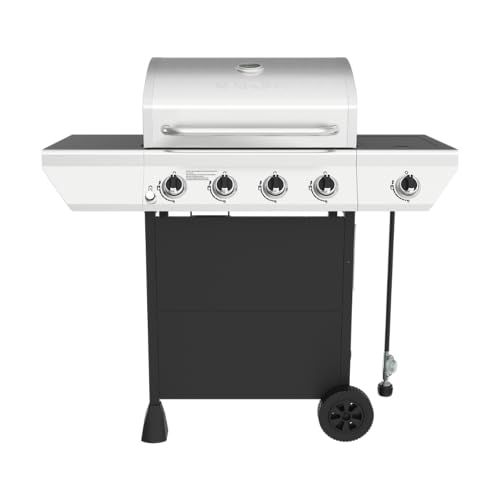
Nexgrill Propane 4-Burner Gas Grill, Side Burner and Stainless Steel Lid
Badge: Best All-Round Heat
Strengths
- 52,000 BTU over 526 square inches is a strong power-to-area ratio — the arithmetic that predicts a properly hot grate.
- Matte finish cast iron grates store heat and return it to the food, smoothing recovery between batches.
- Electronic ignition and a built-in thermometer make the heat repeatable, which is what turns a hot grill into a reliable one.
Trade-offs
- No dedicated broil or boost zone; its heat is even and strong rather than concentrated and extreme.
- Cast iron grates need seasoning care.
- Side burner included, but no cabinet storage for the kit that accumulates.
Mini spec box
- Format: 4-burner propane gas grill with side burner
- Output: 52,000 BTU
- Cooking space: 526 square inches
- Lid: stainless steel; grates: matte finish cast iron
- Extras: built-in thermometer; electronic ignition
The Nexgrill is the heat all-rounder: not the fiercest in a single spot, not the largest in area, but strong everywhere and weak nowhere. Its power-to-area balance is the quiet statistic behind a grate that sears across its whole width instead of in one honoured stripe, and its cast iron grates give it the recovery that batch cooking demands — lift the lid, load cold food, and the surface is back to work quickly. For a household whose hot grilling is varied — steaks one night, a full mixed grill the next, a roast on Sunday — this evenness is worth more than a novelty zone.
Its honest limitation is the absence of a headline: no broil zone, no boost burner, no six-burner span. Buyers who know their cooking centres on one of those extremes should buy that extreme. Buyers whose cooking is everything, in rotation, will find this the most frequently satisfying heater in the guide.
Best for: households wanting strong, even heat for varied cooking / Not suited for: cooks who need a dedicated broil zone or maximum capacity
Check on Amazon to check the latest price on Amazon and confirm the current configuration.

Weber Original Kettle Premium Charcoal Grill, 22-Inch, Black
Badge: Best Charcoal Heat
Strengths
- A concentrated bed of lump charcoal in a 22-inch kettle reaches the highest grate temperatures in this guide — the true ceiling for searing.
- Heat control dampers and a built-in thermometer make that fierceness steerable rather than accidental.
- The One-Touch cleaning system keeps ash — charcoal heat’s constant by-product — from choking the next fire.
Trade-offs
- Heat takes time: lighting, establishing, and settling a charcoal fire is a process measured in tens of minutes, not a button press.
- Temperature is a curve the cook manages, not a dial setting; beginners will overshoot and undershoot while learning.
- Ash, charcoal storage, and fire tending are part of every single cook.
Mini spec box
- Format: 22-inch kettle, charcoal fuel
- Control: heat control dampers; built-in lid thermometer
- Cleaning: One-Touch cleaning system
- Finish: black
If this guide were ranked by a single thermometer reading at the grate, the Weber kettle would win it, and it is important to say so plainly. A chimney of lump charcoal, fully lit and banked in a kettle, produces a radiant fierceness that gas burners — engineered for control and safety — do not match. Steak cooked inches above that bed takes on a crust and a char-kissed flavour that define the charcoal tradition. What elevates this Premium model above a basic kettle for heat work is steerability: dampers that genuinely throttle the fire and a thermometer that tells you where the chamber sits, so the fierceness becomes a tool rather than a bonfire. The One-Touch ash system supports repeatability, because yesterday’s ash is today’s weak fire.
The limitations are charcoal’s eternal ones: time, attention, and ash. The kettle’s heat is earned per cook, and its peak arrives on the fire’s schedule. Households that grill on impulse, midweek, in twenty minutes, will use that peak rarely — which is why it ranks fourth in a guide about usable heat despite holding the highest ceiling. For the cook who plans, who enjoys the fire as part of the meal, it is not a limitation at all; it is the point. Those readers may also enjoy Best House Grills, where this kettle tradition is examined as everyday home equipment.
Best for: sear purists and fire-lovers wanting the highest ceiling / Not suited for: impulse weeknight cooks or anyone unwilling to tend a fire
Check on Amazon to check the latest price on Amazon and confirm the current configuration.

Royal Gourmet CC1830S BBQ Charcoal Grill and Offset Smoker
Badge: Best Dual Character
Strengths
- 783 square inches across the barrel and offset — the largest total cooking space in the guide — with direct charcoal heat in the main chamber.
- An adjustable charcoal pan lets you raise the fire toward the food for searing or lower it for control: charcoal heat with a mechanical assist.
- The offset smoker side adds the opposite virtue — long, gentle, smoky cooking — making this the most temperature-versatile charcoal pick.
Trade-offs
- All charcoal caveats apply, doubled by size: more fuel, more ash, more fire to manage across a big barrel.
- Heat distribution across a long barrel is uneven by nature; the cook works with hot and calm ends rather than eliminating them.
- Front and side tables help, but this is a large, stay-put appliance.
Mini spec box
- Format: barrel charcoal grill with offset smoker
- Total cooking space: 783 square inches
- Fire control: adjustable charcoal pan; side door; lid thermometer
- Surfaces: front and side table
- Finish: black
The Royal Gourmet CC1830S earns its place in a heat guide for a feature the other charcoal pick lacks: an adjustable charcoal pan. Raising the fire closer to the grate is the oldest searing trick in charcoal cooking — distance is temperature — and here it is a mechanism rather than a improvisation with bricks and spare grates. Combined with the barrel’s sheer span, it makes a charcoal grill that can sear at one end, roast in the middle, and, via the offset firebox, smoke gently for hours at the other extreme of the thermometer. No other pick in this guide spans so wide a temperature range in a single appliance.
The cost of that range is management. A barrel this size eats charcoal, sheds ash, and holds different temperatures in different postcodes of its length; the cook must learn its geography and cook to it, rotating food and choosing zones deliberately. For the charcoal enthusiast who hosts, that learning is the hobby. For anyone else, the kettle above delivers charcoal heat in a far more forgiving package.
Best for: charcoal enthusiasts wanting searing heat and offset smoking in one large grill / Not suited for: beginners or small, quick cooks
Check on Amazon to check the latest price on Amazon and confirm the current configuration.

Charbroil Portable Convective 1-Burner Propane Gas Grill
Badge: Best Portable
Strengths
- Genuine gas grilling in a portable format — the only pick here that goes camping, tailgating, and to the beach.
- A single burner is simple to light, simple to control, and economical with fuel on small cooks.
- Aluminised steel construction keeps the package practical for transport and outdoor storage.
Trade-offs
- 11,000 BTU from one burner is, by the standards of this guide, gentle heat: it grills sausages, burgers, and vegetables well, but it will not produce a steakhouse sear.
- One burner means one zone — no gradient, no indirect corner worth the name.
- Cooking area suits two people, not a family dinner.
Mini spec box
- Format: 1-burner portable propane gas grill
- Output: 11,000 BTU
- Construction: aluminised steel
- Finish: black
- Model reference: 465133010
Honesty is this pick’s whole review, so let it be direct: the Charbroil Portable is in a heat guide because portability is a legitimate axis and because its heat, within its scale, is real. Eleven thousand BTU under a small grate cooks the portable repertoire — sausages, burgers, chicken pieces, vegetables, corn — properly and pleasantly, anywhere a small propane canister is welcome. What it cannot do is impersonate the big picks: thick steaks will grill rather than sear, and there is no second zone to rescue anything. Judged as a travel grill, it is a sensible, durable answer. Judged as a hot grill, it is the floor of this guide, and the guide says so rather than dressing it up.
Buy it as a second grill or a travelling grill, and it will delight. Buy it as your only grill for a steak-loving household, and it will disappoint — the detailed reviews above exist to prevent exactly that mismatch. Readers whose portable life is charcoal-based will find their comparison in Best Household Grills, where small kettles appear alongside family models.
Best for: campers, tailgaters, and small portable cooks / Not suited for: serious searing or family-size meals
Check on Amazon to check the latest price on Amazon and confirm the current configuration.
Comparison Table
| Pick | Fuel | Output / area | Heat character | Link |
|---|---|---|---|---|
| Monument Mesa II | Propane | 500°F in 5 mins (listing figure) | Broil zone; fastest fierce heat | Check on Amazon |
| AMERLIFE 6-Burner | Propane | 60,000 BTU; 650 sq in | Heat at crowd volume | Check on Amazon |
| Nexgrill 4-Burner, Stainless Lid | Propane | 52,000 BTU; 526 sq in | Even, strong, cast iron recovery | Check on Amazon |
| Weber Kettle Premium 22-Inch | Charcoal | 22-inch kettle | Highest ceiling; damper-steered | Check on Amazon |
| Royal Gourmet CC1830S Offset | Charcoal | 783 sq in total | Adjustable pan sear + offset smoke | Check on Amazon |
| Charbroil Portable 1-Burner | Propane | 11,000 BTU | Gentle portable heat | Check on Amazon |
How to Choose a Grill When Heat Is the Priority
Start by translating BTU into meaning. A total BTU figure is the sum of every burner’s maximum; what sears your food is heat delivered per square inch of grate, moderated by grate material and lid design. That is why this guide puts a 52,000 BTU grill over 526 square inches in the same serious conversation as a 60,000 BTU grill over 650: their intensity per inch is comparable, and both wear cast iron that stores the heat they make. Next, decide your fuel philosophy with clear eyes. Gas gives you a ceiling you can reach in minutes, every time, with zones; charcoal gives you a higher ceiling you must build, steer, and accept as a curve. Households that grill impulsively should weight gas; households that grill ceremonially can claim charcoal’s peak.
Then interrogate recovery and control, the two traits that separate a hot grill from a merely powerful one. Recovery is grate mass plus burner reserve: after a cold load, does the surface return to searing temperature before the food steams in its own juices? Control is the low end: can the grill hold a gentle zone for finishing, resting, and delicate food, or is it a furnace with an off switch? Every pick in this guide was chosen because it answers both questions respectably for its class — including, at its scale, the portable. Finally, size honestly. Heat at volume (the AMERLIFE) and heat in a small chamber (the kettle) are different products for different households, and buying the wrong axis of hot is the commonest disappointment in this category.
How to Sear Properly: The Hot Grill Method
Equipment sets the ceiling; technique decides whether you reach it. This method works on every pick in the guide, with fuel-specific notes where they matter.
- Preheat longer than feels necessary. On gas, full power with the lid down until the grate is thoroughly heat-soaked — heavy grates need time, and time is what stores the energy your sear will spend. On charcoal, wait until the coals are fully ashed and glowing, then let the grate sit over them to heat.
- Dry the food. Surface moisture is the enemy of browning; it must boil away before searing can begin. Pat meat dry, salt it, and let it stand while the grill heats.
- Oil the food, lightly. A thin film on the food beats a flooded grate, which smokes and flares.
- Lay it down and leave it. Place food on the fiercest zone and resist moving it. A crust releases when it is ready; forcing it tears the very surface you are building.
- Finish in the gentle zone. Once the crust exists, move thick pieces to moderate heat — or the indirect side of a kettle — and close the lid until the centre arrives.
- Rest on warmth, not cold. A warm resting zone or board keeps juices in the meat and the crust intact.
- Manage the fire’s aftermath. Gas: burn off, brush, done. Charcoal: close the dampers, let it die, and clear ash before the next cook — ash is tomorrow’s weak fire.
Troubleshooting. Problem: food steams instead of searing → the grate was not heat-soaked or the food went on wet or crowded; preheat longer, dry the food, and cook in smaller batches. Problem: fierce flare-ups under fatty cuts → move food to the gentle zone and close the lid to starve the flame; never spray water on a grease fire. Problem: charcoal heat fades mid-cook → ash is insulating the coals or the bed was too small; stir gently, open the dampers, and add a modest amount of fresh lump rather than a new full chimney.
Gas Heat Versus Charcoal Heat: An Honest Comparison
Since this guide contains both fuels, it owes you a straight comparison. Gas heat is radiant and convective energy from a controlled flame: it arrives in minutes, divides into zones at the twist of dials, holds a setting indefinitely, and ends with a valve. Its ceiling is set by burner engineering, and its flavour is clean — the taste of the food and its marinade, unadorned. Charcoal heat is the energy of a carbon fire: slower to build, harder to hold at a precise point, and capable of a radiant intensity that exceeds gas, with the added dimension of smoke when wood joins the bed. Its flavour is participatory — the fire seasons the food. The practical consequence: gas wins on frequency, charcoal on occasion. Households that grill three times a week will extract more total pleasure from the gas picks’ repeatable heat; households that grill as an event will find the charcoal picks’ ceiling and character worth every minute of tending. Many serious households eventually own one of each, and this guide’s ranking — gas for usable heat first, charcoal for ceiling close behind — reflects that real-world settlement rather than a verdict on either fuel.
Safety at High Heat
Fierce heat deserves a short, serious section. Keep any grill — gas or charcoal — in the open air, clear of walls, fences, and overhangs, and never use charcoal indoors or in a garage: its exhaust is lethal in enclosed spaces. Treat flare-ups by moving food and closing lids, never with water on grease. Use long tools and heatproof gloves as temperatures rise; the picks in this guide reach their working heat quickly, and forearms learn that once. With gas, leak-check on every tank change and close the valve when idle. With charcoal, assume ash hides live embers for a day or more, and dispose of it only cold, in metal. None of this is complicated, and all of it is the price of admission for cooking at the temperatures this guide celebrates.
The Science of the Sear, Briefly and Usefully
Understanding a little of what heat does to food turns the picks above from products into instruments. Browning — the Maillard reaction between amino acids and sugars — begins in earnest at temperatures a merely warm grate never reaches, which is why the first requirement of a hot grill is a surface that stays fierce when food lands. Alongside it, rendering transforms fat: on a properly hot grate, fat melts, bastes, and crisps edges rather than pooling and flaring. Moisture is the antagonist of both processes. A wet surface cannot brown until its water has boiled off, and boiling consumes exactly the heat you stored in the grate — the physical reason behind this guide’s twin obsessions with dry food and heavy, heat-soaked grates. Sugar is the traitor in the system: marinades and glazes sweet enough to delight will scorch at searing temperatures, which is why technique applies them late, in the gentle zone, after the crust exists. None of this requires a laboratory; it requires a grill whose heat is strong, stored, and divisible — the three adjectives that, in different proportions, describe every serious pick in this guide, from the broil-zoned Monument to the coal-fired Weber.
It also explains why this guide refuses to rank by a single peak figure. A grill that touches a spectacular temperature in one small spot, over a thin grate that collapses under a cold steak, will produce worse sears than a slightly cooler grill with mass and evenness. Cooks eat results, not readings — and the ranking here follows the results.
Matching Heat to the Menu: Four Household Patterns
Different households mean different things by “hot”, and the picks divide cleanly once the menu is named. The steakhouse household — thick cuts, high crust ambitions, vegetables blistered alongside — belongs to the Monument or the Weber kettle, depending on its fuel temperament. The gathering household, whose problem is twenty portions at once, belongs to the AMERLIFE, where the scarce resource is hot area, not hot degrees. The varied household, cooking everything in rotation across a week, belongs to the Nexgrill, whose evenness is its heat virtue. The travelling household — campsite, tailgate, beach, small balcony — belongs to the Charbroil portable, accepting gentler heat as the price of motion. Naming your pattern before you shop converts a confusing category into a short list, and it is the exercise this guide’s structure has been quietly performing: badges for patterns, reviews for evidence, and a final recommendation that simply asks you to recognise your own household in one of the four.
Keeping the Heat Year After Year
A hot grill stays hot through maintenance, not luck, and the chores differ by fuel in instructive ways. Gas grills lose heat to blocked burner ports, corroded heat plates, and grease films that insulate the grate from below; a seasonal routine of port cleaning, plate inspection, and burn-offs restores the original fierceness almost completely. Igniters and valves age too, and a grill that lights reluctantly gets preheated reluctantly, which quietly degrades every sear. Charcoal grills lose heat to ash: yesterday’s ash bed insulates today’s fire, chokes its air, and caps its ceiling, so the kettle’s ash system and the barrel’s clean-out discipline are heat features, not housekeeping. Grates matter in both worlds — seasoned cast iron stores heat; rusted, flaking grates waste it and shed it onto food. The encouraging truth is that heat is recoverable: nearly every “my grill doesn’t get hot anymore” story ends with a cleaning, a cleared port, or an emptied ash catcher rather than a replacement. Buy any pick in this guide, keep that short faith with it, and the fierceness you paid for will still be there in five years — which is more than can be said for most of the gadgets competing for the same patio.
A Note on Thermometers: Trust, But Verify Your Heat
Every serious pick in this guide either carries a lid thermometer or, in the charcoal cases, gives you the means to steer by one — and every experienced hot-grill cook learns the same lesson about them: a lid thermometer measures the air where it sits, not the grate where the food cooks, and the two can differ meaningfully, especially during preheat and recovery. Treat the lid reading as the chamber’s weather report — invaluable for trends, roasting, and repeatability — and verify the events that matter with an instant-read probe in the food itself. Over a few cooks you will learn your own grill’s dialect: how its lid reading relates to grate reality at searing and at roasting settings, where its calm corners live, and how long its recovery really takes after a full load. That calibration knowledge is worth more than any single feature in this guide, because it converts a powerful appliance into a predictable one. Heat you can predict is heat you can cook with; the rest is weather.
Common Buying Mistakes
- Shopping by total BTU alone. Heat per square inch, grate mass, and recovery decide searing — not the biggest sum on the box.
- Buying a ceiling you will never reach. Charcoal’s peak is real but earned per cook; impulse cooks should buy gas speed instead.
- Ignoring the low end. A grill that cannot cook gently will burn as much food as it sears. Zones and control are part of “hot”.
- Crowding the grate. Even the hottest grill steams a crowded load. Batch size is a technique choice, not just a capacity figure.
- Expecting portable heat to sear like a flagship. The portable in this guide is honestly rated; buy it for travel, not for steakhouse crusts.
- Skipping the preheat. Most “weak grill” complaints are cold-grate complaints. Heat-soak the grate and the same grill transforms.
Final Recommendation
For most households, the Monument Mesa II is the hot grill to buy: the fastest fierce heat, zoned and repeatable, without ceremony. Read the top three reviews here: Monument Grills Mesa II 4 Burner, AMERLIFE 60,000 BTU 6-Burner Propane Gas Grill, Nexgrill Propane 4-Burner Gas Grill with Stainless Steel Lid. Choose the AMERLIFE if your heat must serve crowds, the Nexgrill if you want the even all-rounder, the Weber kettle if you chase charcoal’s ceiling and enjoy the fire, and the Royal Gourmet if you want searing and smoking in one big charcoal machine. Take the Charbroil portable for the road — and only for the road. Heat, honestly matched to household, is the whole secret.
Frequently Asked Questions
What makes a grill “hot” in a way that matters?
Four things together: peak grate temperature, speed to reach it, evenness across the grate, and recovery after cold food lands. A grill strong in all four sears reliably; a grill strong in only the first is a specification sheet, not a cooking tool.
Is charcoal really hotter than gas?
At its peak, yes — a concentrated lump charcoal bed reaches grate temperatures beyond typical gas burners. But it takes time and skill to build, and its heat follows a curve. Gas heat is lower at the ceiling and far more immediate, zoned, and repeatable.
How many BTUs do I need for a good sear?
Judge BTU against cooking area, not alone. The serious gas picks in this guide pair their output closely with their grate size and use heavy grates to store heat. A moderate total over a compact area can sear better than a huge total spread thin.
Why is a portable grill in a “hot grills” guide?
Because portability is a real requirement and its heat is honestly sufficient for its repertoire. It is ranked last, with its limits stated plainly, so no reader mistakes it for a searing flagship.
What is a broil zone, and do I need one?
It is a concentrated high-heat area — the Monument’s headline feature — that broils and sears with radiant intensity from above and below. If your cooking centres on steaks, peppers, and bronzed finishes, it is genuinely useful; if you mostly grill gently, it is surplus.
Can a hot grill also cook low and slow?
The charcoal offset in this guide can, by design. Gas grills cook low by running one burner and using indirect placement, which suits roasting more than true smoking. Heat range, not just heat peak, is why the guide weighs control so heavily.
Should I preheat with the lid open or closed?
Closed, always, for both fuels and for every pick in this guide, without exception. A closed lid traps the heat that soaks the grate and warms the chamber, cutting preheat time dramatically; an open lid lets the burners or coals heat the sky. The only exception is the moment of loading and turning food — and even then, work promptly and close the lid again, because every second open is stored heat leaving the grill you paid to make hot.
How do I keep a hot grill’s heat consistent over years?
Keep burner ports clear, grates clean and (for cast iron) seasoned, and charcoal grills free of ash buildup. Heat loss over time is almost always maintenance debt, not age. If a gas grill’s flames burn yellow and lazy rather than blue and crisp, or a kettle’s fire will not climb despite open dampers and fresh fuel, treat those as maintenance signals to act on that week — a port clean, a vent check, an ash clear-out — rather than as the beginning of a replacement conversation. The hot grill you already own is usually one honest afternoon away from being the hot grill you remember.


