Ice cream makers for home use should be easy to set up, quick to clean and sized for a normal household. The best ones turn a chilled base into dessert with little fuss, whether you like firm scoops, soft serve or swirled sundaes. Most families only need a machine that makes about a quart at a time. Think about whether you want a few big batches or a quick single serving, because that shapes which machine will actually get used.
The six picks below include bowl machines, a bucket model and two Ninja systems that process frozen pints. We have not used these machines ourselves, so please confirm capacity, freezing requirements and included parts on the current listing before you buy. Read the manual for the exact recipe guidance each one expects.
As an Amazon Associate we earn from qualifying purchases. Links below are affiliate links, and they do not change the product information we give.
What to Look For
| Feature | Why it matters |
|---|---|
| Capacity | A pint to two quarts fits most households; bigger buckets suit parties |
| Prep | Bowls and pints need advance freezing, while buckets need ice and salt |
| Texture | Soft serve, scoopable and swirl styles produce different results |
| Ease of cleaning | Removable, smooth parts wash faster |
| Storage | Freezer bowls need freezer room, and buckets need cabinet space |
In this guide
Specs at a Glance
| Maker | Type | Freezing | Notes |
|---|---|---|---|
| Ninja CREAMi Swirl NC701 | Frozen pint processor | Freeze pints first | Soft serve and swirl features |
| Hamilton Beach 68330N | Electric bucket | Ice and salt | Four-quart size class |
| Cuisinart ICE-21 | Bowl churner | Freezer bowl | Classic automatic model |
| Cuisinart ICE-30BC | Bowl churner | Freezer bowl | Pure Indulgence line |
| Nostalgia ICMP400 | Electric bucket | Ice and salt | Retro styling |
| Ninja CREAMi NC301 | Frozen pint processor | Freeze pints first | Several modes |
The 6 Best Ice Cream Makers for Home Use

Top pickBest for soft-serve fans
1. Ninja CREAMi Swirl NC701
A newer frozen-pint machine that adds soft serve and swirl features to the usual ice cream, sorbet and gelato modes. It is built for households that like variety.
Suits: soft-serve fans. Strengths: swirl and soft-serve options. Weaknesses: pints must freeze first. Skip it if you want a classic churn.
View Ninja CREAMi Swirl on Amazon

Best for family dessert nights
2. Hamilton Beach 68330N Ice Cream Maker
An electric bucket machine that uses ice and rock salt for a family-size batch. The motor does the churning, so there is no hand cranking.
Suits: family dessert nights. Strengths: a big batch with little effort. Weaknesses: ice and salt are required. Skip it if you want a freezer-bowl design.
View Hamilton Beach 68330N on Amazon
Best for first-time buyers
3. Cuisinart ICE-21 Frozen Yogurt, Ice Cream and Sorbet Maker
A familiar automatic bowl machine that makes ice cream, frozen yogurt and sorbet. It has a simple lid with an ingredient spout.
Suits: first-time buyers. Strengths: simple, automatic operation. Weaknesses: the bowl needs advance freezing. Skip it if you want an instant batch.
View Cuisinart ICE-21 on Amazon
Best for larger households
4. Cuisinart ICE-30BC Pure Indulgence
A larger bowl-based machine from the Pure Indulgence line with a fully automatic churn. It is suited to families who like a bigger batch.
Suits: larger households. Strengths: a bigger bowl and easy use. Weaknesses: the bowl must be pre-frozen. Skip it if you want a compact machine.
View Cuisinart ICE-30BC on Amazon
Best for parties and gatherings
5. Nostalgia ICMP400 Electric Ice Cream Maker
A retro-style electric bucket model that makes a large batch with ice and rock salt. It adds a fun, old-fashioned look to dessert night.
Suits: parties and gatherings. Strengths: a classic look and large capacity. Weaknesses: a bulky bucket. Skip it if you have limited storage.
View Nostalgia ICMP400 on Amazon
Best for small households
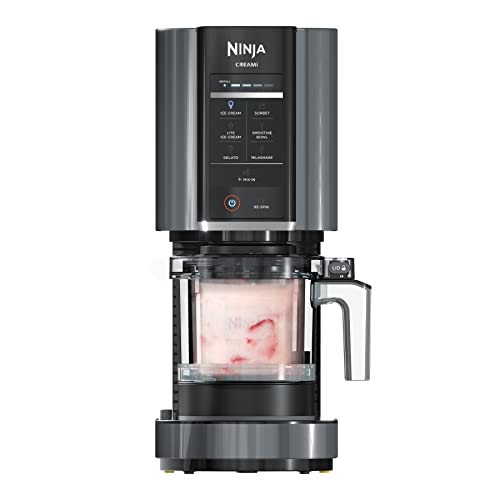
6. Ninja CREAMi NC301
A frozen-pint processor with several programs, including ice cream, sorbet and milkshake. It is popular for smaller portions and quick experiments.
Suits: small households. Strengths: many modes in one machine. Weaknesses: pints take a day to freeze. Skip it if you want a large single batch.
Care and Setup
- Freeze the bowl or pints for at least the time in the manual.
- Chill the mix before churning. Overnight chilling gives a smoother texture.
- Wash removable parts by hand with mild soap.
- Let the machine dry completely before storing it.
Mistakes to Avoid
- Not freezing the bowl long enough.
- Overfilling the container. Ice cream expands as it churns.
- Skipping the chill step for the base.
- Using metal utensils on nonstick parts.
Matching Capacity to Your Household
Capacity is one of the first decisions, and bigger is not always better. A machine that makes a large batch is useful for a family or for parties, but a small household may find that extra ice cream hardens in the freezer and loses quality. A smaller machine suits one or two people, and it also takes less storage space.
Think about how you will use it. If dessert is a weekly family treat, a batch of around a quart or two may feel right. If you make single servings for yourself, a pint-size system avoids waste. If you entertain, a larger capacity or the ability to make a second batch quickly may be worth having. Remember that stated capacity is often the maximum volume of the container, not the amount of finished ice cream, because the mix expands as it churns. Check the manual for the recommended fill level.
- Count how many portions you want per batch.
- Check how much freezer room you have for bowls or pints.
- Consider whether you will make flavours back to back.
- Think about storage tubs for finished batches.
If you are unsure, start with a modest size. It is easier to repeat a small batch than to finish a huge one.
Comparing Freezing Methods and Planning Time
Home machines freeze the mix in different ways, and the method affects the planning you need. Pre-frozen bowl machines use a bowl that lives in your freezer. They are simple and quiet, but the bowl needs to be frozen for many hours beforehand, and a second batch requires a second bowl. Ice-and-salt bucket machines surround the mix canister with ice and rock salt, which lowers the temperature. They suit larger batches and do not need a freezer bowl, but need ice, salt and cleanup of salty water. Frozen-pint processors work on a base you freeze solid in a container, then shave and blend it. They are flexible for small portions and flavours, though the freezing time is long. Some machines have built-in compressors that freeze the mix themselves, and those are typically larger, heavier and more expensive.
- Choose a bowl machine for simplicity and low maintenance.
- Choose a bucket model for family batches and a traditional approach.
- Choose a pint system for variety and single servings.
- Choose a compressor model if you want spontaneous batches and have the space and budget.
Whatever you pick, read the stated freezing times in the manual and plan dessert the day before.
Whichever method you pick, write the freezing time on a sticky note and put the bowl or pints in the freezer the evening before. That one habit prevents most failed batches.
Noise, Counter Space and Storage
Ice cream makers are not large, but they can be noisy and awkward to store. Churning produces a steady motor sound, and ice-and-salt models can be louder because of ice moving in the bucket. If you live in an apartment or run the machine in the evening, check the listing and the maker’s description of sound.
Think about where it will sit. You need a flat surface near an outlet, and room to open the lid or add ingredients. Bucket models need space for ice, salt and a tray or towel for drips. Pint processors need room for several containers in the freezer, and for the machine itself on the counter.
Ask yourself:
- Do I have a cupboard or shelf where the machine can live between uses?
- Is there room in my freezer for a bowl or several pints?
- Can the cord reach an outlet without trailing across a work surface?
- Will I use it often enough that it can stay out on the counter?
An appliance that is hard to get out is used less. A machine you can pull out and run with minimal effort is more likely to become part of your routine.
Test the machine once with just the lid on, so you know how loud it is and how much room the motor base needs. It is easier to adjust your plans before a party than during one.
Cleaning and Day-to-Day Upkeep
Dairy and sugar leave sticky residue, so clean parts soon after churning. Rinse the paddle, bowl and lid, wash them in warm soapy water and dry thoroughly. Use a soft sponge on nonstick or coated parts, and avoid metal utensils that could scratch them. Many removable parts are not dishwasher safe, so check the manual.
The motor base should be wiped with a damp cloth, never immersed. Dry any spills around the lid, where sugar can harden. For ice-and-salt machines, empty and rinse the bucket, since salt can corrode metal if left standing.
- Wash parts right after use so residue does not set.
- Let frozen bowls and canisters warm slightly before washing.
- Dry everything fully before storing, to prevent odours and mould.
- Store the lid slightly ajar if the maker suggests it, so air can circulate.
Replacement signs include a bowl that no longer freezes properly, a paddle with cracks, a lid that does not seat, a motor that stutters or a base that smells of burning. Check whether the manufacturer sells replacement parts before replacing the whole machine.
Ask yourself whether you will use the machine often enough to leave it on a shelf where it is easy to reach. Machines buried at the back of a cupboard tend to stay there.
Troubleshooting Common Texture Problems
Most issues have simple causes. If a batch stays runny, the bowl may not have been frozen long enough, the base may have been too warm or the room too hot. Freeze the bowl for the full recommended time, chill the base overnight and consider churning in a cooler spot.
If the result is icy or grainy, the recipe may lack enough fat or sugar, or the base may have frozen slowly. Try a richer recipe, and keep everything cold. If it is too hard after freezing, let it rest at room temperature before scooping, and check your sugar levels.
If the mix overflows, you overfilled the container. Reduce the amount, since the mix expands as it churns. If there are greasy flecks, over-churned cream may have started to turn to butter, so stop sooner next time.
- Change one thing at a time so you can tell what helped.
- Keep notes on recipe, timing and room temperature.
- Use a thermometer to check the base temperature if your recipe calls for it.
- Follow food safety rules for eggs and dairy.
With a few batches, you will learn the habits of your machine and know when a mix is ready by looks and texture instead of by the clock.
Home Ice Cream Maker FAQ
What size should I buy?
One to two quarts suits most families. A pint-size machine is enough for one or two people. Larger batches freeze harder than small ones.
Do I need an ice cream recipe?
Most manuals include a few. Search the maker’s own guidance for the best results. Start with a basic vanilla and add mix-ins later.
What is the easiest to clean?
Machines with smooth, removable parts are quickest. Check the listing for details. Rinse soon after churning.
Can I make low-sugar or dairy-free desserts?
Yes, many machines handle sorbet and plant-based mixes. Texture may be icier than with cream.
How far ahead should I freeze the bowl?
Follow the manual, which often recommends a full day or at least many hours. Keep the bowl in the coldest part of the freezer and make sure it is solid before you start.
Is a compressor ice cream maker worth it?
It makes sense if you want to churn batches whenever you like without freezing a bowl. These models are typically larger and heavier, so consider counter and storage space and the cost.
Can I make frozen yogurt in these machines?
Many machines handle frozen yogurt as well as ice cream and sorbet. Check the manual for approved recipes and capacity.
Why does my ice cream melt so fast?
Homemade ice cream is often served soft, straight from the machine, and it melts quickly. Harden it in the freezer for a few hours for a firmer scoop.
Do I need to buy special salt for a bucket machine?
Bucket machines usually call for rock salt, which is coarser than table salt. Use what the manual recommends and measure carefully.
Can children use an ice cream maker?
With supervision, many families enjoy making ice cream together. Adults should handle hot custard, sharp tools and electrical parts.
How do I keep a batch from tasting like the freezer?
Use a tightly sealed container, press wrap on the surface and keep strong-smelling foods away. Eat the ice cream within a short time.
Why the Base Matters More Than the Machine
Every home ice cream maker does the same basic job: it chills a liquid while moving it, so ice crystals stay small and air gets folded in. What you pour in decides most of what comes out. A base with too much water and too little fat freezes into a hard, icy block no matter how good the hardware is. A base with enough fat, sugar and solids stays smooth and scoopable.
Fat coats ice crystals and gives the mouthfeel people associate with premium ice cream. Sugar does a second job beyond sweetness: it lowers the freezing point, which is why a low-sugar recipe turns rock hard in the freezer. Milk solids and egg yolks add body and help the mixture hold air. If a recipe seems rich, that richness is usually doing structural work, not just adding calories.
Aging the Base
Many recipes call for chilling the base for several hours or overnight before churning. A fully cold base freezes faster in the machine, and faster freezing means smaller crystals. For freezer-bowl models this matters even more, because the bowl only has a limited amount of cold to spend. Pouring in a room-temperature base wastes it.
Food Safety With Custard and Egg Bases
French-style bases use egg yolks cooked gently into a custard. The cooking step is what makes them safe to eat, so the custard should be heated, stirred constantly and cooled quickly rather than rushed. Raw-egg recipes exist, but they carry a food safety concern that matters for young children, pregnant people, older adults and anyone with a weakened immune system. Pasteurized eggs are one option if you want a no-cook base.
- Cool a cooked custard in an ice bath, then refrigerate it covered.
- Use the chilled base within a day or two instead of leaving it for a week.
- Wash any bowl, whisk and ladle that touched raw egg before reusing them.
- Eggless Philadelphia-style bases skip the issue entirely, with a slightly lighter texture.
Mix-Ins, Swirls and When to Add Them
Add-ins go in near the end, not at the start. Chocolate chips, cookie pieces, nuts and candy can be folded in during the last minute or two of churning, or stirred by hand after the machine stops. Adding them early lets the paddle break them up and pushes them to the bottom or the sides.
Keep mix-ins small and cold. Large chunks can jam a dasher or scrape the bowl wall, and warm pieces melt the surrounding ice cream. Sticky swirls such as caramel or fruit puree behave best when layered into the container by hand as you transfer the ice cream, rather than being churned in. Fruit with a lot of water, like strawberries, freezes into hard ice shards unless you cook it down or macerate it with sugar first.
Scaling Recipes and Planning a Batch
The stated capacity of an ice cream maker is the finished volume, and ice cream expands as it freezes. A common rule is to fill the container about two thirds full at most. Overfilling is a classic reason for a batch that stays soupy or spills over the lid.
If you often cook for a crowd, think about how many batches you will realistically make in a day. Freezer-bowl machines usually need the bowl refrozen between batches, which can take many hours. Salt-and-ice models can run back to back if you have ice and patience. Pre-frozen pint systems let you prepare several pints ahead and process each one when you want it, which suits households where everyone wants a different flavor.
Serving and Storing the Finished Batch
Fresh from the machine, most ice cream has a soft-serve consistency. That is a good time to eat it, but if you want scoops, move it to a shallow, airtight container and harden it in the freezer for a couple of hours. Shallow containers freeze more evenly than deep tubs. Pressing a sheet of parchment directly onto the surface limits freezer burn and stops a crust of ice from forming.
Homemade ice cream has no stabilizers like commercial pints, so it firms up and loses its smoothness over time. Plan to eat it within a week or two. If a tub has frozen solid, let it sit on the counter for ten minutes or so before scooping, and dip the scoop in warm water between servings. Re-softening and refreezing the same tub repeatedly encourages ice crystals, so scoop what you need and return it quickly.
Budget Versus Premium
Lower-priced machines tend to be simpler, louder and more dependent on pre-freezing. More expensive ones add motors, compressors or presets that cut planning time. Spend more if you make ice cream weekly and hate waiting; stay with a simple bowl model if you make it a few times each summer.
Frequently Asked Questions
Should I chill my ice cream base overnight?
It is not required, but it helps. A fully chilled base freezes faster during churning, which produces smaller ice crystals and a smoother texture. Overnight resting also lets flavors blend and the proteins hydrate. Many home cooks chill custard for at least four hours before churning, especially with freezer-bowl machines.
Can I cut the sugar in homemade ice cream?
You can, but expect a harder, icier result. Sugar lowers the freezing point, so less of it means a firmer freeze and less scoopability. Alternatives such as allulose or a splash of alcohol soften the texture, but results vary by recipe, so make small adjustments and compare batches.
Is it safe to use raw eggs in ice cream?
Raw eggs carry a salmonella risk, which matters most for children, older adults, pregnant people and anyone immunocompromised. Cooking the custard to a safe temperature removes the concern. Pasteurized eggs or an eggless base are the usual no-cook options.
How full should I fill the machine?
Leave room for expansion. A good guideline is to fill the container no more than about two thirds full, since the mixture grows as air is incorporated. Always check the maximum fill line in the manual for your specific model.
Soft Serve at Home: What the Swirl-Style Machines Add
Two of the picks in this guide, most clearly the Ninja CREAMi Swirl, chase a texture the others do not: soft serve, dispensed in a swirl, eaten immediately. Soft serve is not simply ice cream served early; it is ice cream held at a warmer serving temperature with a lighter, airier body, and it lives or dies in the minutes after it is made. A machine that dispenses it through a handle adds theatre that children and guests genuinely love, and it suits households whose dessert style is a cone on the deck rather than a tub in the freezer. Its trade-off is storage: soft serve does not harden into the same scoopable texture as a churned batch, so the format rewards making what you will eat now.
The churned machines in the guide, the Cuisinart ICE-21 and ICE-30BC, the Hamilton Beach 68330N and the Nostalgia ICMP400, produce the opposite virtue: a batch that can be hardened, stored and served across several days. Households should choose by dessert habit rather than by novelty. If your family’s ice cream moments are immediate, social and outdoors, the soft-serve route will be used constantly. If your moments are a bowl after dinner across the week, the churn-and-store route will serve you better, and the soft serve machine will become a party trick that waits for an audience.
Two Ninja Pint Machines: Choosing Between Them
With two CREAMi models in one guide, the natural question is what the step between them buys. The NC301 is the straightforward expression of the idea: freeze a pint solid, process it on the setting that matches the base, respin if the texture is powdery, and eat. It suits the user who wants portioned desserts with minimal ceremony and who will build a small rotation of favourite pints. The Swirl adds the dispensing format and a broader sense of occasion, suiting households that will actually use soft serve regularly and that enjoy the ritual of pulling a handle for a cone.
The honest way to choose is to picture your tenth use, not your first. On the tenth use, the novelty has faded and what remains is the routine: freezing pints ahead, cleaning the parts, storing the machine. If that routine, with the Swirl’s extra format, still sounds like pleasure, the step up is justified. If it sounds like equipment in search of an occasion, the simpler machine will make you just as happy, and the money saved buys a great many ingredients for experiments. Both machines reward the same disciplines: a level pint, a full freeze, a base that is not overloaded with mix-ins, and a willingness to respin rather than judge the first pass.
The Freezer-Bowl Middle Ground and the Bucket Tradition
The two Cuisinart models represent the middle path of home ice cream: a bowl that lives in the freezer, a base that is made ahead, and a churn that takes a modest batch from liquid to soft in a short session. The ICE-21 suits smaller households and smaller appetites; the ICE-30BC suits the household that found the smaller bowl perpetually short. What unites them is predictability. Once your routine is set, batch follows batch with very little drama, and that calm is why this format has been the default recommendation for home use for so long. Its single demand, freezer space for the bowl, should be accepted as part of the purchase rather than discovered afterward.
The Hamilton Beach and Nostalgia bucket machines keep an older tradition alive, and their virtues are scale and sociability. They ask for ice and salt, they make a generous amount, and they turn dessert into an activity with a beginning, a middle and a reveal. In a home where ice cream is mostly a summer gathering food, that tradition may serve better than any countertop format. In a home where ice cream is a quiet weeknight pleasure, the same machines will feel like organising an expedition for a bowl of vanilla. The guide’s range is not indecision; it is an acknowledgement that home use means different things in different homes.
A Realistic Weekly Rhythm for a Home Machine
Home use succeeds on rhythm. Consider the pattern that works for many households: a base made on a weekday evening while dinner cooks, chilled overnight without any sense of hurry, churned or processed the following evening in the time it takes to clear the table, and hardened or served according to the format. Two such cycles a week keep a household in fresh ice cream indefinitely, with no single session long enough to feel like a project. The shopping folds into the normal list, the freezer holds one bowl or a row of pints as a standing arrangement, and the machine stops being an event and becomes an appliance in the best sense.
Protect the rhythm from its two natural enemies. The first is the empty freezer problem, where the bowl or pints were never prepared and dessert collapses into a shopping trip; the cure is a standing rule that the vessel goes back into the freezer, washed and dried, the same evening it is used. The second is flavour fatigue, where a household makes the same vanilla until nobody asks for ice cream anymore; the cure is a small, rotating list of house flavours with one experimental slot, so there is always something trusted and something new. Rhythm plus rotation is the entire secret of the households that still use these machines years after purchase.
Troubleshooting by Format
Each format in this guide fails in its own dialect, and learning your format’s dialect saves a great deal of misdirected recipe changing. Freezer-bowl machines produce soup when the bowl was under-frozen or the base went in warm, and produce a hard shell with a soft centre when the batch is too large for the bowl. Bucket machines produce slow, slushy churns when the ice and salt are packed carelessly or the canister is overfilled, and produce salty contamination only when a lid is carelessly handled, which is why the lid stays sealed until the churn is done. Pint processors produce a powdery, crumbly result when the pint was not frozen level and solid or when the base is very low in sugar and fat, and the cure is the respin, sometimes with a small splash of liquid, rather than a new recipe.
Across all formats, a batch that tastes good but stores badly points at the container and the freezer rather than the machine, and a batch that stores well but tastes dull points at the base, which needed to taste slightly too bold and slightly too sweet before freezing. Keep a note of which dialect your failure spoke. Within a few batches you will diagnose your own machine in seconds, and that fluency, more than any feature, is what home use is supposed to produce.
More Questions From Home Users
Which format is easiest for a complete beginner?
The format whose preparation you will not resent. A freezer-bowl machine asks one thing, that the bowl be frozen, and forgives almost everything else, which is why it is the traditional first machine. A pint processor asks that you think a day ahead, and rewards you with the simplest day-of routine in the guide. A bucket machine asks for supplies and a little theatre. Beginners succeed with any of them when the preparation matches their temperament, and struggle with all of them when it does not, so choose by temperament first and by features second.
How do I keep the machine from becoming a cupboard ornament?
Keep it visible, keep its vessel ready, and keep a base recipe you trust taped inside a cupboard door. Ornaments are made by friction: the bowl that must be found, the parts that must be assembled from three drawers, the recipe that must be searched for. Remove each friction once and the machine stays in service. It also helps to give the machine a standing occasion, a Friday dessert or a Sunday churn, because habits attached to the calendar survive moods that kill habits attached to inspiration.
Can one machine serve both everyday portions and parties?
Partly, with planning. A pint system can serve a party if enough pints were frozen ahead, which turns the machine into a processing station for the evening, one cone or bowl at a time. A freezer-bowl machine can serve a party by churning earlier in the day and hardening the batch, or by running a second bowl if you own one. A bucket machine serves a party natively and everyday portions awkwardly. Choose the machine for the everyday case, since that is most of your life, and plan your way around the party case, which is rare and forgiving.
What Home Use Really Costs in Time and Attention
Buyers compare machines by capacity and features, but home use is paid for in minutes and attention, and the formats bill differently. The bucket machines bill in a single, social block: shopping for ice, packing, churning, serving and a wet cleanup, all in one afternoon. The freezer-bowl machines bill in two small instalments, a base today and a churn tomorrow, each too short to resent. The pint systems bill in advance and in miniature: a few minutes to fill and freeze pints whenever the freezer has room, then a few minutes of processing at the moment of dessert. None of these bills is large, but they fall at different points in a household’s week, and the right machine is the one whose bill lands where your week has slack.
Attention matters as much as minutes. A churn that must be watched in its final stage fits a cook who is already in the kitchen; it punishes a cook who starts it and leaves for another room. A processing cycle that runs unattended fits a household that wants dessert at the press of a button after the plates are cleared. Be honest about which cook you are at eight in the evening, because that is when these machines are used, and a machine matched to the morning’s ambitions but not the evening’s energy will be sold within the year.
Flavours That Suit Each Format
Formats have flavour affinities worth exploiting. Soft serve formats flatter mild, creamy flavours and anything that benefits from being eaten fresh and airy: vanilla, fruit swirls, coffee. Freezer-bowl batches, which will be hardened and stored, flatter flavours that deepen with a day’s rest, such as chocolate, nut and spice bases, and they carry mix-ins well because the churn distributes them. Bucket batches flatter the classics served in quantity, and their generous size makes them the natural home of the flavour a whole family agrees on. Pint systems flatter experimentation itself: single-portion bases built for one person’s diet, one person’s curiosity, one person’s very strong opinion about mint.
Use the affinities rather than fighting them. A delicate fresh-herb flavour that fades in storage belongs in the format that serves immediately. A dense, dark chocolate that needs a night to marry belongs in the format that stores. Matching flavour to format is an advanced-sounding idea that is really just the same lesson as everything else in this guide: the machine, the recipe and the household are one system, and the best results come from treating them that way.
How should I store the machine itself between seasons?
Clean and dry every part, assemble the machine loosely so small pieces stay with their parent, and store it upright somewhere it will not be buried under heavier equipment. If the bowl or pints live in the freezer as a standing arrangement, they can simply stay there, ready for the first warm day. Keep the manual with the machine rather than in a household file, because the question you will have in June is about this machine’s dasher or this machine’s fill line, and the answer should be in the same cupboard. A machine stored complete and clean restarts in minutes; a machine stored in pieces restarts after a search, and searches are where good intentions go to cool.
What is a sensible first upgrade after buying one of these machines?
Resist upgrading the machine and upgrade the system around it: a second bowl or extra pints if capacity is your limit, a proper storage tub and a good scoop if serving is your limit, a small stock of containers and labels if organisation is your limit. Most home users who feel dissatisfied in the first season are not suffering from the wrong machine; they are suffering from a missing accessory or an unformed routine, both of which are cheaper to fix than a replacement. Give any machine in this guide a full season, with its system completed, before judging it.
The phrase home use in the title is doing real work. These are not parlour machines and should not be judged as such; they are kitchen companions, judged by whether dessert at home became easier, fresher and more fun across an ordinary season. Pick the format whose preparation you will still be doing cheerfully in month six, keep its vessel ready, and let a short list of trusted flavours carry the routine. The rest, as every experienced home churner learns, is just ice cream.
How do I adapt a family recipe that was written for a different style of machine?
Keep the ingredients and change the expectations. A recipe written for a big bucket batch can be scaled to a bowl or a pint by proportion, but its churn behaviour will differ: smaller volumes set faster, and mix-ins should be scaled by eye as well as by weight, since a pint crowded with chunks has no room to become ice cream. Make the adapted version once as a test, note the fill level and the result, and write your version of the recipe with your machine’s name on it. Family recipes survive by being rewritten for each generation’s equipment, and your annotated version is how this one reaches the next kitchen intact.
And keep the standard humane: the goal is a dessert your household asks for again, served without stress by a machine that feels like part of the kitchen. Any pick in this guide can reach that standard in the right home, which is why the choice should begin with the home and end with the machine, never the other way around.
Is it worth keeping a spare of the part that wears or goes missing?
For the small, losable pieces, yes: a spare lid for the pints, a spare dasher seal or a second scoop costs little and rescues an evening that would otherwise end in improvisation. Keep the spares in the same place as the machine, labelled, so the rescue takes seconds. For large parts such as bowls, buy the spare when you have evidence you need the capacity, as discussed earlier, rather than as insurance. A drawer of thoughtful spares is a system; a drawer of anxious spares is a museum.
Measure your freezer, your counter and your evenings before you measure the machines. Those three measurements, honestly taken, will point at the right pick in this guide more reliably than any feature comparison, and they take less time than returning the wrong one.
What should I make for the first gathering with a new machine?
Make the flavour you have already tested twice, in the format’s most forgiving version, and make it ahead rather than performing the churn in front of an audience. A first gathering is for enjoying the machine, not for debuting both the machine and an untested flavour at once. Serve it with one simple accompaniment, accept the compliments, and save the experiments for family, who will forgive a powdery pint and praise a good one with equal honesty.
Tested flavour, ready vessel, calm host: that combination has carried more successful dessert evenings than any specification ever printed, and it is available with every machine in this guide.
Begin with one batch this week, however humble, and let the machine start teaching you. The second batch is always easier, and by the fourth you will wonder why the decision ever felt complicated.
Complication, in this category, is mostly a shortage of routine, and routine is the one accessory that cannot be bought, only built, one batch at a time.
Build it, and the machine you chose will quietly become the machine you needed.
That, in one sentence, is the difference between owning an ice cream maker and having ice cream at home whenever the household wants it.
It is a difference worth choosing carefully, and then enjoying often.
The Short Version
For soft serve and swirl, the Ninja CREAMi Swirl. For a family bucket, the Hamilton Beach 68330N. For a classic bowl, the Cuisinart ICE-21. For a bigger bowl, the Cuisinart ICE-30BC. For a retro bucket, the Nostalgia ICMP400. For many modes, the Ninja CREAMi. Plan ahead for freezing time. Keep a bowl or pints in the freezer so it is always ready.

