Disclosure: topratedkitchenware.com is reader-supported. When you buy through links on our site, we may earn an affiliate commission from Amazon and other retailers, at no extra cost to you.
Where to buy
If you are shopping for best imersion blenders according to cooks country, start with the six picks below. Linked picks carry a direct Amazon link so you can check the latest price on Amazon and confirm the current configuration before you decide. We never print a fixed price here, because prices and availability change. Every pick is a genuine corded immersion blender, so all six are linked.
- KitchenAid Variable Speed Corded Hand Blender KHBV53 — Best Overall. Check on Amazon for current listing details.
- Turelar Immersion Blender 400W 2-Speed — Best Budget Simplicity. Check on Amazon for current listing details.
- Turelar Immersion Blender 1100W 5-in-1 Set — Best Full Set. Check on Amazon for current listing details.
- MasterChef Immersion Blender 400W — Best for Pureeing. Check on Amazon for current listing details.
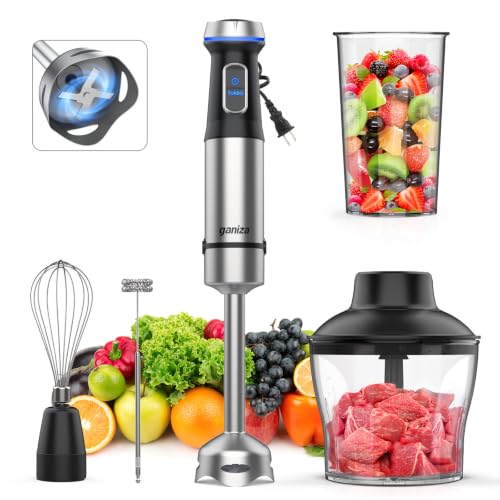
- Ganiza Immersion Blender 5-in-1 1000W — Most Speeds. Check on Amazon for current listing details.
- Vitamix Immersion Blender 5-Speed Bundle — Best Premium Pick. Check on Amazon for current listing details.
Read the full guide ↓ for how each pick handles the job, where each one compromises, and which households each one actually suits.
Looking for the best imersion blenders according to cooks country — misspelling and all — usually means one thing: you want the test-kitchen way of judging, not the marketing way. Test kitchens like Cook’s Country evaluate immersion blenders the way home cooks actually suffer with them: big pots of soup that must come out silky, sauces that must emulsify without splashing, motors that must survive thick mixtures, and designs that must clean up without a fight. This guide applies exactly that lens to six verified corded models, and it is transparent about method: we are applying test-kitchen criteria to verified listing data and specifications, not claiming any publication’s endorsement of these specific models.
That distinction matters, and this guide will keep making it. What a test kitchen would ask of each pick is predictable and demanding. Does the speed control let you start gently in a shallow pan? Does the blending head circulate a full pot or just drill a smooth hole in the middle? Are the materials honest — stainless where heat lives, sensible plastics where they belong? Can the arm come off and rinse clean in seconds? Readers who want the comparison framed by the other famous test kitchen can cross-check our notes on Best Immersion Blenders America S Test Kitchen, which apply a near-identical checklist.
Judged that way, this pool splits cleanly: refined single sticks for cooks who value control, simple 400W tools for pureeing basics, and full sets for kitchens that want one motor to do everything.
Key Takeaways
- Test-kitchen judging prioritises control, circulation and cleanup over headline wattage.
- The KitchenAid KHBV53’s true variable speed is the most test-kitchen-friendly control here.
- Full sets (Turelar 1100W, Ganiza 1000W) win on versatility, lose on storage and washing.
- Simple 400W sticks puree cooked food perfectly well; they fail on hard, dry loads.
- Every pick here is corded: unlimited run time, outlet required.
- We apply test criteria to verified data; no publication endorsement of these models is claimed.
In this guide
Quick Picks
| Pick | Badge | Headline spec | Why it is here |
|---|---|---|---|
| KitchenAid Variable Speed Corded Hand Blender KHBV53 | Best Overall | Removable 8-inch blending arm | Variable speed, removable arm, its own jar |
| Turelar Immersion Blender 400W 2-Speed | Best Budget Simplicity | 400W motor | Two speeds, ergonomic, nothing to learn |
| Turelar Immersion Blender 1100W 5-in-1 Set | Best Full Set | 1100W motor | 1100W set with trigger speed control |
| MasterChef Immersion Blender 400W | Best for Pureeing | 400W motor | Stainless stick built for pureeing |
| Ganiza Immersion Blender 5-in-1 1000W | Most Speeds | Max 1000W heavy-duty motor | 16 speeds and a heavy-duty motor |
| Vitamix Immersion Blender 5-Speed Bundle | Best Premium Pick | 5-speed control | Brand-grade 5-speed one-handed design |
Read this table the way a test kitchen would: the badge column is really a philosophy column. ‘Best Overall’ rewards balance, not extremes. The two sets earn their places by replacing other appliances, not by blending soup better than the sticks do. And the two 400W models stay on the list because a test kitchen judges tools against the jobs they claim to do — pureeing cooked food — not against jobs nobody should ask of them. Our soup-specific ranking in 6 Best Immersion Blenders For Soup Corded And Cordless 2026 applies the same philosophy with a narrower brief.
How These Picks Were Chosen
The six picks were drawn from the verified immersion blender pool to span the real decision space of this category: a refined single stick with true variable speed, two simple 400W sticks, two full attachment sets at different power levels, and a premium brand-led option. We compared motor ratings as stated in the listings, speed control style, included accessories and construction, and we treated headline wattage with suspicion — in stick blenders, blade geometry, bell shape and speed control change results as much as the motor number does.
This guide is research-led: it is built from verified listing data and manufacturer specifications, not from staged hands-on testing we did not perform, and it says so openly. No pick carries a printed price or a rating score, because both change constantly and neither predicts whether your soup comes out silky. Where a model has an obvious limitation — a small motor, a bare kit, a forest of attachments to store — the review names it rather than burying it.
The 6 best imersion blenders according to cooks country picks, reviewed in detail

KitchenAid Variable Speed Corded Hand Blender KHBV53
Badge: Best Overall
Strengths
- Variable speed starts gently, so soups do not splash
- Removable arm rinses clean in seconds
- Included jar is sized for sauces, dressings and smoothies
Trade-offs
- Corded design ties you to an outlet near the stove
- Single arm and jar kit, no whisk or chopper extras
- Jar is small for family-size smoothie batches
Key specs from the verified listing: Removable 8-inch blending arm; Variable speed control; Blending jar with lid included; Matte Black finish; Corded power.
KitchenAid’s KHBV53 is a corded hand blender with true variable speed, a removable 8-inch blending arm and its own blending jar with a lid. It is the control-focused pick: speed follows the trigger, so a pot of soup gets a gentle start instead of a eruption.
Judged by test-kitchen standards, the deciding traits are gentle starts, full-pot circulation and cleanup that takes seconds rather than scrubbing. In practice that makes it a fit for soup and sauce makers who blend in the pot and want finesse more than attachments. The review prose in this guide is research-led: we compared verified listing data, manufacturer specifications and the documented design of each model rather than claiming hands-on bench testing we did not do, and we would rather state that plainly than dress a desk comparison up as a lab report.
The honest limitation is that if you want one tool that also whips and chops, the single-purpose kit here will feel bare compared with the multi-piece sets. None of that makes it a bad buy; it defines the buyer it serves. Match this pick against your own routine — how often you use it, how much you make at once, and how much counter and cupboard space it can honestly claim — and the right answer usually becomes obvious.
Looked at as a weekly routine rather than a specification sheet, the KitchenAid Variable Speed Corded Hand Blender KHBV53 asks little of its owner beyond the basics its listing confirms: Removable 8-inch blending arm; Variable speed control; Blending jar with lid included; Matte Black finish; Corded power. Its clearest strength in practice — variable speed starts gently, so soups do not splash — is the one you will feel every time you use it, while its most relevant compromise — corded design ties you to an outlet near the stove — is the one to weigh before ordering rather than discover after. Owners who match a tool to their habits rarely regret a purchase in this category; owners who buy a headline and hope their habits change usually do.
Best for: Soup makers who want test-kitchen-style speed control / Not suited for: Attachment collectors who want whisk and chopper included
Check on Amazon to see the current listing, configuration and delivery options for the KitchenAid Variable Speed Corded Hand Blender KHBV53.

Turelar Immersion Blender 400W 2-Speed
Badge: Best Budget Simplicity
Strengths
- Simple two-speed layout anyone can use immediately
- Ergonomic handle suits longer blending sessions
- Light, unfussy design stores in a drawer
Trade-offs
- Two speeds give less control than variable models
- 400W is the gentlest motor in this pool
- No extra attachments in the box
Key specs from the verified listing: 400W motor; 2 speed settings; BPA-free blending components; Ergonomic handle; Corded stick design.
This Turelar stick blender keeps things deliberately simple: a 400W corded motor, two speeds, BPA-free blending parts and an ergonomic grip. It is an emulsifier-first tool for soups, sauces and shakes rather than a full prep system.
Judged by test-kitchen standards, the deciding traits are gentle starts, full-pot circulation and cleanup that takes seconds rather than scrubbing. In practice that makes it a fit for first-time immersion blender owners and small kitchens that need the basics done well. The review prose in this guide is research-led: we compared verified listing data, manufacturer specifications and the documented design of each model rather than claiming hands-on bench testing we did not do, and we would rather state that plainly than dress a desk comparison up as a lab report.
The honest limitation is that dense jobs like thick hummus or frozen fruit will ask more of the motor than this class is built to give in long runs. None of that makes it a bad buy; it defines the buyer it serves. Match this pick against your own routine — how often you use it, how much you make at once, and how much counter and cupboard space it can honestly claim — and the right answer usually becomes obvious.
There is also the question of what living with the Turelar Immersion Blender 400W 2-Speed feels like after the first week. The verified configuration — 400W motor; 2 speed settings; BPA-free blending components; Ergonomic handle; Corded stick design — settles into a routine quickly, and the design choices behind it favour the jobs this guide keeps returning to. Where it asks for cooperation, the review has already named it: two speeds give less control than variable models. Where it simply gets on with the work, that is its headline strength at play: simple two-speed layout anyone can use immediately. Judge it on that balance, not on any single line of its listing.
Best for: Beginners who want the basics with zero learning curve / Not suited for: Hard, dry or frozen loads
Check on Amazon to see the current listing, configuration and delivery options for the Turelar Immersion Blender 400W 2-Speed.

Turelar Immersion Blender 1100W 5-in-1 Set
Badge: Best Full Set
Strengths
- Strongest motor rating in this pool
- Trigger variable speed mimics premium controls
- Accessory set covers whisking and chopping jobs too
Trade-offs
- More parts to store and wash than a plain stick
- High power needs a light trigger finger on liquids
- Set format costs more counter organisation than single sticks
Key specs from the verified listing: 1100W motor; 5-in-1 hand blender set; Trigger variable speed; Emulsion stick plus accessory kit; Corded power.
The second Turelar is a different animal: an 1100W, 5-in-1 corded set with trigger-controlled variable speed and accessories that extend it beyond blending into whisking and chopping. It aims to be the one prep motor a small kitchen owns.
Judged by test-kitchen standards, the deciding traits are gentle starts, full-pot circulation and cleanup that takes seconds rather than scrubbing. In practice that makes it a fit for cooks replacing several small appliances with one motor and a box of attachments. The review prose in this guide is research-led: we compared verified listing data, manufacturer specifications and the documented design of each model rather than claiming hands-on bench testing we did not do, and we would rather state that plainly than dress a desk comparison up as a lab report.
The honest limitation is that attachment kits reward organised owners; if the whisk lives in a junk drawer, you have bought complexity you will not use. None of that makes it a bad buy; it defines the buyer it serves. Match this pick against your own routine — how often you use it, how much you make at once, and how much counter and cupboard space it can honestly claim — and the right answer usually becomes obvious.
One more practical lens: who else in the household will use the Turelar Immersion Blender 1100W 5-in-1 Set, and for what? Its confirmed specification — 1100W motor; 5-in-1 hand blender set; Trigger variable speed; Emulsion stick plus accessory kit; Corded power — makes it approachable for some users and excessive or insufficient for others, and a purchase that serves two people’s routines is worth more than a theoretically superior one that serves a single narrow job. Its defining strength, that it can strongest motor rating in this pool, compounds in value the more often the machine is used, which is why frequency of use appears in every verdict in this guide.
Best for: Small kitchens replacing several appliances with one set / Not suited for: Minimalists who hate storing accessories
Check on Amazon to see the current listing, configuration and delivery options for the Turelar Immersion Blender 1100W 5-in-1 Set.

MasterChef Immersion Blender 400W
Badge: Best for Pureeing
Strengths
- Stainless stick tolerates hot pots without worry
- Straightforward controls with nothing to learn
- Built for pureeing, the core immersion job
Trade-offs
- 400W class motor, so work in smaller batches
- No variable-speed finesse for delicate emulsions
- No accessory ecosystem in the box
Key specs from the verified listing: 400W motor; Stainless steel blending stick; Emulsifier/puree positioning; Handheld corded design.
MasterChef’s immersion blender is a 400W handheld with a stainless steel blending stick aimed squarely at pureeing and emulsifying: soups in the pot, sauces in the pan, baby food and dressings in a jug.
Judged by test-kitchen standards, the deciding traits are gentle starts, full-pot circulation and cleanup that takes seconds rather than scrubbing. In practice that makes it a fit for home cooks who want a dependable puree tool and already own a food processor for everything else. The review prose in this guide is research-led: we compared verified listing data, manufacturer specifications and the documented design of each model rather than claiming hands-on bench testing we did not do, and we would rather state that plainly than dress a desk comparison up as a lab report.
The honest limitation is that like the other 400W models, it prefers soft and cooked ingredients; raw, hard loads belong in a countertop machine. None of that makes it a bad buy; it defines the buyer it serves. Match this pick against your own routine — how often you use it, how much you make at once, and how much counter and cupboard space it can honestly claim — and the right answer usually becomes obvious.
Looked at as a weekly routine rather than a specification sheet, the MasterChef Immersion Blender 400W asks little of its owner beyond the basics its listing confirms: 400W motor; Stainless steel blending stick; Emulsifier/puree positioning; Handheld corded design. Its clearest strength in practice — stainless stick tolerates hot pots without worry — is the one you will feel every time you use it, while its most relevant compromise — 400w class motor, so work in smaller batches — is the one to weigh before ordering rather than discover after. Owners who match a tool to their habits rarely regret a purchase in this category; owners who buy a headline and hope their habits change usually do.
Best for: Pureeing households with a food processor for the rest / Not suited for: Anyone wanting variable-speed finesse
Check on Amazon to see the current listing, configuration and delivery options for the MasterChef Immersion Blender 400W.
Ganiza Immersion Blender 5-in-1 1000W
Badge: Most Speeds
Strengths
- 16 speeds give the widest control range in this pool
- Heavy-duty motor handles thicker mixtures
- Full accessory set covers most small prep tasks
Trade-offs
- Speed choice can overwhelm beginners at first
- Kit needs storage space a single stick does not
- Power still does not make it a nut-butter machine
Key specs from the verified listing: Max 1000W heavy-duty motor; 16 speed modes; 5-in-1 hand blender set; Stainless steel construction elements.
Ganiza’s 5-in-1 set pairs a heavy-duty motor rated up to 1000W with sixteen speed modes and a full attachment kit. Where the simple sticks offer two settings, this one offers a dial of possibilities for cooks who blend by feel.
Judged by test-kitchen standards, the deciding traits are gentle starts, full-pot circulation and cleanup that takes seconds rather than scrubbing. In practice that makes it a fit for enthusiasts who blend daily and want one system for soups, batters, whipping and chopping. The review prose in this guide is research-led: we compared verified listing data, manufacturer specifications and the documented design of each model rather than claiming hands-on bench testing we did not do, and we would rather state that plainly than dress a desk comparison up as a lab report.
The honest limitation is that sixteen speeds are only useful if you learn them; set-and-forget users may end up living on two settings anyway. None of that makes it a bad buy; it defines the buyer it serves. Match this pick against your own routine — how often you use it, how much you make at once, and how much counter and cupboard space it can honestly claim — and the right answer usually becomes obvious.
There is also the question of what living with the Ganiza Immersion Blender 5-in-1 1000W feels like after the first week. The verified configuration — Max 1000W heavy-duty motor; 16 speed modes; 5-in-1 hand blender set; Stainless steel construction elements — settles into a routine quickly, and the design choices behind it favour the jobs this guide keeps returning to. Where it asks for cooperation, the review has already named it: speed choice can overwhelm beginners at first. Where it simply gets on with the work, that is its headline strength at play: 16 speeds give the widest control range in this pool. Judge it on that balance, not on any single line of its listing.
Best for: Daily blenders who exploit a wide speed range / Not suited for: Set-and-forget users who will ignore most speeds
Check on Amazon to see the current listing, configuration and delivery options for the Ganiza Immersion Blender 5-in-1 1000W.

Vitamix Immersion Blender 5-Speed Bundle
Badge: Best Premium Pick
Strengths
- Five speeds balance simplicity with real control
- One-handed operation leaves a hand free for the pot
- Backed by the brand known for blending motors
Trade-offs
- Premium tier positioning within this pool
- Bundle is focused on blending, not a chopping system
- Corded design, unlike premium cordless rivals elsewhere
Key specs from the verified listing: 5-speed control; 3-piece bundle; Stainless steel and black finish; One-handed operation design.
Vitamix’s entry is a 5-speed immersion blender in stainless and black, sold as a 3-piece bundle and designed for one-handed operation. It applies the company’s blending-first philosophy to the stick format: motor, blade and speed control, nothing decorative.
Judged by test-kitchen standards, the deciding traits are gentle starts, full-pot circulation and cleanup that takes seconds rather than scrubbing. In practice that makes it a fit for Vitamix loyalists and daily soup makers who want brand-grade motor tuning in a drawer-sized tool. The review prose in this guide is research-led: we compared verified listing data, manufacturer specifications and the documented design of each model rather than claiming hands-on bench testing we did not do, and we would rather state that plainly than dress a desk comparison up as a lab report.
The honest limitation is that buyers wanting a full attachment ecosystem should compare the multi-piece sets, which trade some refinement for range. None of that makes it a bad buy; it defines the buyer it serves. Match this pick against your own routine — how often you use it, how much you make at once, and how much counter and cupboard space it can honestly claim — and the right answer usually becomes obvious.
One more practical lens: who else in the household will use the Vitamix Immersion Blender 5-Speed Bundle, and for what? Its confirmed specification — 5-speed control; 3-piece bundle; Stainless steel and black finish; One-handed operation design — makes it approachable for some users and excessive or insufficient for others, and a purchase that serves two people’s routines is worth more than a theoretically superior one that serves a single narrow job. Its defining strength, that it can five speeds balance simplicity with real control, compounds in value the more often the machine is used, which is why frequency of use appears in every verdict in this guide.
Best for: Brand loyalists wanting refined one-handed blending / Not suited for: Buyers who want a full chopping system included
Check on Amazon to see the current listing, configuration and delivery options for the Vitamix Immersion Blender 5-Speed Bundle.
Comparison Table
| Pick | Badge | Format | Control / feature | Standout point |
|---|---|---|---|---|
| KitchenAid Variable Speed Corded Hand Blender KHBV53 | Best Overall | Removable 8-inch blending arm | Variable speed control | Variable speed, jar included |
| Turelar Immersion Blender 400W 2-Speed | Best Budget Simplicity | 400W motor | 2 speed settings | 2 speeds, 400W |
| Turelar Immersion Blender 1100W 5-in-1 Set | Best Full Set | 1100W motor | 5-in-1 hand blender set | 1100W, trigger control |
| MasterChef Immersion Blender 400W | Best for Pureeing | 400W motor | Stainless steel blending stick | 400W, stainless stick |
| Ganiza Immersion Blender 5-in-1 1000W | Most Speeds | Max 1000W heavy-duty motor | 16 speed modes | 16 speeds, max 1000W |
| Vitamix Immersion Blender 5-Speed Bundle | Best Premium Pick | 5-speed control | 3-piece bundle | 5 speeds, 3-piece bundle |
The comparison table exposes the category’s real trade: control versus kit. The left-hand picks sell finesse — variable or multi-speed control in a single stick. The right-hand sets sell coverage — one motor, many jobs, more washing. A test kitchen would tell you to buy for the job you do weekly, not the job you might do at Christmas. If your weekly job is heavy, continuous blending, our roundup of Best Heavy Duty Immersion Blenders pushes the durability question harder than this mixed pool does.
How to Choose the Right Option for best imersion blenders according to cooks country
Speed control is the first test-kitchen criterion. A blender that can only run flat-out will splash thin liquids and struggle to start an emulsion. True variable speed (KitchenAid), trigger control (Turelar 1100W) and wide multi-speed ranges (Ganiza, Vitamix) all solve the same problem differently: they let the cook, not the motor, set the pace. Two-speed models are fine for cooked soups and purees, where the ingredients are soft and the liquid is deep.
Motor numbers need translating. The pool spans 400W to a stated 1100W, but test kitchens care about sustained performance on thick mixtures, not peak claims. In practice: 400W class for cooked and soft work, the big-motor sets for batters, thick purees and frequent chopping duty. If you regularly blend dense mixtures, the survey in Best High Powered Immersion Blenders explains why motor cooling and duty cycle matter more than the number on the box.
Then judge the kit and the cleanup. Removable arms that rinse under a tap beat fixed designs you must wash around a cord. Accessory sets earn their cupboard space only if the whisk and chopper come out monthly. And consider the vessel you own: a short arm in a tall stockpot leaves the bottom unblended, which no motor can fix.
How to Blend Like a Test Kitchen: Technique for Silky Results
Technique decides more than hardware with a stick blender. Submerge the blade head fully before you switch on, or the first second will redecorate your kitchen. Start on a low speed, tilt the head slightly to start a vortex, and move slowly up, down and around the pot rather than holding still and drilling a hole in the middle. For hot soup, keep the head under the surface, switch off before lifting out, and give thick mixtures rest pauses so the motor stays in its comfort zone.
- Cut ingredients to similar sizes and add enough liquid to cover the blade head.
- Immerse fully, start low, then raise speed gradually.
- Move the head in slow circles, lifting slightly to draw floating pieces down.
- Blend in bursts for thick mixtures, resting the motor between rounds.
- Rinse the arm immediately; dried soup under a blade guard is tomorrow’s scrubbing job.
Problem: the blend splashes everywhere → what to do: the head was not fully submerged or the vessel is too shallow; switch off, use a deeper pot or jug, and restart on the lowest speed. Problem: chunks survive no matter how long you blend → what to do: the pieces started too big or too hard; cut smaller, cook longer, or finish stubborn loads in a countertop blender. Problem: the motor smells warm on thick mixtures → what to do: stop and rest it; work in smaller batches with more liquid rather than forcing a stick blender to do a food processor’s job.
What Test Kitchens Actually Measure (and What They Ignore)
Test-kitchen methodology is boring in the best way: repeatable tasks, identical ingredients, and results judged blind where possible. For immersion blenders that means standardised soup batches scored for smoothness, timed pureeing, splash tests in shallow pans, and motor strain on thick mixtures. Just as revealing is what such testing ignores: packaging, brand stories and the number of attachments photographed on the box. A whisk you never use scores nothing; a speed control you use every day scores every time.
Home buyers can steal the method without the laboratory. Before buying, write down your three most common blending jobs and judge every candidate against those alone. After buying, run your own two-minute test: one pot of soup, one small sauce, one wash-up. The machine that handles your list without drama is your winner, whatever any ranking — including this one — says. The broader category view in 6 Best Immersion Blenders Corded And Cordless 2026 is a good second screen for that shortlist.
Corded Power versus Cordless Freedom
Every model in this pool is corded, which is itself a test-kitchen-flavoured choice: cords deliver full power for as long as the job takes, with no battery fade mid-pot and no charging discipline. The cost is choreography — you blend where the outlet is, and the cord must be kept clear of hot hobs and sharp knives. Cordless models trade some of that sustained strength for total freedom of movement.
For most soup-centred kitchens the corded compromise is the right one, because the flagship job — a big pot, blended thoroughly — is exactly where batteries are weakest and cords are invisible. If your blending is mostly small, quick and scattered around the kitchen, weigh the cordless options in our guide to Best Immersion Blenders And Hand Blenders against these corded benchmarks before deciding.
Reading This Pool the Way a Test Kitchen Would Rank It
Apply the test-kitchen scoring habit to this pool and a pattern emerges that raw specifications hide. On control, the KitchenAid’s variable speed and the Turelar set’s trigger earn the marks that matter daily, because most blending quality is decided in the first three seconds — the gentle start that prevents splashing and begins a smooth emulsion. On circulation, every pick benefits from the same user behaviour: a fully submerged head, moved slowly, in a vessel deep enough to contain the vortex. On cleanup, the removable-arm designs beat everything else in the pool by a margin no motor can close.
Where would a test kitchen be stern? With headline wattage quoted without context, with attachment counts presented as quality, and with any implication that a stick blender should crush ice or mill nuts. The Ganiza and Turelar sets earn their versatility honestly, but a strict panel would score their blending alone against the single sticks — and there the gap narrows to control feel and build, not the size of the box they arrived in.
That is also the fairest way to use this guide’s badges. They are arguments, not verdicts from an authority: each one states which criterion the pick wins on, so you can re-rank the pool instantly by promoting the criterion you care about. A household that blends twice a day should promote control and cleanup; a household equipping an empty kitchen should promote coverage. The machines do not change — the weights do, and honest reviewing means showing you the weights.
The Criteria in Conflict: Where Reasonable Testers Disagree
Honest methodology includes admitting where the criteria fight each other. Power and control conflict: the strongest motors are the hardest to start gently, which is why trigger and variable designs exist as peace treaties. Versatility and cleanup conflict: every attachment that saves a job adds a wash, and a test panel scoring both must decide which sin it hates more. Weight and durability conflict: a stick light enough for a tired wrist at minute three of soup blending is built differently from one designed to survive a decade of thick batters.
Publications resolve these conflicts with house weights, and their rankings differ accordingly — one panel’s winner is another’s runner-up, not because anyone is wrong but because the weights are editorial choices. Cook’s Country’s tradition leans toward value and straightforward performance; other test kitchens lean toward refinement. Neither weighting is yours until you adopt it.
So the most useful sentence in this guide may be the least decisive one: rank the criteria before you rank the blenders. If cleanup leads your list, the removable-arm single sticks win this pool outright. If coverage leads, the sets win and it is not close. If control leads, the KitchenAid and Vitamix contest the title. Any ranking that does not tell you its weights is asking for trust it has not earned; this one has shown its working throughout.
There is a second, quieter disagreement worth naming: how much a brand’s broader reputation should count. A test kitchen scores the unit on the bench. A buyer lives with the company — its manuals, its replacement parts, its warranty behaviour — for a decade. Both views are rational, and the premium picks in this pool are priced partly on the second one. Decide which view you are buying with, and the pool resolves itself accordingly.
A final methodological honesty note, because this keyword asks for it: rankings published by test kitchens reflect their own test batches, their own scoring weights and their own kitchens. Treat any such ranking — and this guide — as a well-argued starting shortlist, then let your three most common jobs make the final call. That is not a cop-out; it is literally how the test kitchens themselves tell readers to shop.
Storage is the unglamorous criterion test kitchens rarely score and owners always feel. A single stick lives in a drawer and gets used daily; a five-piece set lives in a box in a cupboard and gets used when someone remembers it exists. If your kitchen is small, let that image, as much as any specification, steer you toward the simpler picks in this pool.
One more test-kitchen habit worth stealing is the standardised first task. Whatever you buy from this pool, give it the same opening job — your most-made soup, at your normal batch size — and judge it against your memory of every previous method. A machine that transforms your most familiar recipe teaches you more in one pot than a week of experimental cooking, because you already know exactly what ‘right’ tastes like.
And keep the packaging until that first task is done. Philosophy mismatches — a set where a stick was wanted, a stick where a set was needed — declare themselves immediately in real use, and the honest response is an exchange, not a cupboard exile. The pool is deliberately varied so that the right answer for your kitchen exists inside it; the first-task test is how you confirm you picked it.
Accessories bought later deserve the same discipline as the original purchase. A whisk or chopper bought for a named, monthly job extends a good machine; bought on speculation, it extends only the storage problem. Let actual cooking, logged over a month, write the shopping list — that is the test-kitchen method applied to your own kitchen, which is where this keyword was always pointing.
Common Buying Mistakes
Buying the biggest wattage by default. Control and circulation beat raw numbers on most real jobs. Choosing a set for imaginary jobs. Attachments you use twice a year are storage, not value. Ignoring speed control. A gentle start is the difference between emulsified sauce and a splashed hob. Blending in the wrong vessel. Shallow pans and short arms defeat any motor; match the pot to the tool. Expecting stick blenders to crush ice. That is a countertop blender’s job, and forcing it shortens a stick’s life. Skipping the rinse. Thirty seconds of rinsing now beats twenty minutes of scrubbing dried soup later.
Final Recommendation
On test-kitchen criteria, the KitchenAid KHBV53 takes the overall recommendation: genuine variable speed, a removable arm, an included jar and no pointless extras. Choose the Turelar 1100W set if your kitchen genuinely needs one motor for blending, whisking and chopping, the Ganiza if a wide speed range on a heavy-duty motor appeals, and the Vitamix if you want the premium single-stick experience. The two 400W sticks remain the honest budget answers for cooked-food pureeing. KitchenAid Variable Speed Corded Hand Blender KHBV53 remains on the shortlist for soup makers who want test-kitchen-style speed control. Turelar Immersion Blender 400W 2-Speed remains on the shortlist for beginners who want the basics with zero learning curve. Turelar Immersion Blender 1100W 5-in-1 Set remains on the shortlist for small kitchens replacing several appliances with one set.
Frequently Asked Questions
Can an immersion blender replace a countertop blender?
For soups, sauces, dressings and soft smoothies, largely yes. For ice crushing, frozen-solid fruit, nut butters and large hard batches, a countertop machine is still the right tool. Most kitchens end up happiest owning the stick for daily work and borrowing power only when needed.
Why does my soup still have lumps?
Usually piece size and patience: ingredients cut unevenly, a head held in one spot, or blending stopped before the vortex has circulated everything. Move the head slowly through the whole pot and give dense vegetables time to cook soft first.
Are higher wattage stick blenders always better?
No. Wattage helps with thick and dense mixtures, but speed control, blade design and the shape of the blending head matter as much for smoothness and splashing. A well-controlled mid-power model often beats a crude powerful one on soup.
Can I blend in a non-stick pot?
You can, carefully: keep the head moving and avoid grinding the guard against the coating. Many cooks decant to a stainless pot or a deep jug for aggressive blending and keep non-stick for gentle finishing.
How do I clean under the blade guard?
Rinse immediately, then run the head for a few seconds in a jug of warm soapy water. Dried-on food is the real enemy; a stick blender cleaned within a minute of use almost never needs scrubbing.
Is cordless worth it over these corded models?
Cordless buys freedom from outlets and easier stove-side movement; corded buys unlimited run time and usually more power for the money. Every pick in this pool is corded, so if cordless matters, treat this guide as your performance baseline and compare carefully.


