Jura makes fully automatic bean-to-cup machines that grind, brew and often froth milk at the touch of a button. In an office this means staff can make a cappuccino without a barista, and the machine can clean itself on a schedule. The company sells a range from compact home models to larger machines meant for workplaces. Consider how many people will use it daily, since a machine sized for a household may wear faster in a workplace.
The six picks below span the range, from a small-office machine to the larger models meant for heavier use. We have not used these products ourselves, so confirm model details, tank size and warranty terms on the current listing before you buy. Capacity and drink claims are the makers’ own, and some Jura models are sold only through dealers.
As an Amazon Associate we earn from qualifying purchases. Links below are affiliate links, and they do not change the product information we give.
What to Look For
| Feature | Why it matters |
|---|---|
| Bean hopper | A larger hopper means fewer refills in a busy office |
| Water tank | A bigger tank cuts how often someone has to refill it |
| Milk system | Automatic frothing is convenient, but it needs regular cleaning |
| Drink range | More one-touch drinks suit larger groups with different tastes |
| Servicing | Check the warranty and who handles repairs |
In this guide
Specs at a Glance
| Machine | Style | Best for | Notes |
|---|---|---|---|
| Jura ENA 8 | Compact bean-to-cup | Small offices | Space-saving build |
| Jura E8 | Bean-to-cup | Mid-size offices | Wide drink range |
| Jura Z10 | Premium bean-to-cup | Executive suites | Hot and cold brew options |
| Jura S8 | Bean-to-cup | Shared kitchens | Tidy design |
| Jura D6 | Bean-to-cup | Small teams | Straightforward controls |
| Jura WE8 | Bean-to-cup | Offices and workplaces | Designed for heavier use |
The 6 Best Jura Espresso Machines for Offices
Top pickBest for small teams
1. Jura ENA 8 Automatic Coffee Machine
A compact Jura with a small footprint and a range of one-touch drinks. It suits small teams that want quality without a large machine. It brews a good range of espresso drinks without taking over the counter. Expect a manageable cup count per day.
Suits: small teams. Strengths: a compact body. Weaknesses: a smaller tank and hopper. Skip it if you serve a big crowd.
Best for mid-size teams
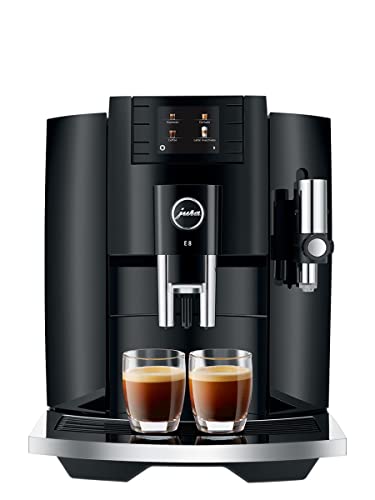
2. Jura E8 Automatic Coffee Machine
A popular mid-range Jura with a good drink menu and automatic milk frothing. It is a sensible pick for a team that drinks plenty of milk-based coffee. Its automatic milk frothing helps when many staff order lattes. Confirm the tank size on the listing so refills are not constant.
Suits: mid-size teams. Strengths: a wide menu. Weaknesses: regular milk cleaning. Skip it if you only want black coffee.

Best for clients and meeting rooms
3. Jura Z10 Automatic Coffee Machine
A premium Jura with a wide menu, including cold brew options. It suits an office that wants a showpiece machine for clients. It makes the most sense where presentation matters as much as the coffee. Confirm the milk system and cleaning steps before you buy.
Suits: clients and meeting rooms. Strengths: a premium feel. Weaknesses: a larger footprint. Skip it if you need low maintenance.
Best for shared kitchens
4. Jura S8 Automatic Coffee Machine
A step-up Jura with a clean look and generous drink range. It fits a shared kitchen where staff want café drinks. Its clean lines and menu make it a friendly face for a break room. Check the hopper and tank sizes on the listing.
Suits: shared kitchens. Strengths: a refined design. Weaknesses: it takes up counter space. Skip it if you have little room.
Best for simple operation
5. Jura D6 Automatic Coffee Machine
A simpler Jura aimed at straightforward operation, which helps in offices where many people share one machine. Straightforward buttons mean new staff learn it quickly. Assign one person to refill and clean it.
Suits: simple operation. Strengths: easy controls. Weaknesses: fewer features. Skip it if you want a full menu.
Best for busier offices
6. Jura WE8 Automatic Coffee Machine
A Jura aimed at workplaces, with features built for repeated daily use and a larger cup count. Check the listing for the exact feature set. Because dealers handle many workplace models, ask about servicing first. Ask the seller whether the warranty covers workplace use.
Suits: busier offices. Strengths: a work-focused build. Weaknesses: it may be sold through dealers. Skip it if you only need a home machine.
Care and Setup
- Run the cleaning and rinse cycles when the machine asks.
- Use fresh beans and keep the hopper lid shut.
- Fit a water filter if the listing recommends one.
- Clean the milk system after use if it has one.
Mistakes to Avoid
- Skipping maintenance prompts.
- Using oily or flavored beans in the grinder.
- Buying a home model for heavy daily use.
- Ignoring warranty terms for commercial use.
Estimating Your Office’s Coffee Demand
The right machine depends on how many people drink coffee and when. Start by counting regular drinkers, then estimate how many cups each person has per day. Remember that demand clusters. Many offices see a rush at the start of the day and after lunch, and a machine that copes with a steady trickle may struggle when a queue forms.
Think about the types of drinks as well. Espresso and black coffee are quick, while milk-based drinks take longer and require more cleaning. If most of your staff prefer lattes or cappuccinos, a machine with an efficient milk system matters more than one built mainly for straight espresso.
- Note the peak number of people who might use the machine within a short window.
- Allow for meetings, visitors and clients, who add to the demand.
- Check the maker’s guidance on daily cup volumes and the intended use for each model.
- Consider the tank and bean hopper sizes, because small tanks mean frequent refills.
If your usage is near the upper end of a model’s stated range, consider a larger or more workplace-oriented model. A home-oriented machine used heavily may wear faster, and the warranty may not cover it, so check the terms.
Home Models Versus Workplace Models
Jura sells machines for homes and machines aimed at workplaces, and the difference matters. Home-oriented models are designed for a smaller number of drinks per day and are typically compact and easy to use. Workplace-oriented models are built for heavier use, often with larger capacity, more robust components and features that make shared use easier.
Read the listing and manufacturer information to find the intended use, and ask the seller whether the warranty covers a commercial or office environment. Some home-use warranties exclude workplace use, and that can leave you without support if the machine fails.
Questions to ask:
- Is this model designed and warranted for office use?
- What is the recommended number of cups per day?
- What are the tank, hopper and grounds container sizes?
- Does it support a fixed water connection, or is it only a tank model?
- How does it handle milk, and how is the milk system cleaned?
Matching the model to the load is better than buying the most expensive option or the cheapest one. A smaller team may be well served by a compact machine, while a busy floor needs more capacity.
Where you can, test a model’s controls with your staff in mind. A clear display and simple buttons reduce questions and misuse, which matters more in an office than a long drink menu.
Milk Systems, Water and Hygiene in a Shared Space
In an office, hygiene is a shared responsibility, and milk is the biggest risk. Milk systems need to be rinsed and cleaned regularly, and in a shared environment it is easy for everyone to assume someone else has done it. Decide who owns cleaning and write the routine down. Follow the maker’s instructions for rinse programs, and keep milk cold and fresh.
Water quality affects both taste and the machine. Hard water leads to scale, which can damage the heating system and slow flow. Many bean-to-cup makers recommend a filter, so check the listing and manual, and plan to replace the filter on schedule. Use clean fresh water in the tank, and empty and refill it regularly.
- Run rinse and cleaning cycles when the machine prompts.
- Keep a log of cleaning, descaling and filter changes.
- Store spare filters, cleaning tablets and any supplies in a labelled spot.
- Wipe the outside and the drip area daily.
Good hygiene also protects taste. A neglected milk path or dirty brew group can give bitter or sour flavours, and staff will notice. Keep supplies stocked and the routine simple.
Check the schedule for descaling and filter changes with the maker, and set a recurring reminder in a shared calendar so the task does not depend on one person’s memory.
Beans, Grinder Settings and Everyday Supplies
A bean-to-cup machine uses fresh beans, and the right choice improves every cup. Choose beans suited to automatic machines. Very oily or flavoured beans can clog grinders, so follow the maker’s guidance. Keep the hopper lid shut to protect freshness, and fill it with an amount that will be used in a reasonable time rather than a huge bag that goes stale.
Grinder settings influence strength and flavour. Adjust them gradually, only while the grinder is running if the manual says so, and give each change a cup or two to show its effect. Avoid constant tweaking by multiple users, which makes results inconsistent.
Plan everyday supplies:
- Beans, in a quantity that matches your usage.
- Milk or milk alternatives, if the machine has a milk system.
- Cleaning tablets, descaler and filters recommended for your model.
- Cups, stirrers and a bin for grounds.
Consider who will restock and how you will know supplies are running low. A simple checklist near the machine or a named person in charge avoids the situation where the machine is out of service on a busy morning. Cost per cup depends on beans, milk and maintenance, so look at the total picture, not just the purchase price.
Service, Warranty and Placement
An office machine needs support. Before buying, ask who handles servicing, how quickly repairs are arranged and what is covered. Authorised dealers may offer service plans and training, and some offices prefer that to dealing with the manufacturer directly. Keep the proof of purchase and the serial number.
Placement affects use and longevity. Choose a spot with an outlet, space for the machine to be opened and cleaned, and easy access for staff. Keep it away from direct heat sources, such as a window with strong sun or a radiator, and from areas where water may splash onto electronics. Leave space for the drip tray, grounds container and tank to be removed. If the area is busy, add a counter space for cups and a bin.
- Check the weight and size against the counter strength and layout.
- Consider a tray or mat to catch drips.
- Make sure the lighting and signage let staff find the controls easily.
- Provide a quick guide near the machine for new starters.
Signs it is time for service include slow flow, strange noises, error messages that persist after cleaning, leaks or drinks that are consistently weak or cold. Address them promptly, since small problems often grow if ignored.
Jura Office Espresso Machine FAQ
Are Jura machines meant for offices?
Some models are aimed at workplaces. Check the listing for the intended use and warranty.
How many cups can one make per day?
Check the maker’s guidance, since heavy use can shorten a home model’s life.
Do I need a water filter?
Often it is recommended, so follow the maker’s guidance.
Can staff operate it without training?
Mostly yes, since drinks are one-touch, but someone should own cleaning.
How do we decide between a compact model and a larger one?
Estimate the peak number of drinks during busy times and compare it with the maker's guidance on use. If many people queue at once, a larger tank and hopper and a more robust model will be easier to live with.
Who should be responsible for cleaning the machine?
Assign a named person or a rota, because shared tasks are often neglected. Keep a simple checklist next to the machine and make sure that person has the supplies they need.
Can we use flavoured or oily beans?
Check the manual. Very oily or flavoured beans can build up in the grinder and brew group, so many makers advise against them. Use beans suited to automatic machines.
Do we need a water filter?
Often it is recommended, especially in hard-water areas, to reduce scale and improve taste. Follow the manual and replace the filter on schedule.
Should we choose a model with a milk system?
If many staff drink milk-based coffee, yes, but be ready to clean it regularly. If most drink black coffee or espresso, a simpler machine may be easier to maintain.
What if the machine breaks during working hours?
Know in advance how to contact the dealer or the maker, and keep the purchase details handy. Some offices keep a backup coffee option for outages.
Does the machine need a fixed water connection?
Many models use a refillable tank, and some workplace models may support a connection. Check the listing for the options before you buy.
Running the Numbers: Cost Per Cup Against a Subscription Service
Offices often compare a bean-to-cup machine with a pod system, a coffee service contract or buying lattes for the team. The comparison is not just the sticker price. A machine has an upfront cost, then ongoing costs for beans, milk, filters, cleaning tablets, descaler and eventual servicing. A service contract replaces many of these with a monthly fee, but locks you into a supplier.
A sensible way to compare is to list every cost line and divide by the number of cups you expect. Beans and milk dominate for most offices, and they scale with use. Maintenance supplies are smaller but steady. Servicing is irregular and depends on how heavily the machine is used and how well it is cleaned. Ask for the maker’s or dealer’s guidance on service intervals and expected costs, and factor in the staff time needed to refill and clean.
- Upfront: purchase price, installation, a stand or cabinet if needed.
- Recurring: beans, milk or alternatives, filters, cleaning tablets, descaler, cups.
- Occasional: servicing, part replacements, extended warranty.
- Hidden: staff time, downtime when the machine is out of service.
The upshot is that a bean-to-cup machine tends to make financial sense where many people drink coffee every day, but a small team that has a cup or two each may find a simpler setup easier to justify. Because we have not used these machines, treat the cost lines as a framework and fill in numbers from current listings and supplier quotes.
Setting Rules and Habits for a Shared Machine
A technically excellent machine can still fail in an office if nobody owns it. Shared equipment follows a familiar pattern: everyone uses it, nobody cleans it and problems appear on a busy morning. A few lightweight rules prevent this.
Name an owner and a backup. They do not need to do everything, but they should know the routine, order supplies and call for service. Put a one-page guide near the machine that shows how to make the main drinks, what the common messages mean and who to tell if something looks wrong. Keep it short, and use photos if helpful.
Decide how to handle special requests. Some offices set a rule that only trained staff change grinder settings, and everyone else sticks to the menu. Others allow a few adjustments within limits. Make sure everyone knows not to put anything other than beans in the hopper, because flavored syrups, powders or pre-ground coffee can cause damage in some models.
- Post the cleaning schedule and tick it off when done.
- Agree on a reporting method for errors, such as a shared message channel.
- Review the routine after the first month and adjust.
Visitors deserve a thought too. A short label on the front explaining the touchscreen helps guests avoid mistakes and keeps queues moving in a lobby or meeting room.
Descaling, Filters and Water Hardness
Scale is a mineral deposit that builds up inside heating parts and pipes, and it affects every coffee machine. Hard water makes the problem faster, and the machine may ask for descaling more often. A water filter, where the maker supports one, reduces the mineral content and can lengthen the time between descaling. Always use the filter type and cleaning products recommended for your specific model, because using the wrong product can harm seals or void the warranty.
Find out your water hardness before you buy. Local utilities usually publish it, and inexpensive test strips can give a rough reading. Some machines have a hardness setting that tells the machine how often to prompt for filter changes or descaling, so set it properly during installation. If you ignore the prompts, flow can slow, the temperature can drift and the pump may work harder than designed.
Keep spare filters and cleaning tablets on a shelf close to the machine, and put the replacement date on a shared calendar. The cost of a missed filter change is usually higher than the filter itself.
Contingency Planning for When the Machine Is Down
Every machine eventually stops at an inconvenient time. A little planning limits the disruption. Record the serial number, purchase date and dealer contact somewhere easy to find. Know whether the warranty includes on-site service, a return for repair or a loan unit, and how long repairs typically take.
Some offices keep a simple backup, such as a kettle and a French press, or a small pod machine in a cupboard. It does not need to be fancy, and it prevents the morning rush from turning into a complaint. For a client-facing meeting room, consider a thermos or catered coffee as a stopgap if the machine goes down on an important day.
After a repair, ask the technician what caused the fault and whether any routine change could prevent it. Many problems trace back to scale, a blocked milk path or incorrect beans, and the fix may be a simple habit. Keep the repair record with the machine’s documentation, since it helps if you need to make a warranty claim or decide when to replace it.
Frequently Asked Questions
How do I compare a bean-to-cup machine with a coffee service contract?
List all costs for each option: purchase, beans, milk, filters, cleaning products, servicing and staff time for the machine, and monthly fees for the contract. Divide by expected cups per month. Ask suppliers for current quotes, since prices change.
How do I find out how hard my office water is?
Your local water utility often publishes hardness figures, and inexpensive test strips can give a rough reading. Set the machine’s hardness setting to match, since it controls how often it prompts for filter changes and descaling.
Can staff add syrups or flavored powders to the bean hopper?
No, many makers warn against it. Syrups, powders and very oily or flavored beans can clog grinders and brew units. Use beans only, and add flavorings to the cup. Check the manual for what your model allows.
What should I keep on file for warranty claims?
Keep the invoice, serial number, model name, installation date, dealer contact and a log of cleaning, descaling and repairs. Having these ready makes claims quicker, and some warranties require proof of regular maintenance.
Placing the Machine: The Decision That Decides Everything Else
More office coffee problems are placement problems than machine problems. A bean-to-cup machine needs four things within easy reach: power, water, a place for used grounds and drips to be dealt with, and enough passing traffic that someone notices when it asks for attention. Put the machine in a kitchen or a break area where people already gather, and it becomes the office’s water cooler in the best sense, a place where the day is punctuated and information travels. Put it in a corridor, a store room or beside one person’s desk, and it becomes either a nuisance or a private appliance with a queue. The models in this guide differ in size, and the compact end, such as the Jura ENA 8 and the D6, exists precisely for offices where the right place is small: a credenza, a kitchen counter with limited depth, a satellite office’s kitchenette.
Think about the queue as well as the machine. A single machine at a single point will gather a morning line, and the line is either a pleasure, colleagues talking while the grinder works, or a friction, people watching a clock. Larger offices often solve this with placement rather than with a bigger machine: the main machine where the kitchen is, and the knowledge that the rush spreads itself across the first hour. Whichever model you choose, leave working room around it: the water tank needs lifting out, the grounds container needs emptying, the drip tray needs sliding, and a machine wedged into an exact alcove will be serviced reluctantly and therefore rarely.
Choosing Among the Six: A Plain-Language Map
The six Jura models in this guide form a ladder, and the rungs are about capacity, variety and presence rather than about good and bad coffee. The ENA 8 is the compact, design-led option for a small office or an executive area, where the machine will be seen up close and used by a modest number of people who value a good espresso and a small footprint. The D6 is the straightforward workhorse for a small team that wants the essentials done well without paying for a drinks menu it will not use. The E8 is the versatile middle, the model most offices picture when they picture this category: a broad range of drinks, milk included, in a size that suits a medium office kitchen. The S8 adds refinement and a more considered interface for offices where the machine is part of the room’s impression, a client-facing kitchen or a studio that cares how its equipment looks and feels.
The Z10 sits at the innovative end, with the widest drink repertoire in this group, including cold-extraction style drinks, and it suits the office that treats coffee as a genuine perk and wants the machine to be a small event rather than a utility. The WE8 is the one designed with workplaces explicitly in mind, built for the steadier daily volume and the shared-use realities of an office rather than a home. Read the ladder by your office’s truth: how many people, how many drinks each, how much milk, how much impression matters, and how much counter you can honestly give. An office that buys one rung too high wastes money on unused repertoire; an office that buys one rung too low creates a queue, a strained machine and a daily, drinkable reminder of the saving.
The First Month: Habits That Decide Whether the Machine Is Loved
Week one belongs to setup and discovery: fill, rinse, run the first drinks, and let people learn the interface while someone knowledgeable is nearby to answer the same three questions everyone asks. Put a short, friendly card beside the machine with the essentials: how to make the standard drinks, what to do when it asks for water or emptying, and who to tell when it asks for something more. Week two belongs to beans: try the office’s chosen beans at a couple of grinder settings and let a small, honest tasting decide the setting, rather than leaving the machine on its arrival settings forever. Week three belongs to the cleaning rhythm: assign the daily, weekly and monthly tasks to named people or to a rota, because a shared machine cleaned by everyone in theory is cleaned by no one in practice. Week four belongs to review: count roughly how many drinks the machine is making, check the supplies it is consuming, and adjust the bean order, the cup stock and the cleaning rota to the reality rather than to the estimate.
That first month also sets the machine’s social contract. Decide, kindly and clearly, whether the machine is for staff only or for visitors too, whether personal syrups and alternative milks may live beside it, and where the line sits between a perk and a mess. Offices that write these small rules early, on the same card as the instructions, avoid the slow accumulation of grievances that attaches to any shared resource. The machine will be loved or resented by Christmas almost entirely on the strength of these habits, and only marginally on the strength of its drinks menu.
Milk in the Office: Pleasure, Logistics and Hygiene
Milk is where office coffee succeeds socially and fails logistically, so it deserves a plan rather than a hope. Decide what milk the office will stock, who buys it, where it lives, and when it is thrown away, and write those answers on the card. A machine with an automatic milk system makes beautiful drinks and asks, in return, that its milk path be rinsed and cleaned on schedule without exception, because milk residue in a warm office machine is a hygiene problem with a short fuse. Offices that know they will not keep that schedule should be honest and choose a pattern they will keep: milk added by hand from a jug, or a machine routine owned by a named person whose job description quietly includes it.
Alternative milks complicate the picture kindly. They vary in how they foam and how they behave in automatic systems, and they separate a workforce into camps with strong views. A workable compromise is to stock the office standard in the machine’s system and let individuals keep their own alternatives for adding by hand, so the machine stays simple and nobody’s preference is outlawed. Whatever the office decides, the fridge discipline is the same: milk dated when opened, kept cold, and discarded on schedule rather than on suspicion. The best office coffee programme is not the one with the most options; it is the one whose options are fresh.
When the Machine Stops: A Calm Office Protocol
Every shared machine eventually presents a message nobody recognises, on the morning nobody needs it. A calm protocol, written before that morning, is worth more than any feature in this guide. Step one is the card: the named person who looks first, armed with the manual and the authority to perform the basic remedies, refilling, emptying, reseating, restarting, that solve most stoppages. Step two is the record: a note of what the message said and what was tried, kept with the machine, so the second occurrence is recognised and the service engineer, if one is called, inherits a history instead of a shrug. Step three is the fallback: a kettle and a simple way of making an acceptable drink for a day, so that a machine awaiting a part is an inconvenience rather than a crisis, and nobody is dispatched to buy a replacement in a panic.
Keep the paperwork with the machine as well: purchase record, warranty details, service contacts, and a log of descaling and filter changes. Offices lose these documents with impressive reliability by filing them with a person, and people change jobs. The machine’s folder, physical or digital and known to at least two people, is the difference between a warranty claim made in a day and a warranty discovered after it has expired. None of this is glamorous, and all of it is what separates an office that enjoys its machine for years from an office that tells stories about it.
More Questions From Office Coffee Managers
How do we stop one person’s strong settings from becoming everyone’s coffee?
Agree a house setting for strength and grind, set it as the machine’s standard, and let individuals adjust their own drink within the drink’s own options rather than by reprogramming the machine’s foundations. Most of these models allow a drink to be strengthened or lengthened in the making, which is where personal taste belongs. A small note on the card, asking people to return any deep setting they changed, prevents the slow drift in which the office coffee quietly becomes one enthusiast’s project. Review the house setting once or twice a year with fresh beans and fresh honesty, because palates and beans both change.
Should the office buy the machine or consider it an employee’s job to run?
The machine should be owned, in every sense, by the office: bought on the office’s decision, maintained on a rota the office recognises, and supplied on the office’s account. Machines that depend on one enthusiast’s goodwill work beautifully until that person is on holiday, in a meeting or in a new job, at which point the office discovers that its coffee programme was a person. Spread the small duties, write the card, keep the folder, and the programme becomes infrastructure, which is what a good perk should quietly become.
What cups should the office provide?
Real cups, in a size that matches the machine’s standard drinks, with a washing arrangement that is as easy as the disposable alternative, or the real cups will lose. Offices that want the environmental and financial sense of reusables must make the sink, the rack and the rota as thoughtless as the bin once was. Provide a few larger mugs for the long-drink drinkers, keep a small stock of takeaway cups for the days people genuinely leave with their coffee, and let the machine’s drip tray be the only thing in the arrangement that is washed by whoever notices it is full, which, with a card and a rota, will be often enough.
Beans for a Shared Palate
Choosing beans for an office is an exercise in diplomacy disguised as shopping. The office palate is a crowd, and the bean that delights the most committed coffee drinker, bright, light and challenging, will strike much of the crowd as sour, while the bean bought purely for safety can strike everyone as dull. The workable target is a well-roasted, medium style of bean from a supplier who can deliver it consistently, bought in a quantity the office finishes while it is still fresh, and stored away from heat and light in its bag, sealed between uses. Change beans occasionally and deliberately, with a small announcement and a chance for people to comment, rather than silently, since half the pleasure of an office machine is the mild theatre of a new bag arriving.
Keep a decaffeinated option with dignity: the same care in sourcing, stored separately and labelled clearly, for the colleagues and the hours that need it. A surprising share of office goodwill is generated by remembering the people for whom the standard offer does not work, the decaf drinker, the tea drinker whose kettle should be equally maintained, the visitor who takes milk in a way the machine does not pour. The coffee programme that includes everyone is the one that gets defended when budgets are discussed, and that defence, in the end, is what keeps a good machine in an office for the long term.
Judging Success After Six Months
An office will know whether it chose well by measures no brochure prints. The queue is short and sociable. The machine is clean when you look at it, not only when you clean it. The bean order is a routine rather than a recurring emergency. New starters are taught the machine in their first week as a matter of course, and visitors are offered a coffee with a small, genuine pride. If those things are true, the model on the counter was the right one, whichever rung of the ladder it occupies. If they are false, the remedy is usually in the habits and the placement rather than in a different machine, and the honest office will fix the card, the rota and the supplies before it fixes the hardware. Choose the Jura that fits your numbers, then spend the real effort where it has always belonged: on the small, shared disciplines that turn an appliance into an institution.
How should an office introduce the machine to staff?
With a small launch rather than a silent installation. Gather whoever is nearby for the first drinks, let the most enthusiastic coffee drinker in the office demonstrate the standard drinks, and walk everyone through the card: the drinks, the messages, the named person. Put the launch at a natural break so it feels like the perk it is. An introduced machine acquires owners across the whole office; an installed one acquires a single owner and a crowd of nervous users, and nervous users are the ones who leave a mess for someone else because they were never shown that the drip tray simply slides out.
What is the best way to handle guests and client visits?
Decide the house offer in advance: who makes the visitor’s coffee, in which cups, and with what small ceremony. A client offered a well-made espresso from a clean machine, in a real cup, by a colleague who is not apologising for any part of the process, receives a message about the office that no brochure delivers. Keep a modest stock of the good cups for these moments, know which drink the machine makes most impressively with the least fuss, and rehearse it once. Hospitality of this kind is a system, not an improvisation, and the machine is only its most visible part.
Systems, cards, rotas and folders sound like a great deal of apparatus for a cup of coffee, until the first morning the machine stops and the office discovers which kind of programme it has been running. Build the kind that shrugs, makes a kettle drink for a day, and has the machine back by Thursday.
How many drinks a day should push an office toward the workplace model?
Count honestly for a week, including visitors and the second cups nobody mentions, and then think in terms of strain rather than a magic number. A compact machine asked to serve a large office will spend its day grinding, heating and asking for water and emptying, and its queue will become the office’s metronome. When the count shows the machine working through most of the morning without rest, or when the cleaning and refilling tasks have become a noticeable job in themselves, the office has outgrown the rung it is on and the workplace-oriented model, the WE8 in this guide, becomes the honest recommendation. Buy for the counted day, with a little headroom for growth, rather than for the hoped-for one.
Counted days and honest headroom: the same discipline this guide has recommended for beans, for milk and for cleaning applies, finally, to the purchase itself. An office that buys on evidence will be an office whose machine still fits it in three years, through growth, through new starters and through the slow evolution of its tastes.
What should the office do in the machine’s first week if the coffee tastes disappointing?
Change one thing at a time, in the order of likelihood: the beans’ freshness, the grinder setting, the water, and only then the machine’s deeper settings. New machines are routinely blamed for the taste of stale beans and for water that the office has never thought about, and a week of small, recorded adjustments will usually find the cause. Keep the tasting honest and collective, since the office palate is the client, and write the winning combination on the card so that the next bean change starts from a known position rather than from folklore.
Folklore is the enemy of every shared machine, and the card on the wall is its antidote. Keep the card current, and the office’s coffee knowledge will survive every change of staff that the years bring.
That, more than the model name on the front, is what makes an office machine a success worth repeating when its long service finally ends.
Choose well, write the card, and let the machine become the best-attended meeting in the building.
It usually does, within the first month, in every office that gives it the habits it needs.
The Short Version
For small teams, the ENA 8. For mid-size offices, the E8. For a premium machine, the Z10. For shared kitchens, the S8. For simple operation, the D6. For heavier use, the WE8.


