Disclosure: topratedkitchenware.com is reader-supported. When you buy through links on our site, we may earn an affiliate commission from Amazon and other retailers, at no extra cost to you.
Where to buy
The fastest way to shop this list is to start with the six models below, compare seat height, flush volume and rough-in against your bathroom, and then read the detailed reviews before you commit. Every linked model here was cross-checked against verified product data before it earned a place, and every link goes to the exact configuration described in its review. If your bathroom has a standard 12-inch rough-in, all six will physically fit the flange position in most homes, which keeps the low-cost part of this purchase honest: you are comparing the toilet itself, not paying for unusual plumbing work to make it fit.
- HOROW 17 Inch High Elongated Toilet
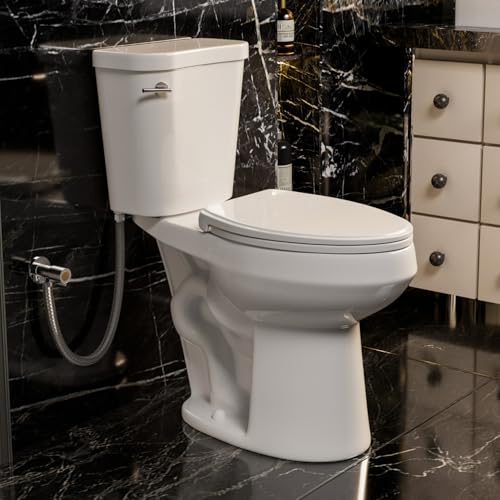
- Garvee Two Piece Elongated Toilet
- IDEALHOUSE ADA Compliant 17 Inch Elongated Toilet
- American Standard Cadet PRO Right Height Elongated Toilet
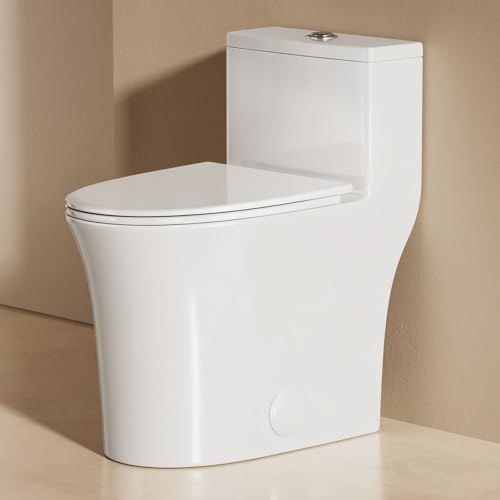
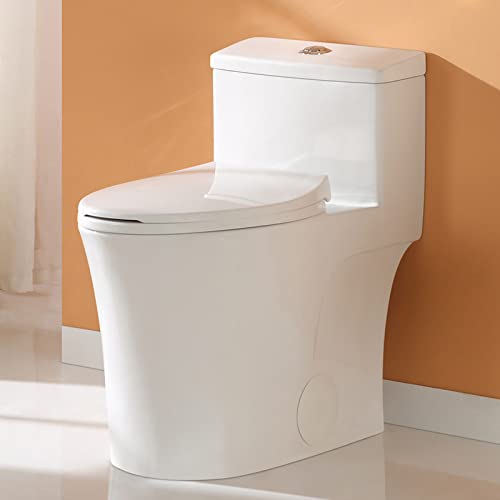
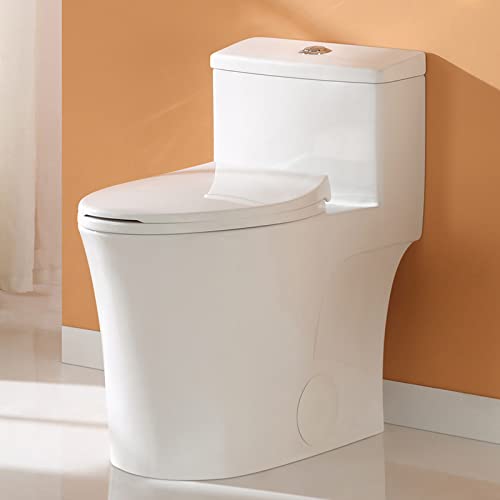
- HOROW T0338W One Piece Toilet
- DeerValley Compact One Piece Toilet
Read the full guide ↓
Finding the best low cost toilets used to mean accepting a weak flush, a seat that felt like a park bench and a bowl that needed scrubbing twice a week. That trade-off has largely disappeared. The current generation of budget-friendly two-piece and compact one-piece toilets uses the same basic physics as far more expensive models: a well-shaped trapway, a siphonic jet that starts the flush decisively, and water volumes that meet modern efficiency rules without leaving waste behind. What separates a genuinely good low-cost toilet from a cheap one is not the badge on the tank. It is whether the manufacturer spent the limited budget on the parts that matter — the flush valve, the glazed trapway, the seat hinge — instead of on styling that photographs well and performs poorly.
This guide is built for the way people actually replace a toilet on a budget. Maybe the old unit rocks on its flange, the tank sweats, the fill valve hisses at night, or a renovation has reached the point where the twenty-year-old round-front model simply looks tired next to new flooring. Whatever brought you here, the goal is the same: spend as little as makes sense, once, and then not think about the toilet again for years. The six picks below cover tall comfort heights for adults who struggle with low seats, a compact one-piece for small bathrooms, an established-brand option for buyers who want the reassurance of a long-standing name, and straightforward two-piece designs that any plumber — or confident home owner — can install with basic tools.
One warning before the picks themselves. The purchase price of the toilet is only part of the real cost of a replacement. A wax ring or silicone ring, a new flexible supply line, and sometimes a pair of closet bolts are small but necessary extras if your existing hardware is corroded. Budget models sometimes include a seat and sometimes, in the wider market, do not, so check what is in the box for the exact configuration you choose. Every pick in this guide includes a seat according to its verified listing data, which removes one of the most common surprise costs in this category. Installation time is the other hidden figure: a two-piece toilet arrives in two cartons and assembles at the flange, while a one-piece is heavier to carry but has no tank-to-bowl joint to align. Neither is difficult, but the difference matters if you are carrying the unit up stairs alone.
Key Takeaways
- Low cost no longer means low performance: several picks here carry a maximum performance flush rating stated in their verified data and use 1.28 gallons per flush or a dual-flush split, so water bills stay controlled.
- Seat height is the comfort decision that matters most. The 17-inch class suits tall adults and anyone who finds sitting down and standing up easier from a higher bowl; standard-height models suit shorter adults and children sharing the bathroom.
- All six picks use a 12-inch rough-in, the most common measurement in American homes, but you should still measure from the finished wall to the center of your flange bolts before ordering.
- Two-piece designs are usually the lower-cost route and are easier to carry and repair; one-piece designs cost a step more in this class, clean faster, and remove the tank-to-bowl leak point.
- A soft-close seat, once a premium extra, is included across most of this list — it is worth having, both for quiet nights and for preventing the slams that chip porcelain over time.
- If water efficiency is your next research step after price, our companion guide to Best Low Flow Toilets explains how flush volumes compare across the wider market.
In this guide
Quick Picks
| Pick | Badge | Format | Flush | Link |
|---|---|---|---|---|
| HOROW 17 Inch High Elongated Toilet | Best Overall | Two-piece, elongated | 1.28 GPF single flush | Check on Amazon |
| Garvee Two Piece Elongated Toilet | Best Budget Pick | Two-piece, elongated | 1.28 GPF side push flush | Check on Amazon |
| IDEALHOUSE ADA Compliant 17 Inch Elongated Toilet | Best Comfort Height Value | Two-piece, elongated | 1.28 GPF siphonic jet | Check on Amazon |
| American Standard Cadet PRO Right Height Elongated Toilet | Best Established Brand | Two-piece, elongated | 1.6 GPF | Check on Amazon |
| HOROW T0338W One Piece Toilet | Best One-Piece Upgrade | One-piece, elongated, skirted | Dual flush 1.1/1.6 GPF | Check on Amazon |
| DeerValley Compact One Piece Toilet | Best for Small Bathrooms | One-piece, compact, skirted | Dual flush 1.1/1.6 GPF | Check on Amazon |
How These Picks Were Chosen
This is a research-led guide, not a hands-on laboratory test, and it is written to be honest about that distinction. Each candidate was checked against verified product data: the manufacturer-stated flush volume, bowl shape, seat height class, rough-in, construction format and included seat. Models were only linked when the verified data confirmed the toilet actually matched what its listing claimed, and any specification you see in the spec boxes below comes from that verified data rather than from marketing copy repeated around the web. Where a specification was not present in the verified data, it was left out rather than guessed.
Price positioning was judged qualitatively, by tier, because exact prices move constantly and a printed figure would mislead within weeks. The question asked of every candidate was simple: for a buyer whose first filter is cost, does this toilet deliver the core job — a complete, confident flush, a comfortable seat height, a seat included in the box, and parts that can be replaced years later — without charging for decorative extras? Models that cut the flush performance to hit a number were excluded. Models that spent their budget on the trapway, the flush mechanism and the seat were kept. That is why this list mixes newer value brands with one long-established name: the Cadet PRO earns its place because its two-piece format and trade-oriented design keep ownership simple, not because of the logo.
Flush claims were read carefully. A stated maximum performance score in the verified data indicates the toilet cleared a standardized bulk-waste test at the top level; where that score is stated, it is mentioned. Where it is not stated, the review says so and judges the flush by its mechanism and volume instead. Water volume was treated as a genuine low-cost issue, not just an environmental one: a household replacing an old high-volume toilet with a 1.28-gallon model saves water on every single flush, and over a year of family use that difference is a real, recurring saving that compounds the low purchase price. Readers comparing efficiency-first options should also look at Best Low Flow Dual Flush Toilets, where the dual-flush mechanism is the main subject.
The 6 Best Low Cost Toilets

HOROW 17 Inch High Elongated Toilet
Badge: Best Overall
Strengths
- 17-inch chair height suits tall adults and makes sitting and standing noticeably easier for seniors.
- Stated maximum performance flush score in its verified data, at an efficient 1.28 gallons per flush.
- Elongated bowl gives more seating room than the round-front bowls still common in this price class.
Trade-offs
- Single flush only — no lighter liquid flush option for households chasing the lowest possible water use.
- The taller bowl can feel high for shorter adults and for young children using the same bathroom.
- Two-piece format means a tank-to-bowl joint to assemble and check during installation.
Key specs
- Format: Two-piece
- Bowl: Elongated, 17-inch height, ADA chair height class
- Flush: 1.28 GPF single flush, stated MaP 1000g
- Rough-in: Standard fit for this class (confirm your measurement before ordering)
For most budget buyers, this HOROW is the sweet spot of the list, and that is why it leads. The formula is straightforward: take the seat height adults increasingly ask for, pair it with a genuinely efficient single flush that still carries a top-level bulk removal score in its data, and sell it in the two-piece format that keeps both manufacturing and shipping costs down. In daily use, the elongated bowl is the detail you will notice most. Round bowls save a couple of inches of room depth, but for adult users the elongated shape is simply more comfortable, and at this tier many competing models still default to round to save money. HOROW did not make that cut here.
The flush deserves a closer look because it is where cheap toilets usually fail. A 1.28-gallon flush has less water to work with than the older generation, so the energy has to come from design: a siphon jet that pushes waste toward the trapway as the rim water swirls the bowl clean. The stated maximum performance score indicates this model was tested with a heavy standardized load and cleared it, which is the single most reassuring data point a budget toilet can carry. It does not guarantee your specific plumbing will behave identically — drain slope and venting matter, as the how-to section below explains — but it separates this model from the anonymous low-cost units whose flush has never been independently scored at all.
Who should buy it? Households replacing a standard toilet in a main bathroom, especially where tall users or older parents are part of the picture. The honest limitation is the single flush: if your household is disciplined about using a light flush for liquids, a dual-flush model lower in this list will use less water over a year. If nobody in your home will bother choosing between two buttons, the simple, strong single flush here is arguably the better real-world choice, because a dual-flush toilet only saves water when people actually use the light setting.
Best for: Most budget buyers, tall users and seniors / Not suited for: Households committed to dual-flush water saving or bathrooms used mainly by small children

Garvee Two Piece Elongated Toilet
Badge: Best Budget Pick
Strengths
- Straightforward two-piece ceramic design in the lowest-cost format in this category.
- Soft-close seat with a locking polypropylene construction included in the box.
- 1.28 GPF water-saving flush with cUPC certification stated in its verified data.
Trade-offs
- 15-inch comfort height is lower than the 17-inch models — better for some, less helpful for tall users.
- Side push flush placement is less common than top or front levers and takes a day to get used to.
- No maximum performance score is stated in its verified data, so flush strength is judged by mechanism, not a test figure.
Key specs
- Format: Two-piece ceramic
- Bowl: Elongated, 15-inch comfort height
- Flush: 1.28 GPF, side push, water-saving
- Seat: Locking PP soft-close seat included
- Rough-in: 12 inch
- Certification: cUPC certified (as stated)
The Garvee is the pick for the buyer whose spreadsheet starts and ends with the total at checkout, but who still wants a toilet that behaves like a proper modern unit rather than a compromise. Its specification reads like a checklist of what actually matters at this tier: an elongated ceramic bowl rather than a cramped round one, a water-saving 1.28-gallon flush, a soft-close seat included rather than sold separately, and certification stated in the data. The 15-inch comfort height sits between the old standard height and the taller chair-height class, which makes it a sensible default for mixed households — tall enough to feel modern, low enough that shorter adults and older children are not left with their feet dangling.
The side push flush is the design detail to think about. Most American toilets use a front or side lever or a top button; a push control on the side of the tank is simple, has few moving parts to wear, and keeps the tank top clear. It is not better or worse in any important mechanical sense, but if anyone in the household has limited hand strength or a strong preference for a traditional lever, look at the other picks before choosing this one. In a rental property or a first renovation, though, the Garvee’s simplicity is the point: standard rough-in, standard two-piece assembly, standard replacement parts logic. Landlords replacing several units across a property will also appreciate that the two-piece format ships and stores in smaller cartons than any one-piece design.
Its honest limitation is the absence of a stated bulk-test score. That does not mean the flush is weak — the siphonic action and full water volume are the same ingredients used by scored models — but a buyer whose home has older, rougher drain pipes and a history of slow clearing should weight the scored picks above this one. For a straightforward bathroom with sound plumbing, the Garvee covers the job at the lowest tier in this guide.
Best for: Tightest budgets, rentals and first renovations / Not suited for: Homes with problem drains that need a test-scored flush, or tall users who specifically want 17-inch height

IDEALHOUSE ADA Compliant 17 Inch Elongated Toilet
Badge: Best Comfort Height Value
Strengths
- Full 17-inch ADA-compliant chair height at a value-tier position in this class.
- Siphonic jet flush at 1.28 GPF balances bowl clearing with water saving.
- Soft-close seat included, and the easy-clean white porcelain finish suits busy family bathrooms.
Trade-offs
- Single flush, so no reduced liquid flush for water-focused households.
- No maximum performance score stated in the verified data.
- The tall stance needs floor space visually — it looks larger in a very small powder room.
Key specs
- Format: Two-piece ceramic
- Bowl: Elongated, 17 inch, ADA compliant comfort height
- Flush: 1.28 GPF water saving, siphonic jet
- Seat: Soft-close seat included
- Rough-in: 12 inch
- Finish: White porcelain, easy clean
If the reason for replacing your toilet is comfort rather than failure — knees that complain, a parent moving in, a tall teenager who folds himself onto a low bowl — the IDEALHOUSE is the value answer on this list. Chair height is the single feature that changes how a toilet feels every day, and this model delivers the full 17-inch ADA-class height in a two-piece ceramic body at the accessible end of the market. The elongated bowl completes the comfort picture: more front-to-back room, a posture that feels like a chair rather than a perch, and a seat that supports adults properly.
Mechanically it keeps things proven and simple. The siphonic jet design concentrates the flush energy at the trapway entrance, which is what pulls the bowl contents through decisively, while rim water washes the bowl walls. At 1.28 gallons it meets the high-efficiency threshold that many water districts use for rebate programs, though you should always confirm your local program’s current requirements before counting on any rebate. The soft-close seat is a small thing that becomes a big thing in a household with children or light sleepers: no midnight slams, and no slammed-seat chips in the porcelain rim over the years.
Its limitations mirror the Garvee’s: no published bulk-test figure in the verified data, and no dual-flush option. Judge it, therefore, as a comfort-first value pick for homes with healthy drains. Paired with a properly seated wax ring and a level floor, it should give the uneventful service that is the whole point of buying in this class. Readers whose priority is pairing height with the lowest possible water use will find the combination explored in Best Low Flow 17 Dual Flush Toilets.
Best for: Comfort-height comfort on a budget, seniors and tall adults / Not suited for: Buyers who want a test-scored flush figure or a dual-flush mechanism

American Standard Cadet PRO Right Height Elongated Toilet
Badge: Best Established Brand
Strengths
- A long-established American brand with a trade-oriented PRO line designed for straightforward installation and service.
- Right Height elongated bowl gives the taller, more comfortable seating position.
- Two-piece format with widely understood parts — flappers, fill valves and seals are easy to source years later.
Trade-offs
- 1.6 GPF uses more water per flush than the 1.28-gallon picks on this list.
- It sits in a higher tier than the newest value brands, so it is not the absolute cheapest route.
- Confirm exactly what the configuration you order includes before installation day.
Key specs
- Format: Two-piece
- Bowl: Elongated, Right Height
- Flush: 1.6 GPF
- Finish: White
- Model: Cadet PRO 215AA004.020 (as stated in verified data)
There is a particular kind of low-cost thinking that says the cheapest purchase is the one you never have to repeat, and the Cadet PRO is the pick for that buyer. American Standard has supplied American bathrooms for generations, and the Cadet line is its workhorse: a two-piece elongated toilet in the taller Right Height format, built around a flush system that plumbers know, with internals that any hardware store in the country can supply parts for a decade from now. In a market filling with brands that appeared recently, that service network is a real, practical form of value — a toilet is a fifteen-to-twenty-year appliance, and the cost of ownership includes the afternoon you spend hunting for a compatible flush valve in year nine.
The trade-off is water. At 1.6 gallons per flush this is the thirstiest model in the guide, meeting the long-standing federal maximum rather than the high-efficiency 1.28 threshold. For a household on an expensive water tariff, or in a drought-conscious district, that gap multiplied by every flush in a family bathroom is a genuine recurring cost, and the 1.28-gallon picks above are the smarter economy. For a household whose water is inexpensive, whose priority is a forceful, familiar flush feel and brand support, the Cadet PRO’s arithmetic can still win. That is an honest either/or, and this guide will not pretend otherwise.
Installation and ownership are as conventional as it gets: tank bolts to bowl, bowl bolts to flange, standard supply connection. If you are paying a plumber by the hour, familiar models like this one tend to be fitted quickly, which can quietly offset a higher shelf tier. Choose it when long-term parts confidence matters more to you than the last increment of water saving.
Best for: Buyers who value an established brand and easy parts sourcing / Not suited for: Households minimizing water use, where 1.28 GPF models win
HOROW T0338W One Piece Toilet
Badge: Best One-Piece Upgrade
Strengths
- One-piece skirted body wipes clean in seconds and removes the tank-to-bowl joint entirely.
- Dual flush 1.1/1.6 GPF lets liquid waste clear with less water.
- 17.3-inch ADA chair height and a stated maximum performance flush score in its data.
Trade-offs
- One-piece units are heavier to move and position than two-piece models.
- Skirted sides make access to the floor bolts a little more deliberate during installation.
- It is the step-up tier of this list — still value-class, but not the cheapest route here.
Key specs
- Format: One-piece, compact skirted design
- Bowl: Elongated, ADA chair height 17.3 inch
- Flush: Dual flush 1.1/1.6 GPF, stated MaP 1000g
- Rough-in: 12 inch
- Finish: White, easy clean
Every list of low-cost toilets needs one model that answers the question: what does a little more money actually buy? The T0338W is that answer. The one-piece body is cast as a single unit, so the awkward ledge where a two-piece tank meets its bowl — the ledge that collects dust and is miserable to clean behind — simply does not exist. The skirted sides hide the trapway outline, giving a smooth profile that a cloth can wipe in one pass. In a bathroom cleaned weekly by someone who hates cleaning bathrooms, that is not styling vanity; it is minutes saved every week for the life of the product.
The dual flush adds the second real upgrade. Liquids clear on the lighter 1.1-gallon setting, solids on the full flush, and the stated maximum performance score in the verified data says the full flush was tested at the top bulk-removal level. The 17.3-inch chair height matches the tallest picks in this guide. Put together, this is the model for the buyer who came looking for cheap, discovered the budget had a little flex, and would rather spend it on cleaning ease and water control than on a second budget toilet for another bathroom.
Plan the installation with the weight in mind. One-piece toilets concentrate all their porcelain in one lift, and the sensible method is two people, a clear path from door to flange, and the unit unboxed as close to the bathroom as possible. The skirted base also means you set the floor bolts and access them through the skirt openings as the manufacturer intends — straightforward, just less forgiving of rushing. Once seated, ownership is simple: no tank joint to weep, a top dual-flush actuator that lifts out for servicing, and a silhouette that makes a small bathroom look deliberately modern rather than merely cheap.
Best for: Buyers willing to step one tier up for easy cleaning and dual flush / Not suited for: Solo installers facing stairs, or the strictest budgets

DeerValley Compact One Piece Toilet
Badge: Best for Small Bathrooms
Strengths
- Compact one-piece footprint designed for small bathrooms, in a skirted easy-clean body.
- Dual flush 1.1/1.6 GPF, described in its data as powerful and quiet.
- Standard seat height suits shorter adults and households with children.
Trade-offs
- Standard height is not the pick for tall users or mobility-focused bathrooms.
- Compact designs give up some of the visual presence larger one-piece models have.
- One-piece weight still applies, despite the smaller footprint.
Key specs
- Format: One-piece, compact, skirted
- Bowl: Standard seat height
- Flush: Dual flush 1.1/1.6 GPF, powerful and quiet (as described)
- Rough-in: 12 inch
- Intended fit: Small bathrooms
Small bathrooms punish the wrong toilet twice: once in the space it eats, and again every time knees meet the vanity opposite. The DeerValley answers with a compact one-piece body that keeps the rough-in standard — so no plumbing changes — while trimming the overall presence of the unit. In a tight en-suite, a half-bath under stairs, or a converted closet bathroom, those saved inches of visual and physical room are the difference between a bathroom that feels designed and one that feels squeezed.
It does not achieve the compact footprint by stripping features. The dual flush matches the step-up HOROW above, the skirted body keeps cleaning simple, and the flush is characterized in its verified data as both powerful and quiet — quiet matters disproportionately in small homes, where an en-suite toilet flushing at night is heard through the wall by everyone. The standard seat height is a deliberate choice for this format: in the small second bathrooms that children and guests often use, a lower seat is the more universal fit, and shorter adults will prefer it to the 17-inch class.
Be honest about the mirror-image limitation: if this toilet is destined for a main bathroom used daily by tall adults, buy the height, not the compactness. But for the genuinely small room it was designed for, the DeerValley is the most considered low-cost answer on this list, and it proves the budget class can solve a specific problem rather than merely being inexpensive.
Best for: Small bathrooms, en-suites and half-baths / Not suited for: Tall users wanting chair height in a main bathroom
Comparison Table
| Model | Format | Height class | Flush | Seat included | Link |
|---|---|---|---|---|---|
| HOROW 17 Inch High Elongated | Two-piece | 17 inch chair height | 1.28 GPF single, stated MaP 1000g | Yes (per listing class) | Check on Amazon |
| Garvee Two Piece Elongated | Two-piece | 15 inch comfort height | 1.28 GPF side push | Yes, soft-close | Check on Amazon |
| IDEALHOUSE 17 Inch Elongated | Two-piece | 17 inch ADA | 1.28 GPF siphonic jet | Yes, soft-close | Check on Amazon |
| American Standard Cadet PRO | Two-piece | Right Height | 1.6 GPF | Check configuration | Check on Amazon |
| HOROW T0338W | One-piece skirted | 17.3 inch ADA | Dual 1.1/1.6 GPF, stated MaP 1000g | Yes (per listing class) | Check on Amazon |
| DeerValley Compact | One-piece skirted | Standard height | Dual 1.1/1.6 GPF | Yes (per listing class) | Check on Amazon |
How to Choose a Low Cost Toilet Without Buying Twice
The most expensive toilet is the cheap one you replace in three years, so choose on the parts that decide longevity. Start with the trapway. Waste leaves the bowl through an S-shaped passage cast into the porcelain; a fully glazed trapway — a smooth glassy coating inside that passage — resists buildup and keeps the flush decisive year after year. Manufacturers state glazing in their data when they offer it, and it is worth more than any decorative rim. Next, the flush mechanism: gravity siphonic designs dominate this class because they are quiet, simple and effective. What you are listening for in specifications is how the water is delivered — a siphon jet at the trapway entrance plus rim outlets that wash the bowl — rather than raw tank size, which efficiency rules have made a poor guide to power.
Measure before you fall in love with any model. The rough-in is the distance from the finished wall (not the baseboard) to the center of the floor flange bolts; 12 inches is standard, older homes sometimes have 10 or 14, and all six picks here are built around the 12-inch standard. Then measure the space the bowl will occupy: elongated bowls project further than round ones, and in a small room you need the door swing and the user’s knees to clear comfortably. Building codes in most American jurisdictions call for a clear space in front of the bowl and a minimum width between side walls or fixtures, and your local rules govern — a compact pick like the DeerValley exists precisely for rooms where those clearances are tight.
Seat height is a household decision, not a specification contest. Chair-height bowls in the 17-inch class genuinely help tall people, older users, and anyone recovering from knee or hip surgery, because the sit-to-stand motion starts from a higher, less strained position. The same height is a daily annoyance for a petite adult whose feet lose floor contact, and for small children. If the bathroom serves everyone, the 15-inch middle ground of the Garvee is a defensible compromise; if it serves one population mainly, buy for that population without apology.
Think about water as a tier decision. At 1.28 gallons, the high-efficiency picks use roughly a fifth less per flush than the 1.6-gallon Cadet PRO, and dual-flush models cut liquid flushes further. Multiply even a small per-flush saving by a family bathroom’s daily use and the annual difference becomes a real line in the household budget — which is the entire spirit of a low-cost purchase. Households on septic systems have an additional reason to prefer the efficient picks, explored in our guide to Best Low Flow Toilets For Septic: less water per flush means less hydraulic load on the tank and drain field. Finally, factor the unglamorous extras into your comparison: whether the seat is included, whether the model uses standard replacement internals, and whether the warranty and brand will plausibly exist when you need a part. A toilet with a slightly higher shelf tier and standard parts is often the lower-cost toilet across fifteen years.
How to Install and Maintain a Budget Toilet
Installation is within reach of a careful home owner, and doing it yourself is the single biggest saving available in a toilet replacement. Work through it in order. First, shut off the angle stop valve behind the toilet and flush to empty the tank; sponge out the remaining bowl and tank water. Disconnect the supply line, remove the caps and nuts at the base, and rock the old unit gently to break the wax seal before lifting it straight up and onto cardboard — never onto finished flooring. Scrape the flange clean, inspect it for cracks, and check that it sits level with or slightly above the finished floor; a flange buried below floor level is the most common cause of the rocking and leaking that killed the old toilet’s seal.
Set the new ring — wax is forgiving and traditional, silicone rings are reusable during positioning and cleaner to handle — then lower the new bowl straight down over the bolts, using body weight in a firm, even press rather than tightening the nuts to pull it down, which can crack porcelain. Snug the nuts alternately, a little at a time, until the bowl is stable with no rock; over-tightening is a classic and expensive mistake. For a two-piece model, set the tank with its gasket, tighten the tank bolts evenly, connect the supply line with a new flexible connector, turn the water on slowly, and watch every joint through two full flushes before caulking the base — and leave the back of the base uncaulked, so a future seal leak reveals itself on the floor instead of hiding under it.
Maintenance in this class is refreshingly plain. Clean porcelain with non-abrasive bathroom cleaner; skip the in-tank drop-in bleach tablets, whose chemicals eat flappers and seals and are a leading cause of the phantom-flush problem described below. Once a year, lift the tank lid and look: the water level should sit at the marked line, the flapper should be supple rather than stiff or warped, and the fill valve should shut off crisply. Those internals are inexpensive and standardized, which is precisely why this guide favors conventional designs.
Problem: The toilet flushes on its own for a few seconds every so often. → what to do: This phantom flushing almost always means the flapper is leaking tank water into the bowl, so the fill valve tops up the level. Replace the flapper with the correct size for your flush valve; it is a five-minute, tool-free job on most models in this class.
Problem: The flush is weak or the bowl swirls without clearing. → what to do: Check the tank water level first — a level set too low starves the flush. Then check the rim outlets under the bowl rim for mineral buildup and clear them gently with a small mirror and a piece of wire. If the problem began suddenly, something may be lodged in the trapway; a closet auger, not a sink snake, is the right tool.
Problem: Water appears at the base. → what to do: Confirm it is not tank condensation or a tank-joint drip running down. If it is truly at the floor line, the seal has failed; do not just caulk over it. Pull the toilet, replace the ring, and inspect the flange height — fixing the cause is cheaper than repairing a rotted subfloor later.
Rentals, Guest Bathrooms and Second Units: Where Budget Toilets Earn Their Keep
A large share of low-cost toilet purchases are not for the buyer’s own main bathroom at all. They are for rental units between tenants, a guest bathroom that sees real use a dozen weekends a year, a basement bath finished on a budget, or a property being prepared for sale where a stained, dated toilet quietly drags down every viewing. Each scenario rewards a slightly different pick from this list, and thinking about which one you are in prevents the most common budget mistake: buying the same toilet for every room by default.
For rentals, durability and serviceability dominate. The two-piece 1.28-gallon models — the lead HOROW and the Garvee — are the landlord’s friends: seats and flappers will be replaced by whoever maintains the property, parts are generic, and the water saving reduces the utility cost that many landlords carry between or during tenancies. For a guest bathroom, appearance per dollar matters more, and the skirted one-piece models punch above their tier visually; a guest who never thinks about the toilet at all is the goal, and quiet, soft-close, easy-clean design achieves it. For a pre-sale refresh, match the height and shape language of the rest of the bathroom rather than chasing features: a clean white elongated model at comfort height reads as a deliberate renovation, while an oddly short or round unit reads as a leftover.
Basement and garage-adjacent bathrooms deserve one extra check before any purchase: confirm the drainage arrangement. Most basements with a floor-level flange on a conventional drain are fine with any pick here, but bathrooms that rely on up-flush or macerating arrangements are a different product category entirely, and none of these gravity toilets substitutes for one. Five minutes with a tape measure and a look at the existing installation saves a return. Similarly, if the room is unheated in winter, any toilet — budget or premium — needs the supply protected from freezing, and the cheapest insurance is keeping the room above freezing rather than buying a special model.
Common Buying Mistakes
The first mistake is shopping by shelf tier alone and ignoring what is missing from the box. A toilet advertised at the lowest figure in its class sometimes arrives without a seat, without a wax ring, or with non-standard internals that will be a nuisance to replace. Every comparison in this guide accounts for the seat because a separate seat purchase quietly erases the apparent saving. The second mistake is forgetting the rough-in measurement and discovering, with the old toilet already removed, that a 10-inch rough-in home and a 12-inch toilet do not negotiate. Measure first; it takes two minutes.
Third, buyers over-value tank size and under-value trapway design, assuming a bigger tank must flush harder. Modern efficiency toilets prove the opposite: delivery speed and jet placement move waste, not stored volume. Fourth, choosing chair height because it is fashionable, for a bathroom used mainly by children or shorter adults, trades daily comfort for a specification. Fifth, reusing the old wax ring, old supply line or corroded bolts to save a trivial sum — these are the cheapest parts of the entire job and the ones whose failure causes the most expensive damage. Sixth, tightening base or tank bolts with full strength: porcelain cracks, and a cracked bowl converts the cheapest toilet on the market into two purchases. Snug and stable is the target, never maximal force.
Final Recommendation
Start with the HOROW 17 Inch High Elongated Toilet if you want one recommendation: it combines the chair height most adults prefer, an efficient flush with a top-level stated performance score, and the low-cost two-piece format, which is exactly the brief most budget buyers walk in with. If the budget is the tightest constraint in the project, the Garvee Two Piece Elongated Toilet covers the essentials for less, and if comfort height at a value tier is the priority, the IDEALHOUSE is built for you. Buyers who think in decades and value an established service network should choose the American Standard Cadet PRO, accepting its higher water use as the price of that confidence. And if the project allows one step up, the HOROW T0338W’s skirted one-piece body and dual flush are the upgrades you will appreciate weekly, while the DeerValley remains the specialist answer for genuinely small rooms. Whichever you choose, measure the rough-in, buy a fresh seal and supply line, and the low-cost route will deliver exactly what it promises: a toilet you stop thinking about.
Frequently Asked Questions
Are low cost toilets powerful enough for a family bathroom?
Yes, when the design is right. Flush power comes from trapway shape, jet placement and delivery speed rather than price. Picks on this list with a stated maximum performance score in their verified data cleared a standardized heavy-load test, and the siphonic designs without a published score use the same basic mechanism. Homes with old, rough or poorly sloped drain lines are the exception — there, favor the test-scored models and keep the drain itself maintained.
What is the difference between 1.28 GPF and 1.6 GPF in real use?
Per flush, the 1.6-gallon model uses about a quarter more water. Across a family bathroom’s daily use that compounds into a meaningful annual difference on a metered water bill, and it can decide eligibility for high-efficiency rebate programs that set their threshold at the lower figure. Flush quality does not automatically follow volume — several 1.28 models here out-score older high-volume designs — so treat the numbers as a running-cost difference, not a power ranking.
Should I choose a one-piece or two-piece toilet on a budget?
Two-piece models are generally the lower-cost route, arrive in lighter cartons, and are easier to carry and to repair at the tank joint. One-piece models remove that joint, clean faster — especially in skirted form — and look more modern, at a step up in tier and a heavier single lift during installation. Neither flushes inherently better; choose on cleaning preference, carrying practicality and budget.
Is chair height right for everyone?
No. The 17-inch class helps tall adults, seniors and anyone with knee or hip limitations, because standing up starts from a higher position. Shorter adults may find their feet lose firm floor contact, and young children will need a step. A mid-height model around 15 inches is the compromise for mixed households, and standard height remains the best fit for bathrooms used mainly by children.
What else do I need to budget for besides the toilet?
A new seal ring (wax or silicone), a fresh flexible supply line, and closet bolts if the existing ones are corroded. If you are hiring installation, labor will exceed the cost of these parts many times over, which is why confirming the rough-in and the included seat before ordering matters — a second plumber visit costs more than any single item in this guide. Our efficiency companion, Best Low Flow Toilets Rim Wash, also covers how bowl-wash design affects long-term cleaning effort.
How long should a budget toilet last?
The porcelain itself should last decades; it is the internals — flapper, fill valve, flush seals — that wear, typically over years of service, and on conventional designs like these they are inexpensive and replaceable without removing the toilet. That is the core of the low-cost argument for standard formats: the expensive part never wears out, and the parts that do wear out are cheap. Avoid in-tank chemical tablets to get the longest life from those seals.
Can I install one of these myself?
Most home owners with basic tools can: the job is shutting off water, removing the old unit, setting a new seal, positioning the bowl without over-tightening, and connecting the supply. The heavy moments are lifting the old toilet out and, for one-piece models, positioning the new one — recruit a second person for those. If your flange is cracked, sits well below floor level, or the floor around it is soft with old water damage, that is the point to call a plumber, because the flange repair, not the toilet, is the real job.