Disclosure: topratedkitchenware.com is reader-supported. When you buy through links on our site, we may earn an affiliate commission from Amazon and other retailers, at no extra cost to you.
Where to buy
The six grills below are this guide’s answer to the best made bb grills — “made” read the way a careful buyer means it: not marketed, not styled, but made. How well is each of these machines actually put together, judged strictly by the construction evidence in its own verified listing? That is the only question this ranking asks. A build-quality audit reads a listing differently from a features audit. It hunts for the nouns of construction — porcelain-enameled cast iron, stainless steel, matte finish cast iron, aluminized steel — and for the structural decisions a manufacturer chose to print: a stainless lid, cast iron grates, foldable shelves engineered to collapse without collapsing, a broil zone built into the firebox. What it ignores is equally deliberate: adjectives without materials behind them, output figures that describe heat rather than construction, and brand reputation used as a substitute for evidence. All six picks here are propane gas grills, and each is linked so you can check the latest price on Amazon. The ranking that follows is the pool’s construction order, from the most completely evidenced build to the simplest honest one.
- Weber Spirit E-425 Gas Grill, 4 Burners with Sear Zone — Best Made Overall
- Monument Grills 4-Burner Propane Gas Grill, Mesa II — Best Stainless Build
- Nexgrill Propane 4-Burner Gas Grill with Stainless Steel Lid — Best Lid and Grate Build
- AMERLIFE 60,000 BTU 6-Burner Propane Gas Grill — Best Big-Frame Build
- IdeaMaxx 3-Burner Propane Gas Grill with Cast Iron Grates — Best Compact Build
- Charbroil Portable 1-Burner Propane Gas Grill — Best Simple Build
Read the full guide ↓ for the reasoning, the comparisons and the buying advice before you decide.
A word on what “well-made” can and cannot be proven from a listing, because this guide’s honesty depends on it. A listing cannot show you a weld. It cannot demonstrate how a lid’s hinge will feel in year four, or whether a cart’s frame racks when it rolls over a patio seam. What it can do — what these six listings do, in varying degrees — is name the materials and constructions from which those futures are reliably predicted. Heavy grate materials predict grate longevity. Stainless where it is stated predicts finish longevity. Named construction systems — a sear zone, a broil zone, an engineered folding shelf — predict a manufacturer that designed rather than assembled. This ranking is built from those predictions, stated as predictions, and the wider family of build-first rankings in this cluster, including Best Made Bbq Grills, applies the same discipline to the same pool from the BBQ side.
Key Takeaways
- The Weber Spirit E-425 has the strongest single construction claim in the pool: porcelain-enameled cast-iron grates, a heavy grate material with a protective enamel skin, on a four-burner frame with a dedicated sear system.
- The Monument Mesa II makes the stainless case: a stainless steel body, an Advanced Broil Zone, and a fast-assembly design brief that speaks directly to how the machine is put together.
- The Nexgrill’s build evidence is specific and checkable: a stainless steel lid over a matte finish cast iron grate, with electronic ignition and a built-in thermometer.
- The AMERLIFE’s construction story is scale with substance — cast iron grates across a six-burner, 650-square-inch frame.
- The IdeaMaxx proves compact builds can be serious: cast iron grates and engineered foldable shelves on a three-burner cart.
- The Charbroil portable is the simplest build here — aluminized steel, one burner — and is badged for honest simplicity rather than ranked as a peer of the carts.
In this guide
Quick Picks
| Pick | Badge | Why it stands out | Link |
|---|---|---|---|
| Weber Spirit E-425 Gas Grill | Best Made Overall | Porcelain-enameled cast-iron grates, Sear Zone with Boost Burners, Weber Works rails | Check on Amazon |
| Monument Grills Mesa II 4-Burner | Best Stainless Build | Stainless steel body, Advanced Broil Zone, foldable side shelves, fast assembly design | Check on Amazon |
| Nexgrill 4-Burner with Stainless Lid | Best Lid and Grate Build | Stainless steel lid, matte finish cast iron grate, 52,000 BTU, electronic ignition | Check on Amazon |
| AMERLIFE 6-Burner Propane Grill | Best Big-Frame Build | Cast iron grates, 60,000 BTU, 650 sq. in., side burner, warming rack, regulating valve | Check on Amazon |
| IdeaMaxx 3-Burner Propane Grill | Best Compact Build | Cast iron grates, 38,200 BTU, foldable side shelves on a portable-capable cart | Check on Amazon |
| Charbroil Portable 1-Burner Grill | Best Simple Build | Aluminized steel portable body, 11,000 BTU, the fewest parts of any pick here | Check on Amazon |
How These Picks Were Chosen
The method is an audit, and its rules are strict enough to state in one paragraph. Every pick comes from a verified pool cross-checked against its manufacturer’s Amazon listing; no hands-on testing is claimed anywhere in this guide. A pick earned construction credit only for what its listing states: a named material (cast iron, stainless steel, aluminized steel, porcelain enamel), a named construction (a lid of a stated material, a grate of a stated finish, a shelf engineered to fold), or a named system that implies designed structure (a sear zone, a broil zone, a regulating valve). Credit was never given for heat output as such — BTU describes a fire, not a build — nor for size as such, nor for the warmth of a brand’s reputation. Where two listings state the same material, the one that states more construction around it ranks higher. Where a listing is silent on a component, the review says so and scores the silence as an unknown, never as a hidden virtue.
That method produces an order that will occasionally surprise a features-first reader, and the surprises are the point. The Spirit leads not because it is the largest or the hottest — its listing states neither a total output nor an area — but because porcelain-enameled cast iron is the most longevity-literate grate specification in the pool, printed in full. The big AMERLIFE stands fourth despite the largest frame, because its construction evidence, while real, is thinner per square inch than the leaders’. The little Charbroil portable stands sixth without embarrassment: a one-burner aluminized steel body is a simple build, and simple builds honestly described are worth more than complex builds vaguely asserted. Readers who want the same audit pointed at gas engineering specifically will find it in Best Made Gas Grills; this guide keeps the lens on the metal itself.
One more boundary, stated for the record: this pool is entirely propane gas. Charcoal construction — kettle bowls, barrel steel, damper machining — is audited in this cluster’s charcoal guides, where the same evidence rules apply to a different material world.
The 6 Best Made BB Grills, Judged on Construction

Weber Spirit E-425 Gas Grill
Badge: Best Made Overall
Strengths
- Porcelain-enameled cast-iron grates: the pool’s most complete grate construction — cast iron’s mass, enamel’s protection, stated in full.
- A four-burner frame carrying a dedicated Sear Zone with Boost Burners: structure designed around heat, not merely containing it.
- Weber Works rails — an accessory mounting system engineered into the cart rather than clipped onto it.
Trade-offs
- The listing does not state the body’s material, total output or cooking area; the build case rests on the grates and systems it does name.
- Its construction story is component-led rather than whole-body, unlike the stainless builds below it.
- The rail ecosystem invites accessory spending beyond the grill itself.
At a glance: Fuel: propane gas · Burners: 4, with Sear Zone and Boost Burners · Grates: porcelain-enameled cast iron · Extras: Weber Works rails · Color: black
A build audit begins where the food and the weather both attack first: the grates. Cast iron is the heavyweight’s choice because mass is performance — it stores heat and returns it to the food — but bare cast iron outdoors is a maintenance commitment, rusting at every lapse. Porcelain enameling is the engineering answer to that dilemma: the iron keeps its mass, the enamel skin keeps the weather off the iron, and the grate asks only reasonable care in return. That this listing states the full construction — material and coating together — is itself a build-quality signal; manufacturers who specify their grates completely are usually the ones who made them carefully. Around those grates, the rest of the stated construction coheres: a four-burner chassis with a sear system engineered as a distinct zone rather than a knob setting, and a rail system that treats the cart’s edges as designed structure. Weber’s name carries documentation weight in this pool, but the ranking does not need it — the printed construction earns first place unassisted.
It suits the buyer who defines well-made as “the components that wear out slowest, specified most honestly.” The honest limitation is the audit’s own: the body’s material goes unstated in this listing, so the whole-machine longevity case leans on the grates and systems more than a stainless rival’s does. A buyer who wants the body itself to carry the construction argument should read the Monument next — and will find this guide agreeing that the argument there is strong. Between component excellence and body excellence, the audit gives the grates the verdict, because grates are where a grill is rebuilt or retired.
Best for: buyers who judge a build by its hardest-working components / Not suited for: buyers who want the body material itself to be the headline

Monument Grills 4-Burner Propane Gas Grill, Mesa II
Badge: Best Stainless Build
Strengths
- A stainless steel body — the whole-machine material claim, stated outright.
- An Advanced Broil Zone: a named, engineered high-heat system rather than a marketing zone.
- Fast assembly as a stated design goal, plus foldable side shelves — construction thinking applied to the owner’s first hour and every storage thereafter.
Trade-offs
- Grate material is not stated in the listing — the audit’s key unknown on an otherwise material-forward product.
- A performance claim (its heat-up speed) is stated in the listing but is a performance figure, not construction evidence, and is scored as such here.
- A newer name in this pool, with a shorter public ownership record.
At a glance: Fuel: propane gas · Burners: 4 · Body: stainless steel · Extras: Advanced Broil Zone, foldable side shelves, fast assembly design · Model: Mesa II 410FBZ
The Monument is the build audit’s favorite kind of listing: one that talks about the machine as a made object. Stainless steel for the body is the headline, and it is the right headline for longevity — the body is the part of a grill that cannot be replaced when it fails, so its material is the purchase’s true foundation. The Advanced Broil Zone adds a designed system to the material: a dedicated high-heat territory implies burner and firebox engineering aimed at a purpose, not a row of identical tubes under a grate. And then there is the detail most listings never mention and owners never forget: assembly. A manufacturer that designs for fast assembly has thought about how its parts meet — about tolerances, fasteners and the sequence of construction — which is to say, it has thought about being made. Foldable shelves extend the same thinking into the machine’s working life.
It suits the buyer who reads “well-made” as a property of the whole object, body first. The honest limitation is the grate silence: on a ranking that weighs grates heavily, an unstated grate material is a real unknown, and the product page should be made to answer it before purchase. With that single caveat, the Mesa II is the stainless school of construction at its most articulate in this pool — the body-first counter-argument to the leader’s grate-first case, separated by a genuinely arguable margin.
Best for: buyers who want a stainless body and design-led assembly / Not suited for: buyers unwilling to verify the unstated grate material
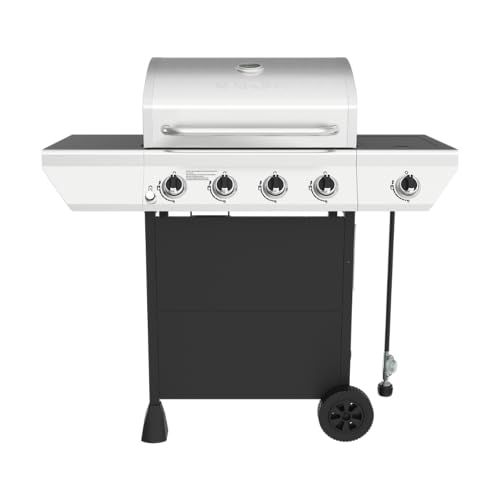
Nexgrill Propane 4-Burner Gas Grill with Stainless Steel Lid
Badge: Best Lid and Grate Build
Strengths
- A stainless steel lid — the component that cycles heat and weather hardest, built from the enduring material.
- A matte finish cast iron grate: cast iron’s mass with a specified finish, stated where rivals stay silent.
- Electronic ignition and a built-in thermometer complete a fully stated specification: 52,000 BTU, 526 square inches.
Trade-offs
- Stainless is claimed for the lid, not the whole body — a partial-material build by its own listing.
- Its portable positioning in the listing sits oddly with a four-burner cart’s scale; it is a cart that can move, not a portable in spirit.
- No cabinet or side-burner furniture beyond the side burner itself is described in structural detail.
At a glance: Fuel: propane gas · Burners: 4 plus side burner · Output: 52,000 BTU · Cooking area: 526 sq. in. · Lid: stainless steel · Grate: matte finish cast iron · Extras: built-in thermometer, electronic ignition
If the Monument argues body-first and the Spirit argues grate-first, the Nexgrill argues the two components a cook touches and sees most: the lid and the grate. The lid is a grill’s hardest-worked panel — lifted a thousand times, heat-cycled every cook, rained on between them — and building it from stainless steel is a longevity decision aimed exactly where failures begin. Beneath it, the grate is specified with unusual completeness: cast iron, with a matte finish named. A named finish is a small phrase with a large implication, because it means the grate was designed as a finished component rather than cast and shipped raw. Around those two, the specification is the pool’s most obliging — output, area, ignition and instrumentation all stated — and a fully stated specification is itself construction evidence of a cultural kind: this is a manufacturer willing to be audited.
It suits the specification-minded buyer who wants every claim checkable and the two most-handled components built from the right materials. The honest limitation is scope: the stainless stops at the lid, and the body’s material goes unnamed, so the whole-machine case is necessarily partial. Third place in this audit is no insult — it is the position of the most completely documented build in the pool, behind a grate champion and a body champion, and for many buyers its balance of the two will read as the wisest construction of the three.
Best for: buyers who want stated, checkable construction on the lid and grate / Not suited for: buyers who want a full stainless body

AMERLIFE 60,000 BTU 6-Burner Propane Gas Grill with Side Burner
Badge: Best Big-Frame Build
Strengths
- Cast iron grates across the pool’s largest frame: 650 square inches on a six-burner chassis.
- A regulating valve and a built-in thermometer — control hardware that speaks to engineered gas delivery.
- A warming rack and side burner complete a full-size station’s structure.
Trade-offs
- Body and lid materials are not stated; the construction case is grates-plus-scale, not whole-machine.
- Six burners means six burners’ worth of parts to maintain — build complexity is a long-term cost as well as a feature.
- The largest footprint in this ranking, permanently placed.
At a glance: Fuel: propane gas · Burners: 6 plus side burner · Output: 60,000 BTU · Cooking area: 650 sq. in. · Grates: cast iron · Extras: warming rack, built-in thermometer, regulating valve
Scale is a construction fact before it is a cooking one. A six-burner, 650-square-inch cart is a frame that must hold its geometry under heat, load and years of lid cycles, and the AMERLIFE’s listing supports its frame with the right component choices: cast iron grates, whose mass is itself structural, a warming rack that adds a second engineered level, and — the detail this audit prizes most — a regulating valve, named in the listing, which indicates gas delivery treated as an engineered system rather than a hose and a hope. The built-in thermometer continues the theme of a machine designed to be monitored and controlled.
It suits the host whose definition of well-made includes “built to a size that hosts,” and whose patio has the permanent corner this frame requires. The honest limitations are the unstated body materials — the audit cannot crown what it cannot read — and the arithmetic of complexity: more burners, more valves, more ignition points, each a small future maintenance event. Fourth place reflects that balance exactly: a big, grate-honest build whose whole-machine construction story is less completely told than the three above it. The propane-specific engineering view of the same machine appears in Best Made Propane Gas Grills.
Best for: hosts who want cast iron substance at the largest scale / Not suited for: small patios or buyers who want body materials stated

IdeaMaxx 3-Burner Propane Gas Grill with Cast Iron Grates
Badge: Best Compact Build
Strengths
- Cast iron grates on a three-burner compact — the heavy grate material, chosen where cheaper compacts economize.
- Foldable side shelves: a mechanism that must be engineered to fold a thousand times without sagging.
- 38,200 BTU across three burners is a strong per-burner specification for its class.
Trade-offs
- Body and lid materials are not stated in the listing.
- Compact scale caps both cooking and the physical robustness a larger frame provides.
- A newer brand with a thinner documented record than the pool’s legacy names.
At a glance: Fuel: propane gas · Burners: 3 · Output: 38,200 BTU · Grates: cast iron · Extras: foldable side shelves · Format: portable-capable cart · Color: black
Compact grills are where build quality usually goes to be economized, which is what makes this one’s listing interesting to an auditor. The grates are cast iron — the expensive, heavy choice, made anyway. The shelves fold — a mechanism, with hinges and tolerances, where a fixed shelf would have been simpler to build and easier to warranty. Those two decisions describe a manufacturer spending its construction budget on the components a cook touches daily, in a size class where rivals spend it on appearance. The output figure supports the impression: divided across three burners, it describes strong individual burners rather than a diluted total.
It suits smaller households, renters and patio-campers who refuse to accept toy-grade construction at compact scale. The honest limitations are the unstated body materials and the ceiling that compactness imposes on everything, robustness included: there is simply less machine here, however well chosen its parts. Fifth place in a build audit, for a three-burner, is a compliment this guide does not hand out carelessly — it is the ranking’s proof that “well-made” is a property of decisions, not of size.
Best for: compact households that want real grate material and engineered details / Not suited for: large-scale hosting or body-material purists

Charbroil Portable Convective 1-Burner Propane Gas Grill
Badge: Best Simple Build
Strengths
- Aluminized steel construction — a heat-tolerant, practical material, named plainly.
- The fewest components of any pick here: one burner, one body, almost nothing to fail.
- A model with a long production lineage behind its model number, in a portable format built to be carried and used hard.
Trade-offs
- Simplicity is the whole story: no zones, no systems, no stated grate material beyond the body specification.
- One burner at 11,000 BTU is a small machine for small work, permanently.
- It is not a peer of the carts in construction ambition, and this ranking does not pretend otherwise.
At a glance: Fuel: propane gas · Burners: 1 · Output: 11,000 BTU · Body: aluminized steel · Color: black · Model: 465133010
The audit closes with the build philosophy opposite to the leaders’: not the most engineered machine, but the least. Aluminized steel is the honest material of working equipment — steel given an aluminum-rich coating for heat and corrosion duty — and around it this portable assembles the minimum viable grill: a body, a burner, a grate, a valve. There is a real construction argument for that minimum. Every omitted system is an omitted failure mode; every omitted part is a part that cannot loosen, clog or corrode its way into a repair. Portable equipment lives roughly — carried, stored in sheds, cooked on at campsites — and the machines that survive that life are usually the ones with the least to break.
It suits campers, tailgaters, balcony cooks and anyone buying a travel grill that will be treated as equipment rather than furniture. The honest limitation is total and obvious: it is a simple build because it is a simple grill, and sixth place here measures construction ambition, not usefulness — on usefulness per pound carried, it may lead the entire pool. As the ranking’s floor, it usefully defines what “made” means at minimum: a named material, a sound minimum of parts, and nothing pretending to be more.
Best for: travel and balcony cooking where simplicity is the durability strategy / Not suited for: zoned cooking, hosting, or station-style outdoor kitchens
Comparison Table
| Pick | Stated grate build | Stated body / lid build | Construction signature | Link |
|---|---|---|---|---|
| Weber Spirit E-425 | Porcelain-enameled cast iron | Not stated in listing | Sear Zone system, Works rails | Check on Amazon |
| Monument Mesa II | Not stated in listing | Stainless steel body | Advanced Broil Zone, fast assembly | Check on Amazon |
| Nexgrill 4-Burner, Stainless Lid | Matte finish cast iron | Stainless steel lid | Fully stated specification | Check on Amazon |
| AMERLIFE 6-Burner | Cast iron | Not stated in listing | Regulating valve, warming rack, largest frame | Check on Amazon |
| IdeaMaxx 3-Burner | Cast iron | Not stated in listing | Engineered foldable shelves | Check on Amazon |
| Charbroil Portable 1-Burner | Not stated in listing | Aluminized steel body | Minimum-parts portable build | Check on Amazon |
How to Choose a Well-Made Grill
Audit in the order parts fail. Grates fail first in most ownership stories — they live in fire and weather simultaneously — so read the grate line of any listing before all others, and rank what you find: porcelain-enameled cast iron and finished cast iron at the top for mass plus protection, plain cast iron next for mass with maintenance attached, coated and plated grates below for ease over endurance. Bodies and lids fail second, by corrosion and fatigue, so read the material line for the largest panels next: a stated stainless body or lid is a longevity claim you can bank, an unstated one is a question the product page must answer. Systems fail third: ignition, valves and folding mechanisms are where engineering quality hides, and the listings that name their systems — a regulating valve, an electronic ignition, an engineered broil or sear zone — are telling you the machine was designed in depth. Assembly is the audit’s final, underrated chapter: a grill arrives as parts, and its first construction is performed by you, so design that respects assembly — clear sequencing, honest fasteners, parts that meet without force — is not packaging trivia but the manufacturer’s construction philosophy demonstrated in your driveway.
Hold two cautions alongside the method. First, output is not construction: a high BTU figure describes a fire’s size, not a machine’s integrity, and this guide scored it only where it implied burner engineering. Second, silence is not guilt — several strong picks here leave a material unstated — but silence is never evidence either, and the well-made buyer’s habit is to convert silences into product-page questions before converting money into an order. The general build audit across this cluster’s whole grill pool is continued in Best Made Grills, where the same rules meet the charcoal constructions as well.
How to Keep a Well-Made Grill Well-Made
Construction quality buys margin, not immunity, and the ownership layer is where the margin is spent or saved. Protect the grates according to their stated build: porcelain-enameled cast iron wants brushing while warm and no thermal shock — never cold water on a hot enameled grate — while plain cast iron wants the classic cycle of brushing, light oiling and dry storage, and matte finished iron wants the same without abrasive enthusiasm. Protect the body according to its material: stainless wiped with the grain and kept dry under its cover, coated and painted surfaces touched up at the first chip before the chip becomes a colony, aluminized steel simply kept clean and dry, as befits working equipment. Protect the systems: burner ports brushed clear each season, ignition contacts dry, valves exercised, folding shelves folded and unfolded along their designed path rather than forced past it. And protect the assembly you performed: once a season, walk the cart with a wrench and re-snug the fasteners that heat cycles and patio rolling have been quietly loosening since the day you built it — the cheapest construction upgrade in this entire guide, available for every pick in it.
Troubleshooting, in the pattern that covers most build-related problems:
- Problem: a grate’s finish begins to flake or freckle with rust → clean to sound material, dry fully, oil lightly if the material allows, and correct the storage cause; finishes fail from moisture sitting, not from cooking.
- Problem: the cart develops a wobble or the lid sits unevenly → check the frame fasteners and the lid’s hinge hardware before blaming the structure; most “build quality” complaints at year two are assembly maintenance at year two.
- Problem: a folding shelf or door grows stiff or sags → clean its hinge line, confirm nothing is bent, and lubricate sparingly with a food-area-safe approach away from cooking surfaces; mechanisms usually need cleaning, not force.
Reading Steel: A Short Field Guide to Grill Materials
Since this ranking is built from material nouns, it owes the reader a translation of them. Cast iron is the mass material: dense, heat-storing, searing beautifully, and honest about its one demand — protection from standing moisture. Porcelain enamel is cast iron’s tailored coat: a glassy skin fused over the metal that keeps weather off while the mass works underneath, at the price of vulnerability to chips and thermal shock. Stainless steel is the corrosion diplomat: an alloy whose surface forms a self-repairing passive layer, which is why it headlines bodies and lids that must face the sky; its grades vary in the wider market, and where a listing does not state a grade, this guide claims none. Aluminized steel is the industrial compromise: steel wearing an aluminum-rich coating for heat and rust duty, chosen for working equipment like the portable here. Matte and coated finishes on grates sit between worlds — easier care than bare iron, less armor than enamel. None of these is “best” outside its job. The well-made grill is the one whose materials match their assignments, which is precisely the pattern the top of this ranking displays: enamel where food and fire meet, stainless where sky and steel meet, and honest working metals where the budget and the burden are both real.
The Assembly Hour: The Build Audit You Perform Yourself
Every grill in this ranking arrives unbuilt, which means every buyer personally completes the manufacturer’s construction — and that hour is a diagnostic no listing can fake. Read it as one. Parts that are stamped, labeled and separated by step describe a maker who engineered the build sequence; a box of anonymous hardware describes the opposite before a single bolt is turned. Panels that meet flush, with holes that align without persuasion, are tolerances made visible; panels that must be sprung into place are storing stress that heat cycles will spend the next years releasing as warps and rattles. Fasteners tell their own story — enough of them, of sensible sizes, with spares included, versus a count so exact that one dropped bolt becomes a hardware-store expedition. The Monument’s fast-assembly claim is best understood in this light: speed of assembly, honestly earned, is a proxy for parts that fit, and parts that fit at hour one are the same parts that stay fitted at year five. Even the leaders here cannot fully prove themselves until this hour, which is why the wisest sentence in any build audit is the buyer’s own plan: assemble slowly, on a flat surface, snugging in sequence rather than torquing the first bolt to finality, and keep the manual — the machine’s construction document — with the grill’s papers for the life of the machine.
Keep the packaging until the first cook is done, and let that first cook be a construction test as well as a meal: run every burner through its range, open and close the lid a dozen times as it heats and cools, work the shelves and doors, and listen. A well-made machine announces itself in that hour — even heat, true controls, hardware that stays where it was set. A machine with a build problem announces that too, while returns are still simple and the evidence is still warm. The audit that began in a listing should always end in fire; paper evidence proposes, and the first cook disposes.
Two assembly observations deserve permanent places in the well-made buyer’s notebook. First, the lid’s fit at the end of the build — its seal, its hinge action, its willingness to sit square without a nudge — predicts more about a gas grill’s cooking consistency than any burner figure, because a lid that leaks heat unevenly makes zones into suggestions. Second, the cart’s roll: a frame that tracks straight and quiet across the patio, fully loaded, is a frame whose geometry survived assembly; a frame that racks and chatters is telling you its joints are working loose in the only language they have. Neither observation requires expertise — only attention, applied at the one moment when the machine’s making is literally in your hands.
What Listings Cannot Say: Weight, Welds and Hinges
An honest build guide ends its audit at the border of its evidence, and the border deserves a map. Three of the most predictive construction facts about any grill are exactly the ones a listing title almost never states. The first is weight: mass in a grill is rarely wasted — it is steel thickness, grate substance, frame section — and a cart that is conspicuously heavier than its size class is usually heavier for honorable reasons, though titles in this pool do not print weights, so this guide scored none. The second is weld and joint quality: the continuous, even bead versus the tacked corner, the bolted joint designed to be serviced versus the rivet designed to be cheap — invisible in text, decisive in decade two. The third is hinge and damper hardware: the parts that move ten thousand times, whose machining quality decides whether a lid still closes like a door or like a suggestion in year six. A buyer shopping beyond this pool should hunt those three facts on product pages and in person wherever possible — lift the lid, work the hinges, heft the grate — because they complete the audit that listings begin. Within this pool, the rankings above stand on what could be proven from the page: materials named, systems stated, assemblies described. That is a defensible border. A guide that claimed more would not be more expert; it would be less honest, and in a category built on metal, honesty is the first construction material.
Common Buying Mistakes
- Judging the build by the heat. BTU is a fire specification. Construction lives in materials, finishes and named systems — audit those.
- Skipping the grate line. The grate is the fastest-wearing major component and the most honestly specified one. Read it first, always.
- Treating an unstated material as a premium one. Silence is a question, not a claim. Make the product page answer it before your money does.
- Ignoring assembly as construction. Your first build of the machine is part of its build quality. Design that respects assembly predicts design that respects everything.
- Buying complexity you will not maintain. Six burners and folding systems reward upkeep; the minimum-parts portable rewards neglect. Match the machine to the owner, honestly.
- Forgetting the seasonal wrench. Fasteners loosen in every cart ever made. The well-made grill kept well-made is the one whose owner re-snugs it once a season.
Final Recommendation
For the buyer who asked this keyword’s question in earnest, start with the Weber Spirit E-425: its porcelain-enameled cast-iron grates are the finest stated construction in the pool, on a four-burner frame with systems to match. Choose the Monument Mesa II if your definition of well-made is body-first — stainless, a designed broil zone, assembly treated as engineering — or the Nexgrill 4-Burner if you want the most completely documented build, stainless lid over a finished cast iron grate. The AMERLIFE brings cast iron substance to the largest frame, the IdeaMaxx brings it to the compact class, and the little Charbroil proves that a minimum of parts, honestly materialled, is its own kind of making. Check the latest price on Amazon for your pick — and read its grate line one last time before you order.
Frequently Asked Questions
What does “well-made” mean for a grill, in practical terms?
That its hardest-working components are built from materials matched to their burdens and specified honestly: grates with mass and protection, bodies and lids in weather-worthy metals, systems — ignition, valves, hinges, folding mechanisms — that are engineered rather than improvised. This guide scored exactly those stated facts, which is why its ranking sometimes differs from a features ranking of the same machines.
Which matters more, grate material or body material?
Grate material decides how the grill cooks and how its most punished component ages; body material decides whether the machine itself survives its climate. This audit ranked the grate-first build at the top because grates are where grills are retired — but for an exposed, wet-climate patio, the stainless-body argument is strong enough that this guide placed it second by a genuinely arguable margin.
Is cast iron always the best grate choice?
It is the highest-mass choice, and mass is searing performance — but it asks for care. Porcelain-enameled cast iron keeps the mass and relaxes the care, which is why it tops this ranking; plain cast iron suits owners who enjoy the oiling ritual; coated grates suit owners who want the easiest cleaning and accept a shorter runway. The best grate is the one whose maintenance matches its owner.
How can I judge build quality from a listing alone?
Read for nouns and named systems, and score silences as unknowns: grate material and finish, body and lid materials, ignition type, valve and zone systems, assembly design. A listing that specifies its construction in checkable language — as the top picks here do — is giving you the audit trail a well-made product should be proud to provide.
Does a bigger grill mean a better-made grill?
No — size is a construction challenge, not a construction virtue. The largest frame here ranks fourth, behind smaller machines with more completely stated builds, and the compact IdeaMaxx out-builds its size class entirely. Judge the decisions, not the dimensions.
How long should a well-made grill last?
Long enough that its replacement is a choice rather than an emergency. The constructions ranked at the top here — enameled cast iron, stainless bodies and lids, finished iron grates — are specified for many seasons of regular use, and the simpler builds below them trade peak longevity for simplicity rather than for fragility. The honest variable is never the calendar but the routine: the same machine can be a five-year grill under neglect or a far longer companion under the short care discipline this guide describes. Buy the construction, then keep it, and the question mostly answers itself in the grill’s favor.
Are newer grill brands worse made than legacy brands?
Not by the evidence of this pool. The two stainless-forward builds here come from names with shorter public records than the legacy makers, and their listings specify construction — body material, zone systems, assembly design — as completely as anyone’s. What a legacy brand genuinely adds is documentation: a longer trail of ownership experience, parts availability and community knowledge. That is worth something real, and this guide credited the leader’s documentation where relevant — but it is a service virtue, not a construction fact, and a build audit that confused the two would misrank exactly the machines this ranking exists to surface.
What maintenance most protects a well-made grill?
Three habits: keep the grates brushed, protected and dry according to their material; keep the machine covered only when cool and dry, with ash and grease never left sitting; and re-snug the frame fasteners once a season. Construction quality buys the margin — those habits decide whether the margin is spent or kept.


