A travel espresso maker is a small hand-powered device that makes espresso-style coffee anywhere you have hot water. Most use a built-in piston or a pump you press by hand. They suit camping, hotel rooms and offices. Think about whether you want to carry a grinder and a kettle as well, because the maker itself is only part of the kit.
The six picks below are compact makers that fit in a bag, some taking ground coffee and others using capsules. We have not used these devices ourselves, so please confirm the included parts, basket type and size on the current listing before buying. Pressure claims are the makers’ own.
As an Amazon Associate we earn from qualifying purchases. Links below are affiliate links, and they do not change the product information we give.
What to Look For
| Feature | Why it matters |
|---|---|
| Coffee type | Some take ground coffee; others take capsules |
| Size | Check the packed size against your bag |
| Water capacity | A larger tank makes a bigger cup per press |
| Effort | Some require more hand strength than others |
| Cleaning | Fewer parts mean quicker cleanup on the road |
In this guide
Specs at a Glance
| Maker | Coffee type | Style | Notes |
|---|---|---|---|
| Wacaco Picopresso | Ground coffee | Handheld | Stainless basket, per the maker |
| Wacaco Minipresso NS | Capsules | Handheld | Capsule-compatible |
| Staresso Mirage | Ground coffee | Handheld | Compact travel design |
| Outin Nano | Ground coffee and capsules | Electric handheld | Heats water inside |
| Cafflano Kompresso | Ground coffee | Handheld | Compact cylinder shape |
| Handpresso Pump | Ground coffee or pods | Handheld | Pump-driven |
The 6 Best Manual Espresso Makers for Travel
Top pickBest for coffee lovers who travel
1. Wacaco Picopresso Portable Espresso Maker
A handheld espresso maker that uses ground coffee and a small stainless steel basket. It is known for strong flavor in a compact format.
Suits: coffee lovers who travel. Strengths: good extraction and a durable build. Weaknesses: needs a fine grind. Skip it if you want capsules.
View Wacaco Picopresso on Amazon
Best for capsule users
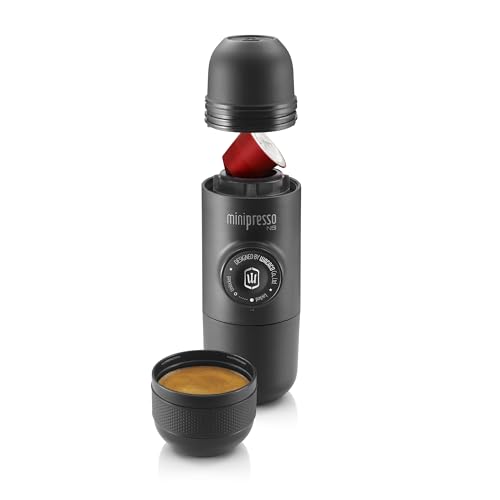
2. Wacaco Minipresso NS Portable Espresso Maker
A handheld maker that works with compatible single-serve capsules. It is quick to prepare and easy to clean.
Suits: capsule users. Strengths: quick use and a compact size. Weaknesses: depends on capsule supply. Skip it if you grind your own beans.
View Wacaco Minipresso NS on Amazon
Best for casual travelers
3. Staresso Mirage Portable Espresso Maker
A handheld espresso maker that works with ground coffee, according to the maker. It is simple to use and travels well.
Suits: casual travelers. Strengths: easy handling and a clean design. Weaknesses: smaller shot size. Skip it if you want a larger basket.
View Staresso Mirage on Amazon
Best for hotel rooms and cars
4. Outin Nano Portable Electric Espresso Machine
A small battery-powered maker that heats water itself, per the maker. It works with ground coffee and compatible capsules.
Suits: hotel rooms and cars. Strengths: built-in heating and little effort. Weaknesses: needs charging. Skip it if you want a purely manual maker.
Best for minimalist packers
5. Cafflano Kompresso Portable Espresso Maker
A compact, cylinder-shaped manual espresso maker. You pour in hot water and push the plunger to create pressure.
Suits: minimalist packers. Strengths: small shape and a simple build. Weaknesses: takes some practice. Skip it if you want a gauge.
View Cafflano Kompresso on Amazon
Best for pod and ground users
6. Handpresso Pump Portable Espresso Maker
A handheld pump espresso maker that works with ground coffee or coffee pods, according to the maker. You pump to build pressure.
Suits: pod and ground users. Strengths: flexible coffee options. Weaknesses: bulkier than others. Skip it if you want the lightest option.
View Handpresso Pump on Amazon
Care and Setup
- Rinse the unit after every use.
- Dry all parts before packing them.
- Keep the seals clean to avoid leaks.
- Pack the maker in a protective pouch.
- Carry a small brush to clear grounds from the basket.
- Let the unit air dry as soon as you reach your destination.
Mistakes to Avoid
- Using water that is not hot enough.
- Packing the coffee too loosely.
- Forgetting extra capsules or a grinder.
- Leaving damp parts sealed in a bag.
- Packing a battery model without checking airline rules.
- Skipping the rinse after the final shot of the day.
How Hand Pressure Shapes the Shot
A manual travel maker replaces the pump of a full machine with your own hands. Depending on the design, you press a piston, squeeze a lever, push a plunger or work a small pump. Hot water is forced through a bed of coffee, and the resistance of the coffee creates the pressure. The result is concentrated and slightly syrupy, though it will not be identical to a shot from a large machine.
Because you supply the force, technique matters more than on a push-button machine. Steady, even pressure gives a smoother flow, while jerky pressure can lead to uneven extraction and a thin or bitter cup. Many people find it helpful to press slowly at the start, then keep a consistent rate until the shot finishes. Pressure figures on listings are the maker’s own, and real-world pressure depends on how hard you press and how fine the grind is.
It also helps to think of these devices as a separate category rather than a smaller version of a home machine. They make a small amount of strong coffee, and they are strongest at that one job. They do not steam milk, and they do not brew multiple drinks quickly. Judge them by how well they make a single good shot in a camp site or hotel room, which is what they are built to do. If you expect cafe-style crema and texture every time, set your expectations moderately and enjoy the improvement over instant coffee.
Ground Coffee, Capsules and Pods Compared
The first decision is what the device will brew. Ground-coffee models give you the widest choice of beans and the most control over dose and grind. They suit people who care about flavor and are happy to carry a grinder or a small supply of fresh coffee. The trade-off is more steps and more cleanup, since you must fill, tamp or level the basket, brew, then knock out and rinse the used grounds.
Capsule models are faster and tidier. You drop in a compatible capsule, add hot water and press. Check carefully which capsule system the device supports, because capsules from different systems do not interchange. Capsules cost more per cup than fresh coffee and add waste, but they remove grinding and dosing from the process. They are a good fit for hotel rooms and offices where speed matters.
Some devices accept both, or use adapters. Read the listing to see exactly what is included. Another consideration is the supply chain. If you travel to places where compatible capsules are hard to find, ground coffee gives you more freedom. If you use ground coffee, pre-ground espresso grind is convenient, though freshly ground beans usually taste better. Think about which route you will actually use on a trip, because a device that needs gear you do not want to carry will end up staying at home.
The Rest of the Travel Kit
The maker is only one piece of a working setup. You need hot water, a way to measure coffee, a cup and something to clean with. For hot water, a small travel kettle, a vacuum flask filled before you leave or a hotel room kettle can all work. Check what water source you will have, since hotel kettles can retain flavors from other uses and rinsing them is a good habit.
A grinder is the item most often forgotten. A hand grinder made for espresso-fine grinding is compact and needs no power. Fine grinding by hand takes some effort, so consider whether you are willing to do it before breakfast. If you prefer to skip it, bring pre-ground coffee in a sealed container and use it up quickly, because ground coffee loses aroma faster than whole beans.
- Hot water source and a flask if you are outdoors
- Grinder or pre-ground espresso coffee
- A small scoop or scale for repeat doses
- Cup that fits under the device
- Cloth, brush and a small bottle for rinsing
Pack the kit in one pouch so everything stays together. If you often fly, check the rules for carrying powder or liquids, and keep batteries and chargers where the airline allows them.
Grind, Dose and Tamping for Better Results
Most poor shots from manual makers come down to grind and dose. If the grind is too coarse, water passes through too quickly and the cup tastes sour or watery. If it is too fine, the water struggles to pass and the shot can taste bitter or be hard to press. Adjust in small steps and change only one thing at a time, so you know what made the difference.
Dose means the amount of coffee in the basket. Use the amount recommended in the manual as a starting point, and keep it consistent. Level the grounds in the basket so the surface is flat, which helps water flow evenly. If the device comes with a tamper, press gently and evenly. Extremely hard tamping does not always help and can make the shot hard to press.
Water temperature makes a difference. Water just off the boil is common advice for espresso-style brewing, but follow the maker’s guidance for your device. A quick preheat rinse warms the metal so the shot does not lose heat. Take note of what you did each time, even if only a few words, and over a few mornings you will settle on a recipe that gives a cup you like. If the first few attempts are disappointing, do not give up. Most people need a handful of tries to understand how their device behaves with their chosen coffee.
Cleaning, Durability and Choosing for Your Trips
Travel devices get knocked around, so durability counts. Look at the materials and the way the parts connect. Metal baskets and sturdy seals tend to last, while thin plastic parts may crack under rough handling. Check whether seals and gaskets are replaceable, since they are the parts that wear first. A protective pouch or case helps in a crowded bag.
Cleaning should be quick enough that you will do it every time. Rinse all parts with warm water after use, remove the used coffee puck and let everything dry before packing. If you must pack it damp, open the bag as soon as you can, because trapped moisture can lead to odors. For a deeper clean, a soft brush clears grounds from small gaps. Avoid harsh cleaners unless the maker says they are safe.
Match the device to the trip. Camping and hiking favor light, simple and battery-free designs. Hotel and office use can accept a slightly larger device and a grinder. Road trips allow more gear, including a flask and a bigger kit. Think also about how many people you will be making coffee for. Most handheld devices make one small shot at a time, so a group may find a single device slow. Finally, look at the warranty and the maker’s support for spare parts, which tells you how long the device is likely to stay in use.
Travel Espresso Maker FAQ
Do they make real espresso?
They create pressure by hand, which gives an espresso-style shot, though not as strong as a pump machine.
Can I use pre-ground coffee?
Yes, but a very fine grind is needed. Pre-ground espresso coffee works best.
Do I need hot water?
Yes. A thermos or travel kettle makes it easy.
Can I take one on a plane?
Handheld makers are usually allowed in carry-on bags, but battery models may have rules. Check your airline before you fly.
What water temperature is best?
Hot, just off the boil, tends to work well. Follow the maker’s guidance for your device.
Do I need to preheat the maker?
A quick rinse with hot water warms the parts and helps keep the shot hot.
How many cups can I make in a row?
Most handheld makers brew one small shot at a time, so plan on a short wait between cups. Larger groups may want two devices or a different approach.
How fine should the grind be?
Aim for an espresso-fine grind, finer than for filter coffee. If shots run through too fast and taste sour, grind finer. If it is hard to press and tastes bitter, go a little coarser.
Can I make milk drinks with these devices?
They make a small, strong shot that you can add to hot milk. They do not steam milk, so you will need a separate way to warm and froth it.
Do they produce crema?
Some produce a light layer of foam, depending on the device, the coffee and your technique. Do not worry if it looks different from machine-made shots, since taste matters more.
Are capsule models cheaper to run?
Usually not. Capsules cost more per cup than fresh ground coffee and add waste. Their advantage is speed and tidiness.
How much coffee should I use?
Start with the dose in the manual and keep it consistent. Small changes in dose can change strength and flow, so adjust gradually.
Why is my shot weak?
Common causes are a coarse grind, too little coffee or water that is not hot enough. Try one change at a time and note the result.
How do I clean the device while camping?
Rinse it with clean water, wipe it with a cloth and let it air dry. Do not use harsh soaps near natural water sources.
How long do the seals last?
It depends on use and care. Replace seals when you see cracks, stiffness or leaks. Check whether the maker sells spares.
Choosing by Trip Type
The best travel espresso maker depends on where you will use it. A weekend car camping trip, a hotel business trip, and a backpacking route each have different limits on weight, water access, and counter space. Thinking through the trip before you buy prevents the common mistake of picking the most capable device when a simpler one fits better.
- Car camping: weight matters little, so you can bring a larger maker, a small grinder, and a kettle or stove. Focus on quality of the shot.
- Backpacking: every ounce counts. A compact, single-serve maker with minimal parts is the practical choice, and you will accept a simpler brew.
- Hotel and business travel: you often have an in-room kettle or access to hot water, but limited space. A small maker that rinses easily in a sink works well.
- Office desk: a device that sits in a drawer and needs only hot water from the dispenser is the easiest to live with.
For flights, think about how the device packs. A hard case, or a spot in a carry-on with a few clothes around it, protects against drops. Pressure parts and seals do not like being squeezed in a crowded bag.
Water Quality and Temperature on the Road
Coffee is mostly water, and travel gives you unpredictable water. Tap water with a strong taste, high mineral content, or chlorine will carry into the cup. If you can, use bottled or filtered water for the first brew of the trip, and compare it to the local tap to hear the difference. Very hard water can also leave scale inside a small device, which affects the seals and the flow.
Temperature is the other variable. Hand-powered makers do not heat the water, so the final cup relies on what you pour in. Water that has just come off the boil loses heat quickly in cold air, and a metal chamber will pull more out of it. If you are camping in cool weather, warming the maker with a splash of hot water first helps the shot stay in a good range. Water that is too cool tends to give a sour, thin cup, while water that is too hot can taste bitter.
Quick field habits
- Let boiled water sit for 30 to 60 seconds before pouring.
- Pre-warm the chamber and cup if the weather is cold.
- Carry a small thermos if you need hot water for multiple cups.
Budget Versus Premium: Where the Money Goes
Travel espresso makers span a wide price range. The cheaper ones are typically simpler and lighter, with a smaller basket and more plastic. Mid-priced and higher models often use better seals, sturdier metal parts, and a design that lets you control the shot more precisely. Models that accept ground coffee give you more flexibility on beans and cost per cup than those that rely on capsules.
Premium does not mean better for every trip. A heavy, expensive maker can be a nuisance for backpacking, while a cheap one may frustrate you if you are particular about taste. Think about the frequency of use. If you will brew daily for a year, spending more on durability makes sense. If you will use it twice a summer, a modest model is fine.
Pay attention to the cost of replacement parts. Seals and gaskets wear out over time, and a maker with readily available spare parts holds its value longer. Check whether the maker sells replacements, and what they cost, before you decide.
Packing and Storing Your Maker
A few habits extend the life of a portable maker. Dry every piece before packing, since trapped moisture can lead to odor or mildew. Keep seals loose in storage rather than compressed, which helps them keep their shape. If the device has a piston or plunger, store it slightly open to avoid stressing the rubber.
Pack coffee separately in an airtight container to protect it from moisture and strong smells. A small dose cup or pre-measured packets save time when you are in a hurry or in poor light. Keep a small towel or cloth in your kit for wiping the maker and your hands, and a spare seal if you travel often. These small items take little space and prevent most travel brewing problems.
Setting Realistic Expectations
A hand-powered or compact travel maker produces a concentrated, espresso style drink, but it is not a duplicate of a large cafe machine. Pressure, temperature control, and grind consistency all depend on your technique and the conditions around you, so results will vary from morning to morning. That variability is part of the appeal for many travelers, who value a good cup in a hard-to-reach place over perfect repeatability. Treat the first few brews as practice, keep notes on your dose and grind, and adjust gradually. If your trip involves limited water or time, choose a simple routine you can repeat easily, rather than a complicated process you will skip.
Related guides
Frequently Asked Questions
What is the best portable espresso maker for backpacking?
For backpacking, pick the lightest and simplest model with the fewest parts, and make sure it works with the water source you will have. Compact, single-serve makers suit this best. Bring pre-measured coffee in a sealed container so you do not have to carry a grinder.
Do I need a grinder to travel with a manual espresso maker?
Not necessarily. You can bring pre-ground coffee in an airtight container, though freshness fades faster. A small hand grinder gives better flavor if you have room for it. Choose based on trip length, since coffee ground a few days earlier still tastes acceptable for many people.
Why does my travel espresso shot taste sour?
Sour shots usually point to under-extraction, which comes from water that is too cool, a grind that is too coarse, or too little pressure. Try finer coffee, hotter water, and pre-warming the chamber. Make one change at a time so you can tell what helped.
Can I use hotel tap water in a portable espresso maker?
You can, but taste and mineral content vary. If the water has a strong smell or taste, it will affect the coffee, and hard water can leave scale. Bottled or filtered water is safer for flavor and for protecting the seals in the device.
Going Deeper: Getting the Most From a Manual Espresso Maker for Travel
Travel espresso is a promise most products break. The hotel machine is dusty, the cafe is three streets away and closed, and the view from the rental window deserves better coffee than either. A handheld manual maker keeps the promise by shrinking espresso to its essentials: a chamber, a basket, pressure from your hands and hot water from whatever kettle the destination provides. The picks above, from Wacaco’s Picopresso and Minipresso to the Staresso Mirage, the electric Outin Nano, the Cafflano Kompresso and the Handpresso Pump, take different routes to that same small miracle. This section is about choosing and using them in the real world of luggage limits, unfamiliar kitchens and early departures, where travel gear earns or loses its place in the bag.
Matching the Choice to the Way You Actually Work
If you travel for work, your coffee problem is the schedule: early starts, unfamiliar cities and hotel breakfasts that begin after your first meeting. A compact maker that works in a hotel room with the in-room kettle, sets up on a bathroom counter and rinses clean in a sink turns those mornings around. For this pattern, ease of use with capsules or pre-ground coffee may honestly beat ultimate shot quality, because a very good shot you actually make beats a perfect one the device is too fiddly to produce at dawn in a strange room.
If you travel for pleasure, camping, road trips and slow rentals, the ritual is part of the reward. You have time to grind fresh, to preheat properly, to make a second cup for a companion on a balcony. Here the more capable, standard-basket style makers shine, and their extra preparation is a pleasure rather than a toll. Your constraints are different: water may come from a camp stove, surfaces may be picnic tables, and everything must survive being packed daily without complaint.
If you travel as a pair or a group, think about throughput and sharing. One small maker producing single shots in sequence can serve two people happily over a leisurely breakfast and strain a group of five before a departure. Some travellers carry a maker for espresso and accept cafe visits for the group occasions; others choose the fastest-cycling device and embrace the role of camp barista. Decide which traveller you are before the trip, because the device that suits a solitary dawn ritual may test a hungry group’s patience.
The Criteria That Matter Most, Revisited
Specification sheets for travel gear quote weight and dimensions. These criteria decide whether the device actually travels well and brews well when it gets there.
- Packed reality: Judge the device packed, with its case, tamper, cups and any accessories it needs to function. A maker that is tiny alone but travels in a bulky entourage is not the compact solution its headline size promises.
- Coffee format: Capsule-compatible models trade ultimate quality for total convenience and zero mess. Ground-coffee models reward fresh grinding and preparation. Some do both. Your tolerance for carrying a grinder decides which camp serves you.
- Pressure method and effort: Hand pumps, squeezes, levers and, in one case here, a small electric pump all generate pressure differently. Consider the effort across two or three consecutive shots, not one, and whether the motion is comfortable on an unstable surface.
- Hot water dependence: Every manual maker needs hot water from somewhere. Think about your destinations honestly: hotel kettles, camp stoves, office kitchens and petrol-station stops each favour slightly different devices, and one model here heats its own water for the hardest cases.
- Cleaning away from home: Rinsing in a hotel sink, drying parts on a towel, and packing a device that is still slightly damp are the realities. Designs that strip down fully and dry fast stay pleasant on day five of a trip, not just day one.
- Robustness: Travel gear gets dropped, frozen in car boots and rattled in luggage. Sound materials, few detachable small parts to lose, and a case that protects rather than decorates are worth more than elegance in this category.
The pattern is that travel exposes every weakness a kitchen forgives. A device that needs a stable counter, a full sink and ten minutes of assembly is a kitchen device with ambitions. Judge each pick above by the worst morning of your typical trip, not the best, and the right one tends to choose itself.
A Step-by-Step Routine That Works
A travel routine has to work on a bathroom counter, a picnic table or a tailgate. This sequence keeps the variables under control wherever you set up.
- Set up a stable, dry station: Choose the flattest surface available, lay a towel down as your work mat, and arrange the device, coffee, water and cup in order before heating anything. The towel catches drips, stops small parts rolling away and becomes your drying rack later.
- Heat more water than you need: Boil enough for preheating, brewing and a rinse afterwards. Running short mid-shot in a strange kitchen is the classic travel failure, and it is entirely preventable at the kettle stage.
- Preheat the device: Run hot water through the empty maker or fill and rest it, especially in cold rooms and campsites. Small devices lose heat fast, and a cold chamber is the main reason travel shots taste sour.
- Prepare the coffee carefully: Dose, distribute and tamp as well as the surface allows. Travel is not an excuse the coffee accepts; a level, even puck matters as much on a mountain as at home, and your hands know how by now.
- Press smoothly and watch the stream: Work the mechanism steadily, on a surface that will not slide, and read the flow as you would at home. Thin and fast or slow and struggling, the stream tells you what tomorrow’s grind adjustment should be.
- Rinse, dry and pack in order: Rinse every part that touched coffee, shake off the water, and let the towel do the drying while you drink. Pack in the same order every time, so a missing part announces itself before you leave rather than at the next destination.
Repetition is the traveller’s friend. The same setup order, the same packing order and the same small checks turn a fiddly device into a trusted companion within one trip. By the third morning, most owners are making their espresso half asleep in an unfamiliar kitchen without a thought, which is precisely the state travel gear should aspire to.
Troubleshooting: Problems, Causes and Fixes
Shots taste sour at altitude or in cold places
Cold is almost always the culprit, compounded by water that boils at a lower temperature in the mountains. Preheat longer, work faster between filling and pressing, insulate the device with your towel, and warm the cup. The recipe has not changed; the environment is stealing its heat.
The device leaks or loses pressure
Check the seals first: a grain of coffee on a sealing surface is enough to break the spell. Rinse seals, seat everything fully, and hand-tighten to the maker’s intent rather than forcing. A seal that weeps after cleaning has likely hardened and wants replacing, which is why a spare travels well.
Coffee everywhere except the cup
Travel surfaces wobble, and pressing on a wobble amplifies it. Brace the device, press downward rather than at an angle, and keep the cup seated where the spouts actually aim. Most travel messes are surface problems wearing the disguise of device problems.
The shot is fine but the faff is too much
Be honest about which step you resent: grinding, preheating or cleaning. Each has a legitimate answer, from a capsule-compatible model for dawn departures to pre-dosing coffee into small containers at home. Optimise the step you hate and keep the rest of the ritual you enjoy.
Care, Storage and Making It Last
Travel gear lives or dies by how it is put away. Never pack a maker wet and sealed for a long journey home; rinse it, dry it as fully as conditions allow, and give it a proper wash and air-dry when you return. Coffee oils in a closed case ripen into exactly the stale flavour you carried the device to avoid.
Keep the small parts accounted for with a simple system: one case, one pouch, one packing order. Baskets, seals and tampers for these devices are small enough to vanish into hotel rooms and tent floors, and a thirty-second count before checkout is cheaper than a replacement part hunt in the next city.
At home between trips, store the maker clean, dry and assembled loosely rather than compressed, so seals rest in their natural shape. Before a new trip, run one shot at home as a rehearsal: it confirms the seals, your packing list and your own routine, and it means the first travel espresso of the journey tastes like it should.
Extra Questions, Answered
Can I take a manual espresso maker in hand luggage?
The devices themselves are simple mechanical tools and generally travel in cabin bags without issue, though anything with a battery, like a self-heating model, follows the usual battery rules. Check your airline’s guidance for your specific model, and pack coffee and accessories so security can see what the device is.
What water should I use in hard-water destinations?
If the local tap water tastes strongly of minerals or chlorine, bottled water improves both the coffee and the device’s life. You need so little per shot that even on a long trip the cost is trivial against the improvement in the cup.
Is a hand grinder essential luggage?
For ground-coffee models and travellers who care about quality, close to it. Fresh grinding is the single biggest quality lever available to a traveller. Capsule models exist precisely for those who would rather spend the luggage allowance elsewhere, and that is a legitimate choice.
How many shots can I make in a row?
As many as your hot water and patience allow. The devices do not overheat or tire, but each shot is a full manual cycle, so groups are served sequentially. For a crowd, make the espresso the event rather than apologising for its pace.
What is the best travel cup pairing?
A small, sturdy, insulated cup that nests with or near the device and survives luggage. Espresso shots are small and cool quickly, especially outdoors, so a cup that holds heat and cannot shatter earns its space in the kit.
How the Picks Differ on the Road
Wacaco’s two entries show the format’s range within one family: the Picopresso is the enthusiast’s instrument, built around a standard basket and real preparation, while the Minipresso NS answers the capsule question, trading variables for certainty. The Staresso Mirage presses with a pump action suited to both travel and home novelty, and the Cafflano Kompresso squeezes its way to pressure with an simplicity that campers appreciate. The Handpresso Pump, one of the format’s pioneers, was designed around car journeys and pods as much as grounds. The Outin Nano breaks the manual pattern with its own heating and pump, answering the one problem the others cannot: destinations with no kettle at all.
That spread means the first decision is not which brand but which problem. No hot water, no space, no patience and no compromise are four different briefs, and each pick above leads one of them. Travellers who name their problem honestly tend to be delighted; travellers who buy the most capable device for a no-patience trip tend to leave it at home by the third journey, which is the saddest review any travel product can earn.
Building the Complete Travel Coffee Kit
The maker is the centre of a kit, not the whole of it. Around it, experienced travellers pack a small grinder or pre-dosed coffee, a cloth that serves as mat and towel, a spare seal, and a cup that insulates. Water is sourced on arrival; everything else travels. Lay the kit out at home and weigh it honestly, then remove anything that has survived two trips unused. Travel kits improve by subtraction, and every removed gram is a gram you will not resent at a station staircase.
The kit also deserves a home routine: washed, dried and repacked on return, ready to grab whole for the next departure. A kit that must be reassembled from drawers before each trip will eventually be forgotten or half-packed, and half a coffee kit is worse than none, because it promises espresso and delivers improvisation. Treat the kit as a single object with a single home, and it will repay you in dawns rescued and views properly accompanied.
Espresso at the Edge of the Map
The deepest pleasure of a travel maker is not the hotel room, convenient as that is, but the places where coffee was never expected at all: a bothy shelf, a ferry deck at dawn, a friend’s boat, a mountain hut with a wood stove and a window full of weather. In those places the small ceremony of heating water, preparing a puck and pressing a shot becomes disproportionately memorable, the kind of detail a trip is later retold by. Travellers who pack a maker for utility often find they have packed a ritual instead, and that the ritual earns its luggage space more completely than utility ever promised.
There is a courtesy dimension too. A travel maker lets you offer real coffee in places where your host’s resources are thin: the rental with one mug, the relative whose machine died in spring. Making a round of small, excellent espressos from a device that fits in a wash bag is a form of travelling hospitality that people remember. Pack the spare seal, learn the routine at home, and the little machine becomes part of how you arrive in places, which is a fine thing for any object to be.
More Questions, Answered
Should I practise with the device before a big trip?
Yes, at least twice at home. Learn its assembly, its pressure feel and its cleaning while mistakes are free. A device first opened in a tent at dawn teaches the same lessons at a much higher price.
What coffee should I pack?
Beans you already know and like, in a small sealed container, ground fresh if you carry a grinder. A trip is not the time to audition an unfamiliar roast through an unfamiliar device; one new variable at a time is the traveller’s rule too.
Can these makers handle back-to-back drinks for a family breakfast?
Patiently, yes. Keep the kettle hot, prepare the next dose while a shot runs, and set expectations that drinks arrive in sequence. Most families find the small ceremony becomes part of the holiday breakfast rather than a delay to it.
What if there is no kettle at all?
Then the self-heating route in this list, or a small travel kettle carried for the purpose, becomes the answer. Every other manual maker assumes hot water exists somewhere; auditing your destinations for that single assumption is the most practical planning step in this entire guide.
How do I keep the routine fast when I am half asleep?
Prepare the night before: coffee measured, device assembled in its order, cup and towel laid out, kettle filled. A travel routine’s speed is decided the evening before, and a prepared station turns a dawn departure from a performance into a reflex, which is exactly what early flights and cold tents require of you.
A travel espresso maker is judged at dawn, in the rain, on the third day, by whether it still feels worth unpacking. Choose from the picks above by your travel style, your coffee format and your appetite for preparation, then rehearse the routine once at home before trusting it to a trip. The reward is disproportionate to the luggage space: real espresso, made by your own hands, in places where coffee was never supposed to be this good.
The Short Version
For ground coffee, the Wacaco Picopresso. For capsules, the Wacaco Minipresso NS. For simplicity, the Staresso Mirage. For battery power, the Outin Nano. For minimalist packers, the Cafflano Kompresso. For pump use, the Handpresso.


