Enthusiasts buy a manual lever espresso machine for control. You decide how fast the pressure builds, how long it holds and when it eases off. That freedom rewards careful dosing, a good grinder and a bit of patience, and it can produce shots that rival much larger machines.
The six machines below suit people who already know a little about espresso and want more say in the cup. They range from a gauge-equipped press kit to an Italian showpiece. We have not used these machines ourselves, so please confirm sizes, voltage and included parts on the current listing before you order.
As an Amazon Associate we earn from qualifying purchases. Links below are affiliate links, and they do not change the product information we give.
What to Look For
| Feature | Why it matters |
|---|---|
| Pressure gauge | Lets you profile a shot and repeat what worked |
| Temperature stability | Metal mass and preheating keep extraction even |
| Basket and portafilter | Affects dose size and which accessories fit |
| Upgrade options | Some makers sell baskets, gauges and screens separately |
| Space and power | Boiler levers need an outlet; presses do not |
In this guide
Specs at a Glance
| Machine | Type | Power | Notes |
|---|---|---|---|
| Flair Classic | Manual press | None; uses a kettle | Original Flair format |
| Flair Signature | Manual press kit | None; uses a kettle | Comes with a pressure gauge kit |
| Flair Neo | Manual press | None; uses a kettle | Simpler build for tinkerers |
| ROK EspressoGC | Dual-arm manual | None; uses a kettle | Made for home use; heavy cast body |
| Elektra Micro Casa a Leva | Lever with boiler | Plugs into the wall | Italian design with a steam wand |
| Wacaco Picopresso | Portable manual | None; uses a kettle | Pocket-sized lever style |
The 6 Best Manual Lever Espresso Machines for Enthusiasts
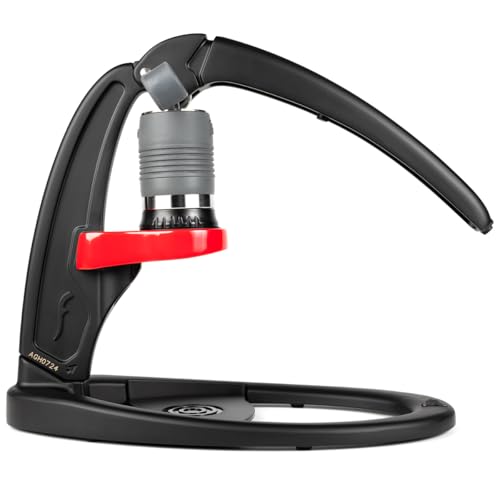
Top pickBest for tinkerers who like to upgrade parts
1. Flair Classic Espresso Maker
The press that introduced many people to manual espresso. It uses a metal frame and a lever, and it welcomes upgrades once you want better control over your shots.
Suits: tinkerers who like to upgrade parts. Strengths: a proven design with plenty of community advice. Weaknesses: you add a gauge or other parts yourself. Skip it if you want everything included.
View Flair Classic Espresso Maker on Amazon
Best for enthusiasts who want feedback
2. Flair Signature Espresso Maker
A press kit that bundles a pressure gauge, so you can see and repeat your pressure curve. It is a sensible pick for anyone who wants to learn pressure profiling without buying extras.
Suits: enthusiasts who want feedback. Strengths: a gauge from day one. Weaknesses: it still needs a kettle and a capable grinder. Skip it if you do not plan to track pressure.
View Flair Signature Espresso Maker on Amazon
Best for beginners who may upgrade later
3. Flair Neo Espresso Maker
A lighter, simpler lever press that leaves out some of the fittings of its bigger siblings. It is a low-fuss way to test manual espresso before moving to a more serious setup.
Suits: beginners who may upgrade later. Strengths: few parts and easy cleanup. Weaknesses: limited feedback while pressing. Skip it if you want a gauge.
View Flair Neo Espresso Maker on Amazon
Best for people who want a sturdy countertop press
4. ROK EspressoGC Manual Espresso Maker
A dual-arm manual machine with a cast metal body, made for home use. The two arms move together to build pressure, which gives the press a balanced feel.
Suits: people who want a sturdy countertop press. Strengths: a solid, heavy build. Weaknesses: it is bulky to store. Skip it if you need something portable.

Best for enthusiasts who also steam milk
5. Elektra Micro Casa a Leva Espresso Machine
An Italian lever machine with a boiler and a steam wand, styled as a showpiece for the kitchen. It brings the lever method together with milk drinks in one machine.
Suits: enthusiasts who also steam milk. Strengths: a built-in boiler and steam wand. Weaknesses: it takes practice and counter space. Skip it if you want a quick, simple routine.
View Elektra Micro Casa a Leva on Amazon
Best for travel and camping
6. Wacaco Picopresso Portable Espresso Maker
A compact hand-driven espresso maker aimed at travelers who still want a proper basket and fine grounds. It is small enough for a bag and needs only hot water.
Suits: travel and camping. Strengths: tiny size and a real espresso approach. Weaknesses: a small dose per shot. Skip it if you serve several people at once.
View Wacaco Picopresso on Amazon
Care and Setup
- Rinse every part that touches coffee as soon as you finish.
- Dry metal parts so seals and gaskets last.
- Replace gaskets and screens on the maker’s advice.
- Keep a notebook of grind, dose and result for each bean.
Mistakes to Avoid
- Changing grind, dose and pressure all at once.
- Pairing a lever with a weak blade grinder.
- Skipping preheating of the chamber.
- Forgetting that boiler machines need regular descaling.
Pre-Infusion and Pressure Profiling by Hand
The main attraction of a manual lever for an enthusiast is control over how pressure builds during a shot. With an electric pump machine, pressure is usually set at a fixed level. With a lever, you can shape it. A typical profile starts with a gentle pre-infusion, where low pressure wets the puck and lets the coffee bed settle and swell, then moves to a higher pressure in the middle of the shot, and tapers off near the end to avoid over-extracting the last drops. Changing these stages can change the balance between sweetness, acidity and bitterness in the cup.
Different designs give you different tools. Some presses let you feel the resistance in your hand and read pressure from a gauge, while others rely on feel. A spring-lever design provides a built-in pressure curve, with the spring setting how hard water is pushed. Experiment deliberately: change one stage at a time, keep your dose and grind constant, and record what you do. Many enthusiasts keep a notebook with grind setting, dose, time, yield and taste. Over time you learn how each coffee responds, and the same machine can make quite different shots from one bean to the next. Treat any pressure numbers in listings as the maker’s claims and rely on your own tasting.
Puck Preparation for Consistent Extraction
Once you are past the basics, puck preparation is where much of the difference comes from. Uneven distribution leads to channeling, in which water finds weak paths and over-extracts some areas while under-extracting others. Simple steps help: weigh the dose each time, distribute grounds evenly with a fine needle or a similar tool, tap or level the surface, and tamp with level, repeatable pressure. A properly fitting tamper matched to the basket size avoids gaps around the edge.
- Weigh the dose to a fraction of a gram if your scale allows it.
- Break up clumps from the grinder before tamping.
- Keep the basket clean and dry, and check that the screen is free of old coffee.
- Consider a paper filter on top or bottom of the puck if you want to experiment with flow, noting that results differ by machine.
Check whether your press uses a standard basket size, because that affects which accessories, such as precision baskets, tampers and distribution tools, will fit. Compatibility varies by machine, so confirm on the listing or in the manual before buying add-ons.
Grinder Quality and Repeatability
For an enthusiast, the grinder is half the equipment. A lever makes small differences visible, so you want a grinder that produces a narrow range of particle sizes and lets you adjust in fine steps. A coarse adjustment jump can mean the difference between a gushing shot and a stalled one. Manual grinders can offer strong quality for their price and suit the ritual of hand operation, while electric grinders offer speed and consistency, which helps if you make several drinks a day.
Think about practical points as well. Retention, the grounds left inside the grinder, changes the dose that reaches the basket and can alter flavor when you switch beans. Some people purge a small amount before grinding. Keep the burrs clean and replace them when they dull, noticeable when you must grind finer for the same flow. A heavy base or a firm clamp keeps a manual grinder steady. When you compare machines, remember that a lever may call for a finer grind than your current grinder can reach, so check the listing and manual for the recommended range, and ask whether your grinder can handle it.
Gauges, Scales and Measurement Tools
A pressure gauge is not strictly necessary, but it teaches you what your technique is doing. Seeing pressure during pre-infusion and the main stage helps you connect hand feel with result, and many enthusiasts use it for a while and then lean more on feel. Not every machine offers one, and some offer it as an optional kit, so check what is included. A scale with a timer is arguably more useful in daily practice, because it lets you track dose and yield and the time of each shot.
- Use a scale that reads in tenths of a gram, if possible, and that responds quickly.
- Record dose, yield and time, then compare with taste.
- Use a thermometer if you want to experiment with water temperature.
- Consider a water filter or a hardness test if your tap water is unusual.
Measurements are useful only if you keep other variables stable. Use the same coffee, the same grind setting and the same water until you understand a change.
Upkeep, Wear and the Long View
A well-made lever can last for years, but it needs upkeep. Clean the group, basket and seals after each session, and lubricate or replace parts as the maker advises. Gaskets and seals are the most common wear items, and a machine that is hard to get parts for will become a burden. Boilers, if present, should be descaled according to your water hardness and the maker’s guidance. Check for leaks, loose fittings and wobbles in moving parts.
When you compare options, think about ownership as a hobby. Ask whether the machine will keep teaching you as your skills grow, whether accessories and parts are available, and whether service is accessible where you live. Compact presses are easy to store and move, while classic Italian designs are showpieces that take counter space and more maintenance. If you find that a machine no longer holds pressure, leaks after replacing seals, or has damaged threads or a bent lever, it may be time to repair or replace it. Keep the original manual and note any accessories you add, so that future repairs and resale are easier.
Manual Lever Espresso for Enthusiasts FAQ
Is a gauge necessary?
Not strictly, but it makes shots repeatable and teaches you what each press feels like.
What grinder should I pair with a lever?
A burr grinder with fine adjustment, ideally one made for espresso.
Are portable presses really comparable?
They can be very good, but they make smaller shots and need more steps than boiler machines.
What does pre-infusion do?
Pre-infusion wets the coffee gently at low pressure before the main extraction. It can help the puck settle and reduce channeling, which often gives a more even and sweeter shot.
How do I know if I am channeling?
Signs include spurting streams, uneven color in the flow and shots that taste both sour and bitter. Improving distribution and tamping and using a bottomless portafilter, if available, can help you see it.
Should I use a paper filter?
Some enthusiasts do for cleaner cups or smoother flow, but results vary by machine. Try it as an experiment and compare, and confirm that it fits your basket.
How often should I replace gaskets and seals?
It depends on use and the materials. Replace them when they harden, crack, leak or lose grip, and keep spares if available.
Can I use the same grind for all coffees?
Usually not. Different beans, roast levels and ages need different grind settings, so expect to adjust whenever you change coffee.
Is it worth buying precision baskets?
They can improve consistency in some cases, but they are not a fix for a poor grinder or sloppy preparation. Confirm that the size matches your machine first.
How do I keep notes on my shots?
Write down the coffee, grind setting, dose, yield, time, water temperature and a short taste note. Reviewing the log helps you repeat successes.
Temperature Control Without a Thermostat
Most manual lever machines and press-style makers have little or no electronic temperature control, so water temperature is something you manage with habit. The main variables are how hot the water starts, how much metal it touches, and how long it sits. A cold chamber or cylinder can pull several degrees out of the water within seconds.
Preheating is the simplest fix. With the Flair models, for example, many users pour boiling water through the assembled brew head and let it sit for a minute before loading the coffee. This warms the metal so the shot is not brewed with cooled water. The Wacaco Picopresso and ROK EspressoGC follow similar logic: warm the parts, then fill with water just off the boil.
- Light roasts usually need water closer to the boil, while dark roasts taste better with slightly cooler water.
- Let a kettle sit for 20 to 30 seconds after boiling if shots taste harsh or bitter.
- Keep the process consistent. A repeatable preheat routine matters more than the exact number.
- If you own a machine with a boiler, like the Elektra Micro Casa a Leva, follow its warm-up time and flush a little water through the group before pulling a shot.
A cheap probe or infrared thermometer can help you learn your routine, but treat readings as a guide. The goal is to produce shots that taste the same from day to day.
Milk Drinks on a Manual Machine
Plenty of enthusiasts drink espresso straight, but if you want a cappuccino or flat white, plan for the milk side before you buy. The Flair, ROK and Picopresso options do not steam milk. You need a separate frother, a stovetop steamer, a handheld wand or a standalone heater, and these add cost, time and counter space.
Machines with a steam wand, such as the Elektra Micro Casa a Leva, can texture milk in the usual way, but steam and brew boilers share the machine, so the order of operations matters. Many owners pull the shot first, then steam, or wait for the machine to recover between tasks.
Compact options for milk:
- A handheld battery-powered whisk for a light foam, good for lattes and iced drinks.
- A French press pumped in a warm pitcher for a basic microfoam.
- A small induction or stovetop steamer if you want hot, foamy milk without a full machine.
If milk drinks are most of what you make, a lever machine with steam capability is likely a better fit than a portable press.
Cleaning Between Shots and at the End of the Day
Manual systems are simple, but they still collect oils and fine particles. Quick habits between shots keep flavor clean. Knock out the spent puck, rinse the basket, and wipe the shower screen or gasket area. When you pull several shots in a row, rinse the chamber with hot water so residue does not carry into the next cup.
At the end of the session, disassemble what you can. Wash parts that touch coffee with warm water; use a soft brush for baskets. Avoid abrasive pads on finished surfaces. Dry everything fully before storing it. Metal parts left damp may spot, and gaskets stored wet can degrade.
For machines that use group heads or boilers, follow the maker’s recommended cleaning agents. Do not use detergents on parts that are meant to be rinsed only with water. Descale on a schedule matched to your water hardness.
- Daily: rinse, wipe and dry parts.
- Weekly: soak removable metal pieces in a coffee equipment cleaner.
- Every few months: inspect seals and lubricate according to the manual.
The Learning Curve: What to Expect
It takes more than a weekend to learn lever espresso well. Expect the first dozen or so shots to teach you more about grind, dose and pressure than they do about flavor. That is normal. Most people find that taste improves quickly once they keep dose and timing the same and change one variable at a time.
A practical approach is to pick one coffee and stay with it for a week. Keep dose, grind and water temperature fixed, then vary only your pressure or pre-infusion time. Write down what you did and how it tasted. After a few days, patterns appear: sour shots usually need finer grind or longer contact, bitter ones need coarser grind or less pressure.
Do not be discouraged if your shots do not match a cafe at first. Manual machines reward patience, and the reward is control. Many owners find they develop a feel for the resistance of the lever or plunger that lets them correct a shot by hand in real time, something an automatic cannot do.
It is also worth planning your accessories before the first shot. A scale that reads to a tenth of a gram, a tamper that fits your basket, a distribution tool and a timer make early practice far less frustrating. These are modest purchases compared with the machine, yet they decide whether you can repeat a good result. Buy the grinder first if you have to choose, because inconsistent grounds hide the benefits of any brewer.
Finally, build a small routine for travel or storage. Portable presses go into bags and cars, so a protective case and a spare set of seals mean you are not stranded if a gasket fails away from home.
Frequently Asked Questions
What water temperature should I use in a manual espresso maker?
Start with water just off the boil, around 200 degrees Fahrenheit, for medium and light roasts, and let it cool slightly for dark roasts. Preheat the metal parts so they do not drop the temperature. Adjust by taste, keeping your routine consistent.
Can I make lattes with a manual lever espresso machine?
Yes, but you will need a way to heat and froth milk. Portable presses have no steam, so people use separate frothers or stovetop steamers. Machines with a steam wand can texture milk, though you must manage the order of brewing and steaming.
How long does it take to learn lever espresso?
Most people see steady improvement within a few weeks of daily practice. Using the same coffee, fixed dose and consistent routine speeds learning. Change one variable at a time and keep notes so you can tell what actually improved the shot.
How do I clean a manual espresso maker after each shot?
Knock out the puck, rinse the chamber and basket with hot water, and wipe seals and the shower area. Wash parts with mild soap at the end of the session when the maker allows it, and dry everything fully before storing to protect gaskets and metal.
Going Deeper: Getting the Most From a Manual Lever Espresso Machine for Enthusiasts
The enthusiast’s lever machine occupies a particular niche: beyond the beginner’s first press, short of the plumbed cafe installation, in the territory where espresso becomes a studied hobby. By this stage the questions have changed. It is no longer whether manual espresso works, but how much control a design offers, how honestly it reports what your hands are doing, and how far it can grow with you as your palate sharpens. The picks above, spanning Flair’s Classic, Signature and Neo, ROK’s EspressoGC, Elektra’s spring-lever Micro Casa and even Wacaco’s Picopresso as the portable outlier, each stake a claim on that territory. This section addresses the enthusiast directly: the variables you will actually explore, and the judgement to explore them one at a time.
Matching the Choice to the Way You Actually Work
If your enthusiasm runs toward experimentation, you want a machine that isolates variables. A pressure gauge, a standard basket and a design that lets you control pre-infusion precisely turn each shot into a small, readable experiment. You will pull shots you would never serve, on purpose, to learn what a change does. The machine for this life is an instrument first, and its beauty is in the honesty of its feedback.
If your enthusiasm runs toward mastery of a classic ritual, the spring lever’s appeal deepens with experience. The Elektra’s approach, where the spring delivers the profile and your craft concentrates on preparation and timing, offers a different discipline: consistency of inputs against a known, graceful pressure curve. Many long-term enthusiasts migrate this way, trading the direct lever’s total control for a repeatability that lets them taste the coffee rather than their own variation.
If your enthusiasm must travel, the Picopresso’s presence in this list is the clue that the hobby no longer stays home. The enthusiast abroad faces a pleasant problem: standards formed on a home lever make ordinary travel coffee unacceptable. A portable device with a standard basket and real pressure lets the practice continue in rentals and hotels, and the variable-isolation habits you built at home transfer directly, because the physics in your hands is the same physics everywhere.
The Criteria That Matter Most, Revisited
Enthusiast criteria are about information and growth. These are the points that decide whether a machine keeps teaching you in year three or runs out of lessons in month three.
- Feedback quality: A gauge is the obvious instrument, but feel is the deeper one. Judge how clearly the machine transmits the puck’s resistance to your hand, because that channel carries information no gauge displays, including the first whisper of channelling.
- Pre-infusion control: The ability to hold coffee at low pressure for a chosen time, and to repeat that choice exactly, is the enthusiast’s favourite variable. Designs differ in how gracefully they let you dwell at low pressure before the full pull.
- Basket ecosystem: Standard baskets open the world of precision baskets, distribution tools and tampers that the enthusiast community tests obsessively. An open ecosystem means your machine can be refined indefinitely; a closed one must be right as bought.
- Thermal behaviour: As palates sharpen, temperature becomes a frontier. Consider how the design gains and holds heat, how you can influence it, and how stable it stays across back-to-back shots when friends are being served.
- Repeatability of your own technique: Paradoxically, control is only useful if you can repeat yourself. Features that help you reproduce a great shot, from gauge markings to a lever geometry that suits your strength, matter as much as features that let you vary one.
- Community and knowledge: Enthusiast machines come with enthusiast communities that publish profiles, fixes and modifications. That living knowledge base is part of the product, and it compounds in value the longer you own the machine.
The enthusiast’s trap is buying headroom you never use while neglecting the feedback you use daily. Rank these criteria by your actual practice: the variables you genuinely explore, the shots you genuinely repeat. The machine that matches your curiosity, rather than your ambition’s photograph, is the one still teaching you in year three.
A Step-by-Step Routine That Works
An enthusiast routine looks like the beginner’s routine with instrumentation and intent added. This is the working pattern for exploring a coffee systematically.
- Fix the frame of the experiment: Decide before grinding what today is testing: one variable, held against a known baseline recipe. Write the baseline and the change down before the shot, not from memory after it.
- Prepare to your highest standard: Weigh the dose, distribute carefully, tamp level. In an experiment, preparation is the control group; sloppiness here invalidates everything downstream, however elegant the lever work.
- Pre-infuse with intention: Hold the gentle phase for the planned time, watching for the first beads of coffee and noting when they appear. That timing is data about the puck and the coffee, not just a waiting period.
- Pull to a planned profile: Execute the pressure plan you chose: a steady hold, a gentle decline, or the spring’s own curve. Watch yield and time together, and end the shot by the plan rather than by panic.
- Taste in a fixed order: Taste, then look at your notes, then decide. Palate first, numbers second, conclusion third. Reversing that order teaches you to taste your expectations instead of the coffee.
- Change one thing, or stop: If the session continues, alter exactly one variable. If the shot was superb, the disciplined move is to repeat it identically and prove you can, which is the enthusiast’s hardest and most valuable exercise.
This routine is slower than service and faster than confusion. It converts a shelf of opinions into a notebook of knowledge, and it is the reason lever enthusiasts improve for years while equally keen owners of automatic machines plateau: the lever makes every variable available, and the routine makes every variable legible.
Troubleshooting: Problems, Causes and Fixes
Great shots that will not repeat
The classic enthusiast frustration, and usually a logging failure rather than a machine failure. Some unrecorded variable moved: bean age, room temperature, a slightly different pre-infusion. Tighten the notebook before touching the equipment, and chase repeatability as a skill in its own right.
Channelling you can feel but not fix
When the lever suddenly eases mid-shot, the puck has cracked a path. The fix lives upstream: distribution, a level tamp, and a pre-infusion that wets the puck gently before full pressure. Aggressive starts crack pucks that gentle starts would have sealed.
A plateau where nothing improves the cup
Plateaus usually mean the limiting factor has moved: to the grinder, to the beans, or to water. Test each with a deliberate change before buying anything. Enthusiasts who upgrade the machine at a grinder plateau purchase disappointment at a high standard.
Overheating across a serving session
Back-to-back shots drift hot on many designs, and later drinks turn harsh while the first was perfect. Build cooling or resting into the session, note the shot number in your log, and taste the third shot with the same attention as the first.
Care, Storage and Making It Last
Enthusiast ownership includes enthusiast maintenance: seals on a schedule, lubrication where the maker specifies it, and a periodic strip-down that you schedule rather than await. Keep a small kit dedicated to the machine, seals, food-safe lubricant, the right tools, so servicing is an hour of satisfaction rather than a week of ordering parts.
Keep the machine’s exterior as honest as its mechanics. Polished surfaces on the classic designs deserve soft cloths and prompt attention to coffee splashes, which etch finishes when left. A machine you are proud to look at is a machine you maintain without resentment, and the correlation between appearance and mechanical care in long-owned machines is not a coincidence.
Finally, curate your accessories as strictly as your technique. The enthusiast’s bench attracts tools, and each should earn its place by improving the cup or the information. A bench cleared to the essentials, gauge, scale, distribution tool, tamper, notebook, keeps the ritual focused and the experiments clean.
Extra Questions, Answered
Is a gauge essential at this level?
Not essential, but unusually valuable. Feel develops regardless, yet the gauge accelerates it and, crucially, makes your results communicable: you can share a profile with another owner and reproduce theirs. Enthusiasm is partly a conversation, and numbers are its language.
Direct lever or spring for the long term?
Direct rewards the controller; spring rewards the perfectionist of preparation. Many enthusiasts own both across a lifetime and value them differently at different stages. There is no final answer, only the honest match to the pleasure you take most often.
How fine should my logging be?
Fine enough to repeat a great shot: dose, yield, time, pre-infusion, pressure behaviour, temperature notes and a taste line. Finer than that yields diminishing returns; coarser yields the unrepeatable great shot, which is the one entry everyone regrets.
When is it time to upgrade from an entry lever?
When you can name the specific limitation the upgrade removes: thermal stability across sessions, a gauge you lack, a basket standard you want. Upgrading on a named limitation succeeds; upgrading on restlessness alone usually relocates the restlessness.
Do enthusiasts really taste pre-infusion differences?
Yes, and it is one of the first refinements a lever teaches, because the machine lets you vary it so cleanly. Longer, gentler pre-infusion typically sweetens dense, fresh coffees; the pleasure is discovering your own coffees’ preferences rather than obeying a rule.
Pressure Profiling, Explained Through Your Hands
Profiling sounds like engineering and feels like weather. On a direct lever, your hand is the weather system: a slow ramp respects a delicate puck, a firm hold drives extraction through a dense one, and a gentle decline at the end softens the final, more bitter fraction of the shot. Enthusiasts talk about profiles because the lever makes them tangible; you are not selecting a curve from a menu but creating one, and feeling the coffee answer in real time through the handle’s resistance.
A practical way to learn is to fix everything except the profile for a week of shots. Pull one coffee three ways: brisk, steady and slow-declining, logging each and tasting blind if you can arrange it. Most owners find a house style within that week, a profile their palate prefers, and the discovery reorganises their brewing more than any accessory purchase. The spring lever owners reach the same knowledge from the other side, learning to shape results through preparation since the curve itself is given, which is its own complete education.
Serving Others on a Lever: The Host’s Problem
The enthusiast’s final examination is an audience. Serving three friends exposes everything casual solo practice hides: thermal drift, workflow bottlenecks and the temptation to narrate instead of brew. The solution is a host’s routine: beans ground to order but everything else staged, cups warmed, the order of drinks decided, and a baseline recipe trusted rather than experiments performed. Guests remember the calm and the cup, in that order.
There is also generosity in restraint. The lever invites demonstration, and a short, warm explanation of what your hands are doing delights people; a lecture between courses does not. Pull the shots, let the theatre speak, and save the profiling discussion for the one guest who asks. Enthusiasm shared at the audience’s pace is how hobbies recruit, and more than one lever owner traces their machine to a morning spent watching someone else’s hands.
The Enthusiast’s Bench: Less, Better Arranged
Walk up to an experienced lever owner’s bench and the striking thing is what is absent. The gadgets of the first year have been culled to the few that earn their space: the scale, the distribution tool that actually helped, the tamper that fits the hand, the notebook. Everything else has been sold, shelved or quietly admitted as decoration. This curation is itself an enthusiast skill, because every object on the bench is either information or friction, and the mature bench keeps the information and dismisses the friction.
New enthusiasts can borrow the endpoint without the years: add one tool at a time, log its effect honestly for a fortnight of shots, and keep only what the log defends. The bench that results will look personal rather than purchased, because it is a record of discoveries instead of a catalogue. Your machine, whichever of the picks above it is, will perform better on such a bench, not because the tools are magic but because the attention is undivided.
The same curation applies to advice. The enthusiast world produces more technique folklore than any palate can test, and the notebook is your filter: a tip earns its place by improving your logged shots, not by arriving with confidence. Owners who treat their own data as the final authority improve steadily and argue rarely, which may be the most pleasant destination the hobby offers.
Reading Other People’s Shots Without Losing Your Own
The enthusiast community is generous with profiles, recipes and advice, and therein lies a subtle danger: it is possible to spend a season brewing other people’s parameters and end it knowing everyone’s settings and nothing about your own coffee. Use shared knowledge as hypotheses, not instructions. Take one idea at a time, run it against your baseline for several shots, and let your notebook vote. The community’s collective experience is a library; your log is the scholarship that makes the library useful.
This discipline also protects your enjoyment. A lever machine invites comparison, and comparison, unlogged and unexamined, curdles into restlessness: another basket, another profile, another machine glimpsed in a photograph. The enthusiast who trusts their own recorded palate can admire all of it without needing any of it, and that contentment, paradoxically, is when their espresso tends to become the best it has ever been, because the variables finally stood still long enough to be understood.
More Questions, Answered
How do I develop my palate alongside my technique?
Taste comparatively whenever possible: two shots differing in one variable, tasted side by side, teach faster than a month of solo shots. Keep the taste notes as disciplined as the numbers, using plain words you will understand in six months.
Is modifying the machine part of the hobby?
For many owners, yes: gauges added, levers extended, baskets upgraded. Modify one thing at a time, keep the original parts, and let the cup judge. A modification that cannot improve a logged shot is decoration, which is also allowed, if admitted.
What separates an enthusiast from a collector?
The notebook. Collectors accumulate machines; enthusiasts accumulate knowledge, sometimes on a single machine owned for decades. Either path is legitimate, but knowing which one you are on keeps both the spending and the bench honest.
How do I know if my grinder is holding me back?
Change nothing but the coffee’s freshness and your preparation for a week; if the shots remain inconsistent in ways the lever reports clearly, borrow or test a better grinder for a day. The difference, if the grinder was the ceiling, is immediate and unmistakable, and one day of evidence settles a year of wondering.
What does a perfect shot actually teach you?
Less than a flawed one, and that is the paradox at the heart of the hobby. The perfect shot confirms a recipe; the flawed one, read through the lever’s feedback and your notes, reveals a variable. Chase the perfect shot for the drinking, by all means, but keep a student’s gratitude for the imperfect ones, because your entire education is stored in them, one honest, logged disappointment at a time, until the disappointments become rare enough to be interesting rather than discouraging.
What is the best use of a lever machine’s quietness?
Early mornings and late evenings in households that sleep around your hobby. The near-silence of a manual lever, grinder aside, lets you practise at hours a pump machine would forbid, and many enthusiasts quietly credit their machines’ discretion for the sheer number of practice shots their lives have contained. Skill follows opportunity, and a quiet machine creates opportunity every single day.
One last word on patience?
The lever rewards it at every stage: in pre-infusion, in learning, in maintenance, in the slow accumulation of a palate. Impatience is the only ingredient this format cannot use, and fortunately it is the one ingredient every owner can choose to leave out of the kitchen entirely, starting with the very next shot they pull.
The enthusiast lever is not a purchase so much as a practice adopted. Choose from the picks above by the feedback they offer, the ecosystem they open and the discipline they invite, direct control or spring repeatability, bench instrument or travelling companion. Then keep the notebook, change one variable at a time, and let the machine teach at its pace. The espresso that results carries something no specification can list: your own understanding, made drinkable.
The Short Version
For a proven press, the Flair Classic. For a gauge, the Flair Signature. For a simple start, the Flair Neo. For a sturdy countertop press, the ROK EspressoGC. For lever style with steam, the Elektra Micro Casa a Leva. For travel, the Wacaco Picopresso.