Celery is fibrous and watery, and it can clog a weak juicer. A masticating juicer, also called a slow or cold press juicer, crushes produce with a slowly turning auger instead of spinning a blade. That gentle action tends to handle stringy stalks and extracts more liquid from them.
Celery juice is also a habit for many people, so durability, quiet running and quick cleanup matter as much as raw yield. A juicer that you dread washing tends to end up in a cupboard, whatever its specifications say. Look at the strainer, the brush and the number of parts before you look at anything else.
The six juicers below suit regular celery juice, from a daily morning glass to larger batches. We have not used these machines ourselves, and we avoid figures we cannot verify. Please confirm chute size, capacity and included parts on the current listing before you buy.
As an Amazon Associate we earn from qualifying purchases. Links below are affiliate links, and they do not change the product information we give.
What to Look For
| Feature | Why it matters |
|---|---|
| Auger design | A strong auger handles stringy fibers without jamming |
| Feed chute | A wide chute means less chopping before you juice |
| Orientation | Vertical models save space; horizontal models handle fibers well |
| Cleanup | Celery strings cling to screens, so easy parts matter |
| Noise | Slow juicers are usually quieter than centrifugal ones |
In this guide
Specs at a Glance
| Juicer | Type | Format | Notes |
|---|---|---|---|
| Omega J8006HDS | Masticating | Horizontal | Long-running model; strong with fibers |
| Kuvings B6000S | Cold press | Vertical | Wider chute; fewer cuts needed |
| Hurom H320N | Slow juicer | Vertical | Compact; low footprint |
| Nama J2 | Cold press | Vertical | Very wide chute; larger body |
| Tribest Slowstar | Masticating | Horizontal | Also works as a mincer |
| Breville Big Squeeze | Slow juicer | Vertical | Large chute; familiar appliance brand |
The 6 Best Masticating Juicers for Celery
Top pickBest for daily celery juicing
1. Omega J8006HDS Nutrition Center Juicer
A horizontal masticating juicer with a long track record. The auger style handles fibrous stalks well, and the machine can also work on nut butters and other prep jobs.
Suits: daily celery juicing. Strengths: a proven design and multi-use ability. Weaknesses: it needs more counter width than a vertical model. Skip it if space is tight.
View Omega J8006HDS Juicer on Amazon
Best for people who want less chopping
2. Kuvings B6000S Whole Slow Juicer
A vertical cold press juicer built around a wide feed chute, so you can drop in larger pieces. That saves time when you prep a bunch of celery.
Suits: people who want less chopping. Strengths: a wide chute and a strong reputation. Weaknesses: more parts to wash. Skip it if you want the simplest cleanup.

Best for small kitchens
3. Hurom H320N Easy Clean Slow Juicer
A compact vertical slow juicer from a brand known for its auger designs. The body is sized for smaller kitchens, and the maker positions it as easy to clean.
Suits: small kitchens. Strengths: a compact footprint. Weaknesses: celery is best cut into shorter pieces. Skip it if you juice large batches.
View Hurom H320N Slow Juicer on Amazon
Best for whole-stalk juicing
4. Nama J2 Cold Press Juicer
A vertical cold press juicer with a very wide chute and a larger body. It is aimed at people who want to feed whole stalks with minimal prep.
Suits: whole-stalk juicing. Strengths: a big feed opening. Weaknesses: a larger footprint. Skip it if you have little counter room.
View Nama J2 Cold Press Juicer on Amazon
Best for multi-purpose use
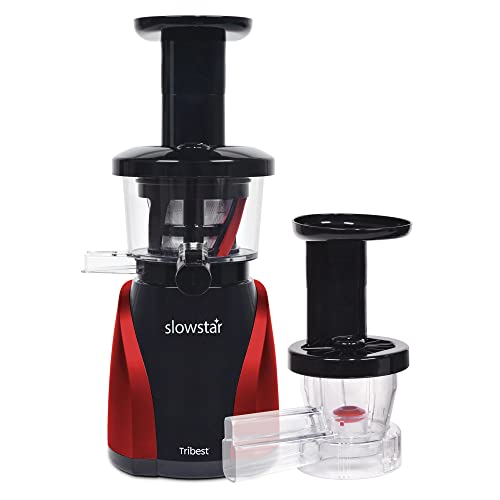
5. Tribest Slowstar Vertical Slow Juicer
A masticating juicer that can be used lying flat or upright, with attachments for mincing. It is a flexible option for cooks who like one machine for several tasks.
Suits: multi-purpose use. Strengths: versatile attachments. Weaknesses: it is a more involved cleanup. Skip it if you only want to juice.
View Tribest Slowstar on Amazon
Best for low-prep juicing
6. Breville Big Squeeze Slow Juicer
A vertical slow juicer from a well-known appliance brand, with a large chute that cuts down on prep. It suits people who want a familiar name and a simple routine.
Suits: low-prep juicing. Strengths: a large chute and brand support. Weaknesses: it takes up more height. Skip it if your cabinets are low.
View Breville Big Squeeze on Amazon
Care and Setup
- Rinse the screen right after juicing so strings do not dry on.
- Use the cleaning brush that comes with the juicer.
- Cut celery into shorter pieces if your chute is narrow.
- Let parts dry fully before storing.
- Strain the juice again if you dislike pulp in the glass.
Mistakes to Avoid
- Feeding long stalks too fast.
- Leaving pulp in the screen overnight.
- Ignoring a narrow chute when you juice daily.
- Forgetting to read the maker’s run-time guidance.
Why Celery Is Hard on Juicers
Celery looks harmless, but it combines long fibers with a very high water content. In a juicer, the strings can wrap around the auger, tangle in the screen and slow the machine. Fast centrifugal juicers shred celery quickly, but the fibers tend to carry liquid out with the pulp. A slow auger squeezes the stalk in a more controlled way, which is the main reason people choose a masticating model for it.
Even with a slow juicer, celery behaves differently from carrots or apples. Because it has little sugar and a lot of liquid, the juice comes out thin and light. It also has a strong flavor, and the amount of juice from a bunch can look small compared to the effort of cleaning. The cleaning step is where many people lose motivation, since fibers lodge in the mesh of the screen.
These features shape what you should look for. A wide, smooth auger and a well-designed screen cut down on clogging. A feed chute that suits your prep style saves time. A clear, simple cleaning process matters more with celery than with almost any other produce. When comparing models, think about the daily routine. If you will juice every morning, the shortest path from stalk to clean machine is a bigger advantage than a small difference in yield.
Chute Width and Prep Time
The feed chute determines how much cutting you must do. A narrow chute needs celery cut into short pieces, and that adds minutes to every session. A wide chute can take a whole stalk or a few large pieces, reducing prep. Wide chutes usually come with larger bodies and sometimes a lighter feel at the screen, so check the machine size against your counter space.
Be careful with long, tough stalks even in wide chutes. Feeding them too quickly can overload the auger and trigger a safety stop or a reverse function. Cutting stalks into manageable lengths and feeding them at a steady pace is gentler on the machine. Some people trim the very bottom of the bunch, where the stalks are toughest, and wash well since dirt hides near the base.
Consider the pusher or tamper too. A pusher that reaches the auger lets you guide stalks down without putting fingers near the opening. Make sure it fits snugly. Look at the hopper size as well. A juicer with a larger hopper lets you feed several pieces at once, while a small hopper may demand constant attention. Read the listing for details on chute dimensions and any safety features, and check the manual to see if the maker recommends cutting produce before feeding it.
Screen Design and Cleaning Routine
For celery, the screen is where the quality of a juicer shows. Fine mesh extracts more juice but clogs more easily and takes more work to clean. A coarser screen may release a little more pulp into the glass but rinses faster. Many juicers include a cleaning brush and a way to rinse the screen while it is still on the machine, which is handy.
The best habit is to rinse immediately after juicing. Celery fibers dry into a stiff mat that is hard to remove. A quick flush with water, followed by a gentle brush, usually takes only a minute or two. Leave the parts to dry on a rack, and avoid putting delicate screens or seals in the dishwasher unless the maker says it is safe.
Count the parts. A juicer with fewer pieces is quicker to assemble, wash and dry. Check whether any seals or gaskets need to be removed for cleaning. Soaking the screen in warm water with a drop of dish soap can loosen stubborn fibers. If you notice staining on plastic parts, it is typically cosmetic, and a short soak can help. Always follow the manual for care, and replace worn brushes, because a stiff, bent brush will not clean the screen well.
Yield, Pulp and Getting the Most from Each Bunch
Yield depends on the machine, the celery and how you feed it. Fresh, crisp celery gives more juice than limp, older stalks, so buy firm bunches and store them in the fridge, wrapped to keep moisture. If celery has gone soft, soaking in cold water for a short while can help revive it before juicing.
Feed at a steady, moderate pace. Pushing too quickly sends wet pulp out of the machine, while going slowly gives the auger time to press. If the pulp coming out looks wet, you can run it through again, though some people dislike the extra effort and the change in taste. Alternating celery with a small amount of a firmer item, such as cucumber or apple, can help push stringy fibers through and add a little sweetness.
Juice separates and loses freshness over time, so drink it soon after making it. Stir or shake before drinking, since celery juice often settles into layers. If you prefer a very smooth glass, strain it through a fine mesh sieve. Pulp does not have to be wasted. It can go into soups, stocks, veggie burgers, baked goods or compost. Check the maker’s run-time guidance, since celery’s fibrous load may require breaks between large batches.
Noise, Footprint and Long-Term Ownership
Daily celery juice often happens early, so noise matters. Slow juicers are generally quieter than centrifugal ones, which is a point in their favor, but sound levels differ by design. Listings may not give reliable noise figures, so rely on the general principle that slower auger speeds are calmer and read user feedback carefully for patterns rather than single comments.
Footprint is the next question. Vertical models take little counter space and are easy to store, while horizontal models are longer but may handle extra tasks such as making nut butters or pasta with attachments. Think about where the machine will live. If it must be put away after each use, weight and handle design matter. If it stays on the counter, appearance and a compact base matter more.
Long-term ownership comes down to parts and support. Ask whether replacement screens, augers and seals are available, what the warranty covers and how long the maker offers it. Budget tiers generally differ in build quality, chute size and ease of cleaning. Entry-level units can work for occasional juicing, while higher tiers are designed for daily use. Signs that it is time to replace include a worn or cracked auger, a screen with torn mesh, a motor that strains or overheats, or leaks around the seals. Stop using a juicer that shows any of these signs.
Masticating Juicers for Celery FAQ
Why a slow juicer for celery?
The auger squeezes stringy stalks well and usually yields more liquid than a fast blade.
Do I need to remove the leaves?
Not usually, but they add a stronger flavor. Check the maker’s guidance.
Is vertical or horizontal better?
Vertical saves space. Horizontal models often handle fibers and extra tasks well.
How much celery do I need for a glass of juice?
It depends on the juicer and how fresh the celery is. Plan on a bunch or so for a typical glass, and expect variation. Fresh, crisp stalks yield more.
Should I cut celery before juicing?
If your chute is narrow, yes. Cut stalks into shorter lengths. Wider chutes may accept longer pieces, but check the manual for any guidance.
Why does my celery juice separate?
Juice naturally separates as solids settle. Stir or shake it before drinking, and drink it soon after making it.
Can I juice celery leaves?
Yes, though they add a stronger, slightly bitter taste. Some people mix them in and others leave them out. Try a small amount first.
What if the juicer jams on celery strings?
Stop, switch to reverse if available, unplug it and clear the strings. Feed shorter pieces more slowly next time.
Is organic celery necessary?
That is a personal choice. Whatever you buy, wash it well, since dirt can hide at the base of the stalks.
How long can I store celery before juicing?
Keep it cold and wrapped so it stays crisp. Use it within a reasonable time, and avoid limp or slimy stalks.
Can I freeze celery juice?
Some people do, but taste and texture can change. If you try it, use a sealed container and leave room for expansion.
Motor Power, Speed and Torque in a Slow Juicer
Slow juicers are described by their rotation speed, usually somewhere between 40 and 80 revolutions per minute. A lower number is not automatically better. What matters for fibrous celery is how well the motor keeps turning when the auger meets a mass of strings. A motor with strong torque keeps pushing through, while a weaker one slows, hums and may trip an overload protection.
Wattage on its own is a poor guide, because gearing and design vary widely among brands. A modest-wattage motor with good reduction gearing can outperform a higher-rated one without it. Look for statements about overload protection, reverse function and continuous run time, since these indicate the maker expected the machine to be used with tough produce. A reverse button is useful for clearing jams without taking everything apart.
Duty cycle deserves attention if you make large batches. Many models list a maximum continuous run of 20 to 30 minutes, followed by a cooling period. Juicing a family-sized batch of celery in one go can approach that limit. If you plan to make a quart or more each morning, check that the stated run time covers your routine.
Using the Same Juicer for Other Produce
Celery is rarely the only thing people juice, so it is worth knowing how a masticating machine handles other ingredients. Hard vegetables such as carrots and beets work well, though they need a steady feed and often smaller pieces. Leafy greens like kale and spinach are well suited to slow juicers, because the slow squeeze extracts more from leaves than fast centrifugal designs typically do. Soft fruits such as berries and grapes are fine in some models, but their pulp can clog finer screens.
- Wheatgrass and herbs: horizontal designs generally handle these best, and some vertical units struggle to catch the thin blades.
- Citrus: peel it first unless the manual says otherwise, since the rind adds bitterness.
- Nuts and frozen fruit: some models include a blank screen for nut milks, frozen desserts or sorbets, which expands what the machine can do.
- Ginger and turmeric: usually fine, but they are very fibrous, so cut small pieces and alternate with softer produce.
If you want a machine for a wide menu rather than just celery, read the accessory list. Extra screens, a smoothie strainer or a pasta maker attachment add versatility but also add parts to wash and store.
Warranty, Parts and Long-Term Support
A juicer is a motorized appliance with plastic components that wear out, so what happens after the first year matters. Warranty terms on slow juicers vary considerably, from one year to well over a decade on some premium models. The longer terms often cover the motor but not the plastic parts, which are the most likely to crack or stain.
Before you buy, see whether replacement augers, screens, brushes and juicing bowls are sold separately and how easy they are to find. A good sign is a manufacturer website with a parts list and clear instructions. A poor sign is a unit whose parts appear nowhere online beyond the original listing. Also check whether the warranty requires registration, and keep your receipt in case you need to make a claim.
Fitting Celery Juicing Into a Weekday Routine
The best machine is the one you will use, and convenience is the main reason juicers end up in cupboards. A practical routine begins the night before: wash the celery, trim the base and tops, dry the stalks, and store them wrapped in the refrigerator so they are crisp and cold. In the morning, you only need to set up the juicer, feed the stalks, and rinse right away.
Rinsing the parts immediately after juicing, before the fibers dry, keeps cleaning to a few minutes. Leaving the screen to soak while you drink your juice makes the job easier still. Think about where the machine lives, as well. One that sits on the counter gets used much more than one stored on a high shelf or in a garage.
Juice is best consumed fresh, because exposure to air and light degrades flavor over time. If you need to make it ahead, fill a glass jar to the top to reduce air contact, seal it, and keep it cold. Expect some natural separation and give it a gentle shake before drinking.
Budget for the produce, too. Celery juice needs a surprising amount of raw material, and a daily habit adds up at the grocery store. Buying whole bunches rather than pre-cut sticks, and choosing a juicer that extracts well, can make the habit cheaper over time. A drier pulp usually signals better extraction, though how dry it looks is not a precise measure and varies with the type of celery and its freshness.
Related guides
- 6 Best Citrus Juicers: Handheld, Press and Electric
- 6 Best Juicers for Celery Juice: Slow and Fast (2026)
- 6 Best Juicers: Centrifugal and Slow Masticating (2026)
Frequently Asked Questions
Can a masticating juicer handle other vegetables besides celery?
Yes. Slow juicers generally handle carrots, beets, cucumbers, leafy greens and apples well. Fibrous roots like ginger need small pieces, and very soft fruit can clog finer screens. Check the manual for your model, and alternate hard and soft ingredients to keep the auger moving and the pulp ejecting steadily.
What RPM is best for a slow juicer?
Most slow juicers run between about 40 and 80 RPM, and there is no single best figure. Torque, gearing and screen design matter more than the number alone. Choose a model with overload protection and a reverse function, especially for stringy produce like celery, rather than chasing the lowest speed on a spec sheet.
Are juicer parts dishwasher safe?
It depends on the model. Many makers say the plastic parts are dishwasher safe on the top rack, while others recommend hand washing to protect fine screens and prevent clouding. Always follow the manual, and avoid harsh detergents or hot drying cycles on parts that may warp. A cleaning brush is usually the safer choice.
Is a masticating juicer worth it compared with a blender?
They do different jobs. A juicer separates the liquid from the fiber, giving a thin, smooth drink, while a blender keeps all the fiber for a thicker smoothie. If you want pure celery juice, a juicer is the right tool. If you prefer fiber and less cleanup, a blender may suit you better.
Going Deeper: Getting the Most From a Masticating Juicer for Celery
Celery is the juicing world’s awkward customer: mostly water held in long, stringy fibres that wrap around lesser machines, clog screens and turn a health ritual into a disassembly project. It is also, for many people, the entire point, since celery juice has a devoted following who drink it daily and need a machine that treats the stalk kindly at volume. A masticating juicer, crushing and pressing slowly rather than shredding at speed, is the natural tool, and the picks above, from Omega, Kuvings, Hurom, Nama, Tribest and Breville, each claim the celery crown in a different body shape. This section looks at the daily reality behind the claims: feeding technique, yield, cleaning and the small habits that decide whether a juicer becomes a ritual or a cupboard monument.
Matching the Choice to the Way You Actually Work
If celery juice is a daily discipline, your juicer is an appliance of routine, like the kettle. It will process a large bunch every morning, and your priorities are throughput without clogging, a feed arrangement that accepts stalks gracefully, and a clean-up measured in a couple of minutes, because a twenty-minute wash is a ritual-killer by day nine. Favour the designs whose screens and augers rinse free quickly, and be honest that in this pattern, cleaning speed outranks almost every other virtue.
If celery is one ingredient among many in a varied juicing practice, versatility moves up the list. The machine must handle leafy greens, hard roots and soft fruits across a week, with celery as a frequent guest rather than the sole resident. Nutrition-centre style machines that also mince, grind and extrude may serve this kitchen better than a celery specialist, and the ability to alternate wet and dry ingredients through a session becomes a genuine technique to learn.
If you are juicing for a household, volume and pulp management dominate. Several glasses a morning means larger batches, a pulp container that does not demand mid-session emptying, and a machine whose motor and parts are built for longer runs. It also means the produce bill becomes visible, which makes yield, the juice actually extracted per bunch, a household economy rather than a specification.
The Criteria That Matter Most, Revisited
Juicer specifications dwell on wattage and speed. For celery, these are the criteria that decide whether the machine thrives or clogs.
- Auger and screen design for fibre: Celery’s strings are the test. A slow, powerful auger that pulls stalks in and a screen that releases pulp rather than trapping it are what you are buying. Designs differ in how the pulp exits, and that difference is the difference between a bunch and a blockage.
- Feed chute arrangement: Whole-stalk feeding sounds convenient, but celery often juices better cut into short lengths, whatever the chute size, because long fibres are the enemy. Judge the chute by how the machine handles realistic preparation, not by the largest object that fits in it.
- Yield on watery produce: Celery is mostly water, so a good press should leave pulp that is notably dry. Yield is money and nutrition both, and over a daily habit the gap between an efficient press and a wasteful one becomes a bunch of celery a week.
- Cleaning architecture: Count the parts that touch juice, and imagine rinsing them half awake. Screens are the crux: a screen that clears under a tap with a brush in a minute sustains a habit; one that needs soaking and picking sustains a grudge.
- Motor character under load: Slow juicers should sound unhurried and stay that way through a tough bunch. A motor that strains, slows or heats is telling you the duty cycle it was built for, and a daily celery habit needs the unstrained kind.
- Juice quality and storage: Slow pressing incorporates less air, so the juice keeps its colour and flavour better if you must store it. If your routine involves juicing ahead for a day, this matters; if you drink immediately, it is a bonus rather than a deciding factor.
Celery exposes a juicer’s design honesty faster than any other produce. Run the picks above against your bunch size, your mornings and your tolerance for washing up, and remember that the machine you will still be using in month six is worth more than the machine with the most impressive first demonstration.
A Step-by-Step Routine That Works
Good celery juicing is mostly preparation and rhythm. This routine keeps the fibres flowing and the machine unclogged, whatever model sits on your counter.
- Wash and cut the celery: Rinse the stalks, trim the base and any tired ends, and cut the stalks into short lengths. This single habit prevents most fibre wrap and clogging, and it takes less time than clearing one blockage.
- Prepare everything before switching on: Juicing is continuous once it starts. Have the celery cut, the glass in place and any other ingredients ready, so the machine is never left chewing on an empty or overloaded chute.
- Feed steadily, not forcefully: Let the auger take each handful at its own pace. Pushing hard with the pusher packs fibres and invites clogging; the slow press rewards patience with drier pulp and better yield.
- Alternate textures in mixed juices: When juicing celery with softer or leafier produce, alternate handfuls so the fibrous celery helps push softer items through. The mixture keeps everything moving and improves the extraction of both.
- Drink fresh where possible: Celery juice is at its best immediately, bright and clean. If you must store it, fill the container to the brim to exclude air, chill it, and drink it the same day.
- Rinse the parts at once: Disassemble and rinse everything immediately, before pulp dries onto the screen. A juicer rinsed in the moment is a two-minute job; a juicer left till evening is a project, and projects end habits.
Notice that the routine’s hardest step is a kitchen knife and a chopping board, not the machine. That is the honest secret of celery juicing: the preparation is the technique, and the masticating press, chosen well and fed properly, does the rest with a calm that centrifugal machines cannot imitate on this particular vegetable.
Troubleshooting: Problems, Causes and Fixes
The machine clogs with stringy pulp
The fibres were too long, the feeding too fast, or both. Stop, reverse if your model offers it, clear the screen, and resume with shorter pieces fed more slowly. A clog is feedback about preparation, and once the lesson is learned it rarely repeats.
Juice is foamy or separates quickly
Some foam is natural, but excessive foam suggests the produce was pushed too hard or the juice sat before drinking. Feed gently, skim if you like, and drink fresh. Storing in a brim-full sealed container slows separation when life requires a delay.
Yield seems poor and pulp is wet
Check feeding pace first: an overloaded auger passes produce through half-pressed. Smaller handfuls, steady rhythm and properly cut celery usually recover the yield. If pulp stays wet across careful sessions, the screen or press fit may need attention.
The juice tastes bitter
Leaves and the white base carry more bitterness, and older celery more still. Use fresh, firm stalks, include leaves to your taste rather than by default, and remember that a little bitterness is celery’s character; the goal is balance, not the removal of its identity.
Care, Storage and Making It Last
The screen is the part that decides a masticating juicer’s lifespan in daily service. Rinse it immediately, use the brush the maker provides, and inspect it against the light now and then: a screen slowly filming over explains a slow decline in yield that owners often blame on the motor. A periodic soak in warm water with a little bicarbonate restores most screens kindly.
Augers, seals and housings want the same immediacy: rinse, dry and reassemble loosely or store so air circulates. Produce residue left in a sealed machine ripens into odours that survive into the next juice, and in a daily celery practice there is always a next juice, usually tomorrow morning, performed by someone half awake who deserves a clean machine.
Keep the whole system honest by descaling your kettle habits onto the juicer: if your water is hard, dry parts rather than leaving them to air-dry into mineral spots, and check seals seasonally. None of this exceeds a few minutes a week, and it is the entire difference between a juicer that serves for years and one that fades in a season.
Extra Questions, Answered
Should I juice the leaves as well?
You can, and they carry flavour and nutrients, but they are more bitter and more fibrous. Many daily drinkers juice a modest share of leaves and adjust by taste. Let your palate, and your machine’s calm handling of them, set the proportion.
Why cut celery if the chute takes whole stalks?
Because the fibre, not the stalk’s width, is the problem. Short lengths cannot wind around the auger or mat across the screen the way full-length fibres do. The thirty seconds with a knife saves the five minutes with a clog, every time.
Can I juice a day ahead?
You can, with the storage care described above, and slow-pressed juice tolerates it better than most. Fresh remains best, and many daily drinkers who try both settle on fresh for the taste and keep ahead-juicing for travel days and emergencies.
What else juices well in the same session?
Cucumber, apple, lemon and ginger all partner celery happily and can help the flow through the machine. Adding a little lemon also brightens the flavour and slows the juice’s discolouration if it must wait before drinking.
Is the pulp useful for anything?
Celery pulp is mild and fibrous; some cooks fold it into soups, stocks or savoury bakes, and compost takes the rest gratefully. Extracting the juice does not obligate you to use the pulp, but a daily habit produces enough that a use, even the compost, feels better than the bin.
How the Picks Differ in Form and Philosophy
The list divides into the horizontal nutrition-centre tradition, represented by the Omega J8006HDS and the Tribest Slowstar’s vertical take on thorough pressing, and the modern vertical designs from Kuvings, Hurom, Nama and Breville that prioritise wide chutes, sleek footprints and quick assembly. The horizontals are the marathon runners, unhurried and exceptionally calm with fibrous produce, often with extra food-processing talents. The verticals are the modern kitchen’s answer, faster to set up and clean, designed for households juicing several kinds of produce in one session.
For a celery-first household the honest question is which compromise you prefer: the horizontal’s patience and fibre mastery against a slightly longer session, or the vertical’s convenience against a little more attention to cutting and feeding. Both families juice celery well when the preparation is right, which returns the decision, as so often in this guide, to the human half of the system.
The Economics and Rhythm of a Daily Bunch
A daily celery habit has a running cost measured in bunches, and yield differences between machines compound quietly. A press that leaves pulp notably drier is, in effect, giving you extra glasses each week from the same shopping. When comparing the picks, treat yield claims with the respect due to your grocery bill, and if you can, test with your own bunch and weigh the juice. Few buyers do this; those who do never argue about yield again.
Rhythm matters as much as economics. Anchor the juicing to an existing morning anchor, the kettle, the dog, the news, and the habit survives busy weeks that dissolve unanchored intentions. The machine’s part in the rhythm is to be ready: stored assembled or nearly so, clean from yesterday, waiting where the celery is. A juicer that must be fetched and built each morning is a juicer negotiating for its life, and it usually loses by February.
Celery in the Wider Juicing Week
Few households juice celery alone forever, and the machine you choose will meet the rest of the produce drawer soon enough. The good news is that the habits celery teaches, cutting fibre short, feeding calmly, alternating textures, rinsing immediately, are the master habits of all juicing, and a celery-first routine makes every other ingredient easier. Cucumbers, apples, carrots and greens all behave better for an owner trained by the most fibrous stalk in the shop.
Plan the week loosely and the juicer earns its keep without becoming a tyrant: celery mornings anchored to the days the bunch is freshest, a mixed juice when the drawer needs clearing, a rest day when life is full. The machine’s readiness supports the rhythm: stored clean, assembled, near the produce. A juicer that is ready is a juicer that is used, and use, as this guide has argued from its first page, is the only benefit any of these machines actually deliver.
Shopping follows the same logic. Buy celery firm, bright and heavy for its size, store it cold and wrapped so it stays crisp, and juice it before the stalks turn rubbery, since tired celery yields tired juice through any machine ever built. The freshest bunch through a modest press will beat a tired bunch through the finest one, which is the produce-aisle version of this guide’s oldest lesson: the machine matters, and what you feed it matters just as much.
More Questions, Answered
Does slow juicing really keep more nutrients?
Slow pressing incorporates less air and generates less heat than high-speed shredding, which helps the juice stay fresher and taste cleaner. The largest nutritional factor, though, is that a machine you use daily delivers its benefits daily; consistency outperforms theory.
How do I stop the juice staining parts?
Rinse immediately and dry; most staining is residue left to sit. A periodic soak for the screen and juice-contact parts keeps colours honest. Some tinting on well-used parts is cosmetic and harmless, a record of service rather than a fault.
Can children share celery juice?
Many households serve it diluted or mixed with apple or cucumber for younger palates. The flavour is assertive, so introductions go better as a blend than as a green ultimatum at breakfast.
Can I add celery to a smoothie instead?
You can, and the fibre comes along for the ride, which some people prefer. The texture and intensity differ from juice, and the daily ritual differs too. Many households do both: juice for the morning glass, blender for everything else, each tool doing what it does best.
How do I tell if the machine or the celery is at fault for a bad batch?
Run a control test: a fresh, firm bunch, cut short, fed slowly, in a clean machine. If the juice is bright and the pulp dry, the earlier problem was the produce or the preparation. If the same faults appear under perfect conditions, the machine needs attention. One honest control batch saves weeks of blaming the wrong half of the partnership.
Should the whole household drink it at the same time?
Freshness argues for juicing to order, in the quantities the morning actually needs. A bunch processed in one session and drunk across a day is a reasonable compromise in a busy house, provided the storage rules in this guide are followed. What does not work is juicing a week’s ambition on Sunday and expecting Friday’s glass to taste like Monday’s; no machine can repeal that arithmetic.
Does the order of ingredients in the glass matter?
Only for drinking pleasure, not for the machine. Some drinkers pour celery over ice with lemon on top; others blend everything in the glass. The juicer’s work ends at the spout, and everything after that is presentation, which is a pleasant freedom after a guide full of technique.
Celery juicing is a habit wearing the disguise of a purchase. Choose the pick above whose feeding, yield and cleaning fit your mornings, cut the stalks short, feed them calmly and rinse the machine in the moment. Do those things and the juicer disappears into the ritual, leaving only the glass of bright, cold juice that was the point all along. Let any of them slide and even the finest press becomes a cupboard monument, which is the fate this guide exists to prevent.
The Short Version
For a proven all-rounder, the Omega J8006HDS. For a wide chute, the Kuvings B6000S. For small kitchens, the Hurom H320N. For whole stalks, the Nama J2. For multi-use, the Tribest Slowstar. For low prep, the Breville Big Squeeze.

