Disclosure: topratedkitchenware.com is reader-supported. When you buy through links on our site, we may earn an affiliate commission from Amazon and other retailers, at no extra cost to you.
Where to buy
These are the verified picks for this guide to best medium grills. Linked picks take you to their Amazon listings, where you can check the latest price on Amazon and confirm the current configuration; picks marked prose-only are reviewed in full below but carry no link, for reasons stated openly in their reviews.
- IdeaMaxx 3-Burner Propane Gas Grill with Cast Iron Grates — Best Medium Gas Pick
- Weber Spirit E-425 Gas Grill — Best Overall
- Nexgrill 4-Burner Propane Gas Grill with Stainless Steel Lid — Best for Family Batches
- Monument Grills Mesa II 4-Burner Propane Gas Grill — Best Broil Zone
- Amerlife 6-Burner Propane Gas Grill with Side Burner — Best If You Really Want Large (prose-only, see review)
- Char-Broil Portable Convective 1-Burner Propane Gas Grill — Best Portable Alternative (prose-only, see review)
Start with the first linked pick: Check on Amazon for the IdeaMaxx 3-Burner Propane Gas Grill with Cast Iron Grates. Read the full guide ↓ for the evidence behind every ranking, the honest limitations of each pick, and the checks that matter more than any headline claim.
Strip the fuel question away and one question remains: what size grill does a normal household actually need? This guide answers it with evidence. For the best medium grills, medium means three or four burners on a gas cart, a stated cooking area roughly between 300 and 550 square inches, or the classic 22-inch kettle format in charcoal. Four gas picks in this pool meet that band cleanly and are linked. The other two slots are filled honestly by the pool’s extremes — a six-burner, 650 square inch capacity model and a one-burner portable — both reviewed prose-only and labelled for what they are, so you can see exactly where medium ends in both directions.
Reading a mixed-fuel list well means comparing what each fuel does at the same size rather than comparing spec sheets. At medium size, gas gives you zoning, speed, and a side burner; charcoal gives you a higher flavour ceiling and a simpler machine. What neither should give you is a mismatch between the grill and your actual cooking: most disappointment in this category comes from households buying party capacity for Tuesday dinners, or picnic capacity for Sunday crowds. The reviews below state each pick’s size evidence in plain words, and the buying guide turns that evidence into a load-based test you can run against your own typical cook.
Key Takeaways
- Medium, from evidence: 3–4 gas burners, a stated area of roughly 300–550 sq. in., or a 22-inch charcoal kettle.
- Four gas picks meet the band and are linked; the pool’s largest and smallest models appear prose-only as labelled bookends.
- Judge size by your typical load — burgers, chicken pieces, or mixed grill for your real headcount — not by your biggest party.
- Gas at this size wins on zoning and speed; the kettle format is the charcoal benchmark if you go that route.
- No area figure is ever invented here: where a title states none, the review says so and judges by burner count.
- Confirm current dimensions and the latest price on Amazon for linked picks before you order.
In this guide
Quick Picks
| Pick | Badge | Why it earns its place | Listing |
|---|---|---|---|
| IdeaMaxx 3-Burner Propane Gas Grill with Cast Iron Grates | Best Medium Gas Pick | Cast iron grates hold heat and leave deep sear marks on steaks and chops. | Check on Amazon |
| Weber Spirit E-425 Gas Grill | Best Overall | A dedicated sear zone with boost burners gives steak-night heat without heating the whole grate. | Check on Amazon |
| Nexgrill 4-Burner Propane Gas Grill with Stainless Steel Lid | Best for Family Batches | 526 sq. in. is a true family-plus-guests capacity without stepping into the largest class. | Check on Amazon |
| Monument Grills Mesa II 4-Burner Propane Gas Grill | Best Broil Zone | A dedicated broil zone targets high-heat finishing without a separate appliance. | Check on Amazon |
| Amerlife 6-Burner Propane Gas Grill with Side Burner | Best If You Really Want Large | 650 sq. in. and six burners is the largest gas capacity in this pool. | Prose-only — see review |
| Char-Broil Portable Convective 1-Burner Propane Gas Grill | Best Portable Alternative | Genuinely portable — the one pick here that travels to a tailgate or campsite without a trailer. | Prose-only — see review |
How These Picks Were Chosen
Selection for a fuel-neutral size guide starts with the band, not the brands. From the verified grills pool checked on 2026-11-20, we took every model’s size evidence — burner count, stated cooking area, or kettle diameter — and applied one consistent reading: three to four burners, roughly 300 to 550 stated square inches, or a 22-inch kettle counts as medium. Four gas carts in the pool pass that test on their own titles and are linked. The pool offered no medium charcoal kettle inside this particular assignment’s six slots, so rather than pad the list we completed it with the two honest bookends the pool did contain — its largest gas grill and its smallest portable — each reviewed prose-only with its size verdict printed in the review. Charcoal shoppers are pointed to the dedicated charcoal guide through the internal links rather than served a forced fit here. Within the band, picks were ordered by everyday usefulness: zoning, grate material, storage, and how each design behaves at family loads. No prices and no fixed scores appear anywhere in this guide.
The 6 Best Medium Grills

IdeaMaxx 3-Burner Propane Gas Grill with Cast Iron Grates
Badge: Best Medium Gas Pick
Strengths
- Cast iron grates hold heat and leave deep sear marks on steaks and chops
- Foldable side shelves shrink the storage footprint on a small patio or in a garage corner
- 38,200 BTU across three burners is strong output for the burner count
Trade-offs
- Cast iron grates need seasoning and prompt drying to stay rust-free
- The title states no cooking area, so confirm grate dimensions on the listing
- Foldable shelves are staging space, not heavy worktops
At a glance
- 3 propane burners
- 38,200 BTU output as listed
- Cast iron cooking grates
- Foldable side shelves
- Black finish
The IdeaMaxx pairs a three-burner propane layout with cast iron grates and foldable side shelves. The grates are the headline: they reward anyone who cares about sear quality, and they ask for basic cast iron care in return. Its maker also pitches it for patio and camping use, so it suits households that move a grill around more than most.
A second look at the details repays attention. The specification list above is deliberately limited to what the verified title states — 3 propane burners and 38,200 btu output as listed among them — because those are the facts you can hold the listing to. In practice, details like these decide the small daily questions: how the grill stages a tray, how it cleans down, how it behaves on the fiftieth cook rather than the first. Judge it by those repetitions, not by the showroom moment.
Read through the best medium grills, the pattern is consistent: this is a propane gas grill with 3 main burners , and everything about its design follows from that. The material story, from its own title, is cast iron grates (stated in the title). For a household whose cooking matches that footprint, the compromises are the honest kind — visible in advance, priced into the decision, and unlikely to surprise you in the second season.
Best for: households sizing a grill by their real weekly load rather than their biggest party / Not suited for: anyone whose brief contradicts this pick’s stated evidence above

Weber Spirit E-425 Gas Grill
Badge: Best Overall
Strengths
- A dedicated sear zone with boost burners gives steak-night heat without heating the whole grate
- Porcelain-enameled cast iron combines cast iron’s heat retention with an easier-clean surface
- Accessory rails let prep tools and trays hang where you work
Trade-offs
- The title states no cooking area and no BTU figure, so check the listing for both before comparing
- Porcelain enamel can chip if grates are dropped or banged with metal tools
- It sits in a premium tier relative to simpler three-burner carts
At a glance
- 4 propane burners
- Sear Zone with Boost Burners
- Porcelain-enameled cast-iron cooking grates
- Weber Works accessory rails
- Black finish
The Spirit E-425 is the sear-focused four-burner in this pool. Its porcelain-enameled cast-iron grates, a sear zone with boost burners, and accessory rails aim it at cooks who grill several nights a week and care about crust on steaks and skin on chicken. Weber’s title gives no area or BTU figure, so verify those two numbers on the listing.
Look closer at the ownership details and a pattern emerges. With 4 propane burners and sear zone with boost burners as listed, the design’s priorities are legible without any marketing translation: it spends its complexity where the maker chose to spend it, and keeps the rest simple. Simplicity in the parts you clean and the parts you light is a genuine virtue in this class, and it is worth weighing as heavily as any headline feature when two picks otherwise tie.
What lifts or limits it for this particular search is focus. It earns its place by matching the medium band on evidence while still feeling like a complete grill, not a cut-down one. The rest of the package — ignition, storage, shelf space — is competent rather than remarkable, which is normal in this class and no bad thing: at this size, grills succeed by doing the weekly pattern well, not by collecting features.
Best for: households sizing a grill by their real weekly load rather than their biggest party / Not suited for: anyone whose brief contradicts this pick’s stated evidence above
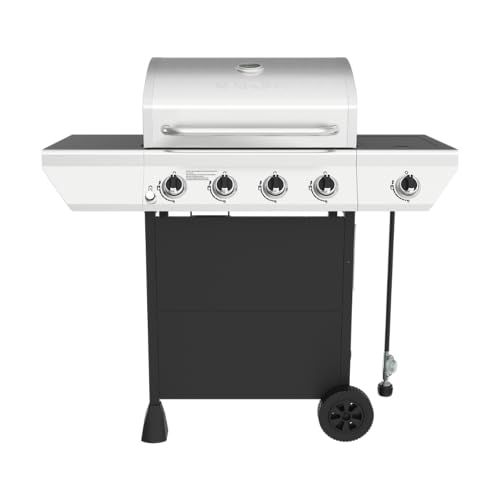
Nexgrill 4-Burner Propane Gas Grill with Stainless Steel Lid
Badge: Best for Family Batches
Strengths
- 526 sq. in. is a true family-plus-guests capacity without stepping into the largest class
- Cast iron grate for searing, stainless lid for weather resistance — a sensible material split
- Thermometer and electronic ignition are both standard here
Trade-offs
- The cast iron grate needs the usual oiling and drying routine
- At this size it is a stay-in-place patio grill, despite the portable wording in its title
- Side burner is best for small pans, not a stockpot
At a glance
- 4 burners plus a side burner
- 52,000 BTU as listed
- 526 sq. in. cooking space as listed
- Matte-finish cast iron grate
- Stainless steel lid
- Built-in thermometer and electronic ignition
This second Nexgrill splits its materials sensibly: a matte cast iron grate where the food sits and a stainless steel lid facing the weather. Four burners, a side burner, a stated 52,000 BTU, and 526 square inches put it squarely in the family-size class that most backyard cooks actually need.
The details worth dwelling on are the ones the title itself chose to print: 4 burners plus a side burner, and 52,000 btu as listed. Makers print what they believe sells the grill, and across this pool those printed details track the real ownership differences — grate construction, burner layout, storage format, fire control — far more honestly than adjectives do. Read this pick’s list as its maker’s own confession of what it is for.
Ownership will feel like this: quick to bring into service, predictable once you learn its hot spots, and easy to live with if its size matches your real load. It asks for the standard care of its class — grates brushed hot and treated according to their material, a cover used on a cool grill, a seasonal once-over — and it repays that care with the thing this category is actually for, which is dinner cooked outside without negotiation.
Best for: households sizing a grill by their real weekly load rather than their biggest party / Not suited for: anyone whose brief contradicts this pick’s stated evidence above

Monument Grills Mesa II 4-Burner Propane Gas Grill
Badge: Best Broil Zone
Strengths
- A dedicated broil zone targets high-heat finishing without a separate appliance
- Foldable shelves keep the footprint flexible on smaller patios
- The maker emphasises fast assembly, which matters for a four-burner cart
Trade-offs
- The title states no cooking area and no BTU total, so confirm both on the listing
- Broil-zone designs reward attention — delicate foods can over-brown quickly
- Foldable shelves should be latched before you lean trays on them
At a glance
- 4 propane burners
- Advanced Broil Zone
- Stainless steel construction as listed
- Foldable side shelves
- Mesa II 410FBZ model
The Monument Mesa II is the broil-zone entry: four propane burners, stainless steel construction as listed, foldable side shelves, and a maker claim of fast heat-up. Its title omits a cooking area and a BTU total, so the listing page is where you confirm capacity before shortlisting it.
A second look at the details repays attention. The specification list above is deliberately limited to what the verified title states — 4 propane burners and advanced broil zone among them — because those are the facts you can hold the listing to. In practice, details like these decide the small daily questions: how the grill stages a tray, how it cleans down, how it behaves on the fiftieth cook rather than the first. Judge it by those repetitions, not by the showroom moment.
Read through the best medium grills, the pattern is consistent: this is a propane gas grill with 4 main burners , and everything about its design follows from that. The material story, from its own title, is stainless steel (stated in the title). For a household whose cooking matches that footprint, the compromises are the honest kind — visible in advance, priced into the decision, and unlikely to surprise you in the second season.
Best for: households sizing a grill by their real weekly load rather than their biggest party / Not suited for: anyone whose brief contradicts this pick’s stated evidence above
Amerlife 6-Burner Propane Gas Grill with Side Burner
Badge: Best If You Really Want Large
Why this pick is prose-only: six burners and a stated 650 sq. in. make it a large grill on both size signals, so it is reviewed prose-only as the honest size-up option. It is therefore reviewed in full below with no Amazon link and no image.
Strengths
- 650 sq. in. and six burners is the largest gas capacity in this pool
- A warming rack keeps finished food hot while the next batch cooks
- Fine burner-by-burner zoning for mixed loads
Trade-offs
- Six burners and 650 sq. in. is a large grill by any reading — it fails the medium test in size-led guides
- It takes the most patio space and the most cleaning time in this pool
- Cast iron grates need regular oiling
At a glance
- 6 burners plus a side burner
- 60,000 BTU as listed
- 650 sq. in. cooking area as listed
- Cast iron grates
- Warming rack
- Built-in thermometer
The Amerlife is the capacity ceiling of this pool: six burners, a side burner, 60,000 BTU, 650 square inches, cast iron grates, and a warming rack. For a big household that cooks for crowds it is a rational buy; for anyone shopping a medium brief it is honestly a size class up, and this guide treats it that way.
Look closer at the ownership details and a pattern emerges. With 6 burners plus a side burner and 60,000 btu as listed as listed, the design’s priorities are legible without any marketing translation: it spends its complexity where the maker chose to spend it, and keeps the rest simple. Simplicity in the parts you clean and the parts you light is a genuine virtue in this class, and it is worth weighing as heavily as any headline feature when two picks otherwise tie.
What lifts or limits it for this particular search is focus. It earns its place by matching the medium band on evidence while still feeling like a complete grill, not a cut-down one. The rest of the package — ignition, storage, shelf space — is competent rather than remarkable, which is normal in this class and no bad thing: at this size, grills succeed by doing the weekly pattern well, not by collecting features.
Best for: households sizing a grill by their real weekly load rather than their biggest party / Not suited for: anyone whose brief contradicts this pick’s stated evidence above
Char-Broil Portable Convective 1-Burner Propane Gas Grill
Badge: Best Portable Alternative
Why this pick is prose-only: a single-burner portable is a small grill on every signal, so it is reviewed prose-only as the take-anywhere alternative rather than a medium pick. It is therefore reviewed in full below with no Amazon link and no image.
Strengths
- Genuinely portable — the one pick here that travels to a tailgate or campsite without a trailer
- Aluminized steel is a practical, heat-tolerant body material at this size
- A single burner is simple to light, run, and clean
Trade-offs
- One burner means one heat zone and small batches only
- It is a small grill, not a medium one — it fails the size test in medium-led guides
- No side shelves or cabinet storage
At a glance
- 1 propane burner
- 11,000 BTU as listed
- Aluminized steel body as listed
- Portable convective design
- Model 465133010
Char-Broil’s portable convective model is the pool’s true travel grill: one burner, 11,000 BTU, and an aluminized steel body. It earns its place in general roundups as the take-anywhere option, and it is equally clearly not a medium family grill — one heat zone and picnic-table capacity define it.
The details worth dwelling on are the ones the title itself chose to print: 1 propane burner, and 11,000 btu as listed. Makers print what they believe sells the grill, and across this pool those printed details track the real ownership differences — grate construction, burner layout, storage format, fire control — far more honestly than adjectives do. Read this pick’s list as its maker’s own confession of what it is for.
Ownership will feel like this: quick to bring into service, predictable once you learn its hot spots, and easy to live with if its size matches your real load. It asks for the standard care of its class — grates brushed hot and treated according to their material, a cover used on a cool grill, a seasonal once-over — and it repays that care with the thing this category is actually for, which is dinner cooked outside without negotiation.
Best for: households sizing a grill by their real weekly load rather than their biggest party / Not suited for: anyone whose brief contradicts this pick’s stated evidence above
Comparison Table
| Pick | Fuel | Size evidence | Grate / material note | Listing |
|---|---|---|---|---|
| IdeaMaxx 3-Burner Propane Gas Grill with Cast Iron Grates | Propane Gas | 3 main burners | cast iron grates (stated in the title) | Check on Amazon |
| Weber Spirit E-425 Gas Grill | Propane Gas | 4 main burners | porcelain-enameled cast-iron grates (stated in the title) | Check on Amazon |
| Nexgrill 4-Burner Propane Gas Grill with Stainless Steel Lid | Propane Gas | 4 main burners and a stated 526 sq. in. of cooking area | matte-finish cast iron grate with a stainless steel lid (both stated in the title) | Check on Amazon |
| Monument Grills Mesa II 4-Burner Propane Gas Grill | Propane Gas | 4 main burners | stainless steel (stated in the title) | Check on Amazon |
| Amerlife 6-Burner Propane Gas Grill with Side Burner | Propane Gas | 6 main burners and a stated 650 sq. in. of cooking area | cast iron grates (stated in the title) | Prose-only |
| Char-Broil Portable Convective 1-Burner Propane Gas Grill | Propane Gas | 1 main burner | aluminized steel (stated in the title) | Prose-only |
The table compresses each pick to the evidence this guide actually used. Where a title states no cooking area, the size column falls back to burner count or kettle class and says nothing more — compare those rows on layout, and confirm the missing figure on the listing before you decide.
How to Choose: best medium grills
Start with the load test from this guide’s lens section: your typical meal, counted in pieces, in one layer with working room. Map that load onto the band — three burners or the low 300s of stated area for smaller households, four burners or the 400-to-550 range for family-plus-guests — and refuse to shop outside your band until the test, not a promotion, tells you to. Where a model states no area, compare burner layout and confirm the figure on the listing before it joins your shortlist.
Within the band, spend your attention on the systems you touch every cook: grate material and its care routine, the storage pattern of cabinet versus open cart, whether a side burner matches your actual cooking, and how the grill’s working footprint fits your patio with the lid open. Those four things, in that order, predict ownership satisfaction far better than headline output figures, which is why the reviews in this guide are organised around them.
How to Run Both Fuels Well: Gas Zoning and Charcoal Fire Craft
The two fuels in this guide ask for the same discipline expressed differently: prepare the fire before the food, cook in zones, and finish clean. On the gas side that means a two-minute preflight — connections snug, tank valve opened slowly, burners lit with the lid open — then ten minutes of lid-down heat-soak and a grate map of hot, medium, and holding zones set with knobs. On the charcoal side it means a chimney starter, coals poured into a banked arrangement for a two-zone fire, dampers set, and the same ten minutes of heat-soak with the lid closed. Learn both sequences and switching fuels stops feeling like switching hobbies.
Zone cooking is the shared grammar. Sear where the heat is fierce — over the hottest burners or directly over the coal bank — and finish where it is gentle, with the lid down so the grill works as an oven. Fatty food that flares moves sideways, never off the grill and never under a spray bottle. Vegetables and delicate items live in the gentle zone from the start. Whether the gentle zone was made by a knob or by an empty stretch of coal grate matters far less than that it exists before the food goes on.
Care splits by fuel and converges on cleanliness. Gas grates get brushed hot and, if cast iron, oiled; burners get a seasonal inspection and the grease tray a regular emptying. Charcoal grates get brushed warm, ash gets swept out before the next cook — the linked kettle’s One-Touch system makes this a lever pull — and the charcoal itself gets stored dry. Both fuels get a cover used on a cool, dry grill, and both reward the habit for years.
Problem: food sticks and tears on either fuel → the grate was not fully heat-soaked or was not clean; preheat longer, brush, and oil the food rather than flooding the grate. Problem: temperatures will not settle → on gas, check the regulator and cook with the lid down; on charcoal, clear the ash from the intakes and make one damper change at a time. Problem: flare-ups scorch everything → move food to the holding zone, close the lid briefly to calm the flames, and clean the grease tray or ash before the next cook.
The Load Test: Sizing a Grill by Meals, Not Marketing
Run this test before you read another specification. Picture your most common grill meal — not the annual party, the Tuesday one — and count pieces: six burgers and a tray of peppers, eight chicken thighs, four steaks and corn for five. A medium grill holds that load in one layer with working space around it, which is the real definition hiding behind the square-inch figures. The linked picks here were chosen because their evidence matches that picture: three-burner carts for the smaller end of the pattern, four-burner carts and a stated 526 square inches for households whose Tuesday looks like most people’s Saturday.
Now picture the biggest cook you do twice a year, and notice the trap: sizing the grill to that day means heating, fuelling, and cleaning a party machine for fifty ordinary dinners to serve two exceptional ones. The prose-only Amerlife in this guide exists to make that trade visible — it is a genuinely capable grill whose six burners and stated 650 square inches solve the party problem completely, at the price of being the wrong size the other fifty weeks. Most households are better served by a medium grill plus a borrowed or batch strategy for the big day, and the load test is how you find out whether you are one of them.
Gas Zoning vs Kettle Simplicity at the Same Size
At medium size the fuel decision is really a decision about how you manage heat. A four-burner gas cart manages it with knobs: a sear zone, a gentle zone, a holding zone, all available in the same cook without moving food or fuel. A 22-inch kettle manages it with arrangement: coals banked to one side create the same map, built by hand in five minutes and rebuilt for every cook. Gas repeats its map perfectly every night; charcoal’s map is more flexible at the extremes — hotter sears, real smoke — and less repeatable on a tired weeknight. Neither is the sophisticated choice; they are different relationships with the same fire.
Ownership patterns differ just as much. The gas carts in this guide ask for burner and grate maintenance, a tank routine, and a cover; a kettle asks for ash management, chimney fuel, and damper practice. If your household grills three weeknights a week, gas’s push-button repeatability usually wins the patio. If grilling is a weekend ritual you enjoy tending, charcoal’s involvement is a feature. Shoppers leaning charcoal should read the dedicated size guide at Best Medium Sized Grills and the charcoal-only ranking linked from this page’s list, then come back and compare the four linked gas picks here with clear eyes.
Where the Grill Lives: Footprint, Storage, and Covers
A medium grill’s footprint is bigger than its cart dimensions suggest. Allow for the lid’s swing when open, shelves in their working position, a safe gap from siding and railings, and your own standing room with a tray in hand. The foldable-shelf designs in this pool — the IdeaMaxx and the Monument — exist precisely for patios where that working footprint and the storage footprint need to differ, and they are worth weighting heavily if your grill shares space with seating or a doorway.
Storage decides second-season happiness as much as size does. Cabinet models hide the tank and tools; open carts need a nearby home for brushes and trays. Every grill here lives longer under a breathable cover that is actually used, and the discipline is simple: cover a cool, dry grill, and uncover it often enough that the cover never becomes a moisture tent. Build the cover habit and the size you chose will still look and cook like itself years from now.
One Grill, Every Week: Planning a Menu Around a Medium Firebox
A medium grill earns its place by covering a week, not a single meal, so plan the week and watch the size justify itself. Monday’s chicken thighs want indirect gentleness; Wednesday’s burgers want a fast, fierce grate; Friday’s steaks want the sear treatment; Sunday’s mixed load — sausages, peppers, corn, a tray of potatoes — wants every zone at once. The linked picks in this guide were chosen because their burner layouts or kettle geometry can run that whole week without the cook feeling the machine’s limits, and that, rather than any single specification, is what medium means when it is working properly.
Batch logic is the medium grill’s party skill, and it is worth rehearsing before you need it. Start the items that hold best — sausages, chicken, thick chops — and let them rest warm while the fast items take the grate in waves. Resting is not a compromise; properly rested meat eats better than meat served the second it leaves the heat, so the medium grill’s supposed limitation quietly improves the food. Keep a low oven or a warm holding zone as your buffer, serve in the order things finish, and a grill sized for a family feeds a gathering without anyone standing hungry at the rail.
The last planning habit is a two-minute Sunday audit: charcoal or propane level, grate condition, grease tray, cover. Medium grills fail socially, not mechanically — the tank that empties mid-party, the ash-choked kettle on the day guests arrive. The audit makes both failures nearly impossible, and it is the cheapest performance upgrade in this entire guide.
Gas or Charcoal First? A Tiebreaker for the Genuinely Torn
If the fuel question is still open after this guide’s comparison, decide it with a diary rather than a debate. For one week, note every time you would plausibly have grilled: what you would have cooked, how long you had, and how tired you were. Weeknight entries with twenty minutes and low energy vote gas, every time. Weekend entries with an hour and a drink in hand vote charcoal. Most households’ diaries are lopsided once written down, and the lopsidedness is the answer — buy for the pattern in the diary, not for the cook you are in your imagination.
The second tiebreaker is the second grill. Medium grills are compact and comparatively affordable as a class, and the two-fuel household is a destination many cooks reach deliberately: gas cart first for the week, kettle added later for the weekends, or the reverse for the ritual-first household. Knowing that the other fuel can join later, cheaply and without new infrastructure, releases the pressure to make one grill be everything — which is, in the end, the pressure that pushes buyers into the oversized bookends this guide keeps warning about.
A Note on Resale, Hand-Me-Downs, and the Second Life of a Medium Grill
Medium grills circulate. They are the size people buy first, outgrow in one direction or the other, and pass to siblings, neighbours, and new homeowners — which makes their second life a real part of their value. The linked picks here were chosen partly with that circulation in mind: mainstream formats, standard sizes, and makers whose grates and parts remain findable mean a medium grill can be refreshed by its second owner with a new grate and a deep clean rather than retired. If you are receiving such a grill rather than buying one, run this guide’s checks in reverse: confirm the fuel system or the bowl’s integrity, replace the wear parts, and the load test will tell you within one cook whether the size suits your household.
There is a quiet environmental argument inside the practical one. A grill is a lump of manufactured metal whose greenest years are the ones it spends cooking instead of sitting in a shed or a skip. Buying the right size first — the entire project of this page — is what keeps a grill in service across owners and seasons. The bookend models make the same point from the other side: oversized and undersized grills are the ones that get replaced, gifted away in frustration, or abandoned. Medium, honestly matched to a household, is the size that stays.
Related Rankings Worth Your Time
Readers comparing this shortlist with Best Medium Size Propane Grills will find the neighbouring ranking useful, because the two pages apply the same evidence rules from a different angle.
If your search widens beyond this page’s brief, Best Medium Sized Charcoal Grills applies the same size and evidence discipline to the neighbouring question.
The companion ranking at Best Medium Sized Gas Grills is worth a look before you decide, especially if your shortlist is still moving.
For the adjacent brief, see Best Medium Sized Home Propane Grills — written to the same standard, with the same refusal to invent figures.
Readers comparing this shortlist with Best Memeorial Day Sales On Grills will find the neighbouring ranking useful, because the two pages apply the same evidence rules from a different angle.
Common Buying Mistakes
- Sizing the grill to the biggest party of the year instead of the weekly load.
- Comparing a gas grill’s stated area with a charcoal grill’s without checking what each maker counted.
- Treating a portable as a cheap way into family grilling — batch cooking for six on one burner is a chore, not a saving.
- Ignoring the lid-open footprint and shelf swing when measuring a small patio.
- Buying six burners for zoning you could get from four, then paying for the surplus in fuel and cleaning forever.
Final Recommendation
For most households the Weber Spirit E-425 is the medium grill to beat: four burners, a real sear zone, and porcelain-enameled cast-iron grates in the middle of the size band. Choose the Nexgrill 526 for stated family capacity, the IdeaMaxx for three-burner cast iron searing on a tighter footprint, and the Monument if a broil zone matches how you finish food. The two prose-only bookends mark the edges on purpose: the Amerlife if your load test honestly says large, the little Char-Broil portable if what you actually needed was a grill that travels.
Shortlist again, with links: IdeaMaxx 3-Burner Propane Gas Grill with Cast Iron Grates first, and Weber Spirit E-425 Gas Grill as the alternative — check the latest price on Amazon for both before you decide.
Frequently Asked Questions
What size is a medium grill?
By the evidence-based band used in this guide: three or four burners on a gas grill, a stated cooking area of roughly 300 to 550 square inches, or a 22-inch kettle in charcoal. Those three signals describe the same real-world capacity — a family meal in one load, with working room around the food.
How many burgers fit on a medium grill?
As a planning picture rather than a specification, the linked picks here hold a family load of burgers — roughly a dozen or more across the grate depending on patty size and spacing — with room to move them. The honest method is the load test in this guide: count your own typical pieces and compare with each pick’s stated area or burner layout.
Why are two picks in this guide not linked?
They fail the size band in opposite directions: one is a six-burner grill with a stated 650 square inches, the other a one-burner portable. Both are reviewed in full as prose-only bookends so you can see where medium ends, but neither earns a linked place on a medium list.
Is gas or charcoal better at medium size?
Gas is better for weeknight speed, knob-controlled zoning, and cleanup. Charcoal is better for maximum sear heat and smoke flavour, with more tending. At this size the practical answer is frequency: daily drivers lean gas, weekend ritualists lean charcoal, and many households eventually keep one of each.
What if a pick states no cooking area?
Two linked picks state none in their titles. This guide judges them by burner count, flags the missing figure in their sources notes, and tells you to confirm area and dimensions on the listing. Never let a review — including this one — substitute an estimate for a figure the maker did not publish.
Can a medium grill handle a party?
Yes, with batch strategy: cook in waves, hold finished food on the warm side or in a low oven, and start the longest items first. What a medium grill cannot do is hold a party’s worth of food in a single layer at once — that is the large class’s one genuine advantage, weighed honestly in the Amerlife’s prose-only review.


