Disclosure: topratedkitchenware.com is reader-supported. When you buy through links on our site, we may earn an affiliate commission from Amazon and other retailers, at no extra cost to you.
Where to buy
The six models below are the verified picks for this guide to the 1100-watt class. Each name links to its Amazon listing, where you can check the latest price on Amazon and confirm the exact rated wattage on the product specifications before you decide.
- Farberware Countertop Microwave Oven 1.1 cu.ft, 1000 Watts, Stainless Steel
- Chefman Countertop Microwave Oven 0.9 Cu. Ft., 900 Watts, Black
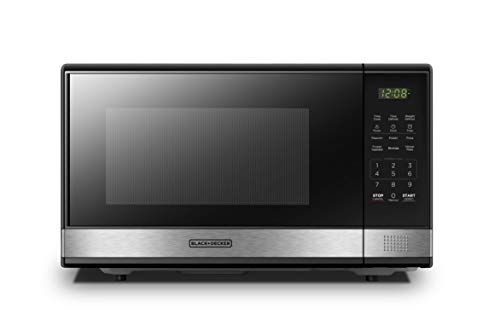
- BLACK+DECKER Microwave Oven Countertop, 1.1 Cu.Ft, 1000W, Stainless Steel
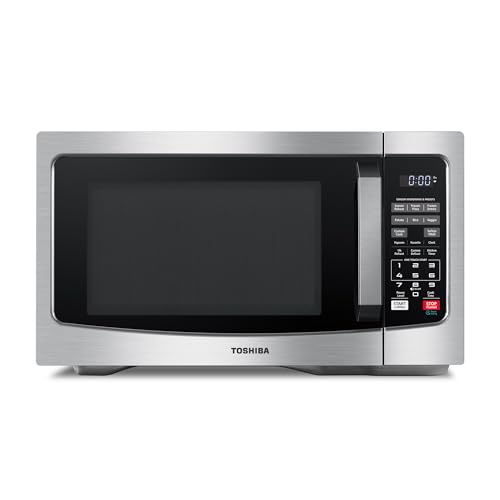
- TOSHIBA Flatbed Microwave Oven with Inverter Technology, 1.3 Cu.Ft, 1200W, Black Stainless Steel
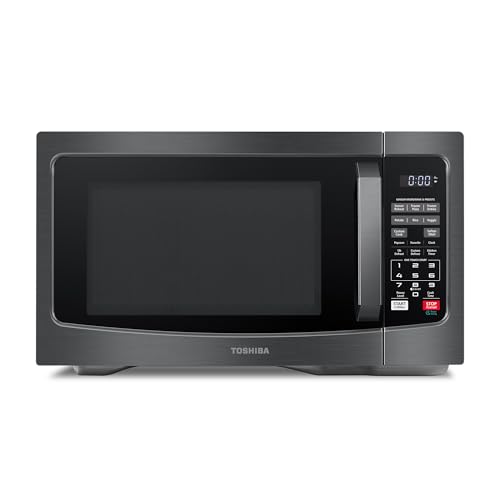
- TOSHIBA Countertop Microwave Oven with Inverter Technology, 1.6 Cu.Ft, 1250W, Black Stainless Steel
- Panasonic Countertop Microwave Oven, 1.2 Cu. Ft., 1250W, Inverter Technology, Stainless Steel — NN-SN67QS
Read the full guide ↓ for the honest explanation of why this class clusters around 1000–1250 watts, the conversion maths for package timings at each wattage, and the detailed review of every pick.
Shoppers hunting for the best microwaves 1100 watt models can buy usually start from a sensible place: a recipe, a frozen meal box, or a cooking chart that assumes about 1100 watts of microwave power. That figure is the reference wattage behind a huge share of packaged-food directions, which is why it feels like the correct thing to buy. Here is the honest complication this guide will not hide from you: exact 1100W nameplates are uncommon in the current countertop market. Manufacturers cluster at 1000W, 1200W, and 1250W, and the practical 1100-watt class is the band around the reference figure — close enough that package timings work with little or no adjustment. So this guide ranks the verified models that bracket 1100 watts, states each one’s true rated wattage in its spec box rather than pretending they are all identical, and teaches you the simple conversion that makes any of them behave like the reference oven your recipes assume.
Why does the band work? Cooking time scales with wattage in a predictable way. A 1000W oven needs roughly a tenth more time than the 1100W reference; a 1200W or 1250W oven needs roughly a tenth less. Those are small corrections — seconds on a beverage, a minute on a family frozen meal — and standing time absorbs much of the difference anyway. What actually separates the picks below is everything around the wattage: capacity from 0.9 to 1.6 cu ft, turntable versus flatbed, conventional versus inverter power delivery, and the control features that decide how precisely you can apply that power. Readers comparing the duplicate phrasing of this search can also see Best Microwaves 1100 Watts, and those who decide the class is too slow for them should jump straight to Best Microwaves 1250 Watts rather than compromising.
Inside: six detailed reviews with the true wattage of every pick, a comparison table, the wattage conversion method written out step by step, a how-to section on cooking accurately at this power level, and a section on inverter technology, which changes how wattage is delivered and matters more at this class than any 50-watt difference on a label.
Key Takeaways
- About 1100 watts is the reference power behind most packaged-food directions; exact 1100W models are rare, so the smart buy is the 1000–1250W band around it.
- Convert times by ratio: at 1000W add roughly a tenth more time than the 1100W direction; at 1200–1250W use roughly a tenth less, then check and use standing time.
- Every pick in this guide states its real rated wattage in its spec box — judge the class by the band, and each model by its true figure.
- Inverter models deliver their wattage continuously at reduced settings, which improves defrosting and delicate cooking more than a small wattage difference does.
- Capacity still rules fit: this class spans 0.9 to 1.6 cu ft, so measure your dishes before choosing on power.
- For daily frozen meals and family reheating, the top of the band (1200–1250W) is the most forgiving; for singles, the 900–1000W end is ample.
In this guide
Quick Picks
- Best Overall — Panasonic Countertop Microwave Oven, 1.2 Cu. Ft., 1250W, Inverter Technology, NN-SN67QS. The class leader: inverter delivery, Genius Sensor cooking, and family size in a stainless cabinet. Check on Amazon
- Best Large Capacity — TOSHIBA Countertop Microwave Oven with Inverter Technology, 1.6 Cu.Ft, 1250W. The biggest cavity here with a 13.6-inch turntable, smart sensor, and auto defrost for family cooking. Check on Amazon
- Best Flatbed — TOSHIBA Flatbed Microwave Oven with Inverter Technology, 1.3 Cu.Ft, 1200W. No turntable, rectangular-dish freedom, inverter evenness, and a cavity that wipes clean in one pass. Check on Amazon
- Best Classic 1000W Workhorse — Farberware Countertop Microwave Oven 1.1 cu.ft, 1000 Watts, Stainless Steel. Multi-stage cooking and defrost by weight or time in the proven mid-size format just under the reference wattage. Check on Amazon
- Best Simple 1000W — BLACK+DECKER Microwave Oven Countertop, 1.1 Cu.Ft, 1000W, Stainless Steel. Push-button door, child lock, and six presets: the uncomplicated route into this class. Check on Amazon
- Best Compact in Class — Chefman Countertop Microwave Oven 0.9 Cu. Ft., 900 Watts, Black. The smallest pick, with 10 power levels, express cook, ECO mode, and mute for apartment counters. Check on Amazon
How These Picks Were Chosen
This is a research-led guide built on verified data. Every model was confirmed against its manufacturer’s listing through the Creators API, and the wattage in each spec box is the model’s rated output from that verified data — we have not rounded any pick up or down into the keyword’s number. Selection then worked outward from the 1100W reference: we included the strongest verified countertop models in the surrounding band, from 900W at the compact end to 1250W at the top, because those are the ovens a buyer following 1100W directions can actually purchase and use successfully today. Models far below the band — the 700W compacts — were left to the compact guides where they belong, because stretching a 700W oven into an 1100W shortlist would mislead exactly the shoppers this page serves.
Within the band, we ranked by cooking usefulness rather than wattage alone. Inverter models took the top badges because continuous power delivery improves the low- and mid-power cooking that this class is bought for. Capacity decided the family positions: the 1.6 cu ft Toshiba for the largest households, the 1.2 cu ft Panasonic as the balanced leader. The two 1000W models anchor the classic end — one for cooks who program multi-stage sequences, one for buyers who want the simplest credible machine. We claim no hands-on testing; the reviews assess documented design, true specifications, and how each wattage behaves against the 1100W reference, with the conversion method given in full so you can verify the claim with your first frozen meal.
A note on honesty in wattage shopping: input power and output power are different numbers, and listings occasionally headline the larger input figure. The wattages used here are cooking output ratings as given in the verified product titles. When you compare any model elsewhere — including the larger formats in Best Microwaves 20 Cubic Ft — confirm you are comparing output with output.
The 6 Best Microwaves 1100 Watt Shoppers Can Actually Buy

Farberware Countertop Microwave Oven 1.1 cu.ft, 1000 Watts, Stainless Steel
Badge: Best Classic 1000W Workhorse
Strengths
- 1000W sits one small step below the 1100W reference, so package directions work with a modest time addition.
- Multi-stage cooking automates defrost-then-cook sequences that this wattage class is often bought to perform.
- Defrost by weight or time, express cooking, and an LED display make it the most programmable conventional pick here.
Trade-offs
- Add roughly a tenth more time than 1100W package directions, and check before serving.
- No sensor and no inverter; low power pulses conventionally.
- 1.1 cu ft is the middle size — right for most, small for the largest family dishes.
Spec box: Capacity 1.1 cu ft · Rated power 1000W · Finish: stainless steel · 10 power levels · Multi-stage cooking · 6 preset options · Defrost by weight or time · LED display · Express cooking
The Farberware is the traditional answer to this search: a mid-size, stainless, turntable oven rated just under the reference wattage, with the programming depth to exploit it. At 1000W, the conversion habit is simple — whatever the 1100W direction says, add about a tenth, then let standing time finish the equalisation. In exchange for that small discipline you get multi-stage cooking, the feature that lets this oven defrost a chicken portion at low power and then cook it at full power in one programmed run, plus defrost by weight for the labelled supermarket pack. For households whose microwave does real cooking rather than only reheating, this is the most capable conventional machine in the class.
Its limits are the class’s limits: without a sensor, reheating quality is your judgement, and without an inverter, gentle jobs pulse. Buyers who defrost delicate foods daily should look at the inverter picks below; buyers who cook family basics will find this the best value expression of the class.
Best for: home cooks who program multi-stage cooking and follow package timings / Not suited for: buyers who want sensor automation or inverter defrosting

Chefman Countertop Microwave Oven 0.9 Cu. Ft., 900 Watts, Black
Badge: Best Compact in Class
Strengths
- The only sub-1.0 cu ft pick, for counters that cannot take the mid-size models.
- Full 10 power levels let you use the conversion method precisely at lower settings.
- Mute, ECO mode, and child lock are features the class’s larger budget models often skip.
Trade-offs
- 900W is the bottom of this class’s band: add roughly a fifth more time than 1100W directions on dense foods.
- 0.9 cu ft limits plate and dish size compared with the 1.1 cu ft models.
- No sensor or inverter technology.
Spec box: Capacity 0.9 cu ft · Rated power 900W · Finish: black · 10 power levels · 6 cooking presets · One-touch express cook · Eco mode · Child safety lock · Mute button
Every wattage class needs its compact answer, and the Chefman fills that role here honestly. At 900W it is the furthest pick from the 1100W reference, and the review will not pretend otherwise: frozen meals need about a fifth more time than the box suggests, plus standing time, and dense dishes benefit from a mid-cycle stir. What you get in return is the only genuinely apartment-sized cabinet in this guide carrying a full control set — ten power levels for precise conversion work, express cook for the daily routine, ECO standby, a mute button, and a child lock. For a single person or a couple whose microwave work is beverages, oats, leftovers, and the occasional frozen meal, the speed difference against the bigger models is measured in seconds per day, while the counter space saved is permanent.
Households cooking frozen family meals nightly should not stretch this model; the 1000W picks above are the floor for that duty. Within its brief, it is the class’s small-kitchen specialist, and it compares well against the compact end of Best Microwaves 21 Inch Width shortlists for buyers measuring tight counters.
Best for: singles and couples with small counters who still want full power-level control / Not suited for: families cooking large frozen meals daily

BLACK+DECKER Microwave Oven Countertop, 1.1 Cu.Ft, 1000W, Stainless Steel
Badge: Best Simple 1000W
Strengths
- Same 1000W, 1.1 cu ft core as the class’s workhorse, in the simplest control layout here.
- Push-button door is gentle on the latch assembly over years of daily use.
- Child safety lock and six auto presets cover family basics without menu clutter.
Trade-offs
- No multi-stage programming, no weight defrost emphasis, no sensor.
- The same tenth-more-time conversion as any 1000W model against 1100W directions.
- Stainless finish shows fingerprints.
Spec box: Capacity 1.1 cu ft · Rated power 1000W · Finish: stainless steel · Push-button door · Child safety lock · 6 auto cook presets · 10 power levels
Some buyers want this wattage class without the programming homework, and this BLACK+DECKER is built for them. The recipe is the proven one: 1.1 cu ft, 1000W, ten power levels, six auto cook presets, a child lock, and a push-button door, from a brand whose appliances are a fixture of American kitchens. In daily use it reheats, defrosts by preset, and cooks frozen meals with the same add-a-tenth timing habit as the Farberware, and its flat, simple front panel is the easiest here to wipe clean. The choice between the two 1000W models is purely about cooking style: programmers take the Farberware, minimalists take this.
Nothing about the simplicity is a performance compromise at full power; the trade-offs appear only in automation. If your household’s microwave work is reheating plates, making beverages, and cooking the occasional frozen dinner, this is the class’s lowest-drama route in.
Best for: buyers who want the class’s core performance with the simplest controls / Not suited for: cooks who use multi-stage programs or sensor menus

TOSHIBA Flatbed Microwave Oven with Inverter Technology, 1.3 Cu.Ft, 1200W, Black Stainless Steel
Badge: Best Flatbed
Strengths
- 1200W inverter power cooks about a tenth faster than the 1100W reference and far more evenly at low settings.
- Flatbed cavity fits rectangular dishes and wipes clean with no turntable to remove.
- Smart sensor automates reheating, the most common job in this class.
Trade-offs
- Premium tier relative to the conventional 1000W models.
- Reduce times slightly versus 1100W directions for delicate items to avoid overshooting.
- Substantial footprint; measure the counter and door swing.
Spec box: Capacity 1.3 cu ft · Rated power 1200W · Finish: black stainless steel · Inverter technology · Smart sensor · Mute function · No turntable (flatbed)
Crossing above the reference wattage changes the conversion direction: at 1200W you shave roughly a tenth off package times rather than adding it, and the inverter ensures the power is delivered smoothly at every level, not just at maximum. The flatbed design is the other half of this pick’s appeal. Rectangular meal-prep containers, lasagne dishes, and two bowls side by side all use the full cavity floor, and cleanup is a single wipe across an empty box. The smart sensor handles reheating judgement, and the mute function keeps the package quiet in open-plan homes.
This is the pick for buyers who microwave as a cooking method, not just a reheating shortcut — the defrosting evenness alone justifies it for households that thaw meat or fish several times a week. Its honest costs are price tier and size, and small kitchens should weigh the Chefman or the 1.1 cu ft models instead. For a deeper look at how the top of this band behaves, Best Microwaves 1250 Watts covers the neighbouring class.
Best for: daily cooks who defrost often and use rectangular dishes / Not suited for: small counters or strict budgets

TOSHIBA Countertop Microwave Oven with Inverter Technology, 1.6 Cu.Ft, 1250W, Black Stainless Steel
Badge: Best Large Capacity
Strengths
- 1.6 cu ft with a 13.6-inch turntable is the family-size option of this class, taking large casseroles and big plates.
- 1250W inverter power is the joint-fastest here and stays even at defrost settings.
- Smart sensor and auto defrost automate the two jobs large households repeat most.
Trade-offs
- The largest footprint in the guide; it will dominate a small counter.
- At 1250W, small portions and delicate items need times trimmed versus 1100W directions.
- Premium tier; oversized for singles, who will never use the cavity.
Spec box: Capacity 1.6 cu ft · Rated power 1250W · Finish: black stainless steel · Inverter technology · Smart sensor · Auto defrost · 13.6-inch turntable
Big households feel wattage and capacity together: a family frozen lasagne in a small, slow oven is the worst combination in microwave cooking. This Toshiba removes both constraints at once — 1.6 cu ft of cavity on a 13.6-inch turntable, driven by 1250W of inverter power with a smart sensor and auto defrost. Large dishes rotate freely, family portions cook in one run instead of two, and the inverter keeps the defrost cycle gentle enough for a whole chicken portion. Against 1100W package directions, trim about a tenth of the time and rely on standing time; the sensor handles reheating without any maths at all.
The limitation is purely physical. Measure the counter run, the depth with the door open, and the clearance above before ordering, because this class of machine does not squeeze. Households of one or two will heat a lot of empty air; the Panasonic below offers the same technology in a more proportionate box.
Best for: large families cooking big dishes and defrosting in quantity / Not suited for: small kitchens or one-person households

Panasonic Countertop Microwave Oven, 1.2 Cu. Ft., 1250W, Inverter Technology, Stainless Steel — NN-SN67QS
Badge: Best Overall
Strengths
- Panasonic’s inverter system with Genius Sensor is the benchmark implementation of this technology in the class.
- 1250W in a balanced 1.2 cu ft cabinet suits family duty without the 1.6 cu ft footprint.
- Sensor reheating and cooking remove the conversion maths for the most common jobs.
Trade-offs
- Premium tier, reflecting the inverter and sensor package.
- Full power is brisk; small servings need a watchful eye or reduced power levels.
- Stainless cabinet needs soft-cloth care to stay unmarked.
Spec box: Capacity 1.2 cu ft · Rated power 1250W · Finish: stainless steel · Inverter technology · Genius Sensor · Model NN-SN67QS
Panasonic popularised inverter microwaves, and the NN-SN67QS shows the maturity of that lead. The Genius Sensor measures the steam food releases and adjusts power and time in real time, which is why reheating — the job where the 1100W conversion question comes up most — largely stops needing conversion at all on this machine: press the sensor function and the oven does the arithmetic. At 1250W it is joint-fastest in this guide, yet the 1.2 cu ft cabinet keeps it proportionate for ordinary family counters, unlike the 1.6 cu ft Toshiba. Defrosting is the other showcase: continuous low power thaws evenly where pulsed ovens cook the edges.
It is the premium expression of this class, and buyers who only reheat coffee will not use what they are paying for. For everyone else — families who reheat, defrost, and cook in the microwave several times a day — it is the most complete answer to the 1100-watt search: comfortably above the reference power, with the sensor intelligence to manage it.
Best for: families who want the class’s best all-round cooking with sensor automation / Not suited for: buyers who only reheat drinks or shop strictly on budget
Comparison Table
| Pick | Badge | Rated power | Capacity | Versus 1100W directions | Link |
|---|---|---|---|---|---|
| Farberware 1.1 cu.ft | Best Classic 1000W Workhorse | 1000W | 1.1 cu ft | Add about a tenth more time | Check on Amazon |
| Chefman 0.9 Cu. Ft. | Best Compact in Class | 900W | 0.9 cu ft | Add about a fifth more time | Check on Amazon |
| BLACK+DECKER 1.1 Cu.Ft | Best Simple 1000W | 1000W | 1.1 cu ft | Add about a tenth more time | Check on Amazon |
| TOSHIBA Flatbed 1.3 Cu.Ft | Best Flatbed | 1200W | 1.3 cu ft | Use about a tenth less time | Check on Amazon |
| TOSHIBA 1.6 Cu.Ft Inverter | Best Large Capacity | 1250W | 1.6 cu ft | Use about a tenth less time | Check on Amazon |
| Panasonic NN-SN67QS | Best Overall | 1250W | 1.2 cu ft | Sensor modes automate most jobs | Check on Amazon |
How to Convert Cooking Times for the 1100-Watt Class
The conversion is one ratio, applied in either direction. Take the time printed for the reference wattage, and scale it by the reference wattage divided by your oven’s wattage. In kitchen terms: moving from 1100W directions to a 1000W oven, multiply the time by about 1.1 — a 10-minute frozen meal becomes about 11 minutes. Moving to a 900W oven, multiply by about 1.2 — the same meal takes about 12 minutes, plus a stir halfway. Moving up to a 1200W or 1250W oven, multiply by about 0.9 — the meal needs about 9 minutes, and you should check early because overshooting dries food out faster than undershooting does. Three refinements make the method reliable. First, convert only the cooking time, never the standing time; standing time is about heat equalising inside the food and stays the same at every wattage. Second, for very short jobs — melting butter, warming a drink — ignore the ratio and use your eyes, because a 10 percent correction on 30 seconds is inside the variation between individual servings. Third, when a package prints a wattage range or separate instructions for different oven sizes, follow the row closest to your oven rather than converting from the 1100W row.
Defrosting deserves its own note, because it is where wattage differences stop being linear. A conventional oven defrosts by pulsing its full power, so a higher-wattage conventional oven pulses harder, not gentler — one reason inverter models, which truly reduce power, defrost more evenly at any wattage. If you defrost in a conventional model from this class, use the weight-based program where offered, turn and separate pieces at each beep, and accept a few minutes of standing time as part of the cycle. The result will be close to the inverter’s with a little more attention.
How to Cook Accurately at This Power Level
Technique matters as much as wattage. Arrange food evenly and avoid piling it in the centre, where microwave energy arrives last. Cover dishes with a microwave-safe lid or vented wrap to hold steam, which speeds cooking and evens it out. Stir, rotate, or flip at the halfway point on anything dense or thick — even turntable models benefit, because the field inside is never perfectly uniform. Use the power levels as the class intends: full power for liquids, soups, and reheating; around half power for defrosting and for reheating delicate items like fish, eggs, and cheese-topped dishes; low power for melting chocolate and butter and for softening ice cream without liquefying it. Then respect standing time, covered, for one to three minutes depending on density — the food continues to cook and, more importantly, to equalise, and skipping it is the most common reason a correctly timed dish eats unevenly.
Troubleshooting at this wattage follows familiar patterns. Problem: the centre of a dense dish stays cold → the portion was too thick for one run; split it, stir halfway, and add standing time rather than simply extending full power. Problem: edges scorch while the middle lags on defrost → drop a power level, separate the pieces earlier, and shield thin edges with small strips of foil only if your manual permits it. Problem: a new oven cooks faster than your old one on every food → you have moved up the wattage band; recalibrate your habitual times by the ratio in the previous section instead of blaming the machine.
Why Inverter Delivery Matters More Than 50 Watts
Shoppers in this class often agonise over small wattage differences while overlooking the larger difference in how power is delivered. A conventional microwave at 50 percent power is actually running at 100 percent power half the time, cycling on and off. Food experiences that as alternating blasts and rests. An inverter microwave at 50 percent power runs continuously at half output. For reheating a drink, the two feel identical. For defrosting mince, melting chocolate, proofing a sauce, or gently reheating a delicate leftover, they do not: continuous power avoids the cooked edges, scorched spots, and boil-over pulses that cycling produces. That is why three of this guide’s six picks — and both of its top badges — are inverter models, and why we rank a 1200W inverter above a hypothetical conventional model of slightly higher wattage. Judge this class by delivered cooking quality, with the wattage band as the entry ticket, and you will choose well. The same logic scales up in Best Microwaves 22 Cu family-size research, where inverter models again separate themselves on defrosting.
Wattage, Your Kitchen Circuit, and Running Costs
An 1100-watt-class microwave draws considerably more from the wall than it delivers to the food, because conversion is not perfectly efficient. In practice, ovens in this band are among the heavier loads on a kitchen circuit, and older homes feel that: a microwave running at full power on the same circuit as a kettle or a toaster oven can trip a breaker that either appliance alone would respect. The practical habits are simple. Give the microwave its own outlet where you can, avoid sharing its circuit with another high-draw appliance in simultaneous use, and never run it from an extension lead or a power strip, which are not made for sustained loads of this size. None of the picks in this guide needs special wiring — they are standard countertop appliances — but the circuit awareness belongs in any honest wattage guide, because the class’s whole appeal is power.
Running costs follow usage, not the rating plate. A microwave heats food directly and briefly, so even the 1250W picks typically use less energy per meal than heating the same food in a full-size oven, which must first heat a large empty box and the air inside it. The inverter models add a small efficiency to that advantage at partial power, since they are not cycling a full-power magnetron to simulate gentleness. The ECO modes on the conventional picks trim the other end of the ledger, the standby draw of the clock and keypad across the twenty-some hours a day the oven sits idle. None of this should decide your purchase on its own — cooking quality and fit matter more — but buyers who weigh lifetime cost can be reassured that choosing the top of this wattage band does not condemn them to the top of the energy bill.
How This Class Handles the Five Everyday Jobs
Reheating leftovers is the job this class performs most, and it is where the band around 1100W feels most at home: portions heat through in minutes, and the sensor models remove the guesswork entirely. Frozen ready meals are the second job, and the one the reference wattage was built around — every pick here cooks them credibly, with the conversion ratio deciding the small differences between models. Defrosting is the third job and the most discriminating: weight-based programs on the conventional picks do a respectable job with attention, while the inverter picks do it with noticeably less edge-cooking. Beverages and melting form the fourth job, where wattage barely matters and power-level control matters entirely — all six picks offer the low settings needed. The fifth job is true cooking: rice, eggs, vegetables, sauces, and multi-stage sequences. Here the programmable Farberware and the inverter Toshibas and Panasonic pull away from the simple models, because cooking asks for staged power changes that reheating never does.
Reading the class through those five jobs explains the badge layout better than any specification table. A household whose microwave life is jobs one, two, and four can buy anywhere in this guide and be content. A household heavy on jobs three and five should pay for inverter delivery and programming depth, because those are the jobs where the differences stop being seconds and start being results.
Reading a Wattage Label: Output, Input, and Honest Numbers
Every microwave carries two wattage figures, and confusing them is the oldest trick in the category — sometimes played innocently, sometimes not. Output wattage is the microwave energy delivered into the cavity, the number that cooks your food and the number package directions assume. Input wattage is the electrical power the appliance draws from the wall, always higher because conversion wastes some energy as heat in the electronics. A listing that headlines the input figure makes an ordinary oven sound a class stronger than it is. The discipline is simple: compare output with output, and find the output figure on the rating label or in the specifications, not in the marketing headline. Every wattage in this guide is the model’s rated output as verified from its product data.
Two more label habits help. First, treat wattage as a class, not a precise promise: individual units vary slightly around their rating, food varies more, and the conversion ratio plus standing time absorbs both. Second, notice that wattage interacts with cavity size. The same 1000W spread across a 1.6 cu ft cavity cooks a small portion no faster than it would in a 1.1 — power density drops as volume rises — which is why the largest pick in this guide also carries the joint-highest wattage, and why small portions in big ovens sometimes surprise their owners by cooking gently. Match the three numbers together — output, capacity, and your typical portion — and the label stops being a contest and becomes what it should be: a description of the machine in front of you.
The Class in One Decision Tree
If the whole guide had to collapse into three questions, they would be these. First: does your largest weekly dish fit? Eliminate every pick it does not, starting from the turntable diameter or the flatbed floor. Second: how often do you defrost? Weekly or more sends you to the inverter picks — the flatbed Toshiba, the 1.6 cu ft Toshiba, or the Panasonic — because that is where their premium converts into visibly better food. Third: who else uses the machine? Children argue for locks and simple panels, light sleepers for mute, and cooks for the Farberware’s staging. Answer those three honestly and the class usually narrows itself to one or two names, with the remaining choice a matter of finish and budget tier rather than right and wrong. That is the sign of a healthy category: at the centre of the market, the differences are about fit, not quality.
Common Buying Mistakes
- Demanding an exact 1100W nameplate. The class is a band around the reference figure; insisting on the exact number shrinks your choice to almost nothing for no cooking benefit.
- Comparing input watts with output watts. Listings sometimes headline the larger input figure. Compare rated cooking output with output.
- Never adjusting package times. A tenth more or less, plus standing time, is the whole skill. Skipping it produces the uneven results people blame on the oven.
- Ignoring capacity while chasing wattage. A fast oven your dishes do not fit is worse than a slightly slower one they do.
- Overlooking inverter delivery. For defrosting and delicate work, how power is delivered matters more than small differences in the headline number.
- Running compact models at maximum for very long cycles. The 900W pick is built for everyday portions; family-scale frozen cooking belongs to the 1000W-and-up models.
Final Recommendation
Buy the Panasonic NN-SN67QS if you want this class at its best: 1250W of inverter power, a sensor that retires the conversion maths for reheating, and a family-right 1.2 cu ft cabinet. Choose the TOSHIBA 1.6 Cu.Ft Inverter when capacity is the binding constraint, and the Farberware 1.1 cu.ft when you want the classic just-under-reference workhorse with real programming depth. Any of the six will cook happily from 1100W directions with the small corrections in this guide — that, in the end, is what shopping for the best microwaves 1100 watt shoppers actually need: the right band, the true wattage stated, and the technique to use it.
Frequently Asked Questions
Can I follow 1100W package directions in a 1000W microwave?
Yes, with one adjustment: add roughly a tenth more cooking time, stir halfway on dense foods, and keep the printed standing time unchanged. Check temperature before serving the first few times while you learn your oven’s exact behaviour, because individual models vary slightly around their ratings.
Is a 1250W microwave too powerful compared with 1100W directions?
No. Use roughly a tenth less time, check delicate items early, and drop a power level for melting or gentle reheating. The difference is small in practice, and sensor-equipped models manage most reheating automatically. Problems only appear when full 1250W power is run for the full 1100W time on small, delicate portions.
Why are there so few microwaves rated at exactly 1100 watts?
Manufacturers standardise power platforms across model ranges, and the common platforms sit at round steps such as 1000W, 1200W, and 1250W. The 1100W figure survives mainly as the reference wattage printed in recipes and package directions, which is why the practical market organises itself into a band around it.
Does wattage change how evenly a microwave cooks?
Raw wattage changes speed more than evenness. Evenness comes from the cavity design, the turntable or flatbed system, your arrangement and stirring, and — at reduced power — from inverter delivery, which avoids the on-off pulsing that cooks edges first. Choose wattage for speed and inverter or sensor features for evenness.
Should I choose 1000W or 1250W if both fit my kitchen?
Choose by food, not by the number. If your week is reheating, beverages, and standard frozen meals, the 1000W models cook them fully with a small time addition, and the saving against the premium inverter models is real. If your week includes frequent defrosting, delicate reheating, or large dense dishes, the 1250W inverter models repay their tier every week in evenness and automation. The worst choice is the middle path taken for its own sake: a higher conventional wattage without the inverter or sensor features that make extra power usable.
Is a higher-wattage microwave in this class more expensive to run?
Barely, and often not at all per meal. A 1250W model draws more power while it runs but finishes sooner, and the energy in a meal is roughly the food’s requirement either way; the inverter models can shade the comparison further at partial power. Standby draw matters as much over a year, which is why ECO modes are worth using. Choose the wattage for cooking results and fit, not for the electricity bill.
Why do two microwaves with the same wattage cook differently?
Because wattage is only the power supply’s rating. Cavity size spreads that power over more or less volume, the turntable or flatbed system distributes it differently, the sensor and control software decide how it is applied over time, and inverter models deliver reduced power continuously where conventional models pulse. Two ovens at the same headline wattage can be a class apart in defrosting and reheating — which is why this guide ranks delivery technology alongside the number.
How do I check my current microwave’s wattage?
The rating label is usually on the back of the cabinet or inside the door frame, and it lists the output wattage alongside the model and serial numbers. A rough home check is timing how long the oven takes to heat a measured cup of water compared with your old oven, but the label is the authoritative source.
What wattage is best for a dorm or small apartment?
If the counter is the constraint, the 900W compact in this guide is the practical floor for following package directions without long delays. Smaller 700W models work for drinks and noodles but stretch frozen-meal times considerably. Match the oven to the food you actually cook most, not the food you cook once a month.
Does this class suit an office kitchen?
Yes, with the simple models favoured. An office needs the push-button durability, the child-lock-equivalent control lockout some panels offer, and a cavity that takes a standard lunch container — the 1.1 cu ft 1000W picks cover all three, follow the directions on the staff’s frozen lunches with the usual small correction, and wipe clean quickly. Choose mute-equipped models if the kitchen shares a wall with a meeting room.
Can I use metal or foil in these microwaves?
As a rule, no: metal reflects microwave energy, can spark, and can damage the cavity. The narrow exceptions some manufacturers allow — small foil shielding on poultry legs, for instance — apply only where your specific model’s manual explicitly permits them. When in doubt, transfer the food to a microwave-safe dish; it takes seconds and removes the risk entirely.