Disclosure: topratedkitchenware.com is reader-supported. When you buy through links on our site, we may earn an affiliate commission from Amazon and other retailers, at no extra cost to you.
Where to buy
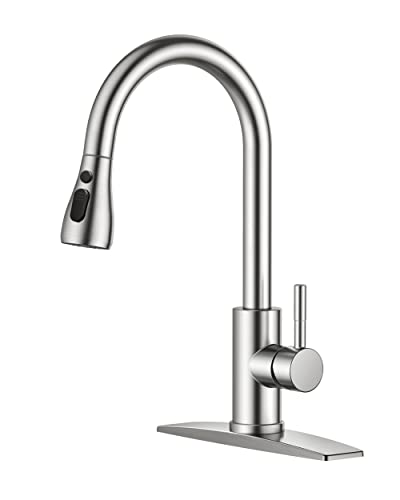
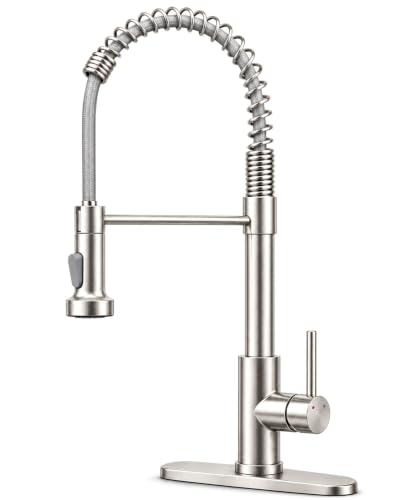
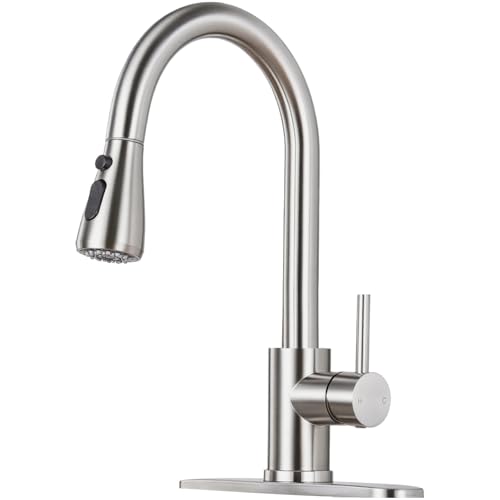
The six faucets below are the current mid-range Delta lineup we would shortlist for a typical American kitchen remodel or replacement. Every model here is a genuine Delta product with a verified listing, a pull-down sprayer, and a single-handle layout, and each one sits in the qualitative middle of the Delta catalogue: above the basic builder-grade lines in finish quality and spray features, below the flagship designer collections in ornament and cost positioning. Use the name links to open a listing and check the latest price on Amazon, confirm the finish and model number, and read the newest owner feedback before you decide.
- Delta Lenta Kitchen Faucet, SpotShield Stainless 19802Z-SP-DST
- Delta Finnridge Kitchen Faucet, Stainless 19730LF-SS
- Delta Essa Kitchen Faucet, Arctic Stainless 9113-AR-DST
- Delta Kate Kitchen Faucet with Soap Dispenser, Stainless 16970-SSSD-DST
- Delta Nicoli Kitchen Faucet, Stainless 19867LF-SS
- Delta Finnridge Kitchen Faucet, Champagne Bronze 19730LF-CZ
Read the full guide ↓ for the balance-of-features reasoning behind each pick, the trade-offs that separate them, and the checks to run before any mid-range faucet earns a place over your sink.
Shoppers hunting for the best mid range delta kitchen faucets usually want the same thing: the point in the Delta catalogue where the money stops buying decoration and starts buying daily usefulness. Go too basic and you give up the pull-down sprayer, the better finishes, and the smoother handle feel that make a faucet pleasant ten times a day. Go too premium and you are paying for designer silhouettes and exotic finishes that do nothing for a Tuesday-night sink full of pans. The middle band is where Delta concentrates its most practical engineering, and it is wide enough that choosing inside it still takes some thought.
This guide stays inside that middle band on purpose. All six picks are single-handle pull-down faucets, because that format has become the default for good reason: one lever controls temperature and flow, and the spray head travels to the work instead of forcing you to move heavy pots under a fixed spout. Within that shared format, the picks separate on the details that actually change daily life: a finish engineered to hide fingerprints, a high-pressure spray mode for baked-on food, a soap dispenser in the box, a two-hole layout for older decks, and two versions of the same faucet in different finishes so you can see what a finish upgrade really changes. If you are also comparing what the same models cost across listings, our companion research on Best Prices Delta Kitchen Faucets looks at the checking strategy, while this guide stays focused on feature balance.
One honesty note before the picks: this is a research-led guide. We compared Delta’s published model information, verified each listing, and weighed the features Delta itself documents for these model numbers. We did not run a laboratory, and we will not pretend otherwise. What we can do is show you exactly which differences are real, which are cosmetic, and which questions to ask of any listing before you buy.
Key Takeaways
- The mid-range Delta sweet spot is a single-handle pull-down faucet: it is the format where spray features, finish quality, and handle feel all step up from the basic lines at once.
- Finish is a functional choice, not just a colour. SpotShield Stainless on the Lenta is designed to resist fingerprints and water spots, which matters in a busy family kitchen.
- The Finnridge pair shows the cleanest finish lesson in the range: the same 19730LF faucet in Stainless or Champagne Bronze, so the upgrade decision is purely about look and upkeep.
- Deck layout eliminates picks fast. Five of these six are single-hole designs; the Kate is the two-hole option and adds a soap dispenser.
- Spray behaviour is the real divider. The Finnridge’s ProClean high-pressure spray targets stuck-on food, while the other picks use conventional pull-down spray patterns for everyday rinsing.
- Judge mid-range value by cost per year of daily use and by the warranty paperwork attached to the exact model number, not by the badge on the collection name.
In this guide
Quick Picks
| Pick | Badge | Why it earns its place | Check |
|---|---|---|---|
| Delta Lenta, SpotShield Stainless 19802Z-SP-DST | Best Overall | A spot-resistant finish, a modern single-hole silhouette, and the most balanced feature set in the group. | Check on Amazon |
| Delta Finnridge, Stainless 19730LF-SS | Best Spray Performance | The ProClean high-pressure spray is the strongest cleaning tool in this lineup. | Check on Amazon |
| Delta Essa, Arctic Stainless 9113-AR-DST | Best Modern Design | A long-running contemporary design with clean lines that suit minimalist kitchens. | Check on Amazon |
| Delta Kate with Soap Dispenser, Stainless 16970-SSSD-DST | Best for Two-Hole Decks | The only two-hole layout here, and the soap dispenser is included rather than sold separately. | Check on Amazon |
| Delta Nicoli, Stainless 19867LF-SS | Best Streamlined Pick | A tidy, unfussy single-hole design for buyers who want the mid-range basics done well. | Check on Amazon |
| Delta Finnridge, Champagne Bronze 19730LF-CZ | Best Warm Finish | The Finnridge feature set wrapped in a warm bronze tone for kitchens moving away from grey metals. | Check on Amazon |
Read the badges as a map, not a ranking. Best Overall means the Lenta balances the most variables for the most kitchens; it does not mean the Finnridge’s spray or the Kate’s dispenser is a lesser feature if that feature is the one your household will use every day.
How These Picks Were Chosen
We started with a simple definition of the tier. A mid-range Delta faucet, for this guide, is one that offers the modern pull-down format, a finish beyond basic chrome, and at least one feature the entry lines do not carry, while stopping short of the designer collections where the silhouette itself is the product. Every candidate was then checked against its verified listing so that the model number, finish name, and configuration in this guide match what a buyer will actually see on the product page.
Three filters did most of the work. First, format: single-handle pull-down designs only, because that is the configuration the overwhelming majority of mid-range shoppers are comparing, and mixing in bridge faucets or bar faucets would muddy the comparison. Second, documentation: the pick had to have its key attributes stated in its own listing title and model data — spray type, hole configuration, included accessories — rather than inferred from a collection brochure. Third, separation: each pick had to win at least one honest argument against the other five. A faucet that was merely similar to a better-documented sibling did not make the cut.
The Finnridge appearing twice is deliberate, not lazy. The Stainless and Champagne Bronze versions share the 19730LF model number, which makes them the cleanest controlled comparison in the Delta mid-range: same body, same ProClean spray, different finish. Holding everything else constant is the only honest way to talk about what a finish upgrade is and is not worth, and it also teaches the model-number reading skill that the pricing-focused companion guide, Best Prices On Delta Kitchen Faucets, builds on.
What we did not do matters too. We did not invent flow figures, dimensions, or durability scores that the listings do not state. Where a specification is not in the verified data, the spec boxes below say so by omission rather than filling the gap with a plausible number. Owner feedback was read for recurring themes — the things many households independently notice — and never converted into invented statistics. Prices were deliberately left out of this guide entirely, because a mid-range judgement should be made on features and build first; the number on a listing changes often enough that printing one here would mislead more than help.
The 6 Best Mid Range Delta Kitchen Faucets, Reviewed in Detail
Each review follows the same pattern: what the faucet is, where it is strong, where it honestly gives something up, the specifications its own listing supports, and the household it fits. Read the trade-offs as carefully as the strengths — in a tier this balanced, the right pick is usually decided by which compromise bothers you least.

Delta Lenta Kitchen Faucet, SpotShield Stainless 19802Z-SP-DST
Badge: Best Overall
Strengths
- SpotShield Stainless finish is engineered to resist fingerprints and water spots, cutting the wipe-down routine.
- Modern single-hole silhouette with clean, squared-off contemporary lines.
- Pull-down sprayer and single-handle control cover the full everyday task list without extras to maintain.
Trade-offs
- Single-hole layout needs a deck plate or a suitable sink if your deck has extra holes.
- No high-pressure specialty spray mode of the kind the Finnridge carries.
- The contemporary styling will look out of place in a traditional or farmhouse kitchen.
Mini spec box
- Model: 19802Z-SP-DST
- Collection: Lenta
- Finish: SpotShield Stainless (brushed nickel tone)
- Mount: single hole
- Handle: single handle
- Sprayer: pull-down sprayer
The Lenta earns Best Overall because it solves the most common mid-range complaint before it happens. Ask owners of brushed-metal faucets what ages the product fastest and the answer is rarely mechanical; it is the finish — a constellation of fingerprints, dried droplets, and polishing marks that makes a two-year-old faucet look tired. A finish designed to resist spots and fingerprints attacks that problem at the surface, and for a household with children, frequent cooks, or hard water, that is worth more than a novelty spray pattern.
In daily use the Lenta is deliberately unremarkable in the best way. The single handle falls to hand, the pull-down head reaches the corners of a large single-bowl sink, and the modern profile wipes down quickly because there are few ledges for grime to gather on. It suits the buyer who is renovating once and wants the result to still look composed years later without a polishing ritual. The honest limitation is focus: the Lenta spends its budget on finish and form, so shoppers who regularly blast casserole dishes will feel the absence of a dedicated high-pressure mode, and traditional kitchens will find its geometry too crisp.
Best for: busy family kitchens and hard-water homes that want a low-upkeep finish / Not suited for: traditional-styled kitchens or cooks who need a high-pressure spray


Delta Finnridge Kitchen Faucet, Stainless 19730LF-SS
Badge: Best Spray Performance
Strengths
- ProClean high-pressure spray is built for dislodging stuck-on food from pans and trays.
- Modern single-hole design with a brushed nickel stainless finish that matches common appliance tones.
- Shares its platform with the Champagne Bronze version, so parts and documentation are easy to cross-check.
Trade-offs
- The stainless finish is a conventional brushed finish, not a spot-resistant one like the Lenta’s.
- A forceful spray demands a lighter touch on delicate items and shallow sinks, where splash-back is real.
- Single-hole mounting only, as listed.
Mini spec box
- Model: 19730LF-SS
- Collection: Finnridge
- Finish: Stainless (brushed nickel tone)
- Mount: single hole
- Spray: ProClean high-pressure spray, pull-down sprayer
If your sink regularly hosts roasting pans, sheet trays, and the remains of Sunday cooking, the Finnridge in Stainless is the pick that treats cleaning power as the headline feature. The ProClean spray is a high-pressure mode intended to strip residue that a gentle rinse pattern just pushes around, and in a mid-range tier where most sprayers are broadly similar, a genuinely more forceful option is a meaningful separator.
The rest of the faucet is sensibly mainstream: single-hole mounting, a modern profile, and a brushed stainless finish that sits comfortably beside stainless appliances. That mainstream quality is also its main caveat. The finish does not carry the spot-resistant treatment of the Lenta, so a Finnridge household should expect the normal routine of wiping the base and spout. The spray itself cuts both ways — the pressure that clears a lasagne dish can bounce off a shallow sink or a stack of light plastic containers, so there is a short learning curve of angle and distance. For cooks who pre-rinse heavy cookware daily, that trade is easy to accept.
Best for: keen cooks who pre-rinse heavy pans and trays every day / Not suited for: shallow sinks or households that hate wiping a conventional brushed finish

Delta Essa Kitchen Faucet, Arctic Stainless 9113-AR-DST
Badge: Best Modern Design
Strengths
- A long-running contemporary design with a distinctive, minimalist silhouette.
- Arctic Stainless gives a cooler, brighter metal tone than standard brushed finishes.
- Single-hole, single-handle pull-down format keeps the deck visually clean.
Trade-offs
- The design-first profile offers no specialty spray mode beyond its pull-down sprayer.
- The cooler Arctic tone can clash with warmer stainless appliances in mixed kitchens.
- Minimalist lines show water spots plainly; expect regular wiping to keep the look.
Mini spec box
- Model: 9113-AR-DST
- Collection: Essa
- Finish: Arctic Stainless (brushed nickel tone)
- Mount: single hole
- Handle: single handle
- Sprayer: pull-down sprayer
The Essa is the design anchor of this group. It has been part of Delta’s contemporary offering long enough that its silhouette is a known quantity — a sweeping, pared-back form that reads as intentional architecture over the sink rather than plumbing. For a minimalist kitchen with flat-front cabinets and integrated appliances, it is the pick that completes the picture instead of merely filling the hole in the deck.
Functionally it is a conventional mid-range pull-down: one handle, a travelling spray head, and no specialty modes. That is the honest shape of the trade. The Essa spends its tier budget on proportion and finish tone, so buyers who rank spray tricks or spot resistance first should look at the Finnridge or the Lenta. Arctic Stainless also deserves a word of caution: it is a cooler, brighter finish than the warmer brushed nickels elsewhere in this guide, and against warm-toned appliances the difference is visible. Order with your appliance tones in mind, wipe it as part of the normal routine, and the Essa rewards you with the most composed profile in the set.
Best for: minimalist and contemporary kitchens where the faucet is part of the design scheme / Not suited for: buyers who prioritise specialty sprays or spot-resistant finishes

Delta Kate Kitchen Faucet with Soap Dispenser, Stainless 16970-SSSD-DST
Badge: Best for Two-Hole Decks
Strengths
- Two-hole configuration fits decks the five single-hole picks cannot use directly.
- Soap dispenser included in the box, clearing the sink-side bottle clutter in one step.
- Pull-down sprayer and single-handle control keep the modern format despite the wider layout.
Trade-offs
- Needs a deck with the right hole pattern; it is not a drop-in for a single-hole sink without modification.
- The dispenser is one more under-sink bottle to refill and one more component to keep clean.
- Styling is transitional rather than sharply modern.
Mini spec box
- Model: 16970-SSSD-DST
- Collection: Kate
- Finish: Stainless (brushed nickel tone)
- Mount: two hole
- Handle: single handle
- Sprayer: pull-down sprayer
- Included accessory: soap dispenser
The Kate exists for a practical reason the other five picks cannot answer: your deck already has two holes, or you want the second hole to do something useful. Instead of covering a spare hole with a blank plate, the Kate puts a soap dispenser in it, which removes the perpetually grubby bottle from the sink rim and gives the whole station a built-in look. For renters upgrading within an existing sink, and for remodels keeping a sound two-hole sink, that is a genuinely different proposition from the single-hole crowd.
Day to day it behaves like the modern faucet it is — single handle, pull-down sprayer — with the dispenser becoming one of those small luxuries households quickly refuse to give up. The caveats are logistical. Measure your hole spacing before ordering, because a two-hole faucet on the wrong deck is a return, not a project. The dispenser bottle under the sink needs periodic refilling from above or below depending on access, and the pump head joins the list of things to wipe. If your deck is single-hole, none of this applies and the other picks are simpler; if it is two-hole, the Kate is not a compromise but the correct tool.
Best for: two-hole decks and anyone who wants a built-in soap dispenser without a separate purchase / Not suited for: single-hole sinks or buyers who dislike maintaining a dispenser

Delta Nicoli Kitchen Faucet, Stainless 19867LF-SS
Badge: Best Streamlined Pick
Strengths
- Clean, unfussy modern design that disappears into a wide range of kitchen styles.
- Single-hole, single-handle pull-down format with nothing superfluous to learn or maintain.
- Also exists in a Champagne Bronze version, giving a documented finish alternative on the same platform.
Trade-offs
- No spot-resistant finish treatment and no specialty high-pressure spray mode.
- The restrained styling will not satisfy buyers shopping for a statement piece.
- Single-hole mounting only, as listed.
Mini spec box
- Model: 19867LF-SS
- Collection: Nicoli
- Finish: Stainless Steel (brushed nickel tone)
- Mount: single hole
- Handle: single handle
- Sprayer: pull-down sprayer
The Nicoli is the quiet professional of the group. It does not headline a spray technology or a finish treatment; it simply presents the mid-range formula — modern single-hole body, single handle, pull-down sprayer — in a tidy, well-proportioned package. There is a real audience for exactly that: buyers replacing a failed faucet who want a clear upgrade in feel and finish without rethinking the kitchen around it.
Because the Nicoli shares its platform across finishes, it is also a useful reference point. The same 19867LF body appears in Champagne Bronze elsewhere in the Delta catalogue, which lets a buyer separate the faucet decision from the finish decision cleanly. In use, expect competence without theatre: the sprayer handles rinsing and filling, the handle meters temperature in the usual single-lever sweep, and the plain brushed finish asks for the normal wipe-down. The limitation is the mirror of its virtue — nothing here will delight a feature hunter. If your shortlist is really about one standout capability, the Lenta’s finish, the Finnridge’s spray, or the Kate’s dispenser answers it more directly.
Best for: straightforward replacements and style-neutral kitchens that want the mid-range basics done well / Not suited for: buyers chasing a signature feature or a bold design statement

Delta Finnridge Kitchen Faucet, Champagne Bronze 19730LF-CZ
Badge: Best Warm Finish
Strengths
- Champagne Bronze brings a warm, soft-gold tone that pairs with the current move toward warmer kitchens.
- Same ProClean high-pressure spray as the Stainless Finnridge — the finish upgrade costs no features.
- Modern single-hole profile keeps the warm finish looking current rather than traditional.
Trade-offs
- Warm bronze tones coordinate with fewer appliance finishes than brushed nickel; plan the whole palette.
- Statement finishes date faster than neutral metals if you renovate rarely.
- High-pressure spray needs the same splash-aware technique as its Stainless twin.
Mini spec box
- Model: 19730LF-CZ
- Collection: Finnridge
- Finish: Champagne Bronze (brushed gold tone)
- Mount: single hole
- Spray: ProClean high-pressure spray, pull-down sprayer
Placing this faucet beside its Stainless twin is the most instructive comparison in the guide. Everything mechanical is shared — the 19730LF body, the ProClean spray, the single-hole mount — so the entire decision collapses to one question: does a warm bronze tone improve your kitchen enough to justify choosing it over the neutral metal? For kitchens with warm wood cabinetry, brass-toned hardware, or cream stone, the answer is often yes, and the Finnridge is the rare case where the prettier option gives up nothing in capability.
The cautions are about coordination and time. Champagne Bronze is a commitment: it looks best when cabinet hardware and lighting echo it, and slightly lost when it is the only warm metal in a sea of cool stainless. It also carries the fashion risk all statement finishes carry — neutral metals survive trend cycles quietly, while a distinctive tone marks its era. None of that diminishes the faucet itself, which sprays, rinses, and installs exactly like its twin. Choose it as a deliberate palette decision and it is the most characterful pick here; choose it on impulse and the Stainless version is the safer long-term resident.
Best for: warm-toned kitchens coordinating bronze or brass accents, with no feature compromise / Not suited for: cool stainless kitchens or buyers who want a finish that never dates

Comparison Table
| Pick | Finish | Mount | Standout feature | Badge | Check |
|---|---|---|---|---|---|
| Delta Lenta 19802Z-SP-DST | SpotShield Stainless | Single hole | Spot- and fingerprint-resistant finish | Best Overall | Check on Amazon |
| Delta Finnridge 19730LF-SS | Stainless | Single hole | ProClean high-pressure spray | Best Spray Performance | Check on Amazon |
| Delta Essa 9113-AR-DST | Arctic Stainless | Single hole | Minimalist contemporary silhouette | Best Modern Design | Check on Amazon |
| Delta Kate 16970-SSSD-DST | Stainless | Two hole | Soap dispenser included | Best for Two-Hole Decks | Check on Amazon |
| Delta Nicoli 19867LF-SS | Stainless Steel | Single hole | Streamlined, style-neutral design | Best Streamlined Pick | Check on Amazon |
| Delta Finnridge 19730LF-CZ | Champagne Bronze | Single hole | ProClean spray in a warm finish | Best Warm Finish | Check on Amazon |
How to Choose a Mid-Range Delta Faucet
Start with the deck, not the catalogue. Count the holes in your sink or countertop and measure their spacing before you fall for any silhouette. Five of the six picks here are single-hole designs; on a multi-hole deck they need the right escutcheon arrangement or they will leave exposed holes, while the two-hole Kate is useless on a true single-hole sink without drilling. This single measurement eliminates more wrong purchases than every other factor combined, and it costs two minutes with a tape measure.
Next, decide what your sink actually does all day. Households divide surprisingly cleanly. If the sink is a cleaning station — roasting pans, stockpots, trays — spray performance should drive the choice, and the Finnridge’s ProClean mode is the feature in this group built for that life. If the sink is a prep station in an open-plan kitchen that guests see, finish behaviour matters more: the Lenta’s spot-resistant surface keeps the station presentable between wipe-downs. If the sink is a design element, the Essa’s profile or the bronze Finnridge’s warmth is a legitimate deciding factor, provided you accept the upkeep that comes with it.
Then read the finish name like a specification, because in Delta’s naming it is one. The suffix at the end of the model number encodes the finish — compare 19730LF-SS with 19730LF-CZ — and finishes differ in more than colour. SpotShield is a treatment, Arctic Stainless is a tone, Champagne Bronze is a palette commitment. A useful exercise is to hold the finish decision up against your appliances, cabinet hardware, and lighting temperature at the same time; a faucet is the one kitchen object you touch with wet hands under bright light every day, so mismatches announce themselves.
Think about the handle in daily terms. All six picks use a single handle, which most households prefer for one-handed temperature adjustment while the other hand holds a pan. What varies is placement and sweep, and the only honest test is imagining your own routine: filling a kettle at dawn, rinsing a cutting board one-handed, nudging the lever with the back of a wrist when your hands are covered in flour. Mid-range money partly buys a smoother, more deliberate handle action than the basic lines, and that tactile quality is a real part of what the tier is for.
Finally, judge the tier on total ownership, not ticket. A mid-range faucet should be supported by clear documentation for its exact model number, a warranty statement you have actually read on the manufacturer’s documentation, and replacement parts that are findable by that model number years later. Delta’s advantage as a major manufacturer is precisely this paper trail. Before buying, open the listing, confirm the model number digit by digit, and save the documentation link; the companion checks in Best Prices Delta Kitchen Faucets show how the same model-number discipline protects you when comparing listings.
How to Install and Care for a Pull-Down Faucet
Most single-hole pull-down faucets in this tier are within reach of a confident DIY installer, and the sequence is consistent. Shut off the hot and cold supply valves under the sink and open the old faucet to drain pressure. Disconnect the supply lines, remove the mounting hardware from below, and lift the old faucet clear. Clean the deck thoroughly — old sealant and mineral crust are the main cause of a new faucet rocking on its base. Set the new faucet with its gasket or sealant as its instructions direct, feed the hoses through the hole, and secure the mounting bracket from below, checking alignment from above before final tightening. Connect the supply lines hand-tight plus a careful partial turn, attach the spray hose and its weight, restore the water, and flush the lines before fitting any aerator, so installation debris never reaches the spray head.
Care is mostly about the finish and the spray head. Wipe finishes with a soft cloth and water; abrasive pads and harsh chemical cleaners are the fastest way to ruin a brushed surface, and spot-resistant finishes like the Lenta’s need nothing more aggressive. If spray flow weakens, the usual suspect is mineral build-up in the spray head — soak the head in a vinegar solution, rinse, and recheck before assuming a mechanical fault. Keep the pull-down hose path under the sink clear of stored bottles so the hose retracts fully and the counterweight can do its job.
Troubleshooting patterns worth knowing:
- Problem: the spray head will not stay docked or retracts slowly → clear the under-sink cabinet so the hose and weight hang freely, then check the weight’s position on the hose.
- Problem: flow drops on one temperature side only → debris has likely reached that supply line or the cartridge inlet; shut off the water, flush the line into a bucket, and retest.
- Problem: a slow drip from the spout after shutoff → note the exact model number and consult the manufacturer’s parts documentation for that model rather than guessing at a generic cartridge.
What “Mid-Range” Really Buys in the Delta Line
It helps to name what the tiers actually change. Delta’s basic lines cover the fundamentals: water delivery, a working sprayer, standard chrome or brushed finishes. Stepping into the middle band buys three things. The first is surface quality — finishes with treatments like SpotShield, or distinctive tones like Arctic Stainless and Champagne Bronze, that hold their appearance longer. The second is spray sophistication, from the convenience of a well-weighted pull-down to a purpose-built high-pressure mode like ProClean. The third is design intent: silhouettes like the Essa’s that were drawn as objects, not just engineered as plumbing.
What the next tier up mostly adds is more of the third item — bolder design, more exotic finishes, electronic extras — rather than a step change in the first two. That is why the middle band is the rational stopping point for most households, and why this guide spends its energy on matching the specific mid-range strengths to specific kitchens instead of urging an upgrade. A buyer who needs none of the three mid-range gains should honestly buy basic; a buyer who needs one of them should buy the pick that delivers exactly that one, which is the logic behind the badges throughout this guide.
Matching the Faucet to Your Water and Your Routine
Two local factors quietly decide satisfaction. The first is water hardness. Hard water spots every finish, but it punishes mirror-bright and minimalist surfaces fastest, because there is no texture to hide the deposits. Hard-water households should weight the Lenta’s spot-resistant finish heavily and budget a weekly wipe for any pick. Soft-water households can choose on looks alone with a clear conscience.
The second factor is who cooks. A household that cooks from scratch daily will use the sprayer hundreds of times a month and should rank spray behaviour and hose handling first — the Finnridge argument. A household that cooks lightly but entertains often will look at the faucet far more than it stresses it, and the Essa or the bronze Finnridge earns its keep visually. Neither priority is more respectable; the mistake is buying for the household you imagine rather than the one that will actually stand at the sink. Readers still narrowing the field by listing rather than by features can cross-check the same models in Best Prices On Delta Kitchen Faucets, which follows these model numbers across the places they are sold.
Reading a Delta Model Number Before You Buy
The single most useful skill in this tier is reading the model number as a compressed specification. Take the Finnridge pair: 19730LF-SS and 19730LF-CZ share every digit before the dash, because they are the same faucet — same body casting family, same spray technology, same mounting. The suffix after the dash is the finish code, and it changes nothing mechanical. The Essa’s 9113-AR-DST tells a similar story: the core number identifies the design, and the letters that follow pin down the Arctic Stainless finish variant. The Lenta’s 19802Z-SP-DST carries its SpotShield finish in the suffix, and the Kate’s 16970-SSSD-DST is a longer string because the configuration itself — two-hole layout with a soap dispenser in the package — is part of what the number has to describe.
Why does this matter to a mid-range buyer? Because nearly every expensive mistake in this category is a variant mistake, not a product mistake. A shopper reads a glowing description of one configuration, orders from a listing whose photograph shows another, and discovers at installation time that the deck holes, the dispenser, or the finish tone is wrong. Photographs are the least reliable part of any listing — finishes render differently under every light, and marketplace images are reused across variants. The model number, checked character by character against the manufacturer’s own documentation for that number, is the ground truth. Make it a habit: find the number in the listing, find the same number in Delta’s documentation, and confirm that finish, hole count, and included accessories all agree before money moves.
The same habit protects the purchase for years afterwards. Replacement parts, warranty conversations, and even a future resale listing all key off the exact model number, not the collection name on the box. Collections are marketing groupings that span many configurations; the number is the individual product. When the faucet arrives, photograph the label on the box and the tag on the supply lines, and file both with your purchase record. If a cartridge, spray head, or finish question ever arises, that photograph turns a frustrating guessing exercise into a two-minute lookup — one more reason the mid-range tier, with its proper documentation, is worth choosing over anonymous alternatives.
A final pre-installation check ties the whole guide together. Dry-fit the faucet on the deck before connecting any water: confirm the base sits flat, the handle sweep clears the backsplash through its full arc, and the spray hose hangs freely into the cabinet without resting on stored items. Those three observations take five minutes and catch the clearance and hose-path problems that no specification sheet will warn you about. Only then connect the supplies, flush the lines, and test every spray mode at working pressure, checking each joint with a dry hand. A mid-range faucet installed with that much care is exactly what the tier promises: not the cheapest water delivery, not a design trophy, but a well-documented tool matched deliberately to the kitchen it serves.
Common Buying Mistakes
- Skipping the hole count. Falling for a single-hole design on a two-hole deck, or the reverse, is the most common and most avoidable error in this category.
- Choosing a finish from a screen alone. Brushed tones photograph differently under every light; check the finish against your appliances and hardware in person or through finish samples where possible.
- Assuming a finish upgrade changes the faucet. The two Finnridge models prove it does not — same body, same spray. Pay for tone knowingly, not under the illusion of better mechanics.
- Ignoring the under-sink cabinet. A pull-down hose needs a clear hang path; a cabinet stuffed with bottles defeats the retraction you paid for.
- Buying the collection name instead of the model number. Collections span configurations. The model number is the product; verify it character by character on the listing.
- Forgetting the dispenser refill. The Kate’s dispenser is a pleasure, but only if your under-sink access makes refilling easy; check before you commit to the two-hole layout.
Final Recommendation
For most kitchens, start with the Delta Lenta in SpotShield Stainless: its finish discipline and balanced format make it the pick least likely to annoy anyone in the house over years of daily use. If your sink is a heavy-duty cleaning station, step sideways to the Delta Finnridge in Stainless and let the ProClean spray do the work your current faucet cannot. And if your deck has two holes, skip the adapters and take the Delta Kate, whose included soap dispenser turns a constraint into an upgrade. The Essa is the design-led alternative, the Nicoli the quiet all-rounder, and the bronze Finnridge the warm-finish statement — each is the right answer for the kitchen described in its review, and the wrong answer only when bought for a kitchen it was not describing.
Frequently Asked Questions
What makes a Delta faucet “mid-range” rather than basic or premium?
In this guide the term describes a qualitative band: pull-down format, finishes beyond basic chrome, and at least one feature the entry lines lack, without the designer pricing of the flagship collections. It is a positioning judgement, not a price tag — which is why this guide never prints one.
Is the Finnridge in Champagne Bronze mechanically different from the Stainless one?
No. Both share the 19730LF model number and the ProClean high-pressure spray; the suffix change from SS to CZ marks the finish only. Choose between them on palette and upkeep, not on expected performance.
Can a single-hole faucet work on a sink with extra holes?
Often, with the correct deck plate arrangement for that model — but the plate must match the faucet, and the result should be confirmed against the specific model’s installation documentation before ordering. The two-hole Kate exists precisely for decks where a purpose-built layout is cleaner.
Does a spot-resistant finish mean I never have to wipe the faucet?
No finish is maintenance-free. SpotShield is designed to resist fingerprints and water spots so the faucet looks good longer between wipes, but hard water and heavy use will still mark any surface eventually. Expect a lighter routine, not no routine.
What should I verify on the listing before buying?
The full model number including its finish suffix, the hole configuration, what is included in the box, and the warranty documentation for that exact model. Those four checks prevent nearly every wrong-variant purchase in this category.
Is a soap dispenser worth choosing a faucet for?
If your deck already has the second hole, yes — it removes counter clutter and looks built-in, at the cost of occasional refills. If your deck is single-hole, it is not worth drilling for on its own; choose from the single-hole picks instead.
Should I match the faucet finish to my appliances exactly?
Closely, not obsessively. Brushed nickel and stainless tones from different product categories are rarely identical, and a faucet sits far enough from the refrigerator and range that a near match reads as intentional. What does jar is temperature: a warm bronze or warm brushed tone against cool blue-grey stainless looks like an error, while two cool tones of slightly different depth look like a choice. Use the Arctic Stainless Essa as the cool extreme in this group and the Champagne Bronze Finnridge as the warm extreme, and place your kitchen’s existing metals on that line before ordering. When in doubt, the neutral brushed finishes — the Lenta, the Nicoli, the stainless Finnridge — forgive the widest range of appliance combinations, which is one more reason they anchor the middle of this guide.
How long should a mid-range faucet last?
Long enough that finish behaviour and parts availability matter more than small feature differences. Buy the exact model number with documentation you can find again in ten years, keep the paperwork, and maintain the finish gently — that combination, not any single specification, is what produces a long service life.