Disclosure: topratedkitchenware.com is reader-supported. When you buy through links on our site, we may earn an affiliate commission from Amazon and other retailers, at no extra cost to you.
Where to buy
The six picks below are the shortlist for best new air fryers, in the order they are reviewed. Linked picks take you straight to their Amazon listing; any pick covered prose-only is named plainly and explained in its review. Read the full guide ↓
- Oster Extra-Large French Door Air Fryer Oven — Best Overall
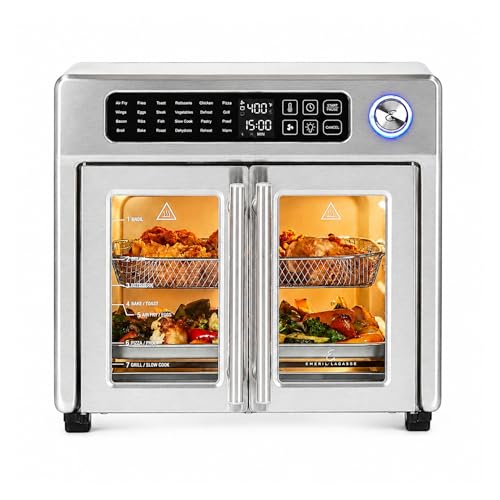
- Emeril Lagasse Everyday 360 Air Fryer Oven — Best Established All-Rounder
- Breville Smart Oven Air Fryer Pro BOV900 — Best Premium
- Chefman 6-in-1 XL 14-Quart Air Fryer — Best Mid-Size Versatility
- Cuisinart Air Fryer Toaster Oven TOA-FD70 — Best French Door Design
- Cuisinart Air Fryer Toaster Oven TOA-55 — Best Proven Combo
Looking for the best new air fryers does not have to mean chasing a launch date. In this guide, “new” is read the practical way: the models worth buying now, in the current market, with the features today’s shoppers actually ask about — French doors, windows you can check dinner through, dual-zone coordination, and controls that do not need a tutorial. Every pick below is a current, verified model from the air fryer pool, and all six are air fryers through and through, so all six carry links.
What has changed in the current generation is less about raw crisping — that problem is solved — and more about living with the machine: how it opens, how it cleans, how it handles a whole meal instead of one snack. The six picks span French door ovens, a premium smart oven, and a mid-size multifunctional model, so you can pick the current idea that fits your kitchen. For a brand-by-brand view, see Best Ninja Air Fryers; for the oil-free angle on the same generation, Best No Oil Air Fryers reads these machines through a different lens.
Key Takeaways
- New here means worth buying now: current designs with the features shoppers ask for today, not invented launch dates.
- French doors and viewing windows define the current oven generation — access and visibility are the upgrades.
- All six picks are verified air fryers and all six are linked; the differences are format, size, and depth.
- The current sweet spot for families is a mid-to-large oven format; solo cooks should still size down.
- Buy the current model whose daily details — cleaning, doors, controls — fit your habits, not the longest feature list.
In this guide
Quick Picks
| Pick | Badge | Why it is here | Amazon |
|---|---|---|---|
| Oster Extra-Large French Door Air Fryer Oven | Best Overall | Fits full 15 x 12 inch pans, so existing bakeware keeps working | Check on Amazon |
| Emeril Lagasse Everyday 360 Air Fryer Oven | Best Established All-Rounder | 9-in-1 function list includes rotisserie, which most rivals skip | Check on Amazon |
| Breville Smart Oven Air Fryer Pro BOV900 | Best Premium | 13 functions is the deepest oven-style list in this guide | Check on Amazon |
| Chefman 6-in-1 XL 14-Quart Air Fryer | Best Mid-Size Versatility | Windowed door lets you watch browning without opening and losing heat | Check on Amazon |
| Cuisinart Air Fryer Toaster Oven TOA-FD70 | Best French Door Design | French doors plus a dedicated pizza function make it a natural daily oven | Check on Amazon |
| Cuisinart Air Fryer Toaster Oven TOA-55 | Best Proven Combo | 1800W and a 450F ceiling give it real searing headroom | Check on Amazon |
How These Picks Were Chosen
The pool for this guide was screened for currency in the only honest sense available from verified data: designs that reflect how air fryers are actually bought and used now. French door access, windowed doors, digital touch controls, and multi-function oven formats dominate the current market because they fix the complaints of the first basket generation — cramped cavities, blind cooking, and one-food-at-a-time dinners. Each pick below represents one of those current ideas executed well, from Oster’s pan-friendly French door oven to Cuisinart’s French-door flagship.
No release dates are claimed anywhere in this guide, because verified product data does not supply them and inventing them would be exactly the kind of freshness theater this keyword attracts. Instead, picks were compared on capacity, function depth, access style, clean-up design, and control clarity — the things that will still matter in year three. This is research-led guidance built from Creators API verified titles and specifications, not hands-on testing, and it ignores prices and popularity figures, which date faster than any appliance. What is left is a snapshot of the current market’s best ideas, any of which would have looked futuristic three product generations ago.
The 6 Best New Air Fryers, Reviewed One by One

Oster Extra-Large French Door Air Fryer Oven
Badge: Best Overall
Strengths
- Fits full 15 x 12 inch pans, so existing bakeware keeps working
- Six presets keep the controls refreshingly simple
- Auto-shutoff timer adds peace of mind for busy households
Trade-offs
- Six presets is the shortest list here; less guidance for unusual foods
- Extra-large body needs a deep, clear stretch of counter
- French doors need side clearance as well as front clearance
Key specs (from the verified listing)
- Format: French door countertop oven, extra-large
- Presets: 6 cooking presets
- Pan fit: fits 15 x 12 inch pans
- Oil claim (per API title): uses 99.5% less oil
- Safety: auto-shutoff timer
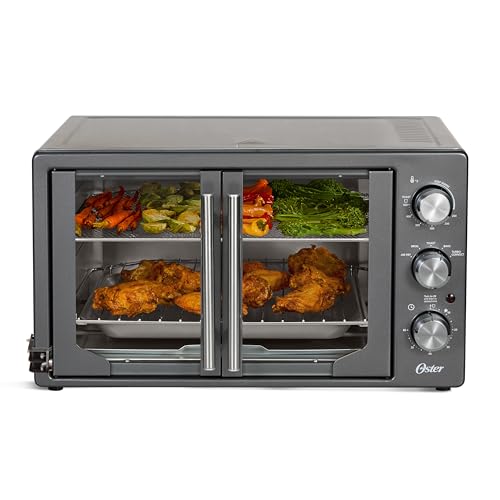
Oster’s take on the French door air fryer oven keeps the formula deliberately simple: an extra-large cavity, six cooking presets, and doors that open wide over a cooking space sized for real pans. The detail that matters most day to day is the 15 x 12 inch pan fit. Many countertop ovens force you into proprietary trays; this one swallows the sheet pans and casserole dishes already in your cupboard, which makes it a natural replacement oven for small households and a capable second oven for big cooking days. The preset list is short on purpose. Six well-chosen programs beat thirty ignored ones for most families, and the auto-shutoff timer covers the distracted-evening scenario where dinner finishes while homework, calls, and doorbells compete for attention. The title’s low-oil framing reflects what air frying does well: circulating heat crisps with a fraction of the oil of pan or deep frying. It suits practical buyers who value pan compatibility and simple controls over app features and preset libraries. Measure the counter run first; extra-large is a promise about capacity and a warning about footprint in the same word.
Day to day, the Oster’s virtue is that it disappears into routine. Six presets are learned in a weekend, the auto-shutoff removes a background worry, and the pan fit means the dishes you already own — the 15 x 12 inch sheet, the everyday casserole — simply move from the big oven to the small one. French doors keep access easy when the tray is full and heavy. It will not host a rotisserie or dehydrate a harvest, and it does not pretend to; its promise is family cooking without a learning curve. Households that measure an appliance by how rarely they think about it will understand this pick immediately, and households that love features should keep reading the rest of the guide.
As a current-market pick, the Oster represents the French door idea at its most practical: no app, no gimmicks, just wide access, pan compatibility, and a short preset list that matches how people actually cook. In a market drifting toward feature inflation, that restraint is itself a modern position. If your definition of new is ‘designed around real kitchens this year’ rather than ‘most buttons,’ this is the pick that makes the argument.
Best for: households that cook from their own pans and want simple, calm controls / Not suited for: rotisserie seekers and preset collectors
Emeril Lagasse Everyday 360 Air Fryer Oven
Badge: Best Established All-Rounder
Strengths
- 9-in-1 function list includes rotisserie, which most rivals skip
- 360 degree convection is built for even browning on full trays
- A proven, widely owned design with a deep pool of shared recipes and tips
Trade-offs
- Drop-down door needs clear counter in front when open and loaded
- Oven-style cleaning means wiping an interior, not dunking a basket
- Rotisserie capacity suits chickens and roasts of modest size
Key specs (from the verified listing)
- Functions: 9-in-1 countertop oven
- Airflow: 360 degree convection
- Extras: rotisserie included among its functions
- Format: countertop oven with drop-down door
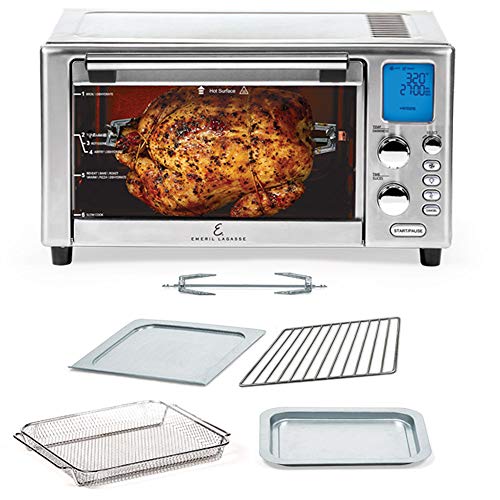
The Everyday 360 is the long-running 9-in-1 oven that helped define this category, built around 360 degree convection and a function list that reaches from air frying through to rotisserie. That rotisserie is the differentiator to weigh: if a slowly turning chicken or roast is something your household would actually cook monthly, this format earns its counter space in a way a basket fryer never can. The 9-in-1 spread covers the realistic week — toast in the morning, air fried vegetables and proteins at night, a bake or roast at the weekend — without asking you to learn a dozen programs. Because the design has been sold for years, the shared knowledge around it is deep: timing tweaks, rack positions, and recipe conversions are easy to find, which quietly shortens the learning curve. It suits households that want an established all-rounder with rotisserie on the menu. It asks for the usual oven compromises in return: interior surfaces to wipe down, a door that needs room to open, and warm-up times a small basket would beat for a single portion.
The Everyday 360’s daily character is shaped by the rotisserie even on days it is not used, because a household that owns one plans different Sundays. On ordinary days it is a competent 9-in-1 oven: toast, trays, reheats, and air fried dinners handled by the same 360 degree convection the line is named for. The long production run matters practically — timings and tweaks for almost any dish are easy to find, and replacement accessories are a solved problem. Cleaning is the oven-format tax: a wipe-down interior rather than a basket in the dishwasher. Owners who cook whole birds and roasts regularly tend to forgive that tax completely; owners who do not should weigh the basket and French door alternatives in this guide.
A long-running design earns its place in a current guide by still answering current demands: 9-in-1 breadth, rotisserie, and convection that handles whole meals. The Everyday 360’s staying power is the story — designs that survive this long in a fast category do so because owners keep recommending the format. Choose it if you value a deep pool of shared knowledge and accessories over having the newest face on the counter.
Best for: rotisserie households and buyers who value a proven, well-documented design / Not suited for: cooks who insist on dishwasher-basket cleaning
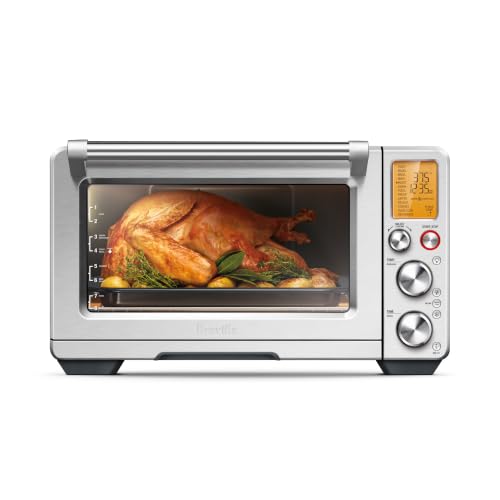
Breville Smart Oven Air Fryer Pro BOV900
Badge: Best Premium
Strengths
- 13 functions is the deepest oven-style list in this guide
- Breville’s convection control is tuned for even, repeatable results
- Dehydrate function extends it into snacks, herbs, and garnishes
Trade-offs
- Premium-tier positioning in this class
- A serious counter footprint that suits permanent placement
- The function depth is wasted on strictly fries-and-nuggets use
Key specs (from the verified listing)
- Functions: 13 functions including roast, bake, dehydrate
- Finish: brushed stainless steel
- Convection: convection setting reduces cook time by up to 30% (per API title)
- Format: countertop smart oven
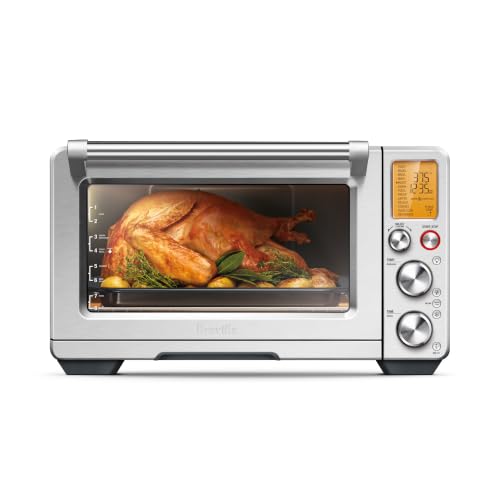
Breville’s Smart Oven Air Fryer Pro is the precision instrument of this group: a brushed stainless countertop oven with 13 functions that treats air frying as one setting on a serious small oven rather than a novelty mode. Roast, bake, and dehydrate anchor the list, and the convection system is the headline engineering — the API title notes the convection setting reduces cook time by up to 30%, which matches the design intent of fast, even, repeatable heat. This is the pick for cooks who notice the difference between a tray that browns evenly edge to edge and one that needs rotating and forgiving. The build and controls feel aimed at people who already own good knives and a scale: deliberate, solid, and meant to live on the counter for years. It suits bakers, roasters, and dehydrate-curious snack makers who will genuinely rotate through the function list. It is a premium-tier option, and households that only want weeknight fries will pay for depth they never open. For everyone else, it is the benchmark the rest of this guide is measured against.
Using the Breville feels like using a small professional oven that happens to air fry. The convection is composed — trays brown evenly enough that rotating becomes a habit you can relax — and the function list reveals itself gradually: dehydrate for a glut of herbs, a slow roast on Sunday, precise baking when a recipe matters. The brushed stainless body asks for a wipe to stay handsome and rewards it. This is not the pick for a household that wants dinner to require no thought at all; presets exist, but the machine’s soul is manual control done well. For cooks who already season by instinct and judge doneness by eye, it is the finalist that speaks their language.
Breville’s Pro is the current benchmark for buyers who want the oven format finished to a premium standard: 13 functions, serious convection, and a dehydrate mode that many newer rivals still treat as an afterthought. It is the pick for shoppers whose ‘new’ means ‘the best-executed version of the idea,’ and who expect the machine to stay current for years because its depth leaves nothing obvious to upgrade to.
Best for: keen cooks who will genuinely rotate through 13 functions / Not suited for: households whose air frying begins and ends with frozen snacks

Chefman 6-in-1 XL 14-Quart Air Fryer
Badge: Best Mid-Size Versatility
Strengths
- Windowed door lets you watch browning without opening and losing heat
- Rotisserie and dehydrator functions widen the repertoire at this size
- Touchscreen controls keep the front panel wipe-clean
Trade-offs
- 14-quart oven cavity heats slower for tiny portions than a small basket
- Touchscreen-only controls are a love-or-hate interface
- Window needs regular wiping to stay worth looking through
Key specs (from the verified listing)
- Capacity: XL 14-quart
- Functions: 6-in-1 including rotisserie, dehydrator, bake, broil, reheat
- Controls: touchscreen
- Door: windowed door for monitoring
Chefman’s 6-in-1 XL takes the middle path between basket fryer and full countertop oven: a 14-quart multifunctional cavity with a windowed door, touchscreen controls, and a function list that includes rotisserie and food dehydrating alongside the expected bake, broil, and reheat. The window is the feature you will use daily. Air frying rewards visual judgment — the last two minutes decide crisp versus scorched — and checking through glass instead of opening the door keeps the heat where it belongs. The 14-quart size splits the difference in this guide: big enough for a family tray of wings or a rotisserie chicken of sensible size, smaller on the counter than the 26 and 30QT ovens. Touchscreen controls divide opinion; they are easy to wipe clean after greasy fingers and offer precise taps, but there is no dial to spin. It suits families who want oven versatility and rotisserie without committing to the largest footprint here, and anyone who cooks by eye. Solo cooks reheating single portions may find a compact basket quicker, but as a household all-rounder this is a well-judged size.
The Chefman’s everyday gift is visibility. Air frying’s decisive moments happen in the last three minutes, and the windowed door turns those minutes from guesswork into watching — cheese catching, edges bronzing, a rotisserie chicken coloring evenly. The 14-quart cavity is the size most families actually fill: a tray of wings, a modest chicken, a dehydrator batch of fruit, without the preheat penalty of the largest ovens. Touchscreen controls wipe clean after greasy work, though dial-lovers will miss the spin. As a household’s only air fryer it covers the widest ground per inch in this guide; as a second machine beside a big oven it may be the one that gets used daily.
The Chefman shows where the middle of the current market is heading: a windowed door as standard thinking, touchscreen controls, and rotisserie plus dehydrating folded into a 14-quart body that normal counters can house. It is arguably the most representative pick in this guide — the feature set a typical family would design for itself — at a size that does not demand a kitchen remodel.
Best for: families wanting oven versatility, a window, and rotisserie at a mid size / Not suited for: solo cooks heating one small portion at a time

Cuisinart Air Fryer Toaster Oven TOA-FD70
Badge: Best French Door Design
Strengths
- French doors plus a dedicated pizza function make it a natural daily oven
- Function list maps exactly onto real meals, nothing ornamental
- Stainless steel build suits buyers reading materials first
Trade-offs
- French doors need width and side clearance on the counter
- Oven-format cleaning is a wipe-down routine, not a dishwasher basket
- No rotisserie, if that feature is on your must-have list
Key specs (from the verified listing)
- Functions: 7 functions — air fry, toast, bake, broil, roast, pizza, warm
- Format: artisan French-door design, stainless steel
- Pan fit: fits a 12 inch pizza
- Model: TOA-FD70
Cuisinart’s TOA-FD70 wraps its 7-function air fryer toaster oven in an artisan French-door design, and the combination is aimed squarely at households that will use it as their everyday oven. The function list is honest about real cooking: air fry, toast, bake, broil, roast, pizza, and warm. Nothing on that list is a gimmick, and the dedicated pizza setting paired with room for a 12 inch pizza tells you the weeknight scenario Cuisinart designed for. French doors open with a single pull and keep both hands’ worth of access to the cavity, which matters when the tray is heavy and hot. The stainless steel construction will also register with buyers who have started choosing appliances by material as much as by menu. It suits families replacing an aging toaster oven and wanting air frying folded into the same box, plus pizza-night households that will use the size weekly. It gives up rotisserie to rivals in this guide, and like every French door model it needs its clearance measured before it comes home.
The FD70 settles into a kitchen the way Cuisinart appliances tend to: quietly, and for a long time. The French doors make the morning toast run and the evening pizza equally easy, and the function list’s honesty — seven jobs, all weekly — means nothing about it feels like a demo mode. Pizza households should note the 12 inch fit is real dinner capacity, not a snack size. The stainless build wipes down well and looks at home beside other serious appliances. It lacks a rotisserie and the deepest preset library in this guide, and it does not miss them; its argument is that the everyday oven jobs, done with good access and no fuss, are the product. For many households, that argument wins.
Cuisinart’s FD70 is the current French-door statement from a heritage kitchenware name: artisan styling, seven honest functions, and pizza capacity sized for real Friday nights. For buyers who distrust no-name novelty, this is the reassuring face of the new generation — modern access and format, from a brand whose toaster ovens were on counters long before air frying was a phrase.
Best for: pizza-night households and French door fans from a heritage brand / Not suited for: rotisserie seekers and the largest families

Cuisinart Air Fryer Toaster Oven TOA-55
Badge: Best Proven Combo
Strengths
- 1800W and a 450F ceiling give it real searing headroom
- Removable crumb tray makes the daily clean-up genuinely quick
- 0.6 cu. ft. interior fits a 12 inch pizza in a mid-size body
Trade-offs
- Mid-size cavity is a squeeze for the largest family trays
- Dial-and-button era controls rather than a smart display
- No French doors; the drop-down door needs front clearance
Key specs (from the verified listing)
- Functions: 7-in-1 combo
- Power: 1800W
- Interior: 0.6 cu. ft., stainless steel
- Max temperature: 450F
- Pan fit: fits a 12 inch pizza; removable crumb tray
The Cuisinart TOA-55 is the established workhorse of this group: a 7-in-1, 1800W air fryer toaster oven combo in stainless steel with a 0.6 cubic foot interior and a maximum temperature of 450F. Those numbers describe a machine tuned for the daily grind rather than the spec sheet contest. The 450F ceiling matters for the foods air fryers are judged on — skin, edges, and crusts brown properly instead of steaming pale — and 1800W gets the cavity to temperature without a long wait. The removable crumb tray is the unglamorous feature owners end up praising, because an air fryer oven lives or dies by how painless the two-minute clean is. Room for a 12 inch pizza keeps family dinners in scope, and the convection capability spreads heat across the tray so the back row cooks like the front. It suits buyers who want a proven mid-size combo from a kitchenware name they already trust, without French doors or a flagship feature list. Very large households may outgrow the interior; everyone else gets a balanced, durable-feeling all-rounder.
The TOA-55’s daily reputation rests on two numbers and a tray. The numbers — 1800W and 450F — mean it heats with intent and browns with authority, so weeknight food comes out decided rather than apologetic. The tray is the removable crumb tray, which turns the least-loved chore of oven ownership into a thirty-second habit. The 0.6 cubic foot cavity is the honest middle: a 12 inch pizza fits, a family tray fits, a holiday bird does not, and most households discover the middle is where their cooking actually lives. It is the pick for buyers who distrust novelty and want the proven formula — strong heat, simple care, mid-size footprint — from a name they already keep in the kitchen.
The TOA-55 represents the proven end of new: an 1800W, 450F combo whose formula — strong heat, mid-size stainless cavity, crumb tray clean-up — is the one newer models keep copying. Buying current does not always mean buying the latest release; sometimes it means buying the design the market has already voted into permanence. For shoppers who want today’s standard without early-adopter risk, this is it.
Best for: buyers who want a proven, powerful mid-size combo with easy crumb care / Not suited for: households needing the largest oven cavities
Comparison Table
| Pick | Capacity / format | Headline detail | Badge | Amazon |
|---|---|---|---|---|
| Oster Extra-Large French Door Air Fryer Oven | Format: French door countertop oven, extra-large | Presets: 6 cooking presets | Best Overall | Check on Amazon |
| Emeril Lagasse Everyday 360 Air Fryer Oven | Functions: 9-in-1 countertop oven | Airflow: 360 degree convection | Best Established All-Rounder | Check on Amazon |
| Breville Smart Oven Air Fryer Pro BOV900 | Functions: 13 functions including roast, bake, dehydrate | Finish: brushed stainless steel | Best Premium | Check on Amazon |
| Chefman 6-in-1 XL 14-Quart Air Fryer | Capacity: XL 14-quart | Functions: 6-in-1 including rotisserie, dehydrator, bake, broil, reheat | Best Mid-Size Versatility | Check on Amazon |
| Cuisinart Air Fryer Toaster Oven TOA-FD70 | Functions: 7 functions — air fry, toast, bake, broil, roast, pizza, warm | Format: artisan French-door design, stainless steel | Best French Door Design | Check on Amazon |
| Cuisinart Air Fryer Toaster Oven TOA-55 | Functions: 7-in-1 combo | Power: 1800W | Best Proven Combo | Check on Amazon |
How to Choose Among the Best New Air Fryers
Start with format, because the current market’s real divide is not brand but shape. Oven-style machines with French or drop-down doors behave like small ovens: they take pans, pizzas, and trays, and they suit households cooking complete meals. They ask for counter width and a wipe-down cleaning routine. If your cooking is mostly complete dinners, the oven format is the current answer; the picks above are all oven-format because that is where the market’s energy is.
Next, weigh the access details that define this generation. French doors open with one hand and keep hot doors away from your arms; drop-down doors become a landing shelf but need front clearance; windows let you judge browning without heat loss. None of these appear on a spec sheet’s first line, yet they decide daily satisfaction more than a preset count does. Match the access style to your counter layout and your cooking habits — a window matters most to cooks who judge by eye, doors matter most to cooks with limited reach or busy hands.
Function depth is the third decision. Current models range from six honest presets to 13 full functions. Buy depth you will rotate through monthly; a dehydrate or rotisserie mode used twice a year is a feature you store, not a feature you own. Finally, treat claims of newness itself with suspicion. Verified specifications — capacity, temperature range, power, functions — are facts; launch language is marketing. Compare the facts, and let Best Of Air Fryers give you the all-time field if you want to see how the current generation stacks up against the classics, or Best Nuwave Air Fryers for one maker’s current flagship thinking.
How to Get the Most From a Current-Generation Air Fryer
Modern air fryers reward a few habits that older basket owners never needed. Use the window or door design you paid for: check browning visually in the last minutes instead of opening on a schedule. Preheat for baked goods and pizzas, where a hot start sets crusts properly, and skip preheating for small frozen batches, where the current generation’s fast elements make it unnecessary. Keep food in a single layer with breathing room; convection needs circulation paths, and the roomy cavities of current ovens tempt overfilling.
- Register your conversions: note time and temperature tweaks for your five most-cooked dishes.
- Use the crumb tray and drip management after greasy cooks, not weekly.
- Rotate trays once for large loads to even out any hot spots.
- Let the oven’s keep-warm or reheat function rescue late diners instead of microwaving.
- Wipe door glass and windows while warm so the visibility feature stays visible.
Problem: food browns on the rack nearest the element while the lower tray lags → swap tray positions halfway, and drop the temperature slightly for the second half. Problem: toast comes out pale on one side → the cavity was cold; give toast a short preheat and use the middle position. Problem: the interior smells of the last cook → run the empty oven hot for a few minutes with the door closed, then wipe; lingering grease films, not the machine, carry odors. Current machines are capable; most disappointments trace back to loading and positioning, which are free to fix.
What Actually Changed in This Generation
Strip away marketing and three real shifts define current air fryers. First, access: French doors, windows, and better lighting ended the era of cooking blind into a drawer. Second, scope: the oven format absorbed the toaster oven entirely, so the default purchase is now a small convection oven with a serious air fry mode rather than a pod that fries. Third, coordination: keep-warm logic, sync features in the dual-basket branch of the family, and better probes mean the machine manages timing, not just temperature.
What did not change is the physics. Crisping still demands dry surfaces, single layers, and space for air to move. A current model does not repeal those rules; it just makes obeying them more pleasant. Buyers who understand that distinction get excellent results from any pick in this guide, while buyers expecting magic from a newer box will be disappointed by physics in any generation. For the materials-first reading of the same shift, see Best Non Toxic Air Fryers.
Should You Upgrade From an Older Air Fryer?
Upgrade when your current machine blocks a meal you cook weekly: a basket that cannot take a pizza, a cavity too small for your traybake, a door you fight, or clean-up you dread enough to cook less. Those are format problems, and the current generation genuinely solves them. Do not upgrade for preset counts, marginal temperature claims, or a newer logo on the same cavity — the food will not notice.
A practical test: list the last ten things you cooked and the three you avoided cooking because the machine made them awkward. If the avoided list is empty, your current fryer is fine and this guide is a pleasant read. If it is full of pizzas, trays, and second helpings, one of the oven-format picks above is a real upgrade, and your old basket becomes the garage-sale hero of someone else’s first air fryer story.
Reading a Current Spec Sheet Without Getting Played
Current listings compete on numbers that sound comparable but are not. Capacity may be quoted in quarts, cubic feet, slices, or pizza inches — convert everything to the foods you cook before comparing. Preset counts mix methods and food names; separate them. Temperature ranges matter at both ends: the ceiling decides browning, the floor decides proofing and dehydrating range. Power in watts hints at preheat speed and recovery when a cold tray goes in.
The most honest line on any current listing is the pan or pizza fit, because it is testable the day the box arrives. Anchor your comparison there, treat the rest as supporting evidence, and the current market becomes much easier to read.
The Accessory Shelf, Current Edition
Current ovens assume a small ecosystem: crisper trays for air frying, flat pans for baking, racks for dehydrating, and sometimes a rotisserie kit. Before buying extras, live with the included set for a month; most households discover the rotation is two trays and a rack. Store what you keep inside the cavity, and measure any third-party pan against the interior before ordering — current cavities vary more in shape than their quart numbers suggest.
Converting Your Favorite Recipes Without Tears
The first month with any pick in this guide goes better with a conversion habit. Convection cooks faster and browns sooner than a still oven, so start recipes a little lower and shorter than written, check early, and adjust in small steps. Frozen foods need almost no conversion beyond a shake or a turn; raw proteins reward a dry surface and a preheated cavity; baked goods want the middle rack position and a few degrees of mercy. Write down what works for your five staple dishes — that small notebook becomes the most valuable page in your kitchen.
Resist changing two variables at once. If a tray underwhelms, alter temperature or position or load size, not all three, so the fix teaches you something. Within a few weeks the machine stops being a new appliance with a manual and becomes your oven — the one whose moods you know. Every finalist here is capable of that relationship; the conversion habit is what turns capability into results.
Cleaning Rhythms That Keep a Good Machine Good
Air fryer ownership has one recurring chore, and the households that stay happy are the ones who shrink it. Wipe interiors while they are still warm, empty crumb trays little and often, soak plates and baskets before scrubbing, and run the empty machine hot for a few minutes after strong-smelling cooks. None of that takes more than a few minutes, and all of it prevents the baked-on film that turns a pleasant machine into a smoky one. Basket formats lean on the dishwasher; oven formats lean on the warm wipe. Choose the rhythm that matches your temperament as honestly as you choose capacity.
Also protect the surfaces you chose. Gentle tools on ceramic and coated pieces, paste cleaners on stainless, no cold water on hot plates — small disciplines that keep a machine cooking like the one you researched. The picks in this guide were selected partly on how gracefully they accept this care, because a best-anything list that ignores year two is only reviewing week one.
Accessories: Buy the Working Kit, Not the Catalog
Every pick in this guide attracts an accessory ecosystem — crisper trays, extra racks, baking pans, rotisserie kits, dehydrating shelves, silicone tools. The working kit for most households turns out to be small: the tray or basket the machine ships with, one rack, and one pan that fits. Live with the included set for a month before buying anything, store what you keep inside the cavity, and measure any third-party pan against the interior rather than trusting a quart number. Accessories should follow recipes you already cook, not invent errands for themselves.
There is one exception worth making early: a simple instant-read thermometer, if your pick lacks a probe. Doneness judged by temperature ends more arguments than any preset, and it serves every machine you will ever own. Beyond that, let a month of real cooking write the shopping list.
Energy, Heat, and the Everyday Economics of a Small Oven
A countertop air fryer heats a compact cavity, and for the small and medium cooks that fill a week — reheats, traybakes, two-person roasts — that compactness is an everyday economy of time as much as energy: less space to bring to temperature, less heat dumped into the kitchen afterward. The advantage fades for marathon baking, where a full-size oven’s thermal mass earns its keep, which is why most households end up with a division of labor rather than a replacement.
Heat management has a comfort side too. A small oven that finishes in twenty minutes leaves a cooler kitchen than a range that runs for an hour, a difference felt most in summer and in small homes. It is one of the unglamorous reasons these machines migrate from gadget to default, and it applies to every pick in this guide regardless of philosophy.
When Something Goes Wrong: A Calm Diagnostic Order
Air fryer disappointments follow a short list of causes, and checking them in order saves both dinners and returns. First, load: too much food, too deep a layer, pieces touching. Second, moisture: surfaces that went in wet cannot brown until they dry. Third, position: the rack or basket level decides which element wins. Fourth, temperature: too low steams, too high scorches the outside of a raw middle. Fifth, time: carryover heat finishes more than most cooks expect, so pulling early is a skill, not a risk.
Change one variable per cook and note the result. Two or three disciplined experiments teach a machine’s personality better than a month of random tweaking, and the notebook you keep becomes the real manual — the one written for your food, your portions, and your kitchen.
Capacity, Pans, and Placement: The Unglamorous Deciders
Every guide in this cluster ends up recommending the same homework, because it decides more purchases than any feature list: measure the counter, then measure the food. Width and depth tell you whether the machine fits; door swing and headroom tell you whether it works there. A French door needs its sides, a drop-down door needs its front, and every oven needs air space above and behind it. Then measure the food — your sheet pan, your pizza, your casserole — against the cavity claims in the detailed reviews. Quart counts are abstract; pan fit is Tuesday.
Placement has a second half: where the machine lives determines whether it is used. An air fryer stored in a cupboard is a weekly appliance; one with a permanent, plugged-in home becomes a daily one. The picks in this guide were chosen as permanent residents — sized for real counters, styled for open view, and built to be wiped rather than hidden. Give the winner its place properly, with accessories in the cavity and a landing board beside it, and the purchase starts paying rent immediately.
Common Buying Mistakes
- Chasing launch language instead of specifications. “New” on a box is marketing; capacity, functions, and temperature range are facts.
- Overbuying size for a small household. Current ovens are roomy; a 30QT class cavity for one person is a preheating penalty every night.
- Ignoring door and clearance geometry. French doors need side room, drop-down doors need front room — measure your actual counter.
- Assuming windows clean themselves. A viewing window is a feature only while it is wiped; budget the two-minute habit.
- Paying for functions you will not rotate. Dehydrate, rotisserie, and proof modes are monthly habits or dead weight.
- Skipping the crumb tray routine. Current ovens stay pleasant only if the tray is emptied little and often.
Final Recommendation
The safest current-market buy for most households is the Oster Extra-Large French Door: pan-friendly, simply controlled, and built around the access style that defines this generation. If you want the deepest current feature set in a mid-size body, the Chefman 6-in-1 in the reviews above is the representative pick, and Breville’s Pro remains the premium benchmark for cooks who will use all 13 functions. Cuisinart’s pair suit brand-loyal buyers in two door styles. Choose by format and daily details, and any of these six will feel like the current generation is supposed to feel: easier to live with, every single day.
Two more first-page finalists deserve a direct look before you decide: Breville Smart Oven Air Fryer Pro BOV900, Emeril Lagasse Everyday 360 Air Fryer Oven — each is reviewed in full above, and each suits a different household in this guide.
Frequently Asked Questions
What counts as a new air fryer in this guide?
A current model worth buying now, reflecting the features today’s market asks for — oven formats, French doors or windows, coordinated cooking, and honest function lists. No launch dates are claimed, because verified product data does not provide them and inventing freshness would mislead you.
Are newer air fryers actually better than older ones?
At access, capacity, and convenience, yes: doors, windows, and oven formats are real improvements. At basic crisping, the physics is unchanged, so a well-kept older basket still fries beautifully. Upgrade for format and daily ease, not for crisping miracles.
Which new features are worth paying for?
The ones tied to your weekly cooking: a window if you cook by eye, French doors if access is awkward in your kitchen, rotisserie or dehydrate if they will happen monthly. Preset libraries and app extras are the easiest to skip.
What size is right for a family in the current market?
Most families land in the mid-to-large oven formats — roughly the 14 to 26QT class or a 12 inch pizza fit — because complete meals, not snacks, drive satisfaction. Solo cooks and couples reheating small portions can stay compact and heat faster.
Should I wait for the next generation instead of buying now?
Only if your current setup truly blocks meals you want to cook. Air fryer development has shifted to refinement, so waiting buys small improvements while costing you a year of better weeknight dinners. If your old machine works, the current one will feel better mainly in daily details.
Do current models need special care?
The same care, slightly different places: wipe windows and door seals, empty crumb trays often, and keep interiors wiped while warm. None of it is hard, but oven-format machines reward little-and-often cleaning more than basket models do.