Disclosure: topratedkitchenware.com is reader-supported. When you buy through links on our site, we may earn an affiliate commission from Amazon and other retailers, at no extra cost to you.
Where to buy
The six picks below are our shortlist for the best of backyard grills, covering the three ways real backyards actually cook: charcoal kettles for flavour-first grilling, a charcoal barrel with an offset smoker for long cooks, and propane models for push-button weeknight speed. Every linked pick uses a plain Amazon link — check the latest price on Amazon from any of them, and read the full guide ↓ for the detailed reviews, comparison table and buying guide before you decide.
- Weber Original Kettle Premium Charcoal Grill, 22-Inch — Best Overall
- Royal Gourmet CC1830S BBQ Charcoal Grill and Offset Smoker — Best for Smoking and Big Batches
- AMERLIFE 6-Burner Propane Gas Grill with Side Burner — Best for Crowds
- Weber Original Kettle Charcoal Grill, 22-Inch — Best Classic Charcoal
- Cuisinart 14-Inch Portable Charcoal Grill CCG-190RB — Best Portable
- Charbroil Portable 1-Burner Propane Gas Grill — Best Compact Gas
A backyard grill earns its place differently from a camping grill or a balcony unit. It lives outside, it feeds whoever shows up on a Saturday, and it has to handle both a fast Tuesday burger run and a slow Sunday cook without complaining. That is the standard this list is built around: cooking area that matches real headcounts, heat control you can actually repeat, and a footprint that suits a patio rather than a parking lot.
Introduction: what makes a grill a backyard grill
Shopping for the best of backyard grills starts with a simple question most product pages never ask: how will this grill spend its life? A backyard grill is a semi-permanent resident. It sits on a patio or deck through a whole season, it gets rained on, it gets fired up for two people on weeknights and for a dozen people on holiday weekends, and it is expected to do both jobs without a fuss. That is a different brief from a portable grill that lives in a car trunk, and it changes what matters. Stability matters more than pack size. Cooking area matters more than novelty features. And the fuel question — charcoal character versus propane convenience — stops being a matter of taste and becomes a matter of routine: the grill you will actually light three times a week is the right one, whichever fuel it burns.
This guide compares six verified grills across that whole range. At one end sit two 22-inch Weber kettles, the classic backyard shape, one with a built-in thermometer and premium touches, one in its original form. In the middle is a Royal Gourmet barrel grill that adds an offset smoker, so the same unit that sears burgers on Saturday can run a long, smoky cook on Sunday. At the convenience end is a large six-burner AMERLIFE propane cart with a side burner and the biggest cooking area on this list, built for feeding crowds without lighting a single briquette. And because not every backyard is big, two compact options close the list: a 14-inch portable charcoal grill from Cuisinart and a small one-burner Charbroil propane grill for tight patios, tailgates and small households.
One honesty note before the picks: this is a research-led guide. Every specification quoted here comes from the verified product listing data for each model — burner counts, BTU figures where the maker states them, cooking areas, grate materials and named features. We do not invent measurements, print prices that would go stale, or claim hands-on testing we have not done. We compare the verified facts side by side, explain what each means for backyard cooking, and say plainly where each grill falls short. If you are also weighing a dedicated smoker setup for the same yard, our companion list of Best Offset Smokers Grills looks at that category on its own terms.
Key Takeaways
- The Weber Original Kettle Premium 22-Inch is the best all-round backyard grill on this list: a built-in thermometer, heat control dampers and the One-Touch cleaning system on the classic kettle shape.
- The Royal Gourmet CC1830S is the only pick that both grills and smokes — a 783 square inch charcoal barrel with an offset smoker, adjustable charcoal pan and a side door for tending the fire.
- The AMERLIFE 6-burner propane grill is the crowd machine: 650 square inches of cooking area, a side burner, cast iron grates and a warming rack, with no charcoal to light or ash to empty.
- The standard Weber Original Kettle 22-Inch remains the classic charcoal choice — same kettle cooking, One-Touch cleaning and dampers, in the simpler original specification.
- Small yards are covered: the Cuisinart 14-inch portable charcoal grill (196 square inches) and the Charbroil 1-burner portable propane grill bring real grilling to tight patios and small households.
- Fuel is the first decision, size is the second: pick charcoal for flavour and ritual, propane for speed and repeatability, then match cooking area to your largest realistic gathering, not your average Tuesday.
In this guide
Quick Picks
| Pick | Badge | Fuel | Cooking area | Standout feature | Link |
|---|---|---|---|---|---|
| Weber Original Kettle Premium, 22-Inch | Best Overall | Charcoal | 22-inch kettle grate | Built-in thermometer, One-Touch cleaning | Check on Amazon |
| Royal Gourmet CC1830S | Best for Smoking and Big Batches | Charcoal | 783 sq. in. | Offset smoker, adjustable charcoal pan | Check on Amazon |
| AMERLIFE 6-Burner Propane Grill | Best for Crowds | Propane | 650 sq. in. | Side burner, cast iron grates, warming rack | Check on Amazon |
| Weber Original Kettle, 22-Inch | Best Classic Charcoal | Charcoal | 22-inch kettle grate | One-Touch cleaning, precise dampers | Check on Amazon |
| Cuisinart 14-Inch Portable Charcoal Grill | Best Portable | Charcoal | 196 sq. in. | Dual air vents, 3 lid locks for carrying | Check on Amazon |
| Charbroil Portable 1-Burner Propane Grill | Best Compact Gas | Propane | Compact single-burner grate | Portable convective design, 11,000 BTU burner | Check on Amazon |
Read the badges as jobs, not rankings of worth. Best Overall means the grill we would point the widest range of backyard cooks toward. Best for Crowds means exactly that — the AMERLIFE is overkill for a couple and perfect for a graduation party. And the two portables are not lesser grills; they are the right answer for yards and households where a full-size cart would crowd out everything else.
How These Picks Were Chosen
We built this list from a verified pool of outdoor grills and applied a backyard filter to every candidate. First, the grill had to make sense as a resident of a patio or yard: stable on its own legs or stand, sized for outdoor cooking rather than indoor countertop use, and built for repeated firing across a season. Second, every fact we rely on had to be present in the verified listing data — fuel type, burner count and output where stated, cooking area, grate material and named features such as cleaning systems, dampers, thermometers and side burners. If a specification was not in the verified data, it does not appear in this guide; we would rather leave a gap than fill it with a guess.
Third, we weighted the things that decide backyard satisfaction over years rather than over an unboxing. Heat control came first: dampers on the charcoal models, burner zoning on the gas models, and a thermometer where the maker fits one, because a grill you cannot read is a grill you cannot repeat results on. Cooking area came second, judged against realistic headcounts — how many burgers, chicken halves or vegetable trays fit without crowding — rather than against the largest number on a box. Cleanup came third, which is why the One-Touch ash system on the Weber kettles matters more than it might sound, and why the offset smoker’s side door, which lets you tend the fire without lifting the main lid, earns real credit. Finally, we kept the list honest about spread: two kettles, one barrel smoker-grill, one large gas cart and two portables is a fair map of how backyards actually differ. Readers comparing the smoking side of this category in more depth will also want our guide to Best Offset Bbq Grills, which stays inside the offset format.
What we did not do: we did not rank by price, because prices move and a ranking built on a changing number helps nobody — each pick is positioned by tier in words instead. We did not import scores or counts from retailer pages, for the same reason. And we did not drop the two portables to make the list look more premium; a list that only serves big yards would fail half its readers.
The 6 Best of Backyard Grills in Detail

Weber Original Kettle Premium Charcoal Grill, 22-Inch
Badge: Best Overall
Strengths
- Built-in lid thermometer, so you can read cooking temperature without lifting the lid and dumping heat.
- Heat control dampers for precise airflow management — the core skill of kettle cooking, made repeatable.
- One-Touch cleaning system sweeps ash into a catcher, turning the worst charcoal chore into a few seconds of work.
Trade-offs
- Charcoal means lighting time and ash management; there is no push-button start to a weeknight cook.
- A single 22-inch grate is one cooking zone — you create heat zones by banking coals, not by turning burners.
- No side shelves or prep surface are part of the kettle format; your prep station is a separate table.
Mini spec box
- Fuel: charcoal
- Size: 22-inch kettle
- Colour: black
- Thermometer: built-in, in the lid
- Heat control: dampers
- Cleaning: One-Touch cleaning system
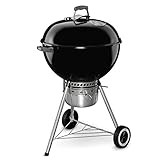
The kettle is the backyard grill in its purest form, and the Premium version is the kettle with its few real annoyances addressed. Start with the thermometer. Kettle cooking lives and dies on temperature you cannot see — the fire is hidden under a lid, and every peek costs heat and time. A built-in lid thermometer turns guesswork into a reading: you learn what a full chimney of briquettes does to your grill, how the temperature responds when you close the dampers halfway, and how long the kettle holds a steady roasting heat. That single instrument shortens the learning curve of charcoal cooking more than any other feature on this list.
The dampers are the other half of that control. With the bottom and lid vents you manage the fire the way you would manage a wood stove: more air, hotter fire; less air, a slower, steadier burn. That is how a kettle — a grill with no smoker box and no electronics — can still roast a whole chicken evenly, hold vegetables at a gentle heat on the cool side, or run a low fire for ribs with the coals banked to one side. The One-Touch system then handles the aftermath: a lever sweeps the ash through ports in the bowl into a catcher, so the bowl is clean for the next cook instead of slowly filling with the residue of the last five. For a grill that lives in a backyard and cooks all season, that is not a luxury; it is the difference between a grill that stays ready and one that gets quietly avoided.
Who should buy it: the backyard cook who wants one grill that does the widest range of jobs well — weeknight burgers and dogs, weekend chicken and ribs, vegetables, corn, even a cast-iron pan of beans on the grate — and who enjoys the small ritual of charcoal. The honest limitation is the format itself: one grate, one fire, no side burner, no shelves, and a lighting routine before every cook. If your household grills four nights a week on a tight schedule, the propane picks below will serve you better. If you grill for the cooking as much as for the eating, this is the centre of the list.
Best for: most backyard cooks who want charcoal flavour with real temperature feedback / Not suited for: cooks who need instant-on weeknight speed or multiple independent heat zones

Royal Gourmet CC1830S BBQ Charcoal Grill and Offset Smoker
Badge: Best for Smoking and Big Batches
Strengths
- A true two-in-one: a barrel charcoal grill plus an offset smoker, the only pick here that does both jobs.
- 783 square inches of cooking space — the largest charcoal cooking area on this list.
- Adjustable charcoal pan and a side door, so you can raise, lower or feed the fire without lifting the cooking lid.
Trade-offs
- The barrel-plus-firebox footprint is the biggest on this list; small patios will feel it.
- Offset smoking is a hands-on craft — expect to tend the fire through a long cook rather than set and forget.
- Front and side tables help, but a barrel this size still wants a nearby prep surface for big cooks.
Mini spec box
- Fuel: charcoal
- Format: barrel grill with offset smoker
- Cooking area: 783 sq. in.
- Fire management: adjustable charcoal pan, side door
- Thermometer: lid thermometer
- Work surfaces: front table and side table
- Colour: black
Every other pick on this list is a grill that can, with some technique, put a little smoke on food. The CC1830S is built the other way around: it is a grill and a smoker in one frame, with an offset firebox that keeps the fire in its own chamber and lets heat and smoke draw across the food in the main barrel. That layout is the traditional barbecue arrangement, and it changes what a backyard can produce. Brisket, pork shoulder, ribs and whole birds cook low and slow in moving smoke rather than over direct coals, and when the same unit needs to grill, the main barrel’s grate and adjustable charcoal pan handle the direct-heat work.
The details that matter are the fire-management ones. The adjustable charcoal pan lets you change the distance between coals and food, which is your coarse heat control for grilling. The side door lets you add fuel or rearrange the fire during a long smoke without opening the main lid and losing the temperature you have spent an hour building. The lid thermometer keeps the cook honest, and the front and side tables give you somewhere to put the tray, the tongs and the spray bottle that offset cooking always seems to require. At 783 square inches, the barrel also swallows party quantities — this is the charcoal pick for the household whose backyard regularly feeds a crowd, and our wider look at the format in Best Offset Smoker Grills Under $500 shows how it compares with dedicated offsets.
Who should buy it: the backyard cook who has caught the smoking bug, or who feeds big groups and wants one charcoal unit that covers both the Saturday grill session and the Sunday long cook. The honest limitation is commitment. Offset smoking rewards attention and punishes absence; the fire needs feeding, the temperature needs watching, and the unit takes up real patio. If your grilling is mostly fast and weeknight-shaped, this is more grill than your routine needs — but if you want smoke, this is the only pick that truly brings it.
Best for: backyard cooks who want genuine offset smoking plus a large charcoal grill in one unit / Not suited for: small patios, or anyone who wants a fire they can ignore

AMERLIFE 60,000 BTU 6-Burner Propane Gas Grill with Side Burner
Badge: Best for Crowds
Strengths
- 650 square inches of cooking area across six burners — the largest gas cooking surface on this list, with real zoning.
- Side burner for sauces, beans, corn or a skillet, so the whole meal can happen at the grill.
- Cast iron grates for strong sear marks, plus a warming rack for holding finished food and toasting buns.
Trade-offs
- Six burners and 650 square inches is a lot of grill for a household of two — most of it will sit cold most of the time.
- Propane convenience comes with tank management: spares, refills and the occasional mid-cook swap if you run dry.
- No charcoal character — the flavour profile is clean gas heat, which some backyard cooks specifically do not want.
Mini spec box
- Fuel: propane gas
- Burners: 6 main burners plus a side burner
- Output: 60,000 BTU (as stated by the maker)
- Cooking area: 650 sq. in.
- Grates: cast iron
- Extras: warming rack, built-in thermometer, regulating valve
The AMERLIFE is the answer to a specific backyard problem: the gathering that outgrows the grill. Six burners across 650 square inches means you can run a genuinely zoned cook — high heat at one end for burgers and steaks, medium in the middle for chicken, low at the far end for vegetables and buns — all at once, all on one grate, without the shuffle-and-stack juggling a small grill forces on you. The warming rack adds a holding level for finished food, which is the unglamorous feature that decides whether a big cook feels calm or chaotic. And the side burner moves the rest of the meal outside: sauce warming, corn boiling, beans simmering, a skillet of peppers and onions, all within arm’s reach of the main grate.
Cast iron grates are the right choice at this size. They hold heat through the temperature crash that happens when a crowd’s worth of cold burgers lands at once, and they lay down the sear marks that make gas-grilled food look and taste grilled rather than baked. The built-in thermometer and regulating valve support the repeatability that is propane’s whole argument: light it, set it, and the grill does roughly the same thing tonight that it did last Tuesday. For households that grill often and entertain regularly, that consistency is worth more than charcoal character. Maintenance between cooks is covered later in this guide, and the same routine applies to the smaller gas pick — a point that also comes up in our notes on Best Oil For Bbq Grills for grate care generally.
Who should buy it: the backyard host — the household whose grill feeds eight to sixteen people several times a summer, and whose weeknight grilling needs to start fast and behave predictably. The honest limitation is scale in the other direction. This is a large cart that will dominate a small patio, burn fuel heating space you are not using for a two-person dinner, and ask for a cover and a proper spot in the yard. Buy it for the gatherings you actually host, not the ones you imagine.
Best for: frequent entertainers and large households that grill often / Not suited for: couples, small patios, or charcoal-first cooks

Weber Original Kettle Charcoal Grill, 22-Inch
Badge: Best Classic Charcoal
Strengths
- The original kettle formula: 22-inch charcoal cooking with precise temperature control dampers.
- One-Touch cleaning system, the same ash-sweeping convenience as the Premium model.
- The simplest specification on this list — fewer parts, fewer things to go wrong, nothing you do not use.
Trade-offs
- No built-in thermometer is stated in the verified specification — you will want a separate probe or lid thermometer for roasting and smoking work.
- Same kettle-format limits as the Premium: one zone, no shelves, charcoal lighting before every cook.
- Premium touches are absent by design; this is the purist’s version, priced by tier as the simpler option.
Mini spec box
- Fuel: charcoal
- Size: 22-inch kettle
- Colour: black
- Heat control: precise temperature control dampers
- Cleaning: One-Touch cleaning system
Why does this list carry two 22-inch Weber kettles? Because they are genuinely different purchases, and the difference teaches you something about grills generally. The Original is the kettle as it has existed for decades: a porcelain-finished bowl and lid (the kettle shape itself), a cooking grate, dampers for airflow, and the One-Touch system for ash. Everything a kettle cook actually does — bank coals for two-zone cooking, close the dampers to settle a roasting temperature, sweep the ash out afterwards — is fully possible on this specification. Generations of backyard cooks learned on exactly this grill, and the technique library for it, from snake-method charcoal arrangements to rotisserie-style indirect roasts, is deeper than for any other format in this guide.
The trade is instrumentation. Without a built-in thermometer in the verified specification, your temperature feedback comes from a separate thermometer — a probe through the vent, an oven thermometer on the grate, or a dual-probe unit clipped at grate level. Many experienced kettle cooks prefer grate-level readings anyway, since lid temperature and grate temperature are not the same number. But it is one more thing to buy, remember and keep batteries in, and beginners consistently underestimate how much a simple always-there reading helps. Judge yourself honestly: if you like tools and technique, the Original plus a good thermometer is a complete and satisfying setup. If you want the reading built in from day one, that is exactly what the Premium pick above is for.
Who should buy it: purists, technique-minded cooks, and anyone who wants the classic kettle experience in its simplest form — also a strong choice as a second grill alongside a gas cart, giving a household both fuels without either unit compromising. The honest limitation is the same as every charcoal pick: it asks for lighting time, airflow attention and ash handling on every cook, and it offers one cooking zone shaped by your coal arrangement rather than by dials.
Best for: classic kettle cooking and charcoal purists who will add their own thermometer / Not suited for: cooks who want temperature feedback built in, or instant-on convenience

Cuisinart 14-Inch Portable Charcoal Grill CCG-190RB
Badge: Best Portable
Strengths
- Real charcoal cooking in a 14-inch format that stores on a shelf and travels in a car boot.
- Dual air vent system for heat control — unusual attention to airflow in a grill this small.
- Three lid locks allow one-handed carrying, a small detail that makes the portability genuine rather than theoretical.
Trade-offs
- 196 square inches cooks for two to four people, not for a party — batch cooking is the price of the format.
- A small charcoal bed means a shorter cooking window per load of fuel; long cooks need refuelling.
- Chrome-plated grate is the lighter-duty grate material on this list; treat it kindly and keep it oiled and dry.
Mini spec box
- Fuel: charcoal
- Size: 14-inch portable
- Cooking area: 196 sq. in.
- Grate: chrome-plated
- Heat control: dual air vent system
- Carrying: 3 lid locks for one-handed carrying
- Model: CCG-190RB
The Cuisinart earns its place by solving the small-backyard problem without giving up charcoal. Plenty of households have a strip of patio, a deck corner or a small yard where a kettle on a stand is simply too much furniture — but they still want real fire cooking for two to four people. A 14-inch grate with 196 square inches handles that job honestly: four burgers, a couple of steaks, a tray of vegetables in rotation, sausages and corn in batches. The dual air vent system is the feature to respect here. Cheap small grills often treat airflow as an afterthought, which makes them either raging hot or dying; vents top and bottom give you the same damper logic as a full kettle, scaled down, so you can actually manage the fire instead of enduring it.
The portability is real, too, and it expands what “backyard” means. Three lid locks secure the unit for one-handed carrying, so the same grill that lives on your patio can go to a park, a campsite or a friend’s larger yard when the gathering moves. For apartment-adjacent living, students, and couples in first homes, that dual life — resident grill and travel grill in one — is often worth more than raw cooking area. Pair it with a small chimney starter and it is a complete charcoal setup that stores in a cupboard.
Who should buy it: small households, small yards, renters, and anyone who wants one inexpensive-tier charcoal grill that both lives at home and travels. The honest limitation is capacity and endurance: it will not cater a party, it will not run an all-afternoon smoke, and its grate asks for gentler care than the cast iron and kettle grates above it. Within its brief — real charcoal flavour, anywhere, for a few people — it is exactly right.
Best for: small households, small patios and grill-anywhere flexibility / Not suited for: parties, long cooks, or as a household’s only grill for a large family


Charbroil Portable Convective 1-Burner Propane Gas Grill (465133010)
Badge: Best Compact Gas
Strengths
- Propane speed in a portable frame: light it and cook, with no charcoal to light, tend or dispose of.
- 11,000 BTU single burner in a convective design — even, enclosed heat rather than a single hot spot over a flame.
- Aluminized steel construction keeps the unit light enough to move between patio, tailgate and campsite.
Trade-offs
- One burner means one heat zone and a compact grate — this is a grill for a few people, cooked in batches if needed.
- Portable propane typically runs on small canisters or an adapter for a larger tank; plan your fuel supply accordingly.
- No side burner, warming rack or storage cabinet — the format trades everything for size and simplicity.
Mini spec box
- Fuel: propane gas
- Burners: 1
- Output: 11,000 BTU (as stated by the maker)
- Construction: aluminized steel
- Colour: black
- Model: 465133010
The Charbroil portable is the gas counterpart to the Cuisinart: the small-backyard answer for people whose priority is speed. Its convective design matters more than the modest burner figure suggests. Instead of food sitting directly over one exposed flame, the enclosed convective layout circulates heat around the cooking space, which evens out the hot-spot problem that plagues small single-burner grills. Burgers, chicken pieces, sausages and vegetables cook through evenly, and the lid-down style suits the way most small-grill cooking actually happens.
As a backyard resident, it suits the tight patio, the deck corner and the household of one or two that grills a few times a month and does not want a cart dominating the space. As a traveller, it goes where the Cuisinart goes — tailgate, campsite, park — with the gas advantage of instant starts and instant shutdown, which matters in places with fire restrictions on charcoal or limited cleanup options. The fuel question is the one practical homework item: small portable propane grills commonly run from compact canisters, with adapters available for standard tanks, so decide which supply you will keep on hand before the first cook rather than during it.
Who should buy it: small households that want gas convenience at the smallest footprint, and anyone needing one grill that splits its life between a small patio and the road. The honest limitation is headroom: one zone, modest area, no extras. It will not grow with a family or a party habit — but it was never pretending to. It is the right size for the life it is built for.
Best for: compact patios, couples and portable gas grilling / Not suited for: groups, multi-zone cooking, or high-heat searing sessions for a crowd
Comparison Table
| Pick | Fuel | Cooking area | Heat control | Cleanup / extras | Link |
|---|---|---|---|---|---|
| Weber Kettle Premium 22-Inch | Charcoal | 22-inch grate | Dampers + built-in thermometer | One-Touch ash system | Check on Amazon |
| Royal Gourmet CC1830S | Charcoal | 783 sq. in. | Adjustable charcoal pan, lid thermometer | Side fire door; offset smoker; front + side tables | Check on Amazon |
| AMERLIFE 6-Burner | Propane | 650 sq. in. | Six burner zones, thermometer, regulating valve | Side burner, warming rack, cast iron grates | Check on Amazon |
| Weber Kettle Original 22-Inch | Charcoal | 22-inch grate | Dampers | One-Touch ash system | Check on Amazon |
| Cuisinart 14-Inch Portable | Charcoal | 196 sq. in. | Dual air vents | Lid locks for carrying | Check on Amazon |
| Charbroil Portable 1-Burner | Propane | Compact grate | Single burner, convective heat | Portable aluminized steel body | Check on Amazon |
Read the table by columns, not rows. The fuel column splits the list into two cooking philosophies. The cooking-area column splits it by household size. And the heat-control column answers the only question that matters mid-cook: how do I make it hotter, cooler, or more even, right now? If a row cannot answer that in a way that fits how you cook, it is the wrong row, whatever its badge says.
How to Choose the Right Backyard Grill
Decide the fuel first, honestly. Charcoal and propane are not better and worse; they are different relationships with cooking. Charcoal asks for fifteen to thirty minutes of lighting and a little fire management, and pays you back with flavour, high-heat searing and a ritual many cooks genuinely enjoy. Propane asks for a tank check and pays you back with instant starts, dial-controlled repeatability and shutdown in seconds. The right choice is the one that matches your week, not your aspirations. If your grill will mostly cook on weeknights after work, be honest about whether the charcoal ritual will survive contact with a tired Tuesday — the two gas picks exist for exactly that reality. If your grilling is a weekend event you look forward to, charcoal’s extra minutes are part of the pleasure, and the kettles or the barrel will reward you.
Size for your largest regular gathering, not your biggest ever. A useful rule of thumb: a 22-inch kettle grate handles roughly eight to ten burgers at once, or a whole chicken with vegetables around it, cooked in one or two batches. The 783 square inch Royal Gourmet and the 650 square inch AMERLIFE exist for households that regularly cook for ten or more at once. The two portables, at the other end, cook happily for two to four. Oversizing has real costs — fuel burned heating empty grate, patio space surrendered, a bigger unit to clean — and undersizing has one cost, batch cooking, which is often perfectly acceptable. Most households are happiest one size up from their average cook, not three sizes up.
Treat heat control as the core feature. Everything else is furniture. On charcoal, control means dampers or vents that move smoothly and a way to read temperature — built in on the Kettle Premium and the Royal Gourmet, added by you on the Original and the Cuisinart. On gas, control means burner count and zoning: six burners let you build hot, medium and holding zones side by side, while a single burner gives you one honest temperature and a lid. Match the control system to the food you cook. If you mostly sear and serve, almost anything here works. If you roast, bake or smoke, control and temperature feedback become the whole game.
Plan the grill’s life, not just its first cook. Where will it stand? On what surface, at what distance from the house and the seating? Where will ash go, where will the propane tank live, where will the cover hang, and how far is the kitchen door when your hands are full? Backyard satisfaction is mostly logistics repeated weekly. A grill with a cleaning system you will actually use, a footprint your patio absorbs, and a fuel supply you can keep stocked will out-cook a theoretically better grill that fights your space. Shoppers working to a tighter budget as well as a tighter yard may also want to scan Best Offordable Smoker Grills List for the value end of the smoker-grill category.
How to Set Up, Use and Maintain a Backyard Grill
Placement and first setup. Stand the grill on a level, non-combustible surface with clear space above and around it, away from siding, fences, overhangs and play areas. Assemble on the surface where the grill will live if you can — large carts are easier to build in place than to carry. Before the first cook, wash the cooking grates with hot soapy water, dry them fully, then run the grill empty at a medium-high heat for twenty to thirty minutes to burn off manufacturing residues. Finish by wiping the hot grates with a thin coat of high-heat cooking oil on a folded paper towel held in tongs; that first seasoning is the start of the non-stick surface you will maintain all season, a routine we cover in more depth in our notes on Best Oil For Cleaning Flat Top Grills and grate care generally.
Lighting and preheating. For charcoal, a chimney starter is the reliable method: fill it, light the paper or cube beneath, and wait until the top coals are ashed over before spreading them — banked to one side for two-zone cooking, or spread evenly for direct grilling. For propane, open the lid before lighting, turn on the gas, ignite one burner at a time, and confirm each burner has lit before closing the lid to preheat. Either way, give the grates a full preheat — ten to fifteen minutes — before food goes on. Hot grates are what release food cleanly, mark it properly and burn off the residue of the last cook, which you then brush away before oiling lightly and cooking.
During the cook. Work with zones, not just temperatures. Keep a cooler area for food that is done early, vegetables that need gentler heat, and anything that flares. On charcoal, adjust the dampers in small steps and wait a few minutes between changes; airflow changes lag. On gas, resist fiddling — set the zones, close the lid, and let the enclosed heat work. Keep the lid down as much as the food allows; every opening is heat leaving and time added.
After the cook, every time. While the grates are still warm, brush them clean, then wipe with a lightly oiled towel. Empty ash from charcoal grills once it is fully cold — ash holds moisture against the bowl and shortens the grill’s life; the One-Touch system on the kettles makes this a ten-second job, which is precisely why it matters. Check the propane tank level and close its valve. Cover the grill once it is cool and dry. Five unglamorous minutes after each cook is what separates a grill that lasts a decade from one that rusts by its third season.
Troubleshooting.
- Problem: charcoal fire runs too hot and flares constantly → close the bottom damper partway, spread the coals thinner, and move food to the cooler side until the fire settles; fat flare-ups calm fastest with the lid down and air reduced, not with a spray bottle.
- Problem: gas burner lights unevenly or flames look weak and yellow → with the grill cold and the gas off, check the burner ports for blockages and clear them with a brush or pin; confirm the tank is not nearly empty and the regulator connection is fully seated before suspecting the burner itself.
- Problem: food sticks despite a preheat → the grates were not hot enough, not clean enough, or not oiled; preheat longer, brush thoroughly, oil the grate (not the food) right before cooking, and then leave the food alone until it releases on its own.
Charcoal vs Propane in a Backyard: an Honest Comparison
Because this list is deliberately fuel-mixed, it is worth stating the comparison plainly. Charcoal — the two kettles, the Royal Gourmet and the Cuisinart — gives you higher peak heat for searing, smoke flavour as a built-in feature of the fuel itself, and a cooking experience that many people find more engaging. It costs you time at both ends of the cook and a small amount of ongoing attention in the middle. It also produces ash, which is a chore with a cleaning system and a genuine nuisance without one.
Propane — the AMERLIFE and the Charbroil — gives you immediacy and repeatability. The grill is ready when you are, the temperature is where you left it last time, and multi-zone cooking is a matter of dials rather than coal arrangement. It costs you the smoke dimension (partly recoverable with a smoker box or a foil pouch of wood chips, never fully equal to charcoal) and ties you to tank logistics. Neither column wins. The households that grill most, in our reading of how these products are actually used, are the ones whose fuel matches their schedule — which is why this guide refuses to crown one fuel and instead matches each pick to the life it fits.
Backyard Grill Safety and Placement Essentials
A backyard grill is an open fire with a lid, and a few habits keep it a pleasure. Keep the grill outdoors only — never in a garage, porch enclosure or tent, where carbon monoxide collects invisibly. Maintain clear space around and above it, and keep children and pets outside that space while it is hot and for a good while after; a kettle bowl stays burn-hot long after cooking ends. For charcoal, dispose of ash only when completely cold — a full day is not excessive — and into a metal container, never plastic or cardboard. For propane, do the soapy-water leak check on connections at the start of the season and whenever a tank is swapped: brush the solution on, open the valve, and look for growing bubbles. Store spare tanks outdoors and upright. Finally, keep a clear path between grill and kitchen; most grilling accidents are carrying accidents.
Common Buying Mistakes
- Buying for the biggest party of the year. One annual gathering of twenty does not justify a grill that wastes fuel and space the other fifty weeks. Cook that party in batches, or borrow a second grill for the day.
- Choosing fuel by ideology instead of schedule. The charcoal grill you light twice a summer loses to the gas grill you use twice a week, every time. Match the fuel to your real routine.
- Ignoring the thermometer question. Temperature feedback is the difference between learning and guessing. If your pick does not include a thermometer in its specification, budget for a separate one from day one.
- Forgetting the cost of the footprint. Measure the patio, then measure the grill — including the space to stand in front of it with the lid open and a tray in your hands. The Royal Gourmet and AMERLIFE are excellent grills that will punish a small yard.
- Skipping the cover and the cleaning routine. A grill’s lifespan is decided by water and ash, not by cooking. A cover, emptied ash and brushed grates are worth more than any premium finish.
- Assuming portable means toy. The two portable picks cook genuinely well within their capacity. Dismissing them for a small household means buying a big grill that fits your life worse.
Final Recommendation
For most backyards, start with the Weber Original Kettle Premium 22-Inch. It is the most complete answer on this list: real charcoal cooking, a thermometer where you need it, dampers that teach you control, and a cleaning system that keeps the whole routine sustainable across a season. If your backyard ambitions include genuine barbecue — ribs, shoulder, brisket, long smoky afternoons — step up to the Royal Gourmet CC1830S, the only pick that pairs a large charcoal grill with a true offset smoker. And if your backyard is a gathering place first and a cooking hobby second, the AMERLIFE 6-Burner Propane Grill will feed your crowds with the least friction and the most predictable results.
The remaining picks answer narrower questions. The Original Kettle is the Premium’s purist sibling for cooks who prefer to add their own thermometer. The Cuisinart portable brings charcoal to small yards and campsites alike. The Charbroil portable does the same job with gas speed. The only real mistake is choosing a brief that is not yours.
Frequently Asked Questions
What size grill does a typical backyard need?
For households of two to six, a 22-inch kettle or an equivalent mid-size grate covers nearly everything, cooking in at most two batches at a party. Regular gatherings of ten or more justify the large formats here — the 783 square inch Royal Gourmet or the 650 square inch AMERLIFE. Small households and small yards are genuinely well served by the portable picks; size should follow headcount, not ambition.
Is charcoal or propane better for a backyard grill?
Neither, in the abstract. Charcoal offers flavour, searing heat and an engaging process, at the cost of lighting time and ash. Propane offers instant starts, dialled repeatability and easy zoning, at the cost of smoke character and tank management. The better fuel is the one your schedule will actually use several times a month.
Can a kettle grill smoke food, or do I need the offset model?
A kettle can smoke smaller items — ribs, chicken, sausages — using banked coals, a water pan and damper control, and kettle cooks have done it for decades. What the Royal Gourmet’s offset firebox adds is separation: the fire lives in its own chamber, capacity is larger, and long cooks on big cuts are easier to sustain. Casual smoking points to the kettle; committed barbecue points to the offset.
How long should a backyard grill last?
With a cover, emptied ash, brushed grates and dry storage, a well-kept grill serves for many seasons; neglect — wet ash left in a bowl, dirty grates, no cover in the rain — is what kills grills early, whatever they cost. The maintenance routine in this guide takes minutes per cook and is the cheapest longevity feature available.
Do I need a side burner?
Only if you will use it, and many hosts genuinely do: sauces, beans, corn, boiled sides and skillet vegetables all migrate happily to the AMERLIFE’s side burner, keeping the whole meal at the grill. If your cooking is grate-only, a side burner is unused weight and one more thing to clean — the kettles’ simplicity will suit you better.
What should I buy alongside a first backyard grill?
A chimney starter for any charcoal pick, long tongs and a wide spatula, a sturdy grate brush, a cover that fits your model, and a thermometer if your pick does not include one in its specification. That short list, plus fuel, is a complete setup; everything else can wait until your cooking asks for it.


