Disclosure: topratedkitchenware.com is reader-supported. When you buy through links on our site, we may earn an affiliate commission from Amazon and other retailers, at no extra cost to you.
Where to buy
Short on time? These are the verified picks for best of old pressure cookers. Each linked name goes to its Amazon listing, where you can check the latest price on Amazon, confirm the current configuration, and read current owner feedback. Any pick described as prose-only is covered in full below without a purchase link, for a reason explained honestly in its review.
- Instant Pot Duo Mini 3 Quart 7-in-1 — Best Compact Classic
- Instant Pot Pro 6 Qt 10-in-1 — Best Modern Classic
- Sweetcrispy 16-in-1 Electric Pressure Cooker 8QT — Best Big Classic
- Instant Pot Duo Plus 6 Qt 9-in-1 — Best All-Round Classic
- Sweetcrispy 16-in-1 Electric Pressure Cooker 8QT (Second Listing) — Best Alternative Listing
- COMFEE’ 12-in-1 Electric Pressure Cooker 6 Quarts — Best Timer Classic
Read the full guide ↓ for how these picks were chosen, what each one does well, where each one falls short, and how to choose between them.
The best of old pressure cookers is a search with a sensible instinct behind it: instead of chasing this season’s model, find the designs that have already proved themselves in real kitchens. Pressure cooking rewards that instinct more than most categories, because the underlying technology is mature and the difference between a good cooker and a great one is usually durability, parts support, and a design that thousands of cooks have already debugged for you. This guide gathers six verified electric models in that proven mould — long-running Instant Pot designs in three sizes, a high-capacity Sweetcrispy, and a timer-focused COMFEE’ — and judges them the way an experienced owner would.
Honesty requires one clarification up front: old here means established and time-tested in design, not antique. Every pick is a current, buyable electric cooker whose design lineage has been in kitchens for years, which is precisely what makes them the safe classics. True vintage stovetop pots are a collector and inspection topic of their own, and no responsible guide would link them as casual purchases without a hands-on safety check of gaskets, valves, and metal. What you get here instead is the spirit of the old way — proven machines, minimal gimmickry — in forms that carry modern safety systems.
Two of the six picks deserve an early note, because this guide refuses to pretend: the two Sweetcrispy entries are two listings for the same 8QT model. We keep both, labelled as such, because availability differs between listings and comparing them costs a buyer nothing. Everything else is a distinct machine, and the reviews treat each on its merits, from the 3-quart Mini to the 12-menu COMFEE’. Readers weighing single-pot cooking more broadly may also enjoy Best One Pot Cookers.
Key Takeaways
- Proven designs beat novelty in pressure cooking: parts, recipes, and known behaviour are the real long-term value.
- The Instant Pot Duo family anchors this list for a reason — its stainless pots and huge recipe base have been tested by years of daily use.
- This guide contains two listings for the same Sweetcrispy 8QT model; they are labelled honestly, and you only ever need one.
- Size discipline matters more than features in a classic purchase: 3, 6, and 8 quarts serve very different households.
- Modern safety systems are the one upgrade the classics gladly accept — you give up nothing by having them.
In this guide
Quick Picks
| Pick | Badge | Listing |
|---|---|---|
| Instant Pot Duo Mini 3 Quart 7-in-1 | Best Compact Classic | Check on Amazon |
| Instant Pot Pro 6 Qt 10-in-1 | Best Modern Classic | Check on Amazon |
| Sweetcrispy 16-in-1 Electric Pressure Cooker 8QT | Best Big Classic | Check on Amazon |
| Instant Pot Duo Plus 6 Qt 9-in-1 | Best All-Round Classic | Check on Amazon |
| Sweetcrispy 16-in-1 Electric Pressure Cooker 8QT (Second Listing) | Best Alternative Listing | Check on Amazon |
| COMFEE’ 12-in-1 Electric Pressure Cooker 6 Quarts | Best Timer Classic | Check on Amazon |
The badges are written from an owner’s perspective. Best All-Round Classic goes to the Duo Plus for its stainless pot and balanced program set; Best Compact Classic to the Duo Mini, the small pot that has converted many sceptics; Best Modern Classic to the Pro, which shows how a proven platform absorbs new functions gracefully. The Sweetcrispy pair share the big-batch role, split only by listing, and the COMFEE’ earns its badge on the strength of its 24-hour timer, a feature with an old-fashioned practicality of its own.
If you are replacing a cooker that served you for years, the closest spiritual successor is usually in this list. Match the size of the pot you actually filled, keep the pot material you actually liked cleaning, and the transition will feel like coming home.
How These Picks Were Chosen
This guide is research-led, and it is worth saying plainly what that means. We did not cook on every machine in a test kitchen. Instead, every pick was verified against Amazon’s own product data through the Creators API on 2026-11-20: the brand, model identity, capacity, function list, and pot material in each review come from the verified listing, not from memory or from other round-ups. Where a specification is not in the verified listing data, we leave it out rather than guess, which is why the spec boxes in this guide stay short and honest.
Selection for best of old pressure cookers weighed the things that decide whether a cooker earns its counter space: capacity matched to real households, pot material and the cleaning reality that comes with it, the usefulness — not just the count — of the function list, safety systems as listed by the maker, and the depth of recipes and spare parts behind the model. Function counts were treated with suspicion on purpose. A cooker with sixteen modes where four do the weekly work is not automatically better than a focused seven-function machine, and the reviews say so where it applies.
We also applied two standing honesty rules. First, no static prices and no fixed ratings appear anywhere in this guide, because both change constantly; the listings themselves are the only reliable place to check them. Second, any pick that does not genuinely fit the keyword is labelled prose-only with the reason stated, instead of being linked as if it fit. If a model in this guide is wrong for your household, the trade-off lists are designed to make that obvious quickly.
The 6 Best Options for Best of old pressure cookers
These reviews judge each cooker the way a long-term owner would: does it cook reliably, clean without drama, and promise parts and recipes for years ahead? Specifications come only from the verified listings, and the duplicate Sweetcrispy listing is handled transparently in its own review.

Instant Pot Duo Mini 3 Quart 7-in-1
Badge: Best Compact Classic
Strengths
- 3-quart size is right-sized for one or two people, sides, and small kitchens
- Same 7-in-1 logic as its big sibling, so recipes scale down predictably
- Stainless pot sears and dishwashes like the full-size Duo
Trade-offs
- Too small for batch cooking, big roasts, or family-size meal prep
- Halving recipes takes a little judgement with liquid minimums
- Per-serving value drops if you regularly cook for four or more
Key specs from the verified listing
- Capacity: 3 Quart
- Functions: 7-in-1: pressure, slow, rice, steam, sauté, yogurt, warm/sterilize (per listing)
- Inner pot: Stainless steel (per listing)
- Extras: App recipe library (per listing)
The Duo Mini exists because the standard 6-quart advice is wrong for a large slice of households. Singles, couples, students, and RV or small-apartment kitchens do not need a pot that dwarfs the meal inside it. Three quarts cooks rice for two beautifully, handles a small batch of soup, steel-cut oats, a couple of chicken breasts, or a side dish while the main course happens elsewhere. It runs the same 7-in-1 playbook as the full-size Duo, so the enormous library of Instant Pot guidance still applies — you simply scale quantities and respect the smaller pot’s fill lines.
Small pots come to pressure faster with less liquid, which makes the Mini genuinely quicker for modest portions, not just smaller. It is also the natural second cooker in bigger households: rice or vegetables in the Mini while the main event pressure-cooks in a 6- or 8-quart pot. Watch minimum liquid — small pots still need enough water to build steam — and avoid forcing family recipes down by guesswork. For one or two people who cook real food in a small space, this is the size that gets used daily instead of admired monthly.
As one of the best of old pressure cookers in spirit — a proven, buyable design rather than a novelty — the Instant Pot Duo Mini 3 Quart 7-in-1 should be judged on reliability, repairability, and whether its behaviour is well documented by the cooks who came before you. On those old-fashioned criteria, a model either has a track record or it does not, and the review above tells you which.
Best for: one or two people who want the classic Instant Pot experience in a right-sized pot / Not suited for: families and batch cookers who will hit its ceiling immediately


Instant Pot Pro 6 Qt 10-in-1
Badge: Best Modern Classic
Strengths
- 10-in-1 range is the broadest in the Instant Pot picks here, including sous vide
- 6-quart capacity keeps the family-friendly middle size
- Grains program attention suits households that cook farro, barley, and mixed grains often
Trade-offs
- More programs mean more menu navigation for jobs a simpler dial handles
- Premium positioning in its line; the extra functions only pay off if you use them
- Black finish shows flour dust and fingerprints more than stainless
Key specs from the verified listing
- Capacity: 6 Qt
- Functions: 10-in-1 incl. pressure, slow, rice/grains, steam, sauté, sous vide, yogurt, warm, sterilize (per listing)
- Finish: Black (per listing)
The Instant Pot Pro is the step-up answer for cooks who outgrew the Duo’s seven functions. Ten modes add the things enthusiasts actually ask for — sous vide for precision work, a dedicated grains approach for more than plain rice, and the full pressure, slow, steam, sauté, yogurt, warm, and sterilize set around them. It keeps the sensible 6-quart footprint, so it swaps into the same counter space and the same recipe ecosystem, just with a wider repertoire. Think of it as the choice for the household that cooks from projects, not just from presets.
The Pro rewards a cook who plans: yogurt on the weekend, a sous vide project midweek, beans and braises under pressure when time is short. Because the program list is longer, spend ten minutes with the manual mapping the buttons to your real routines, and the machine becomes fast to drive. Everything said about pressure discipline elsewhere in this guide applies unchanged — liquid minimums, fill lines, and choosing natural versus quick release by ingredient. If you will genuinely use sous vide and grains, the Pro is the most complete electric pick here; if not, its simpler siblings do the core job for less fuss.
As one of the best of old pressure cookers in spirit — a proven, buyable design rather than a novelty — the Instant Pot Pro 6 Qt 10-in-1 should be judged on reliability, repairability, and whether its behaviour is well documented by the cooks who came before you. On those old-fashioned criteria, a model either has a track record or it does not, and the review above tells you which.
Best for: experienced cooks who want a proven platform with the modern extras already absorbed / Not suited for: purists who want the fewest possible buttons between them and dinner
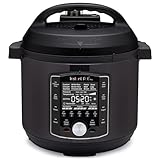

Sweetcrispy 16-in-1 Electric Pressure Cooker 8QT
Badge: Best Big Classic
Strengths
- 8-quart capacity is the batch-cooking and big-family size in this group
- 16 functions and 12 presets cast the widest net for one-button cooking
- Ceramic pot keeps cleanup easy even with large, sticky batches
Trade-offs
- Big footprint and heavier pot demand real counter and storage space
- A very long function list includes modes most households will rarely touch
- Ceramic coating needs gentle utensils and care, like all coated pots
Key specs from the verified listing
- Capacity: 8QT
- Functions: 16-in-1 with 12 presets incl. slow cook, rice, steamer, sauté, soup, yogurt (per listing)
- Inner pot: Ceramic pot (per listing)
- Extras: Recipe book included (per listing)
Sweetcrispy’s 8-quart machine is built for volume. Meal-prep households, big families, and anyone who cooks a pot of soup or pulled pork expecting days of leftovers will feel the difference those extra two quarts make: whole chickens fit comfortably, double batches of beans and grains stay under the fill line, and entertaining stops being a two-round exercise. Sixteen functions with a dozen presets is the longest list in this group, and while nobody uses all sixteen, the breadth means your particular routine — soup, rice, steaming, yogurt — almost certainly has a button.
The ceramic pot keeps the big-batch cleanup civilised; sticky, starchy loads rinse out far more easily than from bare metal, provided you stick to non-metal tools. Plan storage before buying: an 8-quart cooker is a commitment of cupboard or counter, and the pot full of food is heavy, so a clear path from counter to sink matters. For smaller households the capacity is not a bonus but a burden — pressure cookers work best reasonably full, and tiny portions in a cavernous pot are awkward. Match the size to your real cooking and this is the group’s capacity champion.
As one of the best of old pressure cookers in spirit — a proven, buyable design rather than a novelty — the Sweetcrispy 16-in-1 Electric Pressure Cooker 8QT should be judged on reliability, repairability, and whether its behaviour is well documented by the cooks who came before you. On those old-fashioned criteria, a model either has a track record or it does not, and the review above tells you which.
Best for: big households and meal preppers who need genuine 8-quart volume / Not suited for: small kitchens and anyone who found their last cooker too bulky

Instant Pot Duo Plus 6 Qt 9-in-1
Badge: Best All-Round Classic
Strengths
- 9-in-1 set adds useful programs over the classic Duo while keeping its simplicity
- Stainless pot supports hard searing, deglazing, and dishwasher cleaning
- 6-quart size remains the easiest to find recipes and accessories for
Trade-offs
- Overlaps heavily with both the Duo and the Pro; the middle position needs a reason
- No sous vide, which the Pro and Cosori include at this size
- Sealing rings and accessories are consumables to budget for over the years
Key specs from the verified listing
- Capacity: 6 Qt
- Functions: 9-in-1: pressure, slow, rice, yogurt, steam, sauté, warm, sterilize (per listing)
- Inner pot: Stainless steel (per listing)
- Extras: App recipe library (per listing)
The Duo Plus is the classic Instant Pot formula with the rough edges sanded: nine functions instead of seven, the same trusted 6-quart stainless pot, and an interface that stays approachable for a first-time pressure cook. It occupies the sensible middle of the brand’s range — more capable than the original Duo, less specialised than the Pro — and for many households that middle is exactly right. The stainless inner pot remains a core virtue: brown meat properly, build flavour in the same vessel, then pressure-cook without transferring anything.
If your cooking is weeknight dinners, weekend beans and stocks, rice a few times a week, and the occasional yogurt batch, the Plus covers all of it without a learning curve worth mentioning. It also inherits the deepest accessory ecosystem in the category — spare rings, extra pots, steamer baskets, and lids are everywhere because the installed base is enormous. Choose it over the plain Duo if the extra programs match your habits; choose the Pro instead if sous vide is on your list. As an all-round family cooker that asks little and does a lot, it is easy to recommend.
As one of the best of old pressure cookers in spirit — a proven, buyable design rather than a novelty — the Instant Pot Duo Plus 6 Qt 9-in-1 should be judged on reliability, repairability, and whether its behaviour is well documented by the cooks who came before you. On those old-fashioned criteria, a model either has a track record or it does not, and the review above tells you which.
Best for: most families wanting the definitive all-round classic with a stainless pot / Not suited for: sous vide enthusiasts, who should look at the Pro instead

Sweetcrispy 16-in-1 Electric Pressure Cooker 8QT (Second Listing)
Badge: Best Alternative Listing
Strengths
- Same 8-quart, 16-function specification as the other Sweetcrispy listing in this guide
- Ceramic pot and preset breadth suit big-batch, sticky, saucy cooking
- A second listing can occasionally differ in availability, so it is worth comparing the two pages
Trade-offs
- It is the same model as the earlier Sweetcrispy pick — there is no reason to buy both
- Large footprint and coated-pot care requirements apply in full
- Function count far exceeds what most kitchens use weekly
Key specs from the verified listing
- Capacity: 8QT
- Functions: 16-in-1 with 12 presets incl. slow cook, rice, steamer, sauté, soup, yogurt (per listing)
- Inner pot: Ceramic pot (per listing)
- Extras: Recipe book included (per listing)
A note on honesty: this is a second Amazon listing for the same Sweetcrispy 16-in-1 8QT cooker already reviewed in this guide, not a different machine. The verified title, capacity, function count, ceramic pot, and included recipe book match the earlier listing exactly. Rather than pretend otherwise, we keep it in the line-up for a practical reason: duplicate listings are common for value brands, availability and the exact bundle on each page can differ on any given day, and a buyer comparing the two pages loses nothing. Everything in the earlier Sweetcrispy review — the batch-cooking strengths, the counter-space warning, the ceramic care rules — applies word for word here.
Use this listing as a comparison checkpoint, not a second purchase. Open both Sweetcrispy pages, confirm the capacity and pot material match what you want, check which listing is actually in stock and shipping cleanly, and buy one. If you already own the 8QT from the other listing, nothing here adds capability to your kitchen. New buyers should read the fuller Sweetcrispy review above for cooking guidance, then simply choose whichever of the two listings presents the cleaner offer on the day.
As one of the best of old pressure cookers in spirit — a proven, buyable design rather than a novelty — the Sweetcrispy 16-in-1 Electric Pressure Cooker 8QT (Second Listing) should be judged on reliability, repairability, and whether its behaviour is well documented by the cooks who came before you. On those old-fashioned criteria, a model either has a track record or it does not, and the review above tells you which.
Best for: buyers comparing Sweetcrispy listings for the cleaner availability on the day / Not suited for: anyone who already owns the Sweetcrispy 8QT from the other listing

COMFEE’ 12-in-1 Electric Pressure Cooker 6 Quarts
Badge: Best Timer Classic
Strengths
- 24-hour delay timer is a genuine planning feature the bigger brands here underplay
- 12 menus in a 6-quart body give broad coverage at the most useful size
- Nonstick-style pot keeps everyday cleanup fast
Trade-offs
- Value-brand documentation and accessory ecosystem are thinner than Instant Pot’s
- Coated pot requires gentle tools and will not outlast stainless
- Preset names and logic take a short familiarisation period
Key specs from the verified listing
- Capacity: 6 Quarts
- Functions: 12-in-1, 12 menus, 9 cookers in one (per listing)
- Timer: 24H timer (per listing)
- Inner pot: Nonstick / ceramic inner pot (per listing)
- Safety: Built-in safety features (per listing)
COMFEE’ builds its case on planning and convenience: twelve menus, a 6-quart nonstick pot, and a 24-hour timer that lets you load the cooker in the morning and have it finish when you walk back in. That timer is more than a spec-sheet line — for oats ready at breakfast, or a stew that starts itself before you leave work, it changes the cooker from an appliance you operate into one that works to your schedule. The 6-quart size matches the category’s sweet spot, so general pressure-cooking guidance and timings transfer directly.
Delay-start suits sturdy ingredients — grains, beans, broths, tough cuts — far better than delicate vegetables or anything with dairy, which should not sit at room temperature in the pot for hours. The coated inner pot makes the daily rinse quick; treat it gently and it will serve well, while accepting that a stainless pot remains the buy-it-for-decades option. For shoppers who value scheduling and easy cleanup over brand ecosystem, COMFEE’ makes a pragmatic, capable case.
As one of the best of old pressure cookers in spirit — a proven, buyable design rather than a novelty — the COMFEE’ 12-in-1 Electric Pressure Cooker 6 Quarts should be judged on reliability, repairability, and whether its behaviour is well documented by the cooks who came before you. On those old-fashioned criteria, a model either has a track record or it does not, and the review above tells you which.
Best for: schedule-driven cooks who will genuinely use a 24-hour delay timer / Not suited for: buyers who prioritise the deepest possible accessory and parts ecosystem
Comparison Table
| Pick | Badge | Capacity | Key feature from listing | Listing |
|---|---|---|---|---|
| Instant Pot Duo Mini 3 Quart 7-in-1 | Best Compact Classic | 3 Quart | 7-in-1: pressure, slow, rice, steam, sauté, yogurt, warm/sterilize (per listing) | Check on Amazon |
| Instant Pot Pro 6 Qt 10-in-1 | Best Modern Classic | 6 Qt | 10-in-1 incl. pressure, slow, rice/grains, steam, sauté, sous vide, yogurt, warm, sterilize (per listing) | Check on Amazon |
| Sweetcrispy 16-in-1 Electric Pressure Cooker 8QT | Best Big Classic | 8QT | 16-in-1 with 12 presets incl. slow cook, rice, steamer, sauté, soup, yogurt (per listing) | Check on Amazon |
| Instant Pot Duo Plus 6 Qt 9-in-1 | Best All-Round Classic | 6 Qt | 9-in-1: pressure, slow, rice, yogurt, steam, sauté, warm, sterilize (per listing) | Check on Amazon |
| Sweetcrispy 16-in-1 Electric Pressure Cooker 8QT (Second Listing) | Best Alternative Listing | 8QT | 16-in-1 with 12 presets incl. slow cook, rice, steamer, sauté, soup, yogurt (per listing) | Check on Amazon |
| COMFEE’ 12-in-1 Electric Pressure Cooker 6 Quarts | Best Timer Classic | 6 Quarts | 12-in-1, 12 menus, 9 cookers in one (per listing) | Check on Amazon |
Capacities in this table span 3 to 8 quarts, which is the single most important comparison in a classics list: the right old design in the wrong size is still the wrong cooker. Note again that the two Sweetcrispy rows describe the same model on two listings — treat them as one option with two shop windows.
How to Choose the Right Option for Best of old pressure cookers
Start with capacity, because it is the decision you cannot undo. As a working rule, 3 to 4 quarts suits one or two people and side dishes; 6 quarts is the family workhorse that most recipes are written for; 8 quarts and above serve big families, batch cooking, and entertaining. Remember that pressure cookers are never filled to the brim: two-thirds full is the usual working ceiling, and only half for foods that foam or expand like beans, grains, and porridge. That means a 6-quart pot really cooks about 4 quarts of everyday food — do the honest maths against the meals you actually make.
Choose the pot material for your cleaning tolerance. Stainless steel sears hard, tolerates metal utensils, goes in the dishwasher, and can serve for decades, at the cost of food sticking more readily. Ceramic or nonstick-style coatings release rice and sauces beautifully and rinse clean in seconds, but they need gentle tools and will eventually wear. Neither is wrong; the mistake is buying a coated pot with a metal-utensil habit, or a stainless pot while hating cleanup.
Count functions you will use weekly, not functions on the box. The core set — pressure, sauté, rice, steam, slow cook, keep warm — covers most households. Sous vide, yogurt, sterilise, and grains programs are worth having only if they match real habits. Every extra mode adds menu complexity, so a longer list is a benefit only when it overlaps your cooking. Similarly, decide early whether you want electric set-and-forget convenience or stovetop control and durability; they are different philosophies, and this guide includes both where the keyword allows.
Plan the unglamorous details. Measure your counter depth and cupboard height, including room for the lid to open or be lifted away. Check that spare sealing rings and gaskets for the model are easy to buy, because they are wear parts on every cooker. Think about weight: a full 8-quart pot is a serious lift from counter to sink. And consider your stove or circuit: electric models want a convenient outlet with slack in the cord, while stovetop models want a burner that matches the base diameter.
How to Use, Clean, and Troubleshoot a Proven Electric Pressure Cooker
Good pressure cooking is a routine, not a talent. Step one: build flavour first. Use the sauté function on electric models, or medium heat on a stovetop pot, to brown meat and soften aromatics in a little oil. This step is where most of the final flavour is made, and skipping it is why some pressure-cooked meals taste boiled. Step two: deglaze. Add your liquid and scrape the bottom thoroughly. On electric cookers, stuck-on bits are the main trigger for burn warnings; on any pot, they are lost flavour. Step three: load in order. Liquids and sauces at the bottom, ingredients that should stay distinct on top, and do not stir thick sauces like tomato into the liquid — layer them so the bottom stays thin enough to boil and build steam.
Step four: respect the fill lines and the liquid minimum. Never fill past two-thirds, or past half for beans, grains, and foaming foods, and always include at least the minimum water or thin liquid your manual specifies — steam is the cooking medium, and the pot cannot pressurise without it. Step five: lock, set, and leave it alone. Check the sealing ring is seated and the valve is in the sealing position on electric models; on stovetop models, bring the heat up until the regulator signals pressure, then reduce to the lowest heat that holds it. Step six: choose your release deliberately. Natural release — letting pressure fall on its own — suits meats, beans, and broths and prevents sputtering. Quick release suits vegetables, eggs, and delicate foods you do not want to overcook. Many meals are best with a hybrid: ten minutes natural, then release the rest.
Cleaning and care decide how long the cooker serves you. Wash the inner pot after every use and dry it fully; check the sealing ring for odours and cracks, and keep a spare, because a tired ring is the most common cause of a pot that suddenly will not pressurise. Keep the steam release valve and anti-block shield clean per the manual, and never store the cooker with the lid sealed tight — storing it with the lid upside down or ajar keeps the ring from holding odours and taking a set. Stovetop gaskets deserve the same inspection, plus a check that the vent pipe is clear before every single use.
Troubleshooting. Problem: the pot will not come to pressure → check the sealing ring is seated evenly, the valve is set to sealing, and there is enough thin liquid; a ring that has gone slack with age is the usual culprit. Problem: a burn or scorch warning on an electric cooker → stop, release pressure safely, and scrape the bottom; the cause is almost always thick sauce or stuck food at the base, so add thin liquid and layer sauces on top next time. Problem: steam leaking around the lid edge → the ring is dirty, mis-seated, or worn, or food debris is on the rim; clean, reseat, or replace the ring before blaming the machine. Problem: food is undercooked after the timer → dense or frozen ingredients and an impatient quick release are the usual causes; give meats their natural release time, which is genuine cooking time.
Why Proven Designs Outlast Novelty in This Category
Pressure cookers are unusual appliances: the core mechanism has been stable for decades, the failure points are well understood, and the ecosystem around a model — spare rings, extra pots, published recipes with tested timings — compounds in value every year a design stays in production. That is the real argument behind searching for the best of old pressure cookers. A design that has cooked a million dinners has had its quirks found and documented; a brand-new design asks you to be part of its debugging process. For an appliance that works with steam under pressure, most cooks reasonably prefer the known quantity.
The classics also age more gracefully in a practical sense. When a sealing ring flattens in year four, the owner of a long-running model orders a replacement in minutes; the owner of a short-lived model discovers whether parts still exist. The same logic applies to recipes: timings for the Duo family are printed in countless books and sites, while an obscure one-season model leaves you converting and guessing. Longevity in this category is a system, not a single product, and the system is what you are buying. Related guidance in Best One Pot Pressure Cookers applies the same proven-design thinking to dedicated one-pot cooking.
Caring for a Cooker So It Becomes an Old One
Every old cooker was once a new cooker that somebody maintained. The habits are unglamorous and entirely learnable: wash and fully dry the sealing ring, store the lid ajar so the ring keeps its shape and sheds odours, keep the valve and shield clear, and replace the ring at the first sign of slackness or persistent leaking rather than after a failed dinner. On the pot itself, avoid thermal shock, do not use the cooker as long-term food storage in the fridge with the lid sealed, and keep the exterior base dry before it goes back on the counter.
Owners of genuinely vintage stovetop pots should add one more rule that this guide states without exception: have old metal, gaskets, and pressure valves inspected before use, and retire any pot whose history you cannot verify. The classics celebrated here earn their status through documented, supported designs — the modern electric descendants of that tradition, like the models above and those in Best One Pot Cookers With Stainless Inner Core, are how most households should enjoy it. Respect the maintenance, and your current cooker becomes somebody else’s benchmark in ten years.
Common Buying Mistakes
Buying the wrong size with confidence. A 3-quart pot bought for a family of five and an 8-quart pot bought for one person are the same mistake in opposite directions. Pressure cookers work in a fill band — too little food in a huge pot and too much food in a small one both cook badly. Match capacity to your household and your batch habits before looking at any feature list.
Chasing the longest function list. Sixteen functions sounds like value, but the honest question is which buttons you will press in an ordinary week. Buyers routinely pay for modes they never open while ignoring the things that matter daily: pot material, ease of cleaning, and whether the lid and ring are pleasant to live with. Judge the core five functions first and treat the rest as a bonus.
Ignoring the sealing ring and spare parts. Every pressure cooker depends on a rubber ring that ages, absorbs odours, and eventually stops sealing. Choosing a model whose rings and gaskets are easy to source — and buying a spare early — prevents the classic moment where a healthy machine becomes useless over a small rubber part. This matters even more for value brands, so check parts availability before you buy, not after the first failed seal.
Treating release method as an afterthought. Quick-releasing a pot of beans or a beef stew can toughen meat, sputter starchy liquid through the valve, and undercook the centre, while natural-releasing delicate vegetables turns them to mush. The release is part of the recipe. Recipes that do not specify one are a reason to learn the pattern — natural for meats, beans, and broths; quick for vegetables and eggs — rather than a licence to guess.
Filling past the line with expanding foods. Beans, grains, pasta, and porridge foam and swell under pressure. The half-full rule for these foods exists because foam can block the valve and because a pot needs headspace to work safely. Overfilling is the most avoidable error in pressure cooking, and it is entirely about patience, not skill. When in doubt, cook a second batch.
Final Recommendation
For the buyer behind this search, the Duo Plus is the heart of the list: a stainless-pot, 6-quart, nine-function machine from the most proven line in the category, with parts and recipes guaranteed to surround it for years. Small households should take the Duo Mini without hesitation, big ones the Sweetcrispy 8QT from whichever of its two listings is cleaner on the day, and planners the COMFEE’ for its timer. The Pro is there for the classic buyer who wants the modern extras folded in rather than bolted on.
Buy the size you will fill, keep a spare sealing ring in the drawer from the start, and any of these machines has the design pedigree to become your household’s old reliable. If your cooking leans toward dedicated one-pot meals, Best Onions For Slow Cookers and its neighbouring guides cover the slower side of the same one-pot philosophy.
Instant Pot Duo Plus 6 Qt 9-in-1 — Check on Amazon · Instant Pot Duo Mini 3 Quart 7-in-1 — Check on Amazon · Instant Pot Pro 6 Qt 10-in-1 — Check on Amazon
Frequently Asked Questions
Are older pressure cooker designs safe to use?
Established designs with modern safety systems — like every electric pick in this guide — are built with multiple listed safeguards and are the safest way to enjoy the proven-design approach. Genuinely vintage stovetop pots are different: have gaskets, valves, and metal inspected before use, and never use a pot whose condition or history you cannot verify.
Why do two picks in this guide look identical?
Because they are the same Sweetcrispy 8QT model appearing on two Amazon listings, and the guide says so openly rather than inventing a difference. Duplicate listings are common for value brands. Compare both pages for availability and buy one; there is never a reason to buy both.
How long should a good pressure cooker last?
The pot and body of a well-kept electric cooker can serve for many years; the consumable is the sealing ring, which typically needs replacement every year or two depending on use. Stovetop pots can last decades with gasket changes. Longevity depends far more on parts availability and care than on the purchase price tier.
Is a 3-quart cooker big enough to be useful?
For one or two people, absolutely — rice, soups, oats, eggs, and small braises are exactly its territory, and it comes to pressure quickly. It is not big enough for family batch cooking, large roasts, or entertaining. The honest test is the size of the meals you cooked in the last month, not the meals you imagine cooking.
Do classic models miss out on sous vide?
Some do. The Duo, Duo Mini, and Duo Plus in this guide do not list sous vide, while the Pro — the modern evolution of the same family — does. If sous vide matters to you, that is the classic-line answer; if it does not, the simpler models lose nothing in everyday pressure cooking.
What is the first spare part I should buy?
A sealing ring, without hesitation, and ideally two: one for savoury cooking and one for sweet dishes like yogurt and desserts, since rings absorb odours. It is the cheapest insurance in the category and the part whose failure most often gets misdiagnosed as the whole machine dying.


