Disclosure: topratedkitchenware.com is reader-supported. When you buy through links on our site, we may earn an affiliate commission from Amazon and other retailers, at no extra cost to you.
Where to buy
The six models below are the verified picks for this guide to classic-style slot toasters. Each name links to its Amazon listing, where you can check the latest price on Amazon and confirm the current variant — classic designs are revised quietly over the years, so verify the specification rather than assuming a familiar name means a familiar machine.
- Elite Gourmet ECT1027B 2-Slice Cool-Touch Toaster
- Hamilton Beach 22634 Extra-Wide Slot 2 Slice Toaster
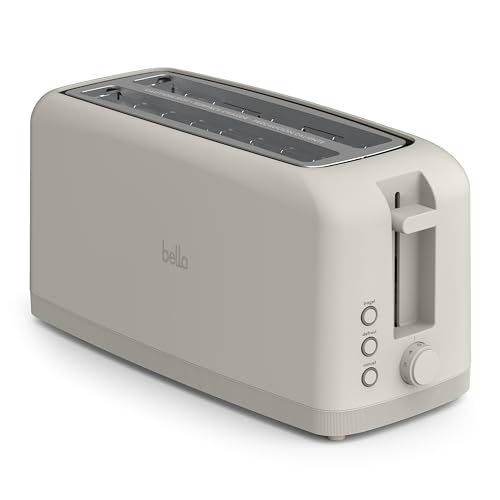
- bella Fits-Anywhere Slim Toaster, 4 Slice
- BLACK+DECKER 2-Slice Toaster with Extra-Wide Slots
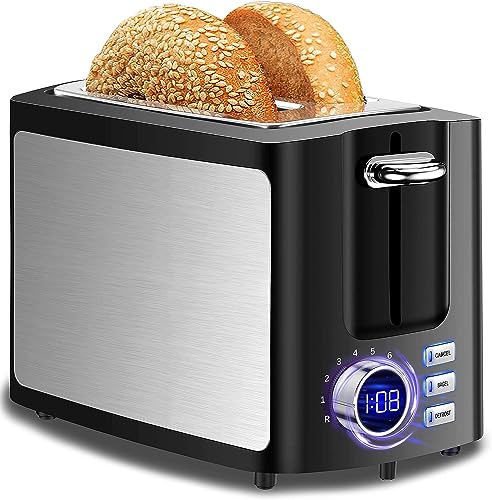
- Hommater 2 Slice Smart Toaster with LCD Display
- Amazon Basics 2 Slice Toaster
Read the full guide ↓ for what the classic pop-up tradition actually consists of, which modern picks honour it, and how to judge durability without falling for vintage marketing.
People searching for the best old toasters usually mean one of two things: a toaster in the classic pop-up tradition — lever, slots, dial, done — built simply enough to serve for years, or a toaster with the look of an earlier era. This guide serves the first meaning and is honest about the second. None of the six verified listings in this pool claims a retro model, a vintage-styled housing or a heritage production run, and this guide will not dress any of them in a label their makers did not claim, nor invent production years for designs whose listings state none. What the pool does contain is the classic tradition itself, alive and well: five lever-operated two-slice pop-up toasters and one long-slot design, ranked here by how faithfully each honours the old virtues — mechanical simplicity, repairable-by-common-sense controls, trays that empty, lifts that retrieve — and by how gracefully each admits the few modern improvements that genuinely earned their place.
The old virtues deserve defining, because they are a discipline rather than a nostalgia. A classic toaster does one job with the fewest moving parts that can do it well. Its controls can be operated by any generation without instruction. Its crumb tray comes out. Its lever lifts high enough for small slices. It makes no promises it cannot keep and states its specification in plain nouns — slots, shades, buttons, trays. Readers who want the motorised opposite of that philosophy should see our guide to Best Motorized Toasters; readers who want the oven format that shared counter space with the classic pop-up should see Best Oven Toasters. Here, the pop-up tradition is judged on its own terms.
Every pick is drawn from verified listing information checked on 2026-11-20, with specifications quoted only as stated. Each review carries a badge, three strengths, three trade-offs and a plain verdict. No pick is credited with an age, a heritage or a styling era its listing does not claim — the classic here is a way of building, not a costume.
Key Takeaways
- “Old” done honestly means the classic pop-up tradition: lever, dial, wide slots, removable tray, no theatrics.
- No listing in this pool claims retro styling or a heritage model year, so none is marketed as such here.
- The BLACK+DECKER is the tradition’s purest current expression: extra lift lever, removable tray, seven shades, bagel mode.
- The Amazon Basics keeps the classic specification and adds cord wrap and a stated 900W.
- Modern improvements worth admitting into the tradition: auto shutoff, cool-touch housings and a proper defrost cycle.
- Judge classic durability by mechanisms and maintenance design, never by a vintage-looking finish.
In this guide
Quick Picks
Six current machines, ranked as heirs to the classic tradition. Buyers who care about provenance of a different kind — where the value sits today — should cross-check our guide to Best Prices On Toasters.
| Pick | Badge | Best for | Listing |
|---|---|---|---|
| Elite Gourmet ECT1027B | Best Simple Classic | Households wanting classic simplicity with a cool-touch housing | Check on Amazon |
| Hamilton Beach 22634 | Best Classic with Modern Safety | Classic format plus auto shutoff and a boost lift | Check on Amazon |
| bella Fits-Anywhere Slim Toaster | Best Long-Slot Classic, Reimagined | Long slices and four-slice rounds in a slim body | Check on Amazon |
| BLACK+DECKER 2-Slice Toaster | Best Traditional Lever Classic | Purists wanting lift, tray and dial with nothing extra | Check on Amazon |
| Hommater 2 Slice Smart Toaster | Best Classic Format, Modern Controls | Traditional shape with a display and four functions | Check on Amazon |
| Amazon Basics 2 Slice Toaster | Best No-Nonsense Classic | The complete classic specification, plainly stated | Check on Amazon |
How These Picks Were Chosen
The pool is the verified slot-toaster field, checked against Amazon’s listing data through the Creators API on 2026-11-20. For this guide, each model was read against the classic tradition’s own criteria: Is the format the traditional pop-up slot design? Are the controls mechanical or mechanically legible? Does the listing state the tradition’s load-bearing details — a lift mechanism, a removable or slide-out crumb tray, a shade dial with a real range? And where a modern feature appears, does it solve a problem the classic design genuinely had — jammed cycles, hot housings, frozen bread — rather than merely decorating the panel?
Two honesty rules governed the writing. First, no pick is described as retro or vintage-styled, because no listing claims that styling; finishes are described as what they are — black, blue, a soft Oatmilk tone, black and silver. Second, no age or production history is asserted for any design, because no listing states one; where a brand’s name carries a long household history, this guide treats the name as a name and judges the current listing in front of it. The result is a classic guide that a sceptical reader can verify line by line.
This is a research-led guide with no hands-on claims and no printed prices. Durability is discussed as design — mechanisms, maintenance, simplicity — never as a promised number of years, because no listing can support such a promise and this guide does not make claims it cannot source.
The 6 Best Old Toasters, Reviewed
Badges match the Quick Picks table. Each review uses only stated specifications, names one honest limitation, and ends with a plain verdict.

Elite Gourmet ECT1027B 2-Slice Cool-Touch Toaster
Badge: Best Simple Classic
Strengths
- Classic two-slice pop-up format with a short, legible control set: six shades, Cancel, bagel capability.
- Cool-touch housing answers the one genuine flaw of the old metal-sided classics — hot outer walls.
- Slots specified precisely at 1.25 inches extra-wide, wider than the narrow slots of true vintage machines.
Trade-offs
- No defrost function is stated, where classic households that freeze bread will miss it.
- No crumb tray is described in the listing.
- Its black finish is modern in character; it makes no vintage styling claim, and neither does this guide.
Mini spec box
- Format: 2 slice, cool-touch housing, classic pop-up design
- Slot width: 1.25 in extra-wide (as stated)
- Shades: 6
- Functions stated: Cancel, bagel mode
- Colour: Black
The classic toaster’s bargain was always simplicity in exchange for a few accepted hazards, and the hot housing was the chief of them: generations learned to keep fingers and tea towels away from a working toaster’s sides. The ECT1027B keeps the simplicity and renegotiates the hazard. Its format is the tradition untouched — two slots, a lever’s job done plainly, six shades, a cancel control, a bagel capability — while its cool-touch housing removes the burn risk that nostalgia tends to forget. That is the correct way to inherit a tradition: keep the discipline, fix the flaw.
Its slot width tells the same story numerically. True vintage slots were narrow, sized for the thin, uniform loaves of their day; a stated 1.25 inches accepts the bagels and thick bakery slices of this one. A household that wants the old experience — put bread in, push lever down, receive toast — without the old exclusions will find this pick the most faithful modern translation of it.
The honest limitations are the unstated defrost cycle and the undescribed crumb tray, both flagged rather than smoothed over: the classic tradition prized clean-out design, and a buyer should verify this machine’s arrangement on the listing page. As the simple classic with the tradition’s worst flaw engineered out, it leads this guide.
Best for: Households wanting the classic routine without the classic burn risk / Not suited for: Freezer households needing a stated defrost cycle
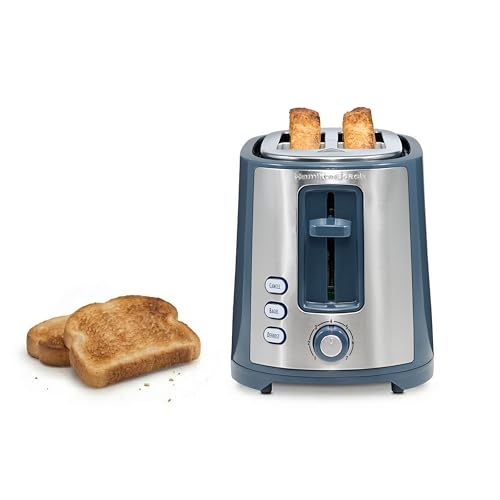
Hamilton Beach 22634 Extra-Wide Slot 2 Slice Toaster
Badge: Best Classic with Modern Safety
Strengths
- Traditional two-slice pop-up format, completed by a slide-out crumb tray in the classic manner.
- Auto shutoff adds the safety behaviour the tradition always lacked.
- Toast Boost perfects the classic lift, raising small slices properly clear of the slots.
Trade-offs
- The Kitchen Makeover Blue finish is contemporary, not a heritage colourway.
- No reheat function or cord storage is stated.
- Seven shades and two function buttons ask slightly more learning than the purest classics.
Mini spec box
- Format: 2 slice, extra-wide slot, classic pop-up design
- Shades: 7 browning settings
- Details: auto shutoff, Toast Boost, slide-out crumb tray
- Functions: Bagel, Defrost
- Colour: Kitchen Makeover Blue
If the Elite Gourmet fixes the classic’s housing, the 22634 fixes its two operational flaws. The first was the jam: a wedged slice in a traditional toaster kept the elements live until someone intervened, and the tradition’s answer was vigilance. Auto shutoff is the modern answer, ending an abnormal cycle by itself, and it belongs in a classic guide because it protects exactly the households — busy, distracted, multi-generational — that classic toasters serve. The second flaw was retrieval: short slices sat low and were fished for. Toast Boost simply finishes the lift lever’s original idea, raising finished toast high enough to take by hand.
Around those two repairs, the specification is tradition-respecting: extra-wide slots, seven shades, bagel and defrost buttons for the two special cycles modern bread habits require, and a slide-out tray that empties the way trays were always meant to. Readers who judge machines primarily by build standards will find a kindred ranking in our guide to Best Quality Toasters.
The honest limitation is presentational honesty itself: the blue finish is a contemporary colour, and this guide will not pretend it is a heritage tint. Buyers seeking a period look should shop true retro-styled lines elsewhere, with eyes open; buyers seeking the classic machine with its flaws repaired should stay here.
Best for: Classic-format households that want the old flaws fixed, not romanticised / Not suited for: Buyers shopping for an authentic period-styled appliance

bella Fits-Anywhere Slim Toaster, 4 Slice
Badge: Best Long-Slot Classic, Reimagined
Strengths
- The long-slot format is itself a classic arrangement, revived here in a slim four-slice body.
- Extra long and wide slot accepts the long loaves that twin-slot classics refuse.
- Oatmilk finish offers a soft, period-neutral look without claiming a styling era.
Trade-offs
- The listing states no shade count and names no functions, so its controls are the least classic-documented here.
- No crumb tray design is described.
- Its slim modern packaging is a reinterpretation, not a reproduction, of the long-slot idea.
Mini spec box
- Format: 4 slice, slim body, extra long and wide slot
- Design line: Fits-Anywhere
- Colour: Oatmilk
- Controls and functions: not stated in the listing title
Before the twin-slot toaster became the default, the long slot was a respectable classic format in its own right: one generous opening that took bread as it came, long slices included. The bella revives that arrangement for the modern problem of counter depth, running four slices along a slim body. Judged as a classic, its claim is format ancestry rather than styling — it makes no retro claim in its listing and this guide makes none for it — and the ancestry is real: a long, wide slot that refuses nothing a bakery sells.
The reinterpretation cuts both ways, and the review should say so. The slim body solves a problem the original long-slot machines never faced, because their kitchens were bigger; the Oatmilk finish is calm and contemporary rather than period. What the listing does not provide is the classic documentation a tradition-minded buyer wants: no shade count, no named functions, no tray description. The classic tradition, at its best, stated its mechanisms plainly, and this pick’s silence is its least classic quality.
The honest verdict is that this is the guide’s moderniser: a classic format carried into a contemporary brief. Buyers who want the long slot’s generosity with fully stated controls should verify this listing carefully before ordering; buyers who want the tradition intact should look to the lever classics around it.
Best for: Long-loaf households drawn to the classic long-slot format in a slim body / Not suited for: Buyers who want every control documented in the classic manner
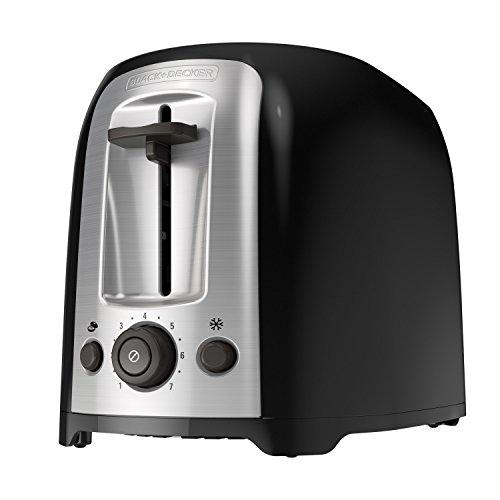
BLACK+DECKER 2-Slice Toaster with Extra-Wide Slots
Badge: Best Traditional Lever Classic
Strengths
- The tradition intact: lever operation, an extra lift lever, a removable crumb tray and a seven-setting dial.
- Extra-wide slots update the classic geometry for modern bread without altering its character.
- A stated bagel mode is the one concession to modern habits, and it is the right one.
Trade-offs
- No defrost function is stated — the tradition’s frozen-bread gap remains.
- No auto shutoff or cord storage is described.
- No display or countdown; feedback is the lever and the dial, as it always was.
Mini spec box
- Format: 2 slice, extra-wide slots, classic lever design
- Shade settings: 7
- Details: extra lift lever, removable crumb tray
- Mode stated: bagel mode
Every tradition needs its purist entry, and this is the guide’s. Read its stated specification and you are reading the classic pop-up toaster’s own self-description across the decades: slots on top, a lever at the side, a dial for darkness, a tray underneath, and a lift to bring small slices within reach. The updates are confined to geometry — the slots are extra-wide for today’s bread — and to a single mode, bagel, for today’s breakfast. Nothing else has been added, and the review’s argument is that nothing else needed to be.
That restraint is a durability strategy as much as an aesthetic one. Mechanisms that are few, visible and mechanical age predictably; there is no interface to become obsolete and no software behaviour to drift. A household that keeps appliances until they truly finish will recognise the philosophy, and a household teaching children or hosting grandparents will recognise the legibility: this machine can be operated correctly by anyone who has ever made toast, in any decade.
The honest limitation is the tradition’s own: no defrost is stated, so the frozen loaf — a thoroughly modern habit — is this pick’s open flank, and no shutoff behaviour is described. Verify the panel on the listing page if either matters to you. As the classic, unadorned and complete in its own terms, it is the benchmark the rest of this guide quietly measures itself against.
Best for: Purists and long-keepers wanting the traditional machine, faithfully specified / Not suited for: Households that toast from frozen daily
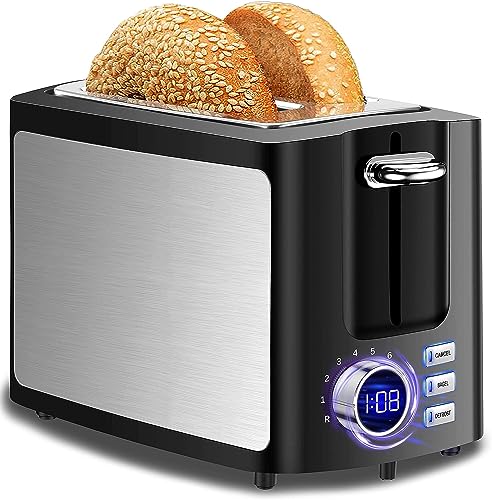
Hommater 2 Slice Smart Toaster with LCD Display
Badge: Best Classic Format, Modern Controls
Strengths
- The classic two-slice pop-up format, kept intact beneath a modern control layer.
- Four stated functions — Bagel, Defrost, Cancel, Reheat — extend the tradition to modern bread habits.
- Nine shade settings and a countdown display give the old routine new precision.
Trade-offs
- A display panel is the least classic control philosophy in this guide.
- The listing describes no crumb tray, where the tradition prized clean-out design.
- No housing material or styling era is stated — it is a modern machine in classic format, and is reviewed as exactly that.
Mini spec box
- Format: 2 slice, wide slot, classic pop-up format
- Controls: LCD digital countdown timer
- Shade settings: 9
- Functions: Bagel / Defrost / Cancel / Reheat
This pick is the guide’s deliberate counterpoint, included so the tradition can be judged rather than merely celebrated. Underneath its display, the Hommater is the same machine the classic makers built: two wide slots, bread in, toast up. What it adds is information — a countdown that shows the cycle, nine settings that make darkness a repeatable number, and the full modern function set, including the defrost the purist pick omits and the reheat that interrupted modern mornings use constantly. A reader who finds the classic format right but the classic information poverty frustrating will find this pick answers the frustration precisely.
Its presence also disciplines the guide’s nostalgia. If a modern control layer demonstrably serves the same breakfasts better — and for mixed households with frozen loaves, it does — then the tradition worth keeping is the format and the discipline, not the dial itself. Readers who end up persuaded by that argument in full will find the function-led ranking in our guide to Best Multi Function Toasters.
The honest limitations are its undescribed crumb tray and its philosophy: this is not a machine for buyers who want the old interface, and it claims no styling heritage whatsoever. As the classic format carried honestly into the present, it earns its place and its badge.
Best for: Households that love the classic format but live modern breakfast lives / Not suited for: Buyers who want the traditional lever-and-dial interface itself

Amazon Basics 2 Slice Toaster
Badge: Best No-Nonsense Classic
Strengths
- The complete classic specification, plainly stated: extra-wide slots, removable tray, Defrost, Cancel and Bagel buttons.
- Cord wrap — the storage virtue classic designs often skipped — included.
- Stated 900W power continues the tradition of honest, checkable specification.
Trade-offs
- Six browning settings is the joint-narrowest range in the pool.
- No lift help is stated for small slices.
- Black and silver is a modern finish; no heritage styling is claimed or implied.
Mini spec box
- Format: 2 slice, extra-wide slots, classic pop-up design
- Power: 900W (as stated in the listing)
- Browning settings: 6
- Details: removable crumb tray, cord wrap
- Buttons: Defrost / Cancel / Bagel
The classic tradition’s deepest virtue was never a look; it was plain dealing. A machine stated what it did, did what it stated, and could be kept clean enough to keep doing it. The Amazon Basics is that virtue in current form. Its specification reads like a checklist written by the tradition itself — wide slots, a tray that removes, the three buttons daily life requires, a cord that wraps away — and it adds the most old-fashioned honesty of all, a stated wattage, so the buyer knows the machine’s class before it arrives.
In service, that plainness compounds. There is nothing to configure and nothing to misunderstand; the tray keeps the interior honest; the wrap keeps the cupboard honest. For a second home, a rental, a grandparent’s kitchen or a first flat — the settings where classic toasters always quietly lived — this is the pick whose virtues require no explanation to anyone who will use it.
The honest limitations are the narrower six-setting range and the unstated lift help, both real and both survivable for the households this pick serves. It closes the guide where the tradition itself would want to close: with the complete, plain machine, offered without costume or apology.
Best for: Anyone wanting the classic specification stated plainly and kept completely / Not suited for: Households needing fine shade steps or lift help
Comparison Table
| Pick | Format | Shades | Relationship to the tradition | Listing |
|---|---|---|---|---|
| Elite Gourmet ECT1027B | 2 slice, 1.25 in slots | 6 | Classic simplicity, hot-housing flaw fixed | Check on Amazon |
| Hamilton Beach 22634 | 2 slice, extra-wide | 7 | Classic format, jam and retrieval flaws fixed | Check on Amazon |
| bella Fits-Anywhere Slim | 4 slice, slim long slot | Not stated | Classic long-slot format, modern packaging | Check on Amazon |
| BLACK+DECKER | 2 slice, extra-wide | 7 | The tradition intact: lever, lift, tray, dial | Check on Amazon |
| Hommater Smart Toaster | 2 slice, wide slot | 9 | Classic format, modern control layer | Check on Amazon |
| Amazon Basics | 2 slice, extra-wide | 6 | Classic specification, plainly and completely stated | Check on Amazon |
How to Choose a Classic-Style Toaster
Choose by mechanism before aesthetics. The classic virtues are a carriage that lifts properly, a tray that removes completely, a dial with a usable range, and controls a guest can operate without a briefing. Every pick in this guide states most of that list; the reviews flag the exceptions, and those flags — an undescribed tray here, an unstated defrost there — are where your verification time belongs. A finish, by contrast, deserves ten seconds: it is a colour, honestly described in each listing, and no colour in this pool claims to be a period reproduction.
Decide next which modern repairs you want admitted into the tradition. The classic design had three genuine flaws — hot housings, jammed cycles with no shutoff, and slots too narrow for modern bread — and this pool’s picks repair them selectively: cool-touch walls, auto shutoff, extra-wide slots everywhere. A purist can refuse the first two repairs and keep the third; a pragmatist can take all three and still own a machine the tradition would recognise. What neither should accept is a modern machine that kept the flaws and added only decoration.
Finally, be honest about the look. If a period-styled kitchen is the brief, shop a line that claims that styling in its listing and verify the claim like any other specification. The machines in this guide are the classic tradition’s working descendants, not its tribute act, and they are recommended on exactly that basis.
How to Keep a Classic Toaster Working for Years
- Unplug and cool the toaster before any cleaning; classic simplicity is no excuse for skipping the basics.
- Empty the crumb tray weekly — slide or lift it out, tip, wipe, dry and refit. Most “old toaster” decline is crumb decline.
- Shake the cooled, unplugged machine gently over a bin monthly to clear crumbs the tray misses.
- Keep the lever’s path clear and never force a carriage down; a sticking lever usually means a crumb in the mechanism.
- Wipe the exterior with a soft damp cloth; do not immerse the toaster, and keep steam from kettles away from the slots.
- Use the lift lever or boost for small items instead of tilting the machine or reaching in.
- Store the cord loosely or on its wrap if fitted, and give the machine clearance above when toasting.
Troubleshooting. Problem: uneven browning side to side → clean the tray and interior first; crumbs insulating one element are the classic cause. Problem: the lever will not stay down → check the outlet, press fully, and clear crumbs from the latch path before assuming failure. Problem: toast tastes of old crumbs → the tray is overdue and the interior needs the shake-out above; run one empty medium cycle in a ventilated kitchen afterwards.
The Classic Flaws, and Which Repairs Earned Their Place
Romanticising the old machines does their tradition no favours, so let the record show the flaws plainly. Housings ran hot enough to demand respect and occasionally exact payment. Slots were narrow and stayed narrow while bread changed around them. A jammed slice held the elements live until a human noticed. Frozen bread defeated the single-cycle design entirely, because the tradition’s kitchens baked or bought fresh daily. Against that record, this pool’s modern repairs can be graded by whether they answer a named flaw: extra-wide slots answer the bread change, completely; auto shutoff answers the jam, completely; cool-touch housings answer the burns, substantially; defrost answers the freezer, which the tradition never faced. Displays and countdowns answer no classic flaw at all — they answer a modern preference for information — and this guide badges the Hommater accordingly, as an enrichment rather than a repair. That grading, flaw by flaw, is the honest way to love an old design: keep what worked, repair what hurt, and admit the rest as taste.
Anatomy of the Classic: Lever, Dial, Tray
The classic pop-up toaster has three organs, and a buyer can judge any heir to the tradition by examining them in order. The lever first: it drives the carriage down, latches it against the spring, and — in the designs that understood their job — offers extra travel at the top of the stroke so finished toast can be lifted clear. Two picks in this guide state lift help outright, the BLACK+DECKER with its extra lift lever and the Hamilton Beach with its Toast Boost, and those statements are the modern form of the oldest compliment a toaster could earn: it gives the toast back. A carriage that strands small slices fails the tradition’s first test regardless of its styling.
The dial second: it is the tradition’s only instrument, and its virtue is a usable range honestly stepped. This pool’s dials and dial-equivalents run from six to nine settings, and the classic question to ask of any of them is not how many numbers it offers but whether your bread’s ideal point sits comfortably mid-range, with a step available in each direction for the second batch and the frozen slice. The tray third: it is the tradition’s conscience. A removable or slide-out tray — stated by the Amazon Basics, the BLACK+DECKER and the Hamilton Beach — means the machine was designed to be kept, because its maker knew crumbs are destiny and gave the owner a civilised way to change it. A classic guide should weigh these three organs above every other consideration, finishes included, because they are what the word “classic” has always actually described.
The Household Debate: Keep the Classic, or Admit the Modern?
Most households that shop this keyword are really holding a debate, and it helps to stage it fairly. The classic case: breakfast is a solved problem, the solution has three controls, and every addition since has been a solution in search of a problem. The modern case: breakfast is not the breakfast of the classic era — the bread is frozen, the bagels are thick, the mornings are interrupted, the children are near the counter — and a machine that ignores those facts is not classic but merely old. Both cases are right about their own households, which is why this guide refuses to crown the purist or the moderniser and instead badges each pick by the household it serves: the BLACK+DECKER and Amazon Basics for the classic case, the Hommater for the modern one, and the Elite Gourmet and Hamilton Beach for the households — probably the majority — whose honest answer is the classic machine with its specific pains relieved.
There is also a middle discipline both sides share, and it is the real inheritance: maintain the machine. The classic era’s owners emptied trays, wiped housings and kept levers clear because appliances were kept, not cycled. Every pick in this guide, whatever its control philosophy, rewards exactly that discipline and punishes its absence in exactly the old ways — crumbs, smoke, uneven toast. A household that keeps the discipline can buy at either end of this guide and be served for years; a household that will not should buy the machine whose tray is easiest to empty, and this guide has told you, pick by pick, which those are.
Second Homes, Grandparents and Rentals: Where Classics Live
The classic toaster’s natural habitats reveal its virtues better than any specification table. In a grandparent’s kitchen, the winning properties are legibility and forgiveness: a lever and a dial that behave exactly as they always have, slots wide enough for the bread grandchildren bring, and — the modern repair that matters most in that house — a housing that does not punish a steadying hand, which is the Elite Gourmet’s brief, or a shutoff that watches a forgotten cycle, which is the Hamilton Beach’s. In a rental or holiday let, the winning properties are cleanability and operator-proofing: a tray the cleaner can empty in seconds, controls no guest can strand in a strange mode, and a cord that stores — the Amazon Basics’ home ground, with the BLACK+DECKER beside it. In a second home, where the toaster works in bursts separated by idle months, simplicity is survival: nothing to configure, nothing to relearn, a machine that wakes up as itself — the purist picks again. Notice that no habitat asks for a display, a ninth shade setting or a period finish, and every habitat asks for the tray, the lift and the honest specification. The tradition survives in these places not because anyone is nostalgic, but because its design answers their actual questions, and a buyer for any of these settings should shop this guide by habitat first and badge second.
What to Verify on a Classic Listing Before You Order
Classic designs are revised quietly — a tray changes, a function appears or vanishes, a finish is renamed — so the final classic discipline is verification. Before ordering any pick in this guide, re-read its current listing for the five facts its review rested on: the slot claim, the shade count, the function names, the tray description and any lift or shutoff behaviour. If the current listing differs from the verified specification quoted here, trust the current listing and re-run the guide’s logic with the new facts; the badges were arguments, not decrees, and the argument survives a changed fact better than a purchase does. Pay particular attention to the two gaps this guide flagged rather than filled — the undescribed crumb trays on the Elite Gourmet and the Hommater — because a tray arrangement confirmed on the listing page converts those picks’ only open question into a settled one, and a tray arrangement that disappoints converts them into different purchases entirely. Verification is not distrust of the tradition; it is the tradition, which always insisted that a machine state plainly what it is.
Common Buying Mistakes
- Buying a costume instead of a mechanism. A period look with a fixed crumb base and a weak lift is a worse classic than a plain machine with the tradition intact.
- Believing invented heritage. If a listing does not claim a model year or a styling era, no guide should claim one for it — this one does not.
- Romanticising the flaws. Hot housings and jam-prone cycles were defects, not character; the repairs in this pool earned their place.
- Skipping the tray check. The tradition’s own standard was clean-out design; hold every pick to it, including the two here whose trays are undescribed.
- Assuming a familiar format means a familiar specification. Classic designs are revised quietly; verify the current listing before ordering.
Final Recommendation
Start with the Elite Gourmet ECT1027B for the classic routine with its worst flaw removed, the Hamilton Beach 22634 for the classic format with its operational flaws repaired, and the bella Fits-Anywhere Slim if the long-slot branch of the tradition is the one your bread needs. The BLACK+DECKER is the purist’s machine, the Hommater the moderniser’s, and the Amazon Basics the plain-dealing benchmark. None of them wears a costume, and that is the point: the best old toasters were never old-fashioned — they were simply built as if breakfast mattered and machinery should be honest, and the best of their descendants still are.
A closing word on what this guide refused to do, because the refusal is the recommendation. It refused to call any machine retro that does not claim the word, to assign any design a year its maker did not state, and to promise any household a lifespan no listing can know. What remains after those refusals is the tradition’s actual substance — levers that lift, trays that empty, dials that mean what they say — and on that substance the six picks above can be compared honestly and chosen confidently. Bring that standard — statement over styling, mechanism over marketing — to the listing page when you verify your chosen pick, and the classic you bring home will be the real thing in every way that affects a single breakfast — which, multiplied by years of mornings, is every way that matters at all. That is all the classic ever asked of a buyer, and it is enough. Choose the pick whose stated mechanisms match your household’s habits, keep its tray empty and its lever clear, and the tradition will do the rest, one unremarkable, reliable slice at a time, for as many mornings as you care to ask of it — which is, in the end, the only promise the classic tradition ever made, and the one it has always kept, in farmhouse kitchens and first flats alike, wherever breakfast is taken seriously and machinery is expected to earn its place rather than merely occupy it, season after season, breakfast after breakfast, year after ordinary, reliable year.
Frequently Asked Questions
Should I repair an old toaster or replace it with a classic-style new one?
Repair what is safely repairable — a crumb-clogged latch, a dirty tray, a sticking carriage often respond to the cleaning routine in this guide — and replace without sentimentality when elements brown unevenly despite cleaning, when a carriage will not latch, or when any electrical behaviour seems abnormal. A current classic-style machine keeps the interface you value while restoring the safety behaviours and slot geometry modern bread requires, which is why this guide exists: the tradition is available new, stated plainly, without inheriting an old machine’s unknowns.
Is a long-slot toaster part of the classic tradition?
Yes — the long slot is one of the tradition’s own formats, accommodating bread as it comes rather than as a standard slice dictates. The bella in this guide carries that format in a slim modern body. Its listing states no controls, so verify its panel on the listing page; the format’s ancestry, however, is genuine, and for long artisan loaves it remains the most classic solution of all.
Are any of these toasters actually vintage or retro-styled?
No — and this guide says so deliberately. None of the six verified listings claims a retro model, a vintage-styled housing or a heritage production run, so none is described that way here. They are current machines in the classic pop-up tradition, ranked by how faithfully they keep its mechanical virtues.
What defines the classic pop-up toaster tradition?
Top slots, a side lever, a darkness dial, a crumb tray that removes, and a lift that brings small slices within reach — one job, few moving parts, controls any generation can operate. Every pick in this guide is measured against that definition, and the reviews flag where each one departs from it.
Why do classic designs appeal to people who keep appliances a long time?
Because their failure modes are few, visible and mostly preventable: crumbs, a sticking latch, a tired spring. Mechanical simplicity cannot promise a lifespan — and this guide promises none — but it removes the electronic obsolescence that retires otherwise sound machines, and it keeps maintenance in the owner’s hands.
Which modern features belong in a classic toaster?
The ones that repair named classic flaws: extra-wide slots for modern bread, auto shutoff for jammed cycles, cool-touch housings for hot walls, and a defrost cycle for the freezer habits the tradition never anticipated. Displays and countdowns are honest enrichments rather than repairs, and are badged as such in this guide.
How do I judge durability without a promised lifespan?
By maintenance design and mechanism count: a tray that removes and will therefore be emptied, a lift that works and will therefore not be forced, controls simple enough not to be abused. Those stated facts are the closest a listing can come to a durability claim, and they are what the reviews here rank.
Can a classic-style toaster handle modern bread habits?
Yes, in this pool: every pick states wide or extra-wide slots, most state a bagel mode, and several state defrost for frozen loaves. The classic format was never the limitation — narrow slots were — and the current generation of classic designs has corrected the geometry while keeping the discipline.