A pillow protector is a zippered cover that sits under your pillowcase and keeps the pillow itself clean. It is easier to wash than a pillow, and it is a simple way to keep a pillow looking fresh for longer. Fabric, size and whether the cover is waterproof are the main differences.
The six protectors below range from a plain zippered cotton cover to a waterproof cover with a bamboo-rayon surface. Sizes, fabrics and care come from each product’s listing page. We have not used these products ourselves. Fabric, certification and waterproofing statements are the makers’ own.
As an Amazon Associate we earn from qualifying purchases. Links below are affiliate links, and they do not change the product information we give.
What to Look For
| Feature | Why it matters |
|---|---|
| Size | Match the cover to your pillow; most here are standard, one is queen |
| Fabric | Cotton, organic cotton, rayon from bamboo and performance fabric feel different |
| Waterproofing | Some covers have a waterproof backing, others are breathable and not waterproof |
| Closure and care | A full zipper encloses the pillow; check machine-wash and dry instructions |
In this guide
Specs at a Glance
| Protector | Size and pack | Fabric | Notes |
|---|---|---|---|
| Amazon Basics | Standard, 27 x 21 in; single cover | 100% cotton, tight weave | Machine wash; tumble dry low; zipper closure |
| FAUNNA 600TC | Standard, 20 x 26 in; 4 pack | 100% cotton, 600 thread count | Invisible zipper; the maker cites OEKO-TEX certification |
| SureGuard | Standard, 27 x 21 in; set of 2 | Cotton surface | Maker says waterproof; 10-year warranty from the maker |
| Bedgear Dri-Tec | Queen; single cover | Dri-Tec performance fabric | Air-X ventilation patch; machine wash cold, tumble dry low |
| BIOWEAVES | Standard, 20 x 26 in; 2-pack | 100% organic cotton | GOTS certified per the maker; stated as not waterproof |
| SOLOSHINE | Standard, 26 x 20 in; pack of 2 | Rayon from bamboo surface, polyester filling | Quilted; waterproof TPU backing; hidden zipper |
The 6 Best Pillow Protectors
Top pickBest for a plain cotton cover for one pillow
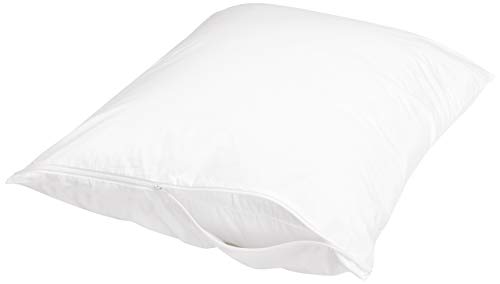
1. Amazon Basics Standard Pillow Protector with Zipper
A single white cover in 100% tight-weave cotton, listed at 27 by 21 inches, with a zipper closure that fully encloses the pillow. It is machine washable and can be tumble dried on low heat.
Suits: a plain cotton cover for one pillow. Strengths: simple cotton fabric and easy care. Weaknesses: sold as a single cover, and the listing does not state a waterproof layer. Skip it if you need a multi-pack or a waterproof cover.

Best for covering every pillow in the house
2. FAUNNA 600TC Cotton Pillow Protectors, 4 Pack
A four-pack of standard 20 by 26 inch white covers in 100% cotton at 600 thread count, with a silent invisible zipper. The maker cites OEKO-TEX certification and says the covers hold up through repeated washing.
Suits: covering every pillow in the house. Strengths: four covers and a high thread count. Weaknesses: the listing does not describe a waterproof layer. Skip it if you only need one or two covers.
View 600TC 100% Cotton Pillow Protectors, Standard Size (20×26), 4 Pack on Amazon
Best for a waterproof layer under the pillowcase
3. SureGuard Pillow Protectors, Set of 2
A set of two standard covers with a cotton surface, listed at 27 by 21 inches. The maker describes them as waterproof, with a hidden zipper, and backs them with a 10-year warranty for household use under its stated conditions.
Suits: a waterproof layer under the pillowcase. Strengths: a long maker warranty and a pair in the box. Weaknesses: waterproof covers can feel less airy than plain cotton. Skip it if you want a plain breathable cover.
View SureGuard Standard Size Zippered Cotton Pillow Protectors, Set of 2 on Amazon
Best for a performance-fabric cover for a queen pillow
4. Bedgear Dri-Tec Performance Pillow Protector
A queen-size white protector in the maker’s Dri-Tec moisture-wicking fabric, with a built-in Air-X ventilation patch. Care is machine wash cold on a gentle cycle and tumble dry low.
Suits: a performance-fabric cover for a queen pillow. Strengths: a ventilation patch and light, travel-friendly design. Weaknesses: the listing shows queen size only, and it is not a cotton cover. Skip it if you have a standard pillow or want natural fibers.
Best for an organic cotton cover
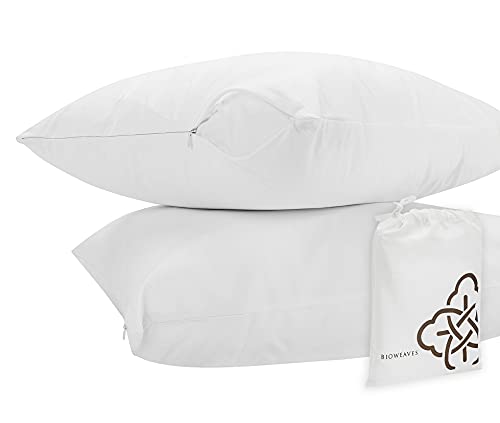
5. BIOWEAVES Organic Cotton Pillow Protectors, 2-Pack
A pair of standard 20 by 26 inch covers in 100% organic cotton with a concealed zipper. The maker cites GOTS certification, and states the covers resist fluid spills but are not waterproof.
Suits: an organic cotton cover. Strengths: certified organic cotton per the maker and a pair in the box. Weaknesses: not waterproof, as the maker states. Skip it if you want a waterproof layer.


Best for a waterproof cover with a smooth surface
6. SOLOSHINE Bamboo Quilted Pillow Protector, Pack of 2
A pair of standard covers with a quilted rayon from bamboo surface over polyester filling, a waterproof TPU backing and a hidden zipper. The maker notes minor shrinkage and wrinkling after washing are normal.
Suits: a waterproof cover with a smooth surface. Strengths: two covers and a quilted feel. Weaknesses: the maker warns of minor shrinkage, and it is a rayon surface rather than cotton. Skip it if you want an all-cotton cover.

View Waterproof Pillow Protector, Bamboo Quilted Zipper, Standard (Pack of 2) on Amazon
Care and Setup
- Check the pillow size and pick a matching cover.
- Zip the protector fully, then add a pillowcase over it.
- Follow each listing’s wash and dry instructions.
- Wash the protector more often than the pillow itself.
Mistakes to Avoid
- Buying a cover in the wrong size for your pillow.
- Assuming every protector is waterproof.
- Skipping the care label and using a hot dryer.
- Using only a protector and leaving out a pillowcase.
What a Pillow Protector Does and Does Not Do
A pillow protector is a thin, zippered cover that goes on the pillow before the pillowcase. Its job is to keep sweat, oils, drool, makeup and dust away from the pillow itself, and to give you a layer you can wash far more easily than a whole pillow. By doing so, it helps a pillow stay cleaner and fresher for longer, and many people find it a low-effort way to keep bedding hygienic.
It does not replace a pillowcase, and it does not stop the pillow from wearing out. Pillows still flatten, lose their fill and need replacing. A protector adds a very thin layer, so most people do not notice a change in feel, but a stiff waterproof one can sound slightly crinkly. Protectors also differ from pillowcases in that they zip fully around the pillow rather than leaving an open end.
If anyone in your home has allergies, a fully enclosed, tightly woven cover is a common step in a broader bedding routine, along with regular washing. Makers may describe covers as barriers to dust mites or allergens, but those are their claims, and a protector is not medical treatment. Talk to a doctor if you have a health concern. A protector is simply a washable layer that is easier to keep clean than a pillow.
Fabric, Weave and Feel
The fabric decides how the protector feels against your pillowcase and how it handles heat and moisture. Cotton is soft, breathable and familiar, and a tight weave helps keep fill and dust inside. Organic cotton is grown under different farming standards, and some listings cite certifications for it, which are the makers’ claims you can read on the label. Thread count is often quoted, but a higher number does not automatically mean a better or softer cover, because yarn quality and weave matter too.
Rayon made from bamboo feels smooth and often cool to the touch, and it is sometimes quilted over a layer of fill. Performance fabrics are engineered to wick moisture and dry quickly, which may suit people who run warm. Polyester blends are durable and resist wrinkling, though they can feel less breathable than cotton.
- Choose cotton for a natural, breathable feel.
- Choose a quilted cover for a softer, cushioned surface.
- Choose a moisture-wicking fabric if you sleep warm.
- Choose a smooth, quiet backing if you are sensitive to crinkly sounds.
Check how the cover feels when the pillow is on it and a pillowcase is over the top. A cover that feels fine on its own may feel different after layering. If you sleep hot, a thick or waterproof cover can trap warmth, so consider a breathable one.
Waterproof or Breathable: Choosing a Barrier Level
Protectors range from fully breathable fabric covers to ones with a waterproof backing. A waterproof backing, often a thin polyurethane layer, stops liquids from soaking into the pillow. This suits households with young children, people who drool or sweat heavily, or anyone who wants maximum protection. The trade-off is that waterproof layers can trap heat and may feel less natural, and some can make noise when you move.
Breathable covers resist spills to a degree but are not waterproof. They allow air to move and usually feel more like ordinary bedding. If your main aim is to keep a pillow clean from everyday wear, a breathable cover may be enough. Read the listing carefully, since terms such as water resistant, fluid resistant and waterproof mean different things, and the makers decide how to use them.
Ask what you want it to do. If you are protecting a good pillow from sweat and oils, a breathable cotton cover is often adequate. If you are guarding against spills, accidents or a hot climate with heavy perspiration, a waterproof barrier may suit better. Wash waterproof covers according to the label, as high heat can damage the barrier layer. If you notice cracks, peeling or stiffness in the backing, it is wearing out.
Size, Closure and Fit
Fit is where many protectors go wrong. Pillow sizes are not perfectly standardized, and a cover that is too small strains the zipper and squashes the pillow, while one that is too large wrinkles and bunches under the pillowcase. Check the pillow’s measurements and compare them with the listing. Standard, queen, king and body pillow covers are different sizes, and a queen cover is not the same as a standard one.
Closures matter for comfort. A full zipper that encloses the pillow gives the most complete cover. A hidden or invisible zipper is less likely to be felt through the pillowcase and does not catch on fabric. An envelope-style closure may be easier to put on, but it can leave a gap. Look for a zipper garage or flap that keeps the pull from scratching your face.
- Measure your pillow lying flat and compare with the listed size.
- Check the pack count: single, set of two or a multipack.
- Consider the pillow loft, since a very high pillow can strain a snug cover.
- Zip slowly and avoid trapping fabric in the teeth.
Pillow shape also matters. Some pillows are contoured or have a flange, and a flat cover may not sit properly on them. If you use a specialty pillow, look for a cover made for its shape.
Washing Routine, Drying and When to Replace
A protector is only useful if you wash it. Many people wash protectors every few weeks, and pillowcases more often, though the right schedule depends on how much you sweat and whether you have allergies. Follow the care label, which usually calls for a machine wash on a regular or gentle cycle and a low-heat tumble dry. Hot washing and high-heat drying can shrink cotton and damage waterproof layers, so use the temperatures the maker states. Some makers note that minor shrinkage or wrinkling is normal.
Zip the protector before washing to protect the zipper and prevent snagging. Wash it alone or with similar fabrics, and avoid fabric softener where the maker advises against it, since softeners can coat fibers and reduce breathability. Dry thoroughly before putting the pillow back, as damp covers can cause odors or mildew.
The pillow underneath also needs care. Check its label, and wash or replace it according to the maker. Pillows that are flat, lumpy, stained or smelly despite a cover are due for replacement. Replace the protector itself when the zipper fails, seams open, fabric thins or pills heavily, the waterproof layer cracks, stains and odors will not wash out, or the cover no longer fits. Budget-wise, basic covers are inexpensive and sufficient for light protection, mid-range ones add finer fabric and concealed zippers, and higher-priced options may use organic or performance materials. Buying a multipack lets you rotate a spare while one is in the wash.
Pillow Protector, Pillowcase and Cover: Sorting Out the Terms
A pillow protector is a thin zippered cover that goes on the pillow underneath the decorative pillowcase. Its job is to shield the pillow from sweat, oils, dust and spills, which helps keep the pillow cleaner between washes. A pillowcase is the outer layer you see, and it is changed and washed more often. A protector adds an extra layer of defense, and because it zips closed, it keeps the pillow sealed within. Some products add claims about allergens or dust mites, and you should read these carefully and treat them as the maker’s description.
If you are shopping for a protector, you are usually choosing between fabric type, closure style and size. A good match gives you a clean pillow without changing how it feels at night.
Fabric Choices Compared
| Fabric | Feel and behavior |
|---|---|
| Cotton | Soft, breathable, familiar |
| Organic cotton | Similar feel, look for the maker’s certification details |
| Polyester blend | Smooth, resists wrinkles, can be less breathable |
| Tightly woven microfiber | Smooth finish, light weight |
Think about noise, too. Some waterproof or plastic-backed protectors can crinkle, so check the listing for words about a quiet or soft feel.
Getting the Right Size for Your Pillows
Pillow sizes vary by region, so look at the dimensions rather than the name alone. Standard, queen and king are common labels, but check the numbers against your actual pillow. A protector that is too small will be hard to zip and may squash the pillow, while one that is too large can bunch up. Measure your pillow and compare it with the listed size, allowing for the loft of the filling. If you have body pillows or specialty shapes, look for a protector made for that size.
- Measure the pillow length and width.
- Check the maker’s size chart.
- Consider how thick or lofty your pillow is.
Washing and Replacing Protectors
Many people wash protectors every month or two, although the right schedule depends on how you use the bed. Follow the care label for temperature and drying, since heat can shrink fabrics or affect backing layers. Zip the protector before washing to keep the zipper from snagging, and dry it fully. Replace a protector when seams loosen, the zipper fails or the fabric thins. Having two on hand makes it easy to rotate one while the other is in the wash.
Zipper and Seam Details Worth Checking
A smooth, covered zipper keeps the closure from scratching skin or catching on the pillowcase. A concealed zip flap or a fabric tab helps. Look for finished seams and strong stitching, and read the listing for how the protector closes. An envelope closure with no zipper is another style that some people prefer.
When a Protector Is Not Enough
A protector helps, but pillows still wear out. Follow the maker’s care instructions for the pillow itself, and replace it when it loses shape or support. If you have concerns about allergies or sleep, ask a medical professional rather than relying on bedding alone.
Protector Questions to Settle Early
Ask how many protectors come in a pack, what size your pillows are and whether the fabric feels quiet. Check the care steps to be sure you can wash it with your usual routine. Look at the zipper design, and see whether the maker offers a replacement or a way to contact support. If you share a bed, decide whether you want matching protectors on both sides, and plan for a spare so one can be washed while the other is in use.
How a Protector Changes the Feel of a Pillow
A protector is the layer your head actually meets, through the pillowcase, so its effect on feel is larger than its thinness suggests. A smooth, tightly woven cotton protector preserves the character of the pillow beneath it: a soft down pillow still feels soft, a firmer foam pillow still feels supportive. A quilted protector adds a thin cushioning layer that can soften a pillow that feels slightly too firm and can smooth out the lumps of an older pillow for a while, though it cannot rescue a pillow that has truly collapsed. A protector with a waterproof membrane changes the sound and the air flow of the pillow as much as the feel; the pillow may sigh less when you lay your head down, because air escapes more slowly, and some sleepers notice a faint rustle that fades from awareness within a few nights.
Temperature is the other half of feel. Any barrier layer reduces how freely air and moisture move away from your head, so a waterproof protector can make a warm sleeper warmer, especially on a foam pillow that already sleeps warm. The remedies are layering and fabric choice rather than abandoning protection: a breathable cotton pillowcase over the protector, a protector whose barrier is only where it is needed, or reserving the fully waterproof style for the pillows that face real risk, such as a child’s bed or a guest bed, while everyday adult pillows use a lighter woven protector that blocks dust and stains without sealing the pillow completely.
Fit shapes feel too. A protector that is too small compresses the pillow and makes it feel firmer and higher; one that is too large wrinkles under the case, and the wrinkles print through to your cheek and bunch under your ear. Measure the pillow itself, including its loft when it is plumped, rather than trusting the label it came with, because pillows change shape with age and a protector bought for the pillow as it is now will always feel better than one bought for the pillow as it was described when new.
Protecting Different Kinds of Pillows
Down and feather pillows benefit most visibly from a good protector, because their natural fillings absorb moisture and odours and are the hardest to wash. A tightly woven protector also keeps fine quills from working their way through the pillow’s own cover, which is the poking annoyance that wakes sleepers and damages pillowcases. For these pillows, a protector is close to essential equipment, and a zippered style that encloses the pillow fully does the most good, keeping the fill cleaner for far longer and reducing how often the pillow itself needs a risky wash.
Memory foam and latex pillows cannot be washed in the ordinary way at all, which makes their protectors the only washable defence they have. Sweat, skin oils and spills that reach foam stay in foam, so a waterproof or at least water-resistant protector earns its place here more than anywhere, provided its heat effect is managed with a breathable case. Shaped and contoured pillows need protectors that match their shape or are generous enough to follow it without pulling tight across the curves, because a tight protector on a contoured pillow flattens the very shaping the pillow was bought for.
Synthetic-filled pillows are the most forgiving: they wash well and dry reasonably fast, so their protectors can be lighter, chosen mainly to keep the pillow’s surface clean between washes and to add a smooth layer under the case. Guest pillows, which spend most of their life in a cupboard and then serve a different sleeper every visit, deserve protectors for a different reason: hygiene between guests and protection from cupboard dust while they wait. A freshly laundered protector and case let a host make a guest bed feel genuinely fresh without washing the whole pillow every time.
Allergy Management: What a Protector Can Honestly Do
A pillow is one of the closest, longest exposures in a sleeper’s life, which is why protectors are so often bought for allergy reasons. Dust mites live where warmth, moisture and shed skin collect, and a pillow offers all three. A protector with a weave tight enough, or a membrane, to form a barrier between the sleeper and the pillow’s interior reduces the sleeper’s contact with the allergens that accumulate inside an older pillow, and a zippered protector that fully encloses the pillow does this far more completely than a slip-on cover that leaves the back open. Washed regularly in hot water according to the maker’s guidance, the protector also removes the surface allergens that collect week by week.
Honesty matters here. A protector manages exposure; it does not sterilise a bedroom, and it works best as part of a simple system: washable bedding washed regularly, a pillow replaced when it is old and heavily colonised, and a bedroom kept as dust-light as ordinary life allows. Someone with a diagnosed allergy should treat a protector as one useful layer in the plan their clinician describes, not as a medical device, and should be wary of any bedding claim that promises more than barrier and washability. Within those limits, the improvement many people notice is real, and it comes from the unglamorous combination of enclosure plus regular hot washing.
Practical details decide whether the allergy benefit survives contact with real life. A protector that is difficult to remove will not be washed often enough, so zips should run smoothly and the protector should be easy to refit on a sleepy Sunday evening. Owning two protectors per pillow, so one can be in the wash while the other is on the bed, is the single change that most improves an allergy routine, because the bed is never left unprotected while laundry waits. Label protectors by room if several similar pillows are in play, so the carefully washed set returns to the right bed.
Setting Up a Washing and Rotation Routine That Sticks
Protectors fail households not by wearing out but by drifting out of routine: washed irregularly, left in the laundry basket, and quietly replaced by nothing. A routine that sticks is tied to an existing habit rather than to willpower. Many households wash protectors with the sheet change on a fixed day, which works because the protector comes off the pillow at the same moment the case does. Others keep protectors on a slower cycle, every few weeks, with pillowcases changed weekly between; either rhythm succeeds if it is consistent, because consistency is what keeps allergens, oils and odours from building to the point where a wash feels like a rescue mission.
Drying deserves as much attention as washing. A protector must be fully dry before it goes back on the pillow, especially a waterproof style, because a sealed layer over a damp pillow traps moisture exactly where you least want it. Line drying gives you a clear view of the protector’s condition as you hang it: thinning fabric, tired zips and seams under strain are all visible in daylight. Tumble drying, where the maker allows it, should follow the stated heat guidance, since the same heat caution that applies to waterproof blankets applies to membranes in protectors.
Rotation between two sets spreads wear evenly and means a protector is never rushed back onto the bed half-dry. It also creates a natural inspection rhythm: the spare set in the drawer is the one you examine when deciding whether the working set is nearing replacement. When a protector’s zip fails, its fabric thins or its barrier no longer passes a simple splash test over the sink, replace it without nostalgia; protectors are consumables with a long life, not heirlooms, and a failed protector gives a false sense of security that is worse than a bare pillow honestly managed.
Protectors for Children, Guests and Shared Homes
Children’s pillows face the hardest life: night accidents, nosebleeds, sickness, spilled drinks and the occasional felt-tip experiment. A waterproof zippered protector on a child’s pillow is one of the highest-value pieces of bedding a parent can own, because it turns each of those events into a case-and-protector wash instead of a pillow replacement. Keep a spare protector for a child’s bed without fail; the night you need it is the night the first one is already in the wash. Choose a style that does not rustle loudly, because a child who associates the pillow with a strange noise may reject the whole bed setup at the age when sleep cooperation is most precious.
In shared homes and house shares, protectors solve a social problem quietly. Each person’s pillow, enclosed in its own protector and case, stays personal even when bedding is washed communally and beds are similar. When someone moves out or a new housemate arrives, a fresh protector is a clean start that does not require buying a new pillow. Landlords furnishing a rental find the same logic applies at scale: protectors on every pillow, washed between tenancies, extend pillow life and give incoming tenants bedding that is demonstrably cared for.
Travel is the last frontier. A protector is light and flat in a suitcase, and sleepers who are sensitive to unfamiliar pillows often travel better with their own protector and case over a hotel or holiday-let pillow, adding a familiar, freshly laundered surface and a barrier against whatever the pillow has absorbed. It is not a guarantee of anything, but as a comfort and hygiene habit it costs almost nothing in luggage space. Back home, the travelling protector goes straight into the wash before it returns to a drawer, like every good travel textile.
More Questions, Answered in Depth
Should I wash a new protector before using it?
Yes, for the same reasons you wash any new bedding: to remove factory finishes and loose fibres, to soften the fabric, and to check the fit after its first wash rather than discovering shrinkage on the pillow at bedtime. A first wash also lets you test the zip and seams while returning the protector is still easy if something is wrong. Use the maker’s recommended settings from the start, because the first hot wash or hot dry is where an incompatible routine does its damage, and a protector that survives its first correct wash will usually settle into years of uneventful service.
Can a protector fix a pillow that already smells or is stained?
It can contain the problem, and that is sometimes worthwhile, but it cannot undo it. A clean protector over a stained pillow stops further damage and keeps the stain away from your pillowcase, yet odours from deep in a filling tend to work through over time, especially in warm weather. If a pillow smells even after its own wash and a full day of airing, the honest answer is that the pillow is near the end of its life and the protector money is better spent protecting its replacement. Use the splash test and the smell test together when deciding: protect what is sound, replace what is not.
Do I need different protectors for summer and winter?
Most households do not, but warm sleepers sometimes keep two styles rather than two seasons: a lighter woven protector for the warm months and a waterproof or quilted one for winter, when extra warmth is welcome and windows stay closed. The swap takes minutes at the sheet change and gives the off-duty set a rest that extends its life. If you try only one change for summer, make it the pillowcase first, in a breathable natural fabric, because the case is the layer against your skin and often decides whether the bed feels cool, whatever protector sits beneath it.
How do I stop a zippered protector from bunching or twisting on the pillow?
Bunching usually means the protector is a size too large or has been put on over an unplumped, flattened pillow. Shake and plump the pillow first, ease the protector on evenly rather than pulling it from one corner, and smooth the excess fabric toward the zip end before closing it. A small amount of trapped air makes a protector balloon and shift, so press the air out gently as you zip. If twisting persists, the protector and pillow shapes may simply be mismatched, particularly with contoured pillows, and a protector designed for that shape will behave better than any amount of nightly adjustment.
Matching Protectors Across a Whole Household
Buying protectors one pillow at a time leads to a drawer of mismatched sizes and styles, so it is worth planning the household as a whole. List the pillows by bed and by size, note which ones face real risk and which mainly need a dust and stain barrier, and buy in coordinated batches so spares interchange between rooms. Standardising on one or two styles simplifies washing enormously: protectors that share care requirements can be washed together, zips and fabrics behave predictably, and nobody has to read a care label at midnight. Keep one spare protector per bed as the minimum float, and two for children’s beds and the guest bed that gets made up in a hurry.
Colour and appearance under the case matter less than people fear, but one detail does matter: a protector thick enough to change the pillow’s outline should be tested under your actual pillowcases, because a tight case over a quilted protector can feel firmer than either layer alone. If your household uses decorative shams or multiple pillows for show, protect those too; a display pillow absorbs dust and handling exactly like a sleeping one, and its protector can be the lightest style you own since it faces no spills. The goal is a simple rule with no exceptions: every pillow in the house sleeps inside a protector, and every protector has a labelled home.
When a pillow is replaced, replace or at least rewash its protector at the same moment, and check the size match before the first night rather than forcing the old protector onto a deeper new pillow. A protector stretched tight over a pillow that has grown in loft will strain its zip and seams, the two places protectors fail first. Buying the new pillow and its protector together, as a pair, is the habit that keeps the whole system painless for years.
Small Problems and Their Simple Fixes
Most protector complaints have small causes. A zip that sticks usually has fabric caught in its teeth or a build-up of lint; work it gently back and forth, clear the track with a soft brush, and never force it, because a broken zip ends a protector’s enclosed life even when the fabric is perfect. A protector that rustles more than expected often settles after the first few washes as finishes wash out; if it does not, moving it to a guest or child’s bed and choosing a softer style for your own pillow is a better answer than abandoning protection. A protector that slips and twists inside the case is usually oversized for a pillow that has flattened with age, which is information about the pillow as much as the protector.
Stains that appear on the protector are the system working, not failing: that mark would otherwise be on the pillow. Treat the stain promptly, soak rather than scrub a barrier fabric, and check that the stain has not struck through to the pillow before the protector goes back on. A protector that yellows evenly over the years is showing honest age from body oils and washing; when yellowing comes with thinning fabric or a tired smell that survives washing, it is announcing its replacement date. Keep a note, even a mental one, of when each bed’s protectors were bought, and the decision to replace becomes a calm judgement instead of a surprise discovered while making the bed for guests.
Finally, if a protector makes a pillow too hot, too firm or too noisy for a particular sleeper, change the style for that one pillow rather than arguing with the sleeper. The range in this guide exists precisely because pillows and people differ: a light woven protector that keeps dust and stains off a pillow is a perfectly good outcome for a hot sleeper, while the waterproof zippered style guards the beds where spills are a genuine risk. Matching the level of protection to the level of risk, bed by bed, is the whole craft.
What to Do on the First Night and the First Wash
A new protector deserves a calm start. Wash it once before the first night, both to remove factory finishes and to confirm that it fits your machine and dries in a reasonable time in your home. Fit it on a clean, fully dry pillow, smoothing the fabric as you close the zip and pressing out trapped air so the pillow keeps its natural shape. Then make the bed exactly as you normally do, with your usual case over the top, and resist judging the combination on the first night alone: any change to a pillow’s surface feels noticeable for a night or two, and most sleepers stop registering a protector entirely within the week.
At the first scheduled wash, inspect the protector as you handle it. Look at the zip’s full length, the seams at the corners where strain concentrates, and any area where the fabric has thinned or the barrier has been creased hard in the same place. This early inspection sets your baseline: a protector that looks unchanged after several washes is settling in for a long life, while early fraying or a stiff, damaged patch is worth raising with the seller while the purchase is recent. Note the date of first use somewhere simple, on the laundry-room calendar or in a phone note, and future replacement decisions become easy arithmetic rather than guesswork.
Finally, tell the household the plan in one sentence: protectors come off with the sheets, spares live in a named drawer, and a wet pillow event means protector and case in the wash and the spare set on the bed. Systems that are spoken aloud survive busy weeks; systems that live in one person’s head quietly collapse the first time that person is away. A pillow protector is a small product, but the calm it brings to beds, guests and laundry is entirely real, and it begins with this first, deliberate week.
If you are choosing between two protectors in this list and the practical details feel equal, let the sleeper decide. The person whose head rests on the pillow every night is the right judge of whether a surface feels smooth enough, quiet enough and cool enough, and their preference will still be governing the bed long after the specifications are forgotten. Buy the protector that sleeper is happy to keep on the pillow, in the size that truly fits, with a spare for wash day, and the pillow underneath will repay the small investment by staying fresh, clean and comfortable for far longer than an unprotected pillow ever manages.
That spare, finally, is not an extravagance but the piece that makes the whole routine survivable on the busiest weeks: beds stay protected while laundry waits its turn, guests can be welcomed without a bedding audit, and a protector reaching the end of its life can be retired the day its replacement arrives rather than a week later. Small, planned redundancy is what turns a good purchase into a settled household system.
Pillow Protector FAQ
Is a protector the same as a pillowcase?
No. A protector zips around the pillow and sits under the pillowcase.
Are all of these waterproof?
No. The makers describe SureGuard and SOLOSHINE as waterproof; BIOWEAVES says it is not.
Do I need a pillow protector if I use a pillowcase?
A pillowcase is easy to wash but does not fully enclose the pillow. A protector adds a washable inner layer that keeps sweat, oils and dust from reaching the pillow.
How often should I wash a pillow protector?
Many people wash them every few weeks, but it depends on how much you sweat, whether you have allergies and what the care label says. Wash pillowcases more often.
Can a pillow protector make me sleep hotter?
A waterproof or thick cover can trap heat, while a breathable cotton or moisture-wicking cover usually feels cooler. Choose breathability if you sleep warm.
Will a protector help with allergies?
Makers may describe tightly woven covers as barriers, but this is their claim and a protector is not medical treatment. Regular washing helps, and a doctor can advise on health concerns.
What size protector do I need?
Match the cover to your pillow size, whether standard, queen, king or body. Measure the pillow flat and compare it with the listing.
Can I put a waterproof protector in the dryer?
Check the label. Many call for low heat, since high heat can damage the waterproof layer.
How do I know when to replace a pillow protector?
Replace it if the zipper fails, seams open, the fabric is thin or pilled, the waterproof layer cracks, or stains and odors remain after washing.
The Short Version
For a plain cotton cover, the Amazon Basics. For a four-pack, the FAUNNA. For a waterproof pair, the SureGuard. For a queen performance fabric, the Bedgear. For organic cotton, the BIOWEAVES. For a quilted waterproof pair, the SOLOSHINE.