Disclosure: topratedkitchenware.com is reader-supported. When you buy through links on our site, we may earn an affiliate commission from Amazon and other retailers, at no extra cost to you.
Where to buy
If you are searching for the best porcilan cast iron dutch ovens, you are almost certainly looking for porcelain-enameled cast iron: a heavy cast iron core sealed under a smooth, glass-like enamel coating. Every pick in this guide is an enameled cast iron Dutch oven confirmed from its product listing, in sizes from five quarts to seven quarts. Start with the short list below, then read the full guide for the honest differences in size, colour, included extras, and day-to-day handling before you choose.
- Le Creuset Enameled Cast Iron Round Dutch Oven, 5.5 qt., Cerise — Check on Amazon
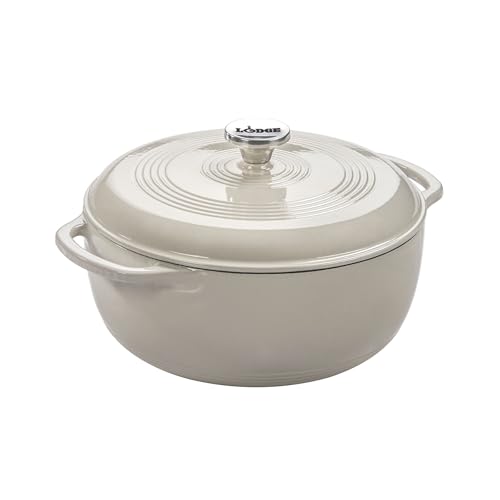
- Lodge Essential Enamel Cast Iron Dutch Oven, 6 Quart, Oyster White
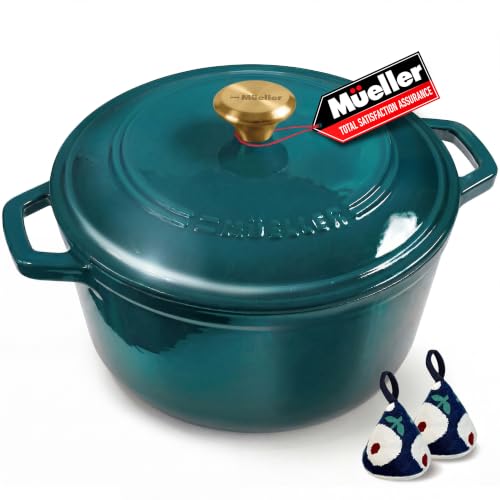
- Umite Chef 7QT Enameled Cast Iron Dutch Oven, Emerald
- Umite Chef 5QT Enameled Cast Iron Dutch Oven, Cream White
- Umite Chef 5QT Enameled Cast Iron Dutch Oven, Red
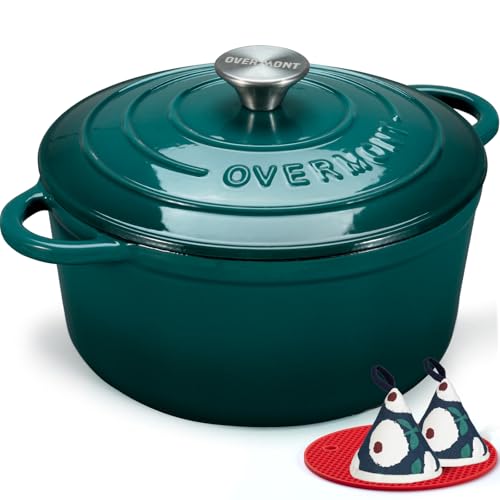
- Overmont Enameled Cast Iron Dutch Oven, 5.5QT, White
Read the full guide ↓
Introduction: what the search term really means
Shoppers typing best porcilan cast iron dutch ovens usually have the right product in mind and a slightly misspelled word for it. The material is porcelain enamel, a powdered glass coating fused onto cast iron at high heat until it becomes a hard, smooth, non-reactive surface. Listings rarely use the full phrase on every model, which is why most of the pots in this guide are simply titled enameled cast iron. That is the same family of cookware: cast iron underneath for steady, even heat, and an enamel skin on top so you can braise acidic tomato sauces, deglaze with wine, and wash the pot without maintaining a seasoned surface the way bare cast iron demands.
That combination explains why this category endures. A porcelain-enameled Dutch oven can start a stew on the stovetop, move into a hot oven for hours, come to the table as a serving vessel, and then hold leftovers without reacting to them. It is not light, it is not fast to heat in the way a thin pan is fast, and it is not the cheapest way to boil pasta. Its strength is control. Once the iron is hot, it stays hot through the moment cold meat hits the surface, through opening the lid to stir, and through the long, low simmer that turns tough cuts tender.
This guide sorts six verified enameled cast iron options by the decisions that actually matter: capacity, colour and finish, what is included in the box beyond the pot itself, and how each design suits bread baking, braising, stews, roasting, and marinating. Two of the picks are colour variants of the same five-quart design, and this guide says so openly rather than pretending they cook differently. If you already own a favourite colour in your kitchen, that honesty will save you time. If you are buying your first Dutch oven, the buying guide and how-to sections after the reviews will walk you through sizing maths, enamel care, and the mistakes that chip coatings and crack lids, so the pot you buy is still the pot you reach for years later.
Key Takeaways
- Porcelain enamel and enameled cast iron describe the same construction in this guide: a cast iron core with a fused enamel coating, confirmed from each listing title rather than assumed.
- The Le Creuset 5.5-quart round oven in Cerise is the safest all-round first choice for most households, balancing capacity, classic round shape, and a size that fits standard ovens and stovetops comfortably.
- Capacity is the first filter. Five quarts suits smaller households and loaf baking, five and a half to six quarts is the versatile middle, and the seven-quart Umite Chef is the pick for large batches and bigger gatherings.
- The two Umite Chef five-quart picks differ by colour, Cream White and Red, not by stated capacity or included potholders, so choose between them on looks and kitchen fit alone.
- Included extras differ in ways listings make clear: cotton potholders with the Umite Chef and Overmont picks, a cookbook with the Overmont, and a moisture-sealing lid with dual handles called out on the Lodge.
- Enamel removes seasoning chores but adds its own rules: avoid thermal shock, lift rather than drag, use wood or silicone tools, and let the pot cool before washing.
In this guide
Quick Picks
| Pick | Badge | Capacity from listing | Best use | Check |
|---|---|---|---|---|
| Le Creuset Enameled Cast Iron Round Dutch Oven, Cerise | Best Overall | 5.5 qt. | Everyday braising, stews, and table service | Check on Amazon |
| Lodge Essential Enamel Cast Iron Dutch Oven, Oyster White | Best for Large Family Meals | 6 Quart | Bread baking, braising, marinating, and slow cooking | Check on Amazon |
| Umite Chef 7QT Enameled Cast Iron Dutch Oven, Emerald | Best Large Capacity | 7QT | Big-batch stews, braising, and entertaining | Check on Amazon |
| Umite Chef 5QT Enameled Cast Iron Dutch Oven, Cream White | Best for Smaller Households | 5QT | Bread baking, braising, stews, and roasting | Check on Amazon |
| Umite Chef 5QT Enameled Cast Iron Dutch Oven, Red | Best Colour Statement | 5QT | The same five-quart jobs in a bold red finish | Check on Amazon |
| Overmont Enameled Cast Iron Dutch Oven, White | Best for Beginners | 5.5QT | Braising, stews, roasting, and sourdough baking with a cookbook included | Check on Amazon |
The table is a starting point, not a verdict. A seven-quart pot that rarely gets filled wastes stovetop space and adds lifting weight every time you move it, while a five-quart pot that overflows every Sunday stew will frustrate you just as reliably. Read the detailed reviews with your most common meal in mind: how many people eat, whether you bake round loaves, whether you marinate in the pot itself, and whether the pot will live on the stovetop or in a cupboard between uses.
How These Picks Were Chosen
This is a research-led guide, not a claim of hands-on laboratory testing. Each pick was checked against its Amazon listing through the Creators API data available to this site, and only products whose listing titles confirm the core attributes of the search were kept as linked picks. For this keyword, the core attributes are strict: the pot must be cast iron, it must be enameled, and it must be a Dutch oven with a lid. A stainless steel casserole, a bare cast iron camp oven, or an aluminium pot with an enamel-look finish would not qualify, no matter how popular it might be, because none of those match what a porcelain-enameled cast iron searcher is asking for.
Within that filter, the six picks were compared on the facts their listings actually state: capacity in quarts, colour, the shape where the title gives it, and the extras and uses the title names. Where a listing states cotton potholders, a cookbook, a moisture-sealing lid, or dual handles, this guide reports it. Where a listing is silent about a detail, this guide stays silent too, rather than filling the gap with a plausible-sounding specification borrowed from a different model. That restraint matters in this category, because Dutch ovens from the same brand often come in several sizes and finishes whose details are easy to confuse.
Two judgement calls deserve a plain explanation. First, the Umite Chef five-quart design appears twice, in Cream White and in Red. Both listings were verified separately, both carry their own product page, and colour is a real buying decision for a pot that often lives in view, so both stay in the guide with the duplication stated openly. Second, readers comparing headline names against value alternatives often start with guides such as Best Dutch Ovens More Affordable Than Le Creuset, which is a sensible companion read once you know which size you need, because price comparisons mean little until capacity and shape are settled.
Finally, community discussion was treated as context, not evidence. Threads collected under topics like Best Dutch Ovens Reddit are useful for surfacing recurring ownership themes, such as enamel staining, lid fit, and how heavy a full pot feels, and those themes shaped the questions this guide answers. They did not invent specifications, and no claim in the reviews below rests on an anonymous comment.
The 6 best porcilan cast iron dutch ovens in detail
Each review below follows the same order so you can compare like with like: what the listing confirms, where the pot is strong, where it asks something of you, and who should buy it or skip it. Capacities and colours come straight from the listing titles. Cooking impressions are framed around the uses those titles name, such as bread baking, braising, stews, roasting, marinating, and slow cooking, because those are the jobs the makers themselves put forward.

Le Creuset Enameled Cast Iron Round Dutch Oven, 5.5 qt., Cerise
Badge: Best Overall
Strengths
- The five-and-a-half-quart round format is the most versatile size in this guide, large enough for a family stew or a round loaf, without dominating a standard stovetop.
- Cerise, the deep graduated red, is the classic table-ready finish, and an enameled pot earns its place at the table because it moves from oven to serving without a transfer dish.
- The round shape suits stovetop burners evenly, with no corners sitting off the heat the way a wide oval can on a small hob.
Trade-offs
- It sits in the premium tier of this category, so the value case rests on long service and everyday use rather than on a low entry cost; check the latest price on Amazon before deciding.
- At this capacity, very large gatherings will still need a second vessel or a bigger pot such as the seven-quart pick below.
- Like every enameled pot here, it is heavy when full and needs two hands, dry grip, and a clear landing space planned before you lift it.
Mini spec box
- Construction: Enameled cast iron
- Capacity: 5.5 qt.
- Shape: Round
- Colour: Cerise
- Lid: Included as a Dutch oven
For most buyers, this is the reference pot against which the rest of the list is judged, and that status is practical rather than sentimental. Five and a half quarts covers the centre of home cooking: a chicken with vegetables, a bean stew for several meals, a pot of braised short ribs, or a crusty round loaf with room for the dough to expand without touching the lid. The enamel surface handles tomato-based sauces and wine reductions without the seasoning worries of bare iron, and it releases fond for gravy with a wooden spoon and a splash of stock. If your cooking is varied and your household is mid-sized, this is the size you will use most often, which is the real test of a best overall pick. Readers who love the format but want to weigh the cost carefully often compare it against the options gathered under Best Dutch Ovens Not Le Crueset before committing, and that comparison is fair, as long as it compares the same capacity.
Best for: Most home cooks wanting one versatile enameled Dutch oven for braising, stews, and bread / Not suited for: Cooks who regularly feed a crowd from a single pot and need seven quarts or more

Lodge Essential Enamel Cast Iron Dutch Oven, 6 Quart, Oyster White
Badge: Best for Large Family Meals
Strengths
- Six quarts gives a useful step up from the five-and-a-half-quart middle, with extra headroom for bone-in cuts and generous batches.
- The listing specifically names a moisture-sealing lid, which matters for braises and slow cooking where escaping steam dries the result.
- Dual handles are stated in the listing, a genuine handling advantage on a heavy, full pot moving between stovetop, oven, and table.
Trade-offs
- Oyster White is a pale finish, and pale enamel shows turmeric, paprika, and tomato staining more readily than deep red or emerald, even though staining is cosmetic.
- The extra capacity adds weight and cupboard footprint compared with the five-quart picks, so storage deserves a thought before buying.
- The listing frames it as an essential, everyday design, so buyers chasing included extras such as potholders or a cookbook will find those on other picks instead.
Mini spec box
- Construction: Enamel cast iron
- Capacity: 6 Quart
- Colour: Oyster White
- Lid feature from listing: Moisture-sealing lid
- Handles from listing: Dual handles
- Named uses: Bread baking, braising, marinating, and slow cooking
The Lodge earns its place by being explicit about the details family cooks feel every week. A lid that seals moisture well keeps a slow-cooked shoulder supple over hours, and it helps bread dough create its own steamy environment for a better crust. Six quarts is also a sweet spot for marinating, one of the uses the listing names, because there is room to turn pieces in liquid without sloshing over the rim, and the enamel surface does not react with acidic marinades. For a household that cooks in batches, freezes portions, and wants one pot that can handle Sunday sauce and weekday soup alike, this is a calm, capable choice in the middle-to-upper tier of the category. Check the latest price on Amazon, and measure your oven and cupboard shelf against a six-quart footprint before you order.
Best for: Families who batch-cook, marinate in the pot, and slow-cook often / Not suited for: Small kitchens where a six-quart pot would crowd the stovetop or the cupboard

Umite Chef 7QT Enameled Cast Iron Dutch Oven with Lid and Cotton Potholders, Emerald
Badge: Best Large Capacity
Strengths
- Seven quarts is the largest capacity in this guide, built for big stews, double batches, and entertaining without splitting food across two pots.
- Cotton potholders are included according to the listing, a small but real convenience on a pot this size, where grip security matters most.
- The Emerald finish is deep and forgiving of the cosmetic marks that heavy use leaves on lighter enamel, while still presenting well at the table.
Trade-offs
- Filled with stew, a seven-quart cast iron pot is a serious lift. Anyone with wrist, shoulder, or grip limitations should think honestly about the full weight, not the empty weight.
- It is more pot than a household of one or two needs for daily cooking, and oversized pots can cook small quantities unevenly across a wide base.
- Storage is a commitment: measure the cupboard or shelf first, including lid clearance.
Mini spec box
- Construction: Enameled cast iron
- Capacity: 7QT
- Colour: Emerald
- Included from listing: Lid and cotton potholders
- Named uses: Bread baking, braising, stews, marinating, and cooking
Choose this pot for the meals that break smaller cookware: a double batch of chilli for a gathering, a large braise with vegetables packed around the meat, or a holiday stew that needs to simmer without crowding. Crowding is the quiet enemy of browning, and the seven-quart interior lets you sear in a single layer more often, building better flavour before the liquid goes in. The listing also names marinating, and the capacity helps there too, although most cooks will still marinate in a bag or a shallower dish for closer contact and use this pot for the cooking itself. Positioned in the category as a heavy-duty, large-format option, it makes the most sense for confident cooks who entertain, meal-prep in volume, or simply hate cooking the same stew twice in two pots. Check the latest price on Amazon and confirm your oven can take its width with the lid on.
Best for: Entertainers, large families, and batch cooks who need maximum capacity / Not suited for: Solo cooks, small ovens, or anyone who struggles to lift a heavy full pot

Enameled Cast Iron Dutch Oven, Umite Chef 5QT Pot with Lid and Cotton Potholders, Cream White
Badge: Best for Smaller Households
Strengths
- Five quarts is a nimble everyday size for one to four people, easier to lift, wash, and store than the larger picks.
- The listing names bread baking first among its uses, and a five-quart round-format class of pot is a popular home for boules and everyday loaves.
- Cotton potholders are included, and the Cream White finish suits bright, neutral kitchens where the pot may sit out in view.
Trade-offs
- Cream and white enamel shows cooking stains and scorch marks more visibly than dark colours, so expect a lived-in look over time.
- Large roasts, whole big chickens with vegetables, and double batches will outgrow it quickly.
- It shares its core design with the Red variant below, so there is no cooking reason to buy both.
Mini spec box
- Construction: Enameled cast iron
- Capacity: 5QT
- Colour: Cream White
- Included from listing: Lid and cotton potholders
- Named uses: Bread baking, braising, stews, and roasting
For smaller households, restraint is a feature. A five-quart pot heats its contents in proportion, encourages right-sized cooking, and does not punish you at the sink. It is large enough for a stew that feeds a small family with leftovers, a braise for guests when paired with side dishes, and a loaf of bread with a crisp crust helped by the lidded, steamy interior. Roasting, also named in the listing, works well at this scale for a modest chicken or a tray-style braise of vegetables and sausages. If your kitchen style is calm and neutral and your cooking is mostly for a few people, this is the pick that fits your life without asking you to reorganise a cupboard around it. Check the latest price on Amazon, and if colour is your only hesitation, compare it directly with the Red version next.
Best for: Couples and small families, bread bakers, and cooks who value easier handling / Not suited for: Batch cooks and anyone regularly cooking for a crowd

Enameled Cast Iron Dutch Oven, Umite Chef 5QT Pot with Lid and Cotton Potholders, Red
Badge: Best Colour Statement
Strengths
- All the practical strengths of the five-quart Umite Chef design above, in a bold Red finish that hides everyday cooking marks better than pale enamel.
- Red is a classic Dutch oven colour that reads well from stovetop to table and pairs naturally with the Cerise-toned end of this category.
- Cotton potholders are included, as with the Cream White listing.
Trade-offs
- Colour is the only stated difference from the Cream White pick, so this is a style decision, not a performance upgrade.
- A strong colour is a long commitment for a durable pot; be sure it suits the kitchen it will live in for years.
- The same five-quart ceiling applies: big batches and large roasts belong in the six- or seven-quart picks.
Mini spec box
- Construction: Enameled cast iron
- Capacity: 5QT
- Colour: Red
- Included from listing: Lid and cotton potholders
- Named uses: Bread baking, braising, stews, and roasting
It would be dishonest to invent a cooking difference between this pot and the Cream White one, and this guide will not do it. Buy the Red if red is what you want to see on your stove every day, if your kitchen already leans on warm accents, or if you prefer a finish that keeps its good looks through tomato sauces and spice-heavy cooking with less visible staining. Functionally, expect the same five-quart versatility: bread, braises, stews, and roasting for smaller households, with the same included potholders and the same need for two-handed, careful lifting. A Dutch oven is one of the longest-lived purchases in a kitchen, so choosing the colour that makes you happy to use it is not a shallow decision at all. It is the decision you will live with longest. Check the latest price on Amazon for this colourway, since colour variants can differ in availability.
Best for: Cooks who want the five-quart Umite Chef design in a bold, mark-forgiving red / Not suited for: Anyone expecting a different size or feature set from the Cream White version

Overmont Enameled Cast Iron Dutch Oven, 5.5QT Pot with Lid, Cookbook and Cotton Potholders, White
Badge: Best for Beginners
Strengths
- The listing includes a cookbook alongside the pot, lid, and cotton potholders, which lowers the getting-started barrier for a first-time Dutch oven owner.
- At five and a half quarts it matches the versatile middle capacity of the Best Overall pick, suiting braising, stews, roasting, and sourdough baking as named in the listing.
- Sourdough baking is called out specifically, a useful signal for bakers who want a lidded pot for steam and crust development.
Trade-offs
- The White finish, like the other pale picks, will show staining and scorch marks sooner than deep colours.
- Experienced cooks who already own Dutch oven cookbooks gain less from the included book, so its value depends on where you are starting from.
- It is still a heavy enameled cast iron pot with the same care rules as the premium names: no thermal shock, no dragging, no metal-tool scraping.
Mini spec box
- Construction: Enameled cast iron
- Capacity: 5.5QT
- Colour: White
- Included from listing: Lid, cookbook, and cotton potholders
- Named uses: Braising, stews, roasting, and sourdough baking
Beginners often stall not on the pot but on the first month of recipes: what to cook, in what order, and how to learn the way a heavy lidded pot behaves. A bundle that pairs the pot with a cookbook and potholders answers that stall directly, which is why this Overmont takes the beginner badge despite sharing its capacity with the Le Creuset. Use the book to build a small rotation, a braise, a stew, a roast, and a sourdough loaf, and by the end of that rotation the pot will feel familiar rather than precious. That last point matters with enamel. A pot you are afraid to use teaches you nothing, while a pot in weekly service becomes the most reliable tool you own. Check the latest price on Amazon, and treat the white finish as a choice to embrace: it will record your cooking history, and many cooks come to like that.
Best for: First-time Dutch oven buyers and sourdough bakers who want guidance included / Not suited for: Experienced owners who need no cookbook and prefer a dark, stain-hiding finish
Comparison Table
| Pick | Capacity | Colour | Included extras from listing | Named strengths | Check |
|---|---|---|---|---|---|
| Le Creuset Round Dutch Oven | 5.5 qt. | Cerise | Lid | Best Overall, versatile round shape | Check on Amazon |
| Lodge Essential Enamel Dutch Oven | 6 Quart | Oyster White | Moisture-sealing lid, dual handles | Family meals, marinating, slow cooking | Check on Amazon |
| Umite Chef 7QT Dutch Oven | 7QT | Emerald | Lid, cotton potholders | Largest capacity, big batches | Check on Amazon |
| Umite Chef 5QT Dutch Oven | 5QT | Cream White | Lid, cotton potholders | Smaller households, bread baking | Check on Amazon |
| Umite Chef 5QT Dutch Oven | 5QT | Red | Lid, cotton potholders | Bold colour, same five-quart design | Check on Amazon |
| Overmont Dutch Oven | 5.5QT | White | Lid, cookbook, cotton potholders | Beginners, sourdough baking | Check on Amazon |
Read the table by columns, not by rows. Capacity first, because it decides what you can cook. Extras second, because potholders and a cookbook are genuine conveniences but never a reason to buy the wrong size. Colour last, unless the pot will live permanently on your stovetop, in which case colour honestly moves up the order. Notice what the table does not contain: prices and scores. Prices move, and a single number cannot capture how a pot suits your household, so use the links to check the current position on Amazon once your size is settled.
How to Choose the Right Porcelain-Enameled Dutch Oven
Start with the meal you cook most, not the meal you admire most. Write down, honestly, the largest dish you make at least once a month. If it is a stew for four with leftovers, five to five and a half quarts will serve you well and reward you with easier handling every single day. If it is a batch of sauce or a braise for a table of eight, start at six quarts and consider seven. A useful working rule is to allow roughly a quart of capacity per person for a main-course stew with vegetables, then add headroom so the pot is never filled to the brim, because a Dutch oven should generally cook with space below the rim for stirring and for the gentle bubbling of a braise. Overfilling is not just messy; it slows browning, risks boil-overs, and makes a heavy pot harder to move safely.
Next, think about shape and your stove. All the picks in this guide are presented as round or standard Dutch oven formats from their listings, and round is the safe default: it sits centred on a burner, heats evenly, and fits a round loaf. Before ordering any large pot, measure three things: the diameter of your largest burner, the width between your oven racks with the lid considered, and the shelf where the pot will live. A seven-quart pot that cannot sit flat in your oven or fit its cupboard will be returned or resented, and both outcomes are avoidable with a tape measure.
Then weigh the enamel decision itself. Porcelain enamel gives you a non-reactive, seasoning-free surface that tolerates acidic ingredients and straightforward washing. In exchange, it asks for gentler handling than bare iron: no sudden plunge from hot stove to cold water, no banging of metal utensils, and no dragging across a grate. If that trade sounds wrong for your cooking style, it is worth reading about alternatives such as Best Dutch Ovens Not Cast Iron before you spend anything, because a lighter stainless or aluminium design suits some cooks better. There is no virtue in owning the classic material if you will fight its weight and care rules every week.
Colour deserves more respect than buying guides usually give it. Enamel colours fall into two practical camps. Deep colours, the Cerise, Emerald, and Red in this guide, forgive the visible record of cooking: spice stains, oven marks, and the faint darkening that comes with years of use. Pale colours, the Oyster White, Cream White, and White, brighten a kitchen and show you browning clearly against a light interior view of your food, but they will display every scorch and turmeric splash. Neither camp cooks better. Choose the one whose ageing you will enjoy rather than resent.
Finally, consider what is in the box. Cotton potholders sound minor until the first time you lift a full seven-quart pot with a thin tea towel. A cookbook sounds minor until it turns an intimidating purchase into a month of planned meals. A moisture-sealing lid and dual handles, as named on the Lodge, are design details you will feel in every braise and every lift. Rank extras after size, but do not dismiss them, especially if this is your first enameled pot. And if timing is flexible, deal-focused readers sometimes track pages such as Best Dutch Ovens On Sale or Best Dutch Ovens Sale Black Friday rather than buying in a hurry, which is a reasonable strategy for a durable, considered purchase like this one.
How to Use, Clean, and Care for an Enameled Dutch Oven
Good results with this cookware come from a few repeatable habits. Follow this sequence for a typical braise, and the same logic adapts to stews, soups, and roasts.
- Preheat gently. Set the empty or oiled pot over low to medium heat and give the iron time to warm evenly. Cast iron heats slowly and holds heat stubbornly, so patience at this stage prevents hot spots and protects the enamel from sudden stress.
- Brown in batches. Dry the surface of meat or vegetables, add them in a single uncrowded layer, and leave them alone until a crust forms. Crowding steams food instead of browning it, in any pot, at any price.
- Build flavour in the pot. Remove the browned food, soften aromatics in the remaining fat, and scrape up the browned bits with a wooden spoon as liquid is added. Those bits are the base of your sauce, and the smooth enamel makes them easy to lift.
- Braise low and covered. Return the food, add liquid partway up rather than drowning it, cover with the lid, and cook at a gentle simmer on the stove or in a moderate oven until tender. Check occasionally, stir carefully, and top up liquid only if it falls too low.
- Rest and serve from the pot. Let the dish sit, covered, for a short rest so the meat relaxes and the sauce settles. An enameled pot holds heat well enough to keep the meal warm at the table.
For bread, the pattern is simpler: preheat the pot with its lid in a hot oven, lower the shaped dough in on its parchment, bake covered for the first portion so trapped steam helps the crust expand, then finish uncovered for colour. Handle the hot lid with the same respect as the pot itself, and set it down only on a heatproof surface.
Cleaning is straightforward when you respect one rule: let the pot cool first. Warm water, a soft sponge or brush, and ordinary washing-up liquid handle most meals. For stuck residue, soak the cooled pot, or simmer water in it briefly and lift the residue with a wooden spoon. Avoid steel wool and harsh scouring powders, which dull and scratch enamel over time. Stains on light interiors are normal and cosmetic; a paste of bicarbonate of soda and water, left to sit and then washed away, softens many of them without aggressive scrubbing. Dry the pot thoroughly, including the rim where enamel meets iron, before storing it, and store the lid slightly ajar or with a cloth between lid and pot if it will sit unused for a long stretch.
Troubleshooting
Problem: Food sticks and browns unevenly during searing → what to do: the pot was either too cold when the food went in or too crowded. Preheat a little longer over moderate heat, dry the food thoroughly, and brown in smaller batches with space between pieces.
Problem: A pale enamel interior has picked up orange or brown stains → what to do: treat it as cosmetic first. Soak, wash with a bicarbonate paste, and avoid abrasive pads. Staining does not affect cooking performance, and aggressive cleaning does more harm than the stain.
Problem: The lid seems to let out a lot of steam during a long braise → what to do: check that the lid is seated squarely, keep the heat at the gentlest simmer that maintains cooking, and top up liquid if needed. A foil-free, well-seated lid and lower heat solve most moisture loss without any modification to the pot.
Porcelain Enamel vs Bare Cast Iron vs Other Materials
The word porcelain in the search points to a real fork in the road, so it is worth spelling out what you gain and give up against the alternatives. Bare cast iron is the traditional camp and skillet material: nearly indestructible, happy over open flame, and improved by seasoning, but reactive with long acidic cooks and in need of drying and oiling discipline after washing. Porcelain-enameled cast iron keeps the iron core and its heat retention, then trades a little ruggedness for a surface that ignores tomato sauce, wine, and vinegar marinades and washes without a seasoning ritual. For the braises, stews, and sauces that define Dutch oven cooking, that trade favours enamel for most home cooks, which is why every pick in this guide sits on the enameled side of the line.
Against stainless steel, enamelled iron is heavier and slower to respond when you raise or lower the heat, but it holds a steadier temperature through searing and long simmers, and its lid-and-mass combination excels at the low, even cooking this category is bought for. Against aluminium, including hard-anodised designs, cast iron is again the heavier, slower, steadier option. None of this makes one material universally better. It makes the Dutch oven a specialist: buy it for the jobs where mass and a tight lid win, and keep a lighter pan in the cupboard for the jobs where speed wins. Knowing that boundary before you buy prevents the common disappointment of expecting one heroic pot to do everything.
Sizing in Real Meals: From Loaves to Large Braises
Quart numbers are abstract until they are translated into food. A five-quart pot comfortably holds a stew for a small family, a modest whole chicken with some vegetables packed around it, or a standard round loaf with room for oven spring. Five and a half quarts, the size of both the Le Creuset and the Overmont here, adds breathing room that shows up as easier stirring and fewer near-overflows, which is why it is the most recommended middle size in this category. Six quarts, the Lodge, stretches to bigger batch cooking and generous marinating, while seven quarts, the Umite Chef Emerald, is the entertainer size: double batches, large bone-in braises, and gatherings where second helpings are assumed.
There is also a minimum-size effect that guides rarely mention. Very small quantities in a very large pot spread thin across a wide base, evaporate faster, and brown less predictably. If most of your cooking is for one or two, the seven-quart pick will underperform the five-quart picks for your daily meals even though it is the bigger, more impressive object. Match the pot to the potful you actually cook, and if your household swings between quiet weeks and big gatherings, the honest solution many cooks land on is the versatile middle size now and a large pot later, rather than one oversized compromise today.
Common Buying Mistakes
- Buying the biggest pot by default. Capacity you rarely use becomes weight you lift every time. Size to your most common large meal, not your largest imaginable one.
- Ignoring the full weight. An empty enameled pot is already heavy; filled with stew and liquid it can challenge wrists and forearms. Plan the lift, the route, and the landing surface before you commit to seven quarts.
- Treating colour variants as different products. In this guide the Cream White and Red Umite Chef picks share a stated design and capacity. Paying twice, or agonising over a performance gap that does not exist, wastes money and time.
- Using metal tools and harsh scourers. Enamel is glass. Metal utensils, steel wool, and aggressive pads chip and dull it. Wood, silicone, and soft sponges keep the surface intact for years.
- Shocking the pot with temperature swings. A hot pot plunged into cold water, or a cold pot set over fierce heat, stresses the enamel. Let it warm gradually and cool before washing.
- Skipping the tape measure. Oven width, burner size, and cupboard depth decide whether a pot gets used. Two minutes of measuring prevents the most avoidable returns in this category.
- Expecting enamel to stay showroom-perfect. Especially in pale finishes, staining and gentle darkening are the normal record of good cooking. Judge the pot by the food it makes, not by whether the interior still looks unused.
Final Recommendation
For most readers, the answer is the Le Creuset Enameled Cast Iron Round Dutch Oven, 5.5 qt., Cerise. Its capacity sits at the versatile centre of the category, its round shape behaves on any stovetop, and its finish is both classic and forgiving. It is the pot to buy if you want one enameled Dutch oven that will handle the widest range of everyday cooking without a second thought about size.
Choose differently when your life points differently. Families who batch-cook and marinate should look first at the Lodge Essential Enamel Cast Iron Dutch Oven, 6 Quart, Oyster White, whose moisture-sealing lid and dual handles are stated, practical advantages. Entertainers and committed batch cooks should step up to the seven-quart Umite Chef in Emerald. Smaller households will be happier lifting the five-quart Umite Chef, in Cream White for a bright kitchen or Red for a bolder, more forgiving finish. And first-time owners who want recipes and potholders in the box should start with the Overmont and its included cookbook. Whichever you choose, check the latest price on Amazon for your exact size and colour, measure your oven once, and then cook with the pot often. Frequency of use, not prestige, is what makes a Dutch oven worth its cupboard space.
Frequently Asked Questions
What does porcilan mean in this search?
It is a misspelling of porcelain. Porcelain enamel is the glass-like coating fused onto cast iron, and most listings shorten the description to enameled or enamel cast iron. All six picks in this guide were confirmed as enameled cast iron Dutch ovens from their listing titles.
Does enameled cast iron need seasoning?
No. The enamel coating is the cooking surface, so there is no seasoning layer to build or maintain. Wash it with warm soapy water, dry it thoroughly, and protect it from chips and thermal shock instead. That freedom from seasoning is one of the main reasons cooks choose enameled over bare cast iron.
What size Dutch oven should a family buy?
For a small family cooking stews and braises with leftovers, five to six quarts covers most needs, which is why this guide centres on five, five-and-a-half, and six-quart picks. Larger households, entertainers, and double-batch cooks should consider the seven-quart Umite Chef, while couples often find five quarts easier to live with daily.
Can I bake bread in these pots?
Yes. Bread baking is named in the listings for the Lodge, both Umite Chef sizes, and the Overmont specifically names sourdough baking. The lidded pot traps steam around the dough for the first part of the bake, helping the crust expand and crisp. Use parchment to lower the dough into the preheated pot safely.
Why are there two Umite Chef five-quart picks?
Because the verified listings offer the same five-quart design in two colours, Cream White and Red, each with its own product page and included cotton potholders. The difference is the finish, not the stated capacity or function, so choose by colour preference and by how visible you mind cooking stains being.
How do I stop the enamel from chipping?
Use wood or silicone tools, avoid banging the rim and lid, lift the pot instead of dragging it, heat it gradually, and let it cool before washing. Store it dry, and avoid stacking other heavy cookware inside it. Enamel is durable in normal cooking, but it is glass, and treating it as glass keeps it intact.
Is a Dutch oven worth it if I already own a slow cooker?
For many cooks, yes, because the jobs overlap only partly. A Dutch oven browns food on the stovetop in the same vessel that then braises it, bakes bread, roasts, and serves at the table, none of which a typical slow cooker does well. If your cooking is mostly set-and-forget stews on a schedule, the slow cooker may be enough; if you want searing, oven work, and bread in one pot, the Dutch oven earns its place.