As an Amazon Associate, this site may earn an affiliate commission from qualifying purchases made through links on this page, at no extra cost to you.
A ceramic glass cooktop is a beautiful thing to cook on until the wrong pan meets it. The surface looks indestructible, but it is really a sheet of glass-ceramic sitting over radiant heating elements, and it keeps a long memory of every pan that dragged across it, every base that rocked on a hot spot, and every sugary boil-over that baked itself into a permanent mark. The right cookware treats that surface gently: a flat base that sits flush, a smooth underside that glides rather than grinds, and a weight that holds steady without demanding to be shoved around. The wrong cookware does the opposite, and it does it slowly enough that you only notice the damage when it is too late to undo.
This guide looks at six pots and pans sets that earn their place on a ceramic glass cooktop for the right reasons. Every pick has a genuinely flat base, because a base that rocks on glass heats unevenly and can scorch food in one spot while leaving the rest lukewarm. Every pick has a smooth underside, because rough cast iron and warped aluminium are the two fastest ways to scratch a cooktop. And every pick is judged on how it actually cooks on radiant glass, not on how it performs on gas or induction, where the rules are different and the forgiveness is greater.
Ceramic glass cooktops heat differently from the burners most of us grew up with. A gas flame wraps around the sides of a pan and forgives a slightly warped base. A radiant element only heats where it touches, so contact is everything. A pan that bows upward in the middle loses contact exactly where the heat is strongest, and the food in the centre burns while the edges lag behind. A pan with a rough or ridged bottom creates tiny air gaps that behave like insulation. That is why the base of the pan matters more on glass than anywhere else in the kitchen, and why so many sets that are perfectly good on gas turn into a disappointment the first week they meet a smooth top.
There is also the question of what not to use. Rough, unseasoned cast iron is the classic mistake. Its bottom is sand-cast and pitted, and sliding it across glass is like dragging sandpaper over a window. Even enamelled cast iron needs care, because a chipped rim or a grain of grit trapped underneath can score the surface in a single careless move. Thin, lightweight aluminium pans are the other trap: they heat fast, warp fast, and once they warp they never sit flat again. None of the six picks below fall into either trap, and the guide explains for each one exactly why its base is safe for glass.
One more thing worth saying up front: no set here is chosen for a single feature. A nonstick set that heats beautifully but loses its coating in two years is not a good buy. A stainless set that lasts forever but frustrates a beginner who keeps burning eggs is not a good buy either. Each of the six below is judged as a whole system — the base, the walls, the handles, the lids, the way the pieces work together across a week of real cooking — and the trade-offs are stated plainly, so you can match the set to the way you actually cook rather than to the way a brochure imagines you cook.
What to look for in pots and pans for a ceramic glass cooktop
The single most important feature is the flatness of the base, and it is also the hardest to judge in a shop or on a product page. Manufacturers all claim a flat base. The useful test is simple: set the pan on a flat counter and press the rim on one side. If the pan rocks, the base is not flat. A pan that rocks on a counter will rock on your cooktop, and on glass that means uneven heating and, over time, a risk of the pan walking as it expands. All six picks in this guide pass that test out of the box, and the ones with heavier, thicker bases hold their flatness longer because they resist the thermal cycling that slowly warps thinner pans.
A truly flat, smooth base
Look for a base that is machined or polished smooth, with no ridges, rings, or rough texture. Some pans have a decorative ring pattern pressed into the bottom, which looks smart but creates air gaps on a glass surface and can leave ring-shaped hot spots. Stainless sets with an encapsulated base — a disc of aluminium sandwiched between steel — tend to be the flattest, because the disc is ground smooth after bonding. Hard-anodised aluminium sets are also usually flat, because the anodising process is applied to a formed pan and the base is finished on a lathe. What you want to avoid is any pan whose underside you can feel catching on a fingernail. Run your finger across the base: if it snags, it will snag on glass too.
Flatness is not a one-time property. Pans warp when they are heated empty, when they are plunged into cold water while still hot, and when they are stored with heavy objects stacked inside them. The heavier and thicker the base, the more resistant it is to all three. That is one reason this guide favours sets with substantial bases even in the budget tier. A pan that stays flat for ten years is cheaper than a pan that warps in ten months, whatever the sticker said on day one.
Materials that behave on radiant heat
Radiant elements heat by glowing hot and radiating energy upward, which means the pan receives heat from below only. Materials that spread heat sideways — aluminium and copper — are valuable here, because they even out the hot spots directly above the element. Pure stainless steel is a poor heat spreader on its own, which is why good stainless sets are always clad or have an aluminium core. A tri-ply stainless pan, with aluminium between two layers of steel, is the standard answer, and it works beautifully on glass. A hard-anodised aluminium pan spreads heat even better, but it brings the nonstick question with it. Ceramic nonstick spreads heat well too, and it suits cooks who want the easy release without the PTFE debate.
One material deserves a special note: copper. A copper core or copper base is wonderful for responsiveness, and it is perfectly safe on glass as long as the underside is smooth. But solid copper pans are usually heavy, expensive, and need polishing, and they rarely come as complete sets in the mid-range. For most cooks, a clad stainless set or a good hard-anodised set delivers ninety percent of the benefit at a fraction of the fuss.
Weight you can lift when the pan is full
Glass cooktops punish heavy cookware in a quiet way. A full stockpot of soup is heavy enough that setting it down hard can crack the glass, and lifting it off with a jerk can chip an edge. The safest habit is to lift, never slide, and to set pans down gently. That habit is easier with pans you can actually lift. A twelve-inch stainless skillet full of food can weigh a surprising amount, and if the handle is short or slippery, you will be tempted to drag it. All six picks below are judged partly on this: handles that give a secure grip, helper handles on the larger pieces, and a total weight that a normal cook can manage with one hand when the pan is half full.
Weight is a trade-off, not a simple virtue. A heavier pan holds heat better and resists warping. A lighter pan is easier to lift and quicker to respond. The sweet spot for most cooks is a pan that feels solid in the hand without feeling like a workout. The sets in this guide sit in that middle ground, and the review of each one says plainly where it falls on the scale, so you can decide whether you would rather have the stability of a heavier base or the agility of a lighter one.
Handles that stay cool and stay put
On a glass cooktop, the pan sits low and the handle sits close to the heat. A handle that gets hot is not just uncomfortable; it is a burn waiting to happen when you reach for it without thinking. Stainless handles look elegant and are oven-safe, but they conduct heat and will get warm during a long simmer. Silicone-wrapped handles stay cooler and grip better with wet hands, but they usually cap the oven temperature. The best compromise for most cooks is a long, riveted handle with a comfortable contour and a hanging hole, plus a helper handle on anything wider than ten inches. Rivets matter too: a handle held on by two or three solid rivets will not wobble after a year of use, while a handle attached with a single screw eventually works loose.
Lids that fit, and glass versus metal
A lid that fits tightly matters more on glass than on gas, because radiant heat is slower to recover when you lift the lid and let the heat out. Tempered glass lids let you see the food without lifting, which keeps the heat in and the cooking even, and they are the better choice for simmering sauces and soups. Metal lids are sturdier and oven-safe to higher temperatures, but you have to lift them to check, and every lift costs you heat. Most of the sets in this guide include glass lids, and the reviews note where a metal lid would have been the better call.
Size and piece count: what a household actually uses
A ten-piece set sounds generous until you realise two of the pieces are a tiny saucepan you will never use and a steamer insert that lives in a cupboard. The sets in this guide are chosen for usable pieces: a small saucepan for sauces and reheating, a medium saucepan for rice and vegetables, a large stockpot for pasta and soups, and two skillets in the sizes you reach for every day. If you cook for one or two people, a smaller set with a ten-inch skillet as the largest piece may suit you better than a sprawling twelve-piece collection. If you batch-cook, the stockpot size matters more than anything else. Buy the pieces you will use weekly, not the pieces that make the box look impressive.
In this guide
Quick comparison: the six picks at a glance
| Set | Material | Base on glass | Best for | Watch out for |
|---|---|---|---|---|
| All-Clad D3 Stainless | Tri-ply stainless, aluminium core | Flat, polished, stays flat | Serious cooks who want a lifetime set | Heaviest; handles get warm |
| Cuisinart Multiclad Pro | Tri-ply stainless, aluminium core | Flat, encapsulated base | Stainless performance at a friendlier tier | Handles warm on long simmers |
| Calphalon Premier Hard-Anodized | Hard-anodised aluminium, nonstick | Flat, smooth, even heat | Everyday nonstick cooking on glass | Nonstick is a wear item, not forever |
| Calphalon Classic Nonstick | Hard-anodised aluminium, nonstick | Flat, smooth base | Value-tier daily cooking | Two layers of nonstick; watch the coating |
| Anolon Advanced Hard Anodized | Hard-anodised aluminium, nonstick | Flat, smooth, dual-riveted handles | Comfort-first cooks who grip a lot | Not the lightest set to lift |
| GreenPan Valencia Pro | Hard-anodised aluminium, ceramic nonstick | Flat, smooth, even heat | Ceramic nonstick without PTFE | Ceramic coating needs gentle care |
The table above is a summary, not a verdict. A set that looks second-best on paper may be the best set for your kitchen, because your kitchen is not a test lab. The cook who fries eggs every morning has different needs from the cook who braises short ribs every Sunday. Read the individual reviews, pay attention to the trade-offs, and choose the set whose compromises you are happiest to live with.
How these six made the cut
The shortlist started with the base. Any set with a reported tendency to warp, any set with a rough or ridged underside, and any set that the manufacturer itself does not recommend for glass-top cooking was removed before any other factor was considered. That cut alone removed most of the cheapest sets on the market, because thin aluminium warps and manufacturers know it. What survived were sets with a track record of staying flat: heavy-gauge aluminium and clad stainless, from brands with long histories of making cookware for smooth-top ranges.
The second cut was about real cooking. A set earns its place here only if it performs across the jobs a household actually does: frying an egg without sticking, searing chicken without steaming it, simmering a sauce without scorching the bottom, and boiling pasta without the pot rocking as the water rolls. Sets that did one of those things brilliantly and another badly were ranked below sets that did all of them well. That is why there is no single-purpose superstar here — no cast iron skillet, no copper saucier, no carbon steel wok — and instead six complete, honest, everyday sets.
The third cut was about longevity. A nonstick coating that flakes in eighteen months is a cost, not a feature, and the reviews say so plainly. A stainless set that will outlive its owner is worth more than its price suggests, because the cost per year collapses. Every pick below is something a careful owner can expect to use for years, and the care section at the end of this guide explains how to get those years out of it.
Matching the set to the way you cook
Before reading the reviews, it helps to know which kind of cook you are, because the best set on glass is the one that fits your habits rather than the one with the longest feature list. The breakfast cook, who fries eggs and makes pancakes most mornings, lives or dies by the nonstick release of a skillet, and a hard-anodised or ceramic set will make every morning easier than a stainless one. The sauce cook, who simmers reductions and makes pan gravies, needs a pan that holds heat steadily and lets a fond build on the bottom — and that is a stainless job, because a fond is flavour, and a nonstick surface is designed to prevent exactly that. The batch cook, who fills a stockpot with soup on Sunday and eats from it all week, should choose by the stockpot first and the skillets second, because a pot that is too small or too thin will boil over and scorch no matter how good the rest of the set is.
Household size matters too. A couple cooking for two will use the small saucepan and the ten-inch skillet most, and a sprawling twelve-piece set will leave half its pieces in a cupboard. A family of five needs the large skillet, the big stockpot, and the extra saucepan, and will use every piece in the box. If you cook for one, do not buy a set built for a family: buy the pieces you will actually lift and wash, and spend the difference on a better quality in those few pieces. A three-piece set of excellent pans beats a twelve-piece set of mediocre ones, every time, because the pans you use daily are the only ones that matter.
Finally, be honest about how much care you are willing to give. A nonstick set asks for medium heat, a soft sponge, and a little patience, and it repays that care with years of easy cooking. A stainless set asks for preheating technique and a bit of scrubbing, and it repays that care with decades of service. A ceramic set asks for the gentlest treatment of all, and it repays it with the easiest cleanup in the kitchen. There is no wrong answer, only a mismatch between the set and its owner. The reviews below state each set’s demands plainly, so you can choose the one whose demands you are happy to meet — and then, on your ceramic glass cooktop, it will simply work, day after day, without drama.
The best pots and pans for ceramic glass cooktops, reviewed
Top pick
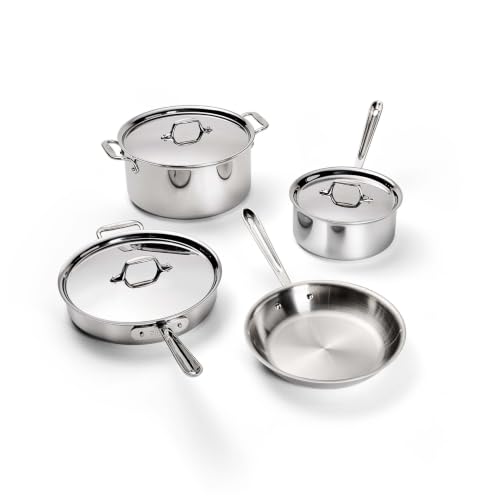
1. All-Clad D3 Stainless Steel Cookware Set: the lifetime set for serious glass-top cooks
The All-Clad D3 is the set this guide measures everything else against, and it earns that position the honest way: by doing the unglamorous things perfectly. Its base is a sandwich of stainless steel, aluminium, and stainless steel again, bonded across the whole pan rather than just the bottom, so heat spreads up the sides as well as across the base. On a ceramic glass cooktop, that matters more than it sounds. The element heats the bottom; the aluminium core carries that heat outward and upward, so the edges of the pan cook at nearly the same temperature as the centre. The result is a skillet that browns a chicken thigh evenly edge to edge, and a saucepan that simmers a sauce without a scorched ring in the middle.
The base itself is the flattest in this guide. All-Clad grinds the underside smooth after bonding, and the tri-ply construction resists warping because the layers expand at different rates and hold each other in check. This is a pan you can set on a glass cooktop, heat to searing temperature, and then watch it stay put — no rocking, no spinning, no hot spot in the middle where the oil pools away from the food. It is also a pan that will still be flat in ten years, because nothing in its construction gives up. The weight is substantial, and that is both the point and the price: the mass that keeps it flat is the same mass you lift when it is full.
In daily use, the D3 rewards a cook who understands stainless steel. Food sticks to stainless when the pan is too cold or the oil is too thin, and it releases when the pan is properly preheated and the oil shimmers. That is a technique, not a flaw, and once it becomes habit, the D3 becomes the most versatile pan in the kitchen. It sears better than any nonstick set here, it goes from cooktop to oven without a second thought, and it cleans up with a scrub and a rinse — no special sponges, no worrying about scratching a coating, no expiry date on the cooking surface. The polished exterior looks beautiful on a glass cooktop, and it stays beautiful, because stainless does not stain the way anodised aluminium can.
Strengths: The flattest, most warp-resistant base in this guide, and tri-ply heat that evens out the hot spots of a radiant element. Sears and browns better than any nonstick set, goes to high oven temperatures, and has no coating to wear out. The pieces are the right sizes for real cooking, and the lids fit tightly enough that a simmer stays a simmer.
Trade-offs: It is the heaviest set here, and the largest skillet full of food is a two-hand lift for many cooks. Stainless handles conduct heat and will get warm during a long cook, so a towel or mitt becomes part of the routine. It demands proper preheating technique, and it costs more than any other set in this guide — a premium you pay once and then forget about for decades.
Who it suits: The cook who wants to buy once and cook on glass for twenty years. It is the right choice if you sear meat, make pan sauces, and care about browning, and if you are happy to learn the preheating rhythm that stainless steel rewards. It is less suited to the cook who wants eggs to slide out of the pan with no technique at all, or to anyone who struggles to lift a heavy skillet. For a lifetime set that treats your glass cooktop with respect and returns the favour with superb cooking, check price on Amazon.


2. Cuisinart Multiclad Pro Stainless Steel Set: tri-ply cooking at a friendlier tier
The Cuisinart Multiclad Pro is the answer for the cook who read the All-Clad review above and thought, yes, but not at that price. It is a tri-ply stainless set with an aluminium core, built on the same principle — heat spread through the whole pan, a flat bonded base, no coating to wear out — and it delivers most of the D3’s cooking performance on a ceramic glass cooktop at a substantially lower tier. The base is flat and polished smooth, and the encapsulated aluminium core evens out the element’s hot spots well enough that a sauce simmers evenly and a skillet browns without a pale ring at the edges.
Where the Multiclad Pro differs from the D3 is in the details rather than the concept. The steel is a touch thinner, so the set is a little lighter and a little quicker to respond when you turn the heat down — which is a genuine advantage when a sauce is about to catch. The handles are a cool-grip design, contoured and riveted, and they stay more comfortable during a long simmer than a plain stainless handle, though they will still warm up if you leave a pot on high heat for a long stretch. The lids are tempered glass with a steel rim, so you can watch a simmer without lifting, and they fit snugly enough that steam stays where it belongs.
In use, the Multiclad Pro behaves like a proper stainless set: it wants the pan preheated and the oil shimmering before food goes in, and it rewards that patience with a clean release and a good sear. It is noticeably lighter than the D3, which matters when you are pouring a full pot of pasta water into a colander over the sink — a moment when a heavy pot and a hot glass cooktop are an unforgiving combination. The set includes the pieces a household reaches for daily, and the saucepans are deep enough for rice and vegetables without boiling over at the first bubble.
Strengths: Genuine tri-ply performance at a mid-range tier, with a flat, smooth base that is safe on glass and resists warping. Lighter than the premium set, so easier to lift and pour. Glass lids let you monitor cooking without losing heat, and the handles are comfortable for long sessions.
Trade-offs: The thinner steel means it does not hold heat quite as steadily as the heaviest sets, so a crowded skillet will drop in temperature a little more when cold food goes in. Handles still warm on long, high-heat cooks. Like all stainless, it asks for proper preheating technique, and the exterior can show water spots if you do not dry it after washing.
Who it suits: The cook who wants stainless steel performance on a ceramic glass cooktop without paying the top tier. It is an especially good fit for households moving from nonstick to stainless for the first time, because it is lighter and more forgiving than the premium set while still teaching the same good habits. If your budget will not stretch to the D3, this is where the smart money goes — a set that will last for years and cook beautifully on glass. To compare the current listing with the premium tri-ply sets, check price on Amazon.


3. Calphalon Premier Hard-Anodized Nonstick Set: the everyday nonstick workhorse
Most households cook on nonstick, and on a ceramic glass cooktop a good nonstick set is a pleasure rather than a compromise — provided the base is flat and the coating is treated as a wear item with a finite life. The Calphalon Premier is the nonstick set this guide trusts most on glass. Its hard-anodised aluminium body is thick enough to resist warping, and the base is finished flat and smooth, so it sits flush on the element and heats evenly across its whole surface. Eggs slide, pancakes turn, and a pan sauce reduces without a scorched patch in the middle.
The hard-anodised construction is doing two jobs at once. The aluminium core spreads heat sideways, which is exactly what a radiant element needs, because the element only heats the area directly beneath the pan. The anodised surface is harder than plain aluminium and resists scratches from utensils, which matters because a scratched nonstick pan is a pan on its way out. The coating itself is a triple layer, and Calphalon rates it for metal utensils, though in practice a wooden or silicone tool will add years to its life. The handles are stainless with a silicone grip, they stay cooler than bare metal, and they are riveted solidly enough that the pans feel secure when full.
What the Premier does best is the ordinary weeknight. A skillet that releases a fried egg cleanly, a saucepan that simmers tomato sauce without a stuck ring, a sauté pan wide enough to brown chicken in a single layer — these are the jobs that fill a kitchen, and this set does them without fuss. It is also a sensible weight: substantial enough to sit steadily on glass, light enough to lift with one hand when half full. The glass lids fit well and let you watch a simmer, and the set’s pieces are the ones a household actually uses, without a novelty piece padding out the box.
Strengths: A flat, warp-resistant hard-anodised base that heats evenly on radiant glass, with a genuinely good nonstick release for eggs, fish, and pancakes. Comfortable silicone-grip handles that stay cool, solid rivets, and a weight that balances stability with liftability. The most forgiving set here for a cook who just wants dinner to work.
Trade-offs: Nonstick is a wear item: even with perfect care, the coating will lose its release over years, and high heat and dishwasher cycles shorten that life. The set is not the best choice for hard searing, because the coating prefers medium heat and the pan should not be heated empty. Oven temperatures are capped lower than stainless sets.
Who it suits: The everyday cook who values easy release and easy cleanup above all, and who is willing to replace a nonstick set every few years as a consumable. It is the right set for busy weeknights, for households with children who cook, and for anyone whose glass cooktop has suffered from a warped budget pan before. For a nonstick set that actually stays flat on glass, check price on Amazon.
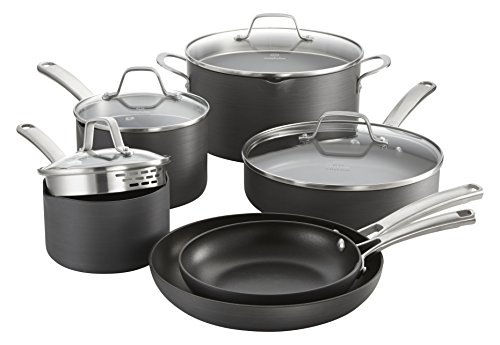
4. Calphalon Classic Nonstick Cookware Set: the value route into a proven nonstick line
The Calphalon Classic is the value pick in this guide, and it earns the place by solving the one problem that kills most affordable cookware on a ceramic glass cooktop: it stays flat. The set is hard-anodised aluminium, ten pieces in a practical grey finish, and the underside of each pan is finished smooth enough to sit flush on glass without scoring it. The pans are lighter than the premium sets, which is both a virtue and a warning — they lift easily, but they also demand the care that keeps any lighter pan flat: never heat them empty for long, never plunge them into cold water while hot, and never stack heavy objects inside them.
Where the Classic differs from the Premier set reviewed above is in the coating and the price tier, not in the basic discipline of the design. The Classic’s nonstick interior is a simpler dual-layer system rather than the Premier’s more durable multi-layer surface, and in daily use it is a solid performer for eggs, pancakes, and sautéed vegetables: food releases cleanly, and cleanup is a wipe and a rinse. The handles are long stainless steel, designed to stay cooler than the pan body during stovetop cooking, and the set includes tempered glass lids, a welcome touch at this tier because you can watch a simmer without lifting and losing heat. The pieces cover the daily jobs — fry pans, saucepans with lids, a sauté pan, and a stockpot — without novelty padding.
The trade-off for the tier is longevity rather than behaviour. These pans heat quickly and respond quickly, but the nonstick surface will wear sooner than the heavier Premier set’s coating, and the lighter bodies hold less residual heat when a crowded skillet meets cold food. For a household that cooks daily and treats its pans decently, the Classic set delivers years of honest service — and because it sits in Calphalon’s value line rather than its premium one, the eventual replacement cost is lower than upgrading within the same brand family would suggest. Think of it as the same flat-base, glass-safe philosophy as the Premier, trimmed to the essentials.
Strengths: A genuinely flat, smooth base at the value end of this guide, from a brand whose nonstick lines are proven on glass. Light and easy to lift, with a reliable nonstick release for everyday cooking, stay-cool stainless handles, and glass lids included in the ten-piece count.
Trade-offs: The dual-layer coating is a wear item with a shorter life than the Premier set’s multi-layer surface, and the set is not suited to high-heat searing. Lighter construction means less heat retention and more vulnerability to warping if heated empty or shocked with cold water.
Who it suits: The value-conscious cook, the first-apartment kitchen, and the household that wants a flat-bottomed set for a new glass cooktop from a proven brand without paying premium-tier money. It is also a sensible second set for a holiday home or a rental. Treat it gently — lift it, never slide it, and let it cool before washing — and it will repay the care many times over. For the most affordable Calphalon set that is genuinely safe on glass, check price on Amazon.

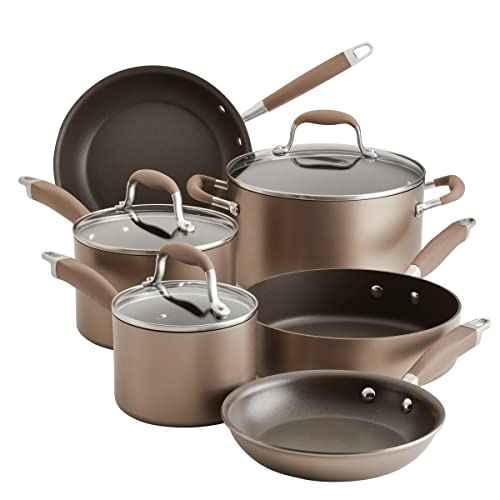
5. Anolon Advanced Hard Anodized Nonstick Set: comfort-first cooking for hands that grip a lot
The Anolon Advanced set is the pick for the cook whose hands do the deciding. Its defining feature is the handle: a dual-riveted, rubberised grip that is wide, comfortable, and secure even with wet hands, and it stays cooler than bare metal through a long simmer. On a ceramic glass cooktop, where the safest habit is to lift the pan rather than slide it, a handle you can trust matters more than any other single feature, and Anolon’s is the best in this guide. The pans themselves are hard-anodised aluminium with a flat, smooth base, and they heat evenly across a radiant element without the hot centre that plagues thinner pans.
The nonstick surface is a triple layer over the anodised body, and it is rated for metal utensils, though — as with every nonstick set — wooden and silicone tools will extend its life. In daily use, the Advanced set is the most forgiving of the nonstick picks here for a cook who is hard on handles: the dual rivets do not loosen, the grip does not rotate, and the pans feel planted when you set them down. The saucepans are deep enough for rice and sauces without boiling over, the stockpot is a practical size for pasta, and the skillets are the sizes you reach for every day.
One small detail deserves mention: the set’s lids are tempered glass with a wide steel rim, and they fit tightly enough that a simmer stays a simmer rather than a rolling boil that needs constant attention. The set is a touch heavier than the Calphalon Classic, which is a fair trade for the thicker base and the better handles, and it is still light enough to lift with one hand when the pan is half full. The exterior is a dark, satin finish that hides water spots better than polished stainless, which is a small mercy in a kitchen where the pans are washed and put away in a hurry.
Strengths: The most comfortable, secure handles in this guide, with dual rivets that will not loosen. A flat, warp-resistant hard-anodised base that heats evenly on glass, and a reliable nonstick release for everyday cooking. Good lid fit and a practical set of pieces.
Trade-offs: It is heavier than the lightest budget sets, so the largest skillet full of food is a two-hand job for some cooks. Nonstick is a wear item and the coating will eventually need replacing, and the set prefers medium heat rather than hard searing. The dark exterior shows scratches more readily than stainless if abused.
Who it suits: The cook who grips a pan a hundred times a day and wants the handle to disappear into the hand rather than demand attention. It is an excellent fit for older cooks, for anyone with weaker grip strength, and for households where the same pans get used for breakfast, lunch, and dinner. Comfort is not a luxury in a kitchen — it is the difference between cooking happily and cooking carefully — and this set understands that. For the most comfortable set that still respects your glass cooktop, check price on Amazon.

6. GreenPan Valencia Pro Ceramic Nonstick Set: ceramic nonstick that behaves on glass
The GreenPan Valencia Pro is the ceramic nonstick pick, and it is here for the cook who wants the easy release of nonstick without a PTFE coating. Its ceramic surface is a mineral-based layer over a hard-anodised aluminium body, and the base is finished flat and smooth, so it sits flush on a ceramic glass cooktop and spreads the element’s heat evenly. Eggs release cleanly, fish lifts without tearing, and a pan of sautéed vegetables browns without the stuck bits that make cleanup a chore. The set is a pleasure to use on glass because it is quiet about its virtues: it heats evenly, it does not rock, and it does not scratch.
Ceramic nonstick has a reputation for losing its release faster than PTFE, and that reputation is partly earned — ceramic coatings are more sensitive to high heat and to cooking sprays, both of which can degrade the surface. The Valencia Pro mitigates that with a reinforced ceramic layer and a thicker, warp-resistant base, but the honest advice is the same as for any ceramic pan: keep the heat at medium, use a little oil or butter rather than spray, and let the pan cool before washing. Treated that way, the coating holds its release for years rather than months, and the set becomes the easiest cleanup in the kitchen.
The set’s other virtues are practical. The handles are stainless with a comfortable contour and they stay reasonably cool, the glass lids fit well, and the pieces are the sizes a household uses daily. The Valencia Pro is also the lightest of the premium-feeling sets here, which makes it easy to lift on and off the glass — a real advantage when you are moving a full skillet from cooktop to table. The cream-coloured ceramic interior looks beautiful and makes it easy to see when food is browning, though it will show stains sooner than a dark surface if you cook a lot of tomato sauce.
Strengths: A PTFE-free ceramic nonstick surface with a genuinely flat, smooth base that is safe on glass and heats evenly. Light and easy to lift, with a beautiful interior that makes browning easy to judge, and a reinforced coating that lasts when treated gently.
Trade-offs: Ceramic nonstick is more sensitive to high heat and cooking spray than PTFE, and it needs medium heat and a little oil to keep its release. The light-coloured interior stains more readily, and the set is not the best choice for hard searing.
Who it suits: The cook who wants nonstick release without PTFE, and who is willing to cook at medium heat and treat the coating kindly in return for the easiest cleanup in this guide. It is a lovely fit for breakfast cooking, for fish and vegetables, and for anyone whose glass cooktop has suffered from a warped pan before. For a ceramic nonstick set that truly stays flat and gentle on glass, check price on Amazon.
Mistakes that damage a ceramic glass cooktop
The most expensive mistake is the simplest: sliding a pan. Glass-ceramic is hard but it is not scratch-proof, and a pan dragged across it with a grain of salt or a speck of grit underneath will leave a mark that no cleaner can remove. Lift the pan, set it down, and lift it again to move it. It feels slow for the first week and then becomes automatic. The same rule applies to the stockpot: never drag a full pot across the glass to reach a free burner. Pick it up, even if it is heavy, or leave it where it is and use another burner.
The second mistake is heating a pan empty. An empty pan on a radiant element climbs to a temperature far beyond cooking temperature in under a minute, and that heat can warp the base, damage a nonstick coating, and — in the worst case — crack the glass through thermal shock. Always put oil, water, or food in the pan before it goes on the heat, and if you preheat, do it for a minute or two at most, never for five.
The third mistake is the sugary boil-over. Jam, syrup, and sugary sauces that boil over onto a hot glass surface can fuse to it as they cool, and scraping them off risks scratching the glass. The habit that prevents it is simple: use a larger pot than you think you need, keep the heat at a steady simmer rather than a rolling boil, and wipe up a spill immediately with a damp cloth once the surface has cooled enough to touch. A cooktop scraper, used flat and gently on a cool surface, handles the stubborn marks.
The fourth mistake is using the wrong pan entirely. Rough cast iron, warped aluminium, and pans with a ridged or patterned underside have no place on glass. If you love cast iron, keep it for the oven or for a gas burner elsewhere, or use an enamelled piece with a perfectly smooth base and lift it every single time. And never set a hot lid face-down on the glass: the suction can be strong enough to lift the glass when you pull the lid away, and the heat can mark the surface.
Caring for your pans and your cooktop together
The pans and the cooktop share a care routine, and it is simpler than it sounds. Let pans cool before washing them, because plunging a hot pan into cold water is the fastest way to warp a base — and a warped base is a pan that will never cook evenly on glass again. Wash nonstick by hand with a soft sponge, even when the box says dishwasher-safe, because the dishwasher’s heat and detergent wear coatings faster than any cooking ever will. Dry stainless pans after washing to prevent water spots, and store pans with a paper towel or a pan protector between them so the base of one does not scratch the coating of another.
For the cooktop itself, a daily wipe with a damp cloth and a weekly clean with a dedicated glass-ceramic cleaner keeps the surface clear and the elements efficient. A cleaner that leaves a thin protective film helps food release and makes the next wipe easier. Avoid abrasive pads, scouring powders, and anything with a gritty texture. And once a month, lift each pan and look at its base: if you see a ring of discolouration, a rough patch, or a wobble when you set it on a flat counter, that pan is telling you it is time to retire it before it damages the glass.
black friday deals on pots and pans sets
best cookware sets for glass top stoves
Frequently asked questions
Can I use cast iron on a ceramic glass cooktop?
You can, but you must be careful, and most cooks are better off not doing it. Rough, unseasoned cast iron will scratch glass, and even enamelled cast iron can chip the surface if it is set down hard or dragged. If you do use it, lift it every time, never slide it, and check the base for chips or grit before each use. For everyday cooking on glass, the flat-bottomed sets in this guide are safer and easier.
Why does my pan rock on my glass cooktop?
A rocking pan has a warped base, usually from being heated empty or plunged into cold water while hot. The warp means only part of the base touches the element, so food burns in the middle and stays cool at the edges. A warped pan cannot be fixed, and it should be retired before it damages the glass. The sets in this guide are chosen for bases that resist warping, and the care section explains how to keep them flat.
Are glass lids or metal lids better on a ceramic glass cooktop?
Glass lids are usually the better choice for simmering, because you can see the food without lifting the lid and losing heat. Radiant elements recover heat slowly, so every lift costs you cooking time. Metal lids are sturdier and can go to higher oven temperatures, so they suit cooks who finish dishes in the oven. Most of the sets in this guide include glass lids, and they are the right call for everyday glass-top cooking.
Do I need special pans for a ceramic glass cooktop, or will any pan work?
Any pan with a flat, smooth base will work, but not every pan has one. Thin aluminium warps, rough cast iron scratches, and ridged bases create hot spots. The sets in this guide are chosen because their bases are genuinely flat and smooth, and because they hold that flatness over years of use. If your existing pans pass the rock test on a flat counter and have smooth undersides, they are fine on glass.
How do I clean burnt food off a ceramic glass cooktop without scratching it?
Let the surface cool, then soften the residue with a damp cloth and a little glass-ceramic cleaner. For stubborn marks, a cooktop scraper held flat against the glass, used gently, removes the residue without scratching. Never use an abrasive pad, a metal scourer, or a knife. Wiping up sugary spills promptly, once the surface is cool enough to touch, prevents the fused marks that are hardest to remove.
The bottom line
A ceramic glass cooktop asks one thing of your cookware above all else: a flat, smooth base that sits flush, heats evenly, and never drags across the glass. The six sets in this guide meet that test in different ways — tri-ply stainless for the cook who wants a lifetime set, hard-anodised nonstick for the cook who wants easy mornings, and ceramic nonstick for the cook who wants easy release without PTFE — and the right choice is the one whose compromises fit your kitchen, your hands, and the way you actually cook. Choose the set that respects your glass, treat it gently, lift it rather than sliding it, and it will cook beautifully on that smooth top for years to come.