Disclosure: topratedkitchenware.com is reader-supported. When you buy through links on our site, we may earn an affiliate commission from Amazon and other retailers, at no extra cost to you.
Where to buy
The verified picks for best prices on single cup coffee makers are listed below. This guide prints no prices, because prices change constantly and a printed figure would mislead you within weeks; for every linked pick, check the latest price on Amazon when you are ready to decide. Readers comparing adjacent formats can also browse Best Single Serve Coffee Makers With Kcup alongside this guide. Read the full guide ↓
- Keurig K-Express, Black — single serve k-cup pod brewer coffee maker. Check on Amazon for the current listing.
- Keurig K-Express, Warm Stone — single serve k-cup pod brewer coffee maker. Check on Amazon for the current listing.
- Elite Gourmet 14 oz Single-Serve — 14 oz single-serve capacity coffee maker. Check on Amazon for the current listing.
- Keurig K-Mini Mate, Black — single serve k-cup pod brewer coffee maker. Check on Amazon for the current listing.
- Tastyle Mini Hot and Iced Single Serve — single serve for k-cup pods and grounds coffee maker. Check on Amazon for the current listing.
- Keurig K-Express, Evergreen — single serve k-cup pod brewer coffee maker. Check on Amazon for the current listing.
Introduction: Finding the Best prices on single cup coffee makers
Finding the best prices on single cup coffee makers is a more specific job than it first appears, and this guide treats it that way from the first paragraph. Single cup brewers split into two philosophies, and this verified pool contains both. The pod philosophy — four Keurig machines here — buys total convenience: a sealed cup of coffee in about a minute with nothing to measure. The grounds philosophy — the Elite Gourmet with its reusable filter, and the Tastyle Mini that accepts both pods and grounds — buys flexibility and lower running cost at the price of a little more routine. Price hunting across that divide is meaningless until you pick a philosophy, because the machine is the small cost and the format is the standing one. This guide links all six genuine single cup machines and prices the philosophies honestly, in tiers and habits rather than stale numbers.
The method throughout is choosing a format philosophy first — pods, grounds, or the Tastyle’s both — then matching reservoir, size range, and footprint inside that choice. If your research is also pulling you toward single serve formats, Best Single Serve Coffee Makers With No Pods covers that side of the counter; this guide stays with its own brief and does it properly.
Key Takeaways
- Four Keurig picks run pods only; the Elite Gourmet runs grounds with a reusable filter; the Tastyle Mini runs both.
- The K-Express line (three finishes here) is the reservoir mainstream: 42 oz, three sizes, Strong Brew.
- The K-Mini Mate is the compact pod option, per-cup water, up to 12 oz.
- The Elite Gourmet is the pod-free economy route: 14 oz, one touch, reusable filter.
- Format decides lifetime cost more than machine price; pods are a subscription, grounds are a grocery.
- Check the latest price on Amazon for your shortlist on the same day; this guide prints no prices.
In this guide
Quick Picks
| Badge | Pick | Headline spec |
|---|---|---|
| Best Overall | Keurig K-Express, Black | Single serve K-Cup pod brewer; 3 brew sizes |
| Best for Light Kitchens | Keurig K-Express, Warm Stone | Single serve K-Cup pod brewer; 3 brew sizes |
| Best for Grounds Drinkers | Elite Gourmet 14 oz Single-Serve | 14 oz single-serve capacity; 600W, one-touch operation |
| Best Compact | Keurig K-Mini Mate, Black | Single serve K-Cup pod brewer; Brews up to a 12 oz cup |
| Best Hot & Iced Mini | Tastyle Mini Hot and Iced Single Serve | Single serve for K-Cup pods and grounds; Hot and iced coffee |
| Best Statement Finish | Keurig K-Express, Evergreen | Single serve K-Cup pod brewer; 3 brew sizes |
Badges reflect the angle of this guide — choosing a format philosophy first — pods, grounds, or the Tastyle’s both — then matching reservoir, size range, and footprint inside that choice — and the same badges appear in the detailed reviews below so you can track each pick through the guide.
How These Picks Were Chosen
This guide is research-led, and it says so plainly: the picks come from a verified pool checked against the makers’ own listings, not from a test kitchen claiming hands-on scores it cannot show. Each model’s identity, brand, and headline specifications were confirmed from its listing data, and only specifications present in that verified data are quoted below — where the pool confirms a model without a long feature sheet, the review says exactly that instead of filling gaps with guesses.
Within the pool, picks were ordered by how well they serve the keyword’s core job: choosing a format philosophy first — pods, grounds, or the Tastyle’s both — then matching reservoir, size range, and footprint inside that choice. Readers who want the wider category picture can compare Best Single Serve Coffee Makers Without Pods alongside this guide.
Finally, honesty about money: no static prices appear anywhere in this guide, because prices change and a printed number would mislead within weeks. Tier language — mainstream, premium-tier, step-up — is used instead, and every linked pick invites you to check the latest price on Amazon at the moment you are actually shopping.
The 6 Best prices on single cup coffee makers

Keurig K-Express, Black
Badge: Best Overall
The Keurig K-Express, Black is built for most pod drinkers: a reservoir machine with three sizes and a strength button covers the mainstream routine. In the context of best prices on single cup coffee makers, its confirmed specification supports that job directly: single serve k-cup pod brewer and 3 brew sizes.
Strengths
- 42 oz reservoir covers several cups between refills
- Strong Brew button for bolder and iced cups
- Travel mug friendly for commuters
Trade-offs
- Pod format costs more per cup than batch grounds
- Reservoir water should be refreshed, not left for days
- Three sizes is plenty for most, limiting for mug-size perfectionists
Key specs (from verified listing data)
- Single serve K-Cup pod brewer
- 3 brew sizes
- 42 oz removable reservoir
- Strong Brew button
- Travel mug friendly
- Black finish
Day to day, what separates this pick within the pool is fit, not magic — the honest limitation is that like every pod brewer, per-cup pod cost and pod waste are the standing trade for the convenience. In daily use, that single fit question matters more than any feature list. If it passes your fit test, Check on Amazon to see the current listing for this exact model.
Best for: most pod drinkers: a reservoir machine with three sizes and a strength button covers the mainstream routine / Not suited for: anyone whose needs flatly contradict that profile — for them, another pick in this guide fits better.
Keurig K-Express, Warm Stone
Badge: Best for Light Kitchens
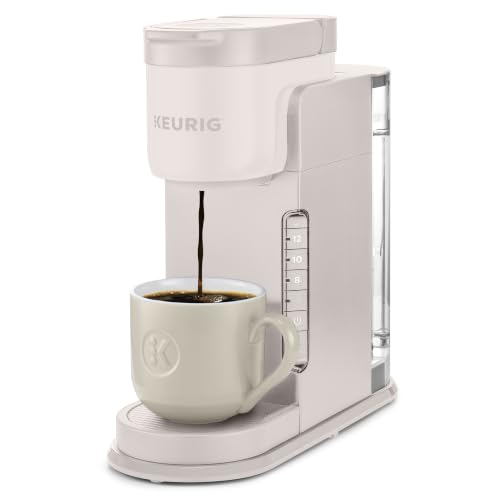
The Keurig K-Express, Warm Stone is built for the same mainstream pod household as the black K-Express, in a softer finish for light kitchens. In the context of best prices on single cup coffee makers, its confirmed specification supports that job directly: single serve k-cup pod brewer and 3 brew sizes.
Strengths
- Identical proven K-Express hardware in a Warm Stone finish
- Reservoir, three sizes, and Strong Brew all present
- Light finish brightens small kitchens
Trade-offs
- Finish-only difference from other K-Express colors
- Pod cost and waste trade-offs apply as with all pod brewers
- Warm Stone shows coffee drips more than black
Key specs (from verified listing data)
- Single serve K-Cup pod brewer
- 3 brew sizes
- 42 oz removable reservoir
- Strong Brew button
- Travel mug friendly
- Warm Stone finish
Day to day, what separates this pick within the pool is fit, not magic — the honest limitation is that the finish is the only difference from the black model, so it should be chosen on looks alone and never paid for as an upgrade in capability. Judge it by your busiest morning, not your laziest one, and the verdict is usually clear. If it passes your fit test, Check on Amazon to see the current listing for this exact model.
Best for: the same mainstream pod household as the black K-Express, in a softer finish for light kitchens / Not suited for: anyone whose needs flatly contradict that profile — for them, another pick in this guide fits better.

Elite Gourmet 14 oz Single-Serve
Badge: Best for Grounds Drinkers
The Elite Gourmet 14 oz Single-Serve is built for grounds drinkers who want a tiny one-touch brewer and a reusable filter instead of pods. In the context of best prices on single cup coffee makers, its confirmed specification supports that job directly: 14 oz single-serve capacity and 600w, one-touch operation.
Strengths
- Reusable filter ends pod buying for grounds users
- One-touch simplicity
- Compact design with auto shut-off
Trade-offs
- Grounds only: no pod convenience
- 14 oz maximum per brew
- 600W class brewing is unhurried compared with larger machines
Key specs (from verified listing data)
- 14 oz single-serve capacity
- 600W, one-touch operation
- Reusable filter for grounds and loose-leaf tea
- Travel mug included positioning
- Auto shut-off
- Model EHC111A
Day to day, what separates this pick within the pool is fit, not magic — the honest limitation is that the 14 oz ceiling and grounds-only format will not serve pod loyalists or multi-cup households. That is the honest test: not whether it impresses, but whether it disappears into your routine. If it passes your fit test, Check on Amazon to see the current listing for this exact model.
Best for: grounds drinkers who want a tiny one-touch brewer and a reusable filter instead of pods / Not suited for: anyone whose needs flatly contradict that profile — for them, another pick in this guide fits better.
Keurig K-Mini Mate, Black
Badge: Best Compact
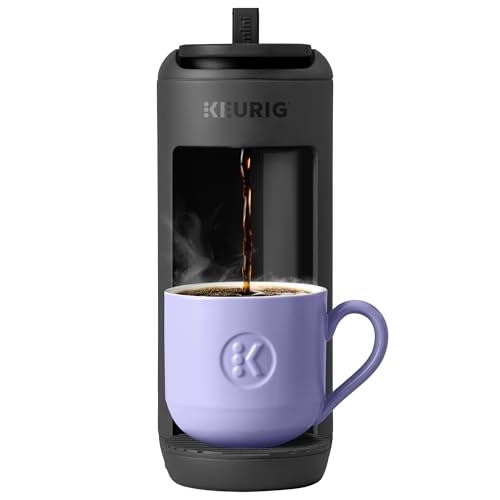
The Keurig K-Mini Mate, Black is built for one-person households, dorms, offices, and RV counters where space outranks reservoir size. In the context of best prices on single cup coffee makers, its confirmed specification supports that job directly: single serve k-cup pod brewer and brews up to a 12 oz cup.
Strengths
- Compact footprint fits where reservoir machines cannot
- Per-cup water means nothing sits stored in the machine
- Simple routine suits occasional drinkers
Trade-offs
- No reservoir: every cup starts with a fill
- Up to 12 oz per brew caps mug size
- Not built for a multi-person morning queue
Key specs (from verified listing data)
- Single serve K-Cup pod brewer
- Brews up to a 12 oz cup
- Compact, portable design
- Black finish
Day to day, what separates this pick within the pool is fit, not magic — the honest limitation is that water is added per cup, so back-to-back cups for a group become a fill-brew-fill routine. Households that match the machine to the routine rarely shop for its replacement. If it passes your fit test, Check on Amazon to see the current listing for this exact model.
Best for: one-person households, dorms, offices, and RV counters where space outranks reservoir size / Not suited for: anyone whose needs flatly contradict that profile — for them, another pick in this guide fits better.
Tastyle Mini Hot and Iced Single Serve
Badge: Best Hot & Iced Mini
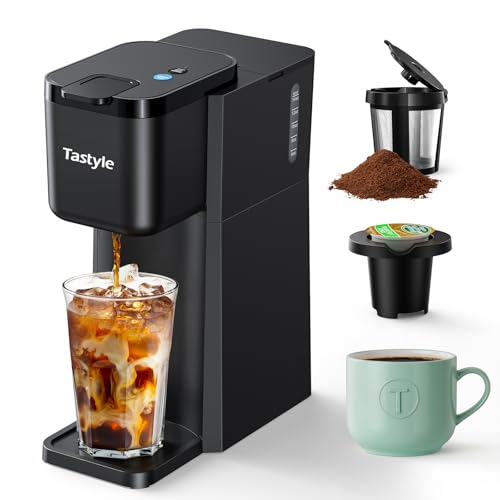
The Tastyle Mini Hot and Iced Single Serve is built for single serve drinkers who refuse to choose between pods and grounds, and who drink iced coffee. In the context of best prices on single cup coffee makers, its confirmed specification supports that job directly: single serve for k-cup pods and grounds and hot and iced coffee.
Strengths
- Accepts both K-Cup pods and grounds
- Hot and iced modes in a mini body
- Wide 6 to 14 oz size range
Trade-offs
- Mini format means frequent refilling
- Lesser-known brand than the pool’s Keurig entries
- Iced mode drinks differ from cafe iced coffee and take dialing in
Key specs (from verified listing data)
- Single serve for K-Cup pods and grounds
- Hot and iced coffee
- 6 to 14 oz brew sizes
- Recipe book included
- 120V, model K310IC, Classic Black
Day to day, what separates this pick within the pool is fit, not magic — the honest limitation is that the mini format means a small water routine per cup and a footprint-first design brief. If that profile sounds like your kitchen, this pick has earned its counter space. If it passes your fit test, Check on Amazon to see the current listing for this exact model.
Best for: single serve drinkers who refuse to choose between pods and grounds, and who drink iced coffee / Not suited for: anyone whose needs flatly contradict that profile — for them, another pick in this guide fits better.

Keurig K-Express, Evergreen
Badge: Best Statement Finish
The Keurig K-Express, Evergreen is built for K-Express shoppers who want the deep green finish and the same reservoir routine. In the context of best prices on single cup coffee makers, its confirmed specification supports that job directly: single serve k-cup pod brewer and 3 brew sizes.
Strengths
- Full K-Express feature set in Evergreen
- Strong Brew for bolder cups
- 42 oz reservoir for multi-cup mornings
Trade-offs
- Color is the whole difference from other K-Express models
- Evergreen is a commitment if your kitchen colors change often
- Pod format running costs apply
Key specs (from verified listing data)
- Single serve K-Cup pod brewer
- 3 brew sizes
- 42 oz removable reservoir
- Strong Brew button
- Travel mug friendly
- Evergreen finish
Day to day, what separates this pick within the pool is fit, not magic — the honest limitation is that as with its finish siblings, nothing about the brew changes with the color. Weigh that fit honestly and the rest of the decision makes itself. If it passes your fit test, Check on Amazon to see the current listing for this exact model.
Best for: K-Express shoppers who want the deep green finish and the same reservoir routine / Not suited for: anyone whose needs flatly contradict that profile — for them, another pick in this guide fits better.
Comparison Table
| Pick | Badge | Headline | Also confirmed |
|---|---|---|---|
| Keurig K-Express, Black | Best Overall | Single serve K-Cup pod brewer | 3 brew sizes |
| Keurig K-Express, Warm Stone | Best for Light Kitchens | Single serve K-Cup pod brewer | 3 brew sizes |
| Elite Gourmet 14 oz Single-Serve | Best for Grounds Drinkers | 14 oz single-serve capacity | 600W, one-touch operation |
| Keurig K-Mini Mate, Black | Best Compact | Single serve K-Cup pod brewer | Brews up to a 12 oz cup |
| Tastyle Mini Hot and Iced Single Serve | Best Hot & Iced Mini | Single serve for K-Cup pods and grounds | Hot and iced coffee |
| Keurig K-Express, Evergreen | Best Statement Finish | Single serve K-Cup pod brewer | 3 brew sizes |
Read the table alongside the detailed reviews rather than instead of them: the table compares confirmed specifications, while the reviews carry the fit judgments that decide real purchases. Shoppers cross-shopping formats can set this beside Best Single Serve Combo Coffee Makers to see how the category divides the work.
How to Choose: Best prices on single cup coffee makers Decided Properly
Start with the decision this guide keeps returning to: choosing a format philosophy first — pods, grounds, or the Tastyle’s both — then matching reservoir, size range, and footprint inside that choice. Concretely, that means four questions in order. First, how much coffee does your household actually brew, and over how long a window is it drunk? Capacity and carafe type follow from that answer, not from the largest number on a box. Second, how does the coffee get made on your busiest morning — by a timer set the night before, by a person standing there wanting it fast, or one cup at a time across hours? Third, which special talent, if any, will be exercised weekly: hotter brewing, iced modes, small-batch settings, a built-in grinder, a second format? Pay only for talents with a weekly appointment. Fourth, what will the machine cost you in routine — descaling, carafe care, grinder cleaning where fitted — and is that routine one your household will genuinely keep?
Tier thinking helps without a single price figure. The mainstream tier buys programmability and thermal keeping without specialty premiums. The enthusiast tier buys a specific excellence — temperature control, speed, or fresh grinding. The flexibility tier buys format range inside one footprint. None of these tiers makes better coffee from bad inputs; fresh beans, decent water, and a kept cleaning routine outrank every tier jump. Buy the tier whose excellence you will actually touch every day, and let Best Single Serve Full Automatic Coffee Makers inform the adjacent-format questions this guide deliberately leaves open.
One more sizing note that saves real regret: measure the counter spot with the machine’s lid open and the carafe’s removal path in mind, not just the base footprint. A machine that fits on paper but fights its cabinets every morning is the wrong machine at any price.
How to Brew a Better Single Cup, Whatever the Format
- Preheat the mug with hot water while the machine warms; a cold mug steals the first impression of any single cup.
- Match dose to size: pods at their intended size, grounds measured for the exact ounces you will brew.
- For iced drinks, brew the hot-and-iced mode or Strong Brew over ice rather than chilling a normal cup.
- Rinse reusable filters immediately; dried grounds cement into mesh and haunt the next cup.
- Run a water-only cycle between flavored pods and plain coffee to keep flavors honest.
- Descale on schedule; single cup machines show scale damage faster because every passage is small.
Troubleshooting. Problem: the pot tastes sour and thin → check dose and grind before blaming the machine; under-extraction is the usual cause. Problem: coffee tastes bitter or stale despite fresh beans → deep-clean the carafe and brew basket, since old oils flavor every new pot. Problem: brewing slows, sputters, or cools → descale, and check the brew path for grounds buildup with the machine unplugged, following the manual. Most complaints about machines in this class trace back to one of those three causes, and all three fixes are free.
For a deeper look at adjacent routines, Best Single Serve Multi Brew Coffee Makers is a useful companion read once your own setup is dialed in.
Pod Math Versus Grounds Math
A pod household pays for sealed convenience every single cup, forever, and gains a minute and a clean counter each time. A grounds household pays in minutes instead: measuring, rinsing a filter, disposing of wet grounds — small costs multiplied by every cup, offset by coffee bought as a grocery at a fraction of pod cost per ounce. Neither math is wrong; they price different scarcities. Households short on mornings should buy pods without guilt. Households short on budget, or long on environmental unease about pod waste, should buy the reusable-filter route and build the ninety-second routine. The Tastyle Mini exists for households honestly split between the two scarcities, and its dual acceptance is a feature, not a compromise.
Reservoir or Per-Cup Water: The Daily Friction Choice
Inside the pod camp, the live decision is water logistics. The K-Express reservoir holds 42 oz ready to brew, which is invisible convenience until the morning it runs dry mid-queue — and which demands freshness discipline so water never sits for days. The K-Mini Mate inverts the trade: every cup begins with a fill, a small friction that guarantees fresh water and a machine that stores nothing between uses, ideal for desks, dorms, and weekend cabins. Count your cups and your users. One drinker forgives the fill; a four-person staggered morning forgives nothing. The machine whose friction you will not notice is the machine priced right, whatever its sticker says.
The Two-Machine Household, Considered Seriously
Some households honestly need two coffee solutions: a pot machine for the morning rush and a single serve for the afternoon individual, or a full-size brewer at home and a compact at a desk or cabin. The pool in this guide makes that pairing natural, since its formats share a kitchen without sharing a routine. The discipline is to assign each machine its job in writing — which drinkers, which hours, which drinks — so neither becomes an expensive backup for the other. Bought deliberately, a second machine ends format wars and queue friction; bought impulsively, it is counter clutter with a power cord. Decide by your household’s actual daily pattern, not by the appeal of owning both.
Travel Mugs, Heights, and Other Fit Tests
The least glamorous specifications cause the most returns. Travel mug clearance decides whether the commuter’s cup fits under the spout or demands a transfer pour that spills weekly. Reservoir removal decides whether filling happens at the sink or with a jug ferried across the kitchen. Lid height decides whether the machine lives under cabinets or exiled to an island. Before ordering any pick here, run these three measurements against your kitchen and your mugs, because a machine that fits your routine but not your counter will be resented daily and replaced early — the most expensive outcome in the whole category, whatever its sticker said.
When to Replace Rather Than Repair Your Routine
Sometimes the disappointing cup is not the machine’s fault or the coffee’s — it is a mismatch that no adjustment closes: a pot machine in a one-cup household, a compact in a family queue, a grounds routine in a pod household’s schedule. The diagnostic is consistency: if the friction appears every day, in the same place, despite fresh coffee, correct dose, and a clean machine, the format is wrong, not the settings. Replacing a mismatched machine feels wasteful, but a year of daily friction costs more in time and abandoned coffee than the switch. This guide’s comparisons are built to surface those mismatches before purchase, which is the cheapest moment to discover them.
The Quiet Cost of Pod and Filter Logistics
Every format carries a logistics tail that never appears on the box. Pod households manage a drawer: stocking, rotating, and disposing, with the standing risk of running out of the one roast everyone drinks. Grounds households manage filters, scoops, and a grinder or a standing grocery habit. Thermal drip households manage carafe care and descaler. None of these tails is heavy, but each is permanent, and the honest price of a machine includes the tail it attaches to your kitchen. When two picks in this guide otherwise tie, choose the one whose logistics tail your household will mind least — that tiebreaker, boring as it sounds, predicts satisfaction better than most headline features.
Morning Light: A Note on Routine Realism
Coffee equipment is bought in the evening and judged at dawn, half awake, by people who have not yet had coffee. That asymmetry explains a shelf of abandoned machines: every routine that seemed charming in a showroom — grinding, tamping, sequencing — must survive contact with a sleepy operator. The picks in this guide were ordered with dawn realism in mind: the fewer decisions a machine demands before the first cup, the more kindly it is ranked for households whose mornings are rushed. If your household genuinely loves a ritual, buy for the ritual without apology. If it loves sleep more, buy the machine that asks the least, and let the coffee be the only warm-up act.
Hosting With the Machine You Own
Guest coffee exposes every machine’s ceiling: the pot that is plenty for two is a queue for six, and the single serve that delights a solo drinker becomes a production line at a family breakfast. You do not need to buy for the maximum gathering you will ever host — that way lies commercial equipment in a home kitchen — but you should know your machine’s hosting plan before the guests arrive. Brew the full pot early and let the thermal carafe hold it, stage mugs and supplies where guests can serve themselves, and keep a simple backup for the overflow cup. A calm host with a mid-size machine outperforms a flustered one with a flagship, every holiday on record.
Water, the Ingredient Nobody Prices
Water is nearly all of what ends up in the cup, yet it is the one input shoppers never comparison-shop. Hard water scales heating elements and brew paths, gradually slowing machines and cooling pots; heavily chlorinated water flattens delicate roasts no machine can rescue. A simple filter pitcher is the sweet spot for most kitchens: it strips the chlorine note while keeping the mineral content coffee extraction actually prefers, since fully distilled water brews strangely flat. Whatever source you choose, keep it consistent while you judge a new machine — changing water and machine in the same week makes it impossible to know which change you are tasting, and many good machines have been returned for their water’s sins.
The First Two Weeks With a New Machine
Every new coffee maker has a learning curve, and judging it on day one is the most common evaluation error in the category. Spend the first brews exactly as the manual directs, with your usual coffee, and change nothing. Then adjust one variable — dose, grind, or size — per day, tasting each change in isolation. By the end of week two you will know the machine’s real character: how it handles your beans, your water, and your schedule. Machines that seemed disappointing on day one regularly become favorites by day fourteen, not because they changed, but because the routine around them finally fit. Give any pick in this guide that honest fortnight before verdicts.
Descaling Without the Drama
Descaling sounds like maintenance homework, which is why it gets postponed until the machine slows, sputters, or brews lukewarm — by which time flavor has been declining for weeks. Treat it as a calendar habit instead: mark it when you change seasonal clocks or replace a water filter, whichever rhythm your household actually keeps. Use the maker’s recommended solution or schedule, run the full rinse cycles afterward so no cleaning taste survives into coffee, and wipe the brew basket and carafe the same day. Ten unhurried minutes a few times a year protects heating elements, keeps brew temperatures honest, and is the cheapest performance upgrade any machine in this guide will ever receive.
Grind Size, the Free Flavor Upgrade
Before blaming a machine for a disappointing cup, audit the grind. Drip brewing lives in the medium range, and the failure modes are diagnostic: sour and thin usually means under-extraction from too coarse a grind or too little coffee, while bitter and harsh points to over-extraction from too fine a grind or water that sat on the grounds too long. Pre-ground coffee removes the variable entirely, which is its quiet virtue for consistency, while a home grinder restores control at the cost of one more routine. Change grind in small steps, brew full pots between changes, and let your palate — not the bag’s marketing — arbitrate the result.
Counter Ergonomics Nobody Mentions
Where a coffee maker lives decides how much you enjoy it, and the measurements that matter are dynamic: carafe clearance under the brew head, lid swing, reservoir removal path, and the height of the whole machine under your cabinets with its lid open. A thermal carafe that must be tilted awkwardly to fit will eventually be the reason a machine is replaced, no matter how well it brews. Before buying, measure the intended spot with cabinets in mind, imagine the 6 a.m. version of the routine with sleepy hands, and check that the cord reaches without crossing the sink. Ergonomic fit is invisible in listings and decisive in kitchens.
Storing Coffee So the Machine Can Shine
Machines get blamed for what storage did to the beans. Coffee’s enemies are oxygen, light, heat, and moisture, and the countertop canister beside a warm machine delivers all four. Keep beans or grounds in an opaque, sealed container in a cool cupboard, buy in quantities your household finishes while still fresh, and never refrigerate daily coffee — condensation and odor absorption do more harm than the cool does good. When a pot tastes off, audit storage before settings: fresh coffee in a modest machine outperforms stale coffee in a flagship every single morning, and it is not close.
Reading a Listing Like a Skeptic
Coffee maker listings compress hard truths into cheerful bullets, so read them in a fixed order. First, capacity in ounces, not cups — a ‘cup’ in this category is smaller than your mug. Second, the carafe: glass with a warming plate or thermal without one changes the last cup completely. Third, the controls you will use daily versus the ones photographed once. Fourth, what is not said: an unmentioned feature is an absent feature. Finally, the model designation in full, because suffixes separate finishes from genuinely different machines. That five-minute discipline, applied to any pick in this guide, prevents nearly every regret this category produces.
The Household Negotiation Every Machine Must Pass
Coffee makers are shared infrastructure, and the best machine is the one every drinker in the house will actually operate. The early riser needs quiet and programmability; the second shift needs a carafe still holding heat; the occasional drinker needs a routine simple enough to remember monthly. Before choosing, list each person’s non-negotiable and test candidate machines against the whole list, not the loudest voice. Features that serve one drinker while taxing everyone else — fiddly settings, fragile carafes, demanding cleaning — quietly fail households even when they win reviews. The picks in this guide were ordered with that negotiation in mind.
Thermal Carafe Versus Warming Plate, Settled
The last cup is where coffee makers tell the truth. A warming plate keeps coffee hot by cooking it, and the flavor bill arrives within the hour: bitter, flat, and stale no matter how good the first cup was. A thermal carafe simply insulates, so the pot you brewed is the pot you finish. The thermal trade-offs are real — the carafe is heavier, it hides how much coffee remains, and it demands rinsing discipline — but every pick in this guide accepts them, which is why this pool reads as a quality-first shortlist. If your household drains a pot in fifteen minutes, the distinction barely matters; if your pot lives across a morning, it matters more than any other single specification.
Brew Strength Controls, Explained Honestly
Strength buttons do not add coffee or caffeine; they change how water meets the grounds, usually by slowing the flow or pulsing it, so extraction deepens from the same dose. That makes them genuinely useful for iced coffee, milk drinks, and travel mugs, where dilution waits downstream, and genuinely pointless as a daily default if you already dose correctly. The free experiment: brew your usual pot on the standard setting, then the same coffee on the strong setting, and taste them side by side. Most households find one setting they love and one they never touch again — and knowing which is yours is worth more than any reviewer declaring a winner.
The Small-Batch Problem in Full-Size Machines
Big machines brew small pots badly by default: the water races through a shallow bed of grounds and under-extracts, producing the sour, weak cup that convinces people their machine is broken. Dedicated small-batch settings exist precisely to slow that flow and restore extraction, which is why their presence or absence in a listing deserves real weight for couples and single drinkers. If your machine lacks the setting, the manual workarounds are a finer grind, a slightly higher dose, and pre-warming the carafe so the small volume does not surrender its heat to cold steel. Judge any machine in this guide by your real weekday batch, not your weekend maximum.
Iced Coffee From a Hot Machine
Iced modes on drip and single serve machines brew a concentrated hot coffee directly over ice, flash-chilling it so the result tastes like coffee rather than like yesterday’s pot rescued from the fridge. The technique details matter: fill the vessel with ice before brewing, use the strong or iced setting if fitted, and expect to sweeten while the drink is still slightly warm if you take sugar. The honest limitation is dilution — as the ice melts, the cup softens — which is why coffee ice cubes, made from a spare brewed pot, are the enthusiast’s quiet upgrade. Households that drink iced coffee weekly should weight this talent heavily in their choice.
Programmability and the Night-Before Routine
A programmable machine is only as good as the routine feeding it: water filled, filter seated, coffee dosed, carafe emptied and in place. Skip any step and the timer brews a disaster at dawn — a pot onto a full carafe, or hot water through yesterday’s grounds. Households that thrive with timers build the setup into the evening kitchen shutdown, the same pass that locks doors and loads the dishwasher. Households that cannot keep that rhythm should buy manual simplicity instead and spend the savings on coffee. This is also why programmable picks in this guide are praised for control clarity: a timer you set wrong is worse than no timer at all.
What ‘Cup’ Means, and Why Your Mug Disagrees
Coffee maker capacities are quoted in cups that are not your cups. The industry cup is a small measure, so a twelve-cup machine brews roughly what a household would call six generous mugs, and a ten-cup machine is a four-to-five-mug device in real kitchens. This is not deception so much as tradition, but it causes real misbuying: households size by the box number, then brew twice daily and blame the machine. Before choosing, pour your actual morning — every mug, travel cup, and second helping — into a measuring jug once. That single measurement, compared against honest ounce figures, settles capacity questions that pages of reviews cannot.
Cleaning the Brew Path You Cannot See
The parts of a coffee maker you cannot see decide how the parts you can taste behave. Mineral scale narrows heating passages, coffee oils film the brew basket and carafe, and both accumulate invisibly until flavor falls off a cliff. The maintenance rhythm that prevents it is unglamorous: rinse the carafe and basket daily, wash them with coffee-equipment cleaner when rinsing stops being enough, descale on a calendar rhythm matched to your water, and run plain water cycles after any deep clean. None of this requires talent — only the decision that the machine’s third year should taste like its third week, which is entirely purchasable with ten minutes of routine.
Buying for the Third Year, Not the First Week
First-week impressions reward novelty: new buttons, new finishes, new routines. Third-year satisfaction rewards boring virtues — a carafe that still pours cleanly, controls that never needed a manual twice, a brew path that stayed clean because cleaning it was easy, and a footprint that never fought the kitchen. When comparing picks in this guide, discount any feature whose charm depends on newness and weight any feature whose value compounds: thermal keeping, strength control you use daily, a small-batch setting matched to your real pour. The best value in this category is almost never the cheapest machine or the richest one; it is the one whose routine your household is still happily running years later.
Common Buying Mistakes
- Choosing a format by machine price alone. The format is the standing cost; the machine is the one-time one. Price the habit, not the hardware.
- Buying a reservoir machine and letting water sit. Stale reservoir water quietly ruins good pods; refresh or choose per-cup filling.
- Brewing pods at sizes they were not blended for. Weak giant cups are a sizing error, not a pod verdict; use Strong Brew or a smaller size.
- Ignoring the travel mug test. Commuters should confirm mug clearance — the K-Express is listed travel mug friendly for a reason.
- Skipping the reusable filter rinse. Grounds machines punish lazy rinsing with stale flavors that get blamed on the coffee.
Final Recommendation
For most shoppers, the answer to best prices on single cup coffee makers is the Keurig K-Express, Black: single serve k-cup pod brewer in a package built for most pod drinkers: a reservoir machine with three sizes and a strength button covers the mainstream routine. Choose the Keurig K-Express, Warm Stone instead if its profile — the same mainstream pod household as the black K-Express, in a softer finish for light kitchens — describes your household more precisely. The Elite Gourmet 14 oz Single-Serve is the third route worth pricing live, particularly for grounds drinkers who want a tiny one-touch brewer and a reusable filter instead of pods. Every recommendation here stays inside the verified pool, and every price should be checked live at the moment of decision — fit, honestly assessed, is what makes a coffee maker beloved instead of merely owned.
Frequently Asked Questions
Which single cup format is cheapest to run?
Grounds with a reusable filter, represented here by the Elite Gourmet, carry the lowest per-cup cost because coffee is bought as a grocery. Pods trade money for convenience on every cup. The Tastyle Mini lets a household run both.
Which pick suits a dorm or desk?
The K-Mini Mate for pod users — compact, per-cup water, up to 12 oz — or the Elite Gourmet for grounds users who want a tiny one-touch machine with auto shut-off.
Can one machine really do pods and grounds well?
The Tastyle Mini is built for exactly that, with 6 to 14 oz sizes and hot and iced modes. Dual machines ask a little more routine care, since two formats share one brew path.
What does Strong Brew actually help with?
Iced coffee, milk drinks, and travel mugs — anywhere dilution waits downstream. It extracts more from the same pod instead of spending a second pod.
How big a cup can these machines brew?
From the pool data: the K-Mini Mate up to 12 oz, the Elite Gourmet 14 oz, the Tastyle 6 to 14 oz, and the K-Express line across its three brew sizes with a 42 oz reservoir behind them.
Why are no prices printed in this guide?
Single cup machine prices and finish prices move constantly. Shortlist by format and fit, then check the latest price on Amazon for each finalist on the same day.


