A prosumer espresso machine sits between a basic home machine and a full cafe unit. It usually has a sturdy metal body, a commercial-style portafilter, precise temperature control and enough steam power to texture milk drinks without waiting between steps.
The six machines below lean toward a dual boiler build and temperature stability. We have not used these products ourselves. Please confirm voltage, dimensions and what is included on the current listing before buying, because accessories and bundles vary by seller.
As an Amazon Associate we earn from qualifying purchases. Links below are affiliate links, and they do not change the product information we give.
What to Look For
| Feature | Why it matters |
|---|---|
| Temperature control | PID control keeps the water temperature steady from shot to shot |
| Boilers | Dual boilers allow brewing and steaming at the same time |
| Water supply | A tank is simple; a plumb-in option saves refilling |
| Build | Metal frames and brass parts tend to last and hold heat better |
In this guide
Specs at a Glance
| Machine | Material | Size | Notes |
|---|---|---|---|
| Breville Dual Boiler | Stainless steel | Check the listing for dimensions | Dual boiler; PID; built-in tank |
| Rocket Appartamento | Stainless steel and copper | Check the listing for size | Heat exchanger; E61 group |
| Lelit MaraX | Stainless steel | Check the listing for dimensions | Heat exchanger; PID |
| Ascaso Steel Duo | Stainless steel | Check the listing for size | Dual boiler; PID |
| Profitec Pro 300 | Stainless steel | Check the listing for dimensions | Dual boiler; PID |
| Quick Mill Silvano | Stainless steel | Check the listing for size | Single boiler; Italian build |
The 6 Best Prosumer Espresso Machines

Top pickBest for enthusiasts who want a modern interface
1. Breville Dual Boiler (BES920)
A long-running home machine with two stainless boilers, PID control and a digital display. It is one of the best-known entry points into dual boiler espresso.
Suits: enthusiasts who want a modern interface. Strengths: dual boilers with a clear display. Weaknesses: large on the counter. Skip it if you want a very small machine.
View Breville Dual Boiler on Amazon
Best for small kitchens that want style
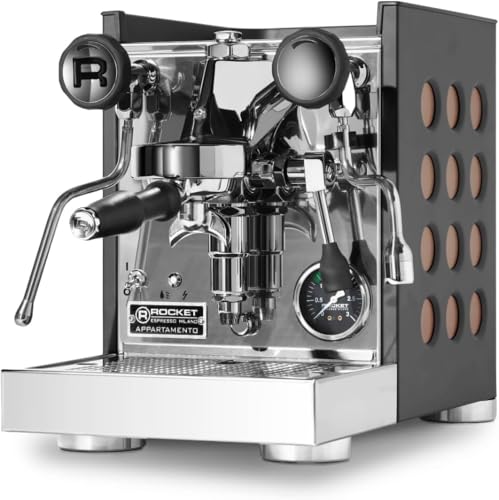
2. Rocket Espresso Appartamento
A compact Italian heat exchanger machine with an E61 group and a polished steel body. The copper-accent look makes it popular for open kitchens.
Suits: small kitchens that want style. Strengths: compact size and an E61 group. Weaknesses: a single heat exchanger boiler. Skip it if you want separate brew control.
View Rocket Appartamento on Amazon

Best for home users who want control
3. Lelit MaraX PL62X
A heat exchanger machine with a PID that lets you manage brew temperature, in a compact housing. It is a favourite among home users who want control without a second boiler.
Suits: home users who want control. Strengths: adjustable brew temperature. Weaknesses: still a heat exchanger design. Skip it if you want true dual boilers.

Best for design-conscious buyers
4. Ascaso Steel Duo PID
A Spanish dual boiler machine with a brushed steel body and a touch of retro styling. It aims at a clean look and temperature stability.
Suits: design-conscious buyers. Strengths: a distinctive steel look. Weaknesses: fewer reviews than the biggest brands. Skip it if you want a widely serviced brand.
View Ascaso Steel Duo on Amazon
Best for small counters needing dual boilers
5. Profitec Pro 300
A German dual boiler machine in a compact body, with a rotary pump option on some versions. It trades size for polish and is built for daily use.
Suits: small counters needing dual boilers. Strengths: compact dual boiler build. Weaknesses: fewer controls than larger models. Skip it if you want a big touchscreen.
View Profitec Pro 300 on Amazon
Best for espresso fans who steam occasionally
6. Quick Mill Silvano
An Italian machine with a single boiler and a thermoblock-style steam side, aimed at users who want a classic look. It suits those who steam less often.
Suits: espresso fans who steam occasionally. Strengths: a classic Italian build. Weaknesses: less suited to back-to-back milk drinks. Skip it if you make lattes constantly.
View Quick Mill Silvano on Amazon
Care and Setup
- Backflush with plain water after each session and with cleaner on the schedule the maker gives.
- Descale at the interval suited to your local water.
- Purge and wipe the steam wand straight after steaming.
- Keep the drip tray empty so it does not overflow.
Mistakes to Avoid
- Pairing a prosumer machine with a weak grinder.
- Skipping descaling and risking boiler damage that no warranty covers for hard water.
- Ignoring counter height and cabinet clearance before buying a tall model.
- Expecting instant readiness from a heavy brass machine.
Heat Exchanger Versus Dual Boiler in Daily Use
The choice between these two designs shapes how you use the machine every morning. A dual boiler has one boiler for brewing and another for steam, each held at its own temperature. You can brew a shot and steam milk at the same time, and the brew temperature is managed directly. A single boiler machine must change temperature between brewing and steaming, which adds waiting.
A heat exchanger machine keeps one boiler hot enough to make steam and passes cooler brew water through a tube within it. This lets you brew and steam together without a second boiler. The trade-off is that brew water temperature depends on how the heat exchanger behaves, and some machines need a short cooling flush before a shot to avoid scorched water. Some models add electronic controls to help manage this.
Both designs make excellent coffee in skilled hands. Dual boilers tend to offer easier temperature adjustment and repeatability, which suits people who like to change beans often. Heat exchangers are often simpler and more compact, suiting those who want classic hardware and are happy to learn a routine. Single boiler machines can be a good value for people who mostly drink straight espresso or who are patient with milk drinks.
Think about how you drink coffee. If you make several milk drinks in a row, simultaneous steaming is valuable. If you drink one or two shots a day, a simpler design may be enough. Check the listing for the boiler type, temperature control and warm-up time, and read the manual for the intended workflow.
Temperature Control, Pressure and Shot Consistency
A prosumer machine’s selling point is control. A PID controller is an electronic thermostat that holds boiler temperature within a narrow band, which helps shots taste consistent. Different machines let you set the temperature in different ways, and some display it. A machine without a PID can still pull good shots, but you may need to adjust technique to deal with temperature swings.
Pressure is the next factor. Most machines use a vibration or rotary pump to deliver pressure during extraction. Rotary pumps are generally quieter and are associated with plumbed-in or commercial-style setups. Many machines have a pressure gauge, and some let you adjust the pressure at the pump or with a valve. Consult the manual for the right pressure and the process of changing it. Do not adjust pressure without knowing what you are doing.
Group head design affects thermal stability. A large brass group head holds heat and warms up slowly, which helps stability once heated but requires patience to reach temperature. Some machines have heated groups that warm quickly. The listing should describe the group, and the manual should state recommended warm-up times. Always allow the whole machine, including the portafilter and group, to heat fully before pulling shots.
Even the best machine cannot compensate for poor grinding or stale beans. Control is only useful if you control the other variables too. Use a scale, keep notes and change one thing at a time. That discipline is what turns hardware into reliable espresso.
Water Supply, Tanks, Plumbing and Scale Control
Water makes up most of an espresso, and it also affects your machine’s lifespan. Most home machines use a reservoir that you fill by hand, which is simple and flexible. A larger tank means fewer refills, and a tank that is easy to remove and clean is a practical advantage. Check the capacity, access and whether there is a low-water warning.
Some machines can be plumbed into a water line and drain, which removes refilling. This requires planning, with the correct fittings, a water filter and possibly a professional installation. Check the machine’s specifications for whether plumbing is supported or requires a conversion. A leak can cause serious damage, so use quality parts and check connections regularly.
Scale is the slow enemy. Hard water leaves mineral deposits in boilers, pipes and valves, which can reduce heating efficiency and block flow. Using filtered or softened water suited to espresso machines slows buildup. The right water for your machine is a matter of balance, because very soft water can cause its own problems. Follow the maker’s advice, and consider testing your water hardness.
Descale on the schedule the manual suggests, using products approved for your machine. Replace water filters as recommended. If you notice slow heating, reduced steam, odd noises or lower flow, scale may be the cause. Keep a maintenance log. Good water management is one of the most useful things you can do to protect a prosumer machine.
Steam Power, Milk Drinks and Workflow
If you drink cappuccinos and lattes, steam performance matters as much as the shot. A steam wand with enough power textures milk quickly into fine foam, whereas weak steam takes longer and produces larger bubbles. Dual boilers and heat exchangers usually offer stronger steam than entry-level machines, but the exact power varies. Check the listing for the wand design and whether it is articulated, since a wand that moves freely makes technique easier.
Wand tips differ in the number and size of holes, affecting how fast steam comes out. Many machines allow replacing the tip. Look for a wand that stays cool enough to wipe, and a no-burn or well-insulated design. Practice with cold milk and a thermometer or by feel, and learn to purge the wand before and after use to clear condensation and milk residue.
Workflow matters when you make several drinks. Check the pump, the group and the steam wand layout, and think about how easy it is to move between steps. A drip tray that is shallow or hard to remove can be annoying, and a cup warmer on top is useful for keeping cups hot. Consider the machine’s footprint and height relative to your cabinets, as many prosumer machines are large.
Finally, think about noise, speed and warm-up. Machines with larger boilers may take a while to heat, though some include faster heat-up modes. Decide whether you can plan ahead or want a quick start. Check whether the machine has an auto-on timer to warm up before you wake.
Cost of Ownership, Service and Upgrades
The price of the machine is only part of the cost. You will need a good grinder, which many experienced users say deserves a similar or greater share of the budget. You will also need accessories: a scale, a tamper, a milk pitcher, cleaning supplies, descaler and water treatment. Factor these in when comparing machines.
Service is a major question. Prosumer machines are built to be maintained, and parts like gaskets, shower screens and valves wear and need replacing. Find out whether spare parts are available where you live, whether the maker or a local technician offers service, and what the warranty covers. A machine that you can maintain is likely to last far longer than one you must replace when a part fails.
Consider the learning curve too. Some prosumer machines are easy to use, while others reward patience. Be honest about how much time you want to spend, and look for guidance from the maker. A machine you enjoy using is better than one that is theoretically superior.
Budget tiers can be described in general terms. Lower-priced prosumer machines offer core features, such as good build and temperature control, in a convenient package. Mid-range models add more power, better materials and features. Higher tiers deliver commercial-grade components, serviceability and plumbing options. Ask before buying: What drinks do I make? How many per day? What grinder do I have? Is there space and power? Can I get service? Do I want a plumbed-in option later? Answering these helps you choose a machine that fits your habits and avoids paying for features you will not use.
Prosumer Espresso Machine FAQ
What does prosumer mean?
It describes machines that borrow commercial parts and design for a home user. The result is more control and durability than a basic home machine.
Do I need a plumbed-in machine?
No. A water tank works for most homes. Plumbing in is a convenience if you pull many shots each day, but it needs a nearby line and a suitable fitting.
Are heat exchanger machines worse than dual boilers?
Not necessarily. They steam strongly and brew well. Dual boilers simply make it easier to set temperatures for each job, and they usually recover faster between shots.
How important is the grinder?
Very. A good grinder often matters more than the machine, so plan to give it real attention. Even the best boilers cannot make up for uneven or stale grounds.
How long should I let a prosumer machine warm up?
It depends on the design, and larger groups take longer to stabilize. Follow the manual, and let the portafilter and group heat fully before pulling shots.
What water should I use?
Use water suited to espresso machines, often filtered or treated, and follow the maker's advice. Very hard water causes scale, while very soft water can have its own problems.
How often should I descale?
It depends on your water and use. Follow the manual's schedule and use approved products. Slow heating or weak steam can be signs that scale has built up.
What is a PID controller?
It is an electronic controller that keeps boiler temperature steady. It helps shots taste consistent and, on some machines, lets you change the brew temperature.
Can I make several milk drinks in a row?
Dual boiler and many heat exchanger machines are designed for this, while single boiler machines need pauses between brewing and steaming. Check the listing.
Is a rotary pump better than a vibration pump?
Rotary pumps are generally quieter and suit plumbed-in setups, while vibration pumps are common and compact. Either can make good espresso.
Do I need a special electrical outlet?
Check the voltage and current requirements in the manual, since some machines draw considerable power. Use a suitable outlet and avoid extension cords.
Boiler Size, Warm-Up Time and Daily Routine
Prosumer machines are not instant. A heavy metal body, large boiler and substantial group head take time to come up to a stable temperature, and many owners treat warm-up as part of the routine. Machines with heat-exchanger or dual boiler designs often need a longer period for the group and portafilter to heat through than the water gauge suggests. If you want espresso within a few minutes of waking up, look at whether a machine offers a quick-start mode or can be put on a timer, and plan to leave the portafilter locked in to warm.
Boiler size affects both recovery and energy use. A larger boiler holds heat steadily and steams for longer, but takes longer to heat and may use more electricity while idle. A smaller boiler heats faster but can have less steam reserve. Neither is better in the abstract; the right choice depends on how many milk drinks you make back to back.
A timer is worth considering if your machine supports one. Setting it to turn on shortly before you wake gives the machine time to stabilize, and it saves you from guessing whether it is ready.
Matching the Machine to the Way You Drink Coffee
Straight espresso drinkers care mostly about temperature stability and a steady pump, while milk drink lovers care about steam recovery and workflow. A one-person household making a single flat white each morning can do well with a simpler setup, and may not use a dual boiler’s ability to brew and steam at the same time. A household making four lattes for guests will notice the difference.
Think about shot style too. Some machines include pressure profiling or flow control, which lets you change the pressure during the shot. This can be rewarding for a hobbyist who enjoys experimenting, but it adds variables for a beginner. A machine with a fixed pressure and good temperature control is easier to learn on.
Also consider the people who will use it. If several family members will pull shots, a machine with clear controls and forgiving behavior is more practical than a finicky one that needs a specific routine.
Counter Space, Weight and Kitchen Fit
Prosumer machines are heavy and often deeper than a typical drip machine. Measure the space under your cabinets, including the height needed to lift the water tank lid or fill the reservoir. Check the depth too, so the machine does not hang over the edge or press against the backsplash, which can trap heat and moisture.
Weight matters more than most buyers expect. Machines with stainless steel panels and large boilers can be difficult to move, so find a permanent spot with room to pull the machine forward for cleaning. Make sure the counter can take the weight, and place the machine on a mat or tray to protect it from drips.
Plan for the supporting gear as well: a grinder, a tamper, a knock box, a pitcher and a place to keep them. A compact machine like the Rocket Appartamento saves width, but the grinder will still need space beside it.
Warranty, Parts and Finding Service Before You Buy
A machine in this class is meant to last for years, but it will need care. Before buying, find out who supports the product where you live. Some brands sell through authorized dealers who offer repair and parts, while others rely on the maker’s service center or third-party technicians. Check the length of the warranty and what it covers, as boilers, pumps and electronics may be treated differently.
Look at how easy it is to find replacement gaskets, shower screens and gauges. Machines built from standard components can be repaired by a local technician, while proprietary parts may require shipping to the maker. Reading the manual before you buy tells you how much routine service you can do yourself.
Keep the receipt and register the machine if the brand offers it. It is also worth confirming that the listing is from an authorized seller, because warranty terms can differ for gray market imports.
It is also sensible to budget for the first month. New owners usually buy a few extras after the machine arrives, such as a better tamper, cleaning tablets, a descaling product or a knock box, and these can add up. Allow some room for them so the machine is not left waiting on small parts.
Finally, think about resale. Well-known prosumer brands tend to hold interest on the used market, and a machine with its original box, manual and accessories is easier to sell if you outgrow it. That is not a reason to buy, but it can soften the decision if you are unsure whether the hobby will last.
Your First Month With a Prosumer Machine
The opening weeks with a machine at this level rarely go the way the glossy product pages suggest. The Breville Dual Boiler, the Rocket Appartamento and the Lelit MaraX all arrive capable of far better espresso than most owners extract from them at first, and the gap is almost never the hardware. It is the routine around the hardware. Spend the first fortnight pulling shots with one coffee, one dose and one yield target, changing a single variable at a time, and keep brief notes on what changed in the cup. That discipline feels slow, yet it teaches you how your particular machine responds to grind, distribution and temperature far faster than jumping between beans and recipes ever will.
Warm-up deserves more respect than it usually gets. A prosumer boiler and a heavy group head hold a great deal of metal, and that metal needs time to reach a stable temperature before the first shot tastes like the third. Owners who switch the machine on while they shower and dress, rather than expecting instant readiness, consistently report sweeter, more repeatable results. If your mornings are rushed, a simple timer plug that starts the machine before your alarm solves the problem without any change to the machine itself, and it protects you from the thin, sour shots that come from a half-warmed group.
Building a Morning Routine That Holds Together
A workable routine is a short chain of habits performed in the same order every day. Flush a little water through the group to wake it up and rinse away stale residue. Weigh the dose rather than trusting the grinder timer until you know how that timer drifts across a bag of beans. Distribute the grounds evenly, tamp once with level pressure, lock in immediately and start the pump without letting the portafilter sit against a hot group, which quietly bakes the top of the puck. None of these steps is glamorous, and together they explain most of the difference between a frustrating machine and a satisfying one.
Keep a small towel, a knock box and a milk pitcher within arm’s reach so the routine flows instead of sprawling across the kitchen. Wipe the portafilter basket dry before dosing, because even a little moisture channels water unevenly through the puck. After the last drink of the day, a quick water-only backflush and a wipe of the shower screen take under a minute and prevent the rancid build-up that slowly poisons flavour. Weekly, that same habit expands into a fuller clean. Owners who treat these small acts as part of making coffee, rather than chores after it, keep machines like the Profitec Pro 300 and the Quick Mill Silvano tasting clean for years.
Heat, Pressure and What Stability Actually Feels Like
Learning to Taste Temperature Problems
Temperature faults announce themselves in the cup long before any gauge explains them. A shot that tastes sharp, salty and thin at the front of the tongue usually ran too cool or too fast, while one that tastes ashy, dull and drying often ran too hot or too long. Before you adjust anything on a PID-equipped machine such as the Ascaso Steel Duo or the Lelit MaraX, confirm the basics: fresh beans, a clean group, a sensible dose. Only then move the set temperature a small step and pull two or three shots, because a single shot tells you almost nothing reliable about a change.
Stability matters more than the exact number on the display. A machine that holds its temperature through back-to-back drinks will serve a household far better than one that posts an impressive specification but drifts when asked to make four milk drinks in a row. This is where the dual-boiler designs in this line-up earn their keep during busy weekend mornings, while heat-exchanger machines reward a short cooling flush and a calmer pace. Neither approach is wrong. They simply ask for different habits, and choosing the design that matches your patience is a smarter move than choosing the one with the longer feature list.
Pre-Infusion and Pressure Profiling Without the Obsession
Gentle pre-infusion, where water first wets the puck at low pressure before full pressure arrives, forgives small distribution errors and tends to produce a more even extraction. On machines that offer it, use it as a consistency tool rather than a flavour toy. Likewise, flow and pressure gadgets can rescue a shot, but they cannot rescue stale beans or a dirty group. New owners often chase exotic profiles while their basic shots still channel, which is rather like tuning a guitar that has not yet been strung. Master the plain, full-pressure shot first; the refinements will still be there when your palate is ready for them.
A practical exercise helps more than any forum thread. Pull the same coffee at three different yields while holding everything else steady, taste them side by side once they have cooled slightly, and note where sweetness peaks and where bitterness takes over. Repeat the exercise a week later with a different coffee. Within a month you will have built an internal map of extraction that transfers to every machine you will ever own, including the Rocket Appartamento with its simpler controls and the Dual Boiler with its deeper menu. That map, not the equipment, is the real upgrade this category offers.
Living With Steam: Milk Drinks for a Household
Steaming for Two Versus Steaming for Six
Steam performance feels abundant when you texture milk for one flat white and very different when four guests are waiting after dinner. Larger boilers recover between pitchers, while smaller or thermoblock-based systems ask you to pause and let pressure rebuild. Plan drinks in a sensible order: pull all the espresso first if your machine holds temperature well, or alternate shot and steam if it prefers a steadier rhythm. Warm the cups, because a cold thick-walled cup steals heat from a small drink shockingly fast, and keep the milk cold until the moment it meets the steam wand.
Technique outweighs raw power for most home drinkers. Submerge the tip just below the surface long enough to introduce a gentle hiss of air early, then sink the wand to create a rolling whirlpool that folds that air into fine foam. Milk that screams, bubbles coarsely or climbs the pitcher too quickly is telling you the tip position is wrong, not that the machine lacks strength. Practice with water and a drop of dish soap if milk feels wasteful while you learn; the foam behaves similarly and costs almost nothing. Within a few weeks the motion becomes automatic, and the difference between the machines in this guide narrows considerably.
Keeping the Steam Side Clean and Safe
Milk residue is the fastest route to unpleasant flavours and blocked steam tips. Purge the wand before and after every use, wipe it immediately with a dedicated damp cloth, and soak the tip if holes begin to clog. A wand left crusted after a busy morning will taint the next drink and can harbour bacteria in a warm kitchen. Descaling and boiler care follow the maker guidance for your model, and softening hard water protects both flavour and the machine’s internal parts. Treat water as an ingredient and a maintenance issue at once, and the machine will repay you with steadier performance.
Finally, think about who else uses the machine. A partner or teenager who finds the routine intimidating will quietly stop using it, and an expensive purchase becomes a single person’s hobby. Machines with forgiving controls and clear feedback, like the Breville Dual Boiler, often win households over, while manual designs charm the person who enjoys the ritual. Be honest about which household you live in. The best prosumer machine is the one that gets used every day without negotiation, produces drinks everyone enjoys, and fits the counter and the morning schedule you actually have rather than the one you imagine on a quiet Sunday.
The Grinder Is Half the Machine
Owners love to credit the espresso machine, but the grinder quietly decides the ceiling of everything in the cup. A prosumer machine paired with an inconsistent grinder produces expensive frustration, because the puck never receives the even particle spread that stable extraction requires. If your shots swing between choking and gushing on the same setting, suspect the grinder before the machine. Burr condition, alignment and retention all matter: stale grounds retained in the chute season the first shot of the day with yesterday’s coffee, which is why a short purge before the first drink is a habit worth its tiny cost in beans. Budget honestly for the pair together, because a slightly humbler machine with a serious grinder will out-pour a flagship machine fed by a grinder that cannot hold its setting from morning to morning.
Single dosing and weighing are the practices that separate repeatable results from lucky ones at this level. Weigh the beans before grinding, weigh the liquid in the cup, and let those two numbers frame every judgement you make about taste. The scale feels like laboratory equipment for the first week and like a trusted friend by the second, because it removes the guessing that makes dialling in feel mysterious. When a shot tastes wrong, the numbers tell you whether the dose drifted, the yield wandered or the time collapsed, and each fault has a different cure. Without them you are adjusting by folklore. With them, the Breville Dual Boiler, the MaraX and every other machine in this line-up becomes a predictable instrument instead of a moody appliance, and your improvement as a barista accelerates in a way no accessory purchase can imitate.
Baskets, Showers and Small Parts With Outsized Effects
The basket is the cheapest component in the extraction chain and one of the most influential. A basket matched to your dose, with holes that are clean, even and unblocked, distributes water pressure honestly across the puck. Hold it up to the light occasionally; a few clogged holes will channel a shot no matter how carefully you prepared it. Precision baskets reward the effort with more even extractions, but they also expose sloppy distribution, which is why they sometimes seem to make coffee worse for a week before they make it better. That week is tuition. The shower screen above the basket deserves the same respect: remove it on the maker’s schedule, clean behind it, and replace its gasket when it hardens, because a leaking, coffee-caked group will quietly tax every shot you pull.
Portafilter choice shapes workflow more than flavour. A bottomless portafilter is a diagnostic window, showing you channeling as it happens in a way no spouted handle can, and watching your own extractions is the fastest education available in home espresso. It is also less forgiving of a messy bench and a careless knock. Many experienced owners keep both: the bottomless for learning and for light-roast experiments, the spouted for splitting shots and for guests. Neither choice needs defending. What matters is that the handle fits your machine’s group properly, seats without force and stays hot with the machine, because a cold portafilter dropped into a warmed group steals heat from the first seconds of the shot.
Upgrades, Accessories and Knowing When to Stop
The Order in Which Extras Actually Help
Spend in the order the cup notices. Fresh beans from a roaster you trust come first, then the scale, then water you would happily drink on its own, then the tamper that fits your basket without rocking, then distribution help if your shots still channel. Precision baskets, upgraded showers and pressure gadgets belong after those foundations, not before them, because each one amplifies a process that must already be sound. The owners who enjoy this hobby longest tend to buy slowly, live with each change for a month of mornings and let their palate, rather than a forum, nominate the next purchase. A prosumer setup assembled at that pace becomes personal in a way a single extravagant order never does.
There is also a point of genuine sufficiency, and recognising it is a skill. When your weekday shots please you, your milk drinks satisfy the household and your weekend experiments stay interesting, the setup is finished, whatever the internet is excited about this season. Machines like the Profitec Pro 300 and the Ascaso Steel Duo are built to serve for a decade or more, and their value compounds with familiarity: you learn exactly how your machine behaves on a cold morning, with a new coffee, under time pressure. That intimacy is the real product this category sells. Chase it, maintain it with water care and honest cleaning, and let other people win the upgrade race while you win the morning.
Weekday Rush, Weekend Ritual, Dinner Party
Picture a weekday at seven in the morning in a house where two adults leave within the hour. The machine that wins this scene is the one that was switched on by a timer, reaches readiness without supervision and forgives a slightly hurried puck because its temperature is stable and its controls are predictable. Drinks are made in a practised sequence, espresso for one, a milk drink for the other, cups warmed under the tap while the shots run. In this household the Breville Dual Boiler’s programmability and clear feedback are not luxuries; they are the difference between a daily ritual that survives busy seasons and an expensive appliance that gets bypassed for the kettle by March.
Now picture the same kitchen on a Sunday, with nowhere to be. Here the manual machines come into their own: the Rocket Appartamento’s lever and gauges invite involvement, the MaraX rewards a slower hand, and the process itself is the entertainment. A household that lives both scenes, rushed weekdays and ritual weekends, should choose for the weekday first, because a machine that fails the rush will not survive to see the weekends. The ritual can be recovered through beans, cups and attention; the lost weekday habit cannot. This is the most practical sentence in this entire guide, and it applies to every buying decision in the prosumer category, whatever the specification sheets argue.
The dinner party is the third test, and it is a test of recovery between drinks and of the host’s workflow more than of peak performance. Four to six drinks in sequence, some with milk, some without, decaf for one guest, hot water for tea from the machine’s tap for another: a prosumer machine handles this gracefully when the host has arranged cups, milk and towels in advance and pulls shots in a steady rhythm. Steam recovery matters here, and so does a drip tray that does not need emptying mid-service. Practise the sequence once on a quiet evening and the party version becomes calm. Guests remember the calm far longer than they remember the crema.
What Ownership Feels Like After a Year
Habits, Costs and the Second-Year Palate
A year in, the costs of ownership have settled into a pattern: beans as the main expense, milk, water treatment, the occasional gasket or shower screen, descaling supplies and perhaps one service visit if a pump or valve has had a hard life. None of it should surprise an owner who kept the maintenance calendar suggested in this guide. What does surprise most owners is their palate. The coffee they loved in month one tastes ordinary in month thirteen, not because it declined but because they improved. They buy better beans, notice roast dates, develop opinions about origins. The machine did not change; it educated its owner, which is the quiet return on the whole investment.
Resale and upgrade thoughts visit almost every owner around this time, and they deserve a cool head. A well-maintained prosumer machine holds its value respectably, and trading up is legitimate when a specific limitation, recovery time, control, footprint, has been felt weekly for months. Trading up because a new model launched is how benches fill with regret. The Profitec, Ascaso and Quick Mill machines in this list were built to make the second year better than the first through familiarity alone. Give them that year, keep the water kind and the group clean, and most owners discover the machine they wanted was the one they already had, properly understood.
Decide by Morning, Not by Specification
If this guide leaves you with one method, let it be this: write down your next seven mornings, honestly, with their timings, their drinks and their people, and read the machine descriptions against that document rather than against your ambitions. The machine that serves those seven mornings will serve the next seven hundred. Keep the water kind, the group clean, the doses weighed and the notes brief, and a prosumer machine stops being a purchase and becomes what its owners eventually call it, without irony: the best room in the house, occupying two feet of counter.
Frequently Asked Questions
How long does a prosumer espresso machine take to warm up?
It varies by design. Many heat exchanger and dual boiler machines reach brewing temperature in several minutes, but the group head and portafilter can need longer to heat through for stable shots. Check the maker’s guidance, and consider a timer if mornings are tight.
Is a prosumer machine worth it for one person?
It can be, if you drink espresso daily and enjoy dialing in shots. The extra cost buys temperature stability, build quality and steam power. If you make only an occasional drink or rarely use milk, a simpler machine may serve you well for less.
Do prosumer espresso machines need professional servicing?
They need regular cleaning and periodic maintenance such as gasket and shower screen replacement. Many owners handle that themselves with the manual. Boiler, pump or electrical problems are usually better left to a qualified technician or the maker’s service center.
What accessories do I need with a prosumer machine?
A quality grinder is the first priority. You will also want a tamper that fits your basket, a scale, a knock box, a milk pitcher and a backflush brush. A water treatment option helps protect the boiler if your tap water is hard.
The Short Version
For a modern dual boiler, the Breville Dual Boiler. For a compact Italian classic, the Rocket Appartamento. For brew temperature control, the Lelit MaraX. For a distinctive design, the Ascaso Steel Duo. For a compact dual boiler, the Profitec Pro 300. For a classic single-boiler look, the Quick Mill Silvano.


