Disclosure: topratedkitchenware.com is reader-supported. When you buy through links on our site, we may earn an affiliate commission from Amazon and other retailers, at no extra cost to you.
Where to buy
The picks below are the verified shortlist for this guide to best quality food processors. Each linked name takes you to its Amazon listing, where you can check the latest price on Amazon, confirm the current configuration, and read the newest owner feedback before you decide.
- Cuisinart Mini Food Processor, 3-Cup — Best Overall
- Hamilton Beach Food Processor, 10-Cup (70730) — Best for Family Batches
- BLACK+DECKER Food Processor, 8-Cup, 450W — Best Mid-Size Pick
- Cuisinart Core Custom 4-Cup Mini Chopper (MCH-4) — Best Mini Upgrade
- KitchenAid 3.5 Cup Food Chopper, Empire Red (KFC3516ER) — Best for Texture Control
- BLACK+DECKER 1.5-Cup Electric Food Chopper, 150W — Best for the Smallest Jobs
Read the full guide ↓ for how each pick performs, where each one compromises, and which households each one actually suits.
Shoppers looking for the best quality food processors usually mean something specific, even if they say it loosely: a machine that still works, and works well, years after the receipt is forgotten. Quality in this category is not a mystery. It shows up as blades that hold an edge, bowls that survive daily washing, motors that do not strain on honest loads, and parts that can still be bought when something finally wears. This guide judges the verified picks on exactly those durable terms.
The shortlist spans the category honestly. At the compact end, the Cuisinart minis and the KitchenAid chopper represent the established mini class, where quality means a well-made blade and a bowl that rinses clean for a decade. At the full-size end, the Hamilton Beach 10-cup carries the family workload. No pick here is a disposable novelty, and each review names the quality evidence in its verified listing, blade material, reversing mechanisms, dishwasher-safe construction, rather than trading in vague premium language. Readers cross-checking value can compare Best Prices Food Processors after this quality pass.
A quality guide also owes you the limits. None of these listings promises commercial duty, and quality at home scale means fitness for home loads repeated for years, not abuse tolerance. The reviews state each machine’s honest ceiling, and the buying sections explain how matching a machine to its proper loads is itself the biggest quality decision a buyer makes.
Key Takeaways
- Quality here means blade steel, bowl durability, motor headroom and parts availability, not badge prestige.
- Auto-reversing blades and stainless multi-purpose blades are the quality signatures at the mini end.
- A machine used inside its design loads outlasts a stronger machine abused beyond them.
- Dishwasher-safe parts are a quality feature: they decide whether the machine is maintained or neglected.
- Established model lines keep replacement bowls and blades available, which is quality measured in years.
In this guide
Quick Picks
- Best Overall: Cuisinart Mini Food Processor, 3-Cup — a pick defined by a compact auto-reversing mini processor that chops in one direction and grinds in the other.
- Best for Family Batches: Hamilton Beach Food Processor, 10-Cup (70730) — a pick defined by a full-size 10-cup processor with a bowl scraper that keeps food moving without stopping.
- Best Mid-Size Pick: BLACK+DECKER Food Processor, 8-Cup, 450W — a pick defined by a mid-size 450W processor that covers shred, slice, mince, grind and puree in an 8-cup bowl.
- Best Mini Upgrade: Cuisinart Core Custom 4-Cup Mini Chopper (MCH-4) — a pick defined by a 4-cup mini chopper with an auto-reversing SmartPower blade and dishwasher-safe parts.
- Best for Texture Control: KitchenAid 3.5 Cup Food Chopper, Empire Red (KFC3516ER) — a pick defined by a 3.5-cup chopper with two speeds plus pulse and a dishwasher-safe work bowl.
- Best for the Smallest Jobs: BLACK+DECKER 1.5-Cup Electric Food Chopper, 150W — a pick defined by a one-touch 1.5-cup chopper with a 150W motor and a stay-sharp blade for the smallest jobs.
How These Picks Were Chosen
Quality was the filter for this shortlist, applied to the verified pool through the Creators API. Each model was confirmed, and only specifications stated in the verified listing appear in this guide. What survived the filter shares a pattern: named blade systems rather than anonymous steel, bowls and parts designed for dishwashers, and model lines with enough history that their failure modes are known and their parts are stocked.
The mix is deliberate. Two Cuisinart minis show how quality scales down, the SmartPower reversing blade is a genuinely engineered answer to the chop-versus-grind problem. The KitchenAid chopper brings two speeds plus pulse, control being a quality trait in its own right. The full-size Hamilton Beach and the mid-size BLACK+DECKER carry the disc repertoire. Brand-focused readers can go deeper with Best Prices On Cuisinart Food Processors.
This is a research-led guide. No hands-on testing is claimed, and no scores or review counts are printed, because those figures shift constantly. Quality claims here rest on construction facts from the listings, materials, mechanisms and included parts, which are the evidence a careful buyer can actually verify before purchase.
The 6 Best Options for Best Quality Food Processors

Cuisinart Mini Food Processor, 3-Cup
Badge: Best Overall
Strengths
- Auto-reversing SmartPower blade gives distinct chop and grind modes in one small bowl
- 24 oz. bowl is the right size for herbs, garlic, nuts and small sauce batches
- Brushed chrome finish and a footprint that lives happily on the counter
Trade-offs
- 3-cup class capacity is a hard ceiling for family-size batches
- No slicing or shredding discs, so it is a blade-only machine
- Small bowl means liquids must stay modest to avoid leaks at the lid
Key specifications (from the verified listing)
- Capacity: 3-cup / 24 oz. (from verified listing)
- Blade: auto-reversing SmartPower stainless blade, chop and grind modes
- Finish: brushed chrome
The Cuisinart Mini is the small-bowl specialist of this shortlist. Its auto-reversing blade is the clever part: run it one way and the sharp edge chops herbs, onions and nuts; reverse it and the blunt edge grinds spices, hard cheese and coffee-adjacent jobs. The 24 oz. bowl keeps it honest, this is a machine for the small, frequent jobs that make cooks reach for a knife and board out of habit, and it does those jobs in seconds with a bowl that rinses clean just as fast.
On quality, the Cuisinart Mini Food Processor, 3-Cup earns its place because it is a compact auto-reversing mini processor that chops in one direction and grinds in the other. That is an engineering answer to a real problem rather than a styling exercise, and engineered answers are what separate machines that age well from machines that merely start well. Every material and mechanism named in its listing is doing work.
Longevity is where the Cuisinart Mini Food Processor, 3-Cup will ultimately be judged, and its prospects rest on unglamorous virtues: parts that tolerate dishwashers, a blade that can be replaced rather than a machine that must be, and a design load that matches the jobs its size invites. Owners who respect that load are the ones still praising a processor a decade on.
There is a final, practical test that separates a good shortlist entry from a great one, and the Cuisinart Mini Food Processor, 3-Cup passes it: the week-two test. In week one any new processor is a novelty that gets used because it is new. By week two the novelty is gone, and the machines still on the counter are the ones whose size, controls and cleanup fit the household’s actual rhythm. Everything in this pick’s verified design, its capacity class, its blade system and the way its parts wash, points toward surviving that test in the kitchens its review describes, which is ultimately the only endorsement that compounds.
Best for: daily small jobs: herbs, garlic, nuts, small sauces and grinding spices / Not suited for: family-size batches or any slicing and shredding work
Check on Amazon for the current listing, configuration and latest price.

Hamilton Beach Food Processor, 10-Cup (70730)
Badge: Best for Family Batches
Strengths
- 10-cup bowl handles family batches, doughs and big shredding jobs in one load
- Built-in bowl scraper folds food back toward the blade while it runs
- Slicing, shredding, mincing and pureeing covered by the included discs and blade
Trade-offs
- Full-size footprint needs real counter or cupboard space
- More parts to wash than any mini chopper in this guide
- Plastic bowl class build rather than a premium metal body
Key specifications (from the verified listing)
- Capacity: 10 cups (from verified listing)
- Functions: slice, shred, mince and puree
- Feature: Easy Clean bowl scraper; model 70730; stainless steel accents
The Hamilton Beach 70730 is the workhorse format most households picture when they say food processor: a 10-cup bowl, a chopping blade plus slicing and shredding discs, and enough room to make a slaw, a pie dough or a double batch of salsa without splitting it. Its signature detail is the bowl scraper, a simple arm that sweeps the bowl wall as it runs, which matters more than it sounds, because uneven bowls are the main reason processors leave a ring of unprocessed food above the blade line.
On quality, the Hamilton Beach Food Processor, 10-Cup (70730) earns its place because it is a full-size 10-cup processor with a bowl scraper that keeps food moving without stopping. That is an engineering answer to a real problem rather than a styling exercise, and engineered answers are what separate machines that age well from machines that merely start well. Every material and mechanism named in its listing is doing work.
Longevity is where the Hamilton Beach Food Processor, 10-Cup (70730) will ultimately be judged, and its prospects rest on unglamorous virtues: parts that tolerate dishwashers, a blade that can be replaced rather than a machine that must be, and a design load that matches the jobs its size invites. Owners who respect that load are the ones still praising a processor a decade on.
There is a final, practical test that separates a good shortlist entry from a great one, and the Hamilton Beach Food Processor, 10-Cup (70730) passes it: the week-two test. In week one any new processor is a novelty that gets used because it is new. By week two the novelty is gone, and the machines still on the counter are the ones whose size, controls and cleanup fit the household’s actual rhythm. Everything in this pick’s verified design, its capacity class, its blade system and the way its parts wash, points toward surviving that test in the kitchens its review describes, which is ultimately the only endorsement that compounds.
Best for: family prep, slaws, doughs and big shredding or slicing sessions / Not suited for: tiny counters or cooks who only ever make single portions
Check on Amazon for the current listing, configuration and latest price.

BLACK+DECKER Food Processor, 8-Cup, 450W
Badge: Best Mid-Size Pick
Strengths
- 8-cup bowl is the sweet spot between mini choppers and full-size machines
- 450W motor with attachments to shred, slice, mince, grind and puree
- Stainless steel blade and a feed chute sized for real vegetables
Trade-offs
- Mid-size bowl still means batching for very large prep days
- Disc-based slicing gives one thickness rather than adjustable cuts
- Controls are simple rather than programmable
Key specifications (from the verified listing)
- Capacity: 8 cups (from verified listing)
- Power: 450W (from verified listing)
- Blade: stainless steel; attachments for shred, slice, mince, grind and puree
The BLACK+DECKER 8-cup sits deliberately in the middle of this guide: bigger than the minis, lighter than the 10 and 14-cup machines, and powered by a 450W motor that covers the five jobs its listing names, shredding, slicing, mincing, grinding and pureeing. For a household of two to four that preps most nights, the 8-cup bowl is usually the size that gets used rather than admired, large enough for a meal’s worth of vegetables, small enough to wash without resentment.
On quality, the BLACK+DECKER Food Processor, 8-Cup, 450W earns its place because it is a mid-size 450W processor that covers shred, slice, mince, grind and puree in an 8-cup bowl. That is an engineering answer to a real problem rather than a styling exercise, and engineered answers are what separate machines that age well from machines that merely start well. Every material and mechanism named in its listing is doing work.
Longevity is where the BLACK+DECKER Food Processor, 8-Cup, 450W will ultimately be judged, and its prospects rest on unglamorous virtues: parts that tolerate dishwashers, a blade that can be replaced rather than a machine that must be, and a design load that matches the jobs its size invites. Owners who respect that load are the ones still praising a processor a decade on.
There is a final, practical test that separates a good shortlist entry from a great one, and the BLACK+DECKER Food Processor, 8-Cup, 450W passes it: the week-two test. In week one any new processor is a novelty that gets used because it is new. By week two the novelty is gone, and the machines still on the counter are the ones whose size, controls and cleanup fit the household’s actual rhythm. Everything in this pick’s verified design, its capacity class, its blade system and the way its parts wash, points toward surviving that test in the kitchens its review describes, which is ultimately the only endorsement that compounds.
Best for: households of two to four wanting one mid-size machine for nightly prep / Not suited for: very large batch days or cooks wanting programmable controls
Check on Amazon for the current listing, configuration and latest price.

Cuisinart Core Custom 4-Cup Mini Chopper (MCH-4)
Badge: Best Mini Upgrade
Strengths
- 4-cup bowl is a useful step up from 3-cup minis for dips and dressings
- Auto-reversing SmartPower blade covers chopping and grinding in one unit
- Dishwasher-safe parts make the small-job cleanup genuinely small
Trade-offs
- Blade-only machine: no slicing or shredding discs
- 4 cups still means batching for crowd-size prep
- White and stainless finish shows every splash until wiped
Key specifications (from the verified listing)
- Capacity: 4 cups (from verified listing)
- Blade: auto-reversing stainless steel SmartPower blade
- Model: MCH-4, white/stainless steel; dishwasher-safe parts
The Cuisinart Core Custom MCH-4 is the mini for cooks who found 3-cup bowls just slightly too small. The extra cup sounds trivial and is not: it is the difference between a batch of hummus that fits and one that climbs the lid. It keeps the family’s auto-reversing SmartPower blade, sharp edge to chop, blunt edge to grind, and pairs it with dishwasher-safe parts, so the machine’s whole ownership proposition is speed at both ends of the job, seconds to process, seconds to clean.
On quality, the Cuisinart Core Custom 4-Cup Mini Chopper (MCH-4) earns its place because it is a 4-cup mini chopper with an auto-reversing SmartPower blade and dishwasher-safe parts. That is an engineering answer to a real problem rather than a styling exercise, and engineered answers are what separate machines that age well from machines that merely start well. Every material and mechanism named in its listing is doing work.
Longevity is where the Cuisinart Core Custom 4-Cup Mini Chopper (MCH-4) will ultimately be judged, and its prospects rest on unglamorous virtues: parts that tolerate dishwashers, a blade that can be replaced rather than a machine that must be, and a design load that matches the jobs its size invites. Owners who respect that load are the ones still praising a processor a decade on.
There is a final, practical test that separates a good shortlist entry from a great one, and the Cuisinart Core Custom 4-Cup Mini Chopper (MCH-4) passes it: the week-two test. In week one any new processor is a novelty that gets used because it is new. By week two the novelty is gone, and the machines still on the counter are the ones whose size, controls and cleanup fit the household’s actual rhythm. Everything in this pick’s verified design, its capacity class, its blade system and the way its parts wash, points toward surviving that test in the kitchens its review describes, which is ultimately the only endorsement that compounds.
Best for: dips, dressings and small batches that overflow a 3-cup mini / Not suited for: slicing, shredding or crowd-size processing
Check on Amazon for the current listing, configuration and latest price.

KitchenAid 3.5 Cup Food Chopper, Empire Red (KFC3516ER)
Badge: Best for Texture Control
Strengths
- Two speeds plus pulse give real control over texture in a mini format
- Stainless steel multi-purpose blade and dishwasher-safe bowl keep cleanup easy
- Easy cord wrap makes it a tidy drawer or counter resident
Trade-offs
- Chopper format only: no discs for slicing or shredding
- 3.5-cup bowl is for small batches by design
- Empire Red finish is a statement colour not every kitchen wants
Key specifications (from the verified listing)
- Capacity: 3.5 cups (from verified listing)
- Controls: 2 speeds plus pulse
- Model: KFC3516ER, Empire Red; stainless steel multi-purpose blade; easy cord wrap
KitchenAid’s 3.5 Cup Chopper is the control-freak mini of the group. Where most small choppers offer one button and optimism, this one offers two speeds plus pulse, and pulse is the control that decides whether onions come out diced or pureed. The stainless steel multi-purpose blade, dishwasher-safe bowl and easy cord wrap complete a design clearly meant to live within reach and be used daily, and the Empire Red finish makes it the one pick in this guide that doubles as counter decor.
On quality, the KitchenAid 3.5 Cup Food Chopper, Empire Red (KFC3516ER) earns its place because it is a 3.5-cup chopper with two speeds plus pulse and a dishwasher-safe work bowl. That is an engineering answer to a real problem rather than a styling exercise, and engineered answers are what separate machines that age well from machines that merely start well. Every material and mechanism named in its listing is doing work.
Longevity is where the KitchenAid 3.5 Cup Food Chopper, Empire Red (KFC3516ER) will ultimately be judged, and its prospects rest on unglamorous virtues: parts that tolerate dishwashers, a blade that can be replaced rather than a machine that must be, and a design load that matches the jobs its size invites. Owners who respect that load are the ones still praising a processor a decade on.
There is a final, practical test that separates a good shortlist entry from a great one, and the KitchenAid 3.5 Cup Food Chopper, Empire Red (KFC3516ER) passes it: the week-two test. In week one any new processor is a novelty that gets used because it is new. By week two the novelty is gone, and the machines still on the counter are the ones whose size, controls and cleanup fit the household’s actual rhythm. Everything in this pick’s verified design, its capacity class, its blade system and the way its parts wash, points toward surviving that test in the kitchens its review describes, which is ultimately the only endorsement that compounds.
Best for: texture-sensitive small jobs where pulse control decides the result / Not suited for: disc work of any kind, or batches beyond a few cups
Check on Amazon for the current listing, configuration and latest price.
BLACK+DECKER 1.5-Cup Electric Food Chopper, 150W
Badge: Best for the Smallest Jobs
Strengths
- 1.5-cup bowl is perfectly sized for garlic, herbs, nuts and baby-food portions
- One-touch pulse operation could not be simpler to learn or teach
- Stay-sharp blade and dishwasher-safe parts keep ownership effort near zero
Trade-offs
- Smallest capacity in this guide: strictly a small-jobs machine
- 150W motor is not built for hard, dense or large loads
- One-touch pulse only, no speed settings to grow into
Key specifications (from the verified listing)
- Capacity: 1.5 cups (from verified listing)
- Power: 150W (from verified listing)
- Operation: one-touch pulse; stay-sharp blade; dishwasher safe
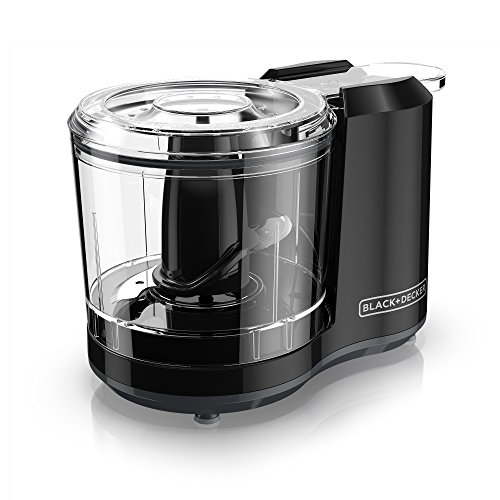
The BLACK+DECKER 1.5-cup chopper is the smallest machine in this guide and makes no apology for it. Its job description is the forty small tasks a week that are beneath a full-size processor and tedious by knife: a handful of garlic, a bunch of herbs, nuts for a salad, a small onion, a portion of baby food. One-touch pulse, a 150W motor, a stay-sharp blade and dishwasher-safe parts add up to a tool whose entire virtue is that using it is faster than deciding whether the job is worth a bigger machine.
On quality, the BLACK+DECKER 1.5-Cup Electric Food Chopper, 150W earns its place because it is a one-touch 1.5-cup chopper with a 150W motor and a stay-sharp blade for the smallest jobs. That is an engineering answer to a real problem rather than a styling exercise, and engineered answers are what separate machines that age well from machines that merely start well. Every material and mechanism named in its listing is doing work.
Longevity is where the BLACK+DECKER 1.5-Cup Electric Food Chopper, 150W will ultimately be judged, and its prospects rest on unglamorous virtues: parts that tolerate dishwashers, a blade that can be replaced rather than a machine that must be, and a design load that matches the jobs its size invites. Owners who respect that load are the ones still praising a processor a decade on.
There is a final, practical test that separates a good shortlist entry from a great one, and the BLACK+DECKER 1.5-Cup Electric Food Chopper, 150W passes it: the week-two test. In week one any new processor is a novelty that gets used because it is new. By week two the novelty is gone, and the machines still on the counter are the ones whose size, controls and cleanup fit the household’s actual rhythm. Everything in this pick’s verified design, its capacity class, its blade system and the way its parts wash, points toward surviving that test in the kitchens its review describes, which is ultimately the only endorsement that compounds.
Best for: the smallest daily jobs: garlic, herbs, nuts, baby food, single servings / Not suited for: anything dense, large or disc-based
Check on Amazon for the current listing, configuration and latest price.
Comparison Table
Read the table by columns rather than rows: the badge column tells you the role each pick plays in this guide, the specification column keeps the comparison on verified facts from the listings, and the best-for column is the one to weigh against your own kitchen, because fit is decided there and nowhere else. Capacities and wattages are the manufacturers’ listing figures; no prices or ratings appear, for the reasons this guide has given throughout.
| Pick | Badge | Key specifications | Best for |
|---|---|---|---|
| Cuisinart Mini Food Processor, 3-Cup | Best Overall | Capacity: 3-cup / 24 oz. (from verified listing); Blade: auto-reversing SmartPower stainless blade, chop and grind modes | daily small jobs: herbs, garlic, nuts, small sauces and grinding spices |
| Hamilton Beach Food Processor, 10-Cup (70730) | Best for Family Batches | Capacity: 10 cups (from verified listing); Functions: slice, shred, mince and puree | family prep, slaws, doughs and big shredding or slicing sessions |
| BLACK+DECKER Food Processor, 8-Cup, 450W | Best Mid-Size Pick | Capacity: 8 cups (from verified listing); Power: 450W (from verified listing) | households of two to four wanting one mid-size machine for nightly prep |
| Cuisinart Core Custom 4-Cup Mini Chopper (MCH-4) | Best Mini Upgrade | Capacity: 4 cups (from verified listing); Blade: auto-reversing stainless steel SmartPower blade | dips, dressings and small batches that overflow a 3-cup mini |
| KitchenAid 3.5 Cup Food Chopper, Empire Red (KFC3516ER) | Best for Texture Control | Capacity: 3.5 cups (from verified listing); Controls: 2 speeds plus pulse | texture-sensitive small jobs where pulse control decides the result |
| BLACK+DECKER 1.5-Cup Electric Food Chopper, 150W | Best for the Smallest Jobs | Capacity: 1.5 cups (from verified listing); Power: 150W (from verified listing) | the smallest daily jobs: garlic, herbs, nuts, baby food, single servings |
How to Choose the Right Option for Best Quality Food Processors
Read blade design as the quality headline
The blade is the part that works hardest and dulls first, so its design is the best single quality signal. Reversing blades, like the Cuisinart SmartPower, double the edge’s roles and spread wear. Stainless multi-purpose blades, like KitchenAid’s, resist the corrosion that kitchen acids bring. A listing that names its blade system is telling you engineering happened; a listing that hides it is telling you something else.
Judge the bowl and lid like consumables, because they are
Bowls crack, lids lose their tabs, and seals perish, on every brand, eventually. Quality therefore includes whether those parts are standard, stocked and replaceable for your model line. Established lines win this test by default. Before buying, a quick search for your shortlisted model’s replacement bowl is a five-minute quality audit no review can do for you.
Motor quality is headroom, not headline wattage
A motor’s quality shows in how it handles the top of its design load: dough in a full-size bowl, nuts in a mini. Headroom means the machine works without the strained note that precedes early failure. Match the load to the class, minis for small dense jobs in short bursts, full-size machines for dough and volume, and any well-made motor in this guide will repay the respect with years of service.
Controls and construction details that age well
Simple, positive controls age better than novelty interfaces, because there is less to fail and nothing to learn twice. Cord storage, like the KitchenAid’s easy cord wrap, prevents the flex damage that kills small appliances at the plug. Dishwasher-safe parts are a construction decision that protects the machine from its owner’s busy life. Quality is the sum of these small decisions, and the listings in this guide let you count them.
How to Keep a Food Processor Working Like New
Most processor wear is technique, not time. Pulse in short bursts rather than holding the motor on, especially with dense loads, and let the blade stop before adding ingredients. Cut food to even, modest pieces so the blade meets uniform resistance, and never fill past the bowl’s working line, because overfilling is what strains motors, stresses lids and leaves the top layer unprocessed all at once.
Wash with the machine’s future in mind. Dishwasher-safe parts can go in the dishwasher, but blades last longer and stay sharper washed by hand and dried immediately, because edges suffer in dishwasher racks and damp storage. Wipe the base with a damp cloth only, never immerse it, and store blades in the bowl or a guard rather than loose in a drawer where edges chip against other steel.
Once a season, do the two-minute quality check: run the empty bowl and listen for new noises, inspect the blade edge under light for chips, check the lid’s locking tabs for play, and look at the cord where it meets the body. Caught early, every one of those is a parts order; caught late, each is a new machine. Quality ownership is mostly this habit, repeated calmly.
- Problem: results have turned uneven over time → the blade edge is likely dulled or chipped; inspect it under light and replace the blade rather than the machine.
- Problem: the lid needs force to lock → check for food residue in the locking track and cracks in the tabs before assuming the bowl has warped.
- Problem: the motor sounds strained on loads it once handled → reduce batch size and piece size first; persistent strain on modest loads signals wear worth a service opinion.
What Quality Means at Mini Scale Versus Full Size
Quality wears different clothes at different sizes. In a mini, it is a blade that reverses instead of merely spinning, a bowl whose plastic resists staining and dishwasher heat, and a base heavy enough to sit still under pulse loads. In a full-size machine, it is disc steel that does not flex, a feed tube that does not crack at the hinge, and a motor with the headroom for dough. Judging a mini by full-size criteria, or the reverse, produces the wrong winner every time, which is why this guide reviews each pick inside its own class first.
The shared thread is honesty of specification. Every pick here states its capacity, its blade system and its parts plainly in its verified listing, and that plainness is itself a quality signal. Manufacturers confident in construction tend to describe it; the listings that reach for adjectives instead of mechanisms are the ones experienced buyers learn to skip. Readers weighing the full-size end can continue with Best Prices On Full Size Food Processors.
The Parts Ecosystem Is the Quality You Buy Last and Use Longest
Ask owners of decade-old processors what quality turned out to mean and most give the same answer: the day something small broke, a part existed. A bowl, a blade, a lid, ordered and fitted in a week, converts a death into a repair. That ecosystem is not an accident; it belongs to model lines with volume and history, which describes the Cuisinart and KitchenAid entries in this guide precisely, and it is the strongest argument for buying inside established lines.
This is also why the guide treats included parts as quality evidence. A machine sold with its discs and blades in the box starts life complete, and a line that sells those parts separately for years afterwards is a line planning to support your machine. When two picks otherwise tie, the one with the deeper parts bench is the quality buy, even if no sticker anywhere says so.
How Quality Shows Up in the Second Year, Not the Second Week
Almost any processor feels like a quality machine in its second week: the blade is factory-sharp, the plastic is glossy, the lid clicks like a showroom door. The honest examination happens in the second year, and its questions are specific. Does the blade still take an edge’s worth of bite out of a nut load, or has it dulled into a pusher? Do the lid tabs still engage with a click, or with a persuasion? Has the bowl stayed clear enough to judge a mixture’s texture at a glance? The picks in this guide were chosen because their designs, named blade systems, dishwasher-rated parts, established model lines, are the ones that answer those second-year questions well.
There is a corollary buyers rarely hear: quality is partly a behaviour the machine invites. A processor whose parts nest together gets stored kindly; one whose discs scatter through drawers gets its edges chipped by cutlery and its bowl cracked by a falling tin. When this guide praises in-bowl storage, cord wraps and dishwasher-safe design, it is praising quality in its behavioural form, the kind that decides whether the engineering quality underneath ever gets the chance to matter. Judge both forms, and the machine you buy will still feel like a quality purchase when the receipt is ancient history.
Blade Steel, Edges and Why Reversing Designs Matter
A processor blade lives a hard life: ice-hard nuts one day, acidic tomatoes the next, dishwasher heat on weekends. Stainless steel is the baseline defence, and every pick in this guide meets it. The design differences sit on top of that baseline. A reversing blade presents a sharp edge for chopping and a blunt edge for grinding, so each edge does the work it is shaped for and neither is abused doing the other’s job. A fixed multi-purpose blade trades that specialisation for simplicity and relies on speed and pulse control, which is why the KitchenAid pairs its blade with two speeds plus pulse.
Edge care decides how long any of this matters. Blades washed by hand, dried, and stored guarded keep their edge for years; blades rattling in a cutlery drawer dull in months without cutting anything at all. When a blade finally does dull, a replaceable blade restores the machine completely, which is the parts-ecosystem argument expressed in a single component.
Motors: Why Duty Cycle Beats Wattage Theatre
Wattage is the number buyers compare and the number that matters least in isolation. A mini’s modest motor, pulsed for seconds at a time, can outlive a powerful motor held at full load, because heat is the enemy and duty cycle decides heat. Quality motor design is therefore about thermal honesty: a machine whose listing and format invite short, appropriate bursts will age better than one marketed into loads it cannot sustain.
The practical rule follows naturally. Use minis in pulses, use full-size machines for sustained work, and give any processor a rest between back-to-back dense batches. None of the picks in this guide asks for special pleading on this point; each is honestly sized for its class, which is precisely the quality trait this section exists to reward.
Plastics, Seals and the Dishwasher Question
Modern processor bowls are engineered polymers, and their quality shows in two places: resistance to the heat and detergents of dishwasher cycles, and resistance to the staining and odour retention that oily, pigmented foods bring. Listings that state dishwasher-safe parts plainly, as the Cuisinart and KitchenAid picks here do, are making a testable claim about their materials, and it is one of the most useful claims in the category because cleanup is where ownership is actually lived.
Seals and lids are the quiet wear items. A lid that locks with a positive action and a bowl whose rim is smooth and unchipped will seal and behave for years; a lid forced onto a damaged rim teaches its owner to dread the machine. Inspect those surfaces when the machine arrives, because a manufacturing flaw caught in week one is a replacement, while the same flaw discovered in year two is an argument.
Quality Signals You Can Verify Before You Buy
A careful buyer can audit quality from a listing page alone. Named blade systems, stated capacities, dishwasher-safe parts, model numbers with a history, and a maker whose other lines you can inspect all count as evidence. Vague superlatives, unnamed materials and missing model numbers count as their opposite. This guide applied that audit to the verified pool and kept the machines whose listings argue in specifics.
The same audit protects you in adjacent categories, and the habit transfers: read for mechanisms, not adjectives, and let the comparison table’s specification column do the talking. Readers applying it to the professional end of this category will find Best Professional Food Processors a natural next stop.
Common Buying Mistakes
- Judging quality by brand badge alone without reading the blade and parts specification.
- Running a mini at full load continuously and blaming the motor for the strain.
- Storing blades loose in a drawer, where edges chip against other steel.
- Buying a model line so obscure that a replacement bowl does not exist.
- Forcing a lid onto a chipped rim until the locking tabs fail.
- Assuming dishwasher-safe means blade care is optional; edges still prefer hand washing.
Final Recommendation
If quality is the brief, the shortlist orders itself by class. Among minis, the Cuisinart Mini’s reversing SmartPower blade is the engineering pick, with the Core Custom 4-cup as its bigger-bowled sibling and the KitchenAid chopper as the control-led alternative. Among full-size machines, the Hamilton Beach 10-cup carries the family repertoire with a scraper design that shows real thought about how processors actually fail to process evenly.
Choose the class your cooking lives in, then choose the pick whose listing argues in mechanisms rather than adjectives. That method, applied to any of the six here, buys a machine whose quality you will still be benefiting from when the purchase is a distant memory.
Ready to decide? Compare Cuisinart Mini Food Processor, 3-Cup, Hamilton Beach Food Processor, 10-Cup (70730) and BLACK+DECKER Food Processor, 8-Cup, 450W on Amazon to check the latest price on Amazon and the current configuration of each.
Readers researching the wider category will also find Best Prices On 8 Cup Food Processors useful background before they decide.
Frequently Asked Questions
What is the most reliable sign of a quality food processor?
A named, specific blade system in the listing, stainless steel with a defined design such as an auto-reversing or multi-purpose blade, backed by dishwasher-safe parts and a model line with replacement parts available. Specifics signal engineering; adjectives signal marketing.
Do more expensive processors always last longer?
Not automatically. Longevity follows fit: a modest mini used inside its design loads routinely outlasts a powerful machine strained beyond them. Tier-appropriate use and a supported parts ecosystem predict lifespan better than price tier does.
How long should a good food processor last?
A well-made home processor used within its class and maintained with basic blade and lid care should serve for many years of regular use. The usual end is not motor failure but an unavailable bowl or blade, which is why established lines are the safer quality buy.
Are dishwasher-safe parts important for quality?
Yes, in practice. Parts designed for dishwasher cycles use materials that tolerate heat and detergent, and easy cleanup means the machine is washed properly instead of neglected. Blades are the exception worth hand washing to protect the edge.
Is a reversing blade genuinely better than a fixed blade?
For machines that both chop and grind, yes: the sharp edge chops and the blunt edge grinds, so each edge does its proper work and wears slower. Fixed multi-purpose blades compensate with speed and pulse control, which is a different, also valid, engineering answer.
What maintenance most extends a processor’s life?
Pulsing instead of continuous running on dense loads, hand washing and guarding the blade, keeping the lid track clean so locks engage without force, and a seasonal check of blade, tabs and cord. None of it takes long; all of it compounds.