A quiet commercial blender is a heavy-duty machine built to run all day with a sound shield or enclosure that cuts the roar. Noise is measured in decibels, but the real test is whether staff can hold a conversation nearby. In a cafe, that means customers can talk and baristas can hear orders, even during a smoothie rush.
The six blenders below include enclosed commercial units and a few quieter prosumer models. We have not used these products ourselves. Please confirm power, size and warranty terms on the current listing before buying, since commercial rating differs from model to model.
As an Amazon Associate we earn from qualifying purchases. Links below are affiliate links, and they do not change the product information we give.
What to Look For
| Feature | Why it matters |
|---|---|
| Sound enclosure | A shield around the jar blocks much of the noise and is the main feature to look for |
| Motor power | High-power motors handle ice and frozen fruit without stalling |
| Programs | Preset cycles give consistent results across staff |
| Jar durability | Commercial jars should be tough and easy to clean between orders |
In this guide
Specs at a Glance
| Blender | Material | Size | Notes |
|---|---|---|---|
| Vitamix The Quiet One | Plastic housing; copolyester jar | Check the listing for size | Sound enclosure; commercial |
| Blendtec Stealth 885 | Plastic housing | Check the listing for size | Enclosure; programmed cycles |
| Vitamix Drink Machine Advance | Plastic housing; copolyester jar | Check the listing for jar size | Programs; commercial |
| Waring Commercial Xtreme | Plastic housing; jar | Check the listing for model details | Hi-power motor |
| Breville Super Q | Plastic housing; jar | Check the listing for jar capacity | Noise-reduction design |
| Blendtec Connoisseur 825 | Plastic housing; jar | Check the listing for options | Touch controls |
The 6 Best Quiet Commercial Blenders for Cafes

Top pickBest for front-of-house cafe use
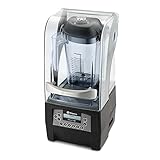
1. Vitamix The Quiet One
A commercial Vitamix with a full sound enclosure around the container, made for cafes and bars. It combines the brand’s tough motor with a quieter operation.
Suits: front-of-house cafe use. Strengths: a dedicated sound enclosure. Weaknesses: heavy and takes counter space. Skip it if you only need home use.

Best for busy cafes
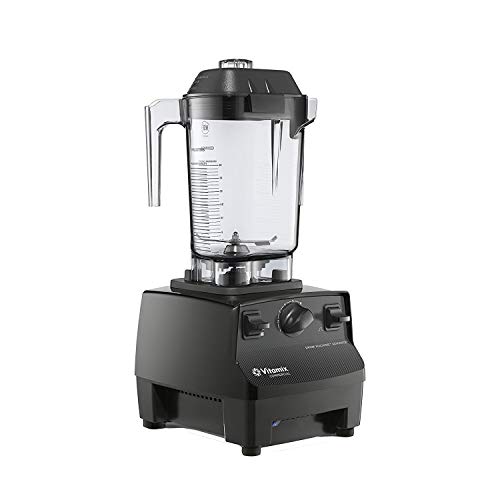
2. Blendtec Stealth 885 Commercial Blender
Blendtec’s quietest commercial series, with a sound enclosure and programmed cycles. It is aimed at cafes that want uniform results and a calmer counter.
Suits: busy cafes. Strengths: quiet operation and presets. Weaknesses: a heavy-duty commercial machine. Skip it if you blend a few times a week.
View Blendtec Stealth 885 on Amazon
Best for volume drink service
3. Vitamix Drink Machine Advance
A commercial Vitamix designed for speed and repeatable drinks. Its sound is lower than a standard open blender, though it is not enclosed like the Quiet One.
Suits: volume drink service. Strengths: fast, consistent drinks. Weaknesses: less quiet than enclosed models. Skip it if you need a full enclosure.
View Vitamix Drink Machine Advance on Amazon
Best for budget-minded commercial buyers
4. Waring Commercial Xtreme Hi-Power Blender
A long-established commercial name with a powerful motor and a sound enclosure in some versions. It is built for repeat daily use.
Suits: budget-minded commercial buyers. Strengths: a tough build. Weaknesses: check the model for the enclosure. Skip it if you want preset programs.
View Waring Commercial Xtreme on Amazon

Best for quiet home or very light cafe use
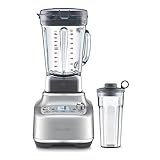
5. Breville Super Q Blender
A premium Breville blender that is known for being quieter than most. It is not a commercial-rated unit, so it fits low-volume cafes and prosumers.
Suits: quiet home or very light cafe use. Strengths: lower noise and a strong motor. Weaknesses: not built for all-day commercial duty. Skip it if you serve a high volume.

Best for small cafes and juice bars
6. Blendtec Connoisseur 825
A powerful Blendtec with a touch interface and the ability to run with a sound cover. It is a flexible pick for small cafes and juice bars.
Suits: small cafes and juice bars. Strengths: strong motor and a clean touch panel. Weaknesses: an enclosure is separate. Skip it if you want all controls to be knobs.
View Blendtec Connoisseur 825 on Amazon
Care and Setup
- Clean the jar straight after each use to stop buildup.
- Run a quick wash cycle with warm water and mild soap.
- Wipe the sound enclosure with a damp cloth.
- Check the blade assembly for wear over time.
Mistakes to Avoid
- Buying a home blender and expecting commercial duty.
- Skipping the sound cover when noise is a concern.
- Overfilling the jar.
- Ignoring the warranty terms for commercial use.
Judging Noise in a Real Cafe
Noise ratings on a listing are a starting point, but they rarely tell you what your customers will hear. Decibel figures depend on how far away the measurement was taken, which recipe was running and whether the blender was empty or loaded. When a listing gives a number, treat it as the maker’s claim and look for the testing conditions. If no number is given, rely on design features such as a full enclosure, a rubber-mounted motor base and a tight-fitting lid.
The sound of a blender is also about pitch. A low rumble is easier to talk over than a high whine, and a short burst is less irritating than a long grind. Frozen ingredients and ice are the loudest part of most recipes, so a quieter blender may still be loud when it crushes ice. Ask how long your typical drink runs and how often you blend during peak hours.
Your room matters as much as the machine. Hard counters, tile and open ceilings bounce sound back, while soft surfaces absorb it. Place the blender away from the register and the seating area where possible, and put a thick mat under it to cut vibration through the counter. A blender that rattles the counter sounds louder than it is. If you can, run a demonstration in your own space and stand where a customer would stand.
Duty Cycle, Motor Load and Warranty Fit
Commercial use means a blender runs many cycles a day, often back to back, and the motor and drive must handle that heat. Check how the maker describes duty, and whether the warranty explicitly covers commercial or food service use. Home warranties often exclude business use, so a cheaper blender can turn out to be more expensive if it fails without coverage.
Look at how the machine handles heat. Some blenders have thermal protection that shuts the motor down when it gets too hot, which protects the unit but can stop service in a rush. If the manual mentions cooling-off periods between batches, plan your menu and staffing around them. Having a second blender on a busy day avoids a bottleneck.
Ask about parts and service before you buy:
- Are replacement jars, lids, blade assemblies and drive couplings available?
- Is there local service or a mail-in repair process, and how long does it usually take?
- Does the warranty cover the motor base and the jar separately, and for how long?
- Does the listing say the unit is rated for continuous food service?
Those answers matter more than a small difference in noise, because downtime costs sales. Keep a spare jar on the shelf so one cracked container does not stop the line.
Jar Size, Blades and Program Control
Jar size should match your standard drink. A jar that is too small makes you blend twice for large orders, while one that is too large struggles to blend a single small serving evenly. Look at capacity on the listing and think about your biggest cup, then check the minimum fill line recommended by the maker. Some jars come in a few sizes, and some blades are shaped for different jobs such as ice, thick smoothies or hot soups.
Blade design affects both texture and noise. Blunt, wide blades crush ice through force and can sound loud, while sharper designs cut through fruit more quickly. Neither is better for every menu, so match the blade to your recipes. Check whether the blade assembly can be removed for cleaning or replacement, and whether it is sold as a spare part.
Program control helps when staff change often. Preset cycles for common drinks reduce training and keep results consistent, and a timer prevents over-blending. Manual controls offer more flexibility for specialty recipes but depend on skilled operators. Touch panels are easy to wipe but can be harder to use with wet or gloved hands; knobs and buttons are simple and tactile. Decide who will use the machine and how much variation you want in your drinks.
Cleaning Routine and Hygiene
A blender in a cafe is a food contact surface, so cleaning is a daily routine, not an occasional chore. Rinse the jar immediately after each use so sugary or protein residue does not harden. A quick cycle with warm water and a drop of mild soap clears most buildup between orders, followed by a clear rinse. At closing, take the jar apart, wash the lid, seals and blade assembly, and let everything dry before reassembly.
With a sound enclosure, wipe the inside of the cover, the hinge and the seal, because splashes collect there and can attract pests. Check the enclosure instructions for what cleaning products are safe on its plastics. Avoid abrasive pads that cloud clear surfaces, and never submerge the motor base.
Think about allergens too. If you serve nut milks, dairy and soy, wash thoroughly between batches and consider separate jars for allergen-sensitive orders. Label jars and keep a log if your local rules require cleaning records, and check your local food safety guidance for sanitizing requirements.
Inspect parts regularly. Cloudy, scratched or cracked jars can harbor residue and may fail under load, so replace them rather than risk breakage. A loose or worn blade assembly can leak, so watch the base of the jar for dampness after use.
Placement, Power and Workflow
Where the blender sits affects how quiet and efficient service feels. Put it near the ingredients and the sink but away from the espresso machine and the area where baristas take orders. Leave clear space above for lifting the lid or opening an enclosure, since some covers need considerable headroom. Check the machine height against your shelves and wall cabinets before purchase.
Power is easy to overlook. High-power blenders draw significant current, so confirm the plug type and the circuit it will use. Sharing a circuit with a kettle, toaster or grill can trip a breaker at the worst time. Ask an electrician if you are unsure, and read the listing for voltage and electrical requirements. A heavy-duty cord that reaches the outlet without stretching is safer than an extension cord.
Workflow shapes how many blenders you need. A single machine may be enough if you blend a handful of drinks per hour, but a rush of orders can create a queue. A second machine, or a spare jar, lets one batch blend while another is cleaned. Mark where cups, lids and straws go so staff do not wander around the counter. Finally, plan a place to store lids and tampers so they do not become lost or contaminated.
Quiet Blender FAQ
Are quiet blenders as powerful?
Many are. The enclosure cuts the noise rather than power, so performance on ice and frozen fruit can stay strong.
Do I need a commercial warranty?
For daily cafe use, yes. A home warranty may not cover commercial duty, so check the terms. Parts and service access matter too.
How quiet is quiet?
Even the quietest blender is audible when it runs at full speed. The goal is a gentler, less piercing sound, not silence, which is easier on staff and customers alike.
Do enclosures make cleaning harder?
Slightly, since the cover and jar are separate pieces. Most can be wiped down quickly, and a rinse cycle between orders keeps the jar clean during a busy shift.
Can a quiet blender be heard over a busy cafe?
It will still be audible, but a good enclosure lowers the sharpest sounds so people can talk nearby. Placement away from seating and a mat under the base also help. Expect a calmer sound, not silence.
What should I check in a commercial blender warranty?
Check that it covers food service use, how long it lasts, and whether the jar and motor are covered separately. Also ask about parts availability and service options. Home warranties may exclude commercial use.
How often should a cafe replace blender jars?
Replace a jar when it becomes cloudy, scratched, cracked or leaks near the blade assembly. Frequency depends on volume and how it is cleaned. Keep a spare so service is not interrupted.
Do I need a dedicated circuit for a high-power blender?
Many high-power blenders draw a lot of current, so avoid sharing a circuit with other heavy appliances. Check the listing for electrical needs and ask an electrician if unsure. Do not use a thin extension cord.
Should I get preset programs or manual controls?
Presets help consistency when staff change often, while manual controls suit skilled operators and specialty recipes. Consider who will use the machine and how varied your menu is.
How do I handle allergens when blending?
Wash the jar, lid and blade assembly thoroughly between batches, and consider separate labeled jars for sensitive orders. Follow local food safety rules for cleaning and record keeping.
What is the best way to reduce vibration noise?
Place a thick, non-slip mat under the base and keep the blender level on a sturdy counter. Make sure the lid is seated firmly. Avoid placing it where it can rattle shelves or equipment.
Matching a Blender to Your Menu
Before choosing a quiet blender, write down what it will actually make. Smoothies and fruit drinks stress a motor differently than frozen coffee drinks, crushed ice or nut-based sauces. A cafe that mostly serves a few blended drinks per hour has different needs from a smoothie bar that blends constantly. Be realistic about volume, because a blender that suits an occasional frappe may struggle during a lunch rush.
The Vitamix The Quiet One and the Blendtec Stealth 885 are built with sound reduction in mind, while others such as the Waring Commercial Xtreme and the Vitamix Drink Machine Advance prioritize durability and speed. Review each model’s stated use case and warranty to see whether it is intended for commercial workloads and how many drinks it is meant to handle.
Heat, Cooling and Continuous Use
Blender motors generate heat, and sustained use can trigger thermal protection or shorten the motor’s life. Commercial models often include stronger cooling and are rated for heavier duty. If your cafe makes drinks back to back, pay attention to how the manufacturer describes continuous use and rest periods. A motor that shuts off in the middle of service will cost you more than a slightly higher purchase price.
- Do not overfill the jar, as heavy loads strain the motor.
- Let the blender rest briefly after several consecutive cycles if the manual suggests it.
- Keep the base vents clear of dust and spilled liquids.
- Avoid running the unit empty or with too little liquid for the recipe.
Training Staff for Quiet and Consistent Results
Quiet operation is not only about the machine. Staff habits change the sound as well. Loading ingredients in the right order, with liquids first and ice last, reduces strain and speeds blending. Cutting large pieces of fruit or frozen blocks down to size avoids clunking and extra noise. A short written recipe card at the station helps new staff produce the same drinks with the same load every time.
Encourage staff to use the lowest setting that gives a good result, and to stop when the drink is smooth instead of running the blender longer than necessary. Less run time means less noise, lower wear and fewer disturbances for customers.
Customer Experience and Atmosphere
A quiet blender matters because of what it protects: conversation, laptop calls and the calm that makes a cafe pleasant. Think about when blending happens. If most orders come during a morning rush where background noise is already high, a louder blender may go unnoticed. If your cafe is calm in the afternoon and customers work or study, every loud burst is noticeable.
- Place the blender away from seating where possible, with a barrier or a corner behind the counter.
- Use a soft mat under the unit to cut vibration through the counter.
- Batch drink orders so blending happens in short bursts rather than constantly.
- Consider a sound enclosure if the model supports one and your workflow allows it.
Customer feedback is a useful check. If regulars comment on the noise, that is a sign to adjust placement or timing.
Maintenance Checks That Keep the Blender Quiet
As blenders age, they often get louder. Worn blade assemblies, loose couplings, dried residue and a vibrating base can all raise the noise level. A simple monthly inspection catches most of these early. Look at the drive socket on the jar and the base for wear, check that the jar seats firmly, and replace any rubber feet that have flattened.
Keep a log of service dates and parts replaced. A record helps you notice when a machine starts to need attention and supports warranty claims if something fails. Following the manufacturer’s cleaning and care instructions also keeps the unit performing as intended.
Budgeting and Planning for Replacement
Quiet commercial blenders cost more than standard models, so it makes sense to plan for the full ownership period. Estimate how many years you expect to use the unit, factor in replacement jars and blades, and check the warranty terms on motor and parts. A spare jar lets you keep serving while one is being washed, and a backup blender can be a lifesaver if the primary unit fails during a busy day.
Consider resale value and service as well. Established brands with accessible service networks are generally easier to maintain than lesser-known units. If you are opening a new cafe, buy equipment in stages and watch how the actual workload shapes your needs.
Designing the Sound of the Room, Not Just the Menu
Customers rarely praise a cafe for being quiet, yet they stay longer, order a second drink and return more often when conversation does not compete with machinery. The Vitamix Quiet One and the Blendtec Stealth earned their names by wrapping a powerful motor in an enclosure that contains the worst of the noise, and that difference changes how a room feels at eight in the morning. When you evaluate a blender for a cafe, listen from the customer’s seat rather than the operator’s position. Stand where people queue, sit where people work on laptops, and judge the sound from there, because that is the experience you are actually selling.
Sound also travels through counters and shelving. A blender placed on a hollow counter near a tiled wall will sound harsher than the same machine on a solid surface in a softer corner. Rubber mats, sensible placement away from the till microphone and a habit of closing the enclosure lid fully on every blend all shave away annoyance without costing output. Staff sometimes prop lids open to save seconds during a rush, and that single shortcut undoes the entire investment in a quiet model. Build the closed-lid habit into training from the first shift and protect it like any other quality standard.
Matching the Jar and Programmes to the Drinks List
A cafe menu usually leans on a handful of core drinks, so programme the machine around those drinks instead of admiring how many cycles it offers. A smoothie built on frozen fruit and ice needs a different ramp of speed than a frappe or a nut-milk shake, and the Vitamix Drink Machine Advance or the Waring Xtreme will deliver more consistent results when staff press one correct button than when everyone improvises. Label the buttons in the words your team uses, tape a small recipe card near the station, and keep the number of standard drinks short enough that a new hire can learn them in a single supervised shift.
Jar size shapes both texture and waste. An oversized jar blending a single small drink leaves product smeared up the walls and invites staff to over-portion to compensate, while a jar matched to your typical batch blends cleanly and pours accurately. Keep a spare jar in rotation so a cracked or clouded container never forces the team to nurse damaged equipment through a service. Clouding is cosmetic, but cracks near the blade assembly are a safety issue and a hygiene trap. Inspect jars weekly under good light, retire doubtful ones without argument, and record the cost as part of the true price of running the station.
Surviving the Rush Without Burning Out the Motor
Pacing, Loading and the Order of Ingredients
Commercial blenders fail early when they are loaded carelessly and run back to back without sympathy. Load liquids first, then soft ingredients, then frozen items and ice last, so the vortex forms quickly and the motor is not asked to smash a static block of frozen fruit from a standstill. If a blend stalls, stop, tamp or stir, and restart rather than letting the motor strain against a locked jar. The Blendtec Connoisseur and the Stealth handle heavy work well, but no motor enjoys being treated as a hammer. A few seconds of attention at loading saves minutes of recovery and months of service life.
During a genuine rush, rotate work where you can. Two machines sharing a queue outlast one machine run continuously, and even with a single unit, alternating heavy frozen blends with lighter drinks gives the motor brief relief. Listen for changes in pitch across the shift; a machine that sounds laboured earlier than usual may be telling you about worn bearings, a dull blade or a jar that no longer seats correctly. Logging these small observations in the closing checklist turns vague impressions into maintenance you can schedule before a breakdown chooses the busiest Saturday of the season for you.
Cleaning Between Drinks and at Close
Hygiene at a blender station is mostly about speed and sequence. Rinse the jar immediately after pouring, run a short wash cycle with warm water and a drop of detergent, and never leave protein-rich residue to dry while the next order waits. Dried smoothie is stubborn, smells quickly in a warm cafe and forces aggressive scrubbing that clouds the jar. At close, remove the jar, wash the enclosure surfaces where splashes collect, and dry everything before reassembly so the morning shift starts with a station that smells of nothing at all. That neutral start is a quiet quality signal to staff and customers alike.
Do not overlook the enclosure itself on quiet models. The sound-dampening cover that makes the Vitamix Quiet One so civilised also traps splashes in its seams, and a sticky enclosure door soon becomes the loudest complaint in the building. Wipe it inside and out daily, check the gasket for tears, and confirm the door still closes with its proper seal. A damaged seal leaks noise and defeats the purpose of the design. Replacing a worn gasket is cheap compared with replacing a machine whose owners assumed the quiet engineering had stopped working, when really a simple rubber part had given up.
Training a Team to Blend the Same Drink Twice
Portioning, Taste Checks and Waste
Consistency is a training outcome, not a machine feature. Weigh or measure ingredients for the core menu until staff can portion accurately by eye, then spot-check with scales during weekly taste sessions. A drink that varies by whoever is on shift teaches customers that your cafe is a gamble. Keep a simple waste log for remakes and spills for a month; patterns usually emerge quickly, such as one drink that always needs a second blend or one ingredient that arrives in awkward sizes. Fixing those small system faults pays back faster than upgrading the blender itself.
The Breville Super Q sits at the lighter-duty end of this line-up and suits smaller or quieter operations, while the true commercial units justify themselves where the drinks queue never really empties. Whichever you choose, write down the house standard for ice quantity, blend time and finished texture in plain language, and keep it where the machine lives. When a new team member asks how a drink should look, the answer should be on the wall, not in a senior colleague’s memory. That is how a good cafe keeps its drinks, and its calm, intact when the busiest person is away.
Designing a Drinks Menu the Blender Can Deliver
A cafe menu is a promise the equipment must keep at speed, so design the drinks list around the blender’s strengths instead of asking it to perform miracles hourly. Two or three base preparations, a blended base, a fruit base and a coffee base, can be combined with syrups, fruits and toppings into a menu that reads as generous while remaining operationally simple. Each base should blend in one cycle, pour cleanly and hold its texture for the minutes a drink waits at a busy pass. Test every candidate drink at the busiest plausible moment, made by your least experienced team member, because that is the version your customers will actually receive on a Saturday. A menu that survives that test will survive anything the season sends.
Seasonal specials deserve the same discipline. A limited drink built on ingredients the kitchen already stocks, blended with an existing programme, adds excitement without adding chaos. What breaks a blender station is the special that needs a different jar, a second blend halfway or an ingredient that arrives frozen in unusable boulders. Brief the team, write the recipe where the machine lives and retire the special on schedule, before its novelty fades and its complexity remains. The Blendtec Stealth and the Vitamix Quiet One can both carry a thoughtful menu beautifully; neither can rescue a menu designed without reference to the station that must produce it, and the difference between a celebrated cafe and a stressed one is often exactly that reference.
Ice, Frozen Fruit and the Hidden Variables
Ice is an ingredient with specifications, whether you treat it that way or not. Wet, half-melted ice dilutes a drink and blends differently from hard, fresh cubes, and a station that fills its ice bin from a melting supply will produce drinks that wander in texture across the day. Frozen fruit varies just as much: fruit frozen in syrup, fruit frozen in chunks and fruit frozen as a solid block each ask different things of the blade. Standardise what you buy, note the supplier on the recipe card and train staff to recognise when a delivery has changed. These invisible consistencies are what regulars actually taste when they say a cafe is reliable, and they are cheaper to protect than any machine upgrade.
Liquid ratios complete the picture. A blend that needs extra liquid to move is a recipe problem, not a power problem, and adding liquid by feel destroys both texture and costing. Mark fill lines, use measuring jugs during training until the levels are memorised, and taste one drink from each batch changeover. The Waring Xtreme and the Drink Machine Advance will both punish a careless ratio with a thin, loud, over-long blend, and reward a correct one with a short, quiet cycle. Quiet, in the end, is partly a recipe achievement: a well-proportioned drink finishes fast, and a fast finish is the least noise any blender can make.
Preventive Maintenance on a Cafe Calendar
Weekly, Monthly and the Logbook Habit
Put the blender on the same calendar discipline as your coffee machine. Weekly: inspect jars, check the enclosure seal, listen to the motor’s note on a standard cycle and record anything that has changed. Monthly: examine the drive socket for wear, confirm the programmes still match the recipe cards and review the waste log for drinks that keep being remade. A worn drive socket is a small, cheap part that announces itself through vibration and noise long before it fails, and replacing it on your schedule rather than the blender’s is the difference between maintenance and emergency. Keep the critical spares, a jar, a socket, a gasket, on a shelf, because a cafe’s busiest day and a part’s failure day have a way of introducing themselves.
The logbook is what turns these checks into knowledge. One line per week, dated, initialled, noting sound, performance and any intervention, builds a history that tells you when a machine is ageing, when a warranty conversation is justified and when a replacement should be budgeted rather than panicked into. It also protects the business when staff change, because the machine’s story no longer lives in one person’s memory. Quiet commercial blending is ultimately a system: enclosure, recipe, training, maintenance and listening, all working together. Buy the machine that fits your menu and your room, then build that system around it, and the calm your customers feel will be as much your creation as the manufacturer’s.
Breakfast Rush, Afternoon Calm, Event Catering
At eight in the morning the blender station in a commuter cafe lives on smoothies and protein shakes made in pairs, and its virtues are speed, a programme that needs one press and an enclosure that keeps the room bearable while the espresso machine hisses beside it. The Vitamix Quiet One was designed for precisely this choreography. By three in the afternoon the same station is making single frappes for a quiet room, and its virtue has changed: now it is the absence of disruption, the ability to blend a drink while a customer takes a phone call at the next table. A machine that serves both scenes without adjustment is worth more than its specification suggests, because a cafe’s day is not one service but several, each with its own definition of good.
Event catering rewrites the rules again. Off-site, the blender works from unfamiliar power, on folding tables, with a menu simplified to what travels. This is where the lighter, simpler machines in this guide, and a ruthless menu edit, earn their keep: two drinks, made perfectly, from ingredients that survive transport, beat six drinks made anxiously. Test the whole station in the car park before the first event, power, jars, ice supply and all, because the faults are always logistical and always findable in rehearsal. The cafes that cater well are the ones that treat the blender as part of a portable system rather than a machine that happens to have been moved.
In every scene the same small disciplines recur: jars inspected, programmes matched to recipes, ice treated as an ingredient, the enclosure closed, the station wiped as you go. They look like housekeeping and function as quality control, because a blender station’s failures are almost never mechanical surprises; they are the accumulated result of small permissions granted under pressure. The manager who protects the disciplines during the rush, rather than only auditing them in the calm, is the one whose Blendtec or Vitamix still sounds new in its third year and whose customers still describe the room as a pleasant place to sit.
When the Blender Becomes the Business
Juice Bars, Gyms and the Dedicated Station
For a juice bar or a gym cafe, the blender is not a station; it is the business, and the buying logic inverts. Duty cycle, jar cost, programme flexibility and the speed of the wash cycle matter more than absolute quiet, though a gym’s members, mid-conversation about everything except blenders, will still thank you for an enclosure. Businesses at this intensity should plan on jar rotation, a spare machine or a service agreement, because a day without blending is a day without revenue. The commercial flagships in this guide, the Vitamix and Blendtec professional lines, justify themselves here through exactly that support ecosystem, while the Waring offers a rugged middle path for operations whose volume is serious but not industrial.
Whatever the setting, the final measure of a quiet commercial blender is whether the room forgets it exists. Customers should remember the drink, the seat and the conversation, not the forty seconds of mechanical weather that interrupted all three. Owners who choose with their ears, train with their recipe cards and maintain with a logbook will achieve that forgetting. It sounds like a modest ambition for an expensive machine, and it is in fact the entire luxury the category sells: power that does not announce itself, working invisibly in the background of other people’s good mornings.
Listen Before You Buy, Then Protect What You Heard
Wherever possible, hear the machine, or its closest sibling, working in a real room before you commit, because noise is the one specification that reads politely and behaves rudely. Stand at a customer’s distance, not a demonstrator’s, and judge the sound against conversation rather than against silence. Then protect the quiet you bought with the disciplines in this guide: closed enclosures, honest recipes, jars retired on time and a logbook that notices change early. A cafe’s atmosphere is an asset built from a hundred such protections, and the blender, heard least and used most, may be the hardest-working of them all.
Budget the whole station when you budget the machine: the spare jar, the spare socket, the recipe cards, the training hour. Cafes that price only the blender are surprised by the rest; cafes that price the system are not, and their drinks, their room and their staff all show the difference by the end of the first season. Choose the machine whose sound, size and support fit your menu and your room, install it like you mean it, and let your customers enjoy the rarest sound in hospitality: a powerful machine they never have to think about.
What the Numbers Teach Across a Season
Track three numbers for a season and the blender station becomes transparent. The first is remakes per hundred drinks, which exposes the recipe or training fault costing you ingredients and goodwill. The second is average cycle count per day, which tells you whether your machine is loafing or labouring and whether a second unit or a larger one belongs in next year’s budget. The third is jar life in months, which converts an occasional surprise expense into a predictable line item. Owners who know these numbers stop arguing from impressions. They can show a partner or a lender exactly what the station earns, what it wastes and what it needs, and they can time a replacement purchase for the quiet month rather than the catastrophic one.
There is a human number worth tracking alongside them: how often staff bypass the enclosure or the programmes under pressure. That figure is a training report, not a discipline problem, because people bypass systems that slow them down without visible benefit. If the bypass rate climbs, stand at the station during a rush and watch where the friction lives, a badly placed bin, a recipe card in the wrong spot, a jar that sticks. Fix the friction and the compliance returns on its own. Quiet, consistency and speed are not competing goods at a well-run station; they are the same good, produced by the same attention, and the season’s numbers will prove it to anyone who doubts.
Frequently Asked Questions
Can a commercial blender make hot soup?
Some blenders can warm soup through friction when run for several minutes, but not every model or jar is designed for hot liquids. Check the manufacturer’s guidance on temperature limits and venting before blending anything hot, since steam pressure can force the lid off.
How often should blender blades be replaced?
There is no fixed schedule. Replace blades when they look dull, bent or corroded, or when blending takes noticeably longer. Heavy ice use wears blades faster. Follow the maker’s guidance and keep a spare blade assembly if your cafe relies on the blender all day.
Should a cafe keep a backup blender?
If blended drinks are a major part of sales, a backup is a sensible safeguard. Even a simpler, less expensive unit can keep service running while the main blender is repaired or cleaned. It also lets two staff members work at once during peak periods.
Are plastic or stainless steel blender jars better?
Plastic jars are lighter, see-through and often cheaper to replace, while stainless steel resists scratching and does not stain, but you cannot see the contents. Choose based on your workflow and cleaning routine, and check whether the jar is dishwasher safe and rated for commercial use.
The Short Version
For front-of-house use, the Vitamix The Quiet One. For a calmer, programmed counter, the Blendtec Stealth 885. For speed during a rush, the Vitamix Drink Machine Advance. For a tough, familiar commercial name, the Waring Commercial Xtreme. For a quieter prosumer blender, the Breville Super Q. For small juice bars, the Blendtec Connoisseur 825.

