Disclosure: topratedkitchenware.com is reader-supported. When you buy through links on our site, we may earn an affiliate commission from Amazon and other retailers, at no extra cost to you.
Where to buy
The picks below are the verified shortlist for this guide to best recommended food processors. Each linked name takes you to its Amazon listing, where you can check the latest price on Amazon, confirm the current configuration, and read the newest owner feedback before you decide.
- Ninja Professional Plus Food Processor, 9-Cup, 1000W (BN601) — Best Recommended Overall
- Cuisinart Mini Food Processor, 3-Cup — Best Recommended Mini
- Hamilton Beach Food Processor, 10-Cup (70730) — Best Recommended for Families
- BLACK+DECKER Food Processor, 8-Cup, 450W — Best Recommended Mid-Size
- Cuisinart Core Custom 4-Cup Mini Chopper (MCH-4) — Best Recommended for Small Batches
- KitchenAid 3.5 Cup Food Chopper, Empire Red (KFC3516ER) — Best Recommended for Control
Read the full guide ↓ for how each pick performs, where each one compromises, and which households each one actually suits.
Ask ten cooks for the best recommended food processors and you will hear the same names recur, not because of marketing, but because recommendations follow survival: the machines people still use, and still praise, years in. This guide is built on that logic. It recommends from the verified pool the way a knowledgeable friend would, by matching each machine to the household it genuinely suits, and saying plainly who should skip it.
The recommendations divide by household shape. The Ninja Professional Plus is the recommend for power and guidance, presets doing the thinking for newer cooks. The Hamilton Beach is the family workhorse recommend. The Cuisinart minis and the KitchenAid chopper split the small-jobs recommendations between them on blade design and control. Nobody is recommended everything, because a recommendation that fits everyone fits no one, and the verdict lines in each review keep the boundaries visible. Value cross-checks live in Best Prices Food Processors.
What this guide will not do is borrow authority it has not earned: there are no invented scores, no quoted review counts, and no hands-on claims. The recommendations rest on verified specifications and on the accumulated logic of what makes owners recommend a processor at all, which the next sections make explicit so you can check the reasoning rather than trust the tone.
Key Takeaways
- Recommendations here are matched to households, not ranked in a single absolute order.
- The Ninja BN601 is the recommend for power with guidance; the Hamilton Beach for family volume.
- The Cuisinart Mini is the most recommendable small-jobs machine for its reversing grind-and-chop blade.
- Every recommendation carries a ‘not suited for’, because honest limits are what make a recommendation worth taking.
- Buy the recommendation that matches your five most frequent jobs, not the most impressive specification.
In this guide
Quick Picks
- Best Recommended Overall: Ninja Professional Plus Food Processor, 9-Cup, 1000W (BN601) — a pick defined by a 1000W 9-cup processor with Auto-iQ presets that chop, slice, puree and mix dough.
- Best Recommended Mini: Cuisinart Mini Food Processor, 3-Cup — a pick defined by a compact auto-reversing mini processor that chops in one direction and grinds in the other.
- Best Recommended for Families: Hamilton Beach Food Processor, 10-Cup (70730) — a pick defined by a full-size 10-cup processor with a bowl scraper that keeps food moving without stopping.
- Best Recommended Mid-Size: BLACK+DECKER Food Processor, 8-Cup, 450W — a pick defined by a mid-size 450W processor that covers shred, slice, mince, grind and puree in an 8-cup bowl.
- Best Recommended for Small Batches: Cuisinart Core Custom 4-Cup Mini Chopper (MCH-4) — a pick defined by a 4-cup mini chopper with an auto-reversing SmartPower blade and dishwasher-safe parts.
- Best Recommended for Control: KitchenAid 3.5 Cup Food Chopper, Empire Red (KFC3516ER) — a pick defined by a 3.5-cup chopper with two speeds plus pulse and a dishwasher-safe work bowl.
How These Picks Were Chosen
The pool was verified through the Creators API and each model confirmed, with only specifications from the verified listings used in this guide. Recommendation strength was then judged on the traits that make owners recommend machines in real life: a design that solves a named problem, parts that clean without a fight, a size that matches a recognisable household, and a model line with enough history to trust.
Six machines cleared that bar, and they divide cleanly. Two full and mid-size machines, the Ninja and the Hamilton Beach, plus the 8-cup BLACK+DECKER, carry the family recommendations. Three minis, the two Cuisinarts and the KitchenAid, carry the small-jobs recommendations, each for a different reason that their reviews separate carefully. Readers whose households are size-specific can narrow with Best Prices On 8 Or 10 Cup Food Processors.
This is a research-led guide. No hands-on testing is claimed, and no scores or review counts are printed, because those figures change constantly and would date the recommendations. What endures, capacity, blade design, programs and parts, is what the recommendations are built on, and a recommendation built on durable facts stays useful long after a score would have drifted.
The 6 Best Options for Best Recommended Food Processors

Ninja Professional Plus Food Processor, 9-Cup, 1000W (BN601)
Badge: Best Recommended Overall
Strengths
- 1000W is the strongest motor figure in this guide, and it shows on dough and dense loads
- Auto-iQ presets run chop, slice, puree and dough programs without guesswork
- 9-cup bowl, three blades, feed chute and pusher cover the full repertoire
Trade-offs
- Preset-led control is less manual than dial-and-pulse purists prefer
- Full-size footprint and parts count, like every big machine here
- Grey finish only in this listing
Key specifications (from the verified listing)
- Power: 1000W (from verified listing)
- Capacity: 9 cups (from verified listing)
- Programs: Auto-iQ presets to chop, slice, puree and mix dough; 3 blades; dishwasher-safe parts; model BN601
The Ninja Professional Plus BN601 brings the biggest number in this guide, a 1000W motor, and wraps it in Auto-iQ presets that run chopping, slicing, pureeing and dough mixing as programs rather than guesswork. The 9-cup bowl and three-blade set cover the full processor repertoire, and the feed chute and pusher handle the disc work. It is the pick for cooks who want power with a autopilot option, strong enough for dough and dense purees, guided enough that a first-time processor owner gets good results on day one.
The Ninja Professional Plus Food Processor, 9-Cup, 1000W (BN601) is recommended here because it is a 1000W 9-cup processor with Auto-iQ presets that chop, slice, puree and mix dough. Recommendations survive on exactly that kind of specific, checkable virtue, a design decision you can point to, rather than on a general glow, and this pick gives a recommender something concrete to point at.
The honest boundary matters as much as the praise: the Ninja Professional Plus Food Processor, 9-Cup, 1000W (BN601) is recommended for the households its size and design describe, and its review states who should look elsewhere in the same guide. A recommendation with visible edges is the only kind worth following, because your kitchen will find those edges whether the guide mentions them or not.
There is a final, practical test that separates a good shortlist entry from a great one, and the Ninja Professional Plus Food Processor, 9-Cup, 1000W (BN601) passes it: the week-two test. In week one any new processor is a novelty that gets used because it is new. By week two the novelty is gone, and the machines still on the counter are the ones whose size, controls and cleanup fit the household’s actual rhythm. Everything in this pick’s verified design, its capacity class, its blade system and the way its parts wash, points toward surviving that test in the kitchens its review describes, which is ultimately the only endorsement that compounds.
Best for: power-first cooks who knead dough and puree dense loads, and beginners who like presets / Not suited for: cooks who want purely manual control or a mini footprint
Check on Amazon for the current listing, configuration and latest price.

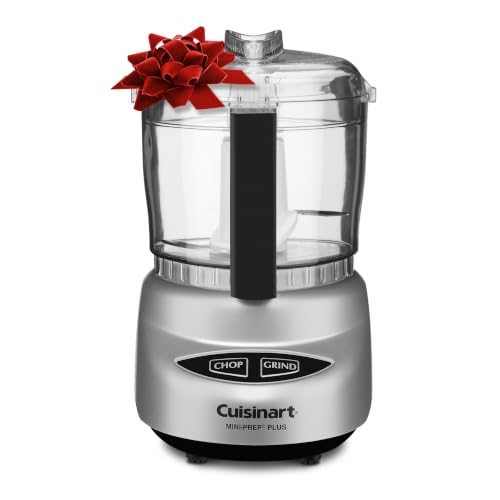
Cuisinart Mini Food Processor, 3-Cup
Badge: Best Recommended Mini
Strengths
- Auto-reversing SmartPower blade gives distinct chop and grind modes in one small bowl
- 24 oz. bowl is the right size for herbs, garlic, nuts and small sauce batches
- Brushed chrome finish and a footprint that lives happily on the counter
Trade-offs
- 3-cup class capacity is a hard ceiling for family-size batches
- No slicing or shredding discs, so it is a blade-only machine
- Small bowl means liquids must stay modest to avoid leaks at the lid
Key specifications (from the verified listing)
- Capacity: 3-cup / 24 oz. (from verified listing)
- Blade: auto-reversing SmartPower stainless blade, chop and grind modes
- Finish: brushed chrome
The Cuisinart Mini is the small-bowl specialist of this shortlist. Its auto-reversing blade is the clever part: run it one way and the sharp edge chops herbs, onions and nuts; reverse it and the blunt edge grinds spices, hard cheese and coffee-adjacent jobs. The 24 oz. bowl keeps it honest, this is a machine for the small, frequent jobs that make cooks reach for a knife and board out of habit, and it does those jobs in seconds with a bowl that rinses clean just as fast.
The Cuisinart Mini Food Processor, 3-Cup is recommended here because it is a compact auto-reversing mini processor that chops in one direction and grinds in the other. Recommendations survive on exactly that kind of specific, checkable virtue, a design decision you can point to, rather than on a general glow, and this pick gives a recommender something concrete to point at.
The honest boundary matters as much as the praise: the Cuisinart Mini Food Processor, 3-Cup is recommended for the households its size and design describe, and its review states who should look elsewhere in the same guide. A recommendation with visible edges is the only kind worth following, because your kitchen will find those edges whether the guide mentions them or not.
There is a final, practical test that separates a good shortlist entry from a great one, and the Cuisinart Mini Food Processor, 3-Cup passes it: the week-two test. In week one any new processor is a novelty that gets used because it is new. By week two the novelty is gone, and the machines still on the counter are the ones whose size, controls and cleanup fit the household’s actual rhythm. Everything in this pick’s verified design, its capacity class, its blade system and the way its parts wash, points toward surviving that test in the kitchens its review describes, which is ultimately the only endorsement that compounds.
Best for: daily small jobs: herbs, garlic, nuts, small sauces and grinding spices / Not suited for: family-size batches or any slicing and shredding work
Check on Amazon for the current listing, configuration and latest price.

Hamilton Beach Food Processor, 10-Cup (70730)
Badge: Best Recommended for Families
Strengths
- 10-cup bowl handles family batches, doughs and big shredding jobs in one load
- Built-in bowl scraper folds food back toward the blade while it runs
- Slicing, shredding, mincing and pureeing covered by the included discs and blade
Trade-offs
- Full-size footprint needs real counter or cupboard space
- More parts to wash than any mini chopper in this guide
- Plastic bowl class build rather than a premium metal body
Key specifications (from the verified listing)
- Capacity: 10 cups (from verified listing)
- Functions: slice, shred, mince and puree
- Feature: Easy Clean bowl scraper; model 70730; stainless steel accents
The Hamilton Beach 70730 is the workhorse format most households picture when they say food processor: a 10-cup bowl, a chopping blade plus slicing and shredding discs, and enough room to make a slaw, a pie dough or a double batch of salsa without splitting it. Its signature detail is the bowl scraper, a simple arm that sweeps the bowl wall as it runs, which matters more than it sounds, because uneven bowls are the main reason processors leave a ring of unprocessed food above the blade line.
The Hamilton Beach Food Processor, 10-Cup (70730) is recommended here because it is a full-size 10-cup processor with a bowl scraper that keeps food moving without stopping. Recommendations survive on exactly that kind of specific, checkable virtue, a design decision you can point to, rather than on a general glow, and this pick gives a recommender something concrete to point at.
The honest boundary matters as much as the praise: the Hamilton Beach Food Processor, 10-Cup (70730) is recommended for the households its size and design describe, and its review states who should look elsewhere in the same guide. A recommendation with visible edges is the only kind worth following, because your kitchen will find those edges whether the guide mentions them or not.
There is a final, practical test that separates a good shortlist entry from a great one, and the Hamilton Beach Food Processor, 10-Cup (70730) passes it: the week-two test. In week one any new processor is a novelty that gets used because it is new. By week two the novelty is gone, and the machines still on the counter are the ones whose size, controls and cleanup fit the household’s actual rhythm. Everything in this pick’s verified design, its capacity class, its blade system and the way its parts wash, points toward surviving that test in the kitchens its review describes, which is ultimately the only endorsement that compounds.
Best for: family prep, slaws, doughs and big shredding or slicing sessions / Not suited for: tiny counters or cooks who only ever make single portions
Check on Amazon for the current listing, configuration and latest price.

BLACK+DECKER Food Processor, 8-Cup, 450W
Badge: Best Recommended Mid-Size
Strengths
- 8-cup bowl is the sweet spot between mini choppers and full-size machines
- 450W motor with attachments to shred, slice, mince, grind and puree
- Stainless steel blade and a feed chute sized for real vegetables
Trade-offs
- Mid-size bowl still means batching for very large prep days
- Disc-based slicing gives one thickness rather than adjustable cuts
- Controls are simple rather than programmable
Key specifications (from the verified listing)
- Capacity: 8 cups (from verified listing)
- Power: 450W (from verified listing)
- Blade: stainless steel; attachments for shred, slice, mince, grind and puree
The BLACK+DECKER 8-cup sits deliberately in the middle of this guide: bigger than the minis, lighter than the 10 and 14-cup machines, and powered by a 450W motor that covers the five jobs its listing names, shredding, slicing, mincing, grinding and pureeing. For a household of two to four that preps most nights, the 8-cup bowl is usually the size that gets used rather than admired, large enough for a meal’s worth of vegetables, small enough to wash without resentment.
The BLACK+DECKER Food Processor, 8-Cup, 450W is recommended here because it is a mid-size 450W processor that covers shred, slice, mince, grind and puree in an 8-cup bowl. Recommendations survive on exactly that kind of specific, checkable virtue, a design decision you can point to, rather than on a general glow, and this pick gives a recommender something concrete to point at.
The honest boundary matters as much as the praise: the BLACK+DECKER Food Processor, 8-Cup, 450W is recommended for the households its size and design describe, and its review states who should look elsewhere in the same guide. A recommendation with visible edges is the only kind worth following, because your kitchen will find those edges whether the guide mentions them or not.
There is a final, practical test that separates a good shortlist entry from a great one, and the BLACK+DECKER Food Processor, 8-Cup, 450W passes it: the week-two test. In week one any new processor is a novelty that gets used because it is new. By week two the novelty is gone, and the machines still on the counter are the ones whose size, controls and cleanup fit the household’s actual rhythm. Everything in this pick’s verified design, its capacity class, its blade system and the way its parts wash, points toward surviving that test in the kitchens its review describes, which is ultimately the only endorsement that compounds.
Best for: households of two to four wanting one mid-size machine for nightly prep / Not suited for: very large batch days or cooks wanting programmable controls
Check on Amazon for the current listing, configuration and latest price.

Cuisinart Core Custom 4-Cup Mini Chopper (MCH-4)
Badge: Best Recommended for Small Batches
Strengths
- 4-cup bowl is a useful step up from 3-cup minis for dips and dressings
- Auto-reversing SmartPower blade covers chopping and grinding in one unit
- Dishwasher-safe parts make the small-job cleanup genuinely small
Trade-offs
- Blade-only machine: no slicing or shredding discs
- 4 cups still means batching for crowd-size prep
- White and stainless finish shows every splash until wiped
Key specifications (from the verified listing)
- Capacity: 4 cups (from verified listing)
- Blade: auto-reversing stainless steel SmartPower blade
- Model: MCH-4, white/stainless steel; dishwasher-safe parts
The Cuisinart Core Custom MCH-4 is the mini for cooks who found 3-cup bowls just slightly too small. The extra cup sounds trivial and is not: it is the difference between a batch of hummus that fits and one that climbs the lid. It keeps the family’s auto-reversing SmartPower blade, sharp edge to chop, blunt edge to grind, and pairs it with dishwasher-safe parts, so the machine’s whole ownership proposition is speed at both ends of the job, seconds to process, seconds to clean.
The Cuisinart Core Custom 4-Cup Mini Chopper (MCH-4) is recommended here because it is a 4-cup mini chopper with an auto-reversing SmartPower blade and dishwasher-safe parts. Recommendations survive on exactly that kind of specific, checkable virtue, a design decision you can point to, rather than on a general glow, and this pick gives a recommender something concrete to point at.
The honest boundary matters as much as the praise: the Cuisinart Core Custom 4-Cup Mini Chopper (MCH-4) is recommended for the households its size and design describe, and its review states who should look elsewhere in the same guide. A recommendation with visible edges is the only kind worth following, because your kitchen will find those edges whether the guide mentions them or not.
There is a final, practical test that separates a good shortlist entry from a great one, and the Cuisinart Core Custom 4-Cup Mini Chopper (MCH-4) passes it: the week-two test. In week one any new processor is a novelty that gets used because it is new. By week two the novelty is gone, and the machines still on the counter are the ones whose size, controls and cleanup fit the household’s actual rhythm. Everything in this pick’s verified design, its capacity class, its blade system and the way its parts wash, points toward surviving that test in the kitchens its review describes, which is ultimately the only endorsement that compounds.
Best for: dips, dressings and small batches that overflow a 3-cup mini / Not suited for: slicing, shredding or crowd-size processing
Check on Amazon for the current listing, configuration and latest price.

KitchenAid 3.5 Cup Food Chopper, Empire Red (KFC3516ER)
Badge: Best Recommended for Control
Strengths
- Two speeds plus pulse give real control over texture in a mini format
- Stainless steel multi-purpose blade and dishwasher-safe bowl keep cleanup easy
- Easy cord wrap makes it a tidy drawer or counter resident
Trade-offs
- Chopper format only: no discs for slicing or shredding
- 3.5-cup bowl is for small batches by design
- Empire Red finish is a statement colour not every kitchen wants
Key specifications (from the verified listing)
- Capacity: 3.5 cups (from verified listing)
- Controls: 2 speeds plus pulse
- Model: KFC3516ER, Empire Red; stainless steel multi-purpose blade; easy cord wrap
KitchenAid’s 3.5 Cup Chopper is the control-freak mini of the group. Where most small choppers offer one button and optimism, this one offers two speeds plus pulse, and pulse is the control that decides whether onions come out diced or pureed. The stainless steel multi-purpose blade, dishwasher-safe bowl and easy cord wrap complete a design clearly meant to live within reach and be used daily, and the Empire Red finish makes it the one pick in this guide that doubles as counter decor.
The KitchenAid 3.5 Cup Food Chopper, Empire Red (KFC3516ER) is recommended here because it is a 3.5-cup chopper with two speeds plus pulse and a dishwasher-safe work bowl. Recommendations survive on exactly that kind of specific, checkable virtue, a design decision you can point to, rather than on a general glow, and this pick gives a recommender something concrete to point at.
The honest boundary matters as much as the praise: the KitchenAid 3.5 Cup Food Chopper, Empire Red (KFC3516ER) is recommended for the households its size and design describe, and its review states who should look elsewhere in the same guide. A recommendation with visible edges is the only kind worth following, because your kitchen will find those edges whether the guide mentions them or not.
There is a final, practical test that separates a good shortlist entry from a great one, and the KitchenAid 3.5 Cup Food Chopper, Empire Red (KFC3516ER) passes it: the week-two test. In week one any new processor is a novelty that gets used because it is new. By week two the novelty is gone, and the machines still on the counter are the ones whose size, controls and cleanup fit the household’s actual rhythm. Everything in this pick’s verified design, its capacity class, its blade system and the way its parts wash, points toward surviving that test in the kitchens its review describes, which is ultimately the only endorsement that compounds.
Best for: texture-sensitive small jobs where pulse control decides the result / Not suited for: disc work of any kind, or batches beyond a few cups
Check on Amazon for the current listing, configuration and latest price.
Comparison Table
Read the table by columns rather than rows: the badge column tells you the role each pick plays in this guide, the specification column keeps the comparison on verified facts from the listings, and the best-for column is the one to weigh against your own kitchen, because fit is decided there and nowhere else. Capacities and wattages are the manufacturers’ listing figures; no prices or ratings appear, for the reasons this guide has given throughout.
| Pick | Badge | Key specifications | Best for |
|---|---|---|---|
| Ninja Professional Plus Food Processor, 9-Cup, 1000W (BN601) | Best Recommended Overall | Power: 1000W (from verified listing); Capacity: 9 cups (from verified listing) | power-first cooks who knead dough and puree dense loads, and beginners who like presets |
| Cuisinart Mini Food Processor, 3-Cup | Best Recommended Mini | Capacity: 3-cup / 24 oz. (from verified listing); Blade: auto-reversing SmartPower stainless blade, chop and grind modes | daily small jobs: herbs, garlic, nuts, small sauces and grinding spices |
| Hamilton Beach Food Processor, 10-Cup (70730) | Best Recommended for Families | Capacity: 10 cups (from verified listing); Functions: slice, shred, mince and puree | family prep, slaws, doughs and big shredding or slicing sessions |
| BLACK+DECKER Food Processor, 8-Cup, 450W | Best Recommended Mid-Size | Capacity: 8 cups (from verified listing); Power: 450W (from verified listing) | households of two to four wanting one mid-size machine for nightly prep |
| Cuisinart Core Custom 4-Cup Mini Chopper (MCH-4) | Best Recommended for Small Batches | Capacity: 4 cups (from verified listing); Blade: auto-reversing stainless steel SmartPower blade | dips, dressings and small batches that overflow a 3-cup mini |
| KitchenAid 3.5 Cup Food Chopper, Empire Red (KFC3516ER) | Best Recommended for Control | Capacity: 3.5 cups (from verified listing); Controls: 2 speeds plus pulse | texture-sensitive small jobs where pulse control decides the result |
How to Choose the Right Option for Best Recommended Food Processors
Start from your five jobs, not from anyone’s ranking
Write down the five processing jobs you actually do: the weekly salsa, the daily herb chop, the Sunday dough. Then read the recommendations as a matching exercise. The best recommended machine for a dough-and-sauce household is the Ninja or a full-size pick; for a dips-and-herbs household it is a mini, and the flagship recommendation would be an expensive irrelevance. Rankings answer ‘which is most capable’; your job list answers the question that matters.
Weight cleanup as heavily as capability
Ask anyone who owns a processor what decides whether it gets used, and cleanup beats power every time. Dishwasher-safe parts, bowls without traps, and blades that rinse clean are the traits behind most real-world recommendations, because a machine that is pleasant to wash is a machine that is used daily, and daily use is what a recommendation is really predicting. This guide’s picks were filtered on exactly that ownership reality.
Choose the control style you will enjoy
Preset programs, like the Ninja’s Auto-iQ, recommend themselves to cooks who want the machine to manage timing. Pulse-and-speed controls, like the KitchenAid’s, recommend themselves to cooks who judge texture by eye and want the final say. Neither is better; they suit different temperaments, and a recommendation that ignores temperament fails in the kitchen even when it is right on paper.
Buy inside lines with a future
A recommendation is partly a bet on the maker’s support: replacement bowls, blades and discs available years from now. Established lines, Cuisinart and KitchenAid in this guide’s mini class among them, carry that bet comfortably. When two machines tie on capability, the one whose parts you can still buy in five years is the one to recommend, and to buy.
How to Get the Best From a Recommended Food Processor
Learn your machine’s pulse character in the first week. Every processor in this guide has a personality: how many pulses take an onion from chunks to dice, how the blade sweeps its bowl, where the working fill line really sits for your recipes. A few deliberate practice jobs, salsa, a crumb, a batch of pesto, teach that character faster than any manual, and they are why recommended machines become loved machines: the owner and the tool calibrate to each other.
Build a small repertoire before a large one. The households that recommend their processors are the ones using them weekly, and weekly use comes from five or six mastered recipes, not fifty aspirational ones. Master the machine’s best tricks first, the jobs its review in this guide highlights, and let the repertoire widen naturally. Storage helps: keep the machine, or at least its blade and bowl, where tonight’s cook can reach them without a step stool and a excavation.
Maintain the recommendation you bought. Wash promptly, dry the blade, store parts together, and run the seasonal two-minute check, blade edge, lid tabs, cord, that the quality guides preach. A recommended machine neglected becomes an unrecommended one through no fault of its design, and the difference between the owners who praise and the owners who warn is usually this paragraph, practised or not.
- Problem: the recommended machine feels underwhelming → check the job match first; a mini asked to do family batches, or a flagship used for herbs, disappoints by design, not by defect.
- Problem: food rides above the blade unprocessed → the bowl is overfilled or the pieces are uneven; work in smaller, even batches and scrape between pulses.
- Problem: discs leave thick end pieces → that is normal disc behaviour on the last slice of a vegetable; feed steadily and accept the small offcut, or finish it by knife.
Why the Same Names Keep Getting Recommended
Recommendation patterns in this category are remarkably stable, and the stability is informative. The names that recur, the Cuisinart minis among them, recur because their designs solved a real problem durably: the reversing blade genuinely is a better answer to chop-versus-grind, and owners notice for years. Newer entrants earn recommendations the same way, the Ninja’s presets genuinely do lower the skill floor, rather than by novelty, which fades by the second season.
The lesson for a buyer is to ask of any recommendation, including this guide’s: what specific design decision is being praised? If the answer is a mechanism you can verify in the listing, the recommendation has bones. If the answer is a vibe, it does not. Every recommendation in this guide is written to survive that question, with the mechanism named in the first paragraph of each review.
Recommendations for Different Households, Stated Plainly
Singles and couples cooking fresh most nights are the mini households: a Cuisinart Mini or the KitchenAid chopper will be used daily and praised honestly. Families with weekly batch cooking are the full-size households: the Hamilton Beach or the Ninja will carry loads a mini cannot, and their owners recommend from experience of volume. Bakers and sauce makers in quantity should read the Ninja’s dough and puree programs as aimed at them specifically.
Mixed households, which is most households eventually, are why two-machine kitchens are so common and so contented. If this guide’s matching exercise leaves you torn between a mini and a full-size pick, that is not indecision; it is an accurate reading of your cooking, and buying the mini first, then the big machine when batch day proves itself, is the sequence experienced owners recommend most. The brand-focused version of this matching lives in Best Prices On Cuisinart Food Processors.
The Recommendation This Guide Would Give a Friend
Strip away the guide format and imagine the question asked across a kitchen table by a friend whose cooking you know. If they feed a family and cook in batches, you would say the Hamilton Beach’s name before they finished the question, and mention the scraper as the reason. If they live on dips, herbs and small fresh things, you would say the Cuisinart Mini, and warn them about the 3-cup ceiling in the same breath. If they are new to processors entirely and a little afraid of wasting money, you would point at the Ninja’s presets, because guidance is what a first machine owes its owner.
That table-talk test is the standard this guide held itself to throughout: every recommendation here is one you could defend to a friend whose kitchen you had eaten in, with the limits stated before they discovered them. Recommendations that survive friendship are built differently from recommendations built for clicks; they are shorter on superlatives and longer on fit, and they accept that the right answer for one household is a polite pass for another. If this guide has done its job, you now know which of the six you would be recommended, and why, and what would make the recommender change their mind.
What a Recommendation Can and Cannot Promise
A recommendation can promise fit: this machine’s size, blade and controls match these jobs and this household. It cannot promise that you will cook more, that a dough will rise, or that a machine will survive loads outside its class. Guides that blur that line produce disappointed owners of good machines. This guide keeps the line bright, every review’s verdict states a best-for and a not-suited-for, and the final recommendation ranks by household rather than crowning a single winner for everyone.
That discipline is also why no scores appear here. A single number pretends the matching exercise away, compressing size, power, control style and cleanup into a figure that cannot know your five jobs. The paragraphs are longer than a score would be; they are also, for the reader whose kitchen is actually at stake, considerably more useful.
The First Month With a New Processor
Recommendations are tested in the first month, and the pattern of success is consistent. The machine lives within reach, not in a deep cupboard. Its owner runs the five core jobs early, learns the pulse counts, and discovers the one unexpected delight, often the speed of a shred or the ease of a grind, that converts a tool into a habit. By week four the machine is either furniture or family, and accessibility plus early wins decide which.
If your new processor is drifting toward furniture, the fix is rarely a different machine. Move it to the counter, pick two recipes it does brilliantly, and put them in this week’s plan. The picks in this guide were chosen partly for how many such easy wins they offer: the minis win on daily herbs and dips, the big machines on the visible magic of a slaw or a dough coming together in under a minute.
When to Recommend a Second Machine
Owners often ask whether a second, smaller processor is indulgence. The honest answer, visible across this guide’s shortlist, is that the mini and the full-size machine are different tools sharing a name: one sweeps small volumes a big blade cannot reach, the other carries volumes a mini cannot hold. Households that cook daily at both scales recommend the pairing without embarrassment, and the combined cost of the pair is routinely less than one flagship asked to do both jobs badly.
The order matters. Buy for your commonest scale first, live with it a season, and let its genuine limits, not a guide’s enthusiasm, nominate the second machine. That patience is the difference between a two-machine kitchen that feels designed and a cupboard that feels like a showroom’s overflow.
Reading Other People’s Recommendations Critically
Friends, forums and family all recommend processors, and their advice is data once you know their kitchens. A recommendation from a household of six transfers imperfectly to a household of one; praise from a baker weighs dough performance you may never need. Ask every recommender three questions: what do you make in it weekly, what do you not make in it, and what broke or annoyed you. The answers convert their enthusiasm into evidence you can use.
Apply the same three questions to this guide and it holds up by design: the weekly jobs are named per pick, the not-suited-for lines answer the second question, and the trade-off lists answer the third. A guide that volunteers its picks’ annoyances is a guide whose praise you can price correctly.
Common Buying Mistakes
- Following a ranking built for a different household size than your own.
- Buying the most capable machine when your five jobs are all small and daily.
- Ignoring cleanup design, then quietly stopping using the machine by month two.
- Treating a recommendation as a promise about recipes the machine was never sized for.
- Storing a new processor out of reach, where habits never form around it.
- Asking recommenders what they bought instead of what they cook in it weekly.
Final Recommendation
The headline recommendation is the Ninja Professional Plus for households that want power with guidance, and the Hamilton Beach 10-cup for families who want capacity with a scraper that keeps big batches honest. Between them they cover most kitchens that cook in volume, and either is a recommendation this guide makes without reservation for its stated household.
For the equally common small-jobs household, recommend yourself the Cuisinart Mini, or the KitchenAid chopper if pulse control is how you cook. The BLACK+DECKER 8-cup remains the middle recommendation for households of two to four who want one machine only. Match the recommendation to your five jobs and you will become one of the owners who recommends their processor, which is the only ranking that ever really mattered.
Ready to decide? Compare Ninja Professional Plus Food Processor, 9-Cup, 1000W (BN601), Cuisinart Mini Food Processor, 3-Cup and Hamilton Beach Food Processor, 10-Cup (70730) on Amazon to check the latest price on Amazon and the current configuration of each.
Readers researching the wider category will also find Best Prices On 8 Cup Food Processors and Best Prices On Breville Food Processors useful background before they decide.
Frequently Asked Questions
Which food processor is most recommended overall?
It depends on the household, which is the honest answer this guide is built on. For power with guidance, the Ninja Professional Plus; for family volume, the Hamilton Beach 10-cup; for small daily jobs, the Cuisinart Mini. Each leads its class rather than pretending to lead all of them.
What makes a food processor worth recommending?
A design that solves a named problem, parts that clean easily, a size matched to a recognisable household, and a maker who will still sell you a bowl or blade in five years. Machines with those four traits are the ones owners praise unprompted.
Should a first-time buyer choose presets or manual controls?
Presets, like the Ninja’s Auto-iQ programs, lower the learning curve and give consistent early results. Manual pulse and speed controls reward cooks who judge by eye. Temperament decides; both styles include excellent machines in this guide.
Is one processor enough, or do most people need two?
One is enough when your cooking lives at one scale. Households cooking daily small jobs and weekly big batches often end up happiest with a mini plus a full-size machine, bought in that order as each proves its necessity.
How do I know a recommendation fits my kitchen?
Match it against your five most frequent processing jobs and your batch sizes. If the recommendation’s best-for line describes those jobs and its not-suited-for line does not, it fits. This guide writes both lines for every pick to make that check easy.
Why does this guide not quote review scores or counts?
Because those figures change constantly and would date the recommendations, and because a single score hides the household matching that decides satisfaction. The guide recommends on durable facts, capacity, blade design, programs and parts, which stay true.