Riedel is an Austrian glassmaker known for designing wine glass shapes around grape varieties. Its lines range from everyday machine-made glasses to hand-blown ranges, and the shape of the bowl is meant to guide aroma and flavour toward the right place on the palate.
The six glasses below come from different Riedel lines, so you can see how stems, tumblers and bowl sizes differ. We have not used these products ourselves. Please confirm set size, capacity and dishwasher guidance on the current listing before buying, as packs are often sold in pairs or fours.
As an Amazon Associate we earn from qualifying purchases. Links below are affiliate links, and they do not change the product information we give.
What to Look For
| Feature | Why it matters |
|---|---|
| Line | Vinum, O, Veritas and Performance differ in finish, glass quality and bowl detail |
| Stem or stemless | Stemless O tumblers are sturdy and compact; stemmed glasses suit formal service |
| Bowl shape | Different shapes suit Cabernet, Pinot Noir, Chardonnay and others |
| Pack size | Many listings are pairs or sets of four, so check the count |
In this guide
Specs at a Glance
| Glass | Material | Size | Notes |
|---|---|---|---|
| Riedel Vinum Cabernet | Crystal glass | Check the listing for capacity | Often sold in pairs or fours |
| Riedel O Cabernet | Glass | Check the listing for size | Stemless; dishwasher friendly, per the maker |
| Riedel Vinum Chardonnay | Crystal glass | Check the listing for capacity | Often sold in pairs |
| Riedel Vinum Pinot Noir | Crystal glass | Check the listing for capacity | Often sold in pairs |
| Riedel Ouverture | Glass | Check the listing for capacity | Often sold in sets |
| Riedel Veritas Champagne | Crystal glass | Check the listing for capacity | Often sold in pairs |
The 6 Best Riedel Wine Glasses

Top pickBest for full-bodied reds
1. Riedel Vinum Cabernet Sauvignon/Merlot Glasses
The classic machine-made Riedel red wine glass, with a tall Bordeaux-style bowl. It is a long-standing choice for fuller red wines.
Suits: full-bodied reds. Strengths: a well-known shape and wide availability. Weaknesses: stems can be fragile. Skip it if you want stemless glasses.
View Riedel Vinum Cabernet on Amazon
Best for casual use and small cabinets
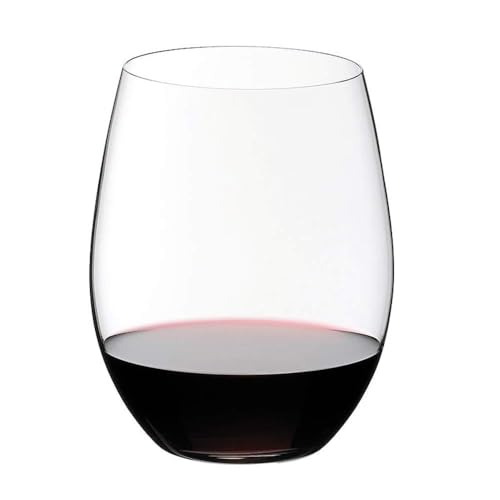
2. Riedel O Wine Tumbler Cabernet/Merlot
A stemless take on the Riedel bowl, designed to fit into a dishwasher and a crowded kitchen. The tumbler is a familiar sight at casual dinners.
Suits: casual use and small cabinets. Strengths: sturdy and stable. Weaknesses: no stem means warmer wine. Skip it if you want formal service.
Best for oaked or full whites
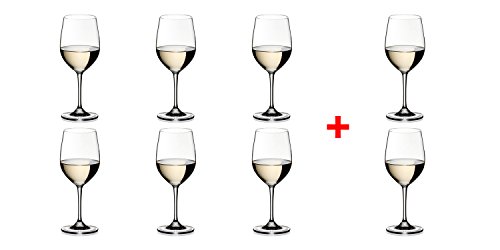
3. Riedel Vinum Chardonnay/Viognier Glasses
A wide-bowled white wine glass that opens up oaked and rounder whites. The Viognier pairing hints at the flexibility of the shape.
Suits: oaked or full whites. Strengths: a roomy bowl for aromatics. Weaknesses: too large for crisp whites. Skip it if you drink only light whites.
View Riedel Vinum Chardonnay on Amazon
Best for pinot Noir and Burgundy
4. Riedel Vinum Pinot Noir Glasses
A rounded Burgundy-style bowl that concentrates delicate aromas and suits lighter reds. The wide shape also flatters older and more nuanced wines.
Suits: Pinot Noir and Burgundy. Strengths: a wide bowl for delicate aromas. Weaknesses: less suited to bold reds. Skip it if you want one all-purpose glass.
View Riedel Vinum Pinot Noir on Amazon

Best for everyday use
5. Riedel Ouverture Magnum Wine Glass
A lower-key Riedel entry line with a generous bowl that works across several wines. It is a handy choice for casual gatherings.
Suits: everyday use. Strengths: an easygoing all-round glass. Weaknesses: less refined than Vinum or Veritas. Skip it if you want a thin, hand-finished feel.
View Riedel Ouverture on Amazon
Best for sparkling wine
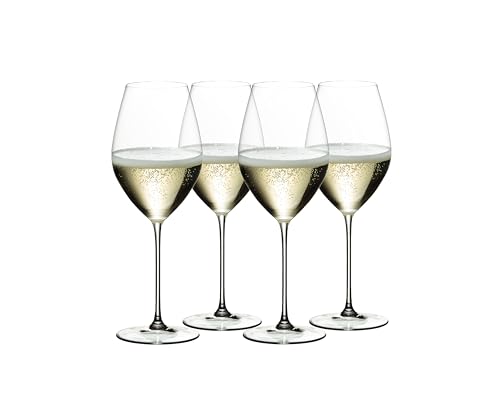
6. Riedel Veritas Champagne Wine Glass
A machine-made, lightweight glass from the Veritas line, with a bowl shaped to show sparkling wine bubbles and aroma. It is a step up in finish from entry lines.
Suits: sparkling wine. Strengths: a lightweight, fine-rimmed feel. Weaknesses: less versatile for still wine. Skip it if you only want red glasses.
View Riedel Veritas Champagne on Amazon
Care and Setup
- Wash gently by hand, holding the bowl rather than the stem.
- If using a dishwasher, follow the maker guidance for the line.
- Dry with a soft cloth to avoid streaks.
- Store stems upright in a cabinet without crowding.
Mistakes to Avoid
- Assuming all Riedel lines handle the dishwasher equally well.
- Buying one shape for every wine without trying a pair of the style first.
- Twisting the stem when drying.
- Overlooking pack size in the listing, and ending up with two glasses when you needed four.
Riedel Lines Compared by Build and Finish
Riedel sells the same idea, grape-specific bowls, across several tiers of construction. Understanding the tiers helps you spend where it matters. At the entry level are machine-made glasses with a thicker rim and a sturdier stem, aimed at everyday use and gifts. Mid-tier machine-made crystal lines have thinner walls and a finer rim, and they are the usual middle ground for people who want better feel without handmade fragility. Hand-made lines sit at the top, with very thin walls and delicate stems.
Each tier changes how the glass behaves in your hands. A thin rim lets wine flow smoothly onto the palate, while a thicker rim feels more substantial but a little less refined. Thin stems and bowls are lighter but more vulnerable to chipping and snapping, particularly when washing and drying.
The names in this guide, such as Vinum, O, Ouverture and Veritas, come from different parts of that range. Rather than assuming a tier from the name, read the listing to see how the glass is described and whether it is machine-made or handmade. If the listing does not say, treat any claim about thinness or weight as unverified. Choose the tier that matches your habits: sturdier lines for busy kitchens and frequent washing, finer lines for occasional special dinners.
- Entry lines suit everyday use and heavy handling.
- Mid-tier crystal suits regular wine drinkers who wash by hand.
- Handmade lines suit careful owners who value feel above all.
Matching Bowl Shape to the Wine You Pour
The idea behind a varietal-specific bowl is that its height, width and rim opening change how a wine’s aromas gather and where it lands on your palate. A tall bowl with a moderate opening is the classic shape for structured reds. A wide, rounded bowl with a narrower rim offers a large surface for lighter, more delicate reds and encourages aromas to collect. A medium bowl with a tapered rim suits fresh whites, while a slightly larger one gives fuller whites room to open.
How much difference this makes is partly a matter of taste, and opinions vary. A good shape can make a wine easier to smell and enjoy, but it will not turn an ordinary bottle into something else. If you are unsure, start with the style you drink most often. A red drinker might begin with a glass for bold reds and add a lighter-red shape later.
For one-glass households, a general-purpose bowl in the middle of the range can cover both reds and whites reasonably well. For sparkling wine, a flute or tulip-style glass keeps bubbles lively. Fill to no more than a third to half of the bowl so you can swirl without spilling, and note that very large bowls hold more air, which may flatter bold wines but let delicate ones fade.
Stemmed Versus Stemless: Handling and Storage
A stem keeps warm hands away from the bowl, which matters for chilled whites and sparkling wines that warm quickly. It also keeps fingerprints off the bowl and gives a graceful way to hold the glass. The trade-off is fragility: stems are the most common break point, and tall glasses need more shelf room.
Stemless tumblers are sturdier and easier to store, and they fit more neatly in a dishwasher or small cupboard. They tip less readily on a crowded table, which makes them appealing for casual dinners. The downside is that your hand warms the bowl, so a chilled wine heats up faster, and fingerprints show on the glass.
If you choose stemless, hold the glass near the base, and consider pouring slightly less at a time. If you choose stemmed, check the height of your cupboard shelves before buying, since some tall bowls will not fit upright. Also think about how you serve. Formal tables and tastings tend to suit stems, while patios, parties and everyday meals often suit stemless glasses. Mixing both is perfectly reasonable: a set of stemmed glasses for guests and a few tumblers for daily use.
Washing, Drying and Storing Riedel Glass Safely
Most breakage happens at the sink. Wash by hand with warm water, a little mild detergent and a soft sponge, holding the bowl rather than the stem. Twisting the stem while wiping places stress on the joint where stem meets bowl, so avoid holding the stem in one hand and the bowl in the other while you twist.
To dry, use a clean, lint-free cloth. Cradle the bowl in one hand and polish gently with the other, or let the glass air dry upside down on a soft mat. Steam from a kettle held near the bowl before polishing can help remove spots, but be careful not to expose a cold glass to sudden heat.
If you use a dishwasher, read the maker’s guidance for the specific line. Some are described as dishwasher friendly, while others are better by hand. Give each glass room so they cannot knock together, use a gentle cycle, avoid harsh detergents and heavy rinse aids, and take glasses out as soon as the cycle ends so they do not sit in steam. Over many cycles, cloudiness can appear, which is hard to reverse.
Store glasses upright rather than hanging them by the rim, and keep them clear of strong food smells. A musty cupboard can transfer odors to the glass, so rinse before use if it has been stored for a long time.
Buying Sets, Gifts and Replacement Checks
Count carefully before you order. Riedel glasses are often sold in pairs, fours or larger sets, and the price per glass can change a lot between pack sizes. If you entertain, think about how many guests you usually have and whether you want one shape for everyone or a mix. Buying a few extra is sensible for any stemmed glass, because breakage is likely over time.
For gifts, a matching pair of a widely available shape is a safe choice, since replacements will be easy to find. Check the listing for the box: some arrive in retail packaging, others in plain cartons. Open the package soon after delivery and inspect every piece for chips, cracks or cloudy spots, and keep the packaging until you are sure.
Questions to ask before buying: Which wines will I pour most often? Do I prefer stemmed or stemless? How will I wash them? How much shelf height do I have? Is the pack size right?
It is time to replace a glass when the rim has a chip, the stem wobbles, the bowl has a crack, or there is permanent cloudiness that polishing cannot remove. A chipped rim can cut lips and should be retired. Keep a record of the line and shape so you can match replacements later.
Riedel Glass FAQ
Is it worth buying wine-specific Riedel shapes?
They can sharpen the character of a wine, but they are not essential. A good general-purpose glass is enough for many drinkers, and you can add specific shapes later for the wines you drink most often.
Which Riedel line is best for beginners?
Vinum and Ouverture are common starting points because they are widely available and not too delicate. Both give you a feel for how a Riedel bowl changes a pour before you try finer lines.
Can Riedel glasses go in the dishwasher?
Several lines can, according to the maker, but delicate lines are better washed by hand. Check the guidance for your line, and avoid crowding the rack so stems do not knock together.
Are stemless Riedel O glasses good for tasting?
They are practical and casual, though the warmth of your hand will heat the wine as you hold the bowl. Chill whites a little cooler if you plan to use them.
What is the difference between crystal and regular glass?
Crystal is usually described as thinner, lighter and clearer, allowing a finer rim. Regular glass tends to be thicker and tougher. Check the listing wording for what the maker states.
How many glasses should I buy for a dinner party?
Plan one per guest plus a few spares, since stemmed glasses break easily. If you serve more than one wine, consider extra glasses so guests are not rinsing between pours.
Why do my glasses look cloudy?
Hard water, strong detergent or many dishwasher cycles can leave a film or etching. Try a soft cloth and a mild wash. Permanent etching cannot be reversed.
How full should I pour?
Fill to about a third to half of the bowl so you can swirl and smell the wine. Sparkling wines can be poured higher in a flute or tulip.
Can I put wine glasses in a cabinet upside down?
It is safer to store them upright, because the rim is the thinnest and most fragile part. Resting on the rim can chip it.
Do I need a decanter with these glasses?
No. A decanter is optional and mostly helps young or sediment-heavy reds. The glass alone is enough for casual drinking.
How can I tell if a stem is weak?
A stem that wobbles, clicks or shows hairline cracks near the bowl should be retired. Do not keep using a glass that flexes.
Serving Temperature and How Glassware Affects It
Glass shape and size influence how a wine warms in your hand and in the room. A larger bowl holds more wine and gives the surface more contact with air, but it can also warm the wine faster if you cradle it. Stemmed glasses let you hold the glass away from the bowl so your hand does not heat the wine, which is a quiet advantage for whites and sparkling wines served cold.
Pour size matters here as well. A smaller pour warms more slowly in a large bowl than a full pour does in a smaller glass, since there is less liquid but also more air above it. Most people pour about a third of the way up the bowl, which leaves room to swirl and concentrate aromas. For white wines served chilled, pour slightly less and refill often, so the wine stays cool.
- Reds are often served slightly below room temperature, so a cool dining room helps.
- Whites and rose benefit from being chilled, but not so cold that the aromas are muted.
- Sparkling wine stays livelier in a narrower bowl that preserves bubbles.
Everyday Use Versus Special Occasions
Many owners reserve fine glassware for special dinners, but wine glasses are designed to be used. The trade-off is durability. Thin, delicate stems are more likely to chip or snap when they are handled often, which is a reason some households keep two sets, a sturdier everyday set and a finer set for guests.
If you drink wine a few times a week, a sturdier line or a stemless style may fit better, since they are easier to wash and store. For holiday meals and dinner parties, a more delicate set shows off the wine and the table. Think about who will handle the glasses, too. Children, guests who are unfamiliar with your kitchen, and anyone doing the dishes will all affect how long a set lasts.
A simple approach to building a collection
- Start with a versatile set that suits the wines you drink most.
- Add specialized shapes as you try new styles.
- Keep a few spares of your most-used glass, since breakage is common.
Budget Versus Premium: Where the Money Goes
The price of wine glasses reflects materials, manufacturing method, and brand. Machine-made glasses are less expensive and generally more durable in daily use, while hand-blown glasses have thinner walls and a lighter feel, with a higher price. Crystal versions often have clarity and brilliance that is noticeable next to ordinary glass, but they can be more delicate.
Spending more does not guarantee a better experience for every drinker. If you enjoy wine casually, a mid-priced set may be more than enough. If you taste wine carefully and care about the feel of the rim and the weight of the stem, a higher end line may be satisfying. The best value is a glass you will use regularly and care for properly.
Consider how many glasses you need and the cost per piece. Sets usually cost less per glass than singles, but buying more than you can store or replace is wasteful. Buy for the number of people you typically host, plus a few extras for breakage.
Gifting and Presentation
Wine glasses are a popular gift for weddings, anniversaries, and housewarmings. When buying for someone else, think about the wines they prefer. A set aimed at red wine is a safe choice for a red drinker, while a pair of sparkling glasses suits a celebration. If you are not sure, a versatile all-purpose style is less risky.
Presentation counts, so check whether the glasses arrive in protective packaging and whether the box is suitable for gifting. Fragile glass should be packed securely, and you may want to inspect the glasses on arrival for chips or defects. Adding a bottle of wine or a decanter makes the gift feel complete. If you plan to ship the gift, choose a retailer with a clear return policy for breakage.
Storage and Display at Home
How you store glasses affects how long they last. Keep them in a cabinet with enough clearance that stems do not bump the shelf above, and avoid stacking bowls inside each other. Many owners store glasses upright, but if you use a rack, hang them by the base rather than the rim to reduce stress on the thinnest part. Wipe dust from glasses stored for a long time before using, and rinse them with warm water to remove any cabinet smell. If you display glasses in an open shelf, keep them away from kitchen grease and strong sunlight.
Choosing Within the Riedel Family Without Overbuying
Riedel’s range can feel like a corridor of near-identical glasses, yet the differences between Vinum, O, Ouverture and Veritas become clear once you think about how you actually drink. Vinum is the dependable machine-made workhorse, with shapes matched to grape varieties and a weight that feels reassuring in the hand. The stemless O tumblers trade ceremony for convenience, fitting dishwashers and crowded tables where stems get knocked. Veritas is lighter and finer, aimed at drinkers who notice rim and balance above all, while Ouverture offers generous, forgiving bowls at the friendliest end of the range. None of these lines is simply better; each is a different answer to a household’s habits.
Start with the wine you open most, not the wine you serve once a year. A household that drinks Cabernet and Merlot weekly will use the Vinum Cabernet Sauvignon glasses constantly, while the Veritas Champagne glass might emerge twice each December. Buying the everyday shape first, in a quantity that covers your usual table plus a spare, builds a set that earns its shelf space. Add specialised shapes slowly, one honest need at a time. This order of buying also protects you from the common regret of a cabinet full of beautiful glasses for wines you rarely pour and too few of the one shape you reach for every Friday.
Stemless Versus Stemmed in Daily Life
The O tumbler divides opinion because it changes how a wine feels in the hand. Without a stem, your palm warms the bowl, which matters little for a casual red on a cool evening and rather more for a chilled white served outdoors in summer. Tumblers shine where space is tight, where children or dogs make stems a liability, or where glasses travel to a picnic or a boat. They also stack into dishwashers with an ease that stemware cannot match. Many Riedel owners end up with both styles, using tumblers for weeknights and stems when the meal deserves a slower pace, and that mixed approach is more honest than declaring one format the winner.
Handling is the other quiet difference. A stem keeps fingerprints off the bowl and lets you swirl without warming the wine, which is why the Vinum Pinot Noir and Chardonnay glasses keep their traditional shape. If you choose tumblers, hold them lower and pour slightly less, and the warming effect stays modest. What matters is that the choice is deliberate. Drinkers who understand the trade-off enjoy both formats; drinkers who buy tumblers expecting stemware behaviour sometimes blame the glass for a problem that was really about expectations. Riedel designs each line for a purpose, and matching purpose to occasion is the whole skill.
Care Routines for Fine Glass
Washing Veritas and Vinum Without Casualties
Fine glass asks for unhurried washing. Fill the sink with warm water, add very little detergent, and wash one glass at a time, holding the bowl low in the water rather than gripping the stem while twisting a cloth. The thinner the rim, the more it resents contact with taps, other glasses and the sink itself, so give each piece room. Rinse in clean warm water and dry immediately with a large lint-free cloth, polishing the bowl first and the stem second. Done this way, a set of Veritas glasses can stay bright for years; done carelessly at midnight after a party, even one washing can halve a collection.
If you prefer the dishwasher, be selective about which lines go in. Sturdier machine-made glasses tolerate a gentle cycle in a proper rack where nothing touches, while the lightest pieces deserve the sink. Never crowd, never use a heated dry that bakes residue onto the rim, and remove the glasses while they are still warm to polish away any film. Water spots are cosmetic, but the detergent perfume that cheap tablets leave behind is not, and it will follow a delicate white wine mercilessly. A fragrance-free detergent and a rinse aid used sparingly keep glass neutral and ready for the next bottle.
Storage, Chips and Knowing When to Retire a Glass
Store stems upright, spaced so rims never touch, in a cabinet you do not have to reach across other objects to access. Most chips happen during that reach. Check rims with a fingertip before guests arrive; a chipped rim is not just ugly, it can cut a lip, and the glass should leave service immediately. Keep the original boxes if you move house often, because glassware travels badly in newspaper and good intentions. Riedel shapes also change subtly across years, so if a particular bowl has become your favourite, buying a spare while the current version is available is simple foresight rather than indulgence.
Retirement is part of ownership. A glass that has gone cloudy from years of hard water, wobbles on a tired foot or carries a repaired-looking chip has done its work. Replacing it keeps the set pleasurable to use, and a table set with sound, matching glasses feels quietly luxurious in a way guests register without analysing. The goal with a brand like Riedel is not to own the most glassware but to own glassware that disappears into the experience, leaving only the wine, the food and the company in your attention. When the glass stops asking to be noticed, it is doing its job perfectly.
Serving Riedel Glasses Well
Temperatures, Pour Sizes and Second Wines
Even the finest bowl cannot rescue a wine served at the wrong temperature. Whites from the Vinum Chardonnay glasses want a proper chill without being numbed, reds want cool room conditions rather than a warm kitchen’s ambient heat, and sparkling wine in the Veritas Champagne glass rewards being genuinely cold at the first pour. Pour modestly, especially into the larger varietal bowls, so the wine stays at temperature and the aromas have room to gather. Refilling little and often is not stinginess; it is how a bottle shows its best side across a whole meal instead of only in the first glass.
When two wines are served, decide in advance whether you will change glasses. A fresh glass for a markedly different wine keeps flavours honest, while a small rinse with the next wine, not water, works when glasses are short and the wines are cousins. Plan the count before guests arrive, including a spare for the inevitable breakage or the guest who sets a glass down somewhere unfindable. Hosting with Riedel should feel calm, and calm is mostly logistics handled early. Choose the shapes, chill the bottles, count the stems, and then enjoy the evening you built instead of working through it.
Why Riedel Matches Bowl to Grape
Riedel’s founding idea is that a glass is a delivery mechanism, shaped to place a particular wine on the palate in a particular order and to present its aroma at a particular concentration. A Cabernet bowl is tall and generous because that wine’s tannin and dark fruit need air and room, and its rim directs the wine to the centre of the tongue where structure registers kindly. A Pinot Noir bowl balloons wide and pinches in because that grape’s treasure is perfume, and perfume needs a surface to rise from and a rim to catch it. You do not need to accept every claim the company makes to benefit from the thinking: once you understand that shape steers delivery, you start pouring more thoughtfully from every glass you own, including the Ouverture tumblers at the friendly end of this range.
The Chardonnay and Viognier glasses in the Vinum line show the same logic applied to whites, balancing a bowl wide enough for an oaked wine’s texture against a rim narrow enough to keep a lean wine’s acidity in line. Champagne in the Veritas glass, taller and narrower than a white wine bowl, protects the bead and concentrates a delicate mousse. Testing these claims at home is easy and enjoyable: pour one wine into two different Riedel shapes and taste them blind if a friend will set it up. Most drinkers detect a difference; some prefer the ‘wrong’ glass, which is also useful knowledge, because the collection you build should serve your palate’s verdicts, not a manufacturer’s diagram.
Machine-Made, Handmade and the Honest Difference
Within Riedel’s world, the step from machine-made to finer lines buys thinness: a finer rim, a lighter bowl, a more seamless stem. What it does not buy is durability, and the trade should be made with open eyes. A household that entertains weekly and washes glasses at midnight should weight its collection toward Vinum’s sturdiness and keep Veritas for the dinners where its delicacy will be appreciated and its washing done soberly the next morning. This is not a compromise; it is correct allocation, the same instinct that puts the good knives in careful hands and the workhorse pan on the daily hob. Glassware budgets, like kitchen budgets, work best when every piece has a job it is genuinely suited to.
Replacement planning belongs in the same conversation. Riedel’s core shapes have remained available across many years, which is one of the brand’s practical virtues: the Vinum Cabernet glass you break this spring can be replaced with a matching one rather than orphaning your set. When you buy, register the exact line and shape in a note, photograph the box end if that is easier, and keep it with your household records. It sounds administrative until the evening you need it, when it becomes the difference between a five-minute order and a evening of measuring bowls with a ruler and guessing. Collections that last decades are built on exactly this kind of unglamorous foresight.
Riedel at the Table: A Host’s Notes
Stem Counts, Second Wines and Real Evenings
Plan the glass count as part of the menu. If the evening moves from a white to a red, decide whether guests keep one versatile glass or change, and set the table accordingly rather than improvising mid-meal. A water glass beside the wine glass is not decoration; it is pacing, palate care and kindness to tomorrow morning, all in one object. Pour wine in modest measures, especially from the larger varietal bowls, and keep the bottle within the host’s reach so refills arrive as hospitality rather than as requests. These habits make fine glassware feel effortless, and effortlessness, not expense, is what guests actually remember about a table.
When the evening ends, resist washing the finest glasses while tired. A rinse to remove the wine, a safe place on the counter and a proper wash in the morning will save more Riedel glass than any other single habit. The morning wash, done with warm water, a clean cloth and daylight to spot the smears, is almost meditative, and it returns the glasses to the cabinet ready for their next performance. Own them this way, as instruments with a routine rather than ornaments with a risk, and the Riedel name on the foot becomes what it should be: not a boast, but a quiet promise that the wine in the bowl is being given its best chance to be enjoyed.
A Tasting Evening Built Around the Glasses
Set a table with one good bottle and three different Riedel shapes, the Vinum Cabernet, the Vinum Pinot Noir and an O tumbler, and pour the same wine into each for a group of friends. Ask everyone to taste in silence first and argue afterwards. The Cabernet bowl will usually present the wine broadest and warmest in impression, the Pinot bowl will lift whatever perfume the wine owns, and the tumbler will feel most casual and, for some tasters, most honest. There is no correct winner, and discovering that is the point: the group learns its own palates, the host learns which glasses the household actually enjoys, and the next purchase makes itself. Few evenings at home teach as much per bottle as this one.
Run the same experiment a month later with a white wine and the Chardonnay glasses against the same three shapes, and the collection’s logic will deepen again. Whites expose rim and temperature faults mercilessly, and the tumbler’s warming hand will divide the table. By the end of two such evenings, a household knows more about its own drinking than a year of uncritical pouring teaches, and the Riedel system stops being a brand story and becomes a set of tools with known behaviours. That knowledge is portable to restaurants, to friends’ houses and to every future glass purchase, which is why enthusiasts defend these glasses with a warmth that puzzles outsiders: they are not defending glass, they are defending an education.
Keep the evenings light. The moment a tasting becomes an examination, the wine loses, so pour generously, serve food alongside and let opinions be wrong in interesting ways. Note the household’s verdicts somewhere durable, because in six months nobody will remember which shape won the Pinot argument, and the note will settle a purchasing debate in seconds. Collections built on recorded household verdicts, rather than on reviews and reputation, fit their owners the way a tailored jacket fits: noticeably, and in a way that makes everything else in the wardrobe look slightly approximate.
Riedel for Weddings, Registries and Heirlooms
Buying Glassware That Outlasts the Occasion
Riedel sets are registry staples for a reason: they are wanted, they are replaceable piece by piece across decades and they mark an occasion every time they are used. Couples registering should choose the shape for the wine they genuinely drink together, in a quantity that covers their real table, and resist the grand assortment that fragments the set into unusable twos and fours. A dozen of one beloved shape will serve a marriage better than four each of three shapes chosen for a photograph. Add the second shape at the first anniversary, when the household’s habits have declared themselves, and the collection grows as a record of the life rather than as a prediction of it.
Heirloom logic follows naturally. Glassware survives generations when it is used carefully, stored sensibly and replaced piece by piece as casualties occur, which Riedel’s long-running lines make possible. A set that arrives at a child or a godchild with its story attached, these were our Friday glasses, carries a warmth that untouched crystal in a box cannot. Use them, then, rather than preserving them out of use. The finest fate for a Veritas glass is a thousand good evenings and an honourable chip at the end of them, and the finest compliment to the maker is a replacement ordered without hesitation, because the shape had become part of how a household celebrates.
Buy the Shape Your Life Keeps Asking For
Stand in front of your wine shelf, not the catalogue, and ask which bottle you open when nobody is watching. That bottle’s shape is your first Riedel. Buy it in a number that covers your real table, add a spare, record the model and wash the set like you intend to own it for a decade, because you will. Let later shapes arrive only when a wine in your life genuinely asks for them, and let the stemless line serve the evenings the stems cannot. A collection assembled at that pace, by that evidence, fits its household so completely that guests feel it without naming it: the wine tastes right, the table looks right, and the glasses disappear, which is the highest achievement available to an object made of glass.
The Price of the Set Is the Smallest Number
Count the whole cost of a Riedel set across five years and the purchase price becomes the least interesting figure. Add the replacements, two or three if the household entertains honestly, the cloth and the rack that protect them, and the shelf space they occupy in a kitchen where space has a price. Against that, count the uses: hundreds of bottles poured better, dozens of dinners given a quiet polish, the replacements that were possible at all because the line endured. Few household objects return their cost at that rate of use. The calculation fails only when the glasses are not used, which is why this guide keeps returning to the same unfashionable advice: buy the line your life will actually wash, pour and replace, and the economics will take care of themselves.
There is one more entry in the ledger, harder to price and worth more than the rest: the way a proper glass changes the drinker’s attention. A household that pours into Riedel shapes pours more thoughtfully, tastes more carefully and argues more interestingly about what is in the bottle. Attention compounds like interest. Ten years of it produces a palate and a set of shared memories that no single bottle, however grand, could have bought outright. The glasses were merely the instrument. Buy the instrument, by all means, but know that what you are really purchasing is the practice it makes easy.
Frequently Asked Questions
How should I hold a wine glass?
Hold a stemmed glass by the stem or the base, which keeps fingerprints off the bowl and prevents your hand from warming the wine. For stemless glasses, hold near the base. Holding the stem is especially useful for chilled white and sparkling wines.
What size wine glass should I buy for everyday use?
A medium bowl that holds around 12 to 16 ounces is a flexible choice for many wines, since it leaves room for swirling. Larger bowls suit full-bodied reds, and smaller ones suit whites and sparkling wine. Consider storage space as well.
Are hand-blown wine glasses worth the extra cost?
Hand-blown glasses often have thinner walls and a lighter feel, which some people prefer. They are also more delicate and costly. If you want durability for everyday use, machine-made options are practical. The decision depends on how you use the glasses and how you value the feel.
What is a good wine glass gift for a beginner?
A versatile set suited to both red and white wines is a safe gift. Look for a medium bowl, a comfortable stem, and a sturdy build. Pairing the glasses with a bottle of wine or a corkscrew makes a thoughtful, complete gift.
The Short Version
For bold red wines, the Riedel Vinum Cabernet. For casual stemless pours, the Riedel O Cabernet. For rounder white wines, the Riedel Vinum Chardonnay. For Burgundy style reds, the Riedel Vinum Pinot Noir. For everyday all-round use, the Riedel Ouverture. For sparkling wine, the Riedel Veritas Champagne.

