A semi-automatic espresso machine controls the pump and water temperature for you, but you grind, dose, tamp and stop the shot yourself. That hands-on role is why many home baristas prefer it to a fully automatic machine: you learn the craft and can improve every cup.
The six machines below range from a bare-bones classic to models with a built-in grinder and a touch of automation. We have not used these products ourselves. Please confirm size, voltage and what comes in the box on the current listing before buying, because bundles and accessories change.
As an Amazon Associate we earn from qualifying purchases. Links below are affiliate links, and they do not change the product information we give.
What to Look For
| Feature | Why it matters |
|---|---|
| Built-in grinder | Saves counter space, but a separate grinder is easier to upgrade later |
| Steam wand | A real steam wand lets you texture milk by hand for lattes and flat whites |
| Portafilter | A standard-size portafilter opens up many baskets and accessories |
| Heat-up time | Thermoblock machines are ready fast; boiler machines take longer but stay steady |
In this guide
Specs at a Glance
| Machine | Material | Size | Notes |
|---|---|---|---|
| Gaggia Classic Pro | Stainless steel body | Check the listing for dimensions | Single boiler; manual steam wand |
| Breville Barista Express | Stainless steel | Check the listing for size | Built-in grinder; pressure gauge |
| Breville Bambino Plus | Stainless steel | Check the listing for dimensions | Thermojet heating; auto steam |
| De’Longhi La Specialista Arte | Stainless steel and plastic | Check the listing for size | Built-in grinder; manual steam |
| De’Longhi Dedica Arte | Stainless steel | Check the listing for width | Slim design; manual steam |
| Breville Barista Pro | Stainless steel | Check the listing for dimensions | Built-in grinder; digital display |
The 6 Best Semi-Automatic Espresso Machines

Top pickBest for beginners who want to learn properly
1. Gaggia Classic Pro
A long-loved Italian machine with a commercial-style portafilter and a manual steam wand. It rewards patience and is a favourite for modifications and tinkering.
Suits: beginners who want to learn properly. Strengths: a simple, repairable design. Weaknesses: no built-in grinder and a short learning curve to master. Skip it if you want automatic milk frothing.

Best for those who want everything in one unit
2. Breville Barista Express
An all-in-one machine with a built-in conical burr grinder, a steam wand and a pressure gauge. It lets you go from beans to espresso without extra equipment.
Suits: those who want everything in one unit. Strengths: built-in grinder and guided features. Weaknesses: grinder is harder to upgrade. Skip it if you want to pick your own grinder.
View Breville Barista Express on Amazon

Best for small counters and busy mornings
3. Breville Bambino Plus
A compact semi-automatic with fast heat-up and an automatic milk frothing wand. It suits small kitchens and people who want a quick start to the day.
Suits: small counters and busy mornings. Strengths: fast heat-up and automatic milk. Weaknesses: no built-in grinder. Skip it if you want a large water tank.

Best for beginners with a built-in grinder
4. De’Longhi La Specialista Arte
A semi-automatic machine with a built-in grinder and guided features that help new users dial in a shot. It also includes a manual steam wand for milk.
Suits: beginners with a built-in grinder. Strengths: guided grinding and tamping help. Weaknesses: more plastic than some competitors. Skip it if you want an all-metal build.
View De’Longhi La Specialista Arte on Amazon

Best for narrow counters
5. De’Longhi Dedica Arte EC155
An ultra-slim machine meant for tight kitchens, with a manual steam wand and a stainless exterior. It is among the narrowest options available.
Suits: narrow counters. Strengths: a very slim body. Weaknesses: no built-in grinder; small tank. Skip it if you make many drinks in a row.
View De’Longhi Dedica Arte on Amazon
Best for those who want a display and presets
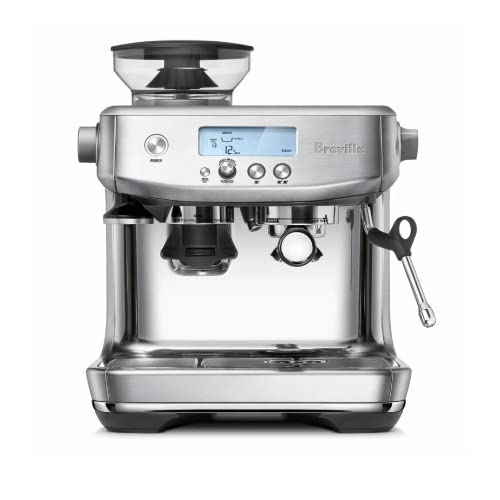
6. Breville Barista Pro
A step-up Breville with an integrated grinder, a clear display and fast heat-up. It keeps the all-in-one layout while adding more precise control than the Express.
Suits: those who want a display and presets. Strengths: fast heat-up and clear controls. Weaknesses: still tied to the built-in grinder. Skip it if you want to buy components separately.
Care and Setup
- Backflush the group head as the maker directs, and wipe the portafilter after each use.
- Descale on the schedule that suits your local water.
- Purge and clean the steam wand after every milk drink.
- Empty and rinse the drip tray and water tank regularly.
Mistakes to Avoid
- Using pre-ground coffee and expecting great shots.
- Skipping descaling and letting scale build in the lines.
- Tamping inconsistently from one shot to the next.
- Buying a machine without a plan for a good grinder.
Grinder Quality and Dialing In
The grinder shapes your espresso as much as the machine does. Espresso needs a fine, even grind, and small changes in particle size swing the shot from sour and thin to bitter and harsh. A burr grinder with fine adjustment lets you make those small changes. Blade grinders and coarse-only grinders are not suited to espresso.
Built-in grinders are convenient and save counter space, and they are tuned to work with the machine. Their limits are that the grinder cannot be upgraded or replaced separately, and a worn grinder can mean repairing the whole unit. A separate grinder costs more and takes room, but it can be swapped or upgraded without changing the machine, and the machine can be upgraded later too.
When you shop, check how many grind settings there are and whether adjustment is stepped or continuous. More steps mean finer control. Look at how much coffee stays in the grinder after use (retention), since stale grounds can taste dull. A grinder with easy-to-reach burrs is simpler to clean.
Dialing in is the process of adjusting grind size, dose and shot time until the taste is balanced. Change one variable at a time, taste each result, and note what you did. A scale that reads in small increments helps you dose consistently. Expect to adjust the grind again when you open a new bag of beans, because freshness and roast change how coffee extracts.
Boiler Types and Heat-Up Time
How a machine heats water affects its speed, steam power and temperature stability. A single boiler heats water for both brewing and steaming, usually by switching temperature, so you wait between pulling a shot and steaming milk. It is simple and often more affordable, and it suits people who make a drink at a time. A heat exchanger or dual boiler can brew and steam at once, which helps if you make several milk drinks in a row, but these designs cost more and take up more room.
Some compact machines use a thermocoil or thermojet, which heats water quickly as it passes through. These machines are ready in short order, which suits busy mornings, though the way they manage temperature differs from a large boiler. Read the listing for the heating system and for how long the maker says the machine needs to warm up.
Warm-up is not just the light turning on. The portafilter, group head and cups also need to heat for stable results, so allow extra time or run hot water through the group before pulling a shot. Cold metal pulls heat from the espresso and makes it taste sour.
If you plan to make many milk drinks, steam capacity is the key spec to check. Weak steam makes froth with large bubbles and takes longer to heat milk. Ask whether the machine recovers quickly between drinks.
Pressure, Portafilters and Baskets
Espresso machines are often described by the pressure of their pump, but the number printed on the box is not the pressure at the coffee. What matters is controlled extraction pressure at the puck, and many machines regulate this internally. Treat large headline pressure figures with caution and look for features such as pressure gauges or pressure profiling if they matter to you.
The portafilter and basket decide how forgiving the machine is. Pressurized baskets have a second wall that restricts flow and creates a foamy layer even with imperfect grinding. They are forgiving for beginners and pre-ground coffee, but they limit flavor. Non-pressurized baskets give you more control and better results with freshly ground coffee, but they demand a good grinder and careful dosing.
Check the basket size, since it governs how much coffee you dose. Typical baskets accept a stated dose range, and using too little or too much affects the shot. The portafilter diameter also matters if you want to buy accessories like tampers, distribution tools or bottomless portafilters, because they need to fit. Confirm the size on the listing or in the manual.
A well-fitted tamper that sits level helps you press evenly. Tamping pressure matters less than being level and consistent. Take care with the portafilter handle, which becomes hot during use.
Milk Steaming and Latte Habits
If you drink milk-based espresso, the steam wand is part of your daily routine. A manual wand gives you control over texture, which is satisfying but takes practice. Automatic wands handle temperature and aeration with less effort, at the cost of less flexibility. Consider how much you want to learn and how much of your morning you want it to take.
A basic technique is to purge the wand, place the tip just below the surface to add a little air, then lower the pitcher so the milk spins and the foam mixes in. Stop when the pitcher is warm but still comfortable to touch. Use cold milk and a cold, clean pitcher, and wipe and purge the wand immediately after each use. Dried milk inside the tip reduces steam and breeds bacteria.
Pitcher size should match your drinks. A small pitcher suits one cup, while a larger one is better for two. A machine that sits low on the counter may limit the pitcher height under the wand, so check clearance. Wand length and angle also affect how easily you can reach the corner of the pitcher.
Plant-based milks behave differently from dairy, and some are designed for steaming while others separate. Try a few and adjust technique for each.
Maintenance Schedule and Water Quality
Espresso machines reward routine care. Rinse the group head and wipe the portafilter after each shot, flush the steam wand after each milk drink, and empty the drip tray regularly. Backflushing, where the machine runs water back through the group with a blind basket, helps clear oils on machines that support it. Check your manual, because some designs do not suit backflushing.
Water quality affects taste and machine life. Very hard water leaves scale that clogs lines and heating elements, while very soft or heavily filtered water can cause its own issues. Many makers recommend filtered water and a descaling routine matched to local water conditions. Follow the manual and use cleaners approved by the maker, as the wrong product can damage seals.
- Replace the group head gasket (shower seal) when it hardens or leaks.
- Replace water filters on the schedule given by the maker.
- Clean baskets and portafilters with a coffee equipment cleaner.
- Check hoses and the water tank for leaks and mold.
Signs of trouble include weak pressure, slow heating, odd noises and leaks. Early service is cheaper than a failure. Before buying, ask whether spare parts and service are available, because a repairable machine can run for many years.
Semi-Automatic Espresso Machine FAQ
What does semi-automatic mean?
The machine handles pressure and temperature, while you control grinding, dosing, tamping and the start and stop of each shot.
Do I need a separate grinder?
Not if you choose a model with a built-in grinder. A separate grinder offers more upgrade options, but it also takes counter space and extra money.
How long does it take to learn?
Most people produce drinkable shots within days, and consistent, tasty shots within a few weeks of practice and small adjustments.
Can I make lattes on these machines?
Yes. A steam wand lets you texture milk by hand. Some models also add automatic frothing for an easier start.
What grind size do I need for espresso?
Espresso needs a fine, even grind, adjusted until the shot tastes balanced. The right setting varies with the beans, the machine and the age of the roast. Change one thing at a time and taste each result.
Why does my espresso taste sour or bitter?
Sour shots are often under-extracted, meaning the grind is too coarse, the dose is low or the shot runs too fast. Bitter shots are often over-extracted. Adjust grind and time in small steps.
What is a pressurized basket?
It is a basket with a second wall that restricts flow and builds a foamy layer even with imperfect grinds. It is forgiving for beginners but limits flavor. Non-pressurized baskets give more control with a good grinder.
Do I need a scale?
It is not required, but a scale that reads in small increments helps you dose and time shots consistently. That makes it much easier to repeat good results.
How often should I descale?
It depends on your water hardness and how often you use the machine. Follow the maker's schedule and use approved descalers. Using filtered water may reduce scale.
Can I use plant-based milk on a steam wand?
Yes, though results vary. Some products are made for steaming and others separate or foam poorly. Try a few and adjust your technique.
Why should I warm the portafilter and cups?
Cold metal and ceramic pull heat from the shot and can make it taste sour. Running hot water through the group and preheating cups improves temperature stability.
Choosing by Experience Level
Semi-automatic machines cover a wide range, from simple designs that reward patience to models with built-in grinders and guided settings. Your experience level should shape the choice more than any feature list. A true beginner is better served by a machine that forgives mistakes, such as one with a pressurized basket option, a built-in grinder with clear dial settings, or a preset shot volume. These features reduce the number of variables you must control during the first weeks.
An intermediate user who already understands grind size, dose and extraction time may prefer a machine with a manual or programmable pre-infusion, a pressure gauge and a standard-size portafilter. These features give you more room to improve. Machines like the Gaggia Classic Pro appeal to people who enjoy tinkering, while the Breville line, including the Barista Express and Barista Pro, packages grinder and machine together for convenience. Consider where you want to be in a year, not only where you are today.
The Tools That Complete the Setup
The machine is only the centerpiece. Espresso is sensitive to small changes, so a handful of inexpensive tools make the difference between guessing and repeating a good result.
- A small scale: weighing the dose in and the espresso out is the most reliable way to dial in a recipe.
- A tamper that fits the basket: a loose or wobbly tamper leads to uneven pressure and channeling.
- A milk pitcher: choose a size that suits your drinks, typically 12 to 20 ounces for one or two cups.
- A knock box or small bin: spent pucks need somewhere to go.
- A cleaning brush and backflush tools: routine upkeep keeps flavors clean.
- A timer or the scale’s timer: it helps you compare shakes of the same recipe.
Budget for these when comparing models, because a cheaper machine that needs several add-ons can end up costing about the same as a more complete package.
Where the Money Goes at Different Price Levels
At the lower end, you are generally paying for a basic pump, a heating element and a simple body. Many entry models lean on a thermoblock for quick heat-up and rely on pressurized baskets so the machine produces something drinkable with inexpensive grinders. Moving up, you gain steadier temperature control, stronger steam power and better components such as metal parts instead of plastic. At the top of the semi-automatic range, you get features like dual heating systems, adjustable temperature and more refined controls.
A higher price does not guarantee better coffee at home. Grinder quality, fresh beans and technique often matter more than the last few features. If the budget is limited, it can make sense to prioritize the grinder over a more expensive machine.
Counter Space, Power and Everyday Fit
Semi-automatic machines are larger than they look in photos, especially models with a built-in grinder and a hopper that needs headroom to refill. Measure the space under your cabinets, leave room to pull the portafilter out and tamp, and check how far the water tank sits from the wall. Some tanks load from the top and others from the back or side, which affects where the machine can live.
Look at heat-up time as well. Thermoblock machines are ready within a minute or so, while larger boiler machines may need much longer to stabilize. If mornings are rushed, a quick-start design will save time. Also consider noise, since the pump and grinder are both audible, which may matter in a small home.
Learning Resources and Getting Better
Espresso is a skill, and the quickest progress comes from structured practice. Many manufacturers publish dialing-in guides, and independent coffee communities offer detailed recipes for common beans. Try changing a single variable per session and take notes. Taste shots straight before adding milk, because that reveals problems milk can hide.
It also helps to buy beans from a roaster that prints a roast date and offers brewing advice. Fresh beans between about one and four weeks after roasting often give the most predictable results, which makes dialing in easier.
A Sensible Order for Troubleshooting Shots
When espresso tastes wrong, change one thing at a time and follow a consistent order. Start with the grind, as it has the largest effect on flow and flavor. If shots run fast and taste sour, grind finer. If they run slow and taste harsh or bitter, grind coarser. Next, check the dose and keep it the same weight each time. Then look at tamping, aiming for level and firm rather than extremely hard. Finally, consider water temperature and bean freshness.
Keep a small notebook or a note on your phone with the dose, yield, time and taste. After a few days you will see patterns, and what once felt random becomes a habit you can control.
Dialling In Without Wasting the Bag
Every new bag of coffee asks the same questions, and a semi-automatic machine like the Gaggia Classic Pro or the Breville Barista Express answers them only through your hands. Begin with a sensible middle recipe, weigh both the dry dose and the liquid yield, and time the shot without treating the timer as a judge. Taste first, adjust second. If the shot runs fast and tastes thin and sour, grind finer; if it drips slowly and tastes bitter and hollow, grind coarser. Change one thing, pull another shot, and write down what happened. Three recorded shots teach more than thirty forgotten ones, and the notebook becomes your shortcut for every future bag.
Beans change as they age, so the setting that sang on day five may drift by day twelve. Expect to nudge the grinder through the life of a bag rather than hunting for one perfect setting that lasts forever. Machines with built-in grinders, such as the Barista Express and Barista Pro, make those nudges quick, while a separate grinder paired with the Gaggia rewards patience with finer control. Either way, purge a little ground coffee after each adjustment so the next shot reflects the new setting rather than a mixture of old and new grounds hiding in the chute.
Distribution, Tamping and the Honest Basics
Most bad shots are born before the pump starts. Grounds clumped in one corner, a tilted tamp or a dented basket edge will channel water no matter how capable the machine is. Break up clumps with a gentle stir, level the bed, tamp straight down with repeatable pressure and wipe the rim clean before locking in. Consistency here is not fussiness; it is what allows your grind adjustments to mean anything. When the basics wander, every change you make is guesswork, and beginners often blame the machine for problems that began at the bench with a hurried puck.
Freshness of water and cleanliness of the group complete the picture. A machine fed with stale tank water and wearing a week of coffee oils will flatten the brightest beans. Rinse the tank, refill with fresh water, and run a short flush before the first shot of the day. Backflush on the schedule your machine’s design calls for, and descale according to your water hardness rather than a calendar you found online. The De’Longhi models in this guide ask for their own routines, and following the maker’s version, not a generic one, keeps seals, valves and heating elements healthy for years of daily use.
Milk Skills for People Who Mostly Drink Espresso
Small Pitchers, Cold Milk and Early Air
Even committed espresso drinkers eventually face a guest who wants a cappuccino, and the Bambino Plus and La Specialista Arte exist partly to make that moment easy. Start with a pitcher sized to the drink, filled to just below the spout with cold milk. Introduce air early with the tip near the surface, listening for a gentle tearing sound rather than loud sputtering, then plunge the tip to spin the milk into a whirlpool that smooths the foam. Stop at the temperature where the pitcher feels hot but still touchable; beyond that, sweetness fades and a cooked flavour takes over that no amount of latte art can disguise.
Automatic milk systems forgive beginners, while manual wands teach faster because every mistake is visible in the pitcher. Whichever your machine offers, wipe and purge the wand the second you finish, since baked milk is stubborn and unhygienic. Practice drinks are not wasted drinks: a flawed flat white still makes a fine coffee for the cook. Within a few weeks of regular attempts, most home baristas can texture milk well enough to please any guest, and the machine that once felt intimidating becomes the easiest appliance in the kitchen to love.
Choosing Your Level of Involvement
This category spans a genuine spectrum of involvement, and honesty about your appetite for ritual is the best buying guide. The Dedica Arte suits someone who wants good espresso in a slim footprint with modest learning, while the Classic Pro suits someone who enjoys improving a skill over months. Neither buyer should envy the other. The espresso hobby deepens only when the daily routine pleases you; a machine that demands more attention than you enjoy giving will be bypassed for the pod machine by February, whatever its pedigree. Match the machine to the person you are on a tired Tuesday, not the enthusiast you are on a free Sunday.
Accessories should follow the same honesty. A scale, a decent tamper that fits your basket properly and a knock box will improve your coffee more than any decorative purchase. Add tools only when you can name the problem they solve in your current routine. That discipline keeps the bench uncluttered, the spending sensible and the focus where it belongs: on the coffee, the machine and the small daily pleasure of making something well with your own hands. Semi-automatic espresso rewards exactly that temperament, which is why its owners tend to stay with it for years.
Troubleshooting the Shots That Go Wrong
A Short Diagnostic Walk
When a shot disappoints, walk the chain in order. Were the beans fresh and stored away from heat and light? Was the dose weighed and the yield sensible? Did the shot run in a reasonable time, and did the stream look even rather than spurting from one side? Was the machine fully warmed, the portafilter hot and the cup warmed? Most failures confess at one of these checkpoints. Fix the earliest fault you find and taste again before touching anything else. This orderly habit, repeated across bags and seasons, is the entire secret that separates improving home baristas from frustrated ones with identical equipment.
Keep perspective on the bad days. Humidity shifts, a new bag behaves oddly, a grinder burr wears slowly and suddenly nothing tastes right. These are normal features of working with a natural product and a mechanical process, not evidence that you chose the wrong machine. Return to your notes, return to a known recipe, and change one variable at a time until the coffee comes back. It always comes back. The machines in this guide, from the compact Dedica to the enthusiast Classic Pro, are all capable of drinks that would satisfy most cafe customers, provided the person driving them stays curious and methodical.
Building Two House Recipes and Keeping Them
Every home barista benefits from owning two recipes outright: a dependable milk-drink recipe for the household’s daily cup and a straight espresso recipe for tasting what a coffee really offers. Write both down with dose, yield, time and the grinder setting for your current beans, and tape them inside a cupboard door near the machine. When a new bag arrives, you are adjusting a known recipe rather than inventing one, which halves the waste and doubles the learning. The Barista Express and Barista Pro owners can lean on their machines’ consistency here, while Gaggia Classic Pro owners gain the same stability from the scale and the notebook. Either way, the recipe is yours, tested against your water, your grinder and your palate, which no chart downloaded from the internet can claim.
Revisit the recipes seasonally. Summer’s lighter roasts may want a touch more yield to open their fruit; winter’s darker blends may want less to keep their sweetness ahead of their bitterness. These are small, pleasurable adjustments, the espresso equivalent of a cook seasoning by taste. What you are building across months is not dependence on the card inside the cupboard but the judgement that wrote it, and judgement is portable to every machine you will ever use, from the Dedica Arte on a friend’s counter to a commercial machine you may meet on a course one day. Skills compound; equipment merely depreciates, which is why the practice matters more than the purchase.
Water, Scale and the Maintenance Calendar
Water is the ingredient nobody lists and everybody tastes. If your tap water is hard, scale will build inside any of these machines and slowly strangle temperature and flow; if it is heavily treated, flavour suffers before the machine does. A simple filter jug answers most homes, and the descale routine should follow your water’s hardness and the maker’s guidance rather than a stranger’s calendar. Put the recurring tasks, backflushing, group cleaning, descale checks, grinder burr inspection, on the same calendar as your other household maintenance, because espresso machines fail socially before they fail mechanically: they are neglected in busy months, perform worse, get used less and enter a spiral that ends with a pod machine and a guilty conscience.
The grinder deserves its own line in that calendar. Burrs dull gradually enough that you adapt to them, compensating with settings until one day a new bag refuses to dial in at all. Note when burrs were fitted, clean the grinder’s chamber and chute regularly so old grounds do not season new coffee, and purge after every adjustment. On the De’Longhi La Specialista, where the grinder is integrated, the same discipline applies through its own access points. A clean, sharp grinder feeding a clean machine is ninety percent of home espresso; the remaining ten percent is the part you get to call artistry, and it is much more fun once the ninety is handled.
Espresso for Guests Without the Stress
A Host’s Workflow for Four Drinks
Making espresso for guests fails socially when the host disappears into a twenty-minute performance while the table waits. Prepare like a cafe in miniature: beans ground to order but cups warmed, milk in the pitcher, towels placed, knock box emptied and the order of drinks decided before the first shot. Pull the shots in sequence, steam in one larger pitcher where the drinks allow it, and serve in pairs so nobody drinks alone. The Bambino Plus’s quick readiness and automatic milk help here, while manual machines reward the host who has practised the sequence on ordinary mornings. Guests remember relaxed competence, not perfection, and a slightly imperfect cappuccino delivered with the conversation still flowing beats a flawless one delivered to an empty room.
Know when to simplify. After a big meal, offer espresso, a small macchiato or an affogato rather than the full menu, and let the machine do what it does best under gentle pressure. Keep a decaffeinated coffee you actually like for the guest who wants the ritual without the evening consequences, because hospitality includes the person who would otherwise sit out the round. These courtesies are the real end product of owning a semi-automatic machine: not drinks as demonstrations, but drinks as part of how your home welcomes people. The equipment in this guide can all support that role beautifully, provided the person driving it has built the small systems, recipes, calendar, workflow, that turn capability into ease.
The Learner, the Family and the Perfectionist
Consider the learner, six months into espresso, working on a Breville Bambino Plus in a small kitchen. Her mornings are quick, her milk is automatic on the days she is rushed and manual when she has ten unhurried minutes, and her bad shots are becoming rarer at a pace that keeps her interested. The machine’s forgiveness is not a limitation; it is the curriculum’s pacing. In a year she may want more control, and she may not, because the drinks already please her household. Either outcome is success, and it began with choosing a machine matched to her life rather than to an aspiration she had not yet tested.
Consider the family, four drinks deep every morning, where the Barista Express or Barista Pro earns its footprint through sheer throughput: integrated grinding, a workflow everyone in the house has learned, a machine that teenagers can operate safely and that produces the flat white a parent needs before the school run. Here the virtues are social as much as technical. A machine the whole household uses justifies itself daily; a machine only one person can drive becomes a shrine. The Gaggia Classic Pro serves a different family, the one where espresso is a shared hobby and the learning is the point, and both families are right, because they chose for the household they actually are.
Consider finally the perfectionist, weighing doses to a tenth, logging extractions, chasing the light-roast shot that sings one morning in three. The Classic Pro and its modifiable, mechanical honesty suit this temperament, as does the La Specialista for the perfectionist who also hosts. What all three owners share, beneath their different machines, is the set of habits this guide keeps returning to: fresh beans, weighed doses, clean equipment, one change at a time. The machines in this list are best understood as three different classrooms teaching the same subject, and the diploma, a reliably excellent cup made without drama, is identical in every one.
The Second Year: Burrs, Seals and Staying in Love
Maintenance as the Romance Continues
By the second year, the romance has become a marriage, and marriages run on maintenance. Seals harden, burrs dull, a steam wand’s tip clogs on the morning it is most needed. Owners who scheduled these small renewals barely notice them; owners who waited for failures remember every one. Keep the maker’s service parts identified, know whether your machine wants a professional descale or a home one, and treat the grinder’s burrs as the consumable they are. The De’Longhi and Breville service networks exist for the larger interventions, and using them before a breakdown, at the first strange noise or the first temperature sulk, is cheaper in money and morale than any emergency call.
Staying in love is also a matter of variety. Rotate roasters, try a decaffeinated coffee worth drinking, learn one new drink per season, an affogato in summer, a spiced winter latte, and the machine stays interesting because the coffee keeps changing. Invite friends to pull their own shots and watch the machine become a social object again. The semi-automatic format’s deepest advantage over every automated rival is this renewability: the skill is yours, the machine is a tool, and the combination can stay fresh for decades. Owners who understand that rarely leave the category; they just, occasionally, buy a bigger classroom.
The Machine You Master Beats the Machine You Covet
Every machine in this guide can make espresso that embarrasses most cafes, and none of them can do it without a person who has built the habits: fresh beans, weighed doses, a clean group, one change at a time and notes that survive longer than memory. Choose the machine whose daily routine you will enjoy at your tiredest, learn it the way you would learn an instrument, and give it a year before you judge it or yourself. By then the question that launched the purchase, which machine is best, will have been replaced by a better one, what shall we try with this coffee, and that replacement is the true sign that the semi-automatic life has taken hold in your kitchen.
Espresso Away From Your Own Counter
Sooner or later the home barista is asked to make coffee somewhere else, a holiday house, a friend’s new machine, an office kitchen, and the experience is a useful audit of what skill and what equipment were doing the work at home. Travel light: a hand grinder if you own one, a small scale, fresh beans and the humility to accept a strange machine’s temperament. The first shot on unfamiliar equipment is reconnaissance, the second is adjustment, and by the third you will know whether your knowledge was real or merely memorised settings. Baristas who pass this test come home better, because they have separated the portable craft, dose, distribution, tasting, from the furniture it usually hides inside.
Back home, let the audit change one small thing. Perhaps the recipe was too dependent on one grinder’s numbers, or the milk routine only worked with one pitcher. Fixing that dependency makes your everyday coffee more robust, not just your travel coffee. This is how a hobby quietly professionalises itself, not through certificates but through the owner’s refusal to be helpless outside their own kitchen. The machines in this guide will wait patiently on the counter while you learn it. When you return, they will make exactly the coffee your improved hands ask them for.
Frequently Asked Questions
What accessories do I need besides the machine itself?
At minimum, a tamper that fits your basket, a milk pitcher if you want milk drinks, and a cleaning brush. A small scale and a knock box are strongly recommended. Many machines include some of these, but quality varies, so check what is in the box before buying separately.
What brew ratio should I start with?
A common starting point is a 1 to 2 ratio, such as 18 grams of coffee producing about 36 grams of espresso in roughly 25 to 30 seconds. Adjust from there to taste. Sour shots usually call for a finer grind or longer yield, while bitter ones call for a coarser grind or shorter yield.
Can I upgrade parts on a semi-automatic machine later?
Some models allow upgrades such as a different basket, a bottomless portafilter, a pressure gauge or a replacement steam tip, while others have limited options. Check whether the portafilter size is standard and whether parts are sold separately, since upgradeability affects how long the machine stays useful.
Is a pressure gauge useful on an espresso machine?
It can help you see what the pump is doing during a shot and spot problems such as channeling or an overly fine grind. It is not essential for beginners, but it becomes a useful learning tool as you start to adjust variables and compare shots.
The Short Version
For a classic first machine, the Gaggia Classic Pro. For an all-in-one setup, the Breville Barista Express. For a compact quick-start machine, the Breville Bambino Plus. For a guided all-in-one, the De’Longhi La Specialista Arte. For tight kitchens, the De’Longhi Dedica Arte. For an upgraded all-in-one, the Breville Barista Pro.