A single brew coffee maker makes one cup or mug at a time, which means no half-full pot sitting on a hot plate. Some use pods, some take ground coffee, and a few work with both, so the right choice depends on how much convenience you want.
The six makers below cover compact pod machines, a pod-and-grounds brewer, a capsule machine and a manual brewer. We have not used these products ourselves. Please confirm pod compatibility, reservoir size and cup sizes on the current listing before buying, because options differ by model.
As an Amazon Associate we earn from qualifying purchases. Links below are affiliate links, and they do not change the product information we give.
What to Look For
| Feature | Why it matters |
|---|---|
| Pod or grounds | Pod machines are quick; grounds brewers let you choose any coffee you like |
| Cup sizes | Check whether the maker handles a travel mug as well as a small cup |
| Water reservoir | A larger tank means fewer refills; a small one saves space |
| Cleaning | Removable parts and an easy descale routine keep the coffee tasting clean |
In this guide
Specs at a Glance
| Maker | Material | Size | Notes |
|---|---|---|---|
| Keurig K-Mini | Plastic housing | Check the listing for dimensions | K-Cup compatible; slim design |
| Keurig K-Elite | Plastic housing | Check the listing for reservoir size | K-Cup compatible; strong brew |
| Hamilton Beach FlexBrew | Plastic housing | Check the listing for size | Pods or grounds |
| Ninja Pods & Grounds | Plastic housing | Check the listing for model details | Pods and grounds; multiple styles |
| Nespresso Vertuo Plus | Plastic housing | Check the listing for dimensions | Capsule system |
| AeroPress | Plastic | Compact; check the listing | Manual; filters sold separately |
The 6 Best Single Brew Coffee Makers
Top pickBest for small spaces
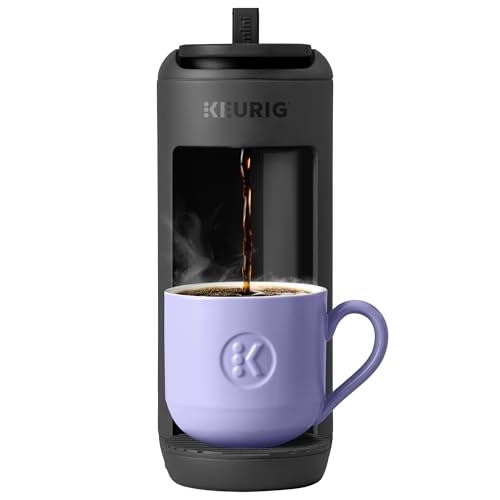
1. Keurig K-Mini Single Serve Coffee Maker
A very slim pod brewer that fits under cabinets and in dorm rooms. It makes one cup at a time and uses the K-Cup pod system.
Suits: small spaces. Strengths: a slim body and an easy routine. Weaknesses: small reservoir, so frequent refills. Skip it if you brew for several people.


Best for households with daily coffee drinkers
2. Keurig K-Elite Single Serve Coffee Maker
A fuller-featured Keurig with a larger reservoir and strong brew options. It handles several cup sizes and is meant for everyday use.
Suits: households with daily coffee drinkers. Strengths: a bigger tank and extra brew options. Weaknesses: larger footprint than the mini. Skip it if you have limited counter space.


Best for those who like choice
3. Hamilton Beach FlexBrew Single Serve Coffee Maker
A flexible brewer that takes either K-Cup pods or ground coffee. It lets you switch between convenience and your own favourite beans.
Suits: those who like choice. Strengths: works with pods or grounds. Weaknesses: plastic build. Skip it if you want a premium finish.


Best for those who like stronger or iced coffee
4. Ninja Pods & Grounds Specialty Single-Serve Coffee Maker
A pod and grounds brewer with a built-in frother option on some versions and several brew styles. It leans toward the coffee-shop style of drink.
Suits: those who like stronger or iced coffee. Strengths: brew style options and flexibility. Weaknesses: bulkier than basic pod makers. Skip it if you want a very simple machine.


Best for fans of capsule coffee
5. Nespresso Vertuo Plus
A capsule machine that brews a range of cup sizes using barcode-read capsules. It produces a crema-topped cup with little effort.
Suits: fans of capsule coffee. Strengths: one-touch brewing and a crema finish. Weaknesses: capsules only, from one system. Skip it if you want to use your own beans.


Best for travel and camping
6. AeroPress Original Coffee Press
A manual brewer that makes a single cup by pressing hot water through coffee. It is light, tough and popular with campers and travellers.
Suits: travel and camping. Strengths: portable and very durable. Weaknesses: needs a kettle and a little practice. Skip it if you want a one-button machine.

Care and Setup
- Descale the machine on the schedule suited to your water.
- Empty the used pod or grounds basket after each cup.
- Wash removable parts by hand or as the maker advises.
- Drain the reservoir if you will be away for days, and refill with fresh water before the next cup.
Mistakes to Avoid
- Letting water sit in the tank for days.
- Skipping descaling and slowing the flow.
- Choosing a pod machine when you want your own beans.
- Ignoring cup height and buying a maker that will not fit a travel mug.
Pods, Grounds or Capsules: Choosing Your System
The coffee format you commit to shapes cost, waste, flavor choice and convenience, so decide it before comparing machines. Pod systems use sealed single-serve cups with a filter and grounds inside. They are fast and tidy, and the range of flavors is wide, but you depend on the pod format and pay more per cup than with bulk coffee. Capsule systems use a sealed capsule that the machine pierces or reads, often producing a crema-topped cup; they are tied to a single maker’s capsules, so check availability where you live.
Machines that accept grounds, either directly or through a reusable filter cup, free you to buy any coffee you like, including freshly ground beans. They take a little more effort, since you measure, fill and empty the filter, but the cost per cup is lower and there is less packaging. Some brewers accept both pods and grounds, which suits households with different tastes.
Manual single-cup methods, such as a press or a pour-over cone, need no electricity and give control over every variable. They need a kettle, a scale or scoop and a little patience.
Think about your mornings. If speed matters most, pods or capsules win. If flavor control and lower running cost matter, grounds are better. Check compatibility on the listing, since pod sizes and capsule types vary, and not every pod fits every machine.
Cup Sizes, Brew Strength and Temperature
Cup size settings change the strength more than most people expect. The machine uses a set amount of coffee in a pod or filter, so adding more water produces a milder, thinner cup, while a smaller size gives a bolder one. If you like a strong mug, use the smallest size that fills your cup, or pick a strong-brew setting if the machine has one. Some machines also offer an over-ice setting that brews stronger so melting ice does not water it down.
Check the range of sizes. Some brewers fill only small cups, while others reach travel-mug volume. Look at the height of the brew area as well, because many machines have a removable drip tray that lets a tall travel mug fit. If you use a big mug every morning, measure it against the clearance in the listing.
Brew temperature affects extraction. Coffee brewed too cool tastes sour and flat, while overly hot water can taste bitter. Makers rarely state exact temperatures, so check the listing for any claims about heating, and rely on your own taste. Preheating the machine with a water-only cycle warms the path and cup, which can help in some designs.
- Choose a size that fills your favorite mug without weakening the coffee.
- Use a strong setting for bold cups, if available.
- Try a small-size brew over ice for iced coffee.
Reservoir, Footprint and Daily Routine
A small reservoir keeps a machine compact but means frequent refills, while a large one suits several coffees a day but takes more room. Removable reservoirs are easier to fill and clean than fixed ones. Look at where the tank sits: a side tank may need clearance beside the machine, and a rear tank may not fit under low cabinets.
Think about the way you use the kitchen. If the machine lives under a cabinet, measure the height with the lid open. A top-opening lid needs vertical clearance to insert pods or grounds. If you share the counter with other appliances, a slim machine is more practical than a wide one.
Heat-up time varies. Some machines keep a small tank hot and are ready quickly, while others heat on demand. An automatic shut-off helps save power and avoid leaving a hot machine on. Programmable timers suit people who want coffee waiting in the morning, though a single-cup brewer usually needs a cup placed beforehand.
Noise is a factor in small homes and offices. Pumps and heaters hum and gurgle, and some are louder than others. Consider placement away from bedrooms if you wake early. A drip tray that is easy to remove and wash also keeps the routine smooth, since spills collect there.
Running Costs and Waste
Looking at the machine price alone hides most of the cost. Pods and capsules are priced per cup, so a daily habit adds up over a year compared with bulk coffee. Ground coffee in a reusable filter is generally the cheapest way to make a single cup, though you spend a little more time. Manual methods cost the least in equipment and use whatever beans you prefer.
Waste is part of the cost. Single-use pods generate plastic, foil and filter paper for every cup, and recycling options depend on the maker and your local rules. Some systems offer recyclable or compostable pods, and others have recycling programs. Check the details with the maker and your local service rather than assuming. A reusable filter cup cuts waste and lets you use any ground coffee.
Think about replacement parts and consumables. Water filters, descaling solution and filter baskets add to the cost over time. If a machine needs a special descaler, factor that in. Check warranty terms on the listing and whether service is available.
Budget tiers are easy to see. Basic machines offer a few cup sizes and a small tank. Mid-range models add strength settings, bigger tanks and extra brew styles. Higher tiers add better build quality, more control and sometimes frothers. Pick the tier that matches your daily use rather than paying for features you will not use.
Descaling, Water and Hygiene
A machine that heats water every day builds up mineral scale inside, especially in hard-water areas. Scale slows the flow, makes the machine louder, and eventually reduces temperature and flavor. Descale on the schedule recommended by the maker, using an approved descaler, and rinse thoroughly afterward by running several water-only cycles. Using filtered water reduces buildup, though it does not remove the need for periodic descaling.
Moisture and warm surfaces encourage mold and bacteria in tanks, trays and needles. Empty the used pod or grounds immediately, and wipe the area where the pod punctures. Wash removable parts such as the tank, lid, drip tray and filter cup with warm soapy water on a regular basis, and let them dry. Do not leave water sitting in the tank for days, especially in warm rooms; change it daily if you can.
Clean the exit needle or spout according to the manual. Coffee oils and grounds can clog it and make the cup weak or messy. A paperclip is sometimes used on certain machines, but only follow the maker’s guidance.
Signs that a machine needs attention include weak or partial brews, a longer brew time, strange noises, leaks and an off taste. A thorough descaling and cleaning often fixes these. If problems continue, contact the maker. A well-kept single brew machine should give steady results for years, and a few minutes of weekly care makes a visible difference.
Single Brew Coffee Maker FAQ
Is a single brew maker better than a drip coffee maker?
It is better when you drink one cup at a time. A drip maker is more practical for several cups at once.
Are pod makers wasteful?
Pods create more waste than ground coffee, though reusable filter cups and recyclable pods are available for many systems.
Can I use my own coffee?
Yes, with a model that accepts grounds or a reusable filter cup. The manual AeroPress also uses your own coffee.
How strong is single serve coffee?
Strength depends on the pod or grind and the cup size. Smaller cup settings usually give a bolder taste, while larger settings produce a milder, thinner cup.
What is the cheapest way to make a single cup of coffee?
Using ground coffee in a reusable filter or a manual brewer is usually the lowest cost per cup. Pods and capsules cost more per serving. Your own beans give the most control.
How do I make my single-serve coffee stronger?
Choose a smaller cup size, use a strong-brew setting if available, or use more coffee in a reusable filter. Larger sizes add water and weaken the cup.
Can I make iced coffee with a single brew machine?
Yes. Brew a small, strong cup over a glass of ice, or use an over-ice setting if the machine has one. Chill the glass first for less dilution.
How often should I descale?
Follow the maker's schedule, which depends on your water hardness and how often you brew. Use an approved descaler and rinse well with several water-only cycles.
Do all pods fit all machines?
No. Pod and capsule formats differ, and not every pod works in every machine. Check the listing for compatibility before buying.
Why is my cup coming out weak or partial?
Scale, a clogged needle or spout, a low water level or a mispositioned pod can cause it. Clean and descale the machine and check that parts are seated properly.
Does a single brew maker work in an office?
Often yes, since it makes one cup at a time with little setup. Look at the tank size, footprint and noise, and plan for regular cleaning.
Matching a Maker to Your Household
The same machine can be a great fit in one kitchen and a poor one in another, so it helps to start from how you actually drink coffee. A few common patterns come up again and again.
The solo weekday drinker
If one person makes one mug before work, speed and low effort matter more than anything else. A compact pod machine such as the Keurig K-Mini suits this pattern because it heats a small amount of water quickly and asks for almost no cleanup. The trade-off is a small reservoir, so you will refill it often, and a narrow drip tray that may not clear a tall travel mug without removing the tray. Confirm that on the listing if you use a large tumbler.
Two people with different tastes
When one person wants a bold mug and the other wants something mild or decaf, a pod system makes sense because each cup is a separate choice. A machine that takes both pods and grounds, like the Hamilton Beach FlexBrew or the Ninja Pods and Grounds model, also lets you brew a larger cup from a bag of beans you already own on the days you run out of pods.
The coffee hobbyist
If you care about the cup more than the speed, the AeroPress is the odd one out in this guide. It is manual, needs a separate source of hot water, and takes a minute or two of attention. In exchange you control grind size, water temperature and steeping time, and there is no heating element or reservoir to descale. People who enjoy a small ritual tend to like it; people who want to press one button usually do not.
The espresso-style drinker
A capsule machine like the Nespresso Vertuo Plus is built around a different idea. The capsules are read by the machine, which adjusts how it brews each one, and the result is a crema-topped cup rather than ordinary drip coffee. Vertuo capsules are a separate format from the older Nespresso Original line, so check which one you are buying before you stock up.
Getting Better Flavor From Any Single Cup Machine
Single brew machines get a reputation for thin or flat coffee, and a good share of that comes from small habits rather than the hardware. These adjustments cost little or nothing.
- Run a water-only cycle first. A cold machine can hand the first cup lukewarm water. Pushing a plain cup of water through warms the internal lines and the mug before the actual brew.
- Warm the mug. A cold ceramic mug pulls heat out of the coffee quickly. Rinsing it with hot tap water takes seconds and keeps the cup hotter for longer.
- Pick the smallest sensible size. Strength drops as the same amount of coffee is stretched over more water. If a pod produces a weak 10-ounce cup, a 6- or 8-ounce setting usually tastes noticeably fuller.
- Use fresher coffee in grounds machines. Pre-ground coffee goes stale within a couple of weeks of opening. Buying smaller bags, or grinding just before brewing, gives more flavor than any machine upgrade.
- Match the grind to the brewer. A reusable filter basket generally wants a medium grind. Too fine can clog the basket or cause overflow; too coarse can taste watery. The AeroPress is more forgiving and works with a range of grinds, which is part of its appeal to hobbyists.
- Use decent water. Coffee is mostly water, so strong chlorine or very hard water will show in the cup. Filtered water often tastes cleaner and also slows scale buildup.
Roast level changes how a pod behaves too. Darker roasts tend to read as bold even in a quick brew, while lighter roasts can taste sour or thin when the contact time is short. If you prefer light roasts, a manual brewer or a grounds-capable machine gives you more room to adjust.
Questions to Ask Before You Order
- Which pod or capsule format does this machine use, and do I like the coffees sold in that format?
- Can I buy the pods at a store near me, or would I depend on shipping every time I run out?
- Does the drip tray fit my usual mug, and can it be removed for a taller cup?
- Where will it sit, and is there room to lift the lid or reservoir without hitting a cabinet?
- Is the reservoir removable, and can I clean it without special tools?
- Does the listing mention a reusable filter, or would I buy one separately?
- What does the maker say about descaling frequency and approved descaling products?
Writing the answers down before you commit keeps the decision grounded in your routine, not in a feature list. Details for the models in this guide change between versions, so the current listing is the place to confirm each one.
When a Single Brew Machine Is the Wrong Tool
These machines are convenient, but they are not the best answer for everyone. If you pour three or four mugs every morning, a drip brewer or French press makes the same amount for less money per cup and with less packaging. If you entertain often, a single cup at a time becomes a queue. And if you are particular about freshness, a pod sealed weeks earlier will rarely match beans ground this morning.
That is not an argument against the category, only a reminder to be honest about volume. A single brew maker earns its counter space when your coffee habit is small, steady and rushed. If that describes your mornings, the options above cover pods, grounds, capsules and a manual route, so one of them should fit.
Pods, Grounds and the Morning You Actually Have
The single brew category divides along one honest question: how much participation do you want before your first sip? A Keurig K-Mini asks almost nothing of you at half past six in the morning, and that is its genius. A Hamilton Beach FlexBrew lets the same household swing between pods and fresh grounds. The AeroPress, sitting at the far end of the list, asks for a kettle, a stir and two attentive minutes, and returns a cup with a depth the push-button machines admire from a distance. None of these answers is wrong. They are answers for different mornings, and choosing well means picturing your own weekday rather than your idealised weekend self.
Households with several coffee drinkers on different schedules benefit most from this format, because nobody brews a pot that stales while partners sleep or leave early. Each person makes exactly one cup, at their own strength, at their own hour. The waste argument cuts both ways: a single cup maker never throws away half a pot, though pod systems create packaging waste that grounds-based brewing avoids. The Ninja Pods and Grounds machine exists for households arguing this exact point, letting both camps share one footprint on the counter. Peace in a shared kitchen is a feature no specification sheet lists and every household values.
Water, Temperature and Getting a Better Cup From Any Machine
Whatever machine you choose, the water decides the ceiling of flavour. A reservoir filled fresh each morning, rather than topped up from a jug that has sat all week, makes an immediate difference you can taste. If your tap water is heavily treated or very hard, a simple filter jug improves the cup and slows the scale that chokes heating elements. Pod machines brew at fixed temperatures that suit most palates, while manual methods like the AeroPress hand you the kettle and the responsibility together: water just off the boil for depth, slightly cooler for delicate, sweet coffees that punish scalding.
Grind and freshness govern the grounds-based options. Pre-ground coffee stales within weeks of opening, so buy smaller bags, store them sealed away from heat and light, and accept that the last scoop will never equal the first. Pod users trade that variable away entirely, gaining consistency at the price of choice. The Nespresso Vertuo Plus builds its whole appeal on that bargain, reading its capsules and spinning out a crema-topped cup with no decisions left to make. Decide which variables you enjoy controlling and which you resent, and the right machine from this list usually selects itself.
Running Costs, Waste and the Honest Arithmetic
What a Cup Really Costs Over a Year
Do the simple arithmetic before you buy, because single brew machines are bought cheaply and fed expensively. Count your household’s cups per day, multiply by the cost of your chosen format, and look at the yearly figure without flinching. For many households the answer is still worth it, since the comparison is not with free coffee but with the cafe cup the machine replaces, and against that benchmark even the most indulgent pod habit looks frugal. Grounds-based single brew sits at the economical end, pods at the convenient end, and refillable pods occupy the middle ground for drinkers willing to trade a minute of filling for a lower cost per cup.
Waste follows the same spectrum. Loose grounds compost happily, paper filters alongside them, while plastic and aluminium pods need whatever recycling scheme operates where you live, which may be excellent or theoretical. Manufacturers’ mail-back programmes work only if you actually use them, so judge yourself honestly. A household that will not rinse, collect and post pods should weigh that in the decision, because good intentions do not recycle anything. The FlexBrew and Ninja designs earn quiet environmental credit here by making the grounds route effortless on the days you have time and the pod route available on the days you do not.
Descaling and the Maintenance You Will Actually Do
Scale is the slow enemy of every heated water appliance, and single brew machines, with their narrow waterways, suffer early. Learn your machine’s descale signal, use the solution or programme it expects, and run it when asked rather than when the machine begins to struggle. Wipe the pod holder and splash area weekly, empty and wash the drip tray before it becomes a science project, and leave the reservoir lid ajar after use so the interior can dry. These are two-minute habits. The households whose machines last are not the ones with the best equipment; they are the ones whose owners do small things promptly.
The K-Elite and its larger siblings add reservoirs and features that reward the same light discipline at slightly bigger scale, while the K-Mini’s tiny water path descalces in minutes. Manual brewing, again, escapes most of this: the AeroPress rinses clean in seconds and has no element to scale. Weigh maintenance appetite alongside brew preference when you choose. A machine that asks for care you will not give becomes a counter ornament within a year, while a simpler machine that asks little and delivers daily will be loved long after fancier rivals are forgotten.
When One Cup Is Not Enough, and Other Honest Limits
Guests, Weekends and the Backup Plan
Single brew machines meet their limit when six guests want coffee at once. The queue forms, the first cup cools while the last brews, and the host becomes a barista instead of a participant. Households that entertain often solve this in one of three ways: a machine with a large reservoir and fast cycle, a separate simple pot or press kept for gatherings, or the social grace to make coffee an unhurried course of its own. Any of these works. What fails is pretending the limit does not exist and resenting a machine for a job it was never designed to do, like blaming a bicycle for a slow motorway journey.
Travel and second homes are where this category quietly shines. A compact maker in a guest room, a holiday let or a caravan gives visitors independence and hosts their mornings back. The K-Mini’s footprint suits a suitcase-adjacent life, and the AeroPress was practically designed for a wash bag. Think about these second roles when you choose, because a machine that serves two settings justifies itself faster. Single brew coffee is, at heart, coffee scaled to a person rather than a household, and for the way most of us actually live now, that scale turns out to fit remarkably often.
One Machine, Several Drinkers, No Arguments
The shared kitchen is where single brew machines prove their social worth. One person drinks strong black coffee at dawn, another takes a mild cup with milk at nine, a third wants tea-strength coffee in the afternoon and a fourth is trying to cut down. A pot-based system forces these people to negotiate; a single brew system lets each of them secede peacefully. The Keurig K-Elite serves this household with reservoir capacity and strength control, the FlexBrew lets the grounds drinker and the pod drinker share one footprint, and the Ninja’s specialty functions cover the household member whose order sounds like a cafe menu. Peaceful secession, in a kitchen, is worth a great deal of money and should be counted honestly among these machines’ features.
Establish the small treaties that keep the peace durable. Pods and grounds live in a defined place, the person who finishes the water fills the reservoir, the drip tray is emptied by whoever notices it, and descaling is a named person’s job rather than everyone’s assumption. Households that write these micro-agreements down, even jokingly on the fridge, keep their machines pleasant for years. Households that rely on goodwill discover that goodwill evaporates around an empty reservoir at seven in the morning. The machine is simple; the system around it is the product, and building that system takes one honest conversation at the moment of purchase.
The Small Office and the Guest Room
Beyond the home, a single brew machine in a small office or studio solves the oldest workplace problem, the stale communal pot, while giving visitors a drink without a production. Keep the format simple, the supplies stocked by a named person and the machine descaled on a calendar nobody has to remember, because office machines die of diffusion of responsibility more than of any mechanical fault. In a guest room, the same machine becomes hospitality: a visitor who can make coffee at their own hour, without waking the house or mastering a stranger’s espresso setup, has been given independence, which is the truest form of welcome. The K-Mini’s scale suits both roles, small enough to live anywhere and simple enough to explain in one sentence.
Second homes and holiday lets add the final case. A machine that tolerates weeks of idleness, restarts without drama and asks nothing of a arriving, tired owner beyond water and a pod is worth more there than a connoisseur’s instrument. Empty the reservoir before long absences, leave the lid ajar and run a cleansing cycle on arrival. The AeroPress, again, is the exception that proves every rule in this section: it asks for a kettle and two minutes, travels in a drawer and will outlive every appliance in the building. Many households end up owning both kinds of answer, the electric convenience for the kitchen and the manual simplicity for everywhere else, and that pairing is not indecision but good sense.
Getting the Most From Pods and Grounds Alike
Storage, Freshness and the Last Cup of the Bag
Pods keep their freshness individually, which is their quiet superpower, but they still deserve a cool, dry home away from the steam of the kettle they serve. Grounds and beans follow the older law: airtight, dark, cool and bought in quantities your household finishes while they are still lively. If the last cups from a bag disappoint, use them for iced coffee or a milk drink rather than concluding the machine has declined. For pod users who miss variety, mixed selections and a standing rule to try one new flavour a month keep the routine fresh without stockpiling. The single brew format’s promise is a cup made for one person at one moment; honouring that promise with fresh inputs and a clean machine is the entire craft, and it is well within everyone’s reach.
Monday to Sunday in One Kitchen
Monday belongs to speed: the reservoir filled the night before, a pod in the Keurig, a cup carried to the door. Tuesday is the same, and the machine’s virtue is that it asks nothing new of a tired person. By Wednesday, someone in the house has time to use grounds in the FlexBrew or to weigh out an AeroPress, and the cup tastes like a small recovery of standards. Thursday brings a guest who takes their coffee weak and milky, a preference a single brew machine honours without brewing a separate pot or apologising for it. Friday’s cup is decaffeinated in the evening, coffee as ritual without consequence, and the weekend opens with two slow AeroPress cups and a conversation that a pot of drip would also have served, but less precisely.
This ordinary week is the real review of any single brew machine, and it explains why the category keeps winning kitchens from more prestigious rivals. The machine that fits the week’s actual texture, its rushes, guests, evenings and slow mornings, will be used five hundred times a year; the machine that fits only Sunday will be used fifty times and resented at a low level throughout. Judge the models in this guide against your own week, written out honestly, and the choice usually becomes obvious within minutes. The Ninja’s versatility suits the household whose week contains multitudes; the K-Mini suits the week that is mostly Mondays; the AeroPress suits the week with real weekends in it.
Notice, too, how the week disciplines maintenance without effort. A machine used daily gets its reservoir refreshed by use, its drip tray noticed, its descale light answered because tomorrow’s cup depends on it. Use is the best maintenance schedule ever designed, which is another reason to choose the machine your week will actually use. The best single brew coffee maker is not the one with the most features or the finest cup in laboratory conditions. It is the one still making your Monday cup, willingly, three years from now.
When the Household Changes
New Babies, New Jobs and Other Earthquakes
Households change, and single brew machines absorb change gracefully. A new baby turns coffee into a series of stolen, reheated moments, and a machine that makes one fresh cup at a time, at any hour, becomes a piece of survival equipment. A new job with an earlier start rewards the programmable reservoir and the travel mug that fits. A teenager discovering coffee adds a drinker whose taste is mercifully simple and whose schedule is not. Through all of it, the format flexes because its unit is the person, not the pot. When you choose, leave a little headroom for the household you are becoming: a second format option, a larger reservoir, a machine whose pods or grounds will still be sold in five years. Small foresight, in a kitchen, compounds daily.
One Cup, Made Properly, Is Enough
The single brew idea survives every trend because it respects how people actually live: one person, one moment, one cup made for them alone. Honour that idea with fresh water, a clean machine and supplies you enjoy, and the humblest maker in this guide will serve you faithfully for years. Choose for your real mornings, maintain in small prompt acts, and let the machine’s simplicity do what it was designed to do, which is to disappear, leaving only the cup. When a device disappears that completely into a life, it has been chosen correctly, and everything else, pods or grounds, speed or ritual, is just the household’s signature on a sound decision.
The Errors Every Household Makes Once
The first error is buying for the fantasy household, the one that hosts brunches for eight, when the real household drinks alone at dawn. The second is ignoring the reservoir: a machine whose water must be filled for every cup will be resented by the person who fills it, however fine the coffee. The third is forgetting the cost of the format, pods or grounds, across a year of mornings. The fourth is placing the machine where it cannot be used without moving something else, because friction, repeated daily, defeats every feature ever engineered. Each of these errors is visible in advance to a buyer who writes down their real week before shopping, which is why this guide keeps prescribing that small act of honesty.
The fifth error is subtler: keeping a machine that no longer fits, out of guilt for its price, while quietly buying coffee out. Households change, tastes change, and a single brew machine that served one chapter honestly can be passed to a student, a guest room or a second home where it fits again. Let it go and buy for the chapter you are in. The category’s prices make this easier than in most of the kitchen, and the daily return on a machine that matches your mornings, measured in cups actually made and enjoyed, dwarfs the sunk cost of the one that did not.
Frequently Asked Questions
Can I reuse a K-Cup pod?
Reusing a spent pod usually gives a watery, bitter cup because most of the flavor is extracted the first time. A better route is a refillable filter cup, if the maker lists one as compatible with your machine, so you can load fresh grounds and avoid single-use waste.
How long do single serve coffee makers last?
Lifespan varies by model and by how well you look after it. Regular descaling, clean water and wiping the needle or brew head matter most, since scale and residue are common causes of slow or weak brews. Check the warranty period on the listing for the maker’s own expectation.
Do pods expire?
Most pods carry a best-by date printed on the box. Coffee does not become unsafe right away after that date, but aroma and flavor fade, so older pods taste flatter. Buying amounts you will finish within a few months and keeping them sealed and dry helps.
Which single brew maker is best for a travel mug?
Look for a removable drip tray or a stated maximum cup height on the listing. Many compact models only clear a standard mug, while taller tumblers need the tray taken out or a machine with a taller brewing area. Measure your mug before ordering.
The Short Version
For tight counters, the Keurig K-Mini. For everyday use, the Keurig K-Elite. For pods or grounds, the Hamilton Beach FlexBrew. For coffeehouse-style drinks, the Ninja Pods & Grounds. For one-touch capsule coffee, the Nespresso Vertuo Plus. For travel and camping, the AeroPress.