A siphon coffee brewer, also called a vacuum pot, uses heat and vapour pressure to push water up into a chamber of coffee grounds, then draws the finished brew back down through a filter. The result is a clean, aromatic cup, and the theatre of the process is half the fun.
The six brewers below range from the well-known Hario Technica to stovetop and tabletop styles from other makers. We have not used these products ourselves. Please confirm the heat source, capacity and which filter or burner is included on the current listing before buying, since siphons are often sold in different bundles.
As an Amazon Associate we earn from qualifying purchases. Links below are affiliate links, and they do not change the product information we give.
What to Look For
| Feature | Why it matters |
|---|---|
| Heat source | Alcohol lamps, butane burners and stovetop designs each suit different kitchens |
| Glass quality | Heat-resistant borosilicate glass is the standard and is easier to trust |
| Filter | Cloth filters give a clean cup but need regular care; metal filters are simpler |
| Capacity | Check how many cups a model brews, as siphons come in several sizes |
In this guide
Specs at a Glance
| Brewer | Material | Size | Notes |
|---|---|---|---|
| Hario Technica | Heat-resistant glass and metal | Check the listing for cup size | Cloth filter; burner may be included |
| Yama Tabletop | Heat-resistant glass and metal | Check the listing for capacity | Tabletop; burner included, per the maker |
| Bodum Pebo | Heat-resistant glass | Check the listing for capacity | Vacuum pot; Bodum design |
| Bodum Santos | Heat-resistant glass | Check the listing for capacity | Vacuum pot; stovetop |
| Nispira | Heat-resistant glass and metal | Check the listing for cup size | Set with burner, per the listing |
| Hario Simply | Heat-resistant glass | Check the listing for capacity | Simplified Hario design |
The 6 Best Siphon Coffee Brewers
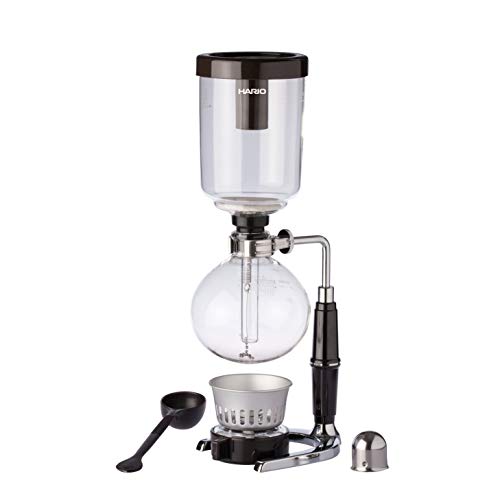
Top pickBest for enthusiasts who want a proven model
1. Hario Technica Syphon Coffee Maker
The best-known siphon brewer, with a heat-resistant glass body and a metal stand. It is the benchmark many enthusiasts compare other siphons against.
Suits: enthusiasts who want a proven model. Strengths: a classic design and a good reputation. Weaknesses: glass is breakable. Skip it if you want a durable unit for travel.

Best for entertaining guests
2. Yama Glass Tabletop Siphon Coffee Maker
A tabletop siphon with a decorative frame and an included burner, meant to be used at the table. It makes a good show for guests.
Suits: entertaining guests. Strengths: a good-looking tabletop setup. Weaknesses: takes more table space. Skip it if you brew in a small kitchen.

Best for design-minded buyers
3. Bodum Pebo Vacuum Coffee Maker
A vacuum coffee maker from a Danish brand known for design, with a glass body and a heat source designed for the system. It leans toward style.
Suits: design-minded buyers. Strengths: a clean look and a known brand. Weaknesses: replacement parts can be hard to find. Skip it if you want a traditional frame.

Best for stovetop users
4. Bodum Santos Vacuum Coffee Maker
A stovetop-compatible vacuum coffee maker with a glass body and a permanent-style filter system. It is a straightforward option for stove users.
Suits: stovetop users. Strengths: simple stovetop operation. Weaknesses: glass can break if mishandled. Skip it if you want a tabletop burner.
Best for first-time siphon buyers
5. Nispira Siphon Coffee Maker
A siphon brewer sold as a complete set with a stand and burner, aimed at first-time buyers. It is a useful introduction to the method.
Suits: first-time siphon buyers. Strengths: a complete set in one box. Weaknesses: less established than Hario or Yama. Skip it if you want a well-known name.
Best for newcomers who want a Hario
6. Hario Simply Syphon Coffee Maker
A simpler siphon from Hario that is aimed at newcomers and uses a compact frame. It keeps the core method with fewer parts.
Suits: newcomers who want a Hario. Strengths: fewer parts and a simpler setup. Weaknesses: less polished than the Technica. Skip it if you want a premium finish.
Care and Setup
- Let the glass cool before washing to avoid thermal shock.
- Rinse the cloth filter in warm water and store it wet in the fridge, as the maker advises.
- Wipe the glass with a soft sponge, not an abrasive pad.
- Keep the burner dry and away from spills, and let it cool fully before refuelling.
Mistakes to Avoid
- Handling hot glass with bare hands.
- Using water that is too hot for the grind.
- Leaving a cloth filter to dry out and harden.
- Setting a lamp on a wobbly table.
How the Siphon Method Works, Step by Step
Understanding the process helps you judge which brewer will suit you. A siphon has two chambers: a lower flask that holds water and an upper chamber that holds the coffee, joined by a tube and sealed with a gasket. When you heat the lower flask, expanding vapor pushes most of the water up into the upper chamber. A little water stays below to keep the system pressurized.
Once the water has risen, you add the ground coffee and stir so all the grounds are wet. The coffee steeps for a set time, often under a minute or two depending on the recipe. You then remove the heat, and as the lower flask cools, pressure drops and the brewed coffee is pulled back down through the filter, leaving the grounds in the upper chamber as a dome.
Several things control the cup. Water temperature, grind size, steeping time and stirring technique all shape flavor. Because the brew stays hot and in contact with the grounds, the method resembles immersion, but the vacuum draw-down gives a clean finish because the filter holds back fines. Consider how comfortable you are with a procedure that needs your attention for several minutes. If you like a hands-on ritual, a siphon rewards the effort. If you want a quick, hands-off cup, other methods may suit you better.
Heat Sources Compared
The heat source is a major choice, and it is not always included. Alcohol lamps are traditional and give a visible flame, but they need fuel, careful handling and good ventilation. Butane burners produce a controllable, steady flame and are common on modern setups. Halogen beam heaters use infrared light to heat the flask, giving fine control and no open flame, though they need a power outlet and a specific type of flask.
Stovetop-compatible models skip the dedicated burner and use your cooker. That saves money and space, but you need a stove that suits the flask base, and glass on a stove calls for caution. Induction cooktops generally need a compatible base, so check the maker’s guidance before trying one.
Each option has tradeoffs for safety and convenience. A flame that is too strong can overheat the flask or crack glass, while one that is too weak makes the water rise slowly and the coffee taste flat. Look for a way to adjust or shield the flame. Never leave a burner unattended, and keep the setup on a stable, heat-safe surface away from curtains and paper. Check that the listing names the heat source, whether fuel is included, and whether the flask needs a specific burner type.
Filters: Cloth, Paper and Metal
The filter changes the character of the cup more than many buyers expect. Cloth filters give a clean, smooth cup with good clarity, and many enthusiasts prefer them for the flavor they allow through. They need care: rinse after use, store them wet in clean water, and replace them when they stain, smell or slow the draw-down. A cloth filter that dries out can harden and may hold off-odors.
Paper filters are convenient. They are disposable, easy to use and give a very clean cup, though they can add a faint paper taste if not rinsed first. They cost more over time, and you need the right size for your filter holder.
Metal filters are durable and reusable, and they let more oils and some fine particles through, creating a heavier body. They are easy to clean but can leave sediment. Some brewers sold as stovetop models use a permanent-style filter.
- Check which filter type the brewer is designed for and whether it accepts alternatives.
- Check that replacements are available in the same size and fitting.
- Fit the filter evenly and keep the chain or spring straight so the seal holds.
A poor seal causes leaks and a slow or incomplete draw-down, so take a moment to assemble the filter carefully before each brew.
Grind, Ratio and Recipe Tuning
Siphon brewing is forgiving once you find a routine, but it responds to small changes. A medium grind is a typical starting point, with finer grinds extracting faster and sometimes tasting bitter, and coarser grinds giving a lighter, sometimes thin, cup. Use freshly ground beans where possible, since the method highlights aroma.
Pick a coffee-to-water ratio and keep it steady while you experiment. Weigh the coffee and the water if you have a scale, because volume measures vary. Start with a ratio from the brewer’s instructions or a recipe you trust, then change one thing at a time. If the cup tastes sharp or sour, you may need a finer grind, a longer steep or hotter water. If it tastes bitter or dry, try a coarser grind, a shorter steep or slightly cooler water.
Stir with purpose but gently. A short, thorough stir at the start wets all the grounds, and a brief second stir before the draw-down helps even extraction. Avoid heavy agitation that pushes fines through the filter. Keep a timer and note your settings so you can repeat good results. Preheating the lower flask with hot water can shorten the rise time and reduce the chance of over-extraction. After a few brews you will recognize how the dome of grounds should look, which is a useful visual cue.
Glass, Safety and Long-Term Care
Siphons are mostly glass, so safety and careful handling matter. Heat-resistant glass can still crack from sudden temperature changes or knocks, so avoid placing a hot flask on a cold or wet surface and let parts cool before washing. Use a heat-safe mat or trivet under the setup, and keep the area clear of clutter.
Inspect the glass regularly for chips, cracks and cloudiness around the neck, where the seal sits. A damaged piece can break during use. Replace it rather than using it. Check the gasket too, because rubber seals can harden, crack or lose their grip over time. A leaking seal means the system cannot build pressure.
Clean the glass with warm water and a soft sponge. Use a bottle brush for the lower flask, and avoid abrasive pads that scratch. Rinse well to remove soap that could flavor the next brew. Dry parts upright and store the tube, chamber and filter separately in a safe place.
Before buying, ask whether replacement glass, gaskets and filters are available. A siphon with accessible spare parts can last for years, while one that cannot be repaired may end up on a shelf after one broken piece. Treat it as a careful, deliberate brewer rather than an everyday rush-hour machine.
Siphon Coffee FAQ
Is a siphon hard to use?
It needs patience and a little practice, but the steps are simple: heat the water, add the coffee, stir, remove the heat and watch the brew draw down.
What grind should I use?
A medium grind is typical, finer than for a French press and coarser than for espresso, though it depends on the recipe.
Is siphon coffee better?
It can taste clean and aromatic, though taste is personal. Many people simply enjoy the process.
Can I use a siphon on an induction stove?
Only if the maker designs for it. Most siphons use their own burner or a gas flame, so check the listing.
How long does a siphon brew take?
Heating, steeping and draw-down together usually take several minutes, depending on the recipe and heat source. Heating cold water takes the longest. Starting with hot water can shorten the process.
What heat sources do siphon brewers use?
Common options include alcohol lamps, butane burners, halogen beam heaters and, for stovetop models, a cooker. Check the listing to see what is included and what you must buy.
Which filter is best for a siphon?
Cloth gives a clean cup but needs careful storage and washing, paper is convenient and disposable, and metal is reusable with a heavier body. Choose by taste and effort, and confirm that the brewer accepts it.
How do I clean a cloth filter?
Rinse it in clean water after each use, without soap if the maker advises. Store it in clean water in the refrigerator if instructed. Replace it when it stains, smells or slows the draw-down.
Why is my coffee not draining down?
The heat may not have been fully removed, the filter may be clogged or fitted badly, or the grind may be too fine. Check the filter seal and try a coarser grind.
Can I make iced coffee with a siphon?
Yes, by brewing a stronger batch and pouring it over ice or by chilling it afterward. Adjust the ratio to allow for dilution.
Is a siphon suitable for everyday brewing?
It can be, if you enjoy the routine. It takes more time and attention than a drip machine, so many people use it for weekends or guests.
Water Temperature and Extraction in a Siphon
Siphon brewing is unusual because the water itself does the work at a high, fairly stable temperature, rather than cooling as it passes through a bed of grounds. When the lower chamber boils, vapor pressure pushes the water up into the top chamber. Once the coffee is added, the water is typically just below boiling, which is on the hot side for many brewing methods.
That heat has real consequences for flavor. Hot water extracts more quickly, so a siphon brew can taste bitter or harsh if the grounds stay in too long, the grind is too fine, or the heat source stays at full power. Many people lower the flame or heat input once the water has risen, so that the top chamber sits at a gentle simmer rather than a rolling boil.
- Stirring. A short, gentle stir at the start wets all the grounds evenly. Too much stirring pushes extraction up and can mute delicate flavors.
- Contact time. Most recipes keep the grounds in contact with water for roughly a minute to ninety seconds. Shorter yields lighter, brighter cups, and longer yields heavier, darker ones.
- Starting water. Using water that is already hot shortens the wait and reduces time on the heat source.
Because home setups differ, treat any time as a starting point and adjust by taste.
Choosing Beans for Vacuum Brewing
A siphon is known for producing a clean, tea-like cup with a bright aroma, since a cloth or paper filter removes most oils and fine particles. That means the bean you choose has a visible effect on the result.
- Light to medium roasts tend to show the most. Floral, fruity, and tea-like origins come through the clean body.
- Dark roasts can work, but the high water temperature can push them toward bitterness. Many people drop the contact time or use a slightly coarser grind.
- Freshness matters. Beans roasted within the past few weeks and ground just before brewing give a noticeably more aromatic cup than stale pre-ground coffee.
- Grind consistency. A burr grinder produces a more even particle size than a blade grinder, which helps prevent a mix of bitter and sour notes.
If you are unsure where to begin, a single-origin medium roast at a medium grind, roughly the texture of coarse sand, is a reasonable first experiment.
Planning a Brew Station and Workflow
A siphon is more of a small ritual than a quick routine, and it rewards a little organization. Before you start, gather the pieces so you are not searching for something while the water is at temperature.
- Heat source and stand. The device needs a stable, level surface with the heat source positioned under the lower chamber. Keep it away from the edge of the counter.
- Scale and timer. Weighing coffee and water is more reliable than scoops. A phone timer helps keep contact time consistent.
- Stirring tool. A bamboo paddle or a clean spoon with a flat edge works. Avoid anything that could scratch the glass.
- Cooling surface. A dry trivet or folded towel gives you a place to set hot glass after the brew.
- Spare filters. Cloth filters wear out and can be hard to find quickly, so keep a spare on hand.
Allow a little time for cleanup. Disassembling the pieces while still warm, but not hot, makes grounds easier to rinse away than letting them dry.
Siphon Versus Pour-Over, French Press and Drip
Deciding whether a siphon belongs in your kitchen is easier when you compare it with the common alternatives.
- Pour-over. Produces a similarly clean cup, and it is faster and more compact. It demands careful pouring technique, though, and does not offer the same visual show.
- French press. Full immersion like a siphon, but with a metal filter that lets oils and fines through, giving a heavier, richer body. Simpler and sturdier than glass.
- Automatic drip. Convenient and consistent for large quantities, with little attention required, but with less control.
- Siphon. Offers precise control over temperature and time, a clean cup, and a memorable brewing experience, at the cost of fragility, extra steps, and a longer cleanup.
A siphon makes sense if you enjoy the process and brew for one to four people. For busy weekday mornings or large groups, many owners keep a simpler brewer as well and use the siphon for weekends and guests.
Scaling Up: Brewing for One Versus a Group
Siphons come in different capacities, and the stated cup count is usually generous, since a cup in a coffee-maker listing is often far smaller than a mug. If you drink one large mug, a small unit is plenty. For guests, a larger glass set lets you brew once instead of repeating the process, but remember that a fuller chamber takes longer to heat and to drain. Keep the ratio of coffee to water the same when you scale, and expect the contact time to shift slightly. Many owners find that two smaller brews in a row taste more consistent than one very large one.
Heat Management, the Heart of the Method
Every siphon brewer in this guide, from the Hario Technica to the Bodum Pebo, lives or dies by its heat source, because heat is both the engine that lifts the water and the threat that scorches the finished coffee. The small alcohol burners that ship with many tabletop models produce a gentle, forgiving flame suited to learning, while butane burners give you a dial you can actually conduct with, raising the water briskly and easing off the instant the upper chamber fills. Electric options remove the flame entirely for those who love the method but not the fire. Choose based on your temperament: the brewer who enjoys tending a flame will find it meditative, while the brewer who wants repeatability will reach for control and consistency every time.
The critical moment arrives when the water has climbed and the coffee is steeping above. Too much heat at this stage boils the brew, agitating it into bitterness and clouding the clarity that makes siphon coffee worth the theatre. Ease the flame to the lowest level that keeps the water up, or slide the burner partly aside, and let the coffee steep in near stillness. When you remove the heat, the drawdown should be calm and even, the grounds settling into a neat dome. A violent drawdown or a cratered bed tells you the heat story went wrong somewhere, and your next brew can fix it precisely because the method shows you its workings in glass.
Grind, Stirring and the Drawdown
Siphon coffee wants a medium grind, finer than a press pot and coarser than espresso, and it rewards evenness above all. Add the coffee once the water has risen and settled, stir gently to wet every ground without churning, and resist the urge to keep stirring out of nervousness. A single calm stir at the start and perhaps one more before drawdown is enough for most recipes. The cloth filters fitted to the Hario and Yama models produce the method’s signature clarity, a cup that tastes almost polished, while paper and metal alternatives shift the balance toward body. Rinse cloth filters thoroughly, store them in water in the refrigerator as makers advise, and replace them when they carry old flavours into a fresh brew.
Timing the steep is your main flavour dial. A shorter steep keeps the cup bright and delicate, suiting light, floral coffees that punish over-extraction, while a longer steep rounds out darker, chocolate-led coffees that can taste thin when rushed. Keep a simple log for your first dozen brews with a new coffee: dose, grind setting, steep time and a line of tasting notes. The siphon looks like a chemistry demonstration, and treating it with a little of a chemist’s record-keeping genuinely pays. Within a month the log becomes intuition, and the brewer that once demanded your full attention becomes a calm performance you can hold a conversation through.
Serving Siphon Coffee to Guests
Theatre With a Purpose
No home brewing method gathers a crowd like a siphon. The flame, the rising water, the aroma released at the stir: it is dinner-party theatre that happens to end in coffee. Lean into that, but prepare like a professional. Measure coffee and water in advance, set out cups, warm them, and rehearse the sequence once with water alone if the brewer is new, because an audience amplifies every fumble. The Bodum Santos and Pebo models, with their balanced, self-contained designs, suit this social role well, while the classic tabletop frames reward the host who enjoys playing scientist in public. Either way, the guests remember the evening, and the coffee, if you have practised, deserves the memory.
Brew for the group size you actually have. A large siphon stretched to serve six produces thin cups and a stressed host, while two smaller brews made in sequence keep quality high and extend the show. Keep the second kettle of water hot and the second dose weighed, and the interval between rounds becomes part of the conversation. Siphon coffee cools quickly in its glass chambers, so pour promptly into warmed cups and serve without delay. The method’s clarity fades as the coffee sits, turning a luminous cup merely pleasant, and the difference between serving at once and serving eventually is the difference between guests asking how you did it and guests simply saying thank you.
Safety and Care of Glass Chambers
Glass under heat and vacuum deserves respect rather than fear. Inspect chambers before every brew for chips and hairline cracks, especially around rims and handles, and retire any piece that shows damage, since thermal stress finds weaknesses without mercy. Never set a hot chamber on a cold or wet surface, never leave a flame unattended, and keep the burner fuel stored away from the brewing area. These are the habits of laboratories, which is fitting, and they become automatic quickly. The Nispira and Hario Simply models in this list keep the format accessible, and their replacement parts are the sort of thing to identify before you need them, not after a Saturday morning crack.
Washing up is gentler than the theatre suggests. Let everything cool fully, rinse the chambers with warm water, and use a soft brush for the narrow tubes where old coffee loves to hide. Avoid sudden temperature shocks, such as running cold water into a still-warm chamber, which stresses glass more than any brewing cycle. Dry the pieces where they will not roll, store the filter assembly clean, and your siphon will serve for years. The method asks for attention at every stage, and in return gives a cup and an experience that no push-button machine can imitate. That exchange is the whole reason it survives.
Siphon Coffee in a Week of Other Methods
Knowing When the Siphon Is the Right Tool
Most siphon owners also own faster methods, and wisdom lies in the rotation. Weekday mornings belong to whatever gets you out of the door happy; the siphon belongs to the slow weekend, the guest, the new bag of special coffee that deserves a stage. Used this way, its demands feel like pleasures rather than chores, and the skill stays fresh through regular, unhurried practice. Reach for it when you want to taste what a coffee really contains, because few methods present flavour with such clarity, and let the everyday machines carry the everyday load without guilt. A siphon resented is a siphon abandoned; a siphon saved for its moments is a siphon kept for decades.
A Starter Recipe You Can Adapt With Confidence
Begin with a middle path you can repeat exactly: a medium grind, a sensible coffee-to-water proportion in the range most siphon makers publish for your brewer’s size, water brought up calmly and a steep of around a minute once the coffee is stirred in. Taste the result and change one variable on the next brew, finer or coarser, longer or shorter, until the cup balances sweetness against clarity. The Hario Technica and the Yama tabletop reward this methodical play because their glass lets you watch every stage respond. Write the winning combination on a card that lives with the brewer, named for the coffee it suits, and you have begun the small recipe library that turns a theatrical device into a dependable instrument for the coffees you love.
Light, delicate coffees generally reward a slightly shorter steep and a touch more care with heat, since their aromatics are the first casualties of boiling. Darker, heavier coffees forgive a longer steep and can even benefit from it, drawing out the chocolate and spice that a quick brew leaves behind. When a brew tastes muddy, suspect agitation and heat before you suspect the beans; when it tastes thin and sharp, suspect the grind and the clock. The siphon’s transparency is its teaching gift: every fault is visible somewhere in the glass, in a drawdown that stalls, a bed that domes wrongly or a liquor that pours cloudy, and a brewer who learns to read those signs rarely makes the same mistake three times.
When the Drawdown Stalls and Other Dramas
A stalled drawdown, where the coffee refuses to descend, is the siphon’s signature emergency and it is almost always a grind or filter story. Grounds ground too fine, or a cloth filter clogged with old oils, block the path; the cure is prevention, a correct grind and a filter kept scrupulously clean, plus the patience to let a slow drawdown finish rather than forcing it with more heat, which only bakes the coffee. If it happens mid-brew for guests, stay calm, remove the heat, let the vacuum do what it can and serve what descends with good humour. The Bodum designs, with their different filter arrangement, have their own version of this lesson, and every siphon owner learns it exactly once, which is the correct number.
Weak vacuum has the opposite signature, a brew that will not climb or that falls back early, and it points to the seal between the chambers or to heat too timid to build pressure. Check the gasket’s condition, seat the upper chamber firmly and give the burner its head during the climb before easing it for the steep. These small mechanical sympathies, gasket, seal, flame, are the maintenance soul of the method. Keep the gasket supple, replace it when it hardens, store the chambers where their rims cannot chip and the whole apparatus stays ready for its next performance. A siphon is not fragile so much as honest: it shows you its condition plainly and asks to be kept like the laboratory glass it resembles.
Keeping a Siphon in a Busy Kitchen
Storage, Spare Parts and the Sunday Ritual
Store the brewer assembled only if your shelves allow it without crowding, since the rims of the chambers are their vulnerable edges and most chips are born in cupboards, not in brewing. Identify your spare parts before you need them: a filter assembly, a gasket, the cloth filters that your model consumes, and note the supplier in the same place you keep the recipe cards. The Nispira and Hario Simply models widen access to the method, and their owners should take the same step, because a siphon sidelined for want of a trivial part is a small domestic tragedy with an entirely administrative cause.
Let the siphon have a ritual slot, a Sunday morning, a dinner’s end, a new bag’s first tasting, and it will stay in your life. Appliances survive on rituals more than on intentions. Brew, taste, rinse while the chambers are warm, dry them in the open air and put the apparatus away clean, and the next performance begins without archaeology. Shared with a friend who has never seen coffee climb into a glass chamber against gravity’s advice, the ritual becomes a small ceremony of your household, and ceremonies, repeated kindly, are what kitchens are actually for.
Weekend Mornings, Dinner Endings and the Curious Guest
The siphon’s natural habitat is the unhurried end of things: the end of the week, the end of a meal, the end of a long day that deserves a ceremony to close it. On a Saturday morning it turns coffee into the day’s first event rather than its fuel, and the person who brews it, watching the water climb in the Hario’s glass, is already relaxing at the speed the method imposes. That imposed slowness is a feature modern kitchens have almost designed out of existence, and it explains the loyalty these brewers inspire. Nobody needs a siphon. The people who own them are choosing a tempo as much as a taste, and the taste, bright, clear and aromatic, rewards the tempo every time.
At a dinner’s end, the siphon solves a social problem elegantly: the meal is over, the conversation is not, and nobody wants to move to another room. Brewing at the table, or within sight of it, extends the evening with theatre and ends it with coffee that tastes like a decision rather than an afterthought. Serve it in small cups, offer it alongside whatever sweet thing remains, and let the last guest watch the drawdown. The Bodum Pebo’s self-contained balance suits this role for hosts who want the theatre without the laboratory aesthetic, while the Yama’s classic frame suits those who want the laboratory too. Both are correct; the evening decides.
The curious guest is the method’s recruiting sergeant. Someone who has watched a siphon brew once will ask about it at the next dinner, and someone who has tasted the cup will understand why the apparatus occupies counter space in a rational household. Keep your explanation short and your coffee good, and the method propagates itself. This is how a brewing technique from another century survives in modern kitchens: not through marketing, but through being witnessed, one astonished guest at a time, in homes where the brewer is kept clean, practised and ready.
Keeping the Skill Alive Across Busy Months
Ritual Slots and Honest Storage
Skills fade in proportion to the friction of practising them, so keep the siphon’s friction low: parts together, filters stocked, a recipe card with the brewer and a ritual slot in the week that the household protects. A brewer stored in three cupboards is a brewer retired. A brewer that lives assembled on a tray, needing only coffee, water and its burner, gets used on the Sundays it was bought for. When busy months win anyway, as they sometimes do, return without guilt and brew a forgiving coffee first, letting the ritual, rather than a demanding recipe, rebuild the habit. The siphon will wait patiently in a way few appliances do, because it has no electronics to date and no seals that perish in a season. Glass, patience and a flame: it is the most durable technology in this entire guide.
The Slowest Method Earns Its Place
In a kitchen filling with appliances that promise coffee faster, the siphon promises coffee slower, and keeps its promise beautifully. Keep its glass sound, its filters clean, its burner ready and its ritual slot protected, and it will repay you with the clearest cups your beans can produce and a quarter of an hour of calm that no other appliance in the house is selling. That combination, flavour and tempo, is why the brewers in this guide, a century into their design’s life, still find new owners every year. Join them on a Sunday morning, with a coffee you love and nowhere to be, and the method will make its own case in glass, steam and aroma.
Filters, Fuel and the Occasional Chamber
Count a siphon’s running costs honestly and they are modest: cloth filters replaced on their schedule, fuel for the burner or the electricity of a modern equivalent, the coffee itself and, across years, perhaps a gasket or a chamber lost to a careless sink. Against that stands the absence of everything that dates or expires in other brewers, no electronics to obsolesce, no proprietary parts ecosystem, no descaling calendar. A Hario or a Yama bought today is mechanically identical in principle to one bought decades ago, and its maker’s parts, filters and cloths remain ordinary purchases. In a kitchen of ageing appliances, the siphon is the one object whose tenth year works exactly like its first, provided the glass survives, and the glass survives in households that inspect and store it as this guide describes.
That longevity changes the buying advice. Since the brewer will not be replaced by its own obsolescence, choose the one whose theatre you enjoy most, the burner’s ritual or the electric calm, the classic frame or the balanced modern design, because you will be living with the choice for a long time and living with it weekly. Longevity also rewards the small stock of spares kept in a drawer, filter, cloths, gasket, bought before they are needed. A siphon sidelined for a trivial part is a preventable sadness, and prevention, in this method as in all the others in these guides, is simply attention paid early instead of regret paid late.
How the Method Changes What You Buy
Owning a siphon quietly changes your coffee buying. Beans bought for espresso’s intensity or a press pot’s forgiveness are no longer the default, because the siphon’s clarity rewards coffees with something to say: a washed coffee with floral lift, a natural with fruit that survives the glass, a single origin whose character you want presented without distortion. Roasters’ tasting notes become genuinely useful, since the siphon will find most of what they promise. Buy smaller bags more often, since the method drinks best with an audience and a fresh bag, and keep one reliable house coffee for the mornings the theatre feels like too much. The shelf that results, a house coffee, a special coffee and the siphon waiting between them, is a small, complete coffee culture in a single cupboard.
That culture is the method’s final argument. The siphon does not compete with your faster brewers; it completes them, giving the household a way to mark the coffees and the mornings that deserve more than fuel. Keep it clean, keep it practised, and let it hold that office for the decades its glass is capable of.
Frequently Asked Questions
What water temperature does a siphon coffee maker reach?
The water in the top chamber is generally close to boiling when it rises, then it cools slightly as you lower the heat. That is hotter than many pour-over methods, so grind a bit coarser and limit contact time to avoid bitter coffee. Exact temperature varies with altitude and heat source.
Do I need a scale to make siphon coffee?
A scale is not required, but it makes results much more repeatable. Weighing coffee and water lets you adjust one variable at a time, which is how you improve a recipe. If you do not have one, use a consistent scoop and the fill lines on the glass.
Why does my siphon coffee taste bitter?
Bitterness usually comes from over-extraction: grounds that are too fine, contact time that is too long, or heat held too high. Try a coarser grind, shorten the brew by fifteen to thirty seconds, and reduce the flame once the water has risen. A dark roast can also push bitterness.
Can I brew tea in a siphon?
Yes. Many tea drinkers use siphons for delicate teas because the stable heat extracts flavor evenly. Use a cloth or paper filter, shorten the contact time compared with coffee, and rinse the filter well afterward so flavors do not carry over between coffee and tea.
The Short Version
For a proven classic, the Hario Technica. For a tabletop show, the Yama Tabletop. For a design-led siphon, the Bodum Pebo. For simple stovetop brewing, the Bodum Santos. For a first siphon, the Nispira. For a simpler Hario, the Hario Simply.


