Disclosure: topratedkitchenware.com is reader-supported. When you buy through links on our site, we may earn an affiliate commission from Amazon and other retailers, at no extra cost to you.
Where to buy
Every product below was shortlisted specifically for this guide to the best size dutch ovens for bread baking, using only verified listings.
Bread baking is a ritual built around one dough weight, so this list is organized by the loaf each pot fits: 5QT for the standard weekly boule, 6 quarts for the large loaf, 7QT for production. The six verified picks below cover that ladder, with two finishes at the key 5QT size. The general sizing companion is Best Size Dutch Ovens For Bread; the value view of the same pots is in Best Residential Dutch Ovens.
- Umite Chef Enameled Cast Iron Dutch Oven, 5QT (Cream White) — Check on Amazon
- Umite Chef Enameled Cast Iron Dutch Oven, 5QT (Red) — Check on Amazon
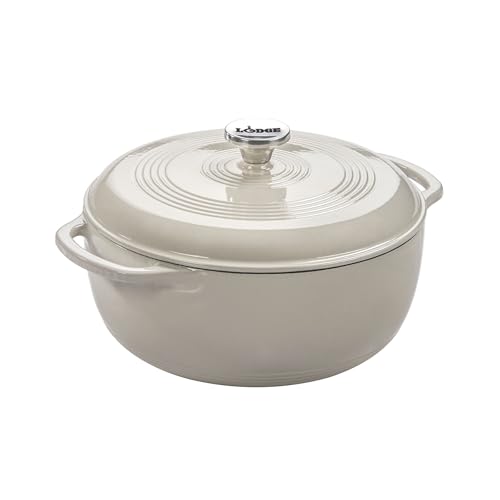
- Lodge Essential Enamel Cast Iron Dutch Oven, 6 Quart (Oyster White) — Check on Amazon
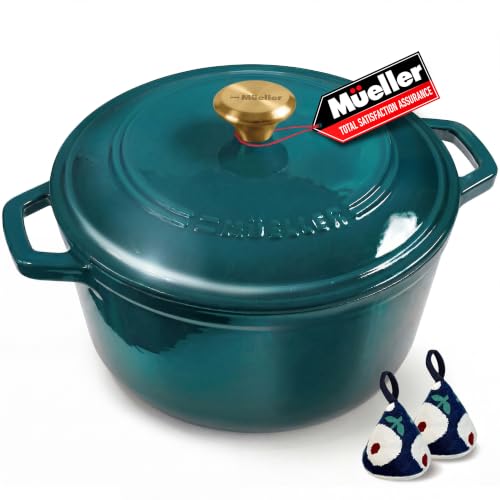
- Mueller DuraCast Enameled Cast Iron Dutch Oven, 6 Quart (Emerald) — Check on Amazon
- Lodge Essential Enamel Cast Iron Dutch Oven, 6 Quart (Island Spice Red) — Check on Amazon
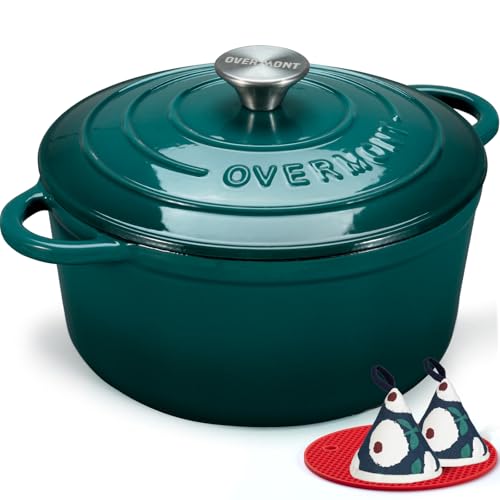
- Umite Chef Enameled Cast Iron Dutch Oven, 7QT (Emerald) — Check on Amazon
Read the full guide ↓
Sizing the best size dutch ovens for bread baking is about the loaf you bake every week, not the loaf you might bake once: a repeat ritual deserves a chamber matched to its dough weight, so the steam, spring and crust come out the same every time. This guide compares six verified enameled cast iron dutch ovens across the baker’s ladder, 5QT for the standard boule, 6 quarts for the large loaf, 7QT for double batches, and judges them on the details a weekly baking ritual actually stresses.
Where a general bread guide asks what a pot can do, a baking guide asks what it will do fifty times a year. That shift in tense changes the criteria: consistency of the steam chamber matters more than versatility, hot-handling details matter more than styling, and finish becomes a question about a year of flour and oven marks rather than a first impression. The reviews below are written from that weekly-baker standpoint throughout.
The pool makes the ladder easy to read: two finishes of the same 5QT Umite Chef at the standard size, three 6-quart pots for the large-loaf class, and one 7QT pot at the top. If you do not yet know your dough weight, weigh your next loaf before ordering; it is the single most useful measurement in this entire category, and Best Size Dutch Ovens For Bread explains the matching table in full.
Key Takeaways
- Bake-weight first: 5QT for the standard 500-700g weekly loaf, 6 qt. near a kilogram, 7QT for doubles.
- A matched chamber removes a variable, so failed bakes can be diagnosed as dough or proof problems.
- The two Umite 5QT finishes let the size decision stand alone; choose color on how it ages.
- A stated oven rating, the Mueller’s 500°F, matters more to weekly bakers than to anyone else.
- Potholders and lid knobs are baking equipment at full temperature, not accessories.
- Buy for the loaf you bake now; the 6 and 7 quart picks are the growth path when the ritual expands.
In this guide
Quick Picks
The baker’s ladder in one table: two 5QT finishes, three 6-quart options, one 7QT ceiling. Badges name the baking role; reviews give the dough weights and the ritual details. Household shoppers who found this list while choosing a general pot should also see Best Prices On Cast Iron Dutch Ovens.
| Pick | Badge | Best for | Link |
|---|---|---|---|
| Umite Chef Enameled Cast Iron Dutch Oven, 5QT (Cream White) | Best Standard-Loaf Pot | Weekly bakers of a standard 500-700g loaf | Linked pick — see Where to Buy |
| Umite Chef Enameled Cast Iron Dutch Oven, 5QT (Red) | Best Finish for Weekly Baking | Bakers who want the 5QT size in a forgiving finish | Linked pick — see Where to Buy |
| Lodge Essential Enamel Cast Iron Dutch Oven, 6 Quart (Oyster White) | Best for Large Loaves | Bakers whose standard loaf runs near a kilogram | Linked pick — see Where to Buy |
| Mueller DuraCast Enameled Cast Iron Dutch Oven, 6 Quart (Emerald) | Best Stated Rating | Specification-led bakers who bake hot and often | Linked pick — see Where to Buy |
| Lodge Essential Enamel Cast Iron Dutch Oven, 6 Quart (Island Spice Red) | Most Practical 6-Quart | Frequent bakers wanting six quarts in a practical color | Linked pick — see Where to Buy |
| Umite Chef Enameled Cast Iron Dutch Oven, 7QT (Emerald) | Best for Production Baking | Bakers producing double batches or family loaves | Linked pick — see Where to Buy |
How These Picks Were Chosen
This shortlist was built from verified product listings, selecting round enameled cast iron dutch ovens across the sizes bread baking uses, and recording the listing details a weekly ritual depends on: capacity, stated oven ratings, explicit bread and sourdough mentions, inclusions such as potholders, and lid claims. Products were only linked when the verified listing confirmed the product, brand and capacity; every specification quoted below comes from the listing itself.
A note on method and honesty: this is a research-led guide, not a hands-on test report, and no claim is made that a season of loaves was baked in each pot. The sizing framework rests on the documented relationship between dough weight and chamber volume, and the ritual criteria, consistency, hot handling, finish aging, are applied from the well-understood pattern of weekly home baking. Where a listing omits a rating, the review says so instead of assuming it.
Two patterns emerged during research. First, the pool naturally forms the baker’s ladder, with the standard size offered in two finishes, which is how bakers actually shop: size first, color second. Second, bread has moved to the front of this category’s listings, named in most of these titles, so the modern buyer can shop on stated baking intent rather than inferring it from a stew pot’s description.
The 6 Best Options for Best size dutch ovens for bread baking

Umite Chef Enameled Cast Iron Dutch Oven, 5QT (Cream White)
Badge: Best Standard-Loaf Pot
Strengths
- Same practical 5QT format as the red variant, in a cream white finish that suits lighter kitchens
- Included potholders make the first bake possible without extra purchases
- Enamel surface releases bread loaves cleanly with parchment
Trade-offs
- Light enamel shows every scorch mark and turmeric stain more readily than dark colors
- Functionally a color variant of the other Umite 5QT listing, so choose on finish
- Heavy to lift one-handed when full, as all cast iron is
Key specs from the listing: Capacity: 5QT; Enameled cast iron; Lid and cotton potholders included; Listing names bread baking, braising, stews and roasting.
This Umite Chef 5QT in cream white is a standard-boule pot in the finish bread bakers either love or avoid: it shows flour, scorch and progress honestly. The 5QT chamber suits a loaf in the 500 to 700 gram range, and the included potholders are the accessory a bread pot uses most. Bread baking, as distinct from bread as an occasional use, is a repeat ritual with a fixed dough weight at its center, and that changes the sizing advice. A baker who makes the same 600 gram sourdough every week does not need a pot that can do everything; they need the chamber that fits that loaf exactly, because they will see the result of the fit fifty times a year. This guide’s picks are therefore judged as ritual tools: same loaf, same pot, repeatable crust.
Finally, bread baking households tend to grow. The standard loaf becomes a double batch for neighbors, the boule gains a batard sibling, the weekly ritual becomes a small production. The sizing question is therefore worth asking with a year’s horizon: buy the pot for the loaf you bake now, but notice which pick you would grow into, because this category rewards buying once and the 6 and 7 quart options here are the growth path from the 5QT starting point.
The baking routine also stresses different details than braising does. The pot is preheated empty, handled at maximum temperature, opened mid-bake, and cooled and washed weekly at minimum. Potholders stop being an accessory and become part of the tool, which is why their inclusion in several of these listings is noted in every review rather than treated as packaging. Lid knobs, similarly, are judged here as hot-handling equipment. In daily use, the details that decide whether a product like this earns its place are unglamorous: how it behaves when your hands are wet or floury, how it feels after a long soak in the sink, and whether it still makes sense on a tired weeknight rather than a leisurely weekend. The Umite Chef Enameled Cast Iron Dutch Oven, 5QT (Cream White) handles that everyday test in line with what its listing promises, and nothing in its specification suggests a hidden catch for the jobs described in this guide.
The honest limitation to weigh is in the trade-offs above. No single product wins on capacity, control and simplicity at once, and this model leans toward repeatable results for a weekly baking ritual rather than covering every style of cooking equally well. Buyers who cook this way most weeks will feel that trade as a benefit; buyers who only occasionally make the dish in question should weigh the simpler or smaller options in this list first.
Ownership, week to week, is mostly lifting and washing. Enameled cast iron asks for a soak rather than a scrub, rewards it by releasing braises and bread crusts cleanly, and punishes only real abuse: metal utensils dragged hard across the enamel, cold water into a screaming-hot pot, or a drop onto a tile floor. Measure the oven cavity and the shelf this pot will live on before it arrives, because a dutch oven that must be fetched from a high cupboard is a dutch oven that gets used monthly instead of weekly.
Best for: Weekly bakers of a standard 500-700g loaf / Not suited for: Bakers who hate how pale enamel records use

Umite Chef Enameled Cast Iron Dutch Oven, 5QT (Red)
Badge: Best Finish for Weekly Baking
Strengths
- 5QT is a genuinely usable size for a standard loaf and for two-to-four-person braises
- Cotton potholders are included, a small but real saving over buying them separately
- Enameled interior needs no seasoning and handles acidic tomato braises well
Trade-offs
- Cast iron is heavy even at 5QT, and heavier again full of stew
- Enamel can chip if knocked against other pans or dropped
- The red finish will show oven browning marks over time
Key specs from the listing: Capacity: 5QT; Enameled cast iron; Lid and cotton potholders included; Listing names bread baking, braising, stews and roasting.
This second Umite Chef 5QT listing is the same pot in red, and its presence in the pool is useful for a baking guide: it lets the size recommendation stand on the size itself, with the finish as a free choice. Red hides the oven’s evidence better across a year of weekly bakes. Consistency is the baker’s real currency. A pot matched to the dough gives the same steam environment every bake, which removes a variable from a process that already has enough of them: flour changes, room temperature, starter mood. When a bake disappoints in a well-matched pot, the baker can trust it was the dough or the proof, and fix the right thing. In a mismatched pot, every failure is ambiguous, and ambiguity is what makes home bakers quit.
Bread baking, as distinct from bread as an occasional use, is a repeat ritual with a fixed dough weight at its center, and that changes the sizing advice. A baker who makes the same 600 gram sourdough every week does not need a pot that can do everything; they need the chamber that fits that loaf exactly, because they will see the result of the fit fifty times a year. This guide’s picks are therefore judged as ritual tools: same loaf, same pot, repeatable crust.
Flour and finish form the small, real subplot of bread-pot ownership. A weekly baker’s pot lives dusted with flour, marked by oven heat, and wiped more often than washed. Pale finishes record all of it; saturated finishes forgive most of it. Neither affects the loaf, and this guide refuses to pretend otherwise, but the difference affects whether the pot pleases its owner in year two, which decides whether the ritual survives. In daily use, the details that decide whether a product like this earns its place are unglamorous: how it behaves when your hands are wet or floury, how it feels after a long soak in the sink, and whether it still makes sense on a tired weeknight rather than a leisurely weekend. The Umite Chef Enameled Cast Iron Dutch Oven, 5QT (Red) handles that everyday test in line with what its listing promises, and nothing in its specification suggests a hidden catch for the jobs described in this guide.
The honest limitation to weigh is in the trade-offs above. No single product wins on capacity, control and simplicity at once, and this model leans toward repeatable results for a weekly baking ritual rather than covering every style of cooking equally well. Buyers who cook this way most weeks will feel that trade as a benefit; buyers who only occasionally make the dish in question should weigh the simpler or smaller options in this list first.
Think, too, about the second winter rather than the first stew. The pots that stay loved are the ones whose size matches the household’s real cooking: the loaf you actually bake, the braise you actually make, the number of people actually at the table. A pot sized to your week will feel indispensable; a pot sized to an imaginary dinner party will feel like a gym membership, impressive, expensive-feeling, and quietly avoided.
Best for: Bakers who want the 5QT size in a forgiving finish / Not suited for: Anyone needing a different size than 5QT

Lodge Essential Enamel Cast Iron Dutch Oven, 6 Quart (Oyster White)
Badge: Best for Large Loaves
Strengths
- Lodge is the most established name in this list, with a long track record in cast iron
- Moisture-sealing lid is designed to keep braising liquid where it belongs
- 6 Quart is the classic all-purpose size for family braises and big loaves
Trade-offs
- Oyster white enamel shows staining from paprika, turmeric and oven heat
- 6 Quart full of stew is a two-handed, plan-ahead lift
- Enamel is not the finish to use over the highest direct stovetop heat for searing marathons
Key specs from the listing: Capacity: 6 Quart; Enameled cast iron; Moisture-sealing lid; Dual handles; Listing names bread baking, braising, marinating and slow cooking.
The Lodge Essential 6 Quart in Oyster White is the large-loaf option in this baking-focused list, with the moisture-sealing lid that steam-hungry doughs benefit from. Bakers whose standard loaf has crept up toward a kilogram will find six quarts the honest fit. The baking routine also stresses different details than braising does. The pot is preheated empty, handled at maximum temperature, opened mid-bake, and cooled and washed weekly at minimum. Potholders stop being an accessory and become part of the tool, which is why their inclusion in several of these listings is noted in every review rather than treated as packaging. Lid knobs, similarly, are judged here as hot-handling equipment.
Consistency is the baker’s real currency. A pot matched to the dough gives the same steam environment every bake, which removes a variable from a process that already has enough of them: flour changes, room temperature, starter mood. When a bake disappoints in a well-matched pot, the baker can trust it was the dough or the proof, and fix the right thing. In a mismatched pot, every failure is ambiguous, and ambiguity is what makes home bakers quit.
Finally, bread baking households tend to grow. The standard loaf becomes a double batch for neighbors, the boule gains a batard sibling, the weekly ritual becomes a small production. The sizing question is therefore worth asking with a year’s horizon: buy the pot for the loaf you bake now, but notice which pick you would grow into, because this category rewards buying once and the 6 and 7 quart options here are the growth path from the 5QT starting point. In daily use, the details that decide whether a product like this earns its place are unglamorous: how it behaves when your hands are wet or floury, how it feels after a long soak in the sink, and whether it still makes sense on a tired weeknight rather than a leisurely weekend. The Lodge Essential Enamel Cast Iron Dutch Oven, 6 Quart (Oyster White) handles that everyday test in line with what its listing promises, and nothing in its specification suggests a hidden catch for the jobs described in this guide.
The honest limitation to weigh is in the trade-offs above. No single product wins on capacity, control and simplicity at once, and this model leans toward repeatable results for a weekly baking ritual rather than covering every style of cooking equally well. Buyers who cook this way most weeks will feel that trade as a benefit; buyers who only occasionally make the dish in question should weigh the simpler or smaller options in this list first.
The lid is half the tool and deserves a thought at purchase time. A well-fitting lid traps the moisture that makes dutch oven cooking what it is, whether that is a self-basting braise or a steamy bread chamber. Check how the lid seats and how its knob handles oven heat and gloved hands, because you will interact with that lid, hot and heavy, every single time you use the pot.
Best for: Bakers whose standard loaf runs near a kilogram / Not suited for: Standard-loaf bakers, who should size down

Mueller DuraCast Enameled Cast Iron Dutch Oven, 6 Quart (Emerald)
Badge: Best Stated Rating
Strengths
- A stated 500°F oven rating gives clear headroom for hot bread bakes
- Induction compatibility is named explicitly, which not every enameled pot claims
- Emerald finish is distinctive and hides light staining well
Trade-offs
- Brand track record is shorter than Lodge or Le Creuset
- 6 Quart is mid-to-large; small households may find it more pot than they need
- As with all enamel, avoid thermal shock from cold water on a hot pot
Key specs from the listing: Capacity: 6 Quart; Enameled cast iron; Oven safe to 500°F per the listing; PFOA-free positioning; Listing names all cooktops including induction, sourdough baking, braising and slow cooking.
The Mueller DuraCast 6 Quart is the specification-led baker’s pick: a stated 500°F oven rating and sourdough named in the listing. Bread baking is a high-heat, repeat ritual, and a pot whose listing answers the temperature question directly saves every buyer a research step. Flour and finish form the small, real subplot of bread-pot ownership. A weekly baker’s pot lives dusted with flour, marked by oven heat, and wiped more often than washed. Pale finishes record all of it; saturated finishes forgive most of it. Neither affects the loaf, and this guide refuses to pretend otherwise, but the difference affects whether the pot pleases its owner in year two, which decides whether the ritual survives.
The baking routine also stresses different details than braising does. The pot is preheated empty, handled at maximum temperature, opened mid-bake, and cooled and washed weekly at minimum. Potholders stop being an accessory and become part of the tool, which is why their inclusion in several of these listings is noted in every review rather than treated as packaging. Lid knobs, similarly, are judged here as hot-handling equipment.
Bread baking, as distinct from bread as an occasional use, is a repeat ritual with a fixed dough weight at its center, and that changes the sizing advice. A baker who makes the same 600 gram sourdough every week does not need a pot that can do everything; they need the chamber that fits that loaf exactly, because they will see the result of the fit fifty times a year. This guide’s picks are therefore judged as ritual tools: same loaf, same pot, repeatable crust. In daily use, the details that decide whether a product like this earns its place are unglamorous: how it behaves when your hands are wet or floury, how it feels after a long soak in the sink, and whether it still makes sense on a tired weeknight rather than a leisurely weekend. The Mueller DuraCast Enameled Cast Iron Dutch Oven, 6 Quart (Emerald) handles that everyday test in line with what its listing promises, and nothing in its specification suggests a hidden catch for the jobs described in this guide.
The honest limitation to weigh is in the trade-offs above. No single product wins on capacity, control and simplicity at once, and this model leans toward repeatable results for a weekly baking ritual rather than covering every style of cooking equally well. Buyers who cook this way most weeks will feel that trade as a benefit; buyers who only occasionally make the dish in question should weigh the simpler or smaller options in this list first.
There is also a learning curve, and it is shorter than the weight suggests. Two or three cooks teach you a pot’s real personality: how its base behaves on your burner, how long your oven actually takes to bring it to temperature, how much liquid your usual braise loses. Judge any dutch oven after that calibration, not after the first attempt, and keep brief notes; in a category built on repeat cooking, notes compound into reliability faster than any upgrade does.
Best for: Specification-led bakers who bake hot and often / Not suited for: Bakers who never check specifications

Lodge Essential Enamel Cast Iron Dutch Oven, 6 Quart (Island Spice Red)
Badge: Most Practical 6-Quart
Strengths
- Same proven Lodge 6 Quart platform as the Oyster White version
- The deep red finish hides cooking stains better than pale enamel
- Moisture-sealing lid supports the low-and-slow braises this size is bought for
Trade-offs
- A color variant rather than a different design, so there is no performance reason to own both
- Heavy when loaded; not the pot for anyone with wrist or grip limitations
- Enamel chips if metal utensils are used aggressively inside
Key specs from the listing: Capacity: 6 Quart; Enameled cast iron; Moisture-sealing lid; Dual handles; Listing names bread baking, braising, marinating and slow cooking.
This Lodge in Island Spice Red gives the 6-quart class its practical finish. Weekly bread baking is a floury, high-heat routine that marks pale enamel quickly; red keeps a working pot looking respectable between deep cleans, which is a real quality in a pot that lives on the stove. Finally, bread baking households tend to grow. The standard loaf becomes a double batch for neighbors, the boule gains a batard sibling, the weekly ritual becomes a small production. The sizing question is therefore worth asking with a year’s horizon: buy the pot for the loaf you bake now, but notice which pick you would grow into, because this category rewards buying once and the 6 and 7 quart options here are the growth path from the 5QT starting point.
Flour and finish form the small, real subplot of bread-pot ownership. A weekly baker’s pot lives dusted with flour, marked by oven heat, and wiped more often than washed. Pale finishes record all of it; saturated finishes forgive most of it. Neither affects the loaf, and this guide refuses to pretend otherwise, but the difference affects whether the pot pleases its owner in year two, which decides whether the ritual survives.
Consistency is the baker’s real currency. A pot matched to the dough gives the same steam environment every bake, which removes a variable from a process that already has enough of them: flour changes, room temperature, starter mood. When a bake disappoints in a well-matched pot, the baker can trust it was the dough or the proof, and fix the right thing. In a mismatched pot, every failure is ambiguous, and ambiguity is what makes home bakers quit. In daily use, the details that decide whether a product like this earns its place are unglamorous: how it behaves when your hands are wet or floury, how it feels after a long soak in the sink, and whether it still makes sense on a tired weeknight rather than a leisurely weekend. The Lodge Essential Enamel Cast Iron Dutch Oven, 6 Quart (Island Spice Red) handles that everyday test in line with what its listing promises, and nothing in its specification suggests a hidden catch for the jobs described in this guide.
The honest limitation to weigh is in the trade-offs above. No single product wins on capacity, control and simplicity at once, and this model leans toward repeatable results for a weekly baking ritual rather than covering every style of cooking equally well. Buyers who cook this way most weeks will feel that trade as a benefit; buyers who only occasionally make the dish in question should weigh the simpler or smaller options in this list first.
Enamel care is simple but not optional. Let the pot cool before washing, soak rather than scour, and reach for a paste cleaner when tomato or turmeric leaves its mark. Pale interiors will slowly take on a patina of use no matter what you do, and experienced owners treat that as a badge rather than damage; if a pristine interior matters to you, choose a darker finish and lower your expectations slightly anyway.
Best for: Frequent bakers wanting six quarts in a practical color / Not suited for: Bakers wanting the palest showroom finish

Umite Chef Enameled Cast Iron Dutch Oven, 7QT (Emerald)
Badge: Best for Production Baking
Strengths
- Full 7QT capacity for large households, batch braising and double loaves
- Potholders included, which matters more as the pot gets heavier
- Emerald finish stands out and hides light oven marks
Trade-offs
- The heaviest class of pot in this guide when full
- Oversized for everyday two-person cooking
- Needs a large oven cavity and a sturdy shelf
Key specs from the listing: Capacity: 7QT; Enameled cast iron; Lid and cotton potholders included; Listing names bread baking, braising, stews and marinating.
The Umite Chef 7QT in emerald is the capacity ceiling of this list, for the baker whose bread baking has become production: double batches, a large family loaf, or a bake that includes a second dish alongside. Its size is a deliberate choice, not a default, and the review treats it that way. Bread baking, as distinct from bread as an occasional use, is a repeat ritual with a fixed dough weight at its center, and that changes the sizing advice. A baker who makes the same 600 gram sourdough every week does not need a pot that can do everything; they need the chamber that fits that loaf exactly, because they will see the result of the fit fifty times a year. This guide’s picks are therefore judged as ritual tools: same loaf, same pot, repeatable crust.
Finally, bread baking households tend to grow. The standard loaf becomes a double batch for neighbors, the boule gains a batard sibling, the weekly ritual becomes a small production. The sizing question is therefore worth asking with a year’s horizon: buy the pot for the loaf you bake now, but notice which pick you would grow into, because this category rewards buying once and the 6 and 7 quart options here are the growth path from the 5QT starting point.
The baking routine also stresses different details than braising does. The pot is preheated empty, handled at maximum temperature, opened mid-bake, and cooled and washed weekly at minimum. Potholders stop being an accessory and become part of the tool, which is why their inclusion in several of these listings is noted in every review rather than treated as packaging. Lid knobs, similarly, are judged here as hot-handling equipment. In daily use, the details that decide whether a product like this earns its place are unglamorous: how it behaves when your hands are wet or floury, how it feels after a long soak in the sink, and whether it still makes sense on a tired weeknight rather than a leisurely weekend. The Umite Chef Enameled Cast Iron Dutch Oven, 7QT (Emerald) handles that everyday test in line with what its listing promises, and nothing in its specification suggests a hidden catch for the jobs described in this guide.
The honest limitation to weigh is in the trade-offs above. No single product wins on capacity, control and simplicity at once, and this model leans toward repeatable results for a weekly baking ritual rather than covering every style of cooking equally well. Buyers who cook this way most weeks will feel that trade as a benefit; buyers who only occasionally make the dish in question should weigh the simpler or smaller options in this list first.
Finally, consider who else cooks. A pot that only one person in the household can lift safely is a single-operator pot, and single-operator pots quietly stop being used for weeknight cooking. The dutch ovens that survive in family kitchens are the ones a second cook can move from stove to oven to sink with confidence, and that social test is worth applying, honestly, before you buy.
Best for: Bakers producing double batches or family loaves / Not suited for: Standard single-loaf bakers
Comparison Table
| Pick | Badge | Key attribute | Format | Link |
|---|---|---|---|---|
| Umite Chef Enameled Cast Iron Dutch Oven, 5QT (Cream White) | Best Standard-Loaf Pot | Capacity: 5QT | Enameled cast iron, 5QT | Check on Amazon |
| Umite Chef Enameled Cast Iron Dutch Oven, 5QT (Red) | Best Finish for Weekly Baking | Capacity: 5QT | Enameled cast iron, 5QT | Check on Amazon |
| Lodge Essential Enamel Cast Iron Dutch Oven, 6 Quart (Oyster White) | Best for Large Loaves | Capacity: 6 Quart | Enameled cast iron, 6 Quart | Check on Amazon |
| Mueller DuraCast Enameled Cast Iron Dutch Oven, 6 Quart (Emerald) | Best Stated Rating | Capacity: 6 Quart | Enameled cast iron, 6 Quart | Check on Amazon |
| Lodge Essential Enamel Cast Iron Dutch Oven, 6 Quart (Island Spice Red) | Most Practical 6-Quart | Capacity: 6 Quart | Enameled cast iron, 6 Quart | Check on Amazon |
| Umite Chef Enameled Cast Iron Dutch Oven, 7QT (Emerald) | Best for Production Baking | Capacity: 7QT | Enameled cast iron, 7QT | Check on Amazon |
The two 5QT rows differ only in finish, which is the honest way to read them: the size decision is identical, the aging decision is yours. Across the table, capacity is the primary sort; everything else in a bread pot is secondary to the chamber fitting the loaf.
How to Choose Best size dutch ovens for bread baking
Begin by weighing your dough, because bread baking is the one dutch oven use where the key number is yours, not the maker’s. Mix your standard loaf, weigh the dough ball, and place it on the ladder: 500 to 700 grams belongs in 5QT, 700 grams to a kilogram in 6 quarts, and doubles or genuinely large loaves in 7QT. If your weights straddle a boundary, choose by hydration: wet, spreading doughs bake taller in the snugger pot, while stiff doughs forgive the roomier one.
Consider your ritual’s tempo second. A weekly baker should weight durability signals, stated ratings, enamel quality and included potholders, more heavily than an occasional baker, because every weakness is met fifty times a year. The stated 500°F rating on one pick here is the clearest example: a small line in a listing that answers the exact question a ritual baker asks most.
Third, choose the finish as a year-two decision. Cream white will show the ritual’s evidence, scorch shadows, flour baked into the texture of the surface, turmeric if the pot ever doubles for curry. Saturated colors, the reds and emerald here, hide most of it. The loaf does not care; the owner’s satisfaction does, and satisfaction is what keeps a ritual alive, so this is a legitimate deciding factor between the two 5QT listings.
Finally, leave yourself the growth path without buying it prematurely. If your baking is expanding, neighbors, a market stall daydream, a second loaf for the freezer, note that the 6 and 7 quart picks exist in the same category at fair positions, and buy the 5QT that fits today’s loaf. A pot bought for a future habit and wrong for the present one is how rituals die; a pot right for today gets used, and used pots justify their successors. The price-tier view of these same pots is in Best Residential Dutch Ovens if budget is the deciding voice.
How to Run a Weekly Bread Baking Ritual in a Dutch Oven
A ritual is a method with the thinking removed. The routine below is the weekly pattern, tuned for repeatability in the pots above.
- Keep the pot, parchment, potholders and a lame in one place; a ritual that starts with hunting for equipment starts badly.
- Feed and mix on a fixed schedule so dough weight and timing stay constant from week to week; consistency upstream makes the pot’s job visible.
- Preheat the empty, lidded pot with the oven for 30 to 45 minutes while the shaped loaf proofs.
- Load the loaf on its parchment sling, score, cover, and bake the steam phase without opening the oven to peek.
- Uncover for the color phase, judging doneness by deep color and a hollow sound from the base of the loaf.
- Cool the loaf fully on a rack, let the pot cool on the stove, wash it warm, and return it to its place the same day.
Problem: Crust is thick and tough rather than crisp → what to do: the steam phase ran long or the chamber is oversized for the loaf; shorten the covered phase slightly and confirm the pot size against your dough weight.
Problem: The crumb is gummy even with a good crust → what to do: the loaf was sliced before it finished setting; cool it completely, at least an hour for a standard boule, before the knife goes in.
Problem: Results vary wildly between identical recipes → what to do: the variable is upstream, proofing time or room temperature, once the pot is correctly sized; log bake times and room conditions for a few weeks and the pattern will show itself.
Why Weekly Bakers Size Differently
An occasional baker buys capability; a weekly baker buys repeatability. That is why this guide spends so much of its length on a single number, dough weight, and so little on versatility. In a ritual, the pot is a constant, and constants should be chosen to disappear: the right chamber, a lid the hand trusts, a rating that never needs thinking about. When a pot disappears into a routine like that, the baker’s attention goes where it belongs, into the dough.
It also explains the finish discussion that puzzles outsiders. A pot used weekly is seen weekly, in flour and in heat marks, and the small daily pleasure or irritation of its appearance compounds across years. Choosing the finish that ages the way you like is not vanity; it is maintenance of the ritual itself, and the two-finish choice at 5QT in this pool exists precisely because makers have learned that bakers care.
Growing the Ritual: Second Loaves and Bigger Batches
Most weekly bakers eventually bake for more people: a second loaf for neighbors, a double batch before holidays, a large celebration loaf. The ladder in this guide is the growth path. The step from 5QT to 6 quarts covers the large single loaf; 7QT covers doubles baked together, with parchment discipline, or one genuinely large loaf. Each step keeps the same technique and changes only the chamber, which is how a ritual should scale.
The honest alternative is two successive bakes in the standard pot, which many experienced bakers prefer for crust quality, at the cost of a longer morning. Neither answer is wrong; they suit different kitchens and different Saturdays. What this guide advises against is buying the ceiling size first and baking standard loaves in it while waiting to grow, because a year of spread, pale loaves is too high a price for a hypothetical future.
Common Buying Mistakes
- Guessing dough weight instead of weighing one loaf before ordering.
- Buying the 7QT ceiling size for a standard weekly boule.
- Treating finish as pure looks, without picturing a year of flour and heat marks.
- Skipping the stated oven rating check on a pot that will preheat empty every week.
- Changing pot size and recipe in the same week, making results impossible to read.
- Storing the baking pot away from its parchment, potholders and lame, so the ritual starts with a search.
Final Recommendation
For the weekly standard loaf, choose between the two Umite Chef 5QT listings on finish alone: cream white if you enjoy a pot that shows its work, red if you prefer one that hides it; the size, the right size, is identical. Large-loaf bakers should step to six quarts, the Mueller for its stated rating or either Lodge for the name and lid, and production bakers to the 7QT Umite Chef. Weigh your dough, buy the chamber that fits it, and the ritual will take care of itself.
Shortlist again: Umite Chef Enameled Cast Iron Dutch Oven, 5QT (Cream White); Umite Chef Enameled Cast Iron Dutch Oven, 5QT (Red); Lodge Essential Enamel Cast Iron Dutch Oven, 6 Quart (Oyster White).
Frequently Asked Questions
Is 5QT big enough for most bread baking?
For the standard home loaf of 500 to 700 grams of dough, yes: it is the size this guide’s weekly bakers should start from. It holds steam snugly around the loaf and gives it room to spring. Bakers whose standard loaf runs heavier should step up to six quarts rather than squeezing into five.
What changes between baking in 5QT and 7QT?
Steam concentration and spread. A standard loaf in 7QT spreads wider, rises less and crusts paler than the same dough in 5QT, because the chamber is too large to stay saturated. The 7QT earns its place with double batches and large loaves, where its volume is filled rather than empty.
Do the two Umite 5QT listings bake differently?
No: they are the same pot in cream white and red. The baking is identical, so the choice is about how the finish ages under a weekly ritual of flour and high heat, and which look you would rather live with in year two.
How important is a stated oven temperature rating for a bread pot?
More important than for any other use, because bread preheats the pot empty and bakes at the top of the oven’s range, weekly. A stated rating like the 500°F one in this list removes all doubt; where a listing is silent, verify with the maker before the first bake.
Should I buy a bigger pot now if I plan to bake more later?
Buy for today’s loaf. A pot matched to your current dough weight will be used constantly and will teach you your ritual; an oversized pot bought for a future habit undermines every bake until the habit arrives. The ladder in this guide makes upgrading later a simple, informed step.
Can the same pot handle bread and weeknight braises?
Yes, and at 5 to 6 quarts it is the same size class either way, which is why these pots dominate home kitchens. The household view of the overlap is covered in Best Prices On Cast Iron Dutch Ovens; the bread-specific sizing in this guide assumes the pot will live the double life comfortably.